
Coral AI is one of those technologies a lot of developers have heard about, maybe bookmarked once, but rarely sit down and truly explore. It often gets mentioned in conversations about edge computing or on-device machine learning, then quietly forgotten while everyone rushes back to cloud APIs. If you’ve ever felt exhausted by sending every image, sound, or sensor reading to the cloud, worrying about latency, privacy issues, scaling costs, or internet reliability, Google’s Coral platform might be exactly what you’ve been overlooking. Coral AI, which many people first discover through coral.ai, is all about running machine learning locally on the device itself. No round trips, no waiting, no constant dependence on servers. And once you really understand what that unlocks, your idea list starts growing fast.
What makes Coral AI special isn’t just speed or hardware. It’s the mindset shift. Instead of thinking of AI as a remote service you call, Coral encourages you to think of AI as a built-in capability, something your product simply has. In this article, we’ll walk through seven powerful things you can build with Coral AI, using real examples and clear explanations. No hype, no buzzword overload, just practical ideas and why they actually matter in the real world.
Find More: 7 Powerful PixNova AI Features Most Users Miss (Honest Review)
What Is Coral AI and Why Developers Are Still Sleeping on It
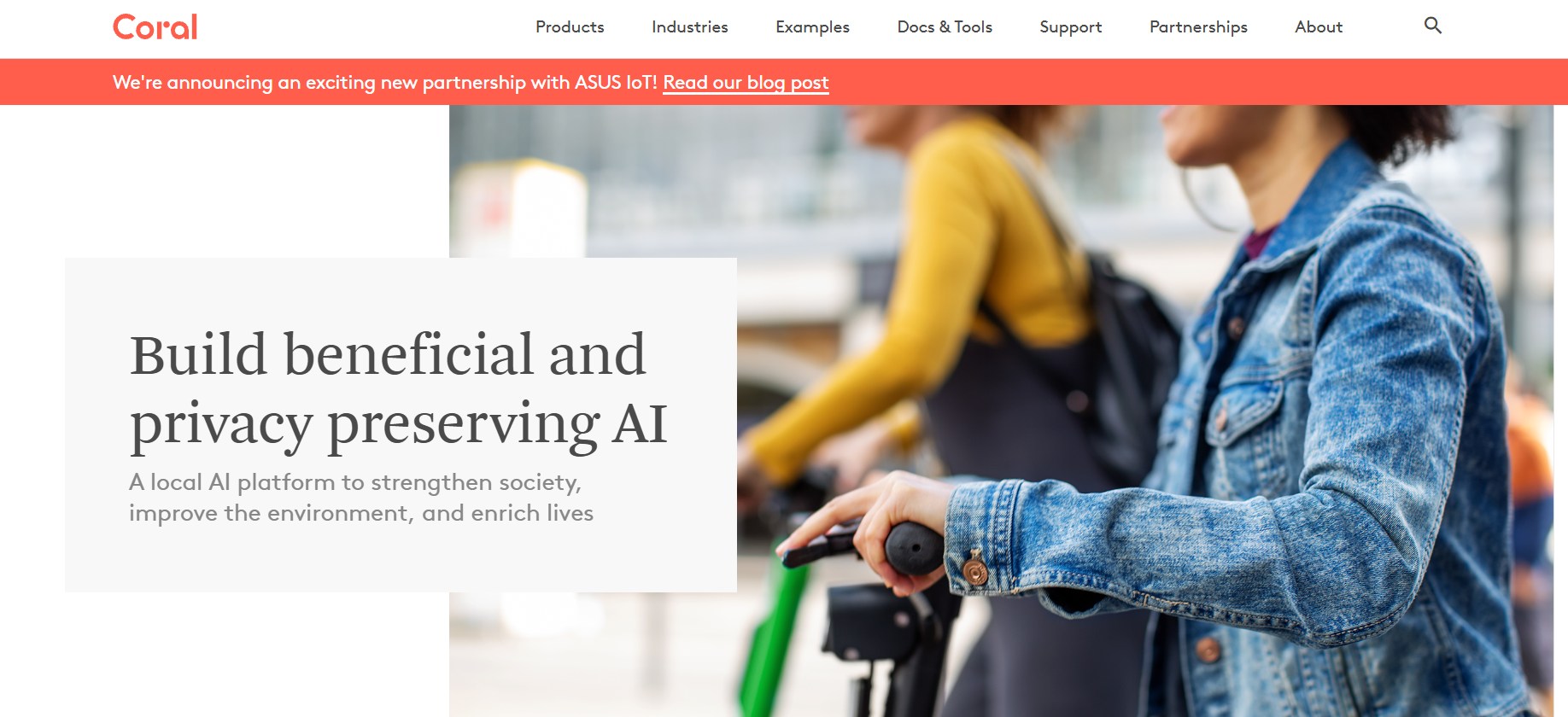
At its core, Coral AI is Google’s edge AI platform built around the Edge TPU, a specialized chip designed for fast and efficient machine learning inference. Instead of sending data to a server, waiting for a response, and paying cloud bills month after month, Coral lets you run trained models directly on hardware like development boards, USB accelerators, and embedded systems.
The real value here comes down to three things: speed, privacy, and control. When inference happens on-device, results come back almost instantly. There’s no internet dependency, which means your system keeps working even when the connection drops. Sensitive data stays local, and your operating costs stay predictable because you’re not paying per request.
Despite all of that, many developers still default to cloud AI. It feels familiar, it’s heavily marketed, and it’s easy to get started. But familiar doesn’t always mean optimal. If you’re exploring Google Coral AI for edge computing, the biggest breakthrough happens when you stop thinking “AI service” and start thinking “AI feature baked directly into the product.”
1. Real-Time Object Detection on Edge Devices
This is where most people begin their Coral AI journey, and for good reason. It’s one of the clearest demonstrations of what edge AI can do better than the cloud.
How Coral AI Handles Object Detection Without the Cloud
Coral AI runs optimized TensorFlow Lite models directly on the Edge TPU. Camera frames are processed locally, objects are detected in milliseconds, and nothing leaves the device unless you explicitly send it somewhere. The model sees the image, makes a decision, and moves on.
There’s no streaming video to a remote server and no waiting for a response. The device sees, thinks, and reacts in real time, which changes how the system feels to the user.
Common Use Cases: Cameras, Drones, and Smart Surveillance
Smart security cameras that only react when a person or vehicle appears. Drones that detect obstacles instantly instead of seconds later. Wildlife cameras that identify animals without uploading footage. Surveillance systems that trigger alerts only when something meaningful happens.
These systems feel fast because they are fast. And that responsiveness is extremely hard to achieve with cloud-only AI, especially in unstable network conditions.
Why Low Latency Makes Coral AI Ideal for This Task
When milliseconds matter, edge AI wins. Coral AI’s low latency makes it ideal for safety systems, automation, robotics, and anything where delays feel broken, frustrating, or even dangerous.
2. Smart IoT Automation With Coral AI
IoT becomes much more powerful when devices can actually make decisions instead of just reporting data.
Using Coral AI for Sensor-Based Decision Making
With Coral AI, sensors don’t simply send raw numbers upstream. They learn patterns. A vibration sensor can detect early signs of mechanical failure. A camera can decide whether motion matters or not. Multiple inputs can be combined to trigger actions instantly.
This transforms devices from passive data collectors into active decision-makers.
Industrial and Home Automation Examples
In industrial environments, Coral AI can spot anomalies before they turn into expensive downtime. Machines can monitor themselves and raise alerts only when something truly unusual happens.
In homes, Coral AI enables smarter automation. Lights that turn on only when a real person enters the room. Climate systems that adjust based on actual behavior, not schedules. Security systems that understand context instead of blindly reacting.
Power Efficiency Advantages Over Cloud AI
Because Coral AI is designed specifically for edge inference, it’s extremely power-efficient. This makes it ideal for always-on devices where battery life, heat, and reliability are critical.
3. Offline AI Applications Most Developers Completely Miss
This is the use case most developers overlook, and arguably Coral AI’s biggest hidden advantage.
Why Offline AI Is Coral AI’s Secret Superpower
Most AI systems assume constant internet access. Coral AI doesn’t. Once your model is deployed, it works fully offline, processing data locally with zero connectivity.
That simple fact unlocks entire categories of products that cloud AI struggles to support.
Use Cases in Remote, Secure, or No-Internet Environments
Think rural areas, ships at sea, factories with restricted networks, hospitals with strict data rules, or military environments where connectivity is limited or intentionally disabled. Think underground facilities, remote research stations, or devices deployed across developing regions.
Coral AI keeps working when the internet doesn’t, and that reliability is incredibly valuable.
How Coral AI Improves Privacy and Data Security
Since data never leaves the device, privacy improves by default. No video uploads, no continuous audio streaming, and no sensitive information sitting on third-party servers.
For many industries, this isn’t a bonus feature. It’s a requirement.
4. Edge AI for Retail and Customer Analytics
Retail is quietly becoming one of the strongest real-world applications of Coral AI.
Foot Traffic Analysis Using Coral AI
Stores can analyze foot traffic patterns without storing personal data. Cameras detect movement, count visitors, and analyze flow entirely on-device.
No identity tracking. No cloud processing. Just useful insights.
Facial Detection Without Identity Storage
Coral AI can detect faces without recognizing who the person is. Retailers can measure engagement, dwell time, and customer behavior without crossing privacy boundaries.
That balance is extremely difficult to achieve with cloud-based AI systems.
Why Retailers Prefer Coral AI Over Cloud Solutions
Lower costs, better privacy, faster responses, and independence from internet uptime. For many retailers, that combination makes Coral AI a clear winner.
5. AI-Powered Robotics and Autonomous Systems
Robots and autonomous machines need to think fast and act even faster. Coral AI fits naturally into these environments.
Coral AI in Robots, Drones, and Autonomous Machines
From warehouse robots to delivery drones, Coral AI enables real-time perception. Machines can detect objects, avoid obstacles, and adapt to their surroundings instantly.
Motion Tracking and Visual Navigation
Navigation depends heavily on vision. Coral AI processes camera input locally, allowing robots to understand space and movement without cloud delays.
Performance Benefits of TPU Acceleration
The Edge TPU is designed specifically for inference workloads. That hardware acceleration is what makes Coral AI powerful enough for real-world autonomy instead of lab-only demos.
6. Voice and Audio Recognition at the Edge
Voice interfaces don’t need to spy on users to work well.
Keyword Spotting With Coral AI
Coral AI excels at keyword spotting. Devices can listen for wake words or specific commands without recording or transmitting full audio streams.
Always-On Voice Commands Without Privacy Risks
Because processing happens locally, microphones don’t need to send raw audio to the cloud. That dramatically improves trust and user comfort.
Smart Assistants and Embedded Audio AI Use Cases
From industrial control panels to smart home devices, edge-based voice recognition feels faster, more reliable, and more respectful of privacy.
7. Custom Edge AI Products for Startups

This is where Coral AI becomes a real business advantage.
Building Commercial Products With Coral AI
Startups can embed intelligence directly into hardware products. There are no per-request inference fees and no dependency on third-party services.
The product works even if the internet is down or the company’s servers disappear.
Cost vs Performance Compared to Other Edge AI Platforms
Coral AI offers a strong balance between performance, cost, and ecosystem maturity. It’s not perfect for every use case, but when it fits, it fits exceptionally well.
When Coral AI Is (and Isn’t) the Right Choice
If you need to train models on-device, Coral may not be ideal. If your models are extremely large or constantly changing, cloud AI might still make sense. But for stable, high-performance inference, Coral AI shines.
Is Coral AI Worth Using in Your Next Project?
If you care about speed, privacy, reliability, and long-term costs, Coral AI deserves serious consideration. The seven use cases we covered are only the beginning.
The biggest shift is mental. Once you stop treating AI as a remote service and start treating it as a local capability, entirely new product ideas appear.
Experiment. Prototype. Break things. That’s where Coral AI really proves its value.
FAQs
1. What is Coral AI used for?
Coral AI is used for running machine learning inference on edge devices, enabling fast, private, and offline AI features like object detection, audio recognition, automation, and robotics.
2. Is Coral AI better than cloud-based AI?
It depends on the use case. Coral AI is better for low-latency, privacy-sensitive, and offline scenarios. Cloud AI is better for large-scale training and rapidly changing models.
3. Does Coral AI work offline?
Yes. One of Coral AI’s biggest strengths is that it works fully offline once the model is deployed.
4. What programming languages support Coral AI?
Most Coral AI workflows use Python or C++ with TensorFlow Lite models optimized for the Edge TPU.
5. Is Coral AI suitable for commercial products?
Yes. Many companies successfully use Coral AI in production for embedded systems, retail analytics, robotics, and IoT products.