
Running a website is like maintaining a high-performance car. Don’t expect top speed if your engine isn’t built for it. Whether you’re managing a blog, an ecommerce store, or a SaaS platform, your hosting plan plays a critical role in performance, security, and scalability. Many businesses start with shared or budget hosting, but as traffic grows and demands increase, sticking with the same plan can lead to frustrating bottlenecks. Here’s how to recognize when it’s time to level up.
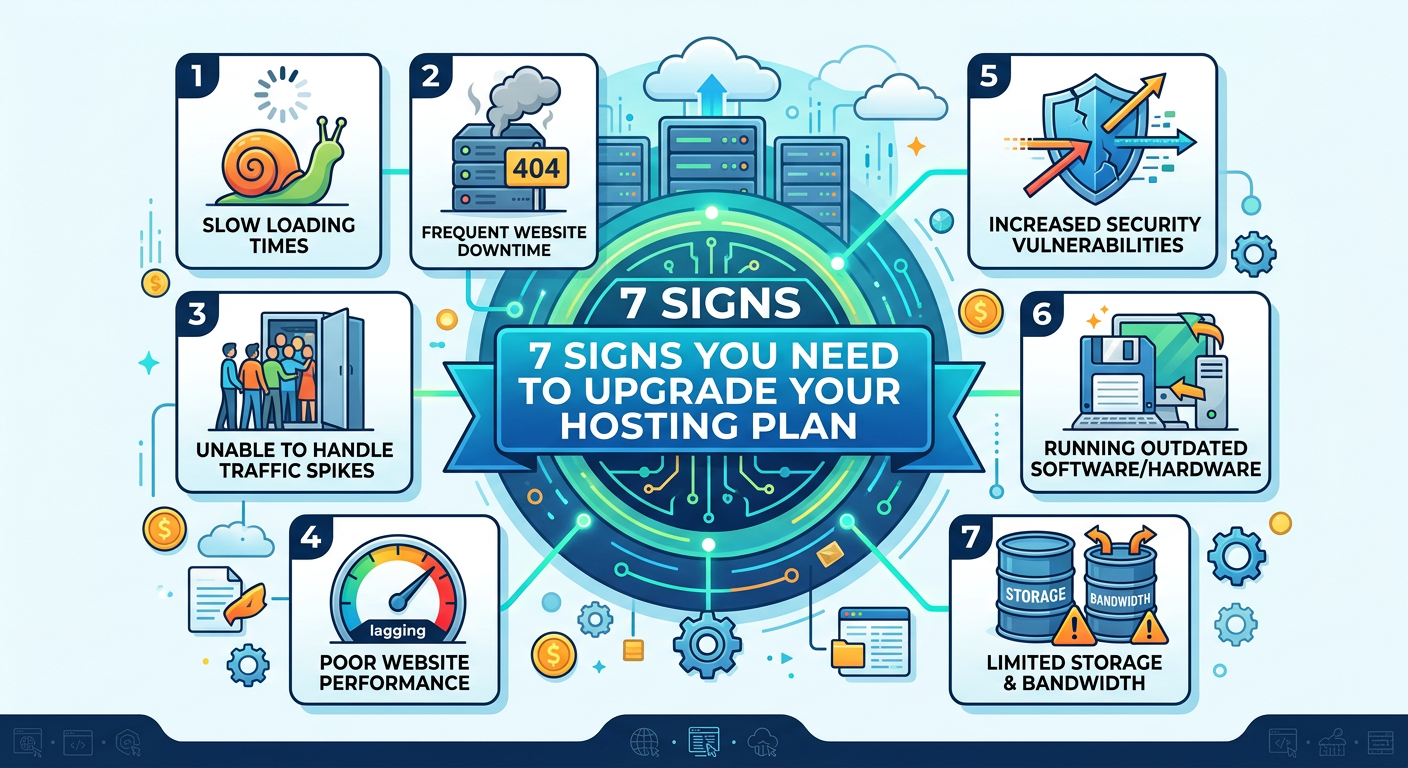
Your hosting provider’s data center infrastructure matters, but so does your plan’s resources. If your site is struggling under its current setup, upgrading could mean the difference between a seamless user experience and losing visitors (or worse, revenue). Check out these seven unmistakable signs that your hosting plan is overdue for an upgrade.
1. Slow Load Times Despite Optimization
You’ve compressed images, minified CSS, and cached aggressively, and yet your site still crawls. If performance tweaks aren’t cutting it, your hosting plan likely lacks the CPU, RAM, or SSD power needed to handle your traffic. Slow load times hurt SEO and conversions, so upgrading to a VPS or dedicated server could be the fix.
2. Frequent Downtime or “Resource Limit” Errors
Nothing screams, “Upgrade now!” like your site crashing during peak traffic. Shared hosting often throttles resources when you exceed limits, leaving visitors staring at a 503 error. If your host keeps suspending your site for exceeding bandwidth or CPU usage, it’s time to move to a plan with higher thresholds.
3. Your Traffic Has Doubled (Or More)
Congrats! Your audience is growing! But if your hosting plan hasn’t scaled with it, you’re risking performance issues. Shared hosting might work for small blogs, but once you hit thousands of monthly visitors, upgrading to cloud or managed hosting ensures stability without surprise outages.
4. Security Concerns Are Keeping You Up at Night
Cheap hosting often skimps on security features like firewalls, malware scans, and DDoS protection. If you’re handling sensitive data (e.g., payments or logins), an upgrade to a plan with robust security, or even a dedicated server, reduces vulnerabilities and keeps hackers at bay.
5. You’re Manually Managing Backups
If your current host doesn’t offer automated backups (or charges extra for them), you’re one mishap away from disaster. Premium plans often include daily backups, one-click restores, and even staging environments that can save you from data loss nightmares.
6. Your Site’s Tech Stack Is Outgrowing Shared Hosting
Running resource-heavy apps? Using Node.js, Redis, or custom databases? Shared hosting rarely supports advanced setups smoothly. Upgrading to a VPS or cloud hosting gives you root access and the flexibility to configure your environment properly.
7. Your Support Tickets Go Unanswered for Days
If your host’s “24/7 support” takes 72 hours to reply, it’s a red flag. As your site grows, you need responsive, expert help, not outsourced chatbots. Managed hosting plans often include priority support, ensuring quick resolutions when issues arise.
Don’t wait until it’s too late. Ignoring these signs won’t make them disappear. Upgrading your hosting isn’t just about avoiding downtime; it’s about future-proofing your site for growth, security, and speed. Assess your needs, compare plans (look for scalable options like cloud hosting), and make the jump before your current setup holds you back. Your website deserves a foundation that matches its potential. If any of these seven scenarios sound familiar, it’s time to invest in a hosting plan that works as hard as you do.