
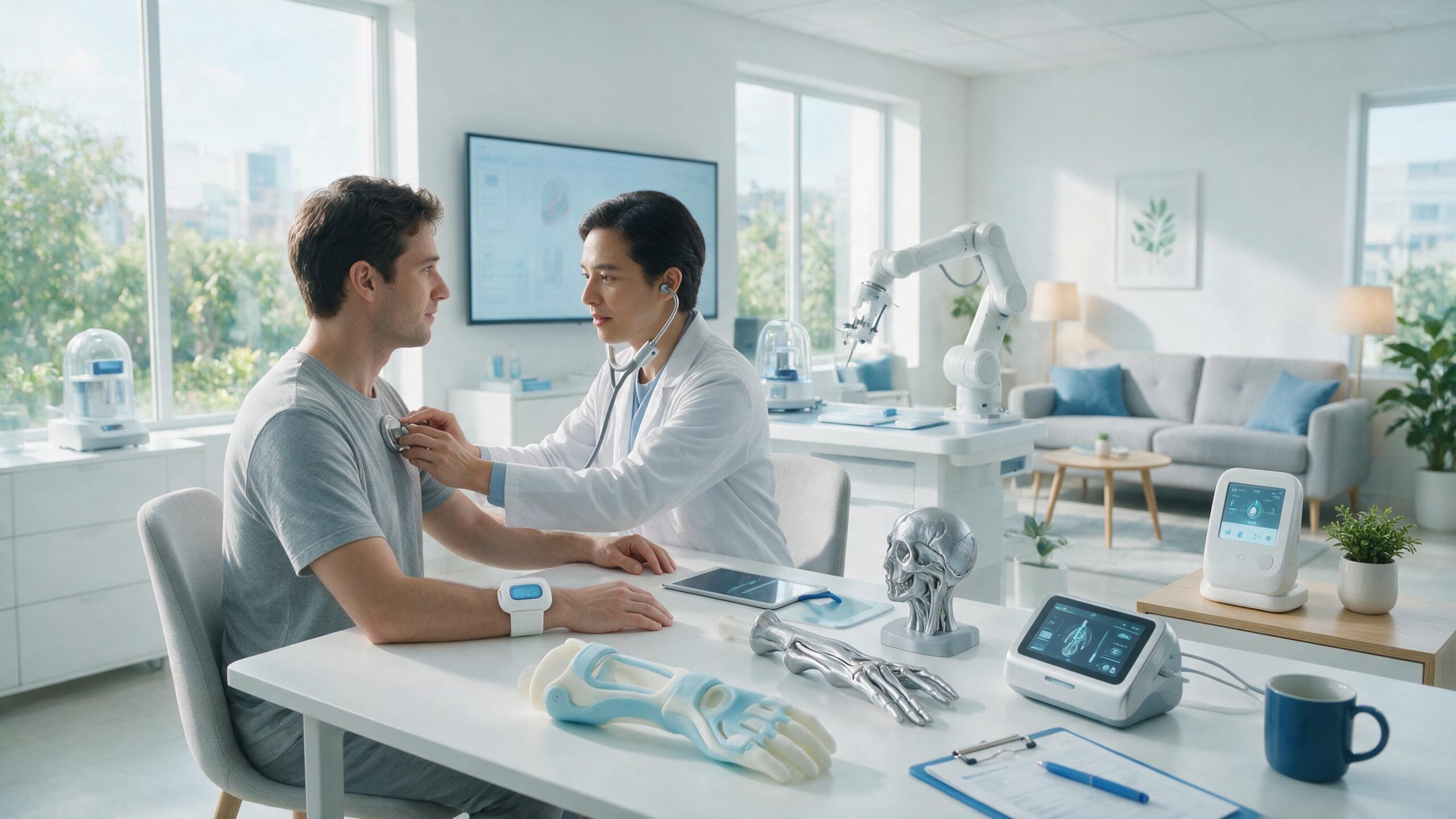
Healthcare technology has reached an inflection point where innovation directly impacts patient outcomes rather than merely supporting backend operations. From AI systems that interpret medical documents in seconds to robotic platforms that execute microsurgeries with unprecedented accuracy, these advancements are fundamentally altering the care delivery model. The gap between what was once possible and what exists today continues to narrow, creating new standards for treatment accessibility, diagnostic precision, and long-term patient engagement that demand closer examination.
How Technology Is Reshaping Modern Patient Care
As digital systems increasingly permeate healthcare facilities, the traditional dynamics between patients and providers have undergone fundamental transformation.
Electronic health records enable instant access to thorough medical histories, eliminating redundant tests and reducing diagnostic errors. Telemedicine platforms have dissolved geographical barriers, connecting rural patients with specialized care previously unavailable to them.
Wearable devices now monitor essential signs continuously, alerting clinicians to potential complications before symptoms manifest. Artificial intelligence assists radiologists in detecting abnormalities with unprecedented accuracy, while machine learning algorithms predict patient deterioration hours in advance. Remote monitoring systems allow chronic disease management from home, reducing hospital readmissions by thirty percent.
These technologies have shifted healthcare from reactive treatment to proactive prevention, fundamentally altering how medical professionals deliver care and patients experience it.
AI-Powered IDP Software for Faster Medical Document Processing
While electronic health records have revolutionized data storage, the challenge of extracting information from unstructured medical documents has persisted until recently.
AI-powered Intelligent Document Processing (IDP) software now automatically extracts, categorizes, and validates data from prescriptions, lab results, insurance forms, and discharge summaries. These systems utilize machine learning algorithms to recognize medical terminology, handwritten notes, and various document formats with accuracy rates exceeding 95%.
Healthcare facilities implementing AI-powered IDP software report processing times reduced by 70%, allowing staff to redirect efforts toward patient care rather than administrative tasks.
The technology integrates seamlessly with existing EHR systems, ensuring data flows directly into patient records without manual entry. This automation minimizes transcription errors, accelerates insurance claim processing, and enables physicians to access critical patient information within seconds rather than hours.
Telehealth Platforms for More Accessible Virtual Care
The geographic barriers that once prevented millions from accessing specialized medical care have largely dissolved through advanced telehealth platforms. These systems now enable real-time video consultations, remote patient monitoring, and digital diagnostics from any location with internet connectivity.
Patients in rural areas can consult with specialists hundreds of miles away without travel expenses or time loss. Modern telehealth platforms integrate electronic health records, prescription management, and secure messaging into unified interfaces.
Healthcare providers can track essential signs through connected devices, allowing continuous monitoring of chronic conditions. This technology reduces hospital readmissions while improving treatment adherence.
The COVID-19 pandemic accelerated telehealth adoption, proving its viability for routine care, mental health services, and follow-up appointments. Insurance companies now reimburse virtual visits at rates comparable to in-person consultations. For clinics ready to make virtual care a permanent offering, it helps to start with a clear picture of telemedicine and the main ways care is delivered remotely. The three common models are synchronous video visits, store-and-forward sharing, and remote patient monitoring. Practices that match the delivery model to their services tend to see smoother adoption by both staff and patients.
Remote Patient Monitoring Through Connected Health Devices
Beyond scheduled video consultations, connected health devices now provide continuous streams of patient data directly to healthcare providers. Wearable sensors and smart medical devices track essential signs including heart rate, blood pressure, glucose levels, and oxygen saturation in real-time. This constant monitoring enables early detection of concerning trends before they escalate into emergencies.
Patients with chronic conditions particularly benefit from these technologies. Diabetes management systems automatically log blood sugar readings, while cardiac monitors alert physicians to irregular heart rhythms.
The data flows seamlessly into electronic health records, allowing clinicians to adjust treatment plans without requiring office visits. This shift reduces hospital readmissions and emergency room visits while empowering patients to actively participate in their care management.
Healthcare providers can now intervene proactively based on objective data rather than waiting for symptoms to appear.
Management Software for Coordinating Clinical and Administrative Workflows
As healthcare organizations expand their technological capabilities, integrated management platforms have emerged to synchronize the complex interplay between patient care delivery and operational administration. Even physical therapy management software is often used
These systems consolidate scheduling, billing, electronic health records, and resource allocation into unified dashboards that eliminate data silos. Clinicians access real-time patient information while administrators track bed availability, staff assignments, and supply inventory simultaneously.
The software automates appointment reminders, insurance verification, and documentation workflows, reducing manual errors and administrative burden. Predictive analytics identify bottlenecks before they impact care delivery, enabling proactive adjustments to staffing levels and equipment distribution.
Interoperability standards allow these platforms to communicate with laboratory systems, pharmacies, and diagnostic equipment, creating seamless information flow.
Healthcare facilities report decreased wait times, improved resource utilization, and enhanced coordination between departments, ultimately supporting better clinical outcomes and operational efficiency.
Predictive Analytics for Earlier Diagnosis and Personalized Treatment
Machine learning algorithms now analyze vast patient datasets to identify disease patterns long before symptoms become clinically apparent. These systems process electronic health records, genetic information, and lifestyle data to calculate individual risk scores for conditions like diabetes, cardiovascular disease, and certain cancers.
Physicians receive actionable insights that enable preventive interventions years ahead of traditional diagnostic timelines.
Treatment personalization has advanced through algorithms that predict medication efficacy based on genetic markers and historical patient responses. Oncology particularly benefits from this technology, as systems recommend targeted therapies aligned with tumor characteristics and patient profiles.
Predictive models also forecast treatment side effects, allowing clinicians to adjust dosages proactively. Healthcare providers report improved outcomes and reduced hospitalizations when implementing these analytics-driven approaches to patient care.
Robotic Systems for Greater Precision in Surgery and Rehabilitation
Surgical robotics have transformed operating rooms by providing surgeons with unprecedented dexterity and visualization capabilities. These systems enable minimally invasive procedures through enhanced three-dimensional imaging and instruments that can rotate beyond human wrist limitations.
Robotic-assisted surgery reduces blood loss, minimizes scarring, and accelerates patient recovery times compared to traditional open procedures. Beyond the operating room, rehabilitation robotics are revolutionizing physical therapy. Exoskeletons and robotic-assisted devices help stroke survivors and spinal cord injury patients regain mobility through repetitive motion training.
These systems provide precise resistance levels and track progress with measurable data, allowing therapists to optimize treatment protocols. Machine learning algorithms now enable robots to adapt to individual patient needs, adjusting force and movement patterns in real-time for maximum therapeutic benefit.
Digital Therapeutics and Mobile Tools for Ongoing Patient Support
While robotic systems revolutionize clinical settings, digital therapeutics are extending healthcare far beyond hospital walls. These FDA-approved software applications deliver evidence-based interventions for managing conditions like diabetes, hypertension, and mental health disorders through smartphones and tablets.
Mobile health tools enable continuous patient monitoring, medication adherence tracking, and real-time symptom reporting. Patients receive personalized treatment adjustments based on collected data, reducing hospital readmissions and emergency visits.
Digital cognitive behavioral therapy programs have demonstrated effectiveness comparable to traditional face-to-face sessions for anxiety and depression.
Remote patient monitoring devices transmit essential signs directly to healthcare providers, facilitating early intervention before complications arise. These technologies democratize healthcare access, particularly benefiting rural populations and individuals with mobility limitations.
Preparing Healthcare Organizations for the Next Wave of Innovation
As healthcare technology accelerates at an unprecedented pace, organizations must fundamentally transform their infrastructure, workforce capabilities, and operational frameworks to remain competitive.
Strategic investment in interoperable systems enables seamless data exchange across platforms, eliminating silos that impede patient care coordination. Organizations must cultivate a culture of continuous learning, equipping staff with technical proficiency through structured training programs and hands-on experience with emerging tools.
Leadership teams should establish innovation committees that evaluate technologies based on clinical outcomes, cost-effectiveness, and integration feasibility. Partnerships with technology vendors, academic institutions, and startups provide access to cutting-edge solutions while distributing implementation risks.
Robust cybersecurity protocols protect patient data as digital ecosystems expand. Organizations that proactively adapt their governance structures, budget allocations, and change management strategies position themselves to leverage breakthrough technologies effectively.