
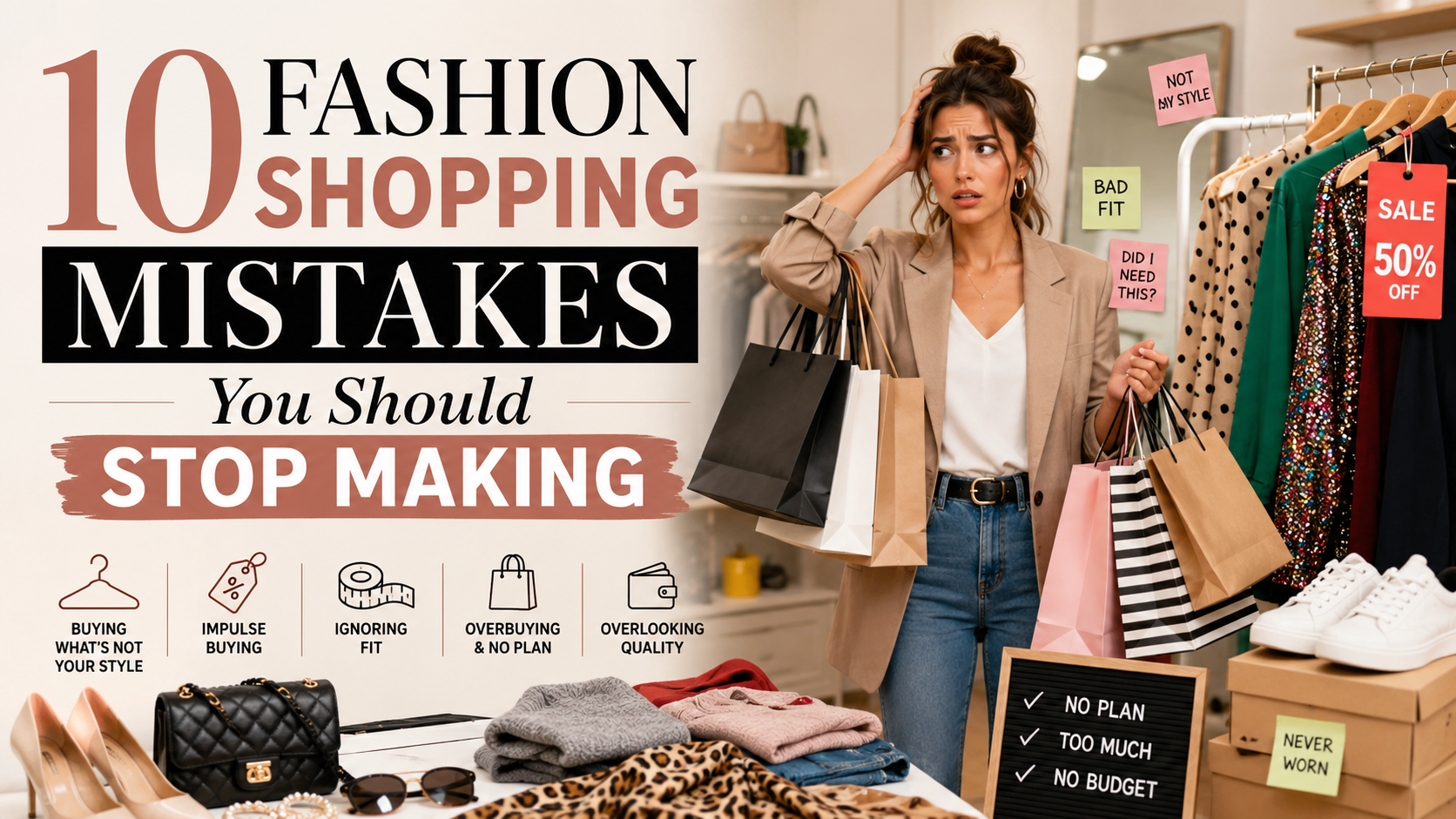
Shopping for clothes should be exciting, but it is surprisingly easy to waste money on pieces that look great in the store and barely get worn afterward. From buying trends that don’t suit your lifestyle to ignoring fit and quality, small shopping mistakes can quickly turn into an expensive wardrobe full of clothes you don’t actually love.
The good news is that better shopping habits are easy to develop. You don’t need to completely change your personal style or stop enjoying fashion. You simply need to become more intentional about what you buy.
Here are 10 common fashion shopping mistakes you should stop making if you want a more stylish, practical, and affordable wardrobe.
1. Buying Something Just Because It’s on Sale
A discount can make almost anything look like a bargain.
You see a shirt marked 50% off and immediately think you’re saving money. But if you would never have bought it at full price and don’t actually need it, you’re not saving—you’re spending.
Before buying a sale item, ask yourself:
- Would I buy this at full price?
- Do I genuinely like it?
- Can I create at least three outfits with it?
- Do I already own something similar?
- Will I realistically wear it?
If the answer is mostly no, leave it behind.
Smart shopping tip: Judge an item by its usefulness, not the size of its discount.
2. Ignoring the Fit
One of the biggest fashion mistakes is choosing an item based entirely on its size label.
Two garments marked the same size can fit completely differently depending on the brand, cut, and material.
Pay attention to:
- Shoulder placement
- Sleeve length
- Trouser length
- Waist fit
- Overall silhouette
- How the fabric sits when you move
If the garment is close to perfect but needs a small adjustment, tailoring may be worthwhile.
A well-fitted affordable outfit can look significantly better than an expensive outfit that fits poorly.
3. Buying Trends You’ll Only Wear Once
Fashion trends can be fun, but buying every trend is an easy way to waste money.
Ask yourself whether the item fits your existing wardrobe and personal style.
Instead of filling your closet with pieces that may look outdated quickly, consider balancing trends with timeless staples such as:
- Straight-leg trousers
- Classic shirts
- Simple sweaters
- Neutral jackets
- Clean sneakers
- Versatile denim
You can still experiment with trends—just avoid building your entire wardrobe around them.
4. Shopping Without Checking Your Existing Wardrobe
Have you ever bought something only to discover that you already own almost the exact same thing?
This happens when people shop without knowing what they already have.
Before going shopping, take a quick look through your wardrobe. Identify:
- What you wear frequently
- What you rarely wear
- What needs replacing
- What you genuinely need
- Which colors or styles you already own too much of
This simple habit can prevent duplicate purchases.
5. Choosing Appearance Over Comfort
An outfit can look fantastic on a hanger but become a terrible purchase if you don’t feel comfortable wearing it.
Consider how the clothing feels when you:
- Sit down
- Walk
- Bend
- Raise your arms
- Spend several hours wearing it
If you’re constantly adjusting your shirt, pulling down your dress, or struggling with uncomfortable shoes, you probably won’t wear the item often.
Style and comfort don’t have to compete. Look for pieces that provide both.
6. Buying Poor-Quality Clothing Because It’s Cheap
Low prices can be tempting, especially when you’re shopping on a budget.
However, extremely cheap clothing may not always offer good value. A garment that loses its shape, develops damage, or becomes uncomfortable after a few washes may end up costing more in the long run.
Inspect:
- Stitching
- Seams
- Buttons
- Zippers
- Fabric
- Lining
- Overall construction
You don’t necessarily need expensive clothing. Instead, look for the best quality you can reasonably afford.
7. Forgetting About Versatility
Before buying a new piece, think beyond the first outfit that comes to mind.
A versatile item can work with multiple pieces already in your wardrobe.
For example, a simple neutral jacket might work with:
- Jeans and sneakers
- Tailored trousers and loafers
- A T-shirt and casual pants
- A shirt and smart-casual trousers
That’s much more useful than an extremely distinctive piece that only works with one specific outfit.
A good rule is to ask:
“How many outfits can I realistically create with this?”
8. Buying the Wrong Size With the Intention of Losing or Gaining Weight
Buying clothes for your “future body” can be risky.
You may eventually change size, but there is no guarantee that the garment will fit properly when that happens.
It’s usually better to buy for the body you have now.
If your size changes later, you can update your wardrobe gradually rather than filling your closet with clothes you currently cannot wear comfortably.
9. Forgetting the Cost of Maintenance
The price tag isn’t always the complete cost of owning a garment.
Some pieces require:
- Dry cleaning
- Special washing
- Professional alterations
- Frequent ironing
- Specialized storage
- Expensive repairs
Before purchasing something, consider whether you’re willing to maintain it.
A beautiful garment that requires more maintenance than you’re prepared to provide may end up sitting unused in your closet.
10. Shopping When You’re Emotional
Your mood can strongly influence your purchasing decisions.
Shopping when you’re bored, stressed, upset, or looking for a quick confidence boost can encourage impulse purchases.
You may experience an immediate feeling of excitement, followed by regret later.
Instead, give yourself a little time before making non-essential purchases.
Try adding the item to your wishlist or leaving it in your online cart for a day. If you still love it afterward and it fits your budget, you can make a more rational decision.
How to Become a Smarter Fashion Shopper
Avoiding these mistakes becomes much easier when you develop a simple shopping system.
Create a Budget
Decide how much you’re comfortable spending before shopping.
Make a List
Write down the pieces you actually need.
Know Your Style
Understand the colors, silhouettes, and clothing categories you wear most.
Check Your Wardrobe First
Avoid unnecessary duplicates.
Prioritize Fit
Never underestimate the difference proper fit can make.
Consider Cost Per Wear
A quality item you wear repeatedly can be better value than a cheap item you wear once.
Give Yourself a Waiting Period
For non-essential purchases, wait 24–48 hours before buying.
The Bottom Line
Fashion shopping doesn’t have to mean constantly buying more clothes. The smartest shoppers understand what they need, what suits them, and what they will actually wear.
Stop buying things simply because they’re discounted. Stop ignoring fit. Stop chasing every trend. Stop purchasing clothes that don’t work with your lifestyle.
Instead, focus on quality, versatility, comfort, fit, and personal style.
The result is a wardrobe that feels more intentional, looks better, and often costs less over time.