
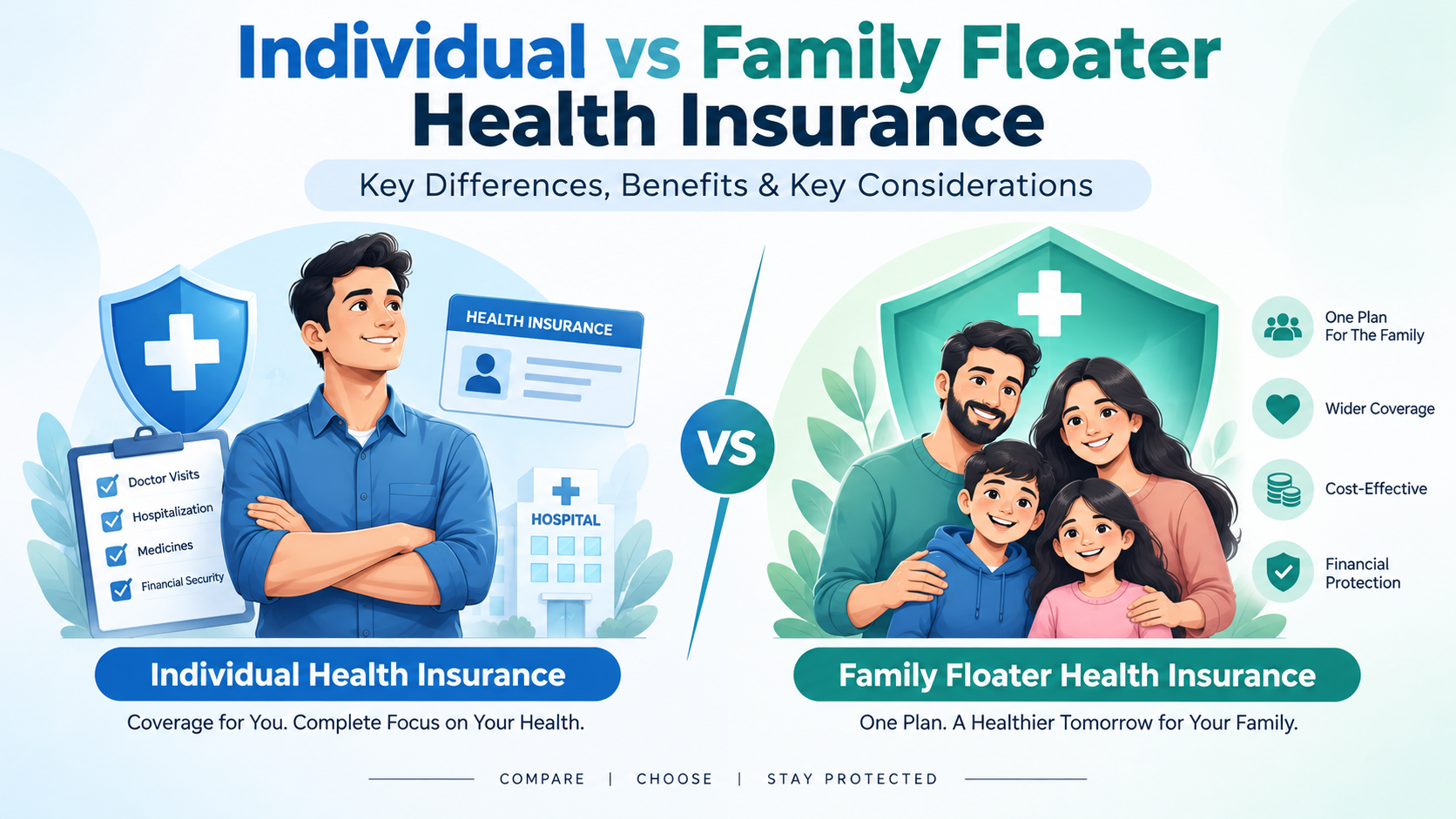
Choosing suitable health insurance coverage for your family is an important financial decision. When comparing health insurance policies, two common options are individual health insurance and family health insurance plans. Understanding how these policies differ can help you choose coverage that fits your family’s needs.
What Is Individual Health Insurance?
An individual health insurance policy covers one person, with a specific sum insured reserved for that policyholder. Each family member who needs separate coverage must have their own policy. Premiums are generally based on factors such as the insured person’s age and health profile.
Individual coverage can be particularly useful for people with specific medical needs or existing health conditions because another family member’s claim does not reduce their separate policy’s available coverage.
Family Floater Health Insurance Plans Explained
A family floater policy covers eligible family members, such as a spouse, children or parents, under one shared sum insured. Any covered member can use that amount when medical care is needed, subject to the policy terms. This structure can be more affordable than purchasing multiple individual policies, although the actual premium depends on the insurer, covered members and chosen benefits.
Key Differences Between Individual and Family Floater Health Insurance
| Factor | Individual Health Insurance | Family Floater Health Insurance |
|---|---|---|
| Coverage structure | A separate coverage limit for each insured person. | One shared coverage limit for all eligible family members on the policy. |
| Premium cost | Separate premiums for each insured member. | Often a lower combined premium because family members share one sum insured. |
| Claim utilisation | One person’s claim does not reduce another family member’s separate cover. | A large claim by one member may reduce the amount available to others during the same policy year. |
| Flexibility | Coverage can be tailored to each person’s health needs. | One policy can simplify administration and renewals. |
Family Floater vs Individual Plans: Which Works Better?
The right choice depends on your family’s age, health needs, budget and the benefits offered by the insurer. Family floater plans may be convenient and cost-effective, while individual policies provide each insured person with their own dedicated coverage.
- Family floater plans: These policies often have lower overall premiums and a single renewal date. Depending on the insurer and product, some plans offer cover up to ₹5 crore, optional add-ons and access to cashless treatment at network hospitals.
- Benefits for families: A shared policy can be easier to administer than several standalone policies. Certain plans may also include maternity benefits, preventive health check-ups and sum-insured restoration features.
- Individual plans: Each insured person has independent coverage, so another family member’s claim does not affect that person’s available sum insured. Depending on the health insurance policy, benefits may include hospitalisation, daycare treatment, outpatient expenses or maternity coverage.
- Specific medical requirements: Individual coverage may suit older adults or people with chronic conditions who need benefits tailored to their particular health needs.
Conclusion
Both individual and family floater health insurance plans offer advantages. The most appropriate option depends on your family composition, ages, health needs and budget. Compare the coverage limits, exclusions, waiting periods, premiums and available benefits of the policies you are considering before making a decision.