

In today’s fast-paced world of software development, security can’t be an afterthought. AppSec tools that work effectively with DevOps workflows, find vulnerabilities early, and give developers clear instructions are what developers need. Aikido and SonarQube are two popular platforms that try to meet these needs, but they do so in different ways for development teams.
Why AppSec Matters
It is very important for DevSecOps teams to choose the right AppSec platform. The best solution should:
- Keep applications safe from bugs at every stage of development.
- Fit into CI/CD pipelines without slowing down the development process.
- Get actionable advice to cut down on remediation time.
- Help meet security and compliance standards without making things more complicated.
These factors are even more important now that software architectures are more modern and release cycles are faster. Choosing the wrong tool can make delivery take longer, make developers angry, or leave important security holes open.
Key Differences: Aikido vs SonarQube
Here is a detailed comparison of these platforms’ features, usability, and developer impact:
Security Coverage
- Aikido: Provides full-stack application security, including runtime monitoring, cloud posture checks, container scanning, SAST, SCA, and API security. Because of this, it is appropriate for contemporary DevSecOps teams that require extensive coverage across various environments.
- SonarQube: Mainly concentrates on code quality metrics and static code analysis. Although it does a good job of identifying possible bugs and coding problems, its lack of runtime and cloud security features can leave gaps in the overall protection of the application.
Pricing & Cost
- Aikido: Clear, all-in-one pricing with costs that stay the same no matter how big the codebase is. This makes it easier for teams to scale while maintaining a reliable cybersecurity product approach.
- SonarQube: The cost depends on how many lines of code are scanned. This can get expensive and make it hard to plan a budget, especially for companies that have more than one repository.
Accuracy & Noise Reduction
- Aikido: Reduces false positives by using AI-assisted scanning to make sure developers only see vulnerabilities that can be fixed. Instead of spending hours manually filtering alerts, this enables security teams to concentrate on high-risk issues.
- SonarQube: If many alerts are irrelevant, its pattern-based static analysis may produce more false positives, which could impede remediation and irritate developers.
Remediation & Guidance
- Aikido: Enables developers to promptly address problems by offering actionable advice, AI-assisted autofixes, and multi-file analysis. Developers don’t need to invest additional time in comprehending the context of every vulnerability.
- SonarQube: Provides basic guidance for resolving problems, but it has limited contextual insights and sophisticated remediation. To comprehend the ramifications of issues found, developers might need to conduct additional analysis.
Integration & Workflow Support
- Aikido: Helps automate workflow and monitor remediation progress by integrating with IDEs, CI/CD pipelines, and issue trackers like Jira. Security can be incorporated right into the development process thanks to these integrations.
- SonarQube: Offers more constrained integration capabilities. In order to integrate it smoothly into their DevOps pipelines, teams frequently require additional configuration.
Aikido: Security That Fits Your Workflow
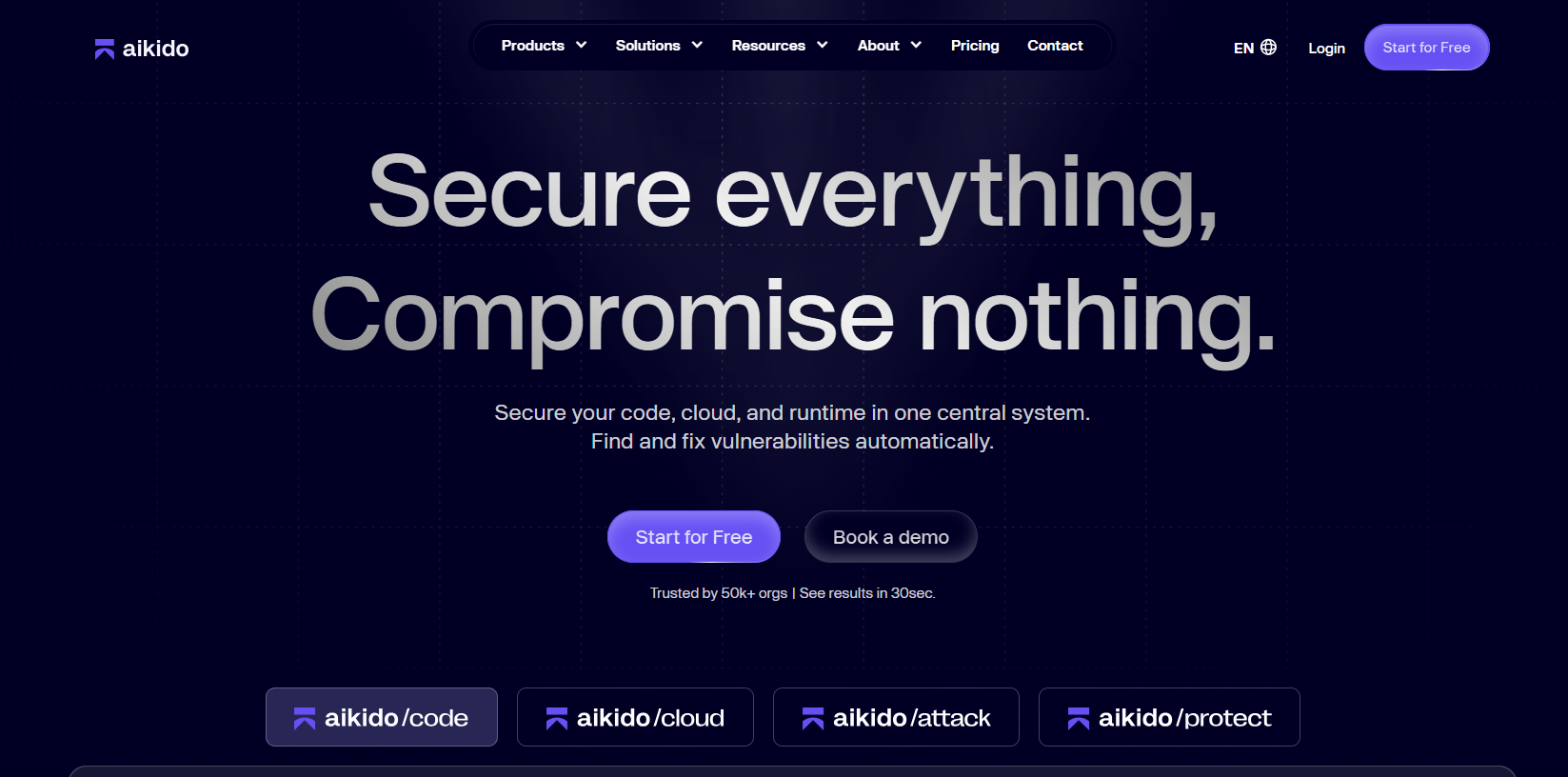
Aikido Security aims to give developers a full, integrated security experience that works well with DevOps workflows. It focuses on actionable insights, automation, and full-stack coverage, which lets teams keep their speed while still keeping their security.
Core Features
- Full Security Coverage: Protects apps in code, the cloud, and runtime environments.
- Developer-Friendly: Offers contextual remediation guidance and AI-assisted autofixes to make things easier for developers.
- CI/CD and IDE Integration: Security is easier to manage with automated scans and workflow integration, which don’t slow down development.
- Noise Reduction: Reduces false positives so that developers can focus on real, significant issues.
- Scalable: Works for both small teams and big, complex businesses.
- Cloud and Runtime Visibility: Posture checks, container scanning, and mapping attack paths add protection that goes beyond code.
- Actionable Analytics: Dashboards that update in real time show trends, risk exposure, and how well things are getting better.
- Dependency Management: Gives you actionable advice on how to fix vulnerabilities in your dependencies.
Aikido gives developers modern, integrated AppSec that makes their work easier and reduces the risk of cybersecurity breaches. Its design is focused on developers, so security won’t slow down development or cause problems.
SonarQube
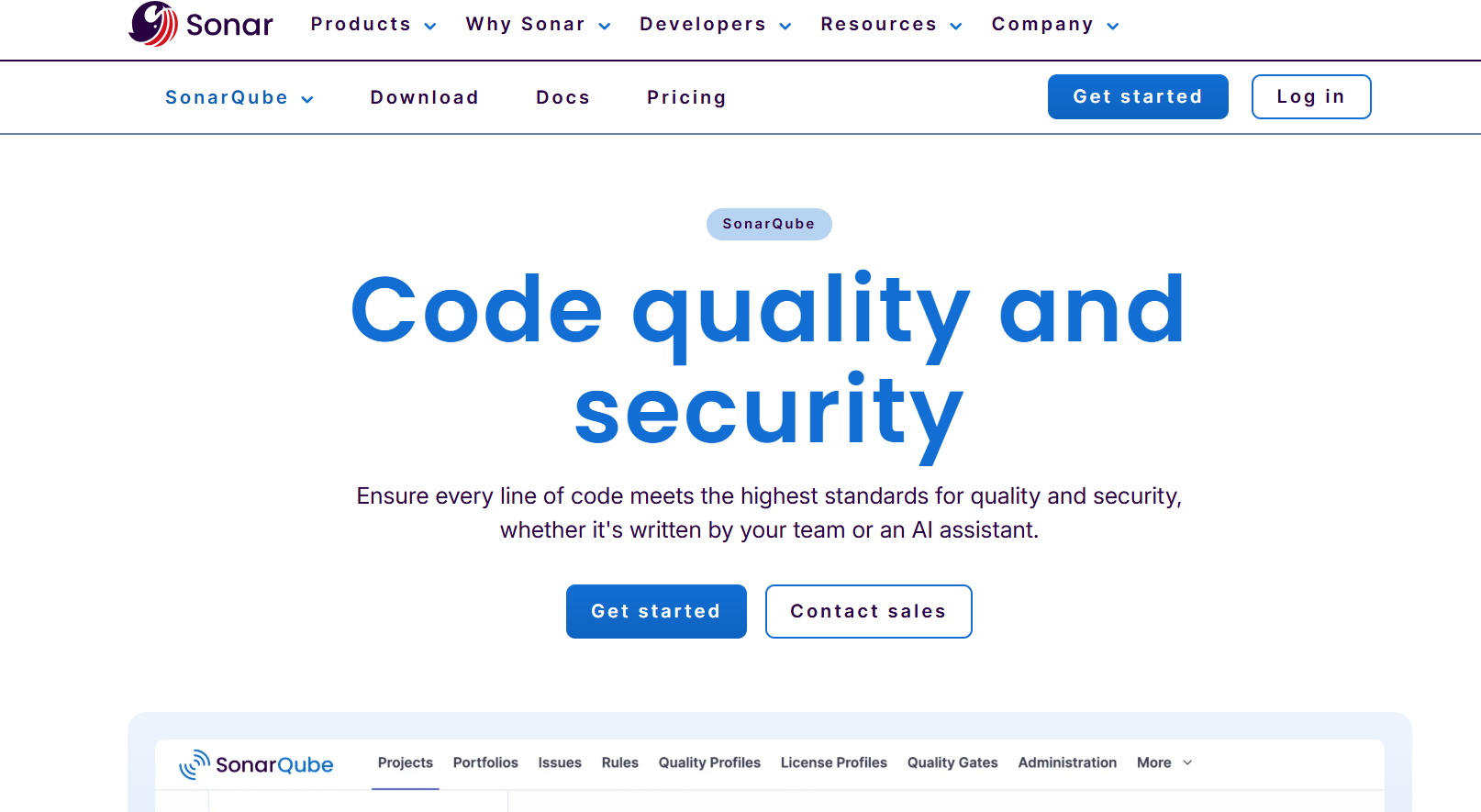
SonarQube is a popular tool that is mostly used for static code analysis and keeping an eye on code quality. It works well for teams that want to make sure everyone follows coding standards and find bugs early.
Core Features
- Static Code Analysis: Finds bugs, code smells, and possible security holes.
- Support for Multiple Languages: Works with many different programming languages and frameworks.
- Code Quality Metrics: Gives you metrics for maintainability, reliability, and test coverage to help you make your software better overall.
- Community and Ecosystem: There is a large community and strong plugin support, and both free and paid versions are available.
- Compliance Reporting: Gives you basic reports on how well your code meets quality standards.
- Scalable for Large Codebases: It can handle big projects well, but it doesn’t cover all of AppSec.
SonarQube is great at static analysis and code quality, so it’s perfect for teams who are concerned about coding standards and how straightforward it is to maintain code. But it doesn’t cover all vulnerabilities in the cloud, runtime, or API.
Summing up
Developers need tools that not only detect problems but also help them fix them quickly. SonarQube is good for static code analysis and enforcing coding standards, but Aikido offers more comprehensive security coverage that includes code, the cloud, and runtime environments. Aikido’s features are best for teams that want integrated, developer-focused AppSec that works effectively in modern workflows.
Tools that help developers at every stage of the software lifecycle can help you streamline your development process, find vulnerabilities earlier, and lower security risks.