UK: +44 2038074555 info@atamgo.com
Building a Roadmap for Digital Maturity: Top 5 Tips

Building a Roadmap for Digital Maturity: Top 5 Tips

Digital Maturity

In today’s rapidly evolving digital landscape, achieving digital maturity is not just an option—it’s a necessity for businesses to remain competitive. Digital maturity goes beyond adopting the latest technologies; it’s about integrating them seamlessly into business processes to drive innovation, efficiency, and growth. By developing a roadmap for digital maturity, organizations can navigate this journey strategically, ensuring alignment with their business goals and customer expectations.

Understanding Digital Maturity

Digital maturity is a multi-dimensional concept that extends beyond technology adoption. It encompasses organizational culture, processes, skills, and strategies. At its core, digital maturity is about achieving a state where digital technologies are leveraged effectively to create value for both the organization and its stakeholders. As businesses progress through the stages of digital maturity, they develop greater digital dexterity, allowing them to adapt more quickly to changing market conditions and customer preferences.

Assessing Current State

Before embarking on the journey to digital maturity, it’s crucial to understand where your organization currently stands. Conducting a thorough digital maturity assessment can provide valuable insights into your existing capabilities, strengths, and areas needing improvement. Utilizing tools like maturity models and surveys can help quantify your organization’s digital dexterity and identify gaps that need to be addressed.

Setting Clear Objectives

Setting clear and measurable objectives is essential for driving digital transformation initiatives effectively. These objectives should align with your organization’s overall business strategy and customer needs. Whether it’s improving operational efficiency, enhancing customer experience, or launching innovative products, defining clear goals will guide your digital maturity roadmap and ensure everyone is working towards a common vision.

Prioritizing Key Initiatives

With limited resources and competing priorities, it’s crucial to prioritize digital initiatives that will have the most significant impact on your organization’s digital dexterity and overall business objectives. This requires a balanced approach, focusing on both incremental improvements and transformative changes. By prioritizing initiatives based on their potential value and alignment with strategic goals, organizations can achieve quick wins while laying the foundation for long-term success.

Building the Roadmap

Building a roadmap for digital maturity involves more than just listing out initiatives and timelines. It’s about creating a strategic plan that outlines clear milestones, responsibilities, and success criteria. Engaging stakeholders across the organization in the roadmap creation process ensures buy-in and alignment, fostering a culture of collaboration and shared ownership of digital transformation initiatives.

For organizations mapping out their digital transformation initiatives, managing projects efficiently is paramount. You can make planning easy with Miro’s project plan templates to streamline processes and ensure alignment with your digital objectives. These templates offer a structured approach to project management, helping businesses achieve their digital maturity goals.

Implementing and Iterating

Implementation is where the rubber meets the road in your digital maturity journey. Adopting agile methodologies can help organizations adapt more quickly to changing requirements and market dynamics. Continuous monitoring, feedback, and iteration are essential for ensuring that digital initiatives are delivering the expected value and driving improvements in digital dexterity over time. 

Building a roadmap for digital maturity is a journey that requires strategic planning, clear objectives, and ongoing commitment. By focusing on understanding your current state, setting clear goals, prioritizing key initiatives, and fostering a culture of continuous improvement, organizations can navigate this journey successfully. Achieving digital maturity is not a destination but an ongoing process of evolution and adaptation to the ever-changing digital landscape.

Additional Resources

For those looking to dive deeper into the topic of digital maturity, there are several valuable resources available. Books like “Leading Digital: Turning Technology into Business Transformation” by George Westerman, Didier Bonnet, and Andrew McAfee offer insights into successful digital transformation strategies. Online courses and workshops on digital maturity assessment and roadmap development can also provide practical guidance for organizations at different stages of their digital journey. Additionally, case studies showcasing companies that have successfully navigated the path to digital maturity can offer valuable lessons and inspiration for others embarking on this transformative journey.


Getting Online When Your Business Is Just You

Getting Online When Your Business Is Just You

Getting Online

Getting online when your business consists solely of you is a pivotal step in establishing your digital presence and reaching a broader audience. Whether you’re a freelancer, solopreneur, consultant, or creative professional, leveraging online platforms and tools can amplify your visibility, potentially attract more clients, and grow your business. Here’s a comprehensive guide to help you navigate the process of getting online as a one-person business: 

1  Define Your Brand Identity:

a. Identify Your Niche:

Clarify your target audience, industry focus, and unique value proposition to differentiate yourself in the market.

Determine your specific services, products, or expertise and the problems you solve for your clients or customers.

b. Develop Your Brand Story:

Craft a compelling story for your brand that communicates your mission, values, and passion for your work. Create a consistent brand voice, tone, and visual identity across your online presence, including your website, social media profiles, and marketing materials.

2.   Establish Your Online Presence: 

a. Build a Professional Website:

Craft a user-friendly website that highlights your portfolio, services, testimonials, and contact details. Opt for a dependable web hosting service and design a layout that adjusts seamlessly to diverse devices and screen dimensions. You can look for affordable web design services that will have the expertise to get your website up and running quickly.

b. Utilize Social Media Platforms:

Select social media platforms that your customers will be on, such as LinkedIn, Twitter, Instagram, or Facebook. Regularly share valuable content, engage with your audience, and network with industry peers to build credibility and visibility.

3.   Optimize for Search Engines: 

a. Conduct Keyword Research:

Discover pertinent keywords and phrases linked to your industry, services, and target demographic utilizing tools such as Google Keyword Planner or SEMrush. Integrate these keywords thoughtfully into your website content, meta tags, headings, and image alt text to enhance your visibility on search engines.

b. Implement SEO Best Practices:

Optimize your website for search engines by improving site speed, creating high-quality content, obtaining backlinks from reputable sources, and optimizing meta titles and descriptions. Regularly monitor your website’s performance using analytics tools like Google Analytics or explore Google Analytics integration with Salesforce to track traffic, conversions, and user behavior more effectively.

4.   Leverage Online Marketing Strategies:

a. Content Marketing:

Develop a content marketing strategy to attract, engage, and educate your target audience through blog posts, articles, videos, podcasts, or infographics. Share valuable insights, tips, and industry expertise to position yourself as a thought leader and build trust with potential clients or customers.

b. Email Marketing:

Build an email list of subscribers who are interested in your products or services and regularly send them newsletters, updates, promotions, or exclusive content. To optimize your campaigns, personalize your email communications, segment your audience, and track metrics such as open rates, click-through rates, and conversions.

5.   Network and Collaborate:

a. Join Online Communities:

Participate in online forums, industry groups, or professional associations relevant to your niche to connect with peers, share insights, and stay updated on industry trends. Engage authentically, provide value to others, and seek opportunities for collaboration, referrals, or partnerships.

b. Attend Virtual Events:

Attend webinars, virtual conferences, workshops, or networking events related to your industry to expand your knowledge, network with potential clients or collaborators, and stay connected with industry peers.

Conclusion:

Getting online as a one-person business is essential for establishing your digital presence, attracting clients, and growing your brand. By effectively defining your brand identity, building a professional website, leveraging social media, optimizing search engines, implementing online marketing strategies, and networking, you can position yourself for success and create meaningful connections in the digital landscape. Remember that consistency, authenticity, and continuous learning are key to building a strong online presence and achieving your business goals as a solopreneur.


The Best 12 Marketing Automation Tools to Use in 2026

The Best 12 Marketing Automation Tools to Use in 2026

Marketing Automation Tools

Meta – Marketing is a multidimensional idea where many different things merge to form one winning strategy to grow your business. These numerous things can be controlled and mastered easily with the help of automation tools and ensure maximum ROI on every campaign.

Marketing automation software helps marketing teams save time and do more tasks. Organizations use it to guide audiences through the buying journey. It offers lead nurturing solutions by automating content delivery. Marketing teams use it to send customized messages throughout the customer journey. When using the tools, organizations end up with more conversions. The platforms help brands create credibility and trust with customers. Companies should choose tools that are scalable and easy to use. Here is the best marketing automation software for your business in 2026.

The Best 7 Marketing Automation Tools to Use in 2026

1. WANotifier

WANotifier

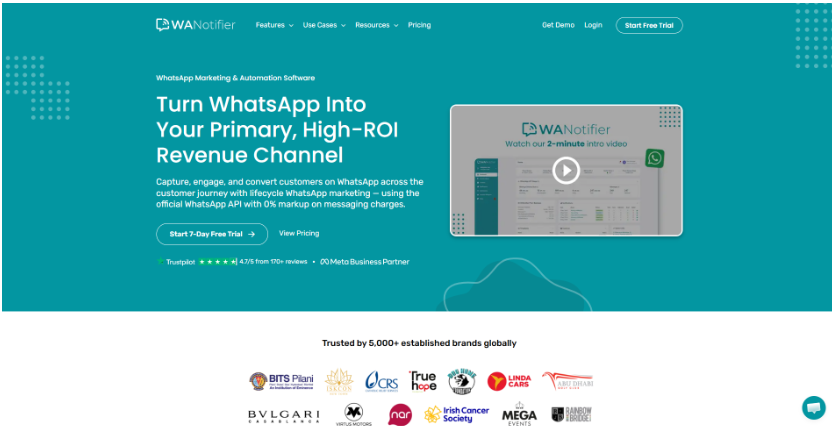
WANotifier is a WhatsApp marketing tool built on the official WhatsApp Business API, and it doesn’t add any markup on top of the messaging charges you’d already pay Meta. That matters if you’re sending a high volume of messages, since a per-message markup adds up fast at scale. The tool handles the whole customer lifecycle on WhatsApp: capturing new contacts, engaging them with messages, and following up to convert them into customers. Setup is straightforward enough that a marketing team can launch a campaign or set up a drip sequence without needing a developer involved. Because of that, WANotifier tends to get used less as a one-off messaging tool and more as the system a team runs its ongoing WhatsApp marketing and customer engagement through, from the first message a contact gets to the ones that come months later.

2. SocialPilot with AI Pilot

SocialPilot

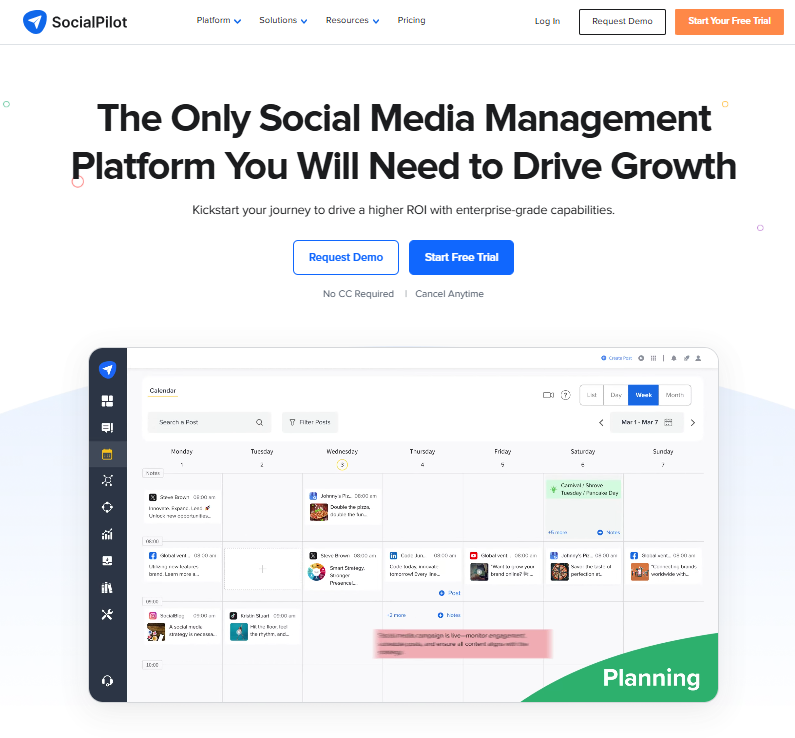
SocialPilot blends AI assistance with full-scale social media management. Its AI Pilot helps you brainstorm fresh ideas, generate engaging captions, rewrite content for different tones, and even suggest hashtags that fit your brand voice. Beyond AI, SocialPilot supports bulk scheduling across multiple platforms, a collaborative content calendar for teams, and white-label analytics reports that make client reporting effortless. With automation handling the busywork, you can focus on building genuine connections and tracking results with advanced insights.


4. Marketo

Marketo

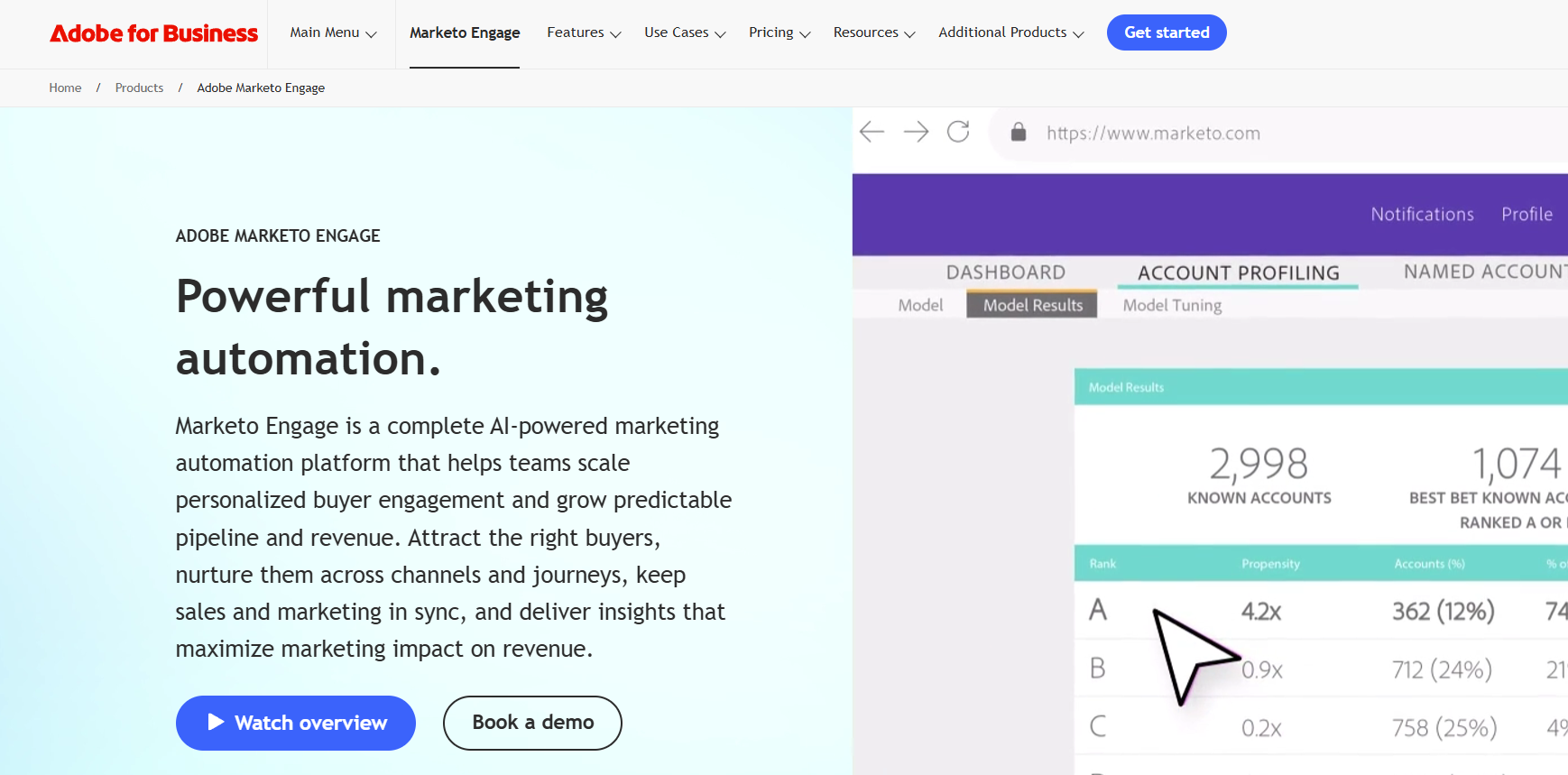
Marketo offers full automation and the power to scale your marketing efforts. The tool is built to increase content delivery speed and personalization. Developed by Adobe, the platform is available as a SaaS marketing tool. It is easy to use, allowing teams to launch more campaigns. Organizations use it as a solution for the complex customer journey across multiple channels. When using automation tools, several things can make your device run slow. They may take up more space or require updating to perform well. There are different methods to help you solve the problem. If you need guidance to help you increase your device speed while using the apps. The simple DIY steps here will help you overcome many common problems that interrupt your work and reduce your productivity level.

5. HubSpot

hubspot

HubSpot was developed to streamline all your marketing strategies. The platform is a powerful tool for lead scoring and doing follow-ups. Teams can use it to automatically post social media ads and emails. The platform provides several tools in one place. It has a CRM, content production, and a marketing hub. Brands use it to improve customer service and build stronger B2B relationships. The software improves workflows and offers insights for each campaign. You can also set up a two-way sync between Google Sheets and HubSpot CRM to keep data updated and simplify reporting.

6. Selzy 

Selzy 

Is a powerful yet easy-to-use email marketing platform tailored for small and medium businesses looking to launch campaigns without technical hassle. From a drag-and-drop email builder and smart automation to segmentation and detailed analytics — everything is streamlined for fast and effective communication. Selzy also offers tools for lead nurturing, A/B testing, and integrations with popular CMS and e-commerce platforms. For those who need to send mass email campaigns efficiently, Selzy’s email blast service helps reach large audiences with just a few clicks, without sacrificing personalization.

7. SendPulse

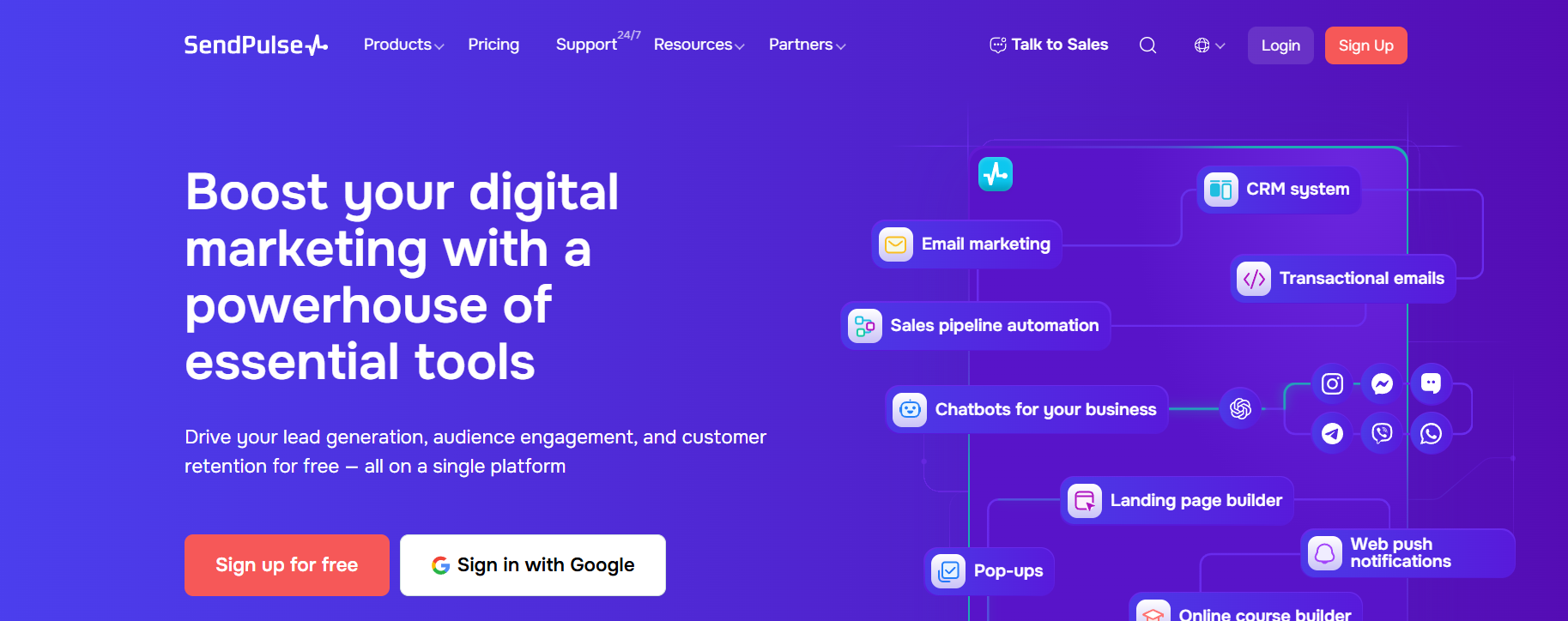
SendPulse serves as a go-to platform for e-commerce businesses and marketers who don’t want to juggle several tools at a time, as SendPulse provides all the necessary marketing automation features on a single dashboard. CRM with email marketing, SMS, and WhatsApp marketing campaigns, a multichannel chatbot builder, and even a website builder. Features for lead generation, lead nurturing, and everything in between. SendPulse is constantly adding new features, and one of the latest ones is their WhatsApp Business CRM integration for their WhatsApp chatbot builder.

8. Sender

Sender

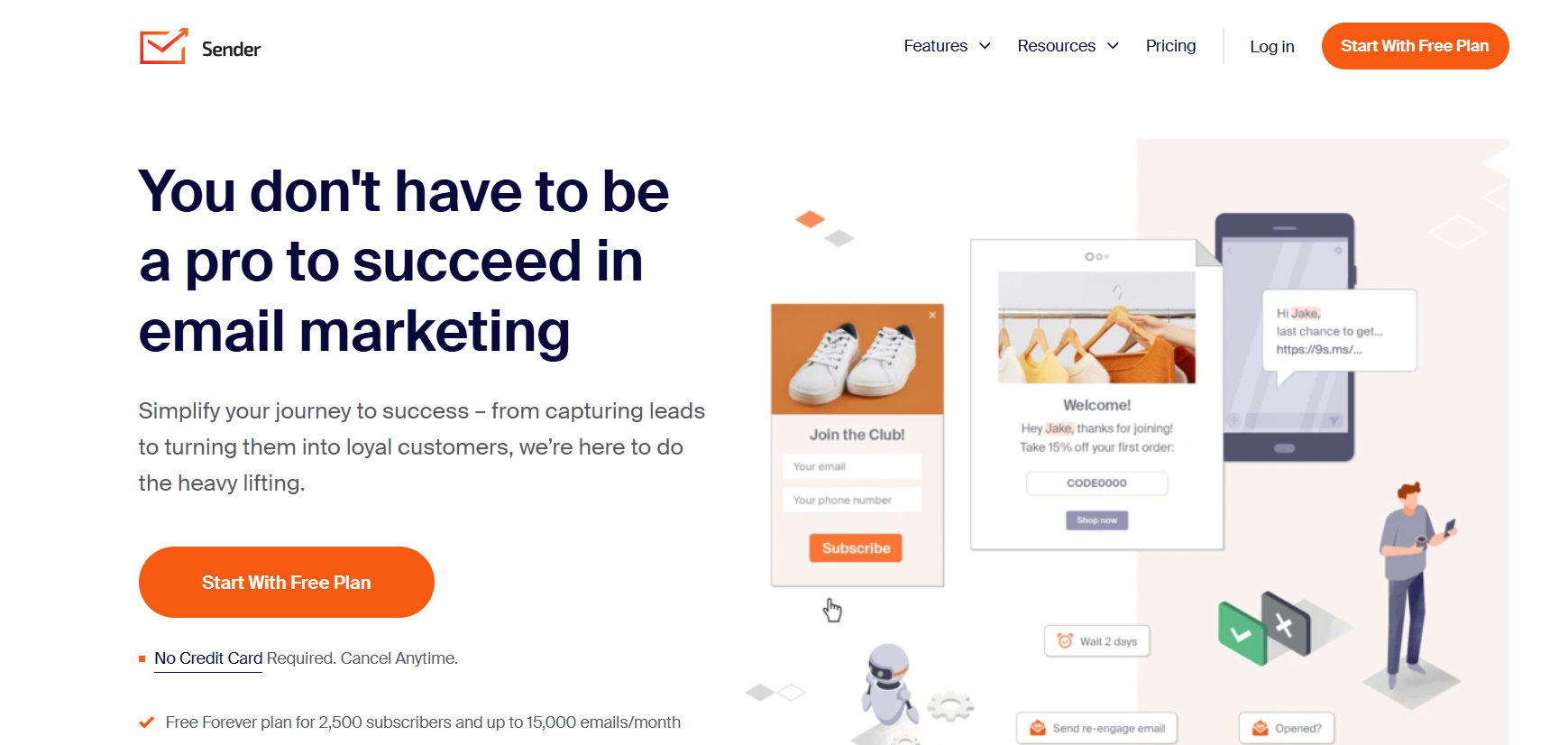
Sender is built to harness the power of email marketing. Brands do not need to have a big budget to start successful email campaigns. They can send up to 15,000 emails each month for free. Organizations can use it to easily compose campaign emails. Once the content is ready, teams use it to manage all campaigns. Sender is one of the top tools for capturing leads and converting them.  

9. Overloop

Overloop

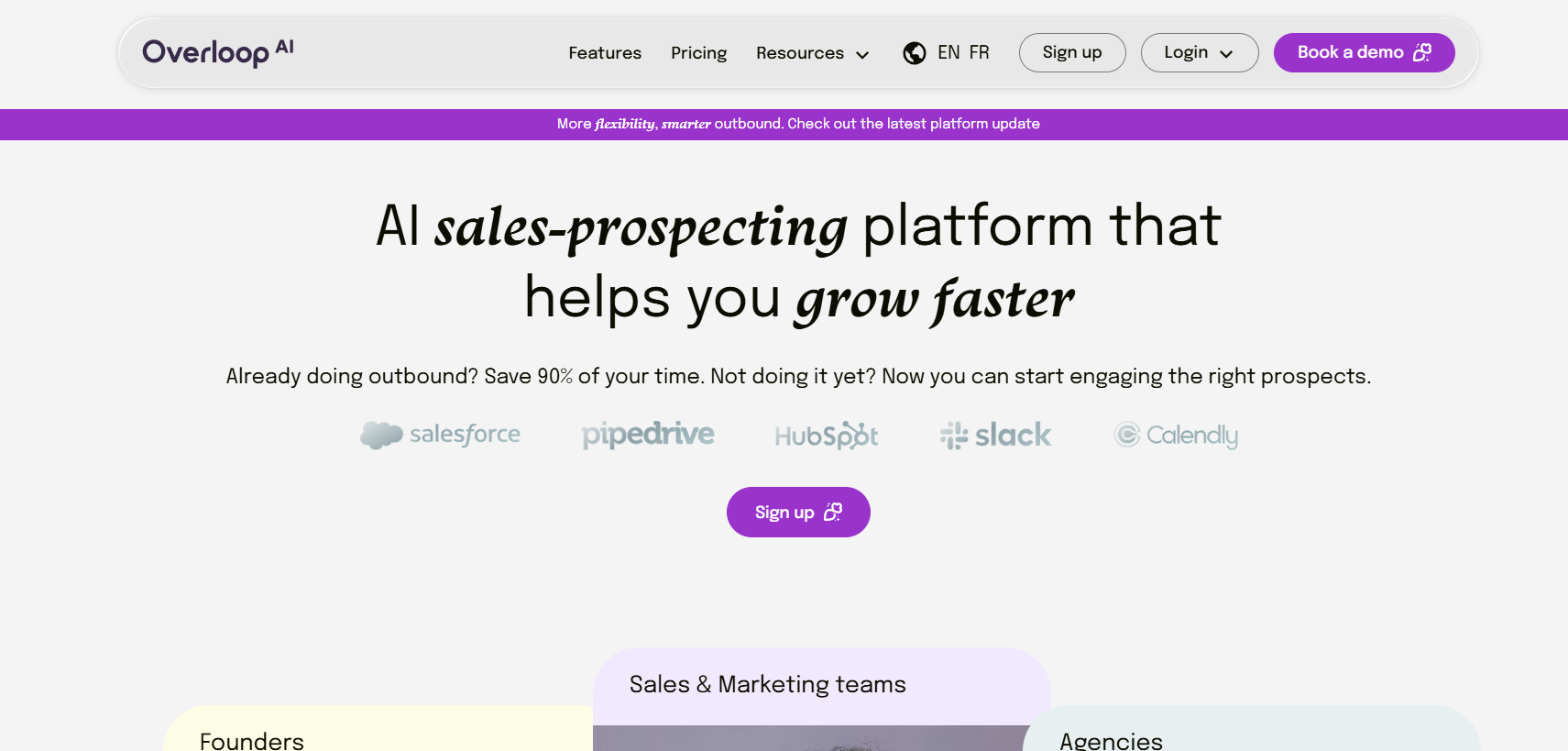
Overloop is a top platform for creating sales engagement. It offers an array of tools to help you extend your outreach and marketing funnel stages. Organizations use it to create extensive prospect lists. They connect it with several platforms such as LinkedIn to generate quality leads. With only one click, teams can start multichannel outreach campaigns. The tools feature analysis tools to provide an overview of successes.  

10. Buffer

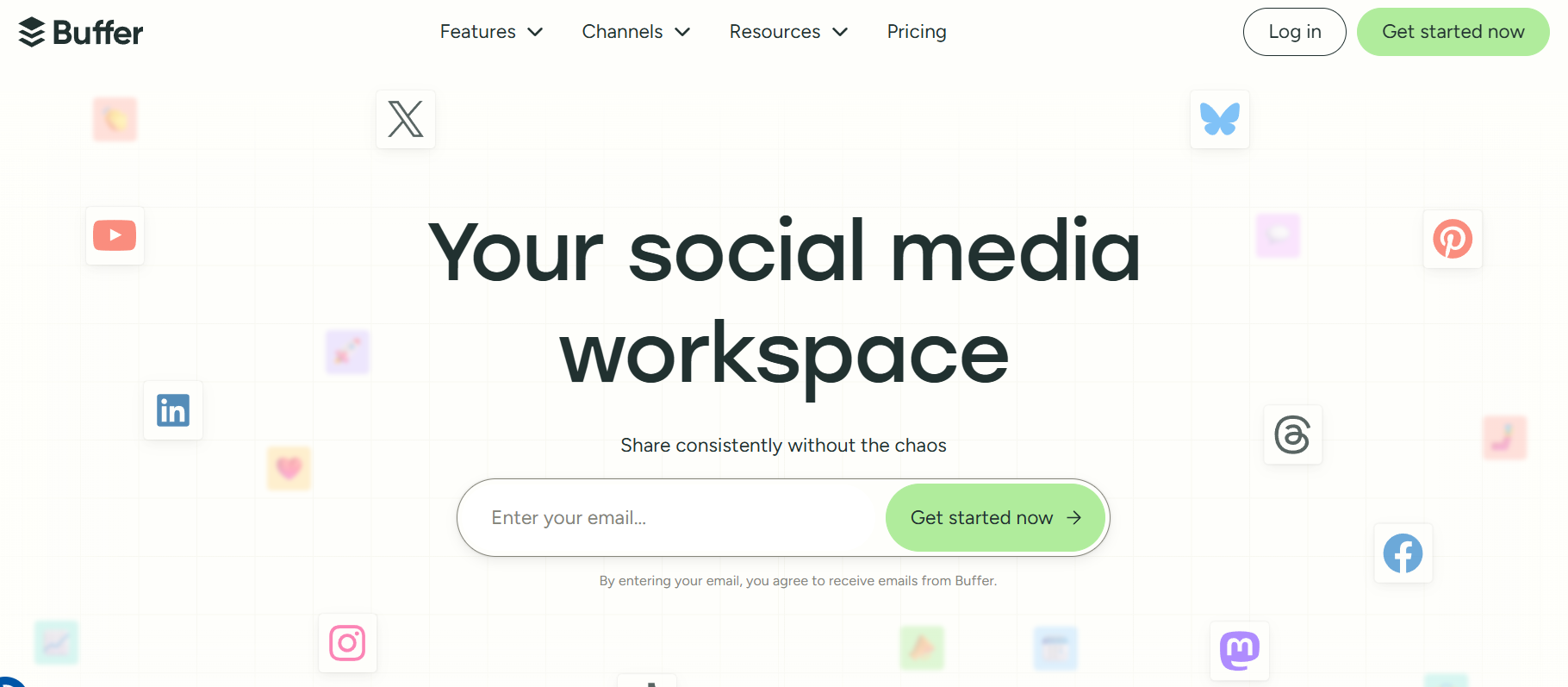
Buffer is a platform for launching multiple social media campaigns. All that marketers need to do is create the content and let the tool distribute it. Through its various algorithms, brands achieve more clicks. They build a larger pool of followers and save a lot of time. The tool makes collaboration easier and increases conversions. Its AI power helps with content publishing and analytics.  

11. Act-On

Act-On

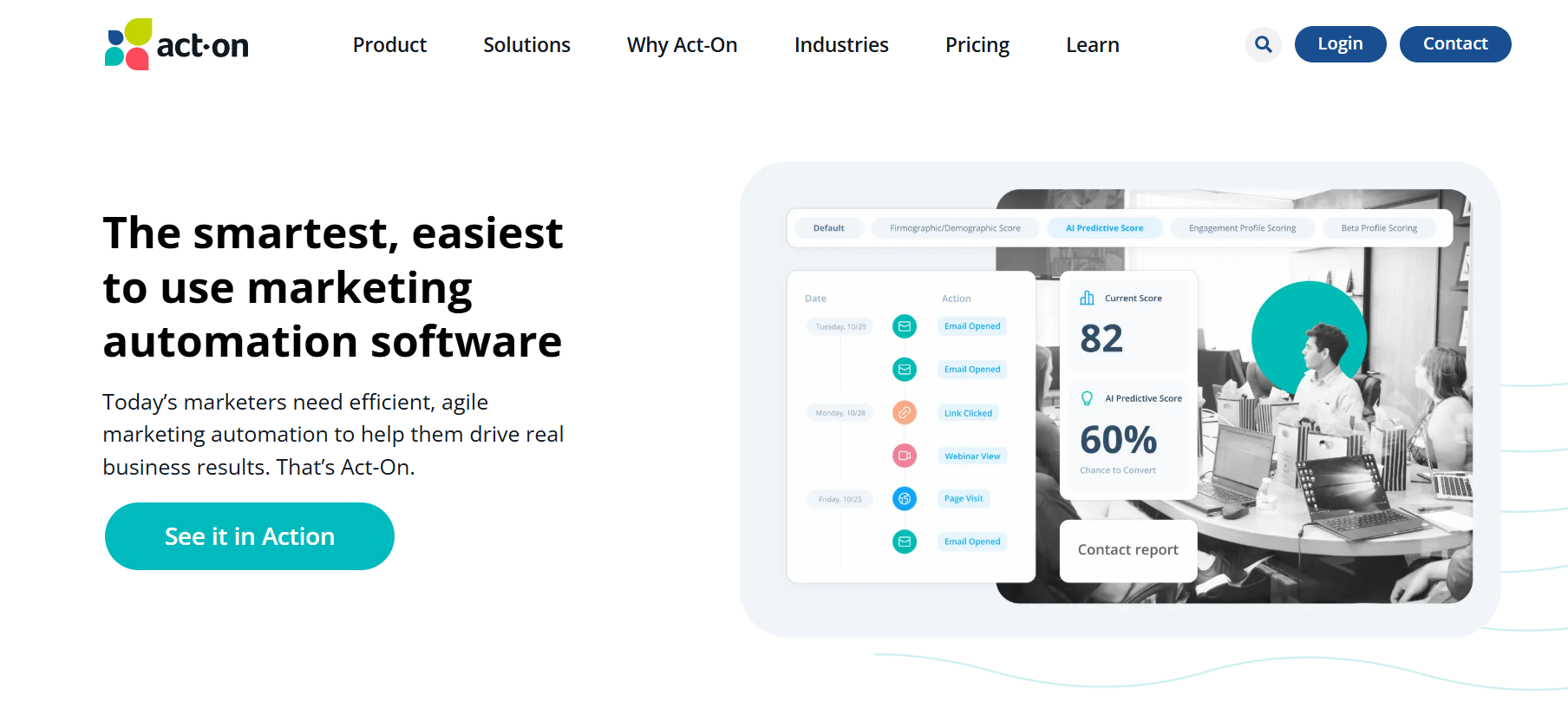
Act-On is a choice tool for creating all-rounded marketing campaigns. Provided as a SaaS platform, the tool offers multiple features, including social media prospecting, lead management, and CRM software integration.  Teams can use it to launch email campaigns and manage webinars. Marketers can integrate it with CRM and do analytics to get a view of success.  Act-On is perfect for creating focused B2B or B2C marketing strategies. You can manage your day smartly while marketing with this tool.  

12. Prisync

Prisync

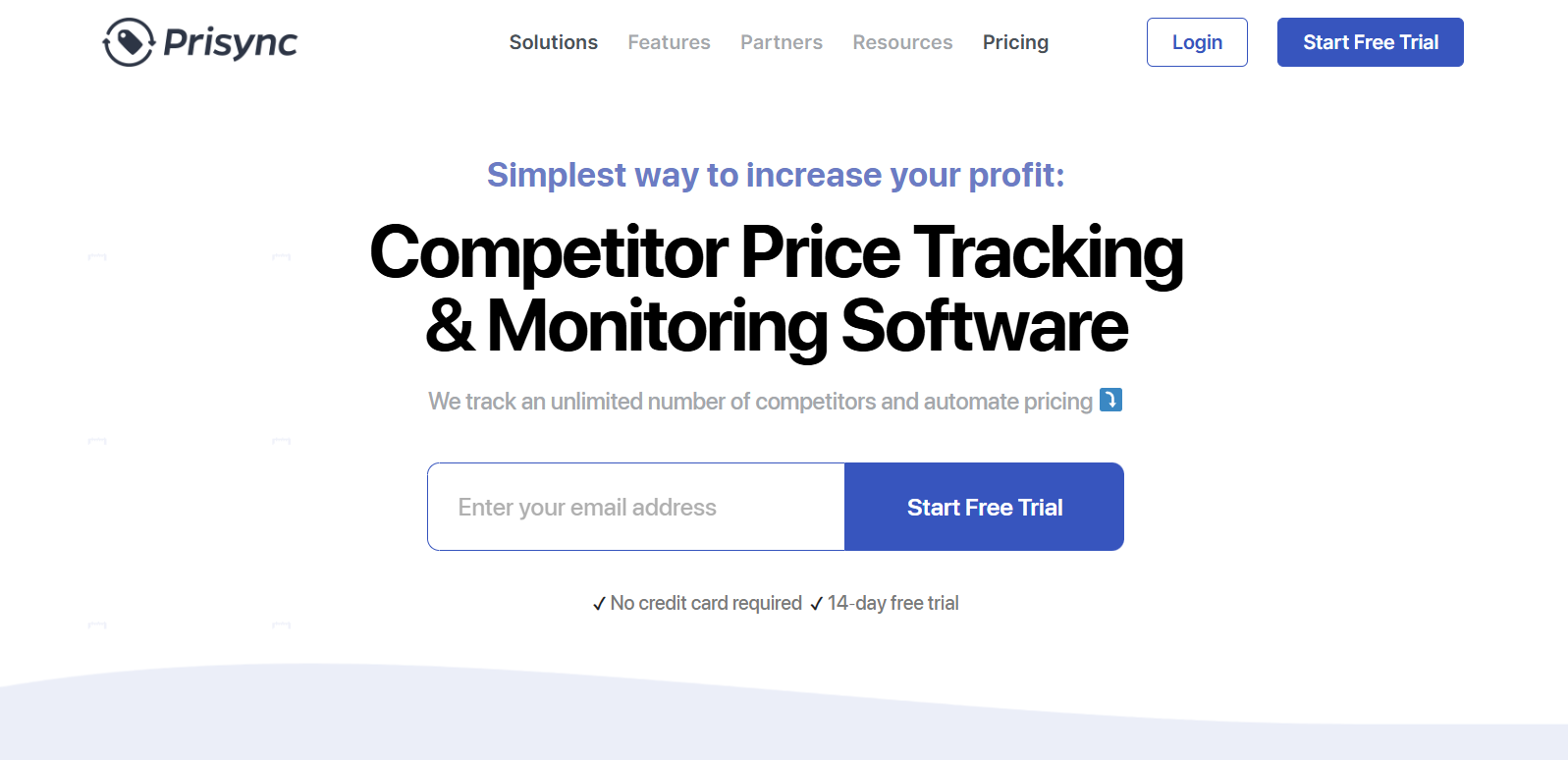
Prisync allows brands to do marketing based on the prevailing market prices. The platform monitors the prices set by competitors and alerts the marketers. Based on the report, they can reset their process to remain competitive. The tool offers insights into content creation and distribution. Brands can integrate it with other platforms to improve customer experiences. Its main solutions are dynamic pricing, MAP monitoring, and price tracking.   

Conclusion  

Modern business fields require vibrant and evolving marketing methods. Automation is one of the strategies that is transforming marketing. It frees up manual work from brands so that they focus on improving content and lead quality. Teams have a broad software choice to use. The best tools should be scalable and meet the demands of the specific brand. They should be easy to use, integrate with other software, and be budget-friendly.

What Gmail’s New Sender Guidelines Mean for Email Marketers

What Gmail’s New Sender Guidelines Mean for Email Marketers

gmail sender

Starting February 1, 2024, Google has established new guidelines for those sending emails to Gmail users, emphasizing the importance of using SPF, DKIM, and DMARC for authentication, keeping spam rates low, and making it easy for recipients to unsubscribe.

This post will guide you through the requirements, explaining why they matter and how to implement them. By following these guidelines, you can ensure your emails reach their intended recipients and not the spam folder.

Requirement 1: DKIM

DomainKeys Identified Mail (DKIM) is a security standard designed to ensure emails are not altered during transmission. It uses public-key cryptography to sign emails with a private key as they leave the sending server. Recipient servers use a public key, published in the sender’s DNS, to verify the message’s source and integrity. This process confirms that the message’s content has remained unchanged since it was signed, establishing its authenticity.

Most email service providers handle the complexities of DKIM for you, including managing encryption keys and signing outgoing messages. The only action required on your part is to add a DKIM record to your domain’s DNS settings. This TXT record, typically provided by your email service provider, contains the public key that recipient servers use for verification.

Requirement 2: SPF

Sender Policy Framework (SPF) is an email authentication standard that prevents email spoofing by verifying sender IP addresses. It enables domain owners to specify which mail servers are permitted to send email on behalf of their domain. When an email is received, the recipient’s server checks the SPF record in the domain’s DNS to verify that the email was sent from an authorized server.

To set up SPF, you need to create a TXT record in your domain’s DNS settings that lists the mail servers authorized to send emails on behalf of your domain. An SPF record might look like this: “v=spf1 ip4:192.168.0.1 include:_spf.yourdomain.com ~all”. This record specifies that the IP address 192.168.0.1 and servers authorized by _spf.yourdomain.com are allowed to send emails from your domain. The “~all” part indicates that emails from other sources should be treated as soft fails, meaning they can still be accepted but marked.

Requirement 3: DMARC

Domain-based Message Authentication, Reporting, and Conformance (DMARC) is an email authentication protocol that builds on SPF and DKIM. It allows domain owners to protect their domain from spoofing by specifying how email receivers should handle emails that don’t pass SPF or DKIM checks. It allows domain owners to protect their domain from spoofing by specifying how email receivers should handle emails that don’t pass an SPF or a DKIM checker.

Implementing DMARC involves creating a DMARC record in your DNS settings, which outlines your domain’s policy for handling emails that fail SPF or DKIM verification. This policy can instruct receiving mail servers to do nothing, quarantine the message, or reject it outright. To set up DMARC, you add a TXT record for the subdomain _dmarc.yourdomain.com with your policy. This record might look like “v=DMARC1; p=quarantine; rua=mailto:dmarc-reports@yourdomain.com”, where “p=quarantine” means emails failing DMARC are moved to the spam folder, and “rua=mailto:dmarc-reports@yourdomain.com” specifies where aggregate reports of DMARC failures should be sent.

Once you have set up your DMARC record, visit the DMARC Checker website and send a test message to the email address provided on the page. The tool will check if your email passes DKIM, SPF, and DMARC authentication and provide you with a detailed report. This step is critical because failing any of these checks may cause your emails to be flagged by spam filtering tools or even blocked by email servers using email blocking tools.

Requirement 4: Reverse DNS Record

A Reverse DNS (rDNS) record, also known as a PTR record, is crucial for validating a server’s identity by mapping an IP address back to its associated domain name. This process is the opposite of what a typical DNS does, hence the name. rDNS plays a significant role in email deliverability, as many email servers perform a reverse DNS lookup on the sending mail server’s IP address to verify its legitimacy. If the rDNS fails, the email is more likely to be treated as spam or rejected.

Typically, setting up a reverse DNS record is done through your internet service provider (ISP) or hosting service. You’ll need to provide them with your sending IP address and the domain name you want it to resolve to. If your sending IP address is 192.168.0.0, and you want it to resolve to mail.yourdomain.com, your hosting provider will create a PTR record in the DNS that points 1.0.168.192.in-addr.arpa to mail.yourdomain.com. Note that the IP address is reversed in the domain format for the PTR record.

Requirement 5: TLS

Transport Layer Security (TLS) is a protocol that encrypts data sent over the internet, ensuring that any information transmitted between email servers remains private and secure. Google’s new guidelines make TLS a mandatory requirement for all sending email servers transmitting emails to Gmail servers.

Most modern email service providers automatically use TLS for email transmissions. However, it’s important to verify that your provider supports TLS and has it enabled for all outgoing emails. If you manage your own email server, ensure that it’s configured to use TLS for sending emails. This typically involves setting up a valid SSL/TLS certificate and configuring your server to use secure protocols for email transmission.

Requirement 6: Low Spam Rates

Google’s guidelines now require that senders maintain a spam rate below 0.10% as reported in Postmaster Tools, with a strict warning against exceeding a 0.30% spam rate. This measure is designed to ensure that emails reaching Gmail users are relevant and welcome, reducing the volume of unsolicited messages.

To maintain low spam rates, it’s essential to focus on engaging your audience with content that is relevant and valuable, which encourages their interaction and engagement. This means not only crafting emails that resonate with your subscribers but also performing regular list cleaning to remove inactive subscribers. Such practices ensure that your emails are directed towards those who are genuinely interested and engaged. Furthermore, adopting opt-in practices, particularly the double opt-in method, is crucial. This approach requires users to confirm their subscription, guaranteeing that they have explicitly agreed to receive your emails.

In terms of monitoring and adjusting your approach, regularly reviewing your spam rates through Google’s Postmaster Tools is vital. This tool helps you identify any issues with your emails that might be causing higher spam rates. Should your spam rate approach or exceed the set thresholds, it’s a signal to reassess your email strategy and content. Adjusting your approach based on feedback and data can help you better align with your audience’s preferences and needs, ultimately ensuring your emails remain welcomed and effective in reaching your audience.

Requirement 7: One-Click Unsubscribe

Google now mandates that all marketing emails sent to Gmail users must include an easy, one-click unsubscribe option. This feature allows recipients to quickly opt out of unwanted emails, enhancing their experience and your reputation as a sender.

Including a visible unsubscribe link in every marketing email is crucial. It should lead recipients directly to an unsubscribe process without requiring additional steps. This not only meets Google’s requirements but also enhances your sender reputation by reducing spam complaints.

Conclusion

Following Google’s new guidelines for email senders is key to ensuring your emails reach Gmail users. By setting up SPF, DKIM, and DMARC, keeping spam rates low, and making it easy to unsubscribe, you’ll improve how your emails are received. These steps are not just about meeting Google’s rules—they’re about building trust with your audience and getting better results from your email campaigns.

Keep an eye on these practices and adjust as needed. This way, your emails will continue to land in the right inboxes, keeping your communication effective and your audience engaged.

How to Help Your Digital Business Thrive: A Brief Guide

How to Help Your Digital Business Thrive: A Brief Guide

Digital Business

Innovation is one of the key traits of digital business. Even today, the idea of a business that exists entirely online is a relatively new concept, and this means that they’re operating in largely untested waters. Because of this, a creative mind and a willingness to take risks can take you far, so long as you’re willing to suffer the consequences if those risks don’t go your way.

With all of this in mind, this article aims to highlight some of the best points to know if you want your new digital business to truly thrive. 

Invest in an Office Space

This might seem like a strange place to start when discussing how you can ensure the success of a digital business, but there are plenty of reasons why it would benefit you – and you specifically – to secure yourself a workspace, even if your business operates entirely online.

Many of the reasons for this are psychological. There are a plethora of tips and tricks that you can engage with to help make yourself more productive, all of which require you to separate your working space from your living space.

However, there are more practical things to consider as well. Business expenses, for example, are far easier to manage when you can separate them entirely from your living expenses. If you want a high-quality internet connection from Frontier internet in Tampa, FL for your business, then you can keep that separate from your personal network if you wish.

What’s more, if you want to work with a team, then an office space can be a huge benefit in terms of your ability to directly collaborate and work with each other. Digital collaboration is a hugely beneficial tool, but it still doesn’t quite stack up to the power of face-to-face collaboration. 

Adopt Strategic Management Techniques

With your working environment sorted out, you can start to think about how you can actually manipulate your management of the business to make it better suited to your needs. Working with a business coach can help you identify growth opportunities, clarify your goals, and develop strategies tailored to your unique business model. For example:

Develop a Strong Brand

One of the best tools you can possibly have in the digital world is a strong brand. This can work to generate interest in the products that you’re selling and often takes on a life of its own once you reach a certain level of popularity. With this in mind, you can likely understand why anything you can do to encourage and enhance the growth of your brand is going to be well worth your while.

Create Low-Cost Products

Another great way to carefully improve the performance of your business is to ensure that you specifically develop products that cost you as close to nothing as possible. After all, the ability to sell digital goods is a great opportunity to practically passive income, and if done right, this can be a massive benefit to your business. 

Take Risks, But Prepare for Consequences

Ultimately, creativity and risk taking are going to be some of the most important tools to help your business to thrive. They are not, however, without risk, and you need to be prepared for the blow back if something you try doesn’t go the way you want.

Risk is a dangerous thing, after all. It could help your business to thrive in a way that few truly do. But it could also end up damaging your company, potentially beyond repair if you’re very unlucky. However, if you want to ensure that your business can become the best version of itself, then you need to learn to live with that.

Unlocking Audience Engagement: Crafting Compelling Content Strategies for Digital Success

Unlocking Audience Engagement: Crafting Compelling Content Strategies for Digital Success

digital experience

Securing success in the ever-changing world of digital interaction hinges on developing compelling content strategies. This essay takes readers on a melodic voyage through cutting-edge techniques that have been painstakingly created to connect with and enthrall various audiences in the enormous and constantly changing digital space. 

Creating an engaging content strategy becomes crucial in increasing audience engagement as firms maneuver through this digital symphony. Every tactic is distinct in the digital marketing orchestra, from personalized content and integrating hybrid cloud solutions to immersive narrative and interactive experiences. 

This investigation follows the integration of hybrid cloud, personalization, interactive content, storytelling, video tactics, and the critical function of strong security measures. By balancing these disparate approaches, companies hope to create a lasting impression on viewers while establishing a foundation for a lasting digital resonance. 

The Art of Storytelling: Weaving Narratives that Resonate 

Stories in the digital sphere are more than just a form of artistic expression; they are the pulse that connects businesses to the core of consumer awareness. This chapter painstakingly explores the many facets of storytelling, going beyond shallow tales that are product-centric to stories that arouse strong emotions and deeply connect with the hopes and wants of the audience. 

Investigating the subtleties of storytelling turns into a compass that points brands in the direction of stories that go beyond the typical and create emotionally charged, immersive experiences. Brands create a symphony of storylines that touch deeply with the audience’s basic emotions by veering away from traditional product-focused storytelling. This fosters a meaningful relationship that goes beyond simple consumer-brand interactions and builds trust in your brand. This segment delves into the craft of storytelling to reveal its revolutionary potential in creating genuine and impactful brand experiences in the digital sphere. 

Interactive Content: Fostering Engagement Through Participatio 

Amidst the deluge of content, interactivity emerges as a crescendo in the digital symphony. This segment delves into the resonance of immersive experiences—AR, VR, interactive storytelling—that captivate audiences by actively involving them in the narrative. These experiences transcend mere consumption; they immerse audiences in brand stories, fostering engagement and a sense of co-creation. Using a free QR code generator can also make it easier for audiences to access content and interact with the brand.

Personalization Paradigm: Tailoring Experiences for Individual Connection 

The world of digital connections is always changing, and the trend toward individualized interactions is becoming more than just necessary—it’s becoming a custom symphony perfectly balanced with each person’s distinctive preferences. An in-depth analysis of the many levels of hyper-personalization is provided in this section, which goes beyond demographics to investigate fine-grained behavioral quirks and preferences. 

In this environment, companies explore diverse personal preferences and behaviors, going beyond traditional segmentation. Brands create unique experiences carefully calibrated to deeply connect with each individual by combining AI-driven insights with thorough data analysis. This section acts as a road map, breaking down the complex practice of hyper-personalization and enabling companies to create memorable experiences that create real relationships at the individual level in the digital environment. 

Video Symphony: Harnessing Visual Narratives for Impactful Engagement 

In the digital landscape, video emerges as a powerful symphony that strikes chords with the audience’s visual sensibilities. This segment explores the art of creating compelling video content—tutorials, storytelling, or behind-the-scenes glimpses—that resonates deeply, captivating audiences and fostering enduring connections. 

Orchestrating Content Harmony with Hybrid Cloud Integration 

Integrating hybrid cloud strategies emerges as a pivotal cornerstone in refining content dispersion within the ever-evolving digital ensemble. This section illuminates the orchestral interplay generated by integrating hybrid cloud solutions, harmonizing on-premises and cloud infrastructures to choreograph seamless accessibility and unwavering reliability of content. 

In essence, what is a hybrid cloud? It represents a fusion, allowing businesses a harmonious blend of scalability and meticulous control over data. This symphonic amalgamation permits agile management and distribution of diverse content types while ensuring robust governance over sensitive data assets. Through the strategic utilization of hybrid cloud solutions, organizations conduct a melodious symphony of content delivery, guaranteeing uninterrupted access to immersive digital experiences. This strategic harmony fortifies audience engagement, resonating across diverse platforms and devices. 

Harmonizing Security Measures: Safeguarding the Content Symphony 

Within the orchestration of digital content, the symphony of security measures plays a critical role in preserving the integrity and trust of audience interactions. This section explores the integration of robust security protocols within content strategies, emphasizing the importance of safeguarding data integrity and audience privacy. 

Hybrid cloud solutions, while enabling seamless content delivery, also necessitate a comprehensive approach to security. Businesses must conduct a harmonious symphony of encryption, access controls, and regular audits to protect sensitive content across diverse environments. By orchestrating stringent security measures within hybrid cloud frameworks, organizations fortify their content symphony against potential vulnerabilities, ensuring that audience interactions remain secure and confidential. 

By conducting this melodic interplay of content delivery and security measures, businesses ensure an engaging digital experience and foster trust and confidence among their audience. This section elucidates the significance of intertwining robust security measures within the hybrid cloud infrastructure to preserve the integrity and harmony of the content symphony. 

Conclusion: Crafting a Harmonious Digital Symphony 

In the symphony of digital engagement, orchestrating compelling content strategies is akin to conducting a harmonious melody that resonates with audiences across diverse platforms. This article has navigated through innovative content methodologies, exploring storytelling, interactivity, personalization, video content, hybrid cloud integration, and the imperative role of robust security measures within this digital orchestra. 

As businesses strive to captivate and engage their audiences in the digital realm, harmonizing these strategies emerges as a pivotal force. From crafting emotive narratives to fostering interactive experiences, tailoring content, integrating hybrid cloud solutions, and fortifying security measures, each element uniquely shapes a captivating digital journey for the audience. 

By orchestrating this melodic interplay of strategies, businesses elevate audience engagement and forge enduring connections. The harmonious fusion of these methodologies in the digital symphony enhances engagement and cultivates trust, loyalty, and lasting resonance within the audience’s digital experiences. 

As the digital landscape continues to evolve, businesses are empowered to conduct this symphony of strategies, crafting an unforgettable and harmonious digital experience that strikes a resounding chord with their audience, setting the stage for enduring success in the ever-evolving digital landscape.