
Introduction
Cybersecurity has become one of the fastest-growing fields in information technology. Every organization, regardless of size or industry, faces the challenge of protecting sensitive information, preventing cyberattacks, and maintaining secure digital operations. As businesses continue to adopt cloud computing, remote work, and connected devices, the demand for skilled cybersecurity professionals continues to rise.
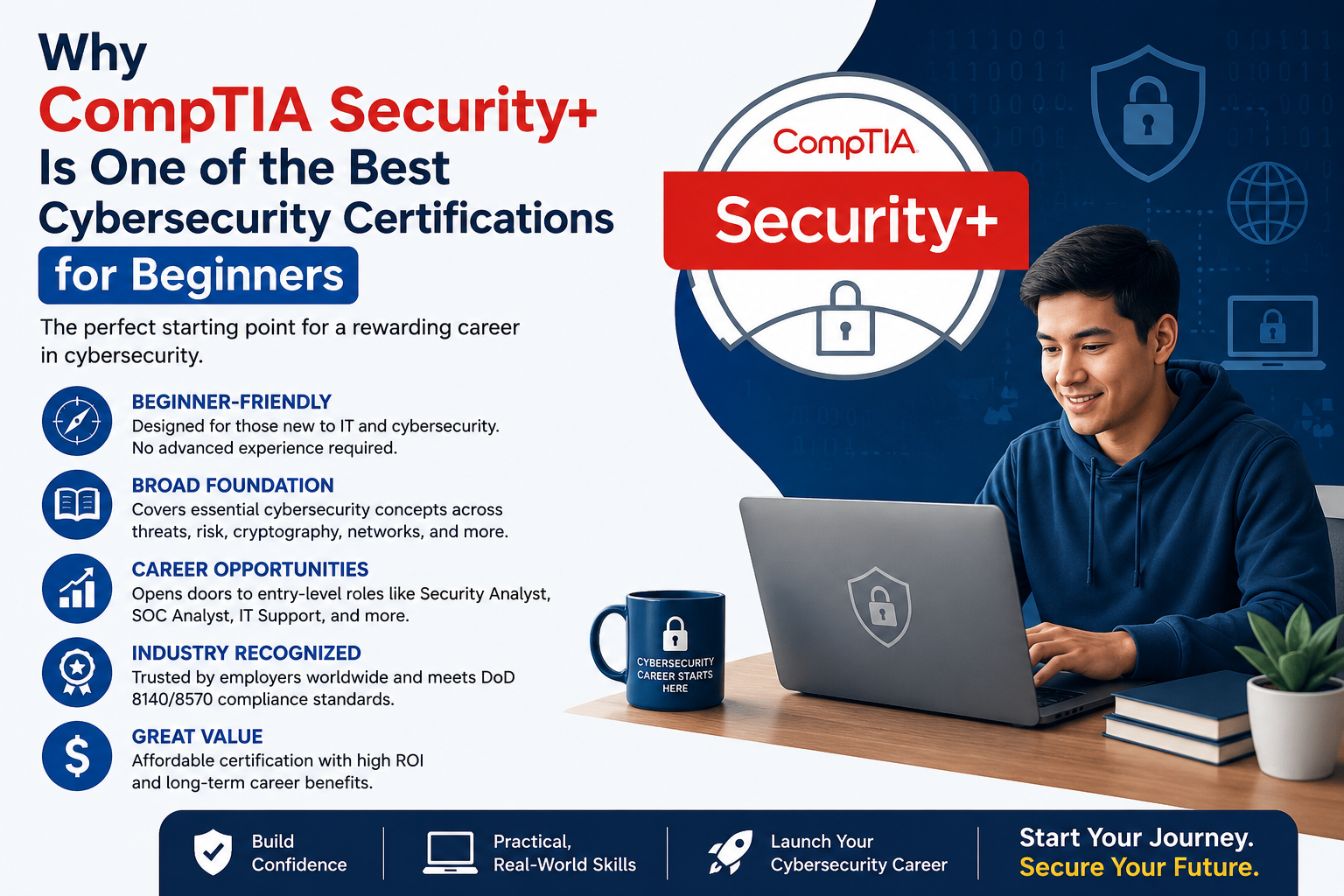
Among the many certifications available, CompTIA Security+ is widely recognized as an excellent starting point for individuals who want to build a career in cybersecurity. The certification validates foundational security knowledge and practical skills required to identify threats, secure networks, manage risks, and respond to security incidents.
Whether you are an IT support specialist, network administrator, recent graduate, or someone planning a career change, earning the CompTIA Security+ certification can strengthen your technical knowledge and improve your employment opportunities. This guide explains what the certification covers, why it is valuable, how to prepare for the exam, and the career paths it can support.
What Is CompTIA Security+?
CompTIA Security+ is a globally recognized certification that focuses on essential cybersecurity concepts and best practices. Unlike vendor-specific certifications, it teaches security principles that can be applied across many technologies and environments.
The certification validates skills in areas such as:
- Network security
- Threat detection
- Risk management
- Identity and access management
- Cryptography
- Incident response
- Security architecture
- Governance and compliance
It provides a strong foundation for professionals beginning their cybersecurity careers.
Why Choose CompTIA Security+?
Security+ is respected by employers because it combines theoretical knowledge with practical security concepts that are relevant in today’s workplace.
Some major benefits include:
- Industry-wide recognition
- Strong cybersecurity foundation
- Better career opportunities
- Vendor-neutral knowledge
- Preparation for advanced certifications
- Increased professional credibility
Many government agencies and private organizations recognize Security+ when hiring for entry-level cybersecurity positions.
Skills You Will Learn
Preparing for the Security+ certification helps candidates develop practical security knowledge.
Understanding Security Threats
Candidates learn about common cyber threats, including:
- Malware
- Phishing attacks
- Ransomware
- Social engineering
- Insider threats
- Denial-of-service attacks
Recognizing these threats is the first step toward building effective security defenses.
Identity and Access Management
Controlling user access is a critical part of cybersecurity.
Important topics include:
- Authentication
- Authorization
- Multi-factor authentication
- Role-based access control
- Password policies
- Identity management
Strong access controls reduce the risk of unauthorized system access.
Network Security
Candidates study techniques used to secure organizational networks.
Topics include:
- Firewalls
- Virtual private networks (VPNs)
- Secure wireless networking
- Network segmentation
- Intrusion detection
- Secure communication protocols
Understanding network security helps protect business infrastructure from cyber threats.
Risk Management and Compliance
Organizations must identify and manage security risks while complying with legal and regulatory requirements.
Candidates learn about:
- Risk assessment
- Business continuity
- Disaster recovery
- Security policies
- Compliance frameworks
- Security awareness
These concepts support effective organizational security planning.
How to Prepare for the Security+ Exam
A structured study plan can greatly improve your chances of success.
Recommended preparation steps include:
- Review the official exam objectives.
- Study cybersecurity fundamentals.
- Learn networking basics.
- Practice security concepts in virtual labs.
- Review real-world attack scenarios.
- Complete practice exams.
- Revise difficult topics regularly.
Consistent study over several weeks is generally more effective than last-minute preparation.
Gain Hands-On Experience
Practical experience helps reinforce theoretical knowledge.
Candidates should practice with:
- Virtual machines
- Firewall configurations
- Security monitoring tools
- Operating system security settings
- Basic penetration testing labs
- Log analysis
Hands-on learning improves confidence and problem-solving abilities.
Common Mistakes to Avoid
Many candidates struggle because they overlook important aspects of preparation.
Memorizing Instead of Understanding
The Security+ exam emphasizes practical application rather than memorization.
Understanding why security controls are implemented is more valuable than remembering isolated facts.
Ignoring Networking Fundamentals
Cybersecurity depends heavily on networking knowledge.
Candidates should understand TCP/IP, DNS, routing, switching, and common network protocols.
Skipping Practice Exams
Practice assessments help identify weak areas while improving time management during the real exam.
Neglecting Risk Management
Risk assessment and governance are essential components of modern cybersecurity and should not be overlooked.
Individuals preparing for the CompTIA Security+ certification can explore additional study resources through Exam Labs to review cybersecurity concepts, strengthen technical knowledge, and better understand the objectives covered in the certification exam.
Career Opportunities After Security+
CompTIA Security+ opens the door to a wide range of cybersecurity careers.
Common job roles include:
- Security Analyst
- Cybersecurity Specialist
- Security Administrator
- Network Administrator
- Systems Administrator
- IT Support Specialist
- Security Operations Center (SOC) Analyst
- Information Security Technician
As cyber threats continue to evolve, organizations across healthcare, finance, education, government, and technology actively seek professionals with foundational cybersecurity expertise.
Tips for Exam Day
To maximize your chances of success:
- Read every question carefully.
- Focus on the security objective being tested.
- Eliminate clearly incorrect answers.
- Think about real-world security best practices.
- Manage your time effectively.
- Review flagged questions before submitting the exam.
Scenario-based questions often require selecting the most appropriate security solution rather than recalling simple definitions.
Frequently Asked Questions (FAQs)
What is CompTIA Security+?
CompTIA Security+ is an internationally recognized certification that validates foundational cybersecurity knowledge and practical security skills.
Who should take the Security+ certification?
The certification is ideal for aspiring cybersecurity professionals, IT support technicians, network administrators, systems administrators, and anyone interested in information security.
Is CompTIA Security+ difficult?
The exam is considered entry to intermediate level. Candidates with networking knowledge and consistent preparation generally find it manageable.
How long should I study for Security+?
Preparation time varies depending on experience, but many candidates study consistently over several weeks while combining theory with hands-on practice.
Is practical experience important?
Yes. Practical experience with security tools, operating systems, and networking concepts significantly improves exam readiness and workplace skills.
What jobs can I pursue after earning Security+?
Successful candidates often qualify for roles such as Security Analyst, SOC Analyst, Security Administrator, Cybersecurity Specialist, and Network Administrator.
Conclusion
CompTIA Security+ is one of the most respected entry-level cybersecurity certifications available today. It provides a comprehensive introduction to modern security principles while preparing professionals to protect networks, systems, applications, and sensitive information in real-world environments.
Success on the Security+ exam requires a balanced approach that combines structured study, practical experience, and a thorough understanding of cybersecurity fundamentals. By consistently practicing security concepts and developing hands-on technical skills, candidates can confidently prepare for certification while building a strong foundation for a rewarding and long-term career in the rapidly expanding field of cybersecurity.