
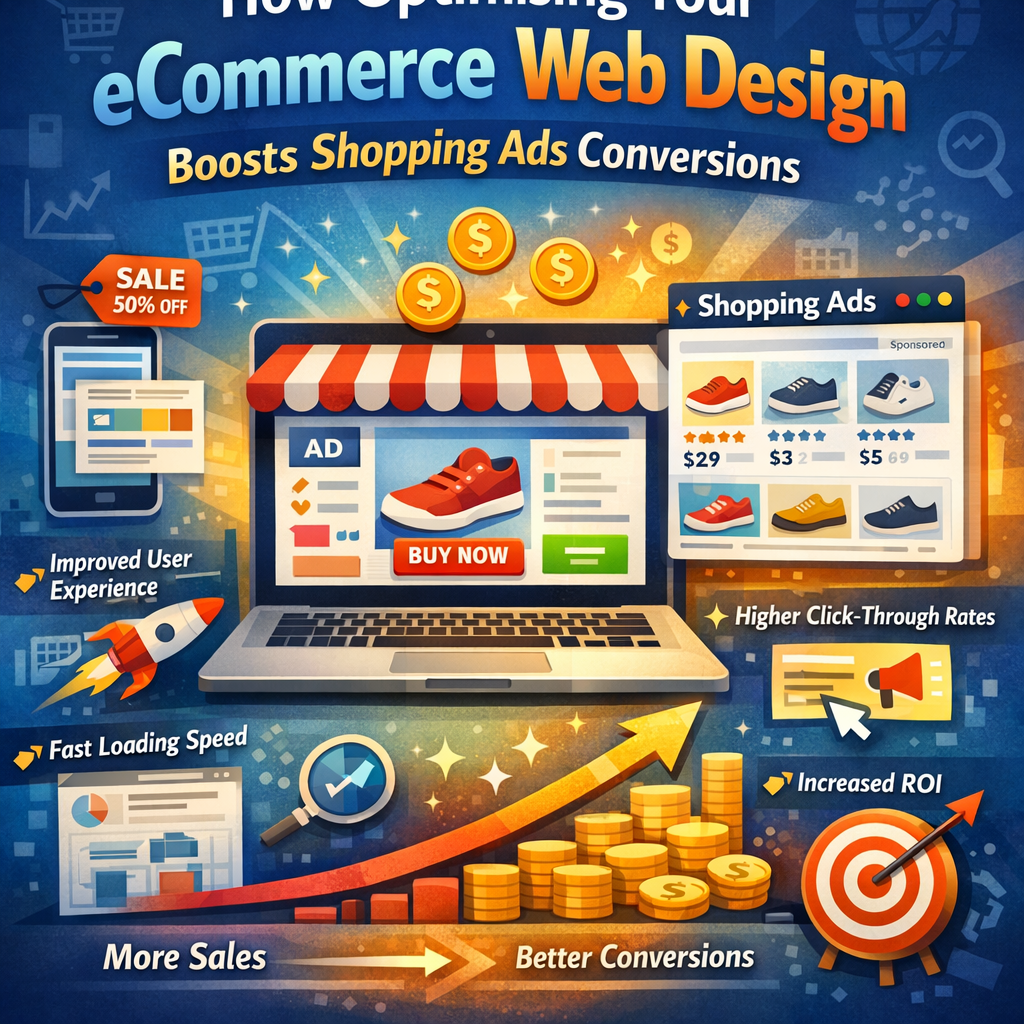
Welcome to the highly competitive world of Australian eCommerce. Retailers across the country invest thousands of dollars into acquiring highly targeted traffic, but getting a user to click an advertisement is only the very first step of the journey. The real magic happens on your website itself. If your online store suffers from sluggish load times, confusing navigation menus, or a cluttered aesthetic, that hard-earned traffic will vanish in seconds. Consumers today have an abundance of choices, and they are not willing to wait for a subpar website to catch up with their expectations. Optimising your eCommerce web design is the most effective way to ensure your paid acquisition efforts actually translate into sustainable revenue and long-term brand loyalty.
The Hidden Cost of Friction on Product Pages
When a potential customer clicks on a Google Shopping ad, they demonstrate exceptionally high commercial intent. They are actively looking for a specific item and fully expect the landing page to provide immediate clarity. If your product page is disorganised, overwhelming, or lacks critical details, customer trust evaporates almost instantaneously. Extensive industry research highlights this exact issue, noting that shoppers who cannot quickly find answers to their fundamental product questions will simply abandon their purchase. They tend to operate on a cautious mentality, preferring to abandon a cart rather than risk buying the wrong item. According to Nielsen Norman Group’s UX guidelines for ecommerce product pages, fully descriptive and well-architected pages build purchase confidence and drastically reduce return anxiety. A beautiful aesthetic means absolutely nothing if the foundational user experience completely fails to answer the buyer’s most pressing questions.
Aligning Paid Traffic with a Seamless User Experience
Driving the right demographic to your website requires strategic precision and constant monitoring. Many ambitious brands choose to partner with a specialised Shopping Ads Agency to scale their campaigns, optimise complex bidding strategies, and ensure their products appear right in front of high-intent searchers. However, even the most expertly managed campaigns will suffer from frustratingly high bounce rates if the post-click experience is neglected. Paid traffic and web design must operate as a unified ecosystem. The advertisement sets the initial expectation, and the website must deliver on that exact promise instantly. If a user clicks on an ad for a specific pair of premium running shoes, they should land directly on a clean, fast-loading page featuring that exact product, complete with clear pricing, shipping details, and an obvious path to the checkout screen. Any deviation from this expected journey introduces doubt.
Key Design Elements That Drive Meaningful Conversions
To maximise the return on investment from your paid advertising, your website needs to remove absolutely every possible hurdle between the initial landing page and the final purchase. Focusing on a few core design principles can make a massive difference in your overall conversion rates, transforming casual browsers into dedicated brand advocates.
Consider implementing the following structural improvements to flawlessly guide your visitors:
- Mobile-first layouts: The vast majority of eCommerce browsing happens on smartphones. Ensure touch targets are large enough for fingers, and keep forms minimal to prevent mobile cart abandonment.
- Visual hierarchy: Use bold, contrasting colours for your primary call-to-action buttons. This subtle psychological cue draws the eye naturally toward the “Add to Cart” button, streamlining the decision process.
- Trust signals and social proof: Prominently display security badges, clear return policies, and authentic customer reviews right below the main product description. This serves to reassure hesitant buyers that they are making a safe choice.
- Guest checkout functionality: Forcing users to create a full account before they can pay is a primary cause of friction. Always offer a swift, uncomplicated guest checkout path to capture impulse purchases.
Why Site Architecture and Speed Are Non-Negotiable
Beyond the visible elements, the underlying technical foundation of your store plays a massive role in retaining paid traffic. Shoppers have virtually zero patience for a slow-loading website today. If your high-resolution product images take too long to render, users will simply hit the back button and buy from a direct competitor. This is exactly where technical on-page optimisation becomes incredibly vital for long-term success. Implementing essential Shopify SEO fixes, such as optimising Core Web Vitals for speed, compressing large media files, and crafting clear product metadata, ensures that shoppers remain engaged long after clicking an ad. A well-structured site not only appeases search engine crawlers but provides the completely frictionless experience required to turn a casual visit into a completed transaction.
Ultimately, your paid marketing efforts and your web design are two distinct sides of the exact same coin. By treating your website as a natural extension of your advertising campaigns, you create a seamless journey that deeply respects the user’s time and intent. When your eCommerce store is fast, highly intuitive, and richly descriptive, your conversion rates will naturally rise. Investing equally in both targeted acquisition and thoughtful, user-centric web design ensures that every single advertising dollar works significantly harder for your bottom line.