

Website migrations can be a turning point or a traffic trap. Whether you’re moving to a new platform, consolidating content, or launching a full redesign, even small missteps can cause major SEO losses.
At Composite Global, we’ve led successful website migrations for brands across fintech, ecommerce, B2B SaaS, and more. From technical SEO to modular rebuilds, we’ve seen what works, and what can go wrong.
Here’s what to look for in a website migration partner before you put your traffic at risk.
1. Look for SEO Website Migration Experience
Not every agency understands how to migrate a site without harming search visibility.
We’ve seen brands lose months of traffic from botched redirects, missing metadata, and content structure changes.
A strong migration partner will:
- Map URL redirects to preserve traffic
- Retain metadata, schema markup, and alt text
- Minimize disruption to internal linking and navigation
- Flag any risky SEO decisions early
At Composite, our SEO team works directly with dev and design during the migration process, so nothing falls through the cracks.
2. Choose a Partner That Knows Both Platforms
What you’re moving from (and what you’re moving to) can make all the difference.
Whether you’re going from WordPress to Webflow, or from Squarespace to Shopify, your migration partner should be fluent in both platforms’ quirks, limitations, and strengths. That means understanding:
- CMS-specific export/import tools
- URL formatting and redirects
- API or plugin compatibility
- SEO considerations for each platform
Composite is a certified Webflow Enterprise Partner, and we’ve migrated clients from legacy systems like Drupal, Contentful, and custom CMS platforms. Platform knowledge means fewer surprises, and a smoother handoff.
3. Don’t Skip Content Strategy and Mapping
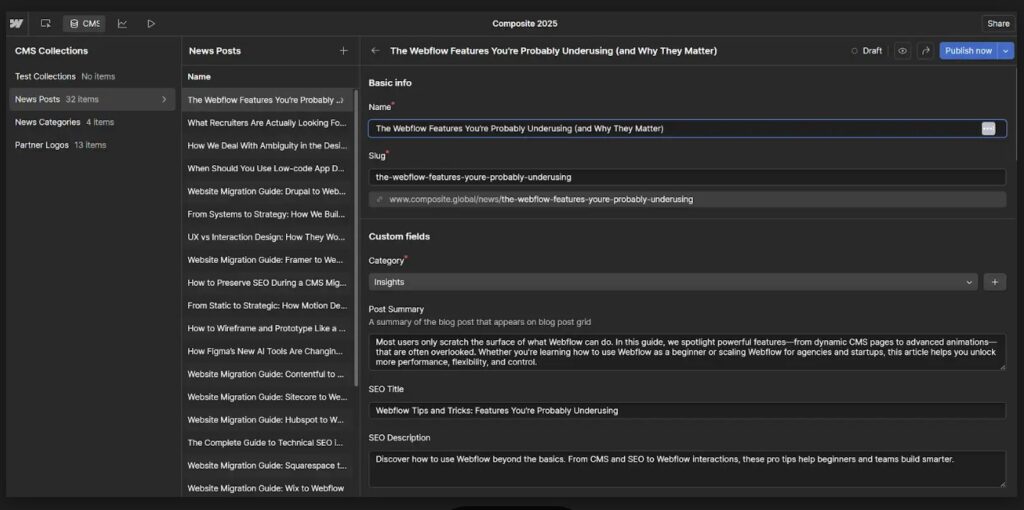
Too often, migration projects focus on tech while content gets left behind.
The right partner will help you:
- Audit and restructure your content hierarchy
- Map existing pages to new navigation or taxonomy
- Archive outdated content safely
- Preserve high-performing internal links
We see every migration as a chance to streamline content and improve UX, not just replicate the past.
4. Ask for a Clear Migration Plan
Website migration services should come with a transparent process, not a vague timeline.
At Composite, we follow a structured workflow that includes:
- Redirect and metadata mapping
- Collaboration on CMS structure and page setup
- QA and accessibility checks in a staging environment
- Coordinated launch support and post-launch monitoring
But more importantly, we keep the lines of communication open from day one. We provide regular updates, flag potential risks early, and make sure your team always knows what’s happening and what’s next. Migration is a collaborative process, and we treat it that way.
5. Go Beyond a Developer
A migration isn’t just about moving files. It’s about translating your brand, preserving your reach, and improving performance.
That’s why our migration teams include:
- UX strategists to spot navigation and structure issues
- SEO specialists to safeguard rankings
- Designers to align with brand identity
- Developers to build clean, scalable systems
Our cross-functional team works in parallel to keep momentum high and results consistent.
6. Don’t Ghost Post-Launch
Some agencies treat launch day like the finish line. We don’t.
At Composite, we stick around post-launch to help smooth out the transition. If something breaks, doesn’t look right, or isn’t functioning the way it should, we’re already in the loop and ready to jump in.
Whether you’re working with an in-house SEO team or managing marketing internally, we’re here to support your success, not just hand off a site and disappear.
Web Design & Platform Resilience
When you’re planning a migration — especially for an eCommerce or high-traffic site — it’s vital to think beyond the switch itself and include web design as part of your strategy. A redesign or rebuild at migration time is a common scenario, so your partner must be experienced in creating websites that not only look good, but also perform, convert, and scale. For example, consider a full-service agency like ronins.co.uk which emphasises that a website “sits at the centre of everything: sales, marketing, operations,” and whose builds are created to handle growth, automation, and data flows without falling apart.
Their approach reinforces that a migration is an ideal moment to address underlying design issues: ensure the new site is mobile-first, SEO-ready from day one, and built to give your content and UX the lift it needs. Incorporating web design health into your migration checklist — structural clarity, site speed, brand-consistency, and usability across devices — helps safeguard the work you’ve done and amplifies your future results.
TLDR: Migration Is a Strategy, Not Just a Move
A successful website migration doesn’t just preserve what’s working, it sets the stage for better performance, better usability, and better business results.
At Composite Global, we approach every migration with layered strategy, hands-on collaboration, and SEO at the core. Whether you’re redesigning, replatforming, or rethinking your content structure, we’re here to help you do it right.
Explore more migration insights on the Composite Global blog.