
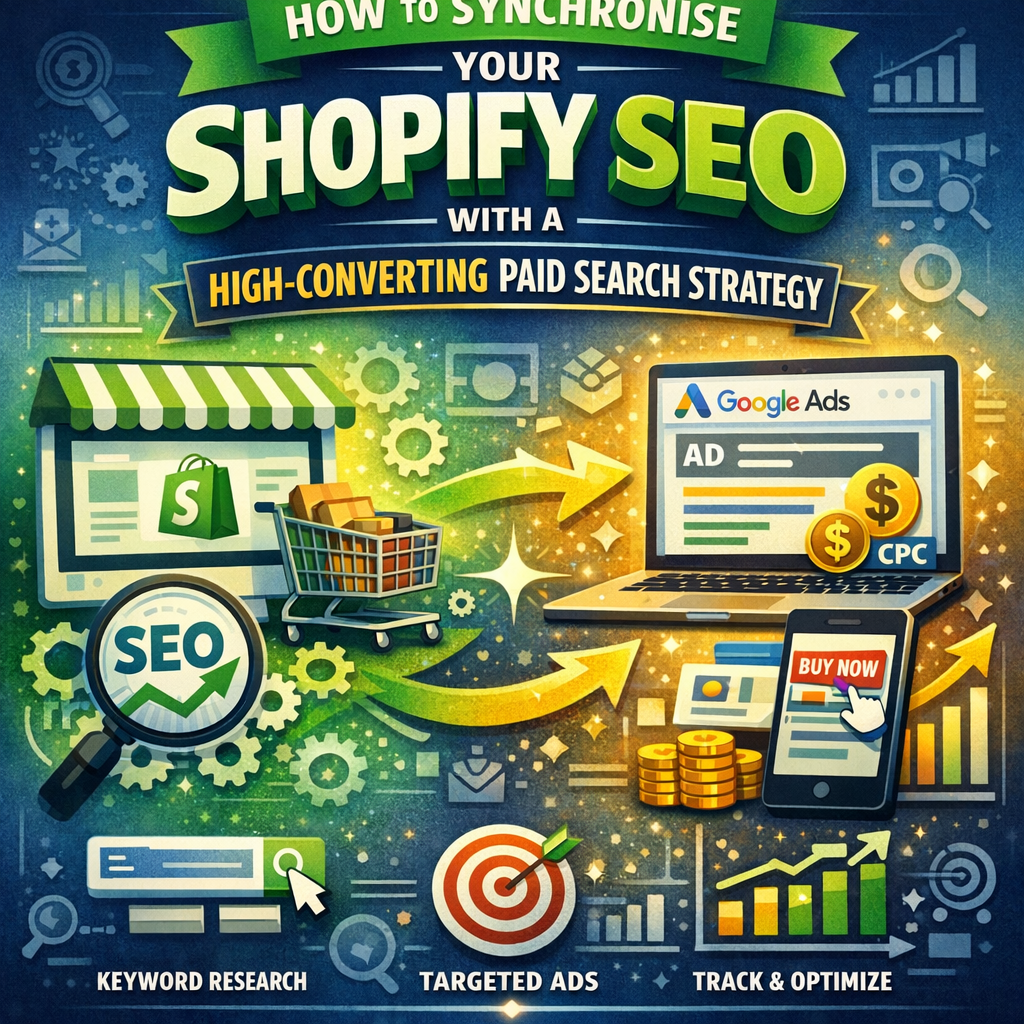
E-commerce growth rarely happens in a vacuum. For ambitious Shopify merchants aiming to scale their businesses into eight-figure brands, relying entirely on a single traffic source creates unnecessary risk in an increasingly competitive retail landscape. Algorithm updates, shifting consumer trends, and rising cost-per-click rates can all disrupt a one-dimensional strategy overnight. While organic search builds long-term authority and a sustainable stream of visitors, paid search delivers immediate visibility and captures highly targeted, ready-to-buy traffic. The real magic happens when you stop treating these two marketing channels as entirely separate entities and start making them work harmoniously together to build an unshakeable digital footprint.
Setting the Organic Foundation First
Before you even consider allocating a substantial budget to click-based ad campaigns, your Shopify store needs to be technically flawless. Pouring paid traffic into a slow, confusing storefront is a fast track to wasted advertising spend and frustrated visitors. It is crucial to implement foundational Shopify SEO strategies to ensure your architecture is firmly intact before driving paid clicks. From flawless mobile responsiveness to intuitive product categorisation, creating a seamless user experience is a mandatory prerequisite. Search engines and actual humans both reward websites that load quickly and present information clearly. Once browsers can effortlessly navigate your site and your core product pages are natively optimised for search algorithms, your online store becomes a reliable, well-oiled mechanism for turning casual visitors into loyal buyers. Only then should you introduce paid traffic to the equation.
When to Accelerate Growth with Paid Specialists
With a solid, highly optimised organic framework in place, you will eventually reach a tipping point where natural growth alone might not match your aggressive revenue goals. This is where paid search steps in to capture high-intent buyers actively searching for products. However, scaling through ads is not as simple as turning on a campaign and watching the sales roll in.
Managing complex bidding ecosystems, keyword match types, and intricate performance campaigns can quickly become overwhelming and expensive for an in-house team. At this stage, many merchants find it significantly more profitable to partner with a specialised Google Ads Agency rather than guessing their way through constant platform updates. Bringing in focused, performance-driven expertise ensures your paid strategy aligns precisely with the organic traffic you are already capturing, thereby maximising the return on every single dollar spent.
The Compounding Value of a Dual-Channel Approach
Operating search engine optimisation and pay-per-click campaigns simultaneously does significantly more than just double your daily traffic. It creates a psychological advantage over your competitors. When consumers see your brand appear at the very top of the sponsored results and then again in the top organic results just below, it builds immediate credibility, authority, and trust.
Recent industry data reinforces this exact phenomenon. Research shows that within the retail sector, there is a distinct compounding value to being seen in both organic and paid search results, noting that e-commerce SEO drives an average conversion rate of 1.6 percent while PPC drives 1.3 percent. Combining these channels yields a significantly higher overall return on investment than attempting to run either strategy in complete isolation.
Practical Tactics to Harmonise Your Campaigns
To truly synchronise these two powerful marketing channels, your digital teams need to share valuable insights and performance data constantly. Siloed departments often lead to duplicated efforts or missed opportunities. By implementing straightforward strategies, you can ensure your organic and paid efforts multiply each other’s overall effectiveness.
Consider implementing the following tactics to align your dual-channel approach:
- Share keyword performance: Identify which specific keywords are converting at the highest rates in your paid campaigns and actively incorporate them into your long-term organic content strategy. This ensures you naturally rank for terms you already know are highly profitable.
- Test messaging through ads: Use your pay-per-click ads to split-test product titles and promotional copy rapidly. Once you find the winning variations that consistently generate clicks, apply those exact phrases to your organic meta descriptions to boost your overall click-through rates.
- Target different intent levels: Let your paid ads focus on aggressive bottom-of-the-funnel keywords to capture immediate sales, while your organic blog content captures and educates shoppers who are still in the early research and comparison phase.
- Retarget organic visitors: Create specific paid remarketing lists targeting users who originally found your store through informational organic articles but left without making a purchase. This keeps your brand top-of-mind as they move closer to a final buying decision.
Sustaining Long-Term E-Commerce Dominance
Scaling a Shopify store successfully requires a multidimensional approach to customer acquisition and retention. By establishing a robust organic foundation first and then layering a precise paid search strategy on top of it, merchants can effectively dominate search engine results pages from top to bottom.
Synchronising these efforts ultimately leads to a much stronger brand presence, vastly improved resource allocation, and a highly profitable path to continuous, sustainable growth. Once you commit to unifying your search marketing disciplines, your online store will be exceptionally well-positioned to thrive in an increasingly crowded digital marketplace.