
My first cross-border supplier trip cost me a vendor. Not because the supplier was bad. Because I missed a wire deadline sitting in a taxi in Karaköy with two bars of signal and a Shopify cart that had locked into a checkout error nobody on my team could clear without me. The Istanbul factory closed for the long weekend the next morning. The wire bounced back. The deal slipped a quarter.
That trip taught me what the playbook is. Three cities. Twelve days. One review day a week. And an infrastructure stack that does not depend on hotel WiFi.
This is the route I now run twice a year. If you sell on Shopify and your supplier base is split across Europe and Southeast Asia, this is the version of a founder retreat I wish I had been handed in 2022.
TL;DR
Twelve days. Lisbon for the European packaging vendor and a working weekend on margins. Istanbul for the textile and leather-goods factories that quietly out-quote half of Europe. Bangkok for the SE Asia supplier loop and a Saturday at Chatuchak to read the consumer signal. Three vendor days per stop, two transit days, a Friday review day at the end of each city. You come home with signed POs, sample photographs, vendor invoices captured the day they hit your inbox, and a Shopify backend that did not stall while you were in the air.
Why founders still fly the route
You can run quotes off email and WeChat. Most of the year you should. But the moment a supplier has met you, prices move and so does priority. I have signed two of my largest annual contracts at restaurant tables. One in Lisbon, one in Istanbul. Neither of those conversations would have happened over Zoom.
There is also the consumer-signal point. Walking a Lisbon high street in May tells you what European DTC is doing six months before it lands in your UK Meta ads feed. Wandering Galata or Chatuchak on a Saturday shows you the silhouette, the colourway and the price band before your competitor pulls them into a Shopify launch.
The retreat is not a holiday. It is field research with a payroll attached.
The 12-day route, day by day
The schedule below assumes a Monday departure from London. Adjust by a day either way for US East Coast or continental Europe founders.
Day 1 (Monday). London to Lisbon. TAP Air Portugal or British Airways into Humberto Delgado. Two hours forty in the air. Taxi or Aerobus into Chiado. Sleep early.
Day 2 (Tuesday). Lisbon vendor day. Most of the packaging and small-batch print suppliers I work with sit between Alcântara and Marvila. Confirm the driver the night before; Lisbon traffic is unkind to underestimates. One vendor in the morning, one in the afternoon, samples in the boot.
Day 3 (Wednesday). Lisbon retail walk. A day for the Príncipe Real and Avenida da Liberdade walk. You are not shopping. You are photographing window displays, screenshotting price tags and reading what the established Portuguese DTC names (Hampton Republic 27, Parfois) are pushing at full price versus markdown.
Day 4 (Thursday). Lisbon review day. Hotel room, laptop, every quote, every sample photograph. You build the short list of vendors worth a sample order. You wire deposits before the weekend.
Day 5 (Friday). Transit to Istanbul. Direct flight Lisbon to Istanbul is four hours fifty. Land at IST mid-evening, M11 metro to Gayrettepe, switch to the M2 for Taksim. Sleep early; you have a factory in Avcılar on Saturday.
Day 6 (Saturday). Istanbul vendor day, European side. Most Istanbul textile factories sit in Avcılar, Esenyurt or Bağcılar, on the European side. Confirm your driver Friday night and bring printed POs. Many factory owners still prefer ink on paper.
Day 7 (Sunday). Istanbul recovery and Grand Bazaar intel. The Bazaar opens late on Sunday but the Spice Bazaar and Galata side streets are working. Walk Karaköy, photograph leather-goods storefronts, get lunch at Karaköy Lokantası and rest in the afternoon. The Bosphorus ferry to Kadıköy is twenty minutes and clears your head.
Day 8 (Monday). Istanbul vendor day, Asian side. Crossing to Anatolia matters. The leather and small-goods workshops in Kadıköy and Bostancı are smaller, faster on samples and often cheaper than the Avcılar volume houses. A second factory day on the Asian side closes the Istanbul loop properly.
Day 9 (Tuesday). Istanbul review and transit to Bangkok. Morning review at the hotel. Afternoon flight IST to BKK runs about nine hours direct on Turkish Airlines. You land in Bangkok mid-morning local. BTS Skytrain from Phaya Thai gets you into Asok or Sukhumvit in twenty-five minutes.
Day 10 (Wednesday). Bangkok vendor day. I keep one Bangkok manufacturer for packaging and one for accessories, both in the Rama IX or Bang Na corridor. A Grab car is the right call here; the BTS does not reach far enough out.
Day 11 (Thursday). Chatuchak and a working evening. Chatuchak Weekend Market is closed Thursday; the wholesale section around Pratunam is not. Walk it. Photograph what is moving. Bangkok DTC reads six to nine months ahead of US Amazon and roughly three months ahead of UK Shopify.
Day 12 (Friday). Bangkok review and fly home. Hotel room day again. Reconcile, file the receipts, push the POs through Shopify’s purchase-order workflow, and book a late flight back via Doha or Dubai.
What you actually pack
Camera-grade phone, two power banks, a paper notebook because supplier WiFi is unreliable, a printed POs folder, a small luggage scale because samples sometimes need to be split across two bags, and a spare debit card kept in a different pocket from the primary. The first time you lose a wallet at a tram stop in Lisbon, you understand why.
You will be tempted to bring a second laptop. Bring one. The review days are when it earns its keep, not the vendor days.
Keeping the Shopify store live while you travel
This is the part most founders mishandle. You fly out, your store does not pause, customer service queries pile up, and a campaign you scheduled for Wednesday goes sideways on Tuesday because Klaviyo flagged an audience size you cannot review from a factory floor in Bağcılar.
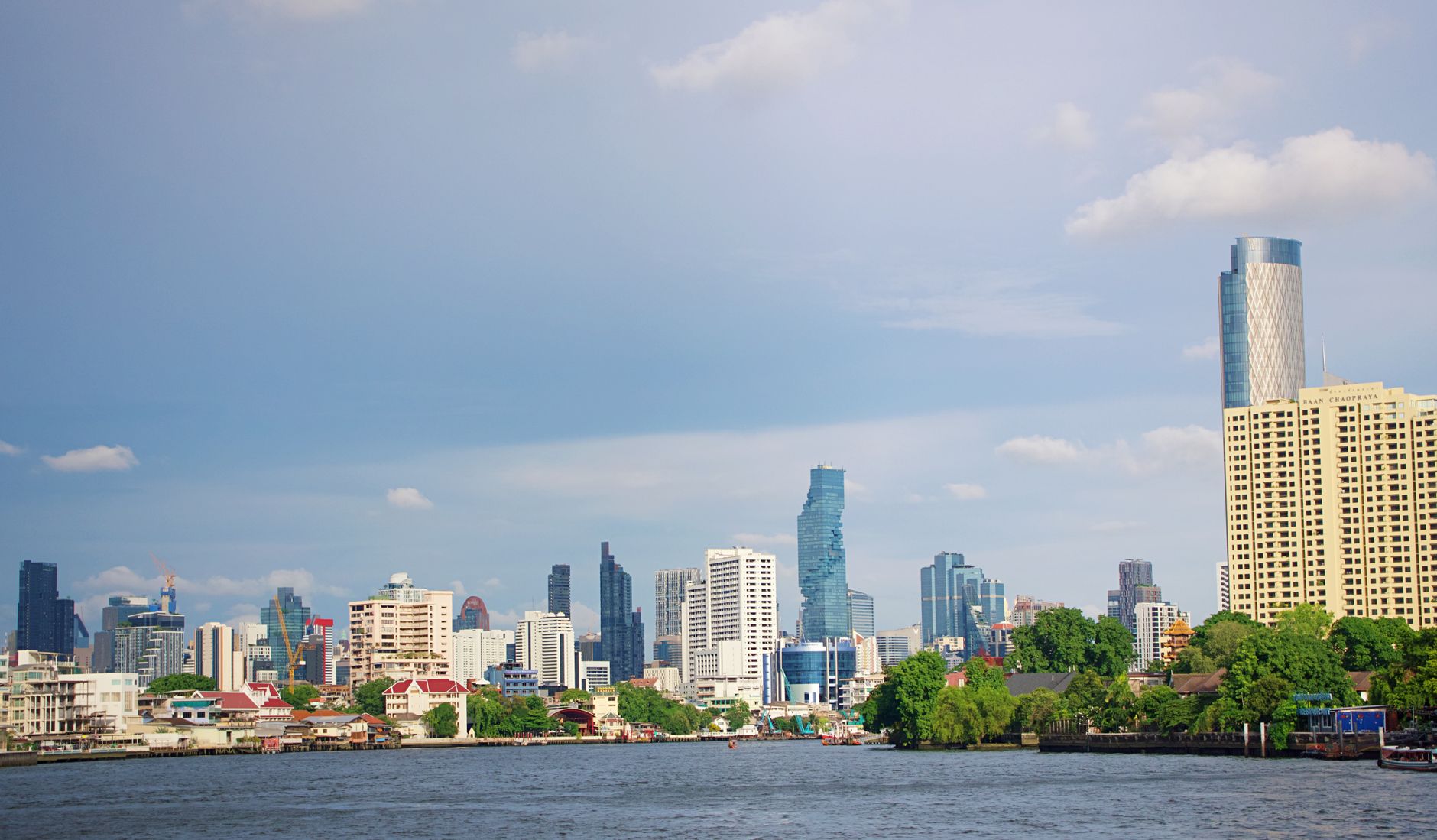
Beautiful view of Bangkok skyline with skyscrapers and river on a sunny day in Turkey
What works: a two-hour daily window blocked into the calendar at 7 to 9 p.m. local. Not for vendor work. For store work. You clear the customer-service queue, you check the Klaviyo flows that fired that day, you scan the orders dashboard for fraud flags, and you ping your support hire on Slack with the morning’s exception list.
If you do not have a support hire yet, this trip is the thing that finally pushes you to make the hire. A part-time virtual assistant on a US or UK time zone, briefed properly, runs the store while you are in the air. The maths is simple. A £600 to £900 monthly support spend is cheaper than the £4,000 quarter you lose when a checkout bug compounds for three days because nobody could escalate it to you.
I keep a running supplier spreadsheet in the same Drive folder as my POs. Date, vendor, amount in local currency, amount in GBP at that day’s rate, category, purpose. Two minutes a day on the road. Four hours saved per quarter when the books close.
Staying online across Turkey
Turkey connectivity is the silent variable that breaks more founder trips than queues at IST ever do. Factory WiFi past the front office is patchy. Hotel WiFi in Taksim is fine; in Karaköy it is hit and miss. The Bosphorus ferry crossings drop signal mid-strait if your carrier is congested. If you are authorising a wire from a taxi on the E-5, you need a connection that does not stall.
Carrier coverage from Sultanahmet to the Asian side
I had the HelloRoam plan for Turkey loaded for the Istanbul leg; it routed through Turkcell, which mattered on the Avcılar factory drive because Turkcell is the only network with consistent coverage along the D-100 corridor and through the industrial belt out to Esenyurt. Vodafone Turkey is strong in the city core and thins out west of Bakırköy. Türk Telekom holds up well on the Asian side, particularly around Kadıköy and Bostancı, and is the most consistent option on the Marmaray underwater rail crossing.
For the Lisbon leg, MEO is the default for the airport and central districts; NOS is competitive in Marvila and Alcântara; Vodafone Portugal is the safer bet on the Cascais coastal stretch. In Bangkok, AIS is the default for foreigners and held up through Chatuchak and the Sukhumvit corridor on my last trip. TrueMove H is solid in the city centre and faster in the wholesale-market stalls. dtac is the budget option most Bangkok-based expats run on.
Here’s the working table I use:
| Route segment | Local carrier | Signal quality | Notes |
|---|---|---|---|
| Lisbon Chiado and Baixa | MEO | Strong | Default for hotel and central walks |
| Lisbon Marvila and Alcântara | NOS | Solid | Better in the industrial belt |
| Istanbul Taksim and Beyoğlu | Turkcell | Strong | Default for city centre |
| Avcılar and Esenyurt factory belt | Turkcell | Strong | Only network with reliable D-100 coverage past Bakırköy |
| Kadıköy and Asian side | Türk Telekom | Strong | Best on Marmaray crossing |
| Bangkok Sukhumvit and Asok | AIS | Strong | Default for foreigners |
| Pratunam and Chatuchak | TrueMove H | Solid | Slightly faster in the market stalls |
The connectivity bill for a 12-day retreat is a rounding error against the cost of one missed wire authorisation. Treat it as infrastructure, not a souvenir.
What the trip actually costs
Return flights from London Heathrow on this loop run £900 to £1,400. Twelve nights of hotels at three-star business properties (Chiado, Taksim, Asok): £1,100 to £1,600. Ground transport, including airport transfers, Istanbul factory drivers and Bangkok Grab cars: £200 to £350. Meals: £350 to £550 if you eat where suppliers eat. Sample shipping home: £250 to £700 depending on volume.
All-in, a disciplined retreat lands at £2,800 to £4,600. The first PO I signed on my first Istanbul trip saved me £11,000 across the year on a single accessory SKU. The maths works if you run the retreat as work, not as a long weekend with a budget attached.
FAQ
How many supplier meetings can a founder realistically run in 12 days? Two vendor days per stop is the working ceiling. Six factory or workshop visits in total. Beyond that you stop absorbing detail and start making decisions on tired judgement. A single review day per city is non-negotiable.
Is the Lisbon to Istanbul to Bangkok loop tax-deductible for UK founders? Most of it, if the trip’s primary purpose is business. HMRC permits ordinary travel, accommodation and subsistence expenses for genuine business journeys, with documentation kept contemporaneously. Speak to your accountant before the trip; document daily; keep receipts in a single capture tool rather than scattered across phone screenshots.
What is the best month to fly this route? April to early June, or mid-September to mid-October. You avoid the worst of Bangkok’s wet season, Lisbon’s August shutdown and Istanbul’s coldest winter weeks. Ramadan timing in Türkiye can shift factory hours; check the calendar before you book.
Should you carry samples back as luggage or ship them? Ship anything over five kilograms. Carry the camera-grade samples (the ones you’ll photograph for Shopify product pages) in your cabin bag. The cost of replacing a lost sample suitcase is higher than the freight bill.
Do UK passport holders need a visa for any leg of this route? Portugal is Schengen and visa-free for up to 90 days in 180. Türkiye is visa-free for UK holders for stays up to 90 days. Thailand is currently visa-exempt for UK holders for stays up to 60 days. Always check the gov.uk foreign travel advice page before flying; rules change.
Bottom line
A founder retreat is not a working holiday. It is the part of the year when the supplier relationships that quietly make the store profitable get re-grounded, and where the consumer signal you trade on gets refreshed in person. Build the 12-day route, keep one review day a week, hire the support cover before you go, and the store reconciles in real time while you are in Galata or Asok. That is the entire trick.