
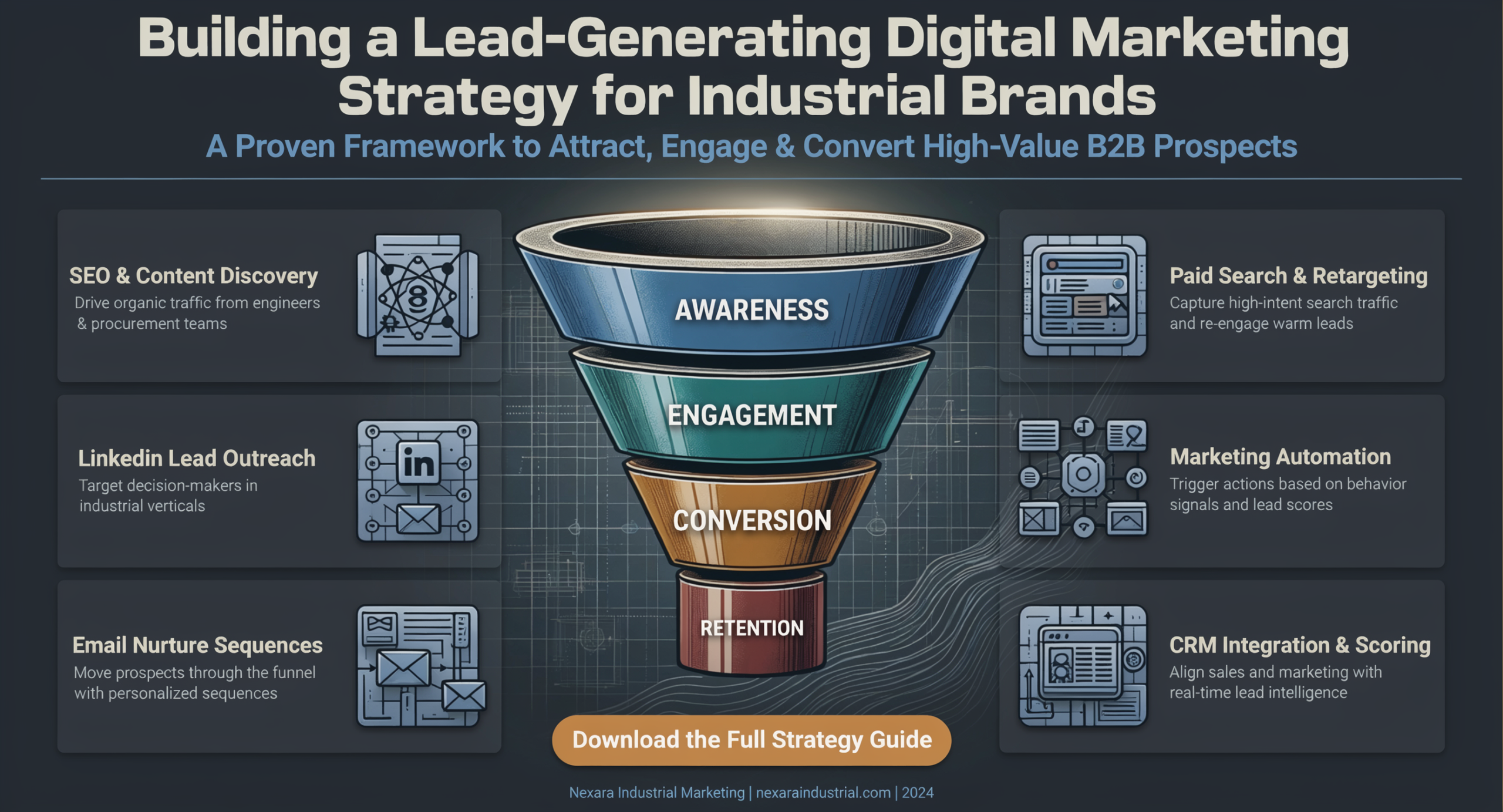
For decades, industrial marketing relied heavily on trade shows, cold outreach, and face-to-face negotiations. Previously, relationships were forged exclusively on factory floors or in corporate boardrooms. Today, however, the landscape has fundamentally shifted, and the initial handshake happens online. Modern manufacturing companies are rapidly reallocating their budgets toward digital channels to meet the evolving expectations of procurement officers and engineers. This transition is largely driven by changing buyer behaviours, with a recent survey from Gartner reporting that 70 percent of B2B buyers now prefer a completely digital, self-service buying experience. Because buyers are conducting extensive independent research before ever engaging with a sales representative, creating a comprehensive digital marketing roadmap has become essential for industrial brands wanting to maintain a competitive edge in today’s demanding market.
The Foundation of Digital Transformation
A successful online marketing strategy must begin with a high-performing website. Research from industry analysts indicates that 94 percent of first-impression assessments for B2B websites are strictly design-driven. If an industrial portal is slow, outdated, or difficult to navigate, potential clients will simply move on to a competitor. This makes specialised Manufacturing Website Design a critical first step before a brand scales its search engine optimisation, content creation, or paid advertising efforts. For Australian manufacturers navigating high local operational costs, having an efficient digital storefront is vital for demonstrating value early in the procurement process.
Rather than serving as a static digital brochure, a modern industrial website must function as an automated sales assistant. A recent marketing study found that 81 percent of manufacturing buyers already have a vendor shortlist established before initiating contact with a supplier. To make that list, websites need to seamlessly accommodate the SQDC framework. By addressing Safety, Quality, Delivery, and Cost directly on their landing pages, manufacturers can build immediate trust with high-value prospects. Furthermore, integrating customer relationship management tools directly into the website ensures that no inquiry falls through the cracks, allowing sales teams to track engagement metrics and tailor their follow-up conversations based on the specific pages a prospect visited.
Key Elements of an Industrial Marketing Roadmap
Once the digital infrastructure is in place, the focus must shift to user experience and lead capture. Industrial purchasing cycles are notoriously long, often involving upwards of 60 touchpoints across multiple channels. Capturing and nurturing these leads requires specific on-page strategies tailored to engineers, project managers, and procurement officers.
These extended cycles mean that keeping your brand top-of-mind is an ongoing challenge. A website that merely lists services without providing educational resources or clear pathways to engagement will struggle to retain visitor interest over a six-month or twelve-month evaluation period.
To maximise conversion rates, industrial brands should incorporate the following features into their digital marketing framework:
- Intent-Separated Calls to Action: A successful site distinguishes between buyers at different stages of the funnel. Using a prominent quote request button serves ready buyers, while a technical query pathway captures engineers still in the early evaluation stage.
- Technical Proof and Documentation: Trust is the primary driver for converting industrial website visitors into qualified leads. Brands must prominently display industry certifications, strict material tolerances, and detailed process documentation.
- Interactive Visualisations: Industrial websites are moving beyond flat images by prioritising interactive elements. Offering 3D product visualisations, animated machinery demonstrations, and direct CAD file downloads serves as a major trust signal for technical buyers.
Scaling Visibility with Fundamental SEO
Establishing a strong web presence is only the beginning of a successful campaign. To ensure the right decision-makers find the site, industrial brands must invest in robust search engine optimisation. Google captures the highest search intent for B2B manufacturing queries, making it vital to rank well for industry-specific capabilities and production processes. Once foundational web elements and site architecture are established, your digital marketing strategy must include link building to scale your online visibility, build domain authority, and drive highly qualified search traffic to your platform.
This strategic focus is particularly relevant within the Australian market, where digital initiatives often model the modern factory framework. Companies operating in industrial hubs across Sydney, Melbourne, and Brisbane are increasingly relying on organic search to discover new domestic partners. When local enterprises search for custom fabrication, precision machining, or heavy equipment suppliers, showing up on the first page of search results provides an immediate competitive advantage. Local case studies demonstrate that aligning website architecture with high-intent search terms and targeted outreach techniques can yield exceptional growth in digital leads over a standard financial year.
Embracing the Future of Industrial Sales
The digital marketing landscape for manufacturers is continuously evolving. With nearly half of B2B manufacturing buyers actively using artificial intelligence tools to research potential suppliers in recent months, complacency is no longer an option. Industrial brands that view their website and digital marketing efforts as a primary revenue engine, rather than a basic IT expense, will consistently outperform their legacy competitors. By establishing a user-centric web presence, targeting high-intent keywords, and securing authoritative backlinks, manufacturers can build a sustainable pipeline of high-quality leads for years to come. Investing in these digital foundations today ensures that as the industry becomes even more technologically advanced, your business remains a visible and highly sought-after partner in the global supply chain.