UK: +44 2038074555 info@atamgo.com
Balancing Creativity and Ethics: The Role of AI Humanizers in Content Creation

Balancing Creativity and Ethics: The Role of AI Humanizers in Content Creation

AI in Content Generation

AI is no longer working behind the scenes. It now speaks for brands, writes articles, and powers daily conversations. This shift raises an important question: How can we humanize communication when machines create the content?

This piece dives into the growing work of AI humanizers. These experts take content made by AI and shape it to feel more genuine, considerate, and responsible. As technology progresses, their role keeps creativity, trust, and subtlety alive in how people stay connected.

To grasp this change, we need to see how AI has grown into a major player in content creation.

How Is AI Changing Content Creation

AI has caused quite a stir in a lot of industries, and content creation is no different. Now, AI is writing articles and social media posts, and developing visual content. AI tools have become important assets for marketers, writers, and creators. AI’s ability to examine vast amounts of data and generate decent content at scale has boosted productivity.

As AI’s impact grows, we need to understand the good things it brings.

The Benefits of AI in Content Generation

Let us look at the benefits below:

  1. Speed and Efficiency: AI has the ability to create content fast, helping creators finish work on time and make lots of stuff.
  2. Data-Driven Insights: AI tools can look at what audiences like and what’s popular, letting creators make content for specific groups of people.
  3. Cost-Effectiveness: By doing repetitive jobs, AI cuts down on the need for many human workers, saving companies money.

But these good points come with drawbacks that need just as much attention.

The Challenges of AI in Content Creation

Even with its good points, the growth of AI in making content brings up several issues:

  • Generic: The AI-created content will never have the same creativity as compared to the content created by a human.
  • Ethics: Using AI for content can cause confusion about who the real author is, biases, and increase the chance of spreading false information.
  • Complete Reliance on Technology: Over-reliance on AI-based content can lead to a lack of creativity and problem-solving amongst the employees.

This is where AI humanizer tools come in, helping to connect computer-made output with real human expression.

The Role of AI Humanizers

AI humanizers use AI tools while adding their own creativity and ethical thinking to their workflow. They connect technology with the human element, making sure content speaks to audiences in a meaningful way.

To get the full picture of what they do, it’s helpful to see how AI can do more than just help out – it can make the creative process better.

Boosting Creativity with AI

  1. Idea Generation: AI helps brainstorm by offering suggestions based on data analysis. People who create stuff can then polish these ideas, adding their own unique take.
  2. Drafting and Editing: AI can help with creating the first draft for human writers. This leads to saving time and effort, which leads to a more efficient workflow.
  3. Personalization: An AI writer is able to create content that is according to an Individual’s preferences. Human writers can then repurpose this content to bring in the human touch.

But being creative isn’t enough when AI is part of the process. Being responsible is just as important.

Sticking to Ethical Standards

People who make AI more human-like have a big job in keeping content creation ethical:

  • Transparency: They make sure audiences know about AI-created content and its limits, building trust and keeping things real.
  • Bias Reduction: AI humanizers work hard to spot and fix biases in AI-generated content, pushing for inclusion and fairness.
  • Quality Checks: By proofing and improving upon the AI content, the human writers ensure that the quality standards are adhered to. Apart from this, they also ensure that the brand values are kept intact.

Despite having all of these positive points, we can’t forget that AI can’t replicate the unique ideation and viewpoints that human creativity brings.

The Importance of Human Creativity

AI handles data analysis and creates content well, but it lacks the emotional understanding and inventiveness of people. Humans bring unique perspectives to creating, allowing them to build stories that resonate with others.

The human touch—the skill of making someone feel understood—is still a challenge for AI.

Building Emotional Bonds

Connecting isn’t just about words. It’s to do with creating a sense of belonging by evoking emotions. This is where the AI and related tools struggle.

  1. Storytelling: Only humans are able to write in a way that is relatable and consistently engaging. Content from AI often misses this storytelling finesse.
  2. Cultural Context: Human-written content is able to hit the mark when it comes to nailing the cultural nuances.
  3. Empathy: One of the advantages humans have over AI is that they can get a better POV of the reader.

Content creation in the future will depend on blending the strengths of AI with human creativity. However, this is not just about the results—it also involves being accountable.

Ethical Considerations in AI-Driven Content Creation

Utilizing AI to generate content comes with its own set of responsibilities. Having bias can be a problem because AI systems learn from past data, which can lead to repeating prejudices.

  • Building Datasets That Reflect Variety: The go-around for this is to use a variety of data sources, etc, to train the AI models.
  • Regular Human Review: Human intervention is required for proofing to look out for biases and other mistakes.

Implementing these steps ensures that the mistakes are minimized and biases are reduced while generating content.

Transparency and Accountability

Trust relies on being upfront. People need to know when AI is involved in creating content.

  • Mark AI-created content.
  • Make sure the final responsibility for a message is assigned, even if a machine helped write it.

Being upfront like this helps protect trust and ensures creators stay accountable. It adds an important layer of ethical understanding when intellectual property raises concerns.

Understanding Intellectual Property

Ownership can get tricky. AI often pulls ideas from many places, so figuring out who gets the credit isn’t simple.

People who refine AI content need to be careful. They should respect original authors and ensure the content avoids breaking legal or moral rules.

These human intervention measures form the basis for the AI content to remain fair and respectful. With things changing in the AI space, it becomes more important than ever to talk about the future trends.

Future Trends in AI and Content Creation

AI is changing fast. Its role in making content will become smoother and more connected. So, what comes next?

  • Better Language Understanding: AI will understand context and tone much more, which will help it create easier-to-read, more focused content.
  • More Personalized Content: Tools will adjust content better by responding to how users act in real time.

These changes will make AI tools more helpful, but they will also increase the need to keep content authentic and valuable.

Why We Need AI Humanizers

As AI starts generating more and more content, making the content feel real and human becomes more important. AI humanizers won’t just polish sentences or fix problems. Their purpose will be closely linked to maintaining the human touch and the brand voice in the content generated by AI.

Teaming Up Humans and AI

This is not about passing the task along; it is about working together. Teams that combine the human touch to shape ideas with AI’s ability to assist in the process will create the most engaging content. They will work together to find the right mix of speed, wide reach, and genuine connection.

The Evolving Role of Humans in AI-Powered Content

AI is changing how content gets created. It brings speed and reach but also sparks questions about staying authentic, being responsible, and keeping a unique voice. As this area evolves, AI humanizers play a critical role. They make sure tech supports creativity instead of taking it over.

The aim isn’t to pick between people and machines. It’s to build setups where both add value. AI can deal with the technical stuff, while humans focus on shaping the message. This creates content that not only is better but also connects with its intended audience. That’s the kind of future worth aiming for.

Ways AI in Healthcare is Transforming Patient Care and Management

Ways AI in Healthcare is Transforming Patient Care and Management

AI in Healthcare

AI in healthcare is revolutionizing patient care by improving diagnostic accuracy, personalizing treatments, and enhancing patient outcomes. With the help of advanced diagnostic tools, virtual health assistants, and its role in drug discovery, AI is fundamentally transforming the healthcare industry. Healthcare development services are key in integrating these AI technologies, allowing for faster adoption and more efficient healthcare delivery.

AI is enhancing disease diagnosis by increasing accuracy, reducing human error, and identifying at-risk patients, which ultimately leads to better health outcomes. Additionally, personalized treatment plans are developed as AI analyzes healthcare data patterns to tailor effective solutions, improve patient results, and minimize adverse drug events. Virtual health assistants also offer 24/7 support, which increases patient engagement and safety, while simultaneously reducing the workload of healthcare providers for improved patient care.

AI-Enhanced Disease Diagnosis

AI is revolutionizing disease diagnosis, offering unprecedented precision and efficiency. Tools powered by ai technology and ai tools can analyze vast datasets, improving diagnostic accuracy and reducing human error, thus identifying conditions that might be overlooked by human errors. Artificial intelligence and advanced technologies are enhancing these processes further, particularly in the realm of medical diagnosis.

AI models can effectively identify patients at risk for various chronic diseases. Here, the true power of machine learning in clinical practice and clinical trials settings becomes evident, accelerating the diagnostic process and enhancing efficiency, ultimately leading to better patient outcomes, improved health outcomes, favorable clinical outcomes, and significant benefits.

Personalized Treatment Plans with Precision Medicine

AI’s role in personalized treatment plans marks a significant breakthrough in precision medicine. By analyzing complex healthcare data patterns, AI:

  • Identifies unique responses to treatments, resulting in more tailored and effective healthcare AI app development company.
  • Improves patient outcomes.
  • Minimizes adverse drug events by considering individual characteristics, genetic information, and patient specific data. AI also streamlines clinical documentation by integrating insights from patient data into SOAP notes templates, making it easier for healthcare providers to track progress and adjust treatment plans efficiently.

Virtual Health Assistants for Improved Patient Care

Virtual health assistants are transforming patient care by offering 24/7 support and monitoring. These AI-powered tools boost patient engagement, reduce healthcare providers’ workload, and improve overall patient outcomes in the healthcare sector, enhancing patient safety for healthcare professionals and healthcare organizations within the healthcare system through an automation solution. Healthcare leaders in the healthcare industry are increasingly recognizing the value of these innovations in population health management.

For healthcare professionals interested in integrating advanced technologies into their practice, exploring options at medical assistant schools in Texas can provide the foundational training necessary to thrive in today’s AI-enhanced healthcare environment.

AI in Drug Discovery and Development

AI is revolutionizing drug discovery and pharmaceutical production in the pharma industry, drastically cutting the time and costs of bringing new drugs to market through the manufacturing process of pharmaceutical manufacturing and pharmaceutical automation. Leveraging machine learning and deep learning ai algorithms, AI quickly identifies promising drug candidates and optimizes their designs in the drug development process and pharmaceutical development within the pharmaceutical sector, benefiting pharmaceutical companies.

Summary

Summarizes the key points discussed in the blog and concludes with an inspirational note on the future of AI in healthcare. Emphasizes the transformative power of AI and its potential to revolutionize patient care and management.

6 Ways AI in the Workplace Boosts Rewards Efficiency

6 Ways AI in the Workplace Boosts Rewards Efficiency

AI in the Workplace

Organizations with effective recognition programs have 31% lower voluntary turnover compared to those without such initiatives.

Companies are constantly searching for ways to enhance employee satisfaction and retention. The intersection of artificial intelligence and employee recognition is revolutionizing how organizations reward their workforce.

AI technologies are addressing longstanding challenges in rewards management from personalization issues to budget constraints and administrative burdens.

The transformation is significant, enabling more meaningful, timely, and impactful recognition that resonates with employees across generations and work environments.

Harnessing AI for More Personalized Rewards

Before diving into specific applications, it’s important to understand how AI fundamentally changes the rewards landscape. The technology doesn’t just automate existing processes—it creates entirely new possibilities for personalization and efficiency.

Understanding Employee Preferences Through Data

AI in the workplace is revolutionizing how companies understand their employees’ preferences. Advanced algorithms analyze past reward selections, redemption patterns, and even social media activity to create comprehensive preference profiles. These systems can detect subtle patterns that human managers might miss.

Traditional rewards programs often rely on generic gift cards or one-size-fits-all recognition. AI-powered employee rewards platforms use machine learning to continuously refine their understanding of what motivates each individual, creating a virtuous cycle of improvement.

Real-Time Recognition Opportunities

One of the most powerful applications of AI is its ability to identify recognition-worthy moments as they happen. Unlike traditional systems that rely on manager observation, AI can monitor performance metrics across various platforms and highlight achievements in real-time.

For sales teams, this might mean automatic recognition when closing a difficult deal. For customer service representatives, it could trigger rewards when resolving complex issues efficiently. The immediacy of this recognition dramatically increases its impact on employee motivation.

Adaptive Learning for Evolving Preferences

People change over time, and so do their preferences. AI systems excel at detecting these shifts and adjusting reward recommendations accordingly. This adaptive capability ensures that workplace productivity remains high through consistently relevant recognition.

The data-driven nature of AI creates a continuously improving system that evolves with your workforce, ensuring rewards remain fresh and motivating rather than becoming stale or predictable over time.

Automating Recognition Workflows for Greater Efficiency

Automation represents one of the clearest ways that benefits of AI manifest in rewards programs. By streamlining administrative processes, organizations can recognize more achievements without increasing overhead costs.

Reducing Administrative Burden

Traditional recognition programs often involve significant manual work—from identifying deserving employees to processing rewards and tracking budgets. This administrative overhead can discourage busy managers from participating consistently.

AI systems automate these workflows, making it frictionless to recognize employees. Some platforms can even draft personalized recognition messages based on the specific achievement, saving managers valuable time while maintaining the personal touch that makes recognition meaningful. Silent Partners is one such solution that enables enterprises to automate internal workflows, including employee recognition, by identifying friction points and embedding AI-driven processes directly within teams. 

Ensuring Consistent Application of Recognition Criteria

Human-managed recognition programs can suffer from inconsistency. Some managers might be more generous with recognition than others, creating perceptions of unfairness.

AI helps standardize recognition across departments by applying consistent criteria to evaluate performance. This fairness builds trust in the rewards system and enhances employee rewards effectiveness across the organization.

Creating Scalable Recognition Programs

As organizations grow, scaling recognition programs becomes challenging. AI makes it possible to maintain personalized, meaningful recognition even across large, global workforces.

The technology can handle recognition for thousands of employees simultaneously, ensuring no deserving achievement goes unnoticed regardless of department size or geographic location.

Optimizing Rewards Budgets Through Predictive Analytics

Smart allocation of recognition resources is essential for maximizing impact. AI excels at identifying the highest-value applications of limited rewards budgets.

Forecasting Budget Requirements

AI analyzes historical recognition trends and business cycles to predict future reward needs, helping HR allocate budgets more effectively across departments and timeframes.

Peak Period Adjustments

During high-demand times like holidays or major project completions, AI automatically reallocates budgets to meet increased recognition demands.

Measuring Recognition ROI

Advanced analytics link recognition efforts to key metrics such as productivity, retention, and customer satisfaction—enabling data-driven optimization of reward strategies.

Continuous Program Improvement

Insights from AI help organizations focus on high-impact recognition activities and refine or phase out less effective ones over time.

Dynamic Budget Reallocation

AI allows for real-time budget shifts based on emerging business needs, ensuring efficient and responsive use of recognition funds across all departments.

Enhancing Recognition Impact Through Natural Language Processing

The words used in recognition can be as important as the reward itself. NLP technology is transforming how organizations communicate appreciation to maximize emotional impact.

Analyzing Recognition Message Quality

NLP systems can evaluate the emotional resonance and specificity of recognition messages. Generic praise like “good job” carries less motivational impact than specific acknowledgment of an employee’s unique contribution.

AI tools can guide managers to create more meaningful recognition by suggesting specific achievements to highlight and language that will resonate with the recipient’s communication preferences.

Multilingual Recognition Capabilities

For global organizations, language barriers can limit the effectiveness of recognition programs. AI-powered translation ensures that recognition messages maintain their emotional impact across language boundaries.

This capability enhances employee rewards by ensuring every team member receives recognition in their preferred language, creating an inclusive environment regardless of location.

Sentiment Analysis for Program Improvement

By analyzing employee responses to recognition, NLP systems can measure the emotional impact of different recognition approaches. This feedback loop allows continuous refinement of recognition strategies.

Organizations can understand which recognition methods drive the strongest positive emotional responses, helping to enhance employee rewards programs over time.

Streamlining Rewards Distribution Through Automation

ChatGPT said:

For recognition to be truly effective, fulfillment must be seamless and timely—an area where AI excels. By automating processes, AI enables instant delivery of digital rewards like gift cards or recognition points, reinforcing positive behavior immediately. It also detects potential fraud by flagging irregular reward claims, preserving program integrity. 

Additionally, AI-powered self-service portals empower employees to manage and redeem rewards autonomously. This not only boosts engagement but also streamlines administration, keeping the focus on celebrating achievements rather than handling paperwork.

Creating Memorable Experiences Through Generative AI

Perhaps the most exciting frontier in AI in the workplace is the creation of truly unique recognition experiences tailored to individual preferences.

Personalized Recognition Narratives

Generative AI can craft custom recognition messages that highlight an employee’s unique contributions in a way that resonates with their personal values and communication style.

These tailored narratives create stronger emotional connections than standardized recognition, making the experience more memorable and motivating.

Custom Reward Experiences

Beyond traditional rewards, generative AI can design custom experiences that align with an employee’s interests. For someone who loves cooking, this might be a virtual cooking class with a celebrity chef.

These personalized experiences demonstrate a deeper level of appreciation than standard rewards, showing that the organization truly values the individual’s unique contributions.

Virtual Recognition Events

For remote or distributed teams, generative AI can create engaging virtual recognition events that bring teams together across distances. From themed celebrations to interactive team experiences, these events build community while highlighting achievements.

This capability is particularly valuable for maintaining strong culture and workplace productivity in hybrid or remote work environments.

FAQs

How does AI improve efficiency in workplace rewards programs?

AI boosts rewards efficiency by automating administrative tasks, personalizing recognition to individual preferences, optimizing budget allocation, and ensuring timely delivery of meaningful recognition, all while providing data-driven insights for continuous improvement.

What benefits does AI bring to employee recognition?

AI enhances employee recognition by making it more personalized, consistent, and timely. It helps identify deserving achievements that might otherwise go unnoticed, ensures fair distribution of recognition, and provides analytics to measure and improve program effectiveness.

Can small companies benefit from AI-powered rewards platforms?

Absolutely! Small companies often benefit most from AI-powered rewards, as they typically have limited HR resources. AI tools handle administrative tasks, allowing small teams to deliver enterprise-quality recognition experiences without dedicated staff.

The Future of AI-Enhanced Employee Recognition

The integration of AI into employee rewards programs represents a fundamental shift in how organizations acknowledge and celebrate their people. By leveraging data, automation, and personalization, companies can create recognition experiences that are more meaningful, more efficient, and more impactful than ever before.

As the technology continues to evolve, we’ll see even deeper personalization and more seamless integration of recognition into daily workflows. Organizations that embrace these technologies now will build stronger cultures and gain competitive advantages in talent attraction and retention.

7 Genius Ways to Use Perchance AI Story Generator

7 Genius Ways to Use Perchance AI Story Generator

perchance ai story

Introduction: Unlocking the Power of Perchance AI Story Generator

Perchance AI Story​ is the perfect tool to supercharge your creativity. Whether you’re a writer struggling with writer’s block, a content creator seeking fresh ideas, or a marketer looking for engaging storytelling techniques, this AI-powered generator can be a game-changer.

AI-driven storytelling has revolutionized the way content is created. With Perchance.org, users can generate unique ideas, develop full-length stories, and even refine their writing skills. Whether you need a captivating short story, a creative plot for your next novel, or engaging marketing copy, AI story generators have become indispensable. Make sure your content passes an AI Content Checker for peace of mind.

In this guide, we’ll explore 7 genius ways to use Perchance AI Story Generator and how it can transform your storytelling process. By the end, you’ll know how to maximize its potential and craft compelling stories with ease.

1. Generate Unique Story Ideas Instantly

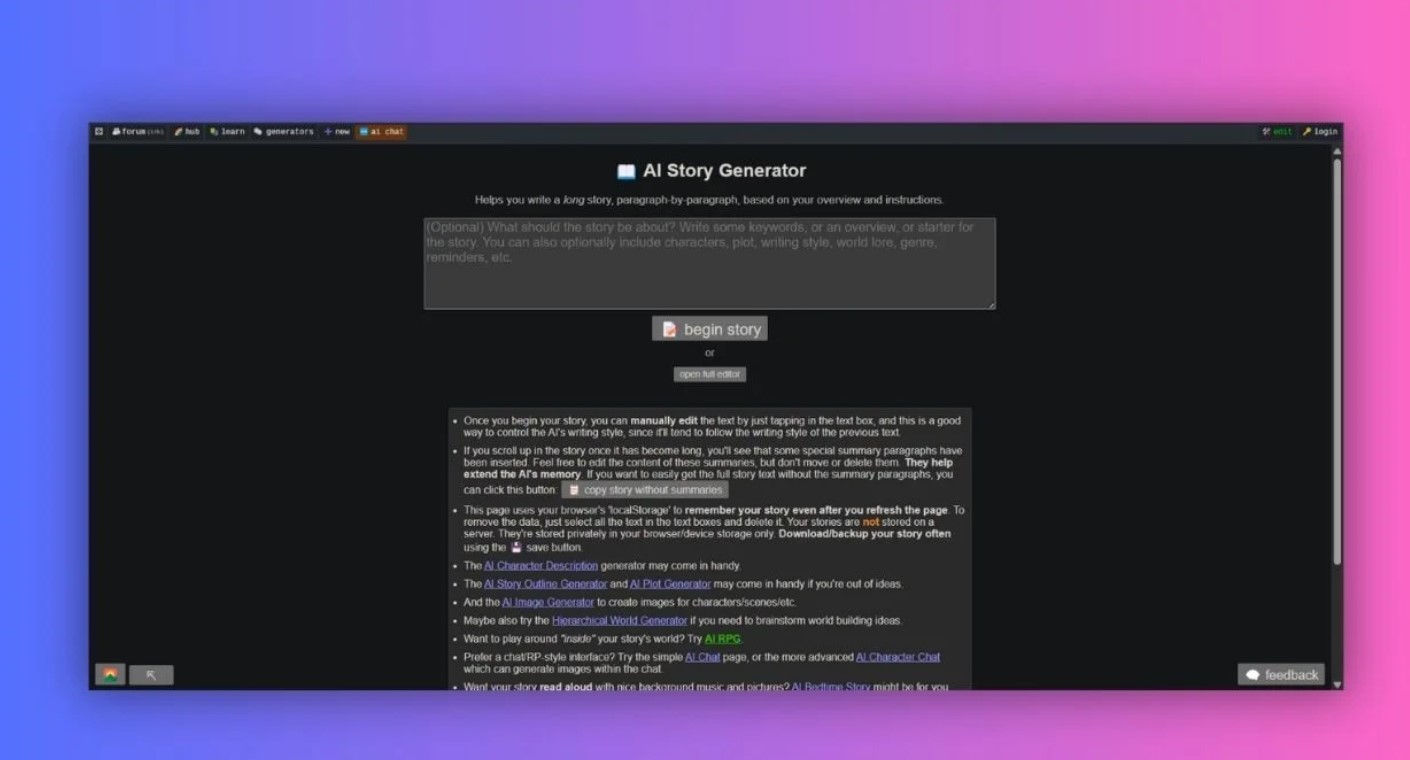
Perchance AI Story Generator

Coming up with fresh and engaging story ideas can be a challenge. Luckily, AI Story Generator Perchance provides an instant solution by offering randomized, AI-driven story prompts.

  • Overcoming Writer’s Block: Simply enter a keyword or theme, and let Perchance.org generate multiple unique story starters.
  • Customizing Prompts: Adjust the settings to refine the style, tone, or genre of the generated content.
  • Mixing & Matching Ideas: Combine multiple AI-generated prompts to create something even more original.

2. Create Full-Length Stories in Minutes

Instead of struggling to develop a full plot, Perchance AI Story Generator helps expand short prompts into complete narratives.

  • Step-by-Step Expansion: Start with a simple prompt, then use AI to build on characters, settings, and conflicts.
  • Editing for a Human Touch: AI-generated content is a great starting point, but you can refine it for better engagement.
  • Adapting AI Stories for Different Mediums: Transform AI-generated plots into screenplays, comics, or even video game narratives.

3. Improve Your Storytelling Skills with AI Feedback

AI isn’t just for generating content—it can also improve your writing skills by providing valuable feedback on structure and style.

  • Analyzing AI-Generated Stories: Review patterns in AI-generated stories to understand effective storytelling techniques.
  • Refining Plots & Characters: Use Perchance Story AI to experiment with different narrative styles and see what works best.
  • Comparing AI vs. Human Writing: Learn from AI-generated content and identify areas where human creativity can enhance the final output.

4. Speed Up Content Creation for Blogs & Social Media

Bloggers and content creators can use AI Story Generator Perchance to streamline their writing process.

  • Repurposing Stories: Turn AI-generated fiction into engaging blog content.
  • Creating Micro-Stories: Generate bite-sized, engaging content for social media posts, helping boost engagement and reach.
  • Enhancing SEO with AI-Generated Stories: Optimize AI content for search engines by including relevant keywords and compelling meta descriptions. Enhancing SEO with AI-Generated Stories: Leverage AI SEO to optimize AI content for search engines by including relevant keywords and compelling meta descriptions.

5. Experiment with Different Writing Styles & Genres

One of the best features of Perchance AI Story Generator is its ability to generate stories in multiple styles and genres.

  • Write Like a Pro: Test different tones, from classic literature to modern thrillers.
  • Explore Different Genres: Whether you’re into sci-fi, fantasy, horror, or romance, Perchance.org provides endless inspiration.
  • Combining Multiple Genres: Blend mystery with fantasy, horror with romance, or sci-fi with drama for a unique storytelling experience.

6. Enhance Your Role-Playing and Gaming Experience

Gamers and RPG enthusiasts can leverage Perchance AI Story Generator to create immersive game narratives. Combined with roleplay AI tools such as DreamGen, players can interact with dynamic characters, expand their adventures, and experience stories that evolve in real time.

  • Build RPG Storylines: Use AI to generate character backstories, world-building details, and side quests.
  • Develop Complex Narratives: AI can help construct layered, compelling plots for tabletop or online role-playing games.
  • Generate Non-Player Character (NPC) Dialogues: AI can craft engaging dialogues for NPCs, making the game world feel more dynamic and real.

7. Brainstorm Marketing Copy and Engaging Advertisements

Storytelling isn’t just for fiction—AI Story Generator Perchance can also enhance marketing content.

  • Engage Your Audience: AI-generated narratives can add a compelling edge to your ads.
  • Product Descriptions & Ads: Use storytelling techniques to make your copy more persuasive and memorable.
  • Personalized Marketing Campaigns: Generate unique ad copy tailored to specific audiences by experimenting with different AI-generated storylines.

Conclusion

Now that you know 7 genius ways to use Perchance AI Story Generator, it’s time to put these strategies into action. Whether you’re crafting fiction, generating marketing copy, or enhancing your gaming experience, Perchance.org is a powerful tool that can elevate your storytelling.

AI-generated storytelling isn’t just a shortcut—it’s a new way to think creatively. Writers, marketers, and gamers alike can benefit from AI Story Generator Perchance to refine their craft, save time, and explore endless creative possibilities. The key is to use AI as a starting point and add your unique touch to bring stories to life.

Start experimenting today and discover the endless possibilities AI storytelling has to offer!

Find More: Boost Your Sales With SEO Services

FAQs

1. Is Perchance AI Story Generator Free to Use?

Yes! Perchance.org offers a free-to-use AI story generator with no sign-up required.

2. How Can I Make AI-Generated Stories Sound More Human?

Edit the AI-generated text, add personal touches, and refine character dialogues to make the story more natural.

3. What Are the Best Prompts for Getting High-Quality Stories?

Use detailed, specific prompts that include settings, character types, and potential conflicts to get better AI-generated results.

4. Can Perchance AI Help with Writing Books or Novels?

Absolutely! You can use Perchance AI Story Generator to outline plots, generate scenes, and explore character arcs.

5. How Does Perchance AI Compare to Other AI Writing Tools?

Unlike some paid AI writing tools, Perchance Story AI is free and user-friendly, making it an excellent choice for beginners and professionals alike.

6. Can Perchance AI Story Generator Be Used for Educational Purposes?

Yes! Teachers and students can use AI-generated stories to practice creative writing, explore different narrative techniques, and analyze literary styles.

Tags:
How AI Is Revolutionizing Web Development Today

How AI Is Revolutionizing Web Development Today

AI Is Revolutionizing Web Development

The way AI is being used in all departments of life is unimaginably great. From health care to the software industry, it is leaving marks that set new trends. 

Artificial Intelligence is now playing its part in web development where it assists developers with automated design tools to highly responsive user interfaces. Moreover, AI chatbots have brought positive impressions to e-commerce sites and other platforms demanding live assistance.

Now, let’s try to unfold the roles of artificial intelligence in web development, by taking you through the perks of AI. 

How AI is Used in Web Development

Let’s move towards the points where AI is used in web development to explain in a better way. 

  1. Content Generation

Content generation is an important part of a website, be it text, video, infographics, or anything. However, AI is widely used to generate text-based content for short blogs, articles, and social media captions, and is not only limited to creative content but technical content too. 

Moreover, AI helps developers in creating SRS documents, case studies, user experience design documentation, etc. 

AI Tools for Content Generation

  • JasperA AI
  • Copy.ai
  • ChatGPT


  1. Coding

With the introduction of ChatGPT, it has become the heaven for developers. Web developers use ChatGPT and other such technologies to generate codes quickly. This not only saves time but also enhances developers’ productivity as dev people will have to use little brain power to think about logic. 

In addition, this assistance of AI enables developers to utilize the saved time to work on the implementation part and deliver the project quickly. Besides project implementation and delivery, AI equips developers to review their written code and get help in debugging. 

Did you Know?

Research shows that the global AI software market revenue is expected to rise from $70 billion to around $135 billion by 2025

source


AI Tools for Coding

  • Github Co-Pilot
  • CodeWP
  • AskCodi


  1. Smart Chatbots

You must have witnessed chatbots on different websites that assist visitors with the site, business, and other related things. Nowadays, the use of AI chatbots is very common as they instantly help the user with their query. Rather than searching for the information manually, you will get it with just a few impressions on the keyboard. 

Moreover, AI chatbots communicate with the user, ask his requirements, and find solutions to problems. 

Meanwhile, to have a better understanding of the role of smart chatbots, read the role of AI in e-commerce. 

AI-Powered Chatbots

  • Chatbot
  • HubSpot Chatbot Builder
  • Tidio


  1. Data Analytics

Artificial intelligence is capable of evaluating large data sets. This feature of AI offers web developers insights and trends while assisting in making informed decisions. 

Additionally, a small to mid-level software development company won’t have to hire a data scientist to analyze data sets, data cleaning, and other processes involved. 

All you have to do is to feed the data to the AI tools and it will complete the job efficiently. Further, this strategy not only enhances the workforce productivity but allows them to focus on the core processes efficiently. 

AI Tools for Data Analytics

  • IBM Watson Analytics
  • Google Cloud Smart Analytics
  • Sisense 


Case Study: Airbnb Utilizes AI Techniques for Categorization

Airbnb faced challenges in automatically tagging and categorizing millions of listing photos to improve search relevance. So, they employed deep-learning neural networks to recognize objects and scenes in images. Hence, this helped them get rid of the challenge as the intelligent image recognition system made the lists more discoverable.

Challenges of Using AI in Web Development

Along with the long list of perks of using AI in web development, some challenges are also on the way. Here are a few: 

  • It is a misconception that AI tools can build a complete website. AI can’t build a site but assist you in many processes involved. 
  • Such tools need to be trained according to your demands. 
  • AI algorithms work on the data you feed. If you provide good quality data, you will get good results like xmap. However, if you feed low-quality or biased data, it may affect the findings. 

Wrapping Up!

Therefore, AI is a companion in building highly responsive and creative websites. It assists web developers in from coding to testing, and in other matters too. However, before using AI tools, one must train the tool according to their needs and requirements.

AI-Powered Training Programs: Helping Businesses Stay Competitive in a Digital Economy

AI-Powered Training Programs: Helping Businesses Stay Competitive in a Digital Economy

AI-Powered Training Programs:

The way businesses train their employees is changing, fast. Traditional training methods, with their rigid schedules and one-size-fits-all approach, are struggling to keep up with today’s rapidly shifting industries. Skills that were relevant just a few years ago can quickly become outdated, leaving businesses scrambling to keep their teams prepared for new challenges. This is where AI-powered training programs come in.

Instead of relying on static training manuals or generic e-learning courses, companies are now turning to AI-driven solutions that adapt to individual learning styles, predict skill gaps, and provide personalized training at scale. AI is making employee education smarter, faster, and more engaging, helping businesses build a workforce that’s ready for whatever comes next. From tailored learning paths to real-time feedback and predictive analytics, AI is transforming corporate training into a dynamic, data-driven experience. Let’s explore how AI-powered training is redefining learning in the workplace and why businesses that embrace it will have the edge in the digital economy.

The Digital Economy and the Need for Continuous Learning

The digital economy is driven by rapid technological advancements, automation, and evolving consumer demands. Traditional skill sets become obsolete faster than ever, and businesses that fail to upskill their workforce risk falling behind. Emerging technologies such as AI, machine learning, blockchain, and cloud computing are reshaping industries, creating new job roles while rendering others redundant. Consequently, employees must constantly update their skills to remain relevant.

“The need for continuous learning has led to a shift away from traditional, static training methods toward dynamic, technology-driven solutions. In the past, corporate training often relied on instructor-led classroom sessions or generic e-learning modules that lacked personalization,” explains Alex L., Founder of StudyX. “These traditional methods struggled to keep pace with the ever-changing skill requirements of the digital economy. AI-powered training programs address this gap by offering real-time learning experiences tailored to each employee’s needs, ensuring that businesses can quickly adapt to technological disruptions and market shifts.”

How AI Is Transforming Corporate Training

“AI is reshaping workplace training in several key ways. The most significant shift is personalization. Traditional training assumes that all employees learn the same way and need the same information, but AI flips this model on its head. By analyzing individual learning patterns, strengths, and weaknesses, AI-powered systems can create customized training plans that adjust in real time.

For example, an AI-driven learning platform might notice that an employee is struggling with data analytics concepts. Instead of forcing them through a full course, it could provide targeted exercises, real-world examples, or even recommend one-on-one coaching sessions. On the other hand, if an employee is excelling, AI can accelerate their learning and introduce more advanced material, keeping them challenged and engaged,” believes Promise Okeke, CEO of NovoPath.

AI-powered training systems can adapt dynamically, offering instant feedback and modifications based on an employee’s progress. This not only improves learning retention but also ensures that employees can acquire skills in a way that aligns with their unique cognitive preferences.

Another game-changing innovation is the use of AI-powered chatbots and virtual assistants. These tools act like on-demand trainers, answering employee questions, guiding them through learning modules, and even providing instant feedback. Employees don’t have to wait for a scheduled workshop to get help, they can simply ask a chatbot and get an immediate response, making learning more interactive and accessible.

“Automation and AI-driven tools have drastically reduced the inefficiencies in corporate training,” notes Steve Morris, Founder & CEO of NEWMEDIA.COM. “By streamlining the learning process, businesses can ensure that their workforce remains ahead of the curve without unnecessary delays.”

AI is also taking training beyond simple assessments and quizzes. With predictive learning analytics, businesses can use AI integration services to forecast future skill gaps and proactively train employees before a problem arises. If a company is planning to adopt a new software tool, AI can identify which employees will need training and recommend relevant courses before the transition even begins.

Key Benefits of AI-Powered Training Programs

Adopting AI in corporate training doesn’t just make learning more engaging, it offers tangible benefits that directly impact business performance. Here’s why companies are making the shift:

1. Training That Feels Personal

Instead of forcing employees through generic courses, AI customizes training to their skill levels, learning speeds, and career goals. This makes learning more relevant, engaging, and effective.

AI’s ability to analyze learning patterns and deliver content accordingly ensures that no two employees have the same learning journey. This level of personalization is what makes AI-driven training significantly more effective than traditional methods.

2. Less Time, Lower Costs

Traditional training can be expensive and time-consuming, requiring workshops, instructors, and printed materials. AI automates much of this process, cutting costs and allowing employees to learn at their own pace, without disrupting their workflow.

3. Real-Time Feedback for Faster Learning

AI-driven training platforms provide instant feedback, helping employees correct mistakes and improve their skills right away. No more waiting for performance reviews or end-of-course evaluations.

“Real-time feedback is a game-changer,” says Stephen Twomey, Founder of MasterMindSEO. “AI enables businesses to address skill gaps the moment they arise, which significantly accelerates the learning curve.”

4. Better Employee Engagement and Retention

Employees want to grow in their careers. Offering AI-powered learning opportunities shows a company is invested in their development, leading to higher job satisfaction and lower turnover rates. When combined with well-structured employee engagement programs, these initiatives create a stronger sense of belonging and commitment, making employees more likely to stay and thrive within the organization.

5. Scalable Learning for Global Teams

AI-powered training platforms can train hundreds or even thousands of employees at once, no matter where they’re located. This makes it easy for multinational companies to provide consistent, high-quality training across all teams.

6. Smarter Decision-Making with Learning Data

AI doesn’t just improve training, it provides insights into workforce development. Businesses can track employee progress, identify knowledge gaps, and refine training strategies based on real data.

As AI-driven training systems collect more data, they become better at predicting what employees need. This allows businesses to be proactive rather than reactive when it comes to upskilling their teams.

Implementing AI-Powered Training in Business Operations

To successfully integrate AI-powered training programs into a business, companies must adopt a structured approach. Implementation involves selecting the right AI-driven learning platforms, defining training goals, and ensuring seamless adoption among employees.

1. Choosing the Right AI-Powered Learning Platform

Businesses should evaluate AI-based training platforms based on factors such as adaptability, user-friendliness, and compatibility with existing learning management systems (LMS). Platforms like Coursera for Business, Udemy for Business, LinkedIn Learning, and AI-driven LMS solutions offer personalized training experiences.

2. Defining Training Goals and Skill Requirements

“Before rolling out AI-powered training, organizations must identify their training objectives. Whether the goal is to enhance technical skills, improve leadership abilities, or familiarize employees with new technologies, defining clear learning outcomes ensures the AI system delivers relevant training content,” says Sumeer Kaur, Founder of Lashkaraa.com.

3. Continuously Monitoring and Optimizing Training Programs

AI-powered training is not a one-time initiative but an ongoing process. Companies must continuously monitor training data, assess learning outcomes, and refine AI algorithms to improve training effectiveness. Regular updates and content enhancements ensure employees stay current with industry trends and emerging skills.

4. Encouraging Employee Adoption and Engagement

“For AI-driven training to be successful, employees must embrace the technology. Businesses can encourage adoption by demonstrating the benefits of AI-powered learning, offering incentives for course completion, and integrating training into employees’ daily workflows. Gamification elements such as leaderboards, badges, and rewards can further boost engagement,” says Doug Coats, Marketing Manager at CodeCorp.

The Future of AI in Corporate Training

As AI technology advances, its role in corporate training will continue to expand. Future developments may include even more sophisticated AI tutors, virtual reality (VR) and augmented reality (AR) integration for immersive learning, and AI-powered mentorship programs that connect employees with virtual career coaches. AI will also play a crucial role in predictive workforce planning, helping businesses anticipate skill shortages and proactively train employees in emerging fields.

“The future of work will be shaped by intelligent, AI-driven training ecosystems that prioritize lifelong learning and adaptability. Companies that embrace AI-powered training today will be better positioned to thrive in the digital economy, ensuring their workforce remains competitive, innovative, and future-ready,” says Adam Fard, Founder & Head of Design at Wireframing with AI.

Final Thoughts

AI-powered training programs are no longer a luxury but a necessity for businesses striving to remain competitive in the digital age. By leveraging AI-driven personalization, automation, and predictive analytics, companies can create dynamic learning environments that foster employee growth and organizational success. The shift toward AI-driven training represents a paradigm change in workforce development, one that prioritizes agility, efficiency, and continuous learning. As businesses navigate the complexities of digital transformation, those that invest in AI-powered training will gain a sustainable competitive advantage, ensuring long-term success in an ever-evolving economy.