UK: +44 2038074555 info@atamgo.com
How Can Business AI Chatbots Improve Customer Service?

How Can Business AI Chatbots Improve Customer Service?

AI Chatbots

As businesses continue to adapt to the digital age, customer expectations are evolving. With consumers expecting quicker responses, more personalized interactions, and consistent support across multiple channels, traditional customer service methods are being put to the test. Enter AI chatbots, a transformative solution that is reshaping the way businesses handle customer service.

In this post, we’ll explore in detail how AI chatbots can elevate customer service, focusing on their ability to streamline operations, enhance personalization, and improve overall customer satisfaction. While some may question whether AI can fully replace human agents, it’s important to understand that chatbots aren’t about replacing people—they’re about augmenting human efforts to improve efficiency, accuracy, and experience.

1. AI Chatbots Enhance Availability and Response Time

One of the most significant advantages of business AI chatbots is their ability to provide 24/7 support. In a world where businesses need to operate around the clock to cater to a global audience, AI chatbots ensure that customers always have access to help, no matter the time zone. This constant availability drastically reduces response times, something that human agents simply cannot achieve.

Imagine a customer having an urgent issue with a product at 3 a.m. The customer might not be able to reach a support team at that hour, but a chatbot is always ready to assist. This instant response time is vital in today’s fast-paced digital world, where waiting hours—or even minutes—can lead to frustration and lost business opportunities.

AI chatbots can quickly resolve frequently asked questions (FAQs) and handle simple tasks like checking order statuses, resetting passwords, or providing product recommendations. This immediacy not only improves customer satisfaction but also allows human agents to focus on more complex issues that require personalized attention. Reddit users on Zendesk often highlight how AI chatbots help reduce response times and keep support available 24/7, showing how critical these tools are for modern customer service.

2. Streamlining Repetitive Tasks for Efficiency

Customer service teams are often bogged down by repetitive tasks that can eat up valuable time, responding to common inquiries, checking stock availability, or processing simple requests. By leveraging AI chatbots to handle these tasks, businesses can ensure that human agents spend their time on high-value interactions that require emotional intelligence, complex problem-solving, or product expertise.

For instance, chatbots can immediately answer questions such as, “What are your business hours?” or “How can I track my order?” without human intervention. By offloading these repetitive queries to AI chatbots, businesses can drastically improve the efficiency of their customer service operations and ensure that agents have the bandwidth to tackle more pressing issues.

Furthermore, chatbots can be integrated into customer relationship management (CRM) systems, which allows them to automatically log customer interactions, track issues, and update records. This streamlines internal processes and helps businesses maintain accurate data without additional administrative work.

3. Improved Personalization for Customers

One of the most powerful aspects of AI chatbots is their ability to deliver personalized experiences. Traditional customer service typically relies on human agents to recall customer preferences, purchase histories, and past interactions. This often requires the customer to repeat themselves, leading to frustration. AI chatbots, however, can integrate with a business’s CRM system to provide a highly personalized experience by accessing data from previous interactions.

For example, an AI-powered chatbot can greet customers by name, suggest products based on past purchases, or even offer solutions to problems based on a customer’s previous inquiries. If a customer has previously purchased a pair of shoes, the chatbot might suggest matching accessories or a special offer on related items.

Chatbots can also gather information during interactions and adapt responses to suit individual needs. This allows businesses to offer tailored product recommendations, promotions, and assistance that feels more intuitive and customer-centric. As AI chatbots continuously interact with customers, they learn and evolve, becoming increasingly effective at predicting customer preferences and providing solutions that resonate with each user.

4. Consistency Across Multiple Channels

Customers expect to engage with businesses across multiple platforms, whether that be through a website, social media, mobile apps, or messaging services like WhatsApp. AI chatbots provide the advantage of delivering consistent service across these channels, ensuring that customers receive the same level of support regardless of the medium they use. As customer interactions scale across multiple channels, many organizations begin to look at the broader role an enterprise CX platform can play in maintaining continuity and visibility across the entire customer journey, beyond any single tool or interaction.

Consider a scenario where a customer reaches out via a website chatbot in the morning and then continues the conversation through Facebook Messenger in the afternoon. With AI chatbots, the conversation history can be synced seamlessly across both channels, allowing the customer to pick up where they left off. This eliminates the need for customers to repeat themselves, improving the overall experience.

By centralizing communication, businesses can streamline their customer service strategy, ensuring no query is lost between platforms. AI chatbots can handle inquiries from social media, live chat, email, and SMS, all while maintaining a unified voice and brand identity.

5. Advanced Natural Language Processing (NLP) for Better Understanding

AI chatbots equipped with advanced Natural Language Processing (NLP) capabilities are able to understand and interpret customer queries with impressive accuracy. NLP allows chatbots to process human language in a way that feels more intuitive and conversational, which is essential for maintaining a natural flow in communication.

NLP enables chatbots to understand context, intent, and even sentiment in customer messages, allowing them to respond in a way that makes sense. For instance, if a customer asks, “Why is my order delayed?” the chatbot can interpret the sentiment behind the query and respond empathetically, offering solutions and reassurance. In some cases, chatbots are even capable of detecting when a customer is frustrated or upset, providing an appropriate, more empathetic response.

As AI continues to improve, chatbots will become even more adept at handling complex inquiries, allowing businesses to provide more sophisticated customer support that rivals human agents.

6. Reducing Operational Costs

For many businesses, especially startups or smaller enterprises, providing high-quality customer service can be a significant expense. From staffing a customer service team to managing long-term training and development, the costs can quickly add up. AI chatbots help reduce these operational costs by automating many aspects of customer service.

With AI chatbots, businesses can scale their customer support operations without the need for hiring additional staff. The chatbot can handle thousands of inquiries at once, ensuring that businesses can cater to a large volume of customers without the added expense of expanding their workforce. Furthermore, chatbots can work around the clock, eliminating the need for overtime or additional shifts for customer service agents.

Although setting up AI chatbots requires an initial investment, the long-term cost savings make them an excellent solution for businesses looking to maintain high-quality service without breaking the bank.

7. Handling Complex Inquiries and Escalation

While AI chatbots are excellent at handling simple queries, they are also increasingly capable of handling more complex customer service tasks. Thanks to advanced machine learning and deep learning algorithms, AI chatbots are continuously improving and can now manage more intricate customer inquiries, such as troubleshooting technical issues or providing detailed product advice.

When a chatbot encounters an issue it cannot resolve, it can seamlessly escalate the query to a human agent, ensuring a smooth transition without causing delays or frustration. This hybrid approach, where AI handles basic tasks and human agents address more complex issues, ensures customers receive fast, accurate service while preserving the human touch when needed.

8. Building Customer Loyalty and Satisfaction

Ultimately, the goal of customer service is to ensure that customers are satisfied with their experience, which builds loyalty over time. By integrating AI chatbots into customer service, businesses can provide faster, more efficient, and more personalized service, all of which contribute to improved customer satisfaction.

AI chatbots can handle large volumes of inquiries simultaneously, ensuring that customers don’t have to wait for extended periods to get help. This instant support helps build trust with customers, as they know they can always rely on prompt and accurate assistance when needed.

Moreover, because AI chatbots learn from every interaction, they continually improve over time. As they become better at predicting and addressing customer needs, businesses will see an increase in customer retention and overall loyalty.

Conclusion

AI chatbots are far more than just a passing trend; they represent a fundamental shift in how businesses can improve their customer service. By automating repetitive tasks, enhancing personalization, ensuring consistent support, and improving operational efficiency, AI chatbots are reshaping the customer service landscape in profound ways.

While chatbots cannot fully replace the human touch, they certainly enhance the overall customer experience, offering businesses an invaluable tool for scaling their customer support efforts and staying competitive in an increasingly digital world. As we move into 2025 and beyond, businesses that embrace AI chatbots will be better positioned to meet the growing demands of their customers, improve satisfaction, and reduce operational costs.


Why Predictive Analytics and Generative AI Are Becoming Essential Tools for Customer Retention in 2025

Why Predictive Analytics and Generative AI Are Becoming Essential Tools for Customer Retention in 2025

Predictive Analytics and Generative AI

A lot of businesses still pour the majority of their resources into acquiring new customers. That’s fine — until you realize just how much more cost-effective it is to focus on the ones you already have.

The problem? Most customer retention strategies still feel stuck in 2015. Generic newsletters, impersonal discounts, loyalty programs that everyone forgets about. The tools have changed. So should the approach.

The Missed Opportunity Hiding in Your Customer Data

If you’ve been in marketing or product long enough, you’ve probably seen this pattern: a customer buys once, maybe twice — then disappears. No feedback, no clear reason, just churn.

But churn rarely happens out of the blue. Customers give signals: slower site visits, shorter sessions, smaller carts, unsubscribing from emails. What’s been missing is a way to read those signals at scale — and respond while there’s still time.

That’s where predictive analytics comes in. By analyzing historical behavior, it can flag likely outcomes:
– Who’s about to churn
– Who’s becoming loyal
– Who’s ready for an upsell
– Who needs a nudge

It’s not about magic. It’s math, done right — and faster than any team of analysts could ever pull off manually.

Personalization That Actually Feels Personal

Then there’s the second half of the equation: how you act on those predictions.

Generic email campaigns won’t cut it anymore. People are tuning out mass content faster than ever. What they respond to is relevance — tone, timing, product match, even the way a subject line is phrased.

This is precisely where a Generative UI makes a difference—not as a flashy novelty, but as an intelligent interface that truly understands each individual customer, acting as an intuitive copy assistant rather than a one-size-fits-all tool.

Think of it as automated 1-on-1 messaging that doesn’t feel automated. Content that adapts to where someone is in their journey. Messages that actually get opened, because they sound like they were written for that customer — not a segment of 5000.

And importantly: it doesn’t mean replacing your team. It means giving them leverage — helping them move fast, test more, personalize deeper.

What It Looks Like in Practice

Companies using tools like https://taluno.ai/ are already putting this into motion. They’re not just layering dashboards on top of CRMs. They’re stitching together data pipelines, training machine learning models on real behavioral patterns, and then letting generative AI write the outreach — customized per customer.

It’s a loop:

  • Predict behavior
  • Generate the right message
  • Watch how the customer responds
  • Learn and adjust

That feedback cycle? It’s where a lot of modern retention strategies fall flat. But once you connect the data and the message — and do it continuously — you stop guessing and start growing.

What You’ll Notice When It Works

When this kind of system is in place, here’s what tends to happen:

  • Repeat orders go up
  • Churn drops without you launching a new loyalty program
  • Email open rates quietly improve
  • Support tickets go down because customers are actually finding what they need

It’s not sexy. It’s not “viral growth.” But it’s what sustainable businesses are built on.

Closing Thought

If retention hasn’t been at the center of your roadmap yet — 2025 is the year it has to be. Between rising acquisition costs, changing privacy laws, and increasingly distracted customers, the old playbook is out.

The good news? You don’t need to hire a data science team to start. But you do need to start thinking about how predictive intelligence and generative workflows can fit into your customer journey.

Tools like Taluno are making that easier — even for mid-sized teams without in-house AI talent. And the earlier you build this muscle, the harder it will be for competitors to catch up.

Continuous Testing in the Age of AI:  How to Build Resilient QA Pipelines with Offshore Teams

Continuous Testing in the Age of AI: How to Build Resilient QA Pipelines with Offshore Teams

Offshore Teams

In today’s fast-paced software development landscape, the integration of AI-driven technologies has pushed traditional testing practices beyond their limits. Teams racing to deliver continuous improvements are now contending with increasingly complex algorithms, unpredictable outputs, and rapidly evolving user expectations. For QA managers and software engineering leaders, these conditions represent both an opportunity and a significant challenge. Implementing effective continuous testing strategies can ensure stability and reliability – but achieving this consistently across distributed teams, particularly when partnering with offshore QA resources, can quickly become daunting.

A common friction point emerges when companies adopt agile methodologies and automated pipelines without first establishing clearly defined protocols for collaboration across global testing teams. For instance, teams in North America leveraging offshore QA talent in Eastern Europe or Asia must bridge gaps not only in time zones but also in communication norms, test environments, and toolsets. Misalignment here can lead directly to costly delays, missed defects, and impaired software quality – impacting customer satisfaction and revenue.

This article addresses precisely those real-world challenges. By combining proven continuous testing principles with actionable strategies for maximizing offshore team collaboration, you’ll gain a practical framework to enhance your QA pipeline’s resilience. Specifically, we’ll explore how forward-thinking teams are integrating AI-based test automation tools alongside carefully managed offshore resources to create agile, responsive, and reliable quality assurance processes. Tools such as an AI Detector are increasingly being used to monitor and validate AI-generated outputs, ensuring systems behave as expected and meet compliance standards.

Rethinking Continuous Testing for the AI Era

The Shift Toward Predictive and Autonomous QA

Traditional quality assurance processes rely heavily on predefined scenarios and repetitive test cases, typically designed around static software behaviors. But in the age of artificial intelligence, applications rarely remain static. Machine learning models continuously evolve, responding dynamically to data streams and user interactions. This fluidity demands a fundamentally different testing approach. Rather than reacting solely to defects post-deployment, modern QA professionals must anticipate and proactively address potential failures.

Advanced testing practices now integrate AI-driven techniques such as predictive analytics, intelligent test generation, and autonomous anomaly detection. For example, predictive analytics enable teams to identify the likelihood of defects based on historical data, thereby focusing testing efforts precisely where they’re needed most. Intelligent test generation uses AI to automatically create and execute relevant test cases, saving valuable engineering hours previously spent on manual scripting and updates.

Why Traditional QA Strategies Fall Short in AI Workflows

AI-powered applications introduce challenges that traditional QA methods fail to adequately address. One significant issue is the opacity of machine learning algorithms – especially neural networks – which complicates traceability and debugging. When an AI model’s output changes unpredictably, traditional scripted tests quickly become obsolete. QA teams accustomed to clearly defined acceptance criteria find themselves grappling with ambiguous, shifting targets.

Moreover, AI-driven systems frequently undergo incremental retraining with live user data, creating constant risk of model drift. Without continuous, real-time testing integrated directly into the development lifecycle, teams risk prolonged exposure to defects that compromise both software reliability and user trust. Clearly, conventional testing strategies lack the agility and flexibility to cope effectively with such rapid evolutionary cycles.

Integrating Offshore Teams into Continuous AI Testing Pipelines

To scale continuous testing efforts effectively, many organizations are turning to specialized offshore software testing providers. Offshore testing teams can deliver substantial value through round-the-clock coverage, expert knowledge of automated testing tools, and the ability to quickly ramp up test capacity during periods of high demand. However, maximizing this value requires thoughtful integration into existing QA processes.

Successful offshore software testing engagements depend significantly on selecting partners experienced not only with automation frameworks but also with agile collaboration across distributed environments. According to insights from Binary Studio, effective offshore QA integration involves clearly defined communication protocols, rigorous alignment of testing standards, and synchronization of automation toolsets. Companies that carefully implement these elements benefit from reduced testing bottlenecks, improved defect detection rates, and greater resilience in their QA pipelines – key advantages in competitive, AI-intensive markets. 

Building Resilient QA Pipelines with AI and Offshore Collaboration

Designing for Testability from Day One

To achieve genuinely resilient QA pipelines, testability must become an integral part of software design from the earliest stages. Experienced QA professionals understand that testability significantly influences the efficiency and effectiveness of continuous testing, especially when AI-driven components introduce dynamic and opaque behaviors.

A testable system is characterized by clear interfaces, modular architecture, and predictable outputs – even within highly complex machine learning scenarios. Establishing clear API contracts and implementing built-in logging and observability tools allows offshore QA teams to effectively test and debug software without delays caused by unclear specifications. Moreover, involving offshore testers in design discussions fosters a deeper understanding of product objectives, enhancing their ability to identify edge cases and potential points of failure proactively.

Synchronizing Tools and Workflows Across Distributed Teams

Maintaining alignment across geographically dispersed QA teams is a central challenge in building resilient pipelines. Successful collaboration demands standardized processes and unified tools accessible from any time zone or location. Organizations typically face problems when each team relies on isolated systems or practices, leading to fragmented test results and increased turnaround times.

Practical solutions include:

  • Centralized Test Management Platforms: Tools like TestRail, Zephyr, or Azure Test Plans streamline test case creation, execution, and result aggregation, making progress transparent to stakeholders globally.
  • Integrated CI/CD Pipelines: Continuous integration tools (e.g., Jenkins, GitLab CI, or GitHub Actions) ensure immediate feedback loops, allowing offshore teams to catch and address defects early.
  • Real-Time Communication Protocols: Implementing tools such as Slack, Microsoft Teams, or Jira ensures rapid, clear communication, significantly minimizing delays caused by asynchronous collaboration.

Enhancing Risk Management with AI-Driven Quality Gates

The integration of AI into continuous testing opens avenues to significantly enhance risk management practices. Rather than relying solely on manual risk assessments or outdated regression suites, AI-enabled quality gates automatically prioritize testing efforts based on data-driven risk profiles. For offshore teams managing tests remotely, these quality gates act as critical checkpoints, safeguarding the software against regression and unforeseen issues during continuous deployment cycles.

Quality gates should be strategically positioned at critical integration points, such as:

  • Code Commits: AI-driven static analysis tools detect high-risk code changes, alerting testers before integration.
  • Automated Regression Testing: AI-powered tools prioritize test cases most likely to uncover defects, streamlining offshore QA workflows.
  • Pre-Deployment Validation: Intelligent analytics identify anomalies and performance regressions before software reaches production, substantially reducing potential user impact.

By embedding AI-driven quality gates into offshore QA workflows, organizations significantly increase confidence in software releases, reduce costly rollbacks, and achieve genuine resilience within their continuous testing pipelines. 

Conclusion: The Future of Global QA is Continuous and Intelligent

In a world driven by rapid technological advancement, traditional testing methodologies are quickly becoming obsolete. Continuous testing powered by artificial intelligence is no longer optional – it is imperative for maintaining high-quality software delivery amid accelerating development cycles. QA leaders who embrace AI-enhanced testing practices will gain a decisive edge by proactively managing risks and addressing quality concerns before users ever encounter them.

Offshore collaboration adds a strategic advantage, especially when organizations carefully integrate global QA teams into AI-driven testing frameworks. Companies can achieve a resilient, scalable, and responsive QA pipeline by:

  • Embedding testability within software architecture from project inception.
  • Ensuring offshore teams use unified toolsets and standardized workflows.
  • Implementing intelligent quality gates to proactively mitigate risk.

Ultimately, the companies positioned to succeed in the future of software delivery will be those that harmonize AI-driven continuous testing with globally distributed expertise. The combination yields accelerated release cycles, reduced operational risk, and superior software quality – outcomes that directly translate to competitive advantage and customer satisfaction.

Why Is Data Processing and Labeling Important in AI Development?

Why Is Data Processing and Labeling Important in AI Development?

Data Processing

Artificial Intelligence (AI), a transitory term for too long, left for vestiges of science fiction, is doing very much to optimize operation of a business, acting upon customer experience, and sculpting new revenue. Say you keep an AI algorithm in great light. It will run on data, though: the well-cleaned, well-processed, and well-marked data. 

So, many AI ventures end up never realizing any business value not because the algorithm that is under consideration is faulty, but because the data pipeline is broken: Whether it is a computer vision model at its core, a sentiment analyzer, or even a predictive analytics system to be deployed at the end of their respective trainings, an AI model has its fate decided way before model training takes place on the clean, curated, and annotated data. 

That is where the need arises for the organization to acquire specialized AI development services for both data processing and labeling and model engineering. These services come up with solutions that do not just ‘work’ technically — they are context-aware, ethically trained, and ready for deployment. 

Let us dig a little deeper into the importance of data processing and labeling in the successful development of AI.

What Is Data Processing in AI?

Raw data — whether collected from sensors, social media, CRMs, or public sources — is often noisy, inconsistent, and incomplete. Data processing refers to the steps taken to clean, format, and organize this raw data into a usable form for machine learning (ML) or AI models.

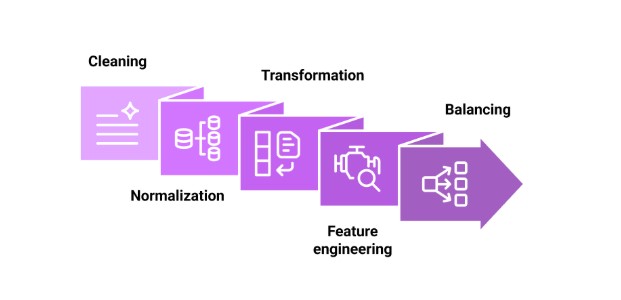
Common Data Processing Steps:

Data Processing

  • Cleaning: Removing duplicates, correcting errors, and filling in missing values
  • Normalization: Bringing data to a common scale or structure
  • Transformation: Converting text, images, audio, or video into machine-readable formats
  • Feature engineering: Extracting meaningful variables or patterns from raw data
  • Balancing: Addressing data imbalance to avoid model bias

Without these steps, your AI model is likely to train on flawed or misleading patterns, reducing accuracy and fairness.

Why Is Data Processing So Important?

Data Processing

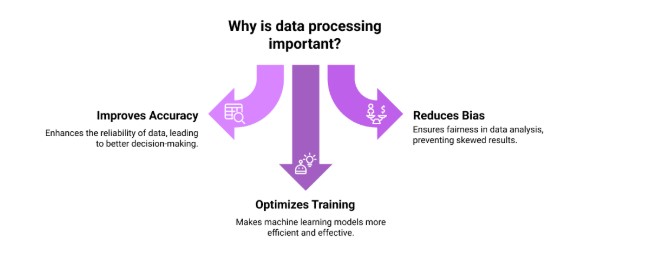
1. Improves Accuracy and Performance

Dirty or disorganized data leads to models that misinterpret the problem. On the other hand, processed data enables:

  • Faster model convergence
  • Higher prediction accuracy
  • Reduced false positives/negatives

For example, in a healthcare setting, failing to normalize patient records could lead to incorrect diagnosis predictions. Data processing ensures consistency and clarity.

2. Reduces Bias and Enhances Fairness

AI models can inherit or amplify the biases present in the data. Proper processing helps detect and mitigate issues like:

  • Overrepresentation of one group over another
  • Historical biases in decision-making
  • Unintended correlations (e.g., ZIP codes correlating with race or income)

Ethical AI begins with ethical data pipelines.

3. Optimizes Training Efficiency

Processed data improves training speed and efficiency. Structured datasets require less compute power, and models are easier to scale and fine-tune across use cases or markets.

What Is Data Labeling?

Once the data is cleaned and structured, it needs to be labeled — especially for supervised learning, the most common form of AI used in business applications.

Data labeling involves assigning meaningful tags or classifications to each data point. These tags guide the model during training by providing the correct answer for every input.

Examples:

  • Labeling customer support emails as “complaint,” “query,” or “feedback”
  • Tagging photos with objects like “car,” “pedestrian,” “traffic sign”
  • Annotating documents with key phrases or sentiment

Labeling provides the “ground truth” the AI needs to learn and generalize accurately.

Why Is Data Labeling Critical in AI Development?

Data Processing

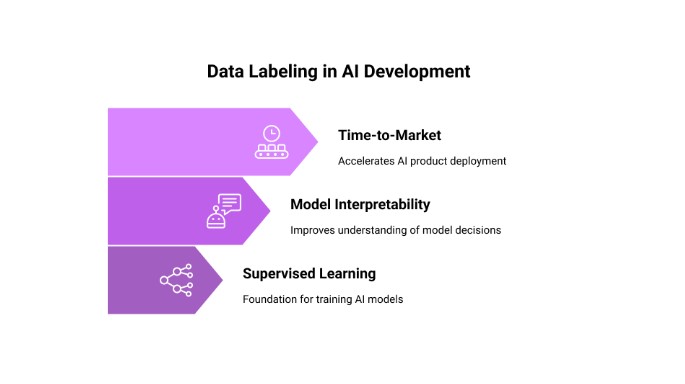
1. Foundation of Supervised Learning

Labeled data is essential for teaching models how to make predictions. If labels are inconsistent, missing, or incorrect, the model will learn the wrong relationships — which can be disastrous in fields like autonomous driving or fraud detection.

2. Enhances Model Interpretability

Proper labeling also improves transparency. It allows teams to:

  • Understand why a model made a particular prediction
  • Debug issues with confidence
  • Improve stakeholder trust and compliance

This is particularly important in regulated industries such as finance, legal tech, and healthcare.

3. Speeds Up Time-to-Market

Well-labeled datasets reduce the number of training cycles needed to reach high performance. That means faster proof of concept, faster validation, and quicker deployment into production.

Real-World Examples

Healthcare:

AI tools for diagnostics rely on thousands of medical images labeled by radiologists to detect conditions like tumors or fractures. Poorly labeled data can misdiagnose and pose risks to patient safety.

Retail:

Recommendation engines are trained using labeled customer behavior data — what was clicked, added to cart, or ignored. Accurate labeling improves personalization, increasing conversions.

Manufacturing:

In predictive maintenance, sensor data must be accurately labeled with equipment status — “operating normally” or “failure detected.” This prevents false alarms and ensures uptime.

Challenges in Data Processing and Labeling

Despite its importance, this stage of AI development is time-consuming and resource-intensive.

Key challenges include:

  • High Volume: AI systems require tens of thousands to millions of labeled examples.
  • Domain Expertise: Some tasks require skilled annotators (e.g., medical, legal).
  • Subjectivity: Labels for language or emotion can be open to interpretation.
  • Data Security: Sensitive information must be anonymized or encrypted during processing.

That’s why many companies either build internal labeling platforms or outsource to managed service providers with quality control processes and tooling.

Conclusion: From Data Chaos to AI Clarity

AI is only as intelligent as the data that powers it. Clean, accurately labeled, and well-structured data sets the stage for high-performing, responsible AI applications.

While model architectures may change and evolve, the foundation remains the same: data processing and labeling are not optional — they’re essential.

Enterprises looking to scale AI initiatives should treat these steps as strategic priorities. Whether you’re building from scratch or refining an existing model, partnering with experts in AI development services can streamline the journey, reduce risk, and unlock faster returns on AI investments.

Remember: smart data leads to smarter AI.

AI Video Generation for Social Media: Tips and Tools for Going Viral

AI Video Generation for Social Media: Tips and Tools for Going Viral

AI Video Generation for Social Media

Creating visually striking content is essential for capturing attention in today’s fast-paced social media environment. Incorporating unique visuals can differentiate your videos from the sea of generic content. Experimenting with unusual color palettes, intriguing animations, or unexpected imagery can elevate the storytelling aspect of your video. Authenticity matters, so consider incorporating personal footage or handcrafted graphics to resonate more with your audience.

Utilizing advanced AI tools allows for the generation of images and animations that can transform your video. These technologies can help create customized visuals that align perfectly with your brand’s identity, instantly making an image to 3d model. Whether you use deep learning models to produce original artwork or stylize existing footage, the options are virtually limitless. However, it’s crucial to maintain a balance between creativity and coherence to ensure your message remains clear.

Enhancing Videos with Creative Effects

Creative effects can transform ordinary footage into something captivating and memorable. Utilizing filters, transitions, and overlays can add depth and personality to videos. These effects enhance the visual storytelling and help convey emotions more effectively. Tools and software equipped with a variety of options allow creators to explore different styles and themes, making the content stand out in crowded feeds.

Incorporating motion graphics is another way to enrich video content. Animations can draw attention to crucial information or highlight key messages. From simple text animations to elaborate 3D graphics, these elements can captivate viewers and encourage them to engage with the content. Finding the right balance is important; overuse can distract rather than enhance the overall message.

Using Music and Sound Effects

The role of music and sound effects extends beyond mere enhancement; they can significantly shape the viewer’s emotional response to your content. Carefully selected background tracks can elevate the mood of a video, while sound effects can add an immersive layer that keeps viewers engaged. Choosing the right genre is crucial, as it can complement the video’s theme and strengthen storytelling. Syncing audio elements to key visual moments can also create a more dynamic experience, ensuring that each aspect of the video resonates with the audience.

Incorporating music and sound effects is also essential for branding. Custom audio tracks can become identifiable components of your content, reinforcing your brand’s personality. When using licensed music, ensure compliance with copyright regulations to avoid potential issues. Free and royalty-free music libraries are available, providing a wealth of options for creators. Investing time in sound design can make your video stand out in a crowded social media landscape.

The Importance of Audio in Video Engagement

Audio plays a crucial role in capturing and maintaining viewer attention. Engaging soundtracks can evoke emotions, emphasize key moments, and create a memorable experience. When videos lack a strong audio component, they risk appearing bland and uninspiring. Subtle background music can set the tone, while clever sound effects can enhance comedic moments or highlight visual actions.

Incorporating high-quality audio not only elevates the overall production value but also encourages viewers to watch until the end. Research shows that videos with well-chosen sound design tend to perform better across various social media platforms. Poor audio quality or mismatched sounds can lead to viewer disengagement. Therefore, investing time in selecting the right audio elements is an essential step in crafting compelling video content.

Analyzing Performance Metrics

Understanding the performance metrics of your videos can provide vital insights into their effectiveness. Key metrics to consider include engagement rates, view counts, shares, and comments. These indicators can help you decipher what resonates with your audience. Analyzing this data allows creators to identify patterns and preferences, facilitating more informed decisions in future content creation.

Implementing tools tailored for tracking video success can streamline the analysis process. Platforms like Google Analytics and social media insights offer comprehensive data on how viewers interact with your content. Utilizing these tools can enhance your strategy by revealing which elements drive higher engagement. Monitoring performance metrics continuously will enable you to adapt your approach, ensuring your videos remain relevant and appealing to your target audience.

Tools for Tracking Video Success

Evaluating the performance of videos is crucial for understanding audience engagement and optimizing future content. Several analytics tools provide insights into various metrics, such as views, likes, shares, and comments. Platforms like YouTube Analytics and Facebook Insights offer robust tracking features that help creators gauge the effectiveness of their videos. These insights can inform the type of content that resonates best with the audience, allowing for data-driven adjustments.

Third-party analytics tools also play a significant role in tracking success across multiple platforms. Tools like Hootsuite and Sprout Social enable users to monitor engagement metrics and audience demographics from different social media channels in one place. Consistent tracking helps identify trends and patterns, making it easier to iterate on video strategies. Implementing a comprehensive analytics approach can lead to improved content creation and increased audience retention.

Strategies for Effective Promotion

Creating a compelling promotional strategy involves understanding your target audience and tailoring content to their preferences. Engaging visuals and informative captions can significantly increase the likelihood of shares and interactions. It’s essential to explore various platforms to determine where your audience is most active. Posting at optimal times based on your audience’s behavior can enhance reach and visibility.

Incorporating hashtags relevant to your content can further improve discoverability, leading to greater engagement. Collaborating with influencers or partnering with other creators can also amplify your message. Encourage user-generated content by prompting followers to share their experiences related to your brand. This not only helps in building community but also creates authenticity around your message.

Ways to Boost Visibility on Social Media

Engaging with your audience is crucial for increasing visibility on social media platforms. Regularly posting content and responding to comments can foster a sense of community. Contests and giveaways can also attract more engagement while boosting visibility. By encouraging followers to share your videos, you create organic exposure, allowing your content to reach new audiences beyond your existing follower base.

Utilizing hashtags effectively can significantly enhance discoverability. Researching trending and relevant hashtags related to your content can connect your videos with audiences interested in those topics. Collaborating with influencers or other creators can further extend your reach. By partnering with individuals who share a similar target audience, you can tap into their follower base, increasing engagement and driving more views to your videos.

FAQS

What is AI video generation?

AI video generation refers to the use of artificial intelligence technologies to create videos automatically or assist in the video creation process, often enhancing visuals, audio, and effects to make content more engaging and shareable. Several AI video generators like Wan AI video generator can produce AI videos with enhancing visuals, audio, and effects.

How can I incorporate unique visuals into my videos?

You can incorporate unique visuals by using AI tools that offer customizable templates, graphics, and animations. Additionally, consider integrating user-generated content or original footage to create a more personalized touch.

Why is audio important in video engagement?

Audio plays a crucial role in video engagement as it helps set the mood, enhances storytelling, and can capture viewers’ attention. High-quality AI music and sound effects can significantly improve the overall viewer experience and retention rates.

What tools can I use to analyze the performance of my videos?

There are several tools available for tracking video performance, including social media analytics platforms, Google Analytics, and dedicated video performance tools like Vidyard or Wistia, which provide insights on viewer engagement, watch time, and other key metrics.

What strategies can I use to promote my videos effectively?

To promote your videos effectively, share them across multiple social media platforms, engage with your audience through comments and discussions, collaborate with influencers, and utilize hashtags to increase visibility. Consider also optimizing your content for SEO to reach a broader audience.

Balancing Creativity and Ethics: The Role of AI Humanizers in Content Creation

Balancing Creativity and Ethics: The Role of AI Humanizers in Content Creation

AI in Content Generation

AI is no longer working behind the scenes. It now speaks for brands, writes articles, and powers daily conversations. This shift raises an important question: How can we humanize communication when machines create the content?

This piece dives into the growing work of AI humanizers. These experts take content made by AI and shape it to feel more genuine, considerate, and responsible. As technology progresses, their role keeps creativity, trust, and subtlety alive in how people stay connected.

To grasp this change, we need to see how AI has grown into a major player in content creation.

How Is AI Changing Content Creation

AI has caused quite a stir in a lot of industries, and content creation is no different. Now, AI is writing articles and social media posts, and developing visual content. AI tools have become important assets for marketers, writers, and creators. AI’s ability to examine vast amounts of data and generate decent content at scale has boosted productivity.

As AI’s impact grows, we need to understand the good things it brings.

The Benefits of AI in Content Generation

Let us look at the benefits below:

  1. Speed and Efficiency: AI has the ability to create content fast, helping creators finish work on time and make lots of stuff.
  2. Data-Driven Insights: AI tools can look at what audiences like and what’s popular, letting creators make content for specific groups of people.
  3. Cost-Effectiveness: By doing repetitive jobs, AI cuts down on the need for many human workers, saving companies money.

But these good points come with drawbacks that need just as much attention.

The Challenges of AI in Content Creation

Even with its good points, the growth of AI in making content brings up several issues:

  • Generic: The AI-created content will never have the same creativity as compared to the content created by a human.
  • Ethics: Using AI for content can cause confusion about who the real author is, biases, and increase the chance of spreading false information.
  • Complete Reliance on Technology: Over-reliance on AI-based content can lead to a lack of creativity and problem-solving amongst the employees.

This is where AI humanizer tools come in, helping to connect computer-made output with real human expression.

The Role of AI Humanizers

AI humanizers use AI tools while adding their own creativity and ethical thinking to their workflow. They connect technology with the human element, making sure content speaks to audiences in a meaningful way.

To get the full picture of what they do, it’s helpful to see how AI can do more than just help out – it can make the creative process better.

Boosting Creativity with AI

  1. Idea Generation: AI helps brainstorm by offering suggestions based on data analysis. People who create stuff can then polish these ideas, adding their own unique take.
  2. Drafting and Editing: AI can help with creating the first draft for human writers. This leads to saving time and effort, which leads to a more efficient workflow.
  3. Personalization: An AI writer is able to create content that is according to an Individual’s preferences. Human writers can then repurpose this content to bring in the human touch.

But being creative isn’t enough when AI is part of the process. Being responsible is just as important.

Sticking to Ethical Standards

People who make AI more human-like have a big job in keeping content creation ethical:

  • Transparency: They make sure audiences know about AI-created content and its limits, building trust and keeping things real.
  • Bias Reduction: AI humanizers work hard to spot and fix biases in AI-generated content, pushing for inclusion and fairness.
  • Quality Checks: By proofing and improving upon the AI content, the human writers ensure that the quality standards are adhered to. Apart from this, they also ensure that the brand values are kept intact.

Despite having all of these positive points, we can’t forget that AI can’t replicate the unique ideation and viewpoints that human creativity brings.

The Importance of Human Creativity

AI handles data analysis and creates content well, but it lacks the emotional understanding and inventiveness of people. Humans bring unique perspectives to creating, allowing them to build stories that resonate with others.

The human touch—the skill of making someone feel understood—is still a challenge for AI.

Building Emotional Bonds

Connecting isn’t just about words. It’s to do with creating a sense of belonging by evoking emotions. This is where the AI and related tools struggle.

  1. Storytelling: Only humans are able to write in a way that is relatable and consistently engaging. Content from AI often misses this storytelling finesse.
  2. Cultural Context: Human-written content is able to hit the mark when it comes to nailing the cultural nuances.
  3. Empathy: One of the advantages humans have over AI is that they can get a better POV of the reader.

Content creation in the future will depend on blending the strengths of AI with human creativity. However, this is not just about the results—it also involves being accountable.

Ethical Considerations in AI-Driven Content Creation

Utilizing AI to generate content comes with its own set of responsibilities. Having bias can be a problem because AI systems learn from past data, which can lead to repeating prejudices.

  • Building Datasets That Reflect Variety: The go-around for this is to use a variety of data sources, etc, to train the AI models.
  • Regular Human Review: Human intervention is required for proofing to look out for biases and other mistakes.

Implementing these steps ensures that the mistakes are minimized and biases are reduced while generating content.

Transparency and Accountability

Trust relies on being upfront. People need to know when AI is involved in creating content.

  • Mark AI-created content.
  • Make sure the final responsibility for a message is assigned, even if a machine helped write it.

Being upfront like this helps protect trust and ensures creators stay accountable. It adds an important layer of ethical understanding when intellectual property raises concerns.

Understanding Intellectual Property

Ownership can get tricky. AI often pulls ideas from many places, so figuring out who gets the credit isn’t simple.

People who refine AI content need to be careful. They should respect original authors and ensure the content avoids breaking legal or moral rules.

These human intervention measures form the basis for the AI content to remain fair and respectful. With things changing in the AI space, it becomes more important than ever to talk about the future trends.

Future Trends in AI and Content Creation

AI is changing fast. Its role in making content will become smoother and more connected. So, what comes next?

  • Better Language Understanding: AI will understand context and tone much more, which will help it create easier-to-read, more focused content.
  • More Personalized Content: Tools will adjust content better by responding to how users act in real time.

These changes will make AI tools more helpful, but they will also increase the need to keep content authentic and valuable.

Why We Need AI Humanizers

As AI starts generating more and more content, making the content feel real and human becomes more important. AI humanizers won’t just polish sentences or fix problems. Their purpose will be closely linked to maintaining the human touch and the brand voice in the content generated by AI.

Teaming Up Humans and AI

This is not about passing the task along; it is about working together. Teams that combine the human touch to shape ideas with AI’s ability to assist in the process will create the most engaging content. They will work together to find the right mix of speed, wide reach, and genuine connection.

The Evolving Role of Humans in AI-Powered Content

AI is changing how content gets created. It brings speed and reach but also sparks questions about staying authentic, being responsible, and keeping a unique voice. As this area evolves, AI humanizers play a critical role. They make sure tech supports creativity instead of taking it over.

The aim isn’t to pick between people and machines. It’s to build setups where both add value. AI can deal with the technical stuff, while humans focus on shaping the message. This creates content that not only is better but also connects with its intended audience. That’s the kind of future worth aiming for.