...
UK: +44 2038074555 info@atamgo.com
Can ChatGPT Generate Audio? Everything You Need to Know

Can ChatGPT Generate Audio? Everything You Need to Know

chatGPT

Artificial intelligence is developing at a rapid pace, and the possibility of creating not only written words but also speech is one of the most interesting ones. The question most commonly raised by many is whether ChatGPT can also generate audio outputs despite the fact that this algorithm is mostly known to engage in text-based conversations. The brief answer: yes, but with some background.

AI models like ChatGPT can now be paired with Speaktor’s AI text to audio technology, enabling users to convert written responses into natural-sounding voices. This creates possibilities of access, productivity, as well as entertainment.

Here, we will deconstruct the interaction between ChatGPT and audio, available tools, and why this functionality is important to the average user.

How ChatGPT Works with Audio

ChatGPT in itself is a written content generation language model. Nonetheless, with the use of text-to-speech (TTS) systems, it can turn its written answers into a spoken voice. Imagine it as two technologies that co-exist:

ChatGPT generates the text

That text is then transformed into speech by Text to Speech (TTS) software.

It is this combination that enables listening to ChatGPT as opposed to reading it. Certain platforms have these features built in, and one can listen to responses in real time.

Why Audio Output from ChatGPT Matters

Audio is not only a cool feature, but it will be a real value to the way we relate with AI. The following are some of the reasons why this capability is significant:

  • Accessibility: Individuals with visual disabilities or reading disabilities will enjoy the advantage of hearing AI responses instead of reading.
  • Productivity: It is easier to multitask. You are able to hear ChatGPT answer as you commute, exercise, or run errands.
  • Learning: Auditory learners can gain a better understanding and be able to retain information heard.
  • International Breadth: TTS is now more helpful to non-native users due to its translation support across various languages.

Listening to technology as an opportunity, rather than reading, makes technology more interactive and more general.

Common Use Cases for ChatGPT with Audio

But what is the difference that this makes? These are some of the useful applications people are making of ChatGPT text-to-audio features:

Learning and Studying

Using ChatGPT, students are able to create summaries of their study and play them out loud using the TTS feature as they move around. This turns the inactive time, such as commuting, into an active learning time.

Business and Productivity

ChatGPT can help professionals write reports, meeting notes, or presentations and then turn them into audio to give brief reviews before critical meetings.

Accessibility Tools

Dyslexic people and people with other reading difficulties can find it easier to digest information by listening to responses given by ChatGPT and not feel overwhelmed by the amount of information.

Creative Projects

Authors, podcast creators, and content creators also have the option of experimenting and transforming the AI-generated scripts into a form of audio prototypes, which will save them time producing the content itself.

Adding ChatGPT to speech: Text to audio

In case you would like to give this a go, it is not as complicated as it sounds. This is the way most people begin:

Write using ChatGPT: Question or create content

Paste the result in a text-to-speech application: This is a wide range of providers, including both free web converters and premium programs.

  • Choose a voice and language: The modern tools provide an opportunity to select any of the natural-sounding voices based on the various accents.
  • Play or download your audio: When converted, you can save it in an audio file, which can be used later.

Certain apps go so far as to be directly connected to ChatGPT to eliminate the step of copy-pasting and listen in real time.

The Quality of AI-Generated Voices

You may ask yourself: Can AI-generated audio sound good? The answer is yes. In ancient TTS, the voices sounded robotic and one-dimensional, but the modern systems are based on the deep learning approach to produce human-like voices.

The contemporary AI audio is capable of recording natural rhythm, intonation, and even nuanced emotional levels. This helps a lot in listening to long texts, as one does not get the impression of listening to a machine. The better the technology, the more difficult it is to differentiate between the actual voices and the artificial intelligence voices.

Limitations to Keep in Mind

Although the combination of ChatGPT and TTS is potent, it is worth keeping in mind the following few things:

  • Relying on integrations: ChatGPT does not generate audio; it requires a text-to-speech engine to do it.
  • Voice variety: Although there are more to choose from, sometimes you will not have a voice that fits you.
  • Connection to the Internet: The majority of the tools need an online connection to work.
  • Precision on complicated matters: The technical or subtle writing can still sound somewhat unnatural during translation.

The knowledge of these limitations aids in making more reasonable expectations, and yet enjoying the convenience.

The Future of ChatGPT and Audio

In the future, the interconnection between conversational AI and audio will become even closer. We are already experiencing some progress:

  • Live voice conversations with artificial intelligence.
  • Profiles that can be customized to the name or brand.
  • Interaction with devices, such as smart speakers, smart headphones, and mobile applications.

By keeping up with these capabilities, ChatGPT will become more than a text-based assistant; it will become an interactive voice assistant.

Final Thoughts

So, can ChatGPT create audio? The response is in the affirmative – with some assistance. By combining ChatGPT’s text generation with modern text to audio tools, like Speaktor’s AI tools, users can enjoy natural, lifelike speech that makes learning, working, and creating more flexible.

This is not only a convenience issue, but rather an accessibility issue, a productivity issue, and the involvement of everyone in AI. Conversational AI will transform the way we engage with information every day, and audio will be a part of conversational AI as it enters its maturity phase.

Top Generative AI Tools Businesses Are Using to Boost Productivity

Top Generative AI Tools Businesses Are Using to Boost Productivity

Generative AI Tools

The business environment is undergoing a monumental transformation, sparked by the seismic shift of Generative AI (GenAI). What began as a novelty for generating viral images has quickly morphed into a collection of highly sophisticated and enterprise-centric tools that are irreversibly altering the way work is accomplished. For businesses in 2025, GenAI is not only about innovation but is a question of competitive survival and unprecedented productivity benefits.

These tools are enabling companies to take boring tasks off their plates, create content in new and exciting ways, use personalized sales agents and data analysts, and allow companies to move faster, and smarter, and achieve greater efficiency. To remain competitive, business leaders and their teams must not only harness the power of this technology but also be aware of the various tools that are capable of the greatest impact.

Let’s consider some of the generative AI tools most organizations are using right now to create an edge on productivity and why the understanding of these tools through a Generative AI Course could be the smartest career investment you could make.

The Powerhouse LLMs and Conversational Assistants

At the heart of the current revolution with GenAI are Large Language Models (LLMs) and conversational assistants developed with LLMs. These are the contemporary digital Swiss Army knives of the office, from brainstorming to elaborate data analysis.

1. ChatGPT/GPT-4o (OpenAI) & Claude (Anthropic)

These multi-purpose assistants are the workhorses of business productivity.

  • Use Cases: In addition to drafting simple content (email, reports, blog posts) the more advanced models like GPT-4o are deployed within workflows for code development (huge productivity for developers), summarizing lengthy documents, and research. Claude is often preferred, as it is able to take larger context windows and has a focus on safety and more considered conversation, making it well suited to analyzing complex legal and sensitive documents.
  • Business Impact: They can serve as virtual research analysts or writing partners, cutting the engaged time that employees spend on the initial draft and synthesizing information. Creating complicated, creative outputs on demand is already part of new marketing and product development models.

2. Microsoft Copilot and Google Gemini

For businesses embedded in the Microsoft or Google ecosystems, these tools represent the seamless integration of Generative AI directly into daily applications.

  • Microsoft Copilot: Built into Microsoft 365 (Word, Excel, PowerPoint, Outlook, Teams), Copilot serves as an AI assistant that drafts presentations from meeting notes, summarizes email threads, generates reports in Word and analyses spreadsheets in Excel. Its deep embedding greatly reduces the friction of adopting new AI tools.
  • Google Gemini: In a parallel, Gemini is embedded in Google Workspace. It can draft emails in Gmail, create documents in Docs, and generate formulas or analyze information in Sheets. Its power is derived from its ability to quickly pull information across the user’s entire Google environment, creating a unified knowledge base.
  • Business Impact: The key advantage is therefore an optimization of workflows. The employee does not need to switch between applications, AI-powered assistance is right where it needs to be, which translates directly and measurably to time savings and efficiency. 

Revolutionizing Content and Creativity

GenAI is an unmatched engine for content creation, permitting businesses to scale their marketing, design, and video manufacture efforts at a fraction of the traditional cost and time.

3. Jasper and Anyword (AI Content Creation)

These podia are purpose-built for venders and content teams who need to maintain a dependable brand voice across a high volume of channels.

  • Use Cases: Producing SEO-optimized blog content, writing compelling advertising copy, captioning social media posts and rapidly iterating on landing page copy. They often include brand voice management and even originality checks.
  • Business Impact: They speed up the content pipeline to have a continuous flow of new, relevant content. For e-commerce and retail, this equates to the faster creation of product descriptions and personalized marketing campaigns.

4. Midjourney and DALL-E (Image Generation)

Visual Generative AI tools have transformed graphic design and concept creation.

  • Use Cases: Quickly producing marketing images, generating custom illustrations for blog posts, creating concept art for product ideation, and making stylized images for business reports. They can convert basic text prompts to high-quality images almost immediately.
  • Business Impact: Significantly reduces reliance on stock photography and lengthy design processes. Small businesses can create visual content that is comparable to that of larger businesses and invest more into engaging and creative digital marketing initiatives.

5. Synthesia and Runway (Video Generation)

Creating engaging video content has traditionally been costly and time-consuming, but GenAI is changing that.

  • Synthesia: Emphasizes creating professional-grade videos with AI avatars and voice-over in multiple languages. Ideal for training content, internal communications, and quick explainer videos.
  • Runway: Provides very powerful solutions for video editing and generative video from creating brand new scenes specifically from text to adding graphics and effects, and even editing videos seamlessly.
  • Business Impact: Allows for speedily producing training, on boarding, and promotional videos at scale, which is extremely important for a multimedia-first experience, increasing productivity both internally with teams and externally. 

Transforming Core Business Functions: Sales, Service, and Data

The true price of GenAI for the enterprise is realized in its claim to core functions that directly drive revenue and effective excellence.

6. HubSpot/Salesforce Agents (Sales and CRM)

Leading CRM boards have integrated AI agents that act as generalized virtual teammates for sales and shopper service teams. Platforms like Ameany, where you can build AI agents for every need, further enhance this capability by allowing businesses to customize and deploy intelligent agents tailored to specific workflows.

Sales: AI prospecting agents streamline account research, identify potential leads based on buying signals, and draft personalized email outreach efforts using the voice of the rep or brand. They also assist in forecasting and deal management.

Customer Service: AI Customer Agents answer a large amount of routine questions, 24/7 and are trained on the company’s knowledge base. AI Customer Agents can summarize long support tickets for human customer service agents, suggest real-time answers during live chats, and can auto-generate new knowledge base articles.

Business Impact: This is a direct lift to sales productivity, having less administrative responsibility and better outreach quality. In customer service, this means lower operating costs and an improved customer experience through accurate, immediate support.

7. Perplexity and NotebookLM (Research and Knowledge Management)

These tools go out their simple web search to provide highly contextualized, citable, and summarized research.

  • Perplexity: Is extremely skilled at providing objective and evidence-based answers to sophisticated questions. This capability is immensely useful if you are conducting market research, competitive assessments, or planning strategically.
  • NotebookLM (Google): It serves as an extremely useful platform for professionals to structure and analyze their own documents (PDFs, notes, articles). It utilizes artificial intelligence to summarize information from your own private library of documents, answer inquiries, and generate new material based on them.
  • Business Impact: In short, it saves an extraordinary amount of time in bringing information together and synthesizing content so that teams can make decisions faster based on evidence.

The Path to AI Proficiency: Your Generative AI Course

The rapid growth of these powerful tools has created an immediate need for upskilling in every industry. The greatest obstacle to fully realizing these productivity gains is not the tools themselves, but the lack of human ability to use them most effectively.

This is why investing in a full-blown Generative AI Course is no longer optional, it is a business necessity. 

A quality Generative AI Course provides the non-technical professional with the skills they need:

  • Prompt Engineering: Understanding how to communicate effectively with LLM’s to get accurate, high-quality responses.
  • Strategic Application: Limited the high-value use cases for a specific role (e.g., how a finance analyst could utilize GenAI for predictive modelling or how an HR professional can utilize GenAI for on boarding).
  • Responsible AI: Understanding ethical, compliance, and governance implications of using GenAI, from data security to mitigating false information (hallucination).

With a structured Generative AI Course, you’re well-positioned to maximize the investment in new tools for your team by covering all bases for the longest amount of time possible.

Final Thoughts: The Productivity Frontier

Generative AI resources have gone from a technology with potential, to a component of necessary business infrastructure. The best resources from conversational LLMs like ChatGPT and Claude, to integrated assistant tools like Microsoft Copilot, to specialty platforms like Jasper and Synthesia, are all collectively redefining what is possible in the modern workplace. 

They provide unprecedented efficiencies in content creation, efficiency of core functions like sales and customer service, and open up entirely new avenues of innovation. For any organization looking to capitalize on this value, the next step is not simply adopting resources, but developing talent. 

In other words, training your workforce with an example Generative AI Course is the solution to close the knowledge gap and ensure that you are not merely employing AI in your business, but delivering on the next frontier of productivity. In the hyper-competitive nature of the mid-2020’s, the only sustainable advantage will be the rate of speed and skill with which you are able to begin integrating human, genius, with Artificial Intelligence available assistance.


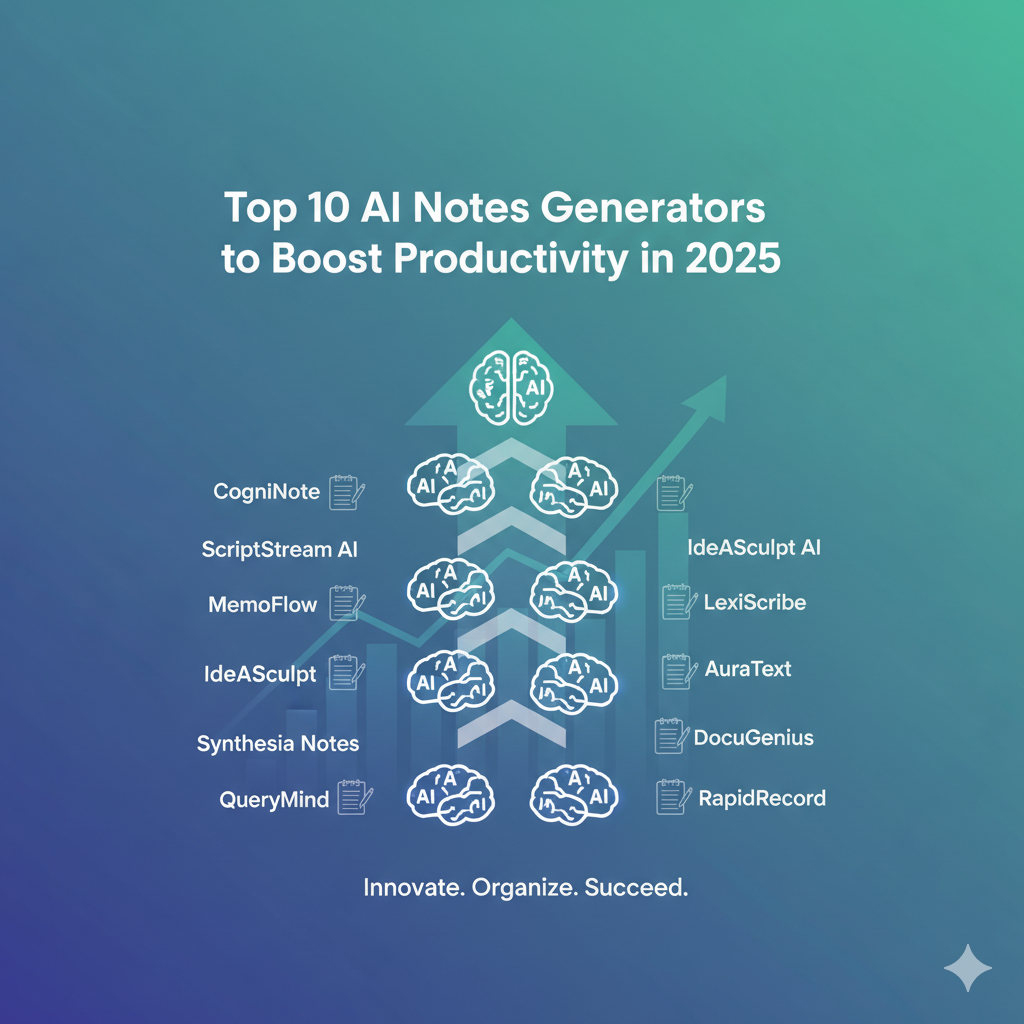
Top 10 AI Notes Generators to Boost Productivity in 2025

Top 10 AI Notes Generators to Boost Productivity in 2025

AI Notes Generators

Have you ever run into challenges with keeping your notes organized on different platforms or devices for different projects? You’re not the only one who answered yes. By 2025, there is no doubt about the skyrocketing demand for smart ways to note down and structure information. This is where AI note generators come into play, allowing you to convert raw text into structured notes at fantastic speed and accuracy.

These instruments are designed for students, professionals, researchers, and groups of individuals who want to save time while gaining clarity and organization. Instead of spending hours typing, formatting, or summarizing, you can let AI do the dirty work so you can focus on what matters most.

As you begin, the initial step is to understand exactly what an AI note generator is and how it functions.

What is an AI Notes Generator?

AI notes generator is an artificial intelligence-based software tool that helps you automatically generate, summarize, and organize notes. You provide the information in text, voice notes, transcripts, or documents, and the AI instantly converts it into tidy notes. This saves you from typing and formatting again and again while keeping you on track with the most critical points without missing any detail.

Such software tools work by using natural language processing to distil important concepts, summarize information, and structure content into an understandable format. Most AI note-taking tools also allow you to customize the output, such as converting notes into bullet points, outlines, or full summaries. They are thus not only useful for students capturing lecture notes but also for working professionals as well who have to handle business meetings, client calls, and project updates.

Unlike traditional note-taking software, AI note generators prioritise effectiveness and accuracy. They help reduce information overload, prioritize what matters most, and allow for collaboration. An AI note taker can streamline daily tasks and ensure no critical detail is overlooked, making organization much simpler. As an individual or as a team, the tools are adaptable to fit various requirements and uses.

Having learned what an AI notes generator is, let us now talk about the benefits of having one for increased productivity.

Key Benefits of Using AI Notes Generators for Productivity

AI note generators are more than just computer note-taking tools. They are designed to optimize the way you take, organize, and work with information. The following are the key benefits outlined:

Time Efficiency

Instead of spending hours typing or organizing notes, AI makes summaries and outlines in seconds from text, voice, or transcripts. This allows you to focus more time on tasks that actually require your attention.

Enhanced Accuracy

Human notes leave out small but critical details. With AI, information is handled systematically, and every key point is captured with precision, ensuring that nothing is overlooked.

Better Organization

AI note generators organise information into tidy, easy-to-read formats, such as bullet points, categorised sections, or executive summaries. This makes it easy to review, refer to, and share your notes.

Collaboration Made Easy

Shared workspaces in most tools enable teams to collaborate on notes in real time. This keeps everyone in sync, eradicates duplication, and makes teams more efficient between projects.

Reduced Information Overload

Instead of overwhelming you with a flood of raw data, AI brings you the most significant information and leaves out the details that are not relevant. This makes your notes concise, actionable, and simple to refer to.

With these benefits in mind, it is now time to talk about the top AI notes generators of 2025, starting with Bit.ai.

Top AI Notes Generators in 2025

Discovering the best AI notes generator can transform the way you take, structure, and share information. In 2025, there are multiple tools available to boost productivity for students, businesses, and teams everywhere. The tools leverage AI to provide you with a summary of information, organize notes, and support collaboration, which allows you to save time and focus on what matters. The list below pinpoints the top AI note generators that stand out on the basis of features, usability, and effectiveness.

1. Bit.ai – Teams and Professionals AI-Driven Notes Generator

AI-driven docs, wikis, and knowledge management platform for teams and individuals, Bit.ai makes it easy to create, organize, and share notes. The AI notes generator in Bit.ai turns meeting transcripts, research content, or brainstorming into nicely structured notes in a snap. Bit.ai boasts real-time collaboration, smart formatting, and centralized knowledge management, making team and professional lives simpler to organize, get on the same page, and be productive. Time is saved, and knowledge sharing globally becomes powerful.

Features

  •             AI-powered note generation from text, documents, and audio
  •             Team Collaborative Workspaces – Work with your team in real-time, eliminating version chaos.
  •             Smart Docs & Wikis – Add AI content, videos, links, and files into one interactive document.
  •             Collaborative Tools – Easily assign roles, set privileges, and monitor your version history.
  •             A Multitude of Integrations – Connect and import from Google Drive, OneDrive, and 100+ other applications.
  •             AI Genius Writer – Instantly write blogs, reports, and emails.
  •             AI Doc Builder – Create fully functional documents in minutes by answering a few questions

Pricing

  •             Free Plan: Basic features with limited templates and storage.
  •             Pro Plan: $8 per user/month for collaboration and customization. 
  •             Business Plan: $15 per user/month for features for your entire team and priority support.

2. Evernote AI – Smart Note-Taking for Personal and Professional Use

Evernote AI is a powerful note-taking application that leverages the capabilities of artificial intelligence to help you capture, organize, and access information at high speed. Evernote AI’s artificial intelligence-powered note generator is able to summarize long documents, highlight crucial points, and arrange your input into structured notes. Cloud sync and cross-device syncing let Evernote keep your notes in front of you whenever you need them. It is hence ideal for students, professionals, and anyone who wishes to enhance productivity and manage information better.

Features

  •             AI-generated summaries and note organization
  •             Tagging and grouping for instant search
  •             Cloud access and cross-device syncing
  •             Calendar, email, and other productivity integration
  •             Collaboration features for shared notebooks

Pricing

Free Plan: Basic note creation and limited AI capabilities

Personal Plan: $7.99/month for entire AI toolset and more storage

Professional Plan: $14.99/month with collaboration and deeper intergrations

3. Notion AI – AI Notes and Knowledge Management

Notion AI is a unified workspace that combines note-taking, task management, and organizing knowledge. Its automatic notes generator powered by AI can summarize content automatically, create organized notes, and build ideas on your input text. Through customizable templates and effortless collaboration features, Notion AI makes individuals and teams more productive and organized. The platform also provides integration with everyday tools, where it becomes easy to work on projects and reference them from the same workspace.

Features

  •             AI-powered note summarization and structuring
  •             Customizable templates for personal or team use
  •             Real-time cooperation and commenting
  •             Syncing within the cloud, working across platforms
  •             Integration with documents, calendars and project management apps

Pricing

  •             Free Plan: Limited pages and standard AI features
  •             Personal Plan: Unlimited pages and advanced AI for $8/month.
  •             Team Plan: $15 per user/month with all team collaboration and management features

4. Mem – AI Notes for Personal and Professional Productivity

Mem is note-taking software that is powered by artificial intelligence and used for capturing ideas, meeting minutes, and research at warp speed. Its AI-created notes feature gets content into clean, structured formats, highlights what is essential, and links related notes together for instant reference. Intelligent search and tagging capabilities of Mem enable easy retrieval of critical information in an instant, and you stay on track and productive on projects and tasks.

Features

  •             AI summaries and note organization
  •             Smart linking between notes of support
  •             Tagging and search for quick access
  •             Cross-device access and cloud sync
  •             Team collaboration and shared notes

Pricing

  •             Free Plan: Limited storage and basic AI features
  •             Pro Plan: Unlimited notes and AI assistance for $8/month

5. Roam Research – AI Notes for Networked Thinking

Roam Research is a knowledge management and networked thinking AI-powered note-taking system. Its notes maker based on AI helps you to abstract content, make organized notes, and connect ideas bidirectionally. This procedure assists in mapping relationships among ideas more simply, monitoring project progress, and keeping your research organized. Roam is especially helpful to professional workers, researchers, and students who work with complex information regularly and want to increase knowledge retention over the long term.

Features

  •             AI-powered note summary and formatting
  •             Two-way linking among notes for context
  •             Visualization by knowledge graph and daily journals
  •             Cross-device functionality and cloud sync
  •             Team collaboration and shared workspace functionalities

Pricing

  •             Personal Plan: $15/month for individual use and AI capabilities
  •             Professional Plan: $25/user/month with team collaboration and power tools

6. Obsidian AI – Smart Note-Taking and Knowledge Management

Obsidian AI is an artificial intelligence-based note-taking platform to help you organize, summarize, and link your notes. Its AI-powered notes generator converts raw text into organized content, identifies main points, and allows easy knowledge mapping. Obsidian AI supports markdown and offline and is ideal for students, researchers, and working professionals alike that need a multi-dimensional, secure note-taking system that can keep long-term knowledge organized.

Features

  •             AI-powered summary and structured notes
  •             Integrated note linking for knowledge mapping
  •             Support for Markdown and off-grid usage
  •             Synchronizing between devices
  •             Working together with vaults shared for you

Plans/pricing

  •             Free Plan: AI note functionality and storage locally
  •             Catalyst Plan: Access to the early access feature. $25 one time payment.
  •             Commercial Plan: $50/user/year for business use with collaboration.

7. Coda AI – AI Notes and Document Automation

Coda AI is a complete platform that combines notes, documents, and spreadsheets with AI-based capabilities. Its AI notes builder can automatically summarize meetings, create structured content, and convert your documents into actionable insights. Coda AI also allows teams to build collaborative workflows, link data, and automate mundane tasks, which makes it a suitable platform for professionals and organizations with productivity and knowledge management optimization needs.

Features

  •             AI-generated summaries and structured notes
  •             Integration with documents, spreadsheets, and databases
  •             Collaborative editing and comments features for team members
  •             Workflow templates and automation
  •             Access from any device and in the cloud

Pricing

  •             Free Plan: Limited amount of documents and basic AI functionality
  •             Team Plan: Collaboration and automation at $10 per user, per month
  •             Enterprise Plan: Custom pricing with support and advanced features

8. RemNote – AI Notes for Learning and Research

RemNote is an AI note-taking app explicitly designed for students, teachers, and researchers. Its AI-generated notes can turn lectures, articles, and study material into structured notes, easier to study and retain. RemNote also offers spaced repetition, concept linking, and knowledge graph visualization, improving learning efficiency and long-term understanding.

Features

  •             Notes compiled by AI and summarized
  •             Conceptual linking and visualization of knowledge graphs
  •             Using spaced repetition to improve memory recall
  •             Access via various devices and back up to the cloud
  •             Group studying or doing research project collaboration

Pricing

Free Plan: Basic AI features and storage with limitations

Pro Plan: $9/month for power AI features and add-ons

Team Plan: $25/user/month with collaboration and enterprise features

9. Supernotes – AI Notes for Fast Capture and Organization

Supernotes is an artificial intelligence-powered platform that is designed for rapid note-taking and management of knowledge. Its artificial intelligence notes generator can summarize text or documents input, organize ideas into efficient formats, and link related information to be easily accessed. Supernotes is the right tool for professionals, students, and teams seeking a simple but effective way to quickly capture information and keep it organized for future or ongoing work or study.

Features

  •             AI generated summaries and higher-level notes
  •             Linking between notes with a contextual similarity
  •             Capturing ideas quickly and organizing them
  •             Access on the cloud and synchronization between devices
  •             Ability to collaborate with teams and shared spaces to take notes

Pricing

  •             Free Plan: Basic AI note-taking with storage limitations
  •             Pro Plan: $8/month for full AI capability
  •             Team Plan: $20/user/month for collaboration and advanced management

10. Nimbus Note – AI Notes for Teams and Individuals

Nimbus Note is an artificial intelligence-based platform that provides a variety of ways to capture, organize and manage notes efficiently. Its AI notes generator is capable of summarizing long documents, transcribing meeting recordings into formatted notes, and highlighting relevant considerations from the content. With collaboration, cloud storage, and customizable templates, Nimbus Note is suitable for professionals, students, and teams in search of an everyday tool for streamlining productivity and maintaining organized knowledge during projects.

Features

  •             AI-powered summaries and organized notes
  •             Collaborative workspaces with real-time collaboration
  •             Cloud storage with cross-device compatibility
  •             Editable templates that can be used for variety of work
  •             Integration with calendars, documents, and productivity software

Pricing

  •             Free Plan: Basic AI features and limited storage
  •             Personal Pro Plan: $5/month for advance AI and additional storage
  •             Team Plan: $10/user/month with collaboration and full features

Wrapping Up: Choosing the Best AI Notes Generator in 2025

AI note-generators are changing how teams, professionals, and students take, organize, and share notes. They can assist in producing short summaries of research papers and lectures, and they can generate completed notes for meetings and brainstorming sessions in a specific format. These note generators save time, reduce error, and allow for higher productivity. Efficient AI-driven features, collaboration capabilities, and cloud access on tools like Bit.ai, Notion AI, and Evernote AI serve diverse global demands.

When you select the proper AI notes generator, consider your specific requirements: whether you need advanced collaboration for teams, customizable templates, knowledge management capabilities, or simple personal note-taking. With their application, you are able to automate workflows, have organized knowledge kept on track, and focus on tasks that directly yield results.

With the right installed AI notes generator, information taking and organization become faster, smarter, and more productive and keep you ahead of 2025 and more.


Generative AI Courses Worth Your Time In 2025

Generative AI Courses Worth Your Time In 2025

Generative AI Courses

Generative AI is changing how teams build products, analyze data, and automate workflows. The correct course balances fundamentals with hands-on practice, includes evaluation and safety, and produces portfolio-ready work. Choose a path you can sustain, block weekly time, and publish projects that demonstrate clarity, measurable impact, and reliable delivery across reviews.
Factors to Consider Before Choosing a Generative AI Course

  • A career goal defines depth and tools. Product builders, analysts, researchers, and managers each need specific modeling, evaluation, and governance capabilities.


  • Experience level sets pacing and prerequisites. Beginner or working professional with Python and cloud determines lab intensity, scaffolding, and outcomes.


  • Learning style drives completion. Cohorts add deadlines and feedback, while self-paced tracks provide flexibility. Choose the format you will finish.


  • Certification and portfolio signaling differ. Vendor certificates help screening, while evaluated projects demonstrate impact, reliability, and design clarity for stakeholders.


  • Time and budget determine momentum. Match weekly hours and costs to reality so practice continues and projects consistently reach completion.

Top Generative AI Courses to Launch Your Career in 2025


1) Generative AI with Large Language Models — DeepLearning.AI

Duration: Self-paced

Mode: Online

Offered by: DeepLearning.AI

Short overview

This concise program introduces generative modeling with large language models. You learn prompting patterns, evaluation basics, and responsible deployment. Hands-on notebooks show strengths and limits. The curriculum emphasizes practical workflows for product features, analytics, and internal tools, while preparing you to explain tradeoffs to stakeholders and teams clearly.

Key highlights

  • Clear prompting frameworks and evaluation basics
  • Practical notebooks illustrating strengths and limits
  • Ties concepts to product and analytics workflows

Learning outcomes

  • Design prompts and simple chains for tasks
  • Explain evaluation and safety considerations
  • Communicate tradeoffs to non-technical stakeholders

2) Master Generative AI — Great Learning Academy Premium

Duration: Self-paced

Mode: Online

Offered by: Great Learning

Short overview

This genai course is a portfolio-focused path covering prompting, application patterns, vector search, and responsible use. Build capstone projects with practical datasets, document design choices, and present outcomes. Emphasizing measurable business impact prepares you for reviews and interviews while building confidence through deployments, testing, and iterative improvement cycles across various environments and constraints.

Key highlights

  • Certificate from Great Learning on completion and access to 20-plus latest courses with Academy Pro
  • GL Coach provides instant doubt clarification, curated materials, AI-assisted mock interviews, and a smart resume builder that places your new data science competencies in the spotlight of recruiters

Learning outcomes

  • Build retrieval augmented applications with embeddings
  • Document decisions and report measurable outcomes
  • Publish projects suitable for portfolio and reviews

3) Google Cloud Generative AI Learning Path

Duration: Self-paced

Mode: Online

Offered by: Google Cloud

Short overview

Google’s path teaches foundation models, responsible AI, Vertex AI pipelines, and grounding with search and embeddings. Labs assemble end-to-end applications using managed services. Content emphasizes governance, evaluation, and cost control, helping technologists design assistants, automations, and analytics features within existing cloud security boundaries to achieve production readiness successfully today.

Key highlights

  • Hands-on labs with Vertex AI components
  • Guidance on governance and cost management
  • Patterns for assistants, search, and analytics

Learning outcomes

  • Build grounded assistants with enterprise data
  • Evaluate quality and monitor usage safely
  • Design for reliability and predictable costs

4) Generative AI with IBM WatsonX

Duration: Self-paced

Mode: Online

Offered by: IBM

Short overview

IBM introduces building blocks for generative applications on WatsonX, including data preparation, tuning, guardrails, and deployment. Guided exercises explore prompt patterns, retrieval augmented generation, and monitoring. The curriculum supports regulated environments and enterprise integration, enabling professionals to deliver reliable assistants, content workflows, and analytics enhancements with transparent governance and accountability.

Key highlights

  • Practical guardrails and monitoring approaches
  • Retrieval augmented generation patterns
  • Fit for regulated and enterprise contexts

Learning outcomes

  • Configure guardrails and evaluate outputs
  • Deploy assistants with monitoring in place
  • Integrate with existing data and security

5) Generative AI for Beginners — Great Learning Academy Free Course

Duration: Self-paced

Mode: Online

Offered by: Great Learning

Short overview

This beginner-friendly course explains core concepts, everyday use cases, and safe usage guidelines. Clear demos build intuition without heavy math. As a free generative AI course, learners complete it with a working understanding of prompts, evaluations, and limitations, earning a shareable certificate that builds momentum for deeper, project-based learning and future portfolio projects.

Key highlights

  • Certificate from Great Learning on completion and access to 20-plus latest courses with Academy Pro
  • GL Coach provides instant doubt clarification, curated materials, AI-assisted mock interviews, and a smart resume builder that places your new data science competencies in the spotlight of recruiters

Learning outcomes

  • Understand core concepts and safe usage
  • Write basic prompts and evaluate results
  • Earn a certificate suitable for LinkedIn sharing

6) Microsoft Learn Generative AI for Developers

Duration: Self-paced

Mode: Online

Offered by: Microsoft Learn

Short overview

Microsoft’s learning path covers responsible AI principles, prompt engineering, tool usage, and orchestration patterns with Azure OpenAI. Hands-on modules teach evaluation and grounding with enterprise data. Examples emphasize constraints such as rate limiting, security, and observability, so developers design features that perform consistently across environments and under expected production load conditions reliably.

Key highlights

  • Responsible AI and production constraints
  • Grounding and evaluation with enterprise data
  • Orchestration patterns for consistent performance

Learning outcomes

  • Build grounded features with observability
  • Apply safety guidelines and evaluations
  • Design for reliability under load

7) NVIDIA Generative AI Fundamentals

Duration: Self-paced

Mode: Online

Offered by: NVIDIA

Short overview

NVIDIA presents generative fundamentals with a practical lens on performance and deployment. Lessons cover tokenization, inference acceleration, optimization, and guardrails. Labs demonstrate the efficient running of models on available hardware and services. The program suits practitioners balancing accuracy, latency, and cost while preparing deliverables for stakeholder review, iteration, and operational readiness requirements.

Key highlights

  • Performance and optimization concepts explained clearly
  • Practical deployment approaches and guardrails
  • Hardware and service choices for efficiency

Learning outcomes

  • Optimize inference for cost and latency
  • Apply guardrails and monitor behavior
  • Prepare deliverables for stakeholder review

Conclusion

Select one learning path and protect weekly hours. Build features that solve real problems, measure outcomes, and document decisions in short README files. Start with a beginner-friendly option or other free courses with a certificate to build momentum, then progress to more advanced projects with feedback. Continue publishing work, gather reviews, refine evaluations, and consistently demonstrate dependable value across various environments.

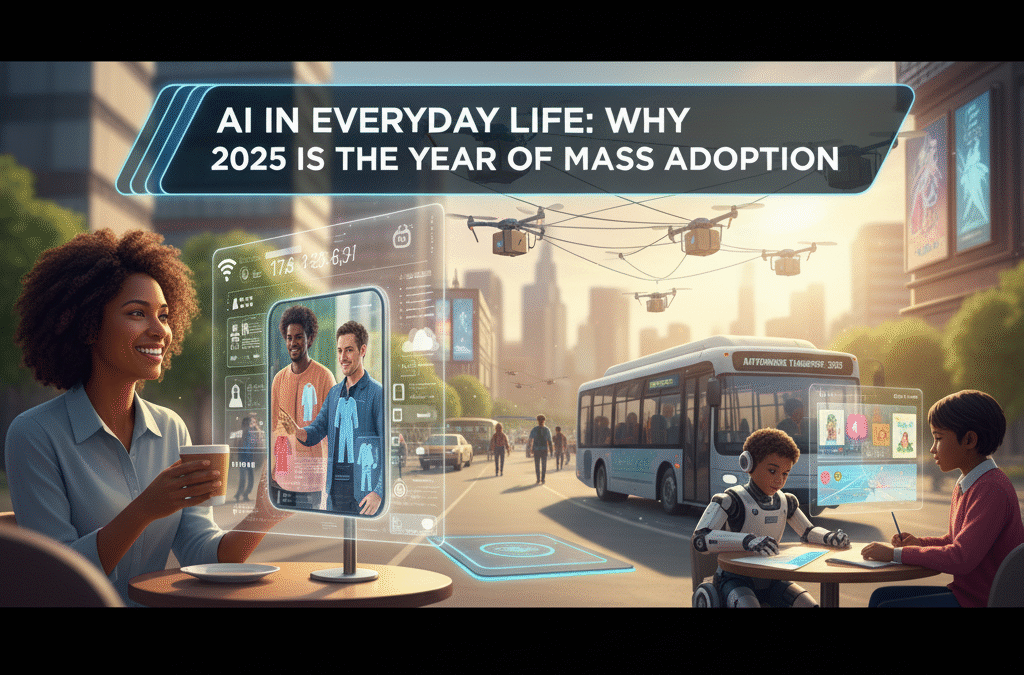
AI in Everyday Life: Why 2025 Is the Year of Mass Adoption

AI in Everyday Life: Why 2025 Is the Year of Mass Adoption

AI

Artificial intelligence is no longer just for tech companies or research labs. In 2025, it has become part of how people work, learn, and connect. From finance and marketing to education and entertainment, AI has moved into the mainstream, and its adoption is accelerating faster than ever before.

The adoption of AI speaks for itself. According to Fantasy AI, generative AI app downloads hit 1.7 billion in the first half of 2025, up from 1 billion just a few months earlier. That is a massive spike. It proves that AI is no longer a niche tool. Families, schools, and businesses are all integrating it because the risks of ignoring it are simply too high.

Why the Shift Happened So Quickly

The last decade was about testing AI — experimenting with chatbots, predictive analytics, or simple automation. But in 2025, those experiments have turned into practical, everyday applications. Three big changes explain this leap:

  • Accessibility: AI tools are now affordable, easy to use, and available in multiple languages. Even small businesses or freelancers can integrate them without technical expertise.

  • Integration: AI isn’t just one tool anymore. It’s baked into productivity software, search engines, education platforms, and mobile apps.

  • Trust: While concerns remain, more people are comfortable using AI for personal and professional needs because they see clear, measurable benefits.

AI in Work and Productivity

Workplaces are where AI is having some of the most visible impact. Professionals are using it to speed up repetitive tasks, make smarter decisions, and improve communication.

  • Project management tools use AI to prioritize tasks and suggest deadlines.

  • Email platforms recommend better subject lines and flag urgent messages.

  • Finance and accounting software automate reconciliation and tax preparation.

For small teams and freelancers, this means being able to compete with much larger organizations. A single person can now manage the workflow of what used to require an entire department.

AI in Education and Learning

AI has also transformed how people learn. Personalized learning platforms adjust lessons in real time. Students struggling with math problems get instant feedback tailored to their level. Language learners practice with AI-powered conversation partners.

By 2030, over a billion learners worldwide are expected to rely on AI-driven education apps. This will reshape how knowledge is delivered, particularly in countries where access to quality teachers has been limited.

AI in Personal Life

From shopping to entertainment, AI has become part of daily routines:

  • Shopping apps make recommendations based on browsing history.

  • Streaming platforms personalize every playlist and movie suggestion.

  • Health apps monitor sleep, heart rate, and activity levels, then suggest lifestyle changes.

In households, voice assistants are now central hubs. They control appliances, answer questions, and even help children with homework. The convenience factor is one of the main reasons adoption rates have skyrocketed.

Emotional and Social AI

One of the more surprising areas of growth has been AI companions. Digital partners, friends, and even AI girlfriends are no longer fringe ideas. Millions of users rely on them for conversation, emotional support, and even confidence-building in real-life relationships.

For younger generations especially, the concept of interacting with AI socially feels natural. Some studies suggest that over 40% of Gen Z users believe AI friendships can positively impact mental health. Whether or not these relationships replace human ones, they clearly represent a cultural shift.

Marketing and Communication With AI

Businesses cannot afford to ignore the marketing power of AI. From automated copywriting tools to predictive analytics, AI has redefined how brands connect with audiences.

  • Social media managers rely on AI to generate captions, hashtags, and ad variations.

  • SEO professionals use AI to track trends and optimize content in real time.

  • Customer support teams depend on AI chatbots to handle routine questions.

For small businesses, this is a game-changer. Competing with big corporations used to be impossible without a large marketing budget. Now, with AI tools, even a two-person startup can maintain a polished online presence.

Lessons From Real-World Experience

In my own experience at Create & Grow, I have seen how AI shortens the gap between small teams and larger competitors. A consultancy I worked with struggled to publish regular content and rank for high-value keywords. By implementing AI tools for keyword research, content ideation, and first-draft generation, we cut their production time in half. More importantly, their organic traffic doubled within six months.

The takeaway is simple: AI is not a replacement for expertise, but it amplifies it. Businesses that learn to guide AI tools strategically will stay ahead of those who resist adoption.

Risks and Challenges

Of course, the rise of AI is not without risks:

  • Over-reliance: Too much automation can make content or communication feel impersonal.

  • Bias and ethics: Algorithms can reflect societal biases unless carefully monitored.

  • Job displacement: Some roles are at risk of being replaced, particularly in repetitive or administrative work.

For individuals and businesses, the solution is balance. Use AI for efficiency, but keep the human touch where it matters most — in creativity, empathy, and strategy.

The Future of AI in Daily Life

By the end of the decade, AI will likely feel as invisible as electricity: always running in the background, powering everything from work to leisure.

Expect to see:

  • Smarter wearables that track not only fitness but also mental well-being.

  • AI-powered personal finance advisors offering real-time investment suggestions.

  • Hyper-personalized education for every student, no matter where they live.

  • More advanced emotional AI that deepens the human–machine relationship.

Conclusion

The rapid adoption of AI in 2025 proves one thing: the technology is no longer optional. From boosting productivity to reshaping relationships, AI is here to stay. Those who embrace it will find opportunities to save time, grow faster, and connect more meaningfully — both in business and personal life.

The numbers back it up. When 1.7 billion downloads happen in just half a year, it signals a cultural and technological turning point. AI has officially moved from novelty to necessity.

How AI Can Boost Email Marketing Campaigns: Tools, Strategies & Benefits

How AI Can Boost Email Marketing Campaigns: Tools, Strategies & Benefits

AI EMAIL MARKETING

Email marketing has always been one of the most powerful tools in the digital marketing world. Even with the explosion of social media and various new communication platforms, email still proves to be a reliable source of strong returns on investment when used wisely. The real challenge for marketers today isn’t about whether email is effective; it’s about figuring out how to make their campaigns shine in an inbox overflowing with countless messages.

Artificial intelligence is turning this challenge into a golden opportunity. By taking care of repetitive tasks, analyzing data more efficiently, and generating insights on a larger scale, AI gives marketers the power to create campaigns that are not just more efficient but also more personalized. From optimizing subject lines to utilizing predictive analytics, AI is rapidly becoming a must-have in the toolkit of any forward-thinking marketer.

The Shift Toward Smarter Campaigns

Traditional email marketing used to be all about casting a wide net and making educated guesses. Marketers would lump audiences together based on basic demographics like age, location, or buying habits, then send out campaigns aimed at those groups. While this method had its merits, it often missed the mark when it came to the finer details that today’s consumers really want.

Enter AI, which completely transforms the landscape by sifting through massive amounts of data to spot trends that might fly under the radar for humans. Rather than sticking to broad categories, AI tools can dive deeper to create micro-segments and even tailor emails for individual recipients. This evolution from one-size-fits-all messaging to super-targeted content is what gives AI its edge in the world of modern email marketing.

Personalization at Scale

Personalization has always been a crucial ingredient for successful email campaigns. People are much more inclined to engage with content that feels like it was made just for them whether that’s through product suggestions, exclusive deals, or customized subject lines. The real challenge, though, is figuring out how to personalize at scale.

This is where AI tools come into play. They leverage behavioral data like browsing habits, past purchases, and engagement trends to automatically craft personalized messages. For example, a fashion retailer could use AI to suggest items that go well with what a customer has previously bought. Likewise, a travel agency might showcase destinations based on a traveler’s past trips and seasonal preferences.

What used to take large teams and a lot of manual effort can now be done automatically, saving time and ensuring that customers receive messages that genuinely connect with them.

Predictive Analytics and Timing

The success of an email campaign hinges not just on the content you share, but also on the timing of your messages. This is where AI really shines, using predictive analytics to help marketers figure out the best moments to hit send for maximum engagement. By sifting through historical data, AI can pinpoint when a person is most likely to check their inbox. Some folks are early risers who dive into their emails first thing in the morning, while others prefer to catch up in the evening. Timing your messages just right can lead to higher open rates, click-through rates, and ultimately, more conversions.

Predictive analytics goes beyond just timing; it also offers a glimpse into customer behavior. AI can spot which subscribers might be on the verge of leaving, which products are starting to take off, and which campaigns may not perform as well as hoped. With these valuable insights, marketers can tweak their strategies ahead of time rather than scrambling to react after the fact.

Smarter Content Creation

One of the most thrilling areas where AI is making waves is in content creation. With tools that harness natural language processing, we can whip up catchy subject lines, draft engaging body copy, and even come up with calls-to-action that are likely to hit the mark. These tools dive into extensive libraries of successful campaigns, spotting patterns and mimicking what works best. 

While marketers are still at the heart of the process, bringing in the brand’s unique voice and creativity, AI speeds things up and takes away a lot of the guesswork. For instance, rather than manually testing a bunch of subject lines, marketers can lean on AI to suggest the options that are most likely to boost open rates.

The end result? A smoother workflow where creativity and data science work hand in hand.

Enhancing Testing and Optimization

A/B testing has been a fundamental part of email marketing for quite some time. Marketers experiment with different subject lines, layouts, or offers to figure out which ones resonate best with their audience. With the help of AI, this whole process becomes quicker and more precise, as it can analyze results in real time and even conduct multivariate tests that take multiple factors into account.

Instead of waiting around for days or even weeks to gather insights, AI-driven platforms can swiftly pinpoint the top-performing versions and automatically implement them for the entire audience. This ongoing optimization guarantees that campaigns are always hitting their peak performance while making the best use of available resources.

AI-Powered Customer Journeys

Email marketing doesn’t really work on its own. Customers engage with brands across various platforms, whether it’s through websites, social media, or even in-store visits. With the help of AI, marketers can craft customer journeys that weave email into the overall experience.

Take, for instance, a situation where a customer leaves items in their online shopping cart. AI can automatically send a reminder email featuring personalized product suggestions. Or, if someone browses a specific category without making a purchase, AI can reach out with a special offer or more details. These automated processes make sure that customers get the right messages at just the right moments in their journey.

AI and the Role of Market Intelligence

AI doesn’t just improve the mechanics of email campaigns it also provides strategic insights. Marketers can better understand customer preferences, industry trends, and competitive benchmarks. This intelligence allows for smarter planning and more effective long-term strategies.

AI news offers a window into how the broader landscape of artificial intelligence is shaping marketing and other industries. By staying informed, marketers can identify emerging tools, anticipate future trends, and integrate innovations before competitors do. This connection between market intelligence and practical application ensures that AI is not just a buzzword but a tangible driver of business results.

Overcoming Challenges in AI-Driven Email Marketing

Even though there are plenty of benefits to using AI in email marketing, it doesn’t come without its hurdles. One of the biggest issues is data quality. AI models rely heavily on the information they get, and if that data is incomplete or outdated, the recommendations can really miss the mark. That’s why marketers need to focus on keeping their data clean and accurate.

Another tricky aspect is finding the right balance between automation and authenticity. Sure, AI can whip up content and streamline workflows, but customers still crave that genuine human touch. Brands need to make sure their AI-driven campaigns keep their unique voice and don’t come off as too mechanical.

Then there’s the matter of privacy and compliance, which is super important. Laws like GDPR and CCPA set strict guidelines on how customer data should be collected and used. Marketers have to handle AI with care, ensuring they’re transparent and respectful of customer preferences.

The Future of AI in Email Marketing

As AI technology keeps evolving, its impact on email marketing is set to expand even further. One of the most valuable email marketing tips for the future is leveraging AI-driven insights to create a seamless blend of voice and visual recognition, along with more advanced predictive models and enhanced personalization features that improve engagement and conversions. Imagine a future where emails change in real-time as you open them this could soon be the norm. Marketers who jump on these trends early will definitely have the upper hand. While AI won’t take away human creativity, it will certainly amplify it, equipping us with the tools to craft campaigns that are smarter, quicker, and more captivating.

Conclusion

AI is revolutionizing email marketing, shifting it from a broad communication tool to a means of personalized engagement. With the ability to personalize at scale, optimize timing, create smarter content, and provide actionable insights, AI gives marketers the power to craft campaigns that genuinely resonate with their audiences. Meanwhile, the importance of market intelligence and ethical data practices ensures that AI is applied thoughtfully and responsibly. The companies that thrive will be those that blend the efficiency of AI with the genuine touch of human creativity. Email continues to be one of the most potent tools in digital marketing, and with AI, its possibilities are just starting to unfold. The future of email marketing will be shaped by those who harness artificial intelligence not only to save time but also to forge meaningful connections that foster long-term customer loyalty.