UK: +44 2038074555 info@atamgo.com
7 Proven YouTube SEO Optimization Tricks Most Creators Still Ignore

7 Proven YouTube SEO Optimization Tricks Most Creators Still Ignore

YouTube SEO optimization is one of those topics everyone mentions, but very few creators truly understand on a practical level. Most people assume it’s just about adding a few keywords to the title and description, hitting publish, and waiting for the algorithm to magically push their video. If that sounds familiar, you’re definitely not alone. The reality is that YouTube SEO is far more human than technical. It’s about how real people search, what makes them click, how long they stay, and whether they feel satisfied after watching. YouTube’s algorithm is simply trying to reward content that genuinely helps viewers. In this guide, we’re going to break down how to optimize YouTube SEO in a realistic, modern way that works today — no gimmicks, no outdated tricks, and no confusing jargon.

Find More: YouTube Profile Picture Downloader: 7 Powerful Tools

What YouTube SEO Optimization Really Means in 2026

YouTube SEO optimization isn’t about gaming the system or tricking the algorithm. It’s about alignment. When your video content, metadata, and viewer behavior all tell the same story, YouTube has a clear reason to rank and recommend your video. The platform wants people to stay longer, watch more, and feel satisfied. If your video helps achieve that goal, SEO optimization YouTube principles naturally start working in your favor.

How the YouTube Algorithm Ranks Videos Today

At its core, YouTube looks at three major factors: relevance, performance, and satisfaction. Relevance comes from your keywords, title, description, tags, and overall topic clarity. Performance is driven by click-through rate, watch time, and audience retention. Satisfaction is measured through engagement signals like likes, comments, shares, and whether viewers continue watching other videos afterward. You can’t rely on just one of these. True youtube seo optimization only works when all three support each other.

YouTube SEO vs Google SEO — Key Differences Creators Miss

Google SEO is heavily focused on text, backlinks, and domain authority. YouTube SEO, on the other hand, is behavior-driven. A perfectly optimized video that people abandon after 20 or 30 seconds will struggle to rank. That’s why learning how to optimize YouTube SEO means shifting your mindset. You’re not writing for a search engine first — you’re creating for people, and letting the algorithm observe how those people react.

Trick #1 – Keyword Research Beyond Basic Search Suggestions

YouTube Research

Most creators stop their keyword research at YouTube’s autocomplete feature. While autocomplete is useful, stopping there leaves a lot of opportunity on the table.

How to Find High-Intent YouTube Keywords

High-intent keywords usually reflect a clear problem or goal. Instead of targeting broad terms like “YouTube SEO,” focus on phrases such as “how to optimize YouTube SEO for beginners” or “YouTube SEO optimization step by step.” These searches come from viewers who are more likely to watch longer, engage, and even subscribe. High intent often beats high volume when it comes to long-term growth.

Using Competitor Videos to Steal Ranking Keywords

One of the smartest ways to improve your youtube seo optimization is to analyze what’s already working. Search for your main topic and open the top-ranking videos. Study their titles, descriptions, chapters, and pinned comments. You’ll start seeing repeated phrases and angles. That’s not guesswork — it’s real data showing you what the algorithm already understands and rewards.

Trick #2 – Optimizing Video Titles for Click-Through Rate and Rankings

Your title is where SEO meets psychology, and it’s one of the most important parts of seo optimization youtube.

The Ideal YouTube SEO Title Formula

A strong title combines a clear keyword with a compelling benefit or curiosity hook. For example, “YouTube SEO Optimization: 7 Mistakes Killing Your Views” works because it targets search intent while making people curious enough to click. The goal isn’t to be clever — it’s to be clear and irresistible at the same time.

Where to Place Your Main Keyword for Maximum Impact

Place your primary keyword as close to the beginning of the title as possible, but only if it sounds natural. Forced keywords kill curiosity. If your title feels robotic, people won’t click, and low click-through rate will hurt your rankings no matter how good your SEO looks on paper.

Trick #3 – Description Optimization Most Creators Waste

Your video description is one of the most underused SEO assets on YouTube.

How to Structure the First 3 Lines for YouTube SEO Optimization

The first three lines of your description are critical. They should clearly explain what the video is about, who it’s for, and what problem it solves — while naturally including your main keyword. This section affects both search visibility and whether viewers trust that your video is worth watching.

Using Semantic Keywords Without Keyword Stuffing

YouTube understands context better than ever. Instead of repeating the same keyword, use related phrases like how to optimize youtube seo and seo optimization youtube throughout your description. This makes your content sound natural while still reinforcing relevance.

Trick #4 – Tags Still Matter (Just Not the Way You Think)

Tags won’t magically push your video to the top, but they still serve a purpose.

How YouTube Tags Actually Help with SEO

Tags help YouTube understand spelling variations, synonyms, and contextual signals, especially when your channel is new. They act as a supporting layer, not a primary ranking factor.

Smart Tagging Strategies for New and Small Channels

For smaller channels, use a balanced mix of your main keyword, close variations, broader topic tags, and your channel name. This helps YouTube connect your content to the right audience while strengthening brand association.

Trick #5 – Audience Retention as a Hidden YouTube SEO Ranking Factor

This is where many SEO strategies quietly fail.

Why Watch Time Beats Keywords

If people don’t watch your video, YouTube won’t promote it — no matter how optimized your metadata is. Audience retention tells the algorithm that your content is worth showing to more users. In many cases, retention matters more than the keyword itself.

Simple Ways to Improve Retention in the First 30 Seconds

The first 30 seconds are crucial. Tell viewers exactly what they’ll learn and why it matters. Avoid long intros, logos, or unnecessary backstory. Get to the value immediately and earn their attention.

Trick #6 – Leveraging Engagement Signals to Boost SEO Rankings

Engagement is direct feedback from real viewers.

How Likes, Comments, and Shares Influence Video Visibility

When viewers like, comment, or share your video, YouTube sees that as a strong satisfaction signal. These interactions support your youtube seo optimization by confirming that people find your content valuable.

Ethical Ways to Increase Engagement Without Clickbait

Instead of begging for engagement, invite it naturally. Ask thoughtful questions, encourage viewers to share their experience, or request opinions. Real conversations outperform empty calls to action every time.

Trick #7 – Optimizing for Suggested Videos and Browse Features

youtube

Search traffic is powerful, but recommendations are where channels truly scale.

How to Get Your Videos Recommended More Often

Consistency plays a huge role here. When your videos focus on closely related topics, YouTube clearly understands who your content is for and where it should be recommended.

Using Playlists and Internal Linking for SEO Growth

Playlists increase session duration and help YouTube connect your videos together. This strengthens seo optimization youtube across your entire channel, not just individual uploads.

Common YouTube SEO Optimization Mistakes Holding Creators Back

Many creators unknowingly limit their growth by repeating the same mistakes.

Over-Optimization and Keyword Stuffing

Stuffing keywords into titles and descriptions makes your content sound unnatural. Viewers feel it immediately, and poor engagement sends negative signals to the algorithm.

Ignoring Thumbnails and Branding Consistency

SEO may earn you an impression, but thumbnails earn the click. Consistent branding builds trust, increases click-through rate, and supports long-term growth.

Conclusion – How to Apply These YouTube SEO Optimization Tricks Today

You don’t need to overhaul your entire channel overnight. Start with one video and apply these principles step by step. Improve your keyword research, refine your titles, strengthen your intros, and focus on retention. YouTube SEO optimization isn’t about tricks or shortcuts — it’s about clarity, consistency, and genuinely caring about the viewer experience. When you do that, the algorithm naturally follows.

Find More: Boost Your Sales With SEO Services

FAQs

1. How long does YouTube SEO take to work?

YouTube SEO can take anywhere from a few days to several weeks, depending on competition, engagement levels, and your channel’s history.

2. Is YouTube SEO optimization still worth it for small channels?

Absolutely. Small channels often benefit the most because SEO helps YouTube understand exactly who your content is for.

3. Do tags still help YouTube SEO?

Tags still help with context and variations, especially for new channels, but they’re no longer a primary ranking factor.

4. What’s more important: SEO or content quality?

Content quality always comes first. SEO amplifies good content, but it can’t save poor or boring videos.

5. Can YouTube SEO optimization increase views without ads?

Yes. When done correctly, organic search and suggested traffic can outperform paid ads over the long term.

Tags:
9 Best Snapchat Video Downloader Tools Most People Don’t Know About

9 Best Snapchat Video Downloader Tools Most People Don’t Know About

Snapchat video downloader tools are something almost everyone searches for at some point — even if they don’t admit it. You see a great video, a funny story, a useful tutorial, a motivational clip, or even a quick business tip… and then it disappears forever. Snapchat was built around temporary content, which is great for privacy, but frustrating when you genuinely want to keep something meaningful. That frustration is exactly why the demand for a reliable Snapchat video downloader keeps growing.

If you’ve ever tried screen recording, you’re already familiar with the pain. Notifications pop up, quality drops, audio glitches, and sometimes the app even notifies the other person. Not ideal. That’s why people search for smarter, cleaner solutions.

In this guide, I’ll walk you through real, working Snapchat video downloader tools, explain how they work in plain language, what you should absolutely avoid, and which tools are actually worth your time in 2025. No robotic talk, no exaggerated claims, no shady tricks — just honest recommendations, practical tips, and realistic expectations.

Find More: 7 Powerful Instagram Post Downloaders You’ll Wish You Found Earlier

What Is a SnapChat Video Downloader and How Does It Work?

A Snapchat video downloader is a tool that allows you to save Snapchat videos directly to your device instead of relying on screen recording. Depending on the tool, this is usually done through a shared video link, public content access, or cached media already loaded in your browser.

The goal is straightforward: obtain the original video file in the best possible quality, without adding watermarks or unnecessary branding.

How Snapchat video downloader tools save videos

Most tools work in one of three main ways:

  • They fetch the video using a shared Snapchat link.

  • They extract cached media files from your browser after the video loads.

  • They process public Snapchat content hosted on Snapchat’s own servers

Good tools are designed to do this quietly and safely. They don’t ask for your Snapchat username, password, or permission to access your account. If a site asks for any of that, that’s your sign to close the tab immediately.

Online vs app-based Snapchat video downloader tools

Online tools are usually the better option for most people. You don’t install anything, you don’t give system permissions, and you avoid apps packed with ads or hidden trackers. Most browser-based tools work on both mobile and desktop and are updated more frequently.

App-based tools can work, but many are bloated, outdated, or designed mainly to push ads rather than deliver quality downloads. Unless you absolutely need an app, online tools are the safer choice.

Is using a Snapchat video downloader legal and safe?

Downloading Snapchat videos for personal use is generally fine in most regions. Problems start when people repost content without permission or use it commercially. From a safety standpoint, the rules are simple: don’t log in, don’t install sketchy software, and don’t give unnecessary permissions. Stick to browser-based tools, and you’ll avoid most risks.

Key Features to Look for in a Snapchat Video Downloader

Not all tools are created equal. Some look good on the surface but fail when you actually use them. Here’s what really matters.

Video quality and HD download support

A proper video downloader for Snapchat should preserve the original quality. If the downloaded video looks blurry, stretched, or compressed, the tool is cutting corners. The best tools let you download videos exactly as they appear on Snapchat, including HD when available.

No watermark and no signup requirements

A clean Snapchat video downloader without a watermark is essential. You shouldn’t have to tolerate logos, banners, or forced branding on your videos. You also shouldn’t need to sign up, verify your email, or create an account just to download a video.

Speed, compatibility, and device support

The best tools work smoothly on:

  • Mobile phones

  • Desktop computers

  • Any modern browser

They should process downloads quickly, without freezing, redirecting you, or forcing multiple clicks just to start the download.

Privacy and security considerations

This can’t be stressed enough: never trust a tool that asks you to log in with Snapchat. Legitimate tools simply don’t need that access. Minimal design, limited ads, and no login requests are usually good signs.

9 Best Snapchat Video Downloader Tools Most People Don’t Know About

These tools are real, tested, and currently working. Availability may vary by region, but overall, these are some of the most reliable options right now.

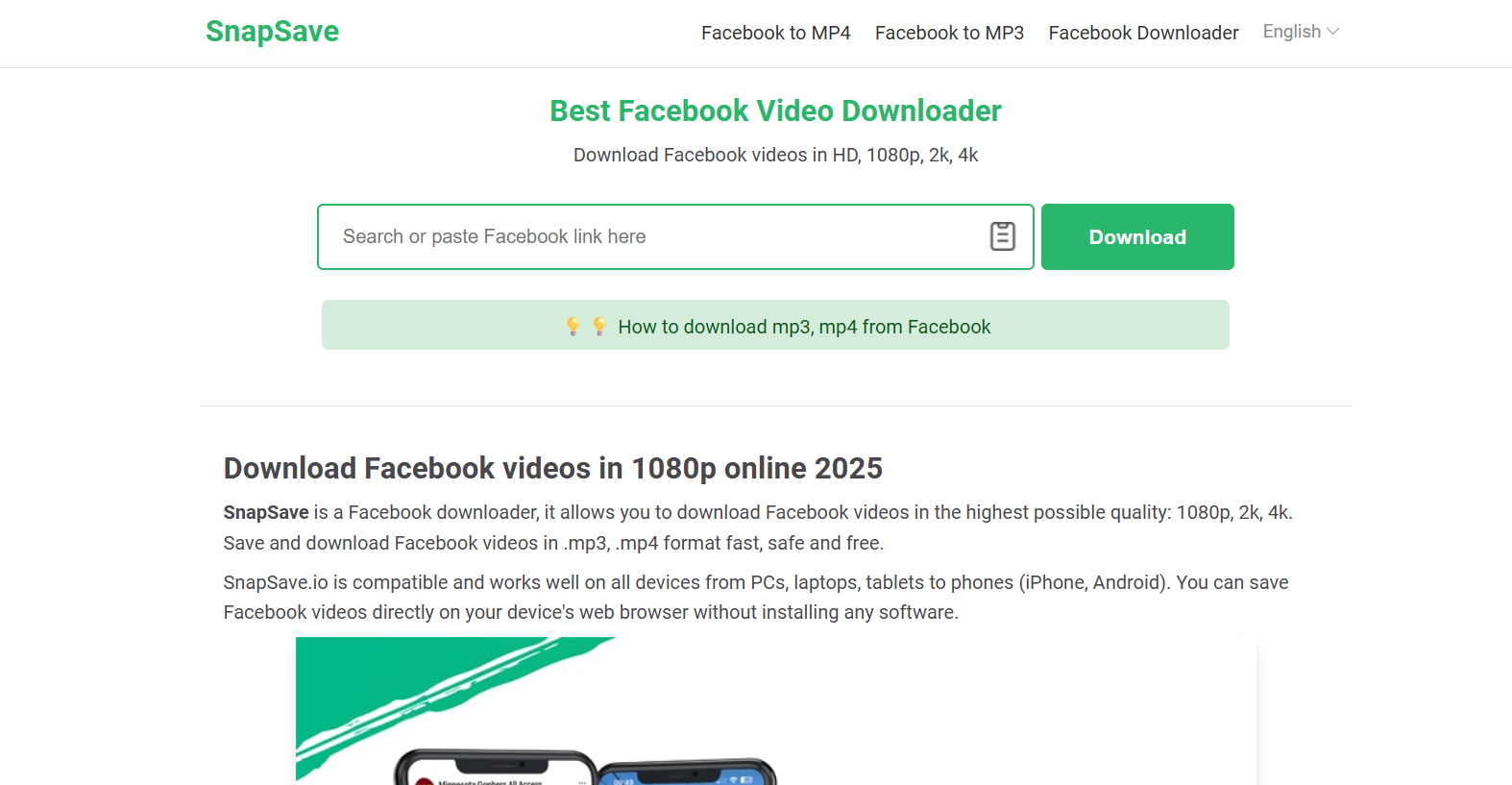
Tool #1 – SnapSave

SnapSave

SnapSave is fast, simple, and works directly in your browser. You paste the Snapchat link, click download, and that’s it. No watermark, no signup, and consistently good video quality. It’s a great starting point if you want something reliable without complications.

Tool #2 – SaveSnap

SaveSnap

SaveSnap is a well-known Snapchat video downloader tool, especially for public videos and Spotlight content. It performs very well on mobile devices and keeps pop-ups to a minimum, which already puts it ahead of many competitors.

Tool #3 – SnapDownloader Online

SnapDownloader

This tool is all about speed. It doesn’t have a fancy interface, but it loads quickly and delivers clean downloads. If you value efficiency over design, this one does the job.

Tool #4 – GetSnap

GetSnap is ideal if you’re looking for a Snapchat video downloader without a watermark that also supports stories. The interface is clean, ads are limited, and the download process feels smooth and predictable.

Tool #5 – SnapKeep

SnapKeep works especially well on Android browsers. It supports multiple formats and handles longer videos better than many similar tools. It’s a solid video downloader for Snapchat users who rely mostly on mobile.

Tool #6 – SnapVid

SnapVid is lightweight and surprisingly reliable. It doesn’t overload you with options, which makes it perfect for quick downloads. No login, no personal data requests, just simple functionality.

Tool #7 – StorySaver Snap

As the name suggests, this tool shines when it comes to public stories and Spotlight videos. It’s not overloaded with features, but it’s consistent, which is more important than flashy extras.

Tool #8 – SnapMedia Save

SnapMedia Save focuses on quality retention. If maintaining sharp video and clean audio matters to you, this is a strong option. It works well on both desktop and mobile.

Tool #9 – Browser Cache Method (Advanced)

This isn’t a traditional tool, but advanced users can extract Snapchat videos from browser cache files. It requires technical knowledge and patience, but it can be extremely effective for content that other tools fail to download.

How to Use a Snapchat Video Downloader Step by Step

Most tools follow the same basic process, which makes them easy to use even for beginners.

Copying the Snapchat video link correctly

For public content, tap the “Share” option and copy the link. If the video doesn’t offer a share option, it’s likely private and protected from downloading.

Paste the link into the Snapchat video downloader

Paste the link into the input field of your chosen tool. Give the page a few seconds to process the link before clicking download.

Downloading and saving the video to your device

Select the available quality if prompted, then download and save the file locally. Always check your downloads folder afterward to confirm the file saved correctly.

Common Mistakes to Avoid When Using a Snapchat Video Downloader

Many problems people face come from avoidable mistakes.

Fake download buttons and scam websites

If a website is filled with flashing buttons and aggressive ads, it’s probably not trustworthy. Legitimate tools are usually simple and clean.

Tools that compromise your Snapchat account

Never enter your Snapchat credentials into a third-party site. If a tool requires login access, it’s not worth the risk.

Low-quality or watermarked downloads

If a tool forces watermarks or reduces video quality, move on. There are better options that respect both quality and user experience.

Snapchat Video Downloader on Mobile vs Desktop

Both options work well, but each has its strengths.

Best Snapchat video downloader tools for mobile users

Mobile users should stick to browser-based tools optimized for Chrome or Safari. These usually offer the best balance between speed and safety.

Best Snapchat video downloader tools for PC and Mac

Desktop tools provide more control, easier file management, and sometimes better quality handling, especially for longer videos.

Which option is better for long-term use?

If you download frequently, the desktop is usually more reliable. For occasional saves, mobile tools are more than enough.

Conclusion

Snapchat video downloader tools exist because people want more control over the content they enjoy. Whether you’re saving something funny, educational, or genuinely meaningful, the key is choosing tools that are simple, safe, and transparent.

Stick to no-login tools, avoid sketchy apps, respect content ownership, and always prioritize quality. Choose one of the tools above, try it once, and you’ll quickly see why screen recording is no longer the best option.

Find More: Boost Your Sales With SEO Services

FAQs

1. Can I use a Snapchat video downloader without logging in?

Yes. The safest and most reliable tools never ask for login information.

2. Do Snapchat video downloader tools work for private videos?

Most tools only support public content. Private videos are intentionally protected by Snapchat.

3. Is there a free Snapchat video downloader without a watermark?

Yes. Several tools listed above offer free, clean downloads with no watermarks.

4. Can using a Snapchat video downloader get my account banned?

If you avoid logging in and only download public content, the risk is extremely low.

5. What’s the safest Snapchat video downloader in 2025?

Browser-based tools that don’t require credentials, have minimal ads, and a clean interface are generally the safest choice.

Tags:
Level Up Your Startup’s Marketing: Strategies That Drive Growth

Level Up Your Startup’s Marketing: Strategies That Drive Growth

Many startups struggle not because their ideas lack value, but because the right people never hear about them. Marketing often becomes an afterthought when budgets are tight and teams are small. Founders try to handle everything themselves, from product development to customer outreach, which can slow growth and lead to missed opportunities. Strong marketing does more than create visibility. It builds trust, communicates value, and turns interest into long-term customers.

This article breaks down practical marketing strategies that can help you grow your startup and reach the right audience without wasting time or resources.

Set Clear Marketing Goals Before Spending a Dollar

Before you invest time or money into marketing, you need to decide what you want it to accomplish. When you jump into tactics without clear goals, your efforts can feel scattered and difficult to measure. Defining your marketing goals helps you stay focused and make smarter decisions about where to invest your resources.

Your goals should connect directly to your business priorities. Whether you want to increase awareness, generate leads, or boost sales, clarity gives your marketing direction. When you know what success looks like, you can track progress more easily and adjust your strategy before small issues turn into costly mistakes.

Hire the Right Marketing Team

Marketing requires more than occasional promotion. If you want consistent growth, you need people who understand strategy, execution, and analysis. Hiring the right marketing team gives you access to expertise that helps you move faster and avoid unnecessary trial and error. A strong team can turn ideas into structured campaigns that support your business goals.

However, you can also choose to strengthen your own marketing knowledge through certifications or formal education. Credible institutions such as Youngstown State University make this more accessible by offering online MBA marketing programs. The program covers areas such as strategic marketing, consumer behavior, digital marketing, and data-driven decision-making. Because it runs online, you can continue managing your business while gaining practical skills you can apply right away.

Understand Your Target Audience on a Deeper Level

To market effectively, you need more than basic information about your audience. Knowing who they are is important, but understanding why they make decisions matters even more. When you take the time to learn about their challenges, motivations, and preferences, your marketing becomes more relevant and engaging.

You can gather this insight through customer conversations, surveys, and feedback. These insights help you refine your messaging so it speaks directly to real needs. When your audience feels understood, they are more likely to trust your brand and take action.

Build a Consistent Brand That People Recognize

Consistency plays a major role in how your startup is perceived. When your visuals, messaging, and tone stay aligned across platforms, people begin to recognize your brand more easily. That familiarity builds trust and makes your business feel more reliable.

A consistent brand also simplifies your marketing efforts. You spend less time guessing how to communicate and more time delivering clear messages. Over time, this consistency strengthens your presence and helps you stand out in competitive markets.

Focus on Content That Solves Real Problems

Your content should always serve a purpose. When you focus on solving real problems for your audience, your marketing feels helpful rather than promotional. Content that educates or answers common questions builds credibility and keeps people engaged.

By creating blogs, videos, or posts that address real challenges, you position your startup as a useful resource.

Use Data to Guide Marketing Decisions

If you want your marketing to improve over time, you need to pay attention to what the data tells you. Relying on assumptions or gut feelings can lead you in the wrong direction. When you track performance, you start to see which efforts actually move your business forward and which ones need adjustment.

You do not need advanced systems to begin. Simply monitor basic metrics such as website traffic, conversion rates, email open rates, and ad performance. These numbers reveal patterns in customer behavior and help you refine your messaging and channels. When you let data guide your decisions, your marketing becomes more intentional and less reactive.

Leverage Social Media With a Purpose

Social media works best when you use it with a clear goal in mind. Posting on every platform can spread your efforts too thin and lead to inconsistent results. Instead, focus on the channels where your audience already spends time and engage with them regularly.

Consistency matters more than frequency. When you share useful content, respond to comments, and show up with a clear voice, you build stronger connections. Remember, social media should support your broader marketing strategy, not distract from it.

Invest in Paid Advertising Strategically

Paid advertising can accelerate growth when you approach it carefully. Rather than spending large amounts upfront, start small and test different messages, audiences, and formats. This allows you to learn what works before increasing your budget.

Paid ads work best when they support your overall strategy. They can help you reach new audiences, promote valuable content, or drive traffic to specific offers.

Strengthen Customer Relationships Through Email Marketing

Email marketing gives you a direct line to people who have already shown interest in your business. Instead of focusing only on sales messages, use email to build trust and provide value. Helpful updates, insights, and personalized communication keep your audience engaged over time.

Strong email relationships often lead to repeat business and referrals, making this channel especially valuable for long-term growth.

Growth rarely comes from doing more. It comes from doing the right things with focus and clarity.. By focusing on these fundamentals, you turn marketing into a strategic asset that helps you grow with confidence. Instead of chasing trends, you create momentum by staying consistent, adaptable, and intentional in how you reach and serve your audience.

Why IT Companies Rely on Digital Marketing Experts for Website Design

Why IT Companies Rely on Digital Marketing Experts for Website Design

IT Companies

A website is the first point of contact between an IT company and its potential clients. Its design and functionality influence perceptions of credibility, professionalism, and technological expertise. Companies recognize that a well-structured website enhances engagement, communicates value, and strengthens brand identity in competitive markets.

Expert agencies like DYAD help IT companies bridge the gap between technical offerings and client expectations. Professional teams transform complex concepts into intuitive layouts, ensuring that every feature supports user needs. This article examines the key reasons IT companies turn to digital marketing specialists for website design and how these collaborations produce measurable results.

Understand User Experience

User experience determines whether visitors stay, explore, or exit a website. Digital marketing experts analyze navigation flows, page layouts, and interactive elements to create seamless interactions. Research into target audiences identifies expectations, preferred pathways, and potential frustrations.

Well-crafted interfaces reduce bounce rates and encourage conversions, enhancing business performance. Clear calls-to-action guide visitors toward desired outcomes, from inquiries to subscriptions. Prioritizing usability ensures that technical content remains accessible and engaging for a diverse audience.

Create Visually Engaging Designs

Visual appeal significantly impacts brand perception and client trust. Experts combine color schemes, typography, and imagery to reflect corporate identity while remaining user-friendly. Consistent design reinforces professionalism and facilitates information retention.

Interactive components, such as buttons and sliders, provide feedback that keeps users engaged. Graphics and icons simplify complex technical concepts without overwhelming visitors. Cohesive aesthetics across pages encourage exploration, increasing the likelihood of lead generation and client interest.

Optimize for Performance

Website speed, responsiveness, and functionality influence user satisfaction and search visibility. Professionals conduct audits to identify performance bottlenecks and implement solutions that improve load times. Mobile optimization ensures accessibility across devices, crucial for enterprise clients who rely on multiple platforms.

Technical adjustments, including caching and image compression, maintain smooth operations under high traffic conditions. Continuous testing identifies glitches before they affect visitors. Reliable performance contributes to credibility, encouraging trust and repeat engagement.

Implement Strategic Content

Content bridges technical expertise and client understanding. Well-structured copy communicates services, benefits, and value propositions clearly. Headlines and subheadings guide readers, while multimedia elements like videos and infographics enhance comprehension.

SEO-focused strategies increase visibility and attract qualified leads. Internal linking and clear navigation support search engines and user experience. Strategic content placement transforms informational resources into conversion opportunities.

Integrate Analytics and Continuous Improvement

Performance evaluation is essential to improve website effectiveness over time. Digital marketing specialists implement analytics tools that track visitor behavior, page interactions, and conversion metrics. Data analysis identifies high-performing areas and points that require adjustments.

Reports allow informed decisions for content updates, design enhancements, and functional improvements. Continuous iteration ensures that the website evolves with client expectations and industry trends. Regular review processes maintain relevance, user satisfaction, and business growth.

Enhance Conversion Paths

Clear conversion paths guide visitors toward meaningful actions, turning casual browsing into qualified leads. Professionals design intuitive layouts that highlight calls-to-action without overwhelming the user. Forms are streamlined to capture essential information quickly while maintaining engagement.

Strategic placement of buttons, links, and interactive elements encourages users to explore services further. A/B testing of different layouts and messaging identifies the most effective approaches for driving conversions. Optimized conversion paths ensure that IT company websites not only attract visitors but also convert interest into measurable business outcomes.

Professional digital marketing firms such as DYAD strengthen IT company websites by improving user experience, visual design, and analytics integration. Collaborations with skilled teams ensure that technical capabilities are presented effectively while maximizing engagement and lead generation. IT companies that invest in specialized support gain a competitive edge, build credibility, and maintain a website that evolves alongside client needs and market demands.

CRM Software Development Cost: What Businesses Should Really Expect

CRM Software Development Cost: What Businesses Should Really Expect

Understanding CRM software development cost is one of the most important steps a business can take before investing in customer technology. While many companies do prefer to ask, “How much does a CRM cost?”, rather than “What are we paying for, and why?”

CRM development is not about a one-size-fits-all expense. Its final cost depends on the functionality, customization, integrations, scalability, and long-term business goals of a company. When all these are planned correctly, CRM software becomes less of an expense and more of a strategic investment that pays back through efficiency, insights, and stronger customer relationships.

Why CRM Development Cost Varies So Widely

CRM software development cost can range from a few thousand dollars to well over six figures. This wide gap exists because CRMs are built for very different purposes. A simple contact management system costs far less than an enterprise-grade CRM powered by automation, AI, and analytics.

Key cost drivers include:

  • Scope of features
  • Level of customization
  • Number of integrations
  • Data volume and complexity
  • Security and compliance needs
  • Development team expertise

A startup tracking leads will not need the same system as a multinational company managing millions of customer interactions across channels.

Types of CRM Solutions and Their Cost Impact

1. Off-the-Shelf CRM Customization ($5000 – $30,000)

Some businesses begin with an existing CRM platform and adapt it to meet their needs. They gain from this choice because it lowers the initial development costs but it still requires qualified CRM developers.  

Good for:

  • Small and medium sized businesses
  • Teams with standard workflows
  • Faster deployment needs

Limitations appear when workflows become complex or when deep customization is required.

2. Custom CRM Software Development ($25,000 – $400,000+)

A fully customized CRM is made to work with specific business processes. As a result, they have total flexibility and long-term scalability.

Good for:

  • Businesses with specific workflows
  • Companies seeking for long-term expansion
  • Organizations that require complete control over features and data

Despite their higher initial cost, custom CRMs frequently minimize operational friction and long-term inefficiencies.

Core Features That Influence CRM Software Development Cost

  • User Management & Roles

Basic access control costs less, while advanced permission systems increase complexity and development time.

  • Contact & Lead Management

The cost of advanced tracking, tagging, and lifecycle automation is more than that of standard contact storage.

  • Automation & Workflows

Deeper logic and testing are needed for automated follow-ups, task assignments and triggers, which increases development effort.

  • Reporting & Analytics

Basic dashboards are cheap. Costs are greatly increased by AI-driven reporting, predictive insights, and advanced analytics.

  • AI & Machine Learning

AI features such as predictive lead scoring, sentiment analysis, or recommendation engines can add 20–40% to the total development cost.

Integrations: A Major Cost Factor

Modern CRMs rarely work alone. Businesses often need integrations with:

  • Email platforms
  • Marketing automation tools
  • Accounting software
  • Customer support systems
  • Payment gateways

Each integration adds development time, testing, and ongoing maintenance. APIs that are poorly documented or frequently updated also increase costs.

CRM Software Development Team Costs

The cost of development depends heavily on who builds the CRM.

Typical Team Includes:

  • CRM developer
  • Backend developer
  • Frontend developer
  • UI/UX designer
  • QA tester
  • Project manager

Expertise level and regions have an impact on hourly rates. Experienced CRM developers lower long-term risks, rework, and performance problems despite being more costly.

Ongoing Costs Businesses Often Overlook

After launch, CRM development continues. While many companies underestimate ongoing costs, such as:

  • Maintenance & Updates

Bug fixes, performance improvements, and feature updates are constant demands.

  • Hosting & Infrastructure

Cloud hosting, databases, backups, and scaling resources add recurring costs.

  • Security & Compliance

Data protection, encryption, access logs, and compliance updates are essential; specially for the industries dealing with sensitive data.

  • Training & Adoption

A CRM only works if people use it correctly. Training teams and refining workflows is part of the real cost.

How a Skilled CRM Developer Helps Control Costs

An experienced CRM developer does more than write code. They help businesses:

  • Avoid unnecessary features
  • Design scalable architecture
  • Choose the right integrations
  • Prevent future performance bottlenecks
  • Balance automation with usability

Early technical mistakes frequently result in costly rewrites later on. By creating systems that expand without failing, a skilled developer lowers that risk.

Cost-Saving Best Practices for CRM Development

  • Start With Clear Requirements

Vague goals lead to scope creep. Clear documentation keeps costs predictable.

  • Build in Phases

Launching a minimum viable CRM and expanding later spreads costs over time.

  • Prioritize Business Value

Not every feature delivers ROI. Focus on tools that save time or increase revenue.

  • Keep Data Clean From Day One

Messy data increases development complexity and weakens automation.

  • Plan for Growth, Not Perfection

A flexible system designed to predict the future is better to a flexible, evolving system.

Is CRM Software Development Worth the Cost?

The answer is typically yes for companies that depend on client relationships. The real value of CRM software lies not only in its functionality but also in how well teams work when friction is removed. People concentrate more on clients and less on technology when data flows properly.

CONCLUSION

Shortly, CRM software development cost depends on choices: technical, strategic, and human. Businesses that use CRM as a long-term asset rather than a short-term tool make better decisions and see stronger returns.

The goal of CRM is to work quietly, efficiently, and reliably in the background while teams focus on growth.