UK: +44 2038074555 info@atamgo.com
How D2C Brands Are Using AI to Conduct Competitor Research

How D2C Brands Are Using AI to Conduct Competitor Research

D2C Brands

I still remember the first time I tried to track competitor prices for my own little ecommerce side hustle. It was me, a mug of coffee, and a spreadsheet that grew more monstrous with every copy-paste. By the time I finished, half the prices had already changed and my wrist was begging for mercy. Fast forward to today, and the world of D2C (direct-to-consumer) ecommerce is a whole different beast—fiercer, faster, and, thankfully, a lot smarter.

With D2C ecommerce sales in the US soaring to an estimated $213 billion in 2024—a 178% jump since 2019—and the global dropshipping market heading toward $1.2 trillion by 2030, the stakes have never been higher. In this environment, staying ahead means knowing not just what your competitors are doing, but what they’re about to do next. That’s where AI web scrapers come in—turning what used to be a manual slog into a strategic advantage for D2C and dropshipping brands. Let’s dig into how these tools are transforming ecommerce competitor research.

What Is AI Web Scraper Competitor Research for Ecommerce Brands?

Let’s start with the basics. An AI web scraper is a tool that uses artificial intelligence—think machine learning and natural language processing—to extract structured data from websites. Unlike old-school scrapers that need you to point out every little HTML tag, AI web scrapers can “read” a page almost like a human, figuring out where the product titles, prices, reviews, and stock statuses live—even if the site’s layout changes overnight.

For ecommerce brands, this means you can automate the entire process of competitor research:

  • Extract product listings, prices, promotions, and reviews from any competitor’s site
  • Monitor inventory levels and new product launches
  • Track changes in real time—no more stale data or missed flash sales

The best part? You don’t need to be a coder or even particularly tech-savvy. Modern AI web scrapers like Thunderbit are built for business users, with intuitive interfaces and features like “AI Suggest Fields” that do the heavy lifting for you.

Why AI-Powered Competitor Research Matters for D2C and Dropshipping Brands

Let’s be real: in today’s ecommerce world, flying blind is not an option. Here’s why automating competitor research with AI is a must for D2C and dropshipping brands:

  • Pricing Intelligence: Regularly monitor competitor prices and promotions to fine-tune your own pricing strategy. Retailers using automated price intelligence tools see up to 7% higher profit margins.
  • Product Assortment Analysis: Spot emerging trends and new product launches before they hit the mainstream. If your competitors are suddenly all-in on a new gadget, you’ll know about it right away.
  • Trend Spotting: Analyze reviews and bestsellers to catch shifts in consumer preferences early.
  • Supplier Discovery: Scrape supplier info or sourcing clues from competitor listings to find new vendors or negotiate better deals.
  • Inventory Monitoring: Track stock levels to capitalize when competitors run out of popular products.

And the ROI? Brands using automated competitor dashboards have been observed to grow 24% faster than the market average, with measurable boosts in conversion rates and sales.

Comparing AI Web Scrapers and Traditional Data Extraction Methods

Before I found Thunderbit, my competitor research toolkit was a Frankenstein’s monster of copy-paste, browser extensions, and the occasional Python script that broke every time a site updated its layout. Here’s how AI web scrapers stack up against the old ways:

Approach Ease of Use Scalability Accuracy & Resilience Maintenance
Manual Copy-Paste Super simple, but painfully slow Not scalable at all Prone to human error, stale data High effort, repetitive
Code-Based Scrapers Flexible, but you need to code Highly scalable if you have servers Breaks with layout changes Constant code fixes
Traditional Extensions User-friendly for simple jobs Moderate—good for hundreds of pages Decent, but needs manual tweaks Medium—reconfigure as sites change
AI Web Scrapers Easiest—just click and go Highly scalable, especially in the cloud Adapts to layout changes, high accuracy Low—AI handles most changes

With Thunderbit, for example, you just install the Chrome extension, click “AI Suggest Fields,” and let the AI figure out what to extract—even from messy, dynamic sites. No more wrestling with CSS selectors or hoping your script survives another site redesign.

Step-by-Step Guide: Using Thunderbit AI Web Scraper for Competitor Research

Let’s walk through how I’d use Thunderbit to run a competitor research project for a D2C brand. No coding, no headaches—just actionable data.

Step 1: Install Thunderbit and Set Up Your Project

First, download and install the Thunderbit Chrome Extension. Once installed, open Thunderbit and create a new project—let’s call it “Summer 2025 Competitor Watch.”

Step 2: Identify Competitor Websites and Target Data

Make a list of your key competitors—maybe it’s the top five Shopify stores in your niche, or the Amazon sellers you keep bumping into. Decide what you want to track:

  • Product names and SKUs
  • Prices and promotions
  • Stock status
  • Customer reviews
  • Images (for those sneaky new product launches)


Step 3: Use AI Suggest Fields for Automated Data Structuring

Here’s where Thunderbit shines. Navigate to a competitor’s product or category page, and hit “AI Suggest Fields.” The AI reads the page and automatically recommends which data fields to extract—think “Product Title,” “Price,” “Availability,” and more. You can tweak the suggestions or add your own custom fields if you want to get more granular.

Step 4: Scrape Data, Including Subpages and Pagination

Click “Scrape” and let Thunderbit do its thing. If the site has multiple pages of products, Thunderbit handles pagination and can even follow links to subpages (like individual product detail pages) to grab deeper info. It’s like having a robot intern who never gets tired or distracted.

Step 5: Export and Analyze Your Competitor Data

Once the data’s in, export it to Excel, Google Sheets, or Airtable with one click. I like to set up a Google Sheet that updates automatically, so I can spot trends and price changes at a glance. Use pivot tables or simple charts to compare prices, track stockouts, or visualize how your assortment stacks up against the competition.

Advanced Tips: Leveraging AI for Deeper Ecommerce Insights

Thunderbit isn’t just about grabbing raw data—it’s about making that data smarter. Here’s how I like to take things up a notch:

  • Custom Labeling and Categorization: Use Thunderbit’s Field AI Prompt to automatically group products into categories, tag reviews by sentiment, or even translate descriptions from other languages.
  • Scheduled Scrapes: Set up recurring scrapes (daily, weekly, or even hourly) to monitor price changes, new product launches, or inventory shifts. The AI can turn your “check competitor prices every Monday” routine into a set-it-and-forget-it process.
  • Data Cleaning: Thunderbit can reformat prices, strip out extra characters, and standardize data as it scrapes—no more messy spreadsheets.

Common Challenges in Competitor Research and How AI Web Scrapers Solve Them

Let’s be honest: competitor research used to be a nightmare. Here are the pain points I’ve run into (and how AI web scrapers fix them):

  • Changing Website Layouts: Traditional scrapers break when a site updates its design. AI scrapers like Thunderbit adapt on the fly, using context to find the right data.
  • Data Inconsistency: Manual copy-paste leads to typos and missed entries. AI scrapers deliver clean, consistent data every time.
  • Time Constraints: Manually tracking hundreds of SKUs across multiple sites? Forget it. AI scrapers can handle this at scale, freeing up your team for actual strategy.
  • Maintenance Headaches: With AI, you’re not constantly fixing broken scripts or selectors. The tool evolves as sites change, so you don’t have to.

As one user put it, “Fast & easy web automation, no CSS selectors, no hassle. Let the AI scraper take care of the boring tasks so you can focus on strategy.”

Real-World Examples: D2C Brands Using AI Web Scrapers for Dropshipping Success

These aren’t just hypotheticals—D2C and dropshipping brands are already seeing real results:

  • Skincare Brand (Los Angeles): Used AI scraping to monitor 50 competitors on Amazon, catching weekend price drops and new bundles. By syncing their own pricing and offers, they saw a 12% boost in conversion.
  • Wellness Supplements (San Diego): Set up real-time alerts for competitor price changes, matching promotions as they happened. Result? A 16% jump in weekday sales.
  • Athleisure Apparel (San Francisco): Tracked top-selling leggings and adjusted their own shipping and pricing to stay competitive during major shopping events.
  • Global Fashion Dropshipper: Scraped new arrivals from fast-fashion giants to spot trends early and source in-demand styles before the market got crowded.

The common thread? Automated, AI-driven competitor research led directly to smarter decisions and measurable business growth.

Key Takeaways: Transforming Competitor Research with AI in Ecommerce

Here’s what I’ve learned (sometimes the hard way):

  • Manual competitor research is a time sink and a recipe for missed opportunities.
  • AI web scrapers like Thunderbit make it easy for D2C and dropshipping brands to automate data extraction, adapt to changing sites, and scale their insights—no coding required.
  • The ROI is real: more accurate data, faster reactions, and higher margins.
  • With features like AI-powered field suggestions, subpage scraping, and scheduled monitoring, even small teams can compete with the big players.


If you’re still stuck in spreadsheet purgatory, now’s the time to give AI web scrapers a try. Download the Thunderbit Chrome Extension, set up your first project, and see how much easier competitor research can be. Your coffee—and your bottom line—will thank you.

Want more tips and detailed guides? Check out the Thunderbit Blog for walkthroughs, use cases, and the latest on AI-powered ecommerce tools.


The Role of Social Content in Building Trust for Personal Injury Lawyers Online

The Role of Social Content in Building Trust for Personal Injury Lawyers Online

Social Content

In today’s world, most people discover new businesses and services through online content. From Instagram to Facebook to TikTok, the concept of ad space and reaching an audience has changed.

While ads are still very relevant, many people are connecting with new potential clients through social media. While you can run ads through social media, attention is heavily influenced by quality content. This has been seen as a challenge for most people, and it can be the same for those working in law. For this article, you’ll gain an understanding of how clever content marketing plays a big role in building trust with potential clients. 

Understanding Content Marketing in Legal Services

Law firms aren’t the first thing that comes to mind when you think of content marketing. The truth is that it can be a very effective medium to connect with people who need legal help. It’s even more helpful if it pertains to personal injury cases, which can become quite convoluted. Personal injury clients are often searching for local expertise they can trust. That’s why firms like personal injury lawyers st. louis prioritizes accessible online content and transparent communication, helping potential clients understand their legal options and fostering a sense of trust early in the process.

Trust and credibility are the support for this endeavor. People need to feel confident that lawyers know what they’re talking about. You won’t accomplish this in a single video, but through online reviews and consistent content, lawyers can reach many more people.

Why Trust is Crucial for Personal Injury Lawyers

Considering they’re dealing with the law and potential consequences, people need to be able to trust. This doesn’t just come from positive reviews or a few Instagram reels; it demands consistency.

This is easier said than done, with many traditional law firms lagging in getting into the content marketing space. On the other hand, one could argue that there are people and tools that can do that for them. It gets pretty niche, especially with a personal injury marketing company that can pretty much handle the majority of it in-house. Without trust, most lawyers won’t be getting very far.

Churning out any kind of results through content marketing can also take quite a bit of time. While using ad space can be helpful, it isn’t the end-all be-all of getting attention. People need to see that you follow through on your content, address multiple topics, and engage with their questions or concerns. When people start to assume you know what you’re talking about, you’re definitely on the right track.

It does take quite a bit of creativity to keep the momentum going, but it isn’t too hard to find some help with that. Content marketing agencies, industry-specific or not, can take most of the stress out of creating content on a schedule.

Endnote

You’d be surprised at the number of personal injury lawyers who have spearheaded their content marketing plan. In the same vein, that isn’t something that happens overnight. More than ever, content marketing is one of the biggest driving factors for attracting an audience as well as potential clients.

For personal injury lawyers, it’s all about leaning into that target market. Building a strategy is the first step, and once you get to execution, it’s all about a balance between maintenance and improvement.

The Key Skill of Today’s Mastering Global Business Management

The Key Skill of Today’s Mastering Global Business Management

Global Business Management

In today’s interconnected world, global business success is not just about mastering strategy, finance, or market research. Instead, it hinges on a more human-centered skillset—one that includes cross-cultural leadership, relationship-building, and effective global communication.

Whether you’re leading a multinational team or negotiating across borders, the ability to collaborate across cultures is what sets apart high-performing global professionals. Programmes like EPGBM IIM Calcutta are designed to develop these core capabilities, preparing professionals to thrive in international settings where cultural sensitivity, emotional intelligence, and adaptability are critical. 

1. Leading and Collaborating Across Global Teams

Embracing Diversity in Leadership

Managing global teams demands more than just leadership—it requires cultural intelligence and inclusivity. Team members often come from different cultural backgrounds, hold diverse viewpoints, and approach work in unique ways. A successful global leader must create a shared purpose and empower everyone to contribute, regardless of their location or background.

Building Trust Across Borders

Trust is foundational in any team but becomes even more critical when managing international teams with limited face-to-face interaction. This means investing in:

  • Regular virtual meetings and informal check-ins
  • Occasional in-person gatherings, where possible
  • Encouraging open, respectful communication

Clear and Inclusive Communication

Leaders must ensure clarity in language and inclusivity in tone. Simple steps such as avoiding idioms, encouraging non-native speakers, and pacing conversations go a long way in creating a safe and productive environment for everyone.

Adapting to Local Contexts

Rather than imposing a uniform way of working, global leaders must adapt their strategies to local norms. For example:

  • Some cultures value hierarchy, while others prefer collaboration
  • Decision-making speeds and risk attitudes vary widely

EPGBM IIM Calcutta helps professionals understand and respond to these cultural nuances through practical frameworks and simulations.


2. Building Global Relationships and Strategic Networks

The Power of Relationship-Based Business

In global business, relationships are more than connections—they are strategic assets. Long-term success depends on cultivating mutual trust, transparency, and cultural awareness.

  • Trust-building takes time and consistent effort
  • Understanding cultural etiquette improves rapport
  • Transparency helps navigate regulatory and ethical differences

Cultural Awareness in Relationship Management

Cultural intelligence plays a vital role in business etiquette and expectations. For instance:

  • In some cultures, indirect communication is preferred
  • In others, formal greetings or titles may be necessary
  • Decision-making may require relationship-building before closing deals

Tailoring your engagement style for each market shows respect and enhances credibility.

Maintaining Global Connections

Technology helps bridge geographical divides, but personal interaction still matters. Face-to-face meetings remain essential for building deeper trust and rapport, especially in the early stages of a partnership.

The Role of Global Networking

Building professional networks across borders opens access to:

  • New markets
  • Diverse business insights
  • Collaboration opportunities

The EPGBM IIM Calcutta programme integrates networking into its learning environment, allowing participants to connect with peers and industry experts from around the world.


3. Mastering Cross-Cultural Communication

Understanding Communication Styles

Cross-cultural communication is not just about speaking different languages—it’s about recognising how messages are conveyed and interpreted differently across cultures.

  • High-context cultures (e.g., Japan, China): value indirect, subtle communication
  • Low-context cultures (e.g., Germany, USA): prefer direct, explicit messages

Knowing the difference helps avoid miscommunication and builds smoother interactions.

Cultural Sensitivity in Daily Interactions

Professionals must be aware of how tone, pace, and non-verbal cues vary globally. For example:

  • Eye contact might signify confidence in one culture but disrespect in another
  • A direct “no” could be considered impolite in some cultures, where indirect refusals are preferred

Being culturally sensitive reduces misunderstandings and builds stronger partnerships.

Choosing the Right Channels

Selecting appropriate communication methods is also crucial:

  • Synchronous tools (like video calls) promote real-time engagement but require time zone management
  • Asynchronous tools (like email) offer flexibility but can delay clarity

Adapting your tools and styles to suit your global audience enhances efficiency and collaboration.

Communication Agility and Active Listening

Great communicators are agile. They adjust their language, tone, and delivery to ensure inclusivity. Active listening—paraphrasing, confirming understanding, and reading non-verbal cues—is essential in global contexts.

Courses like EPGBM IIM Calcutta provide real-world training on these skills through simulations and peer feedback.


Conclusion: Succeeding Through Human-Centered Global Skills

Technical knowledge alone no longer guarantees success in international business management. What truly sets professionals apart today is their ability to connect, communicate, and collaborate across cultures.

Key takeaways include:

  • Effective leadership is about trust, empathy, and adaptability
  • Global relationships thrive on authenticity and cultural awareness
  • Cross-cultural communication is the cornerstone of global business success

Programmes like EPGBM IIM Calcutta are designed to cultivate these competencies through structured, hands-on learning experiences. They prepare you to not only lead but thrive in diverse, complex, and rapidly changing business environments.

As global markets continue to evolve, those who invest in these human-centered global business skills will be best positioned to lead innovation, inspire teams, and build lasting impact across borders.

Why 73% of Businesses Are Wasting Their Digital Budget (And How Industry Leaders Are Getting 10X Returns)

Why 73% of Businesses Are Wasting Their Digital Budget (And How Industry Leaders Are Getting 10X Returns)

Digital Budget

Selecting the right marketing agency for your business has become increasingly crucial as the digital landscape continues to grow more complex and competitive. With the proliferation of channels, platforms, and technologies, many organisations find themselves struggling to keep pace with rapidly evolving best practices while simultaneously trying to run their core business operations. This challenge is particularly acute in competitive markets like Singapore, where digital sophistication is exceptionally high.

The Hidden Cost of Marketing Mediocrity

The gap between average and exceptional marketing performance has never been wider. Research from McKinsey reveals some sobering statistics:

  • Companies with top-quartile marketing capabilities generate 3.4 times more revenue growth than their bottom-quartile counterparts
  • 67% of the buyer’s journey now takes place through digital channels
  • Businesses with integrated marketing strategies achieve 91% higher year-over-year customer retention rates
  • 73% of marketers report they cannot measure the ROI of their marketing activities effectively

“The most expensive marketing isn’t the one with the highest budget—it’s ineffective marketing that creates the illusion of progress while failing to drive measurable business outcomes,” explains digital strategist Sarah Tan, who works with businesses from Jurong to Tampines across Singapore’s diverse commercial landscape.

Why Internal Marketing Teams Often Hit Performance Ceilings

Several structural challenges limit the effectiveness of purely in-house marketing operations:

  • Skill gaps in specialised areas like programmatic advertising, marketing automation, and attribution modelling
  • Limited exposure to cross-industry best practices and innovations
  • Difficulty attracting and retaining top talent, particularly in technical specialisations
  • Challenges in maintaining objectivity and challenging internal assumptions

The solution increasingly involves creating hybrid models where internal teams collaborate with external specialists who bring complementary capabilities and fresh perspectives.

The Evolution from Service Provider to Strategic Partner

Today’s leading marketing partnerships are fundamentally different from transactional agency relationships of the past. They’re characterised by:

  • Deep integration with business strategy and revenue objectives
  • Shared risk/reward compensation structures that align incentives
  • Transparent data sharing and collaborative analytics
  • Joint ownership of both successes and failures

“The most successful partnerships we see are those where the traditional client-vendor boundary begins to dissolve,” notes digital transformation expert Michael Wong. “When agencies gain visibility into business metrics beyond marketing KPIs, they can make decisions that directly impact revenue rather than just surface-level engagement metrics.”

Identifying True Marketing Expertise in a Sea of Mediocrity

The marketing services landscape has become increasingly crowded, making it challenging to distinguish genuine expertise from impressive sales pitches. When evaluating potential partners, prioritise:

  1. Proven measurement frameworks: How do they define and track success? Are they focused on vanity metrics or business outcomes?
  2. Channel integration capabilities: Can they seamlessly coordinate efforts across paid, owned, and earned media?
  3. Technical foundation: Does the agency or the SEO agency they partner with demonstrate robust technical capabilities, particularly in areas like structured data implementation, site speed optimisation, and conversion rate optimisation?
  4. Industry-specific knowledge: Do they understand the nuances of your market sector, customer journey, and competitive landscape?
  5. Cultural alignment: Will their working style complement your internal teams, or will differences create friction?

The Data Revolution Transforming Marketing Effectiveness

Access to data isn’t the challenge—extracting actionable insights is what separates leaders from laggards. Progressive marketing partnerships now build around:

  • Multi-touch attribution models that accurately assign conversion value across touchpoints
  • Predictive analytics that forecast customer behaviour and lifetime value
  • Real-time optimisation capabilities that adjust campaigns continuously
  • Closed-loop reporting systems that connect marketing activities directly to revenue

“We’re seeing a fundamental shift away from report-based marketing toward decision-support systems that enable continuous optimisation,” explains data scientist Li Wei. “The organisations achieving the highest ROI are those with the ability to act on data, not just collect it.”

Beyond Campaigns: Building Marketing Systems

The most sophisticated marketing approaches have evolved from discrete campaigns to integrated systems designed for continuous improvement. These systems incorporate:

  • Automated customer journeys that adapt based on behavioural signals
  • Content engines that produce materials aligned with the buyer’s journey
  • Testing frameworks that drive ongoing optimisation
  • Performance dashboards that provide real-time visibility

Making the Strategic Shift

The competitive advantage gained through marketing excellence continues to grow as digital channels increase in importance. Organisations that cling to outdated approaches risk not just marketing underperformance but existential business challenges as more agile competitors capture market share.

For leadership teams evaluating their marketing approach, the critical question isn’t whether external expertise is needed—it’s how to structure partnerships that combine the market knowledge of internal teams with the specialised capabilities and cross-industry insights that external partners provide.

As the marketing landscape continues to increase in complexity, the businesses that thrive will be those that build collaborative ecosystems rather than relying exclusively on either internal resources or traditional agency relationships. This integrated approach represents the future of effective marketing agency partnerships

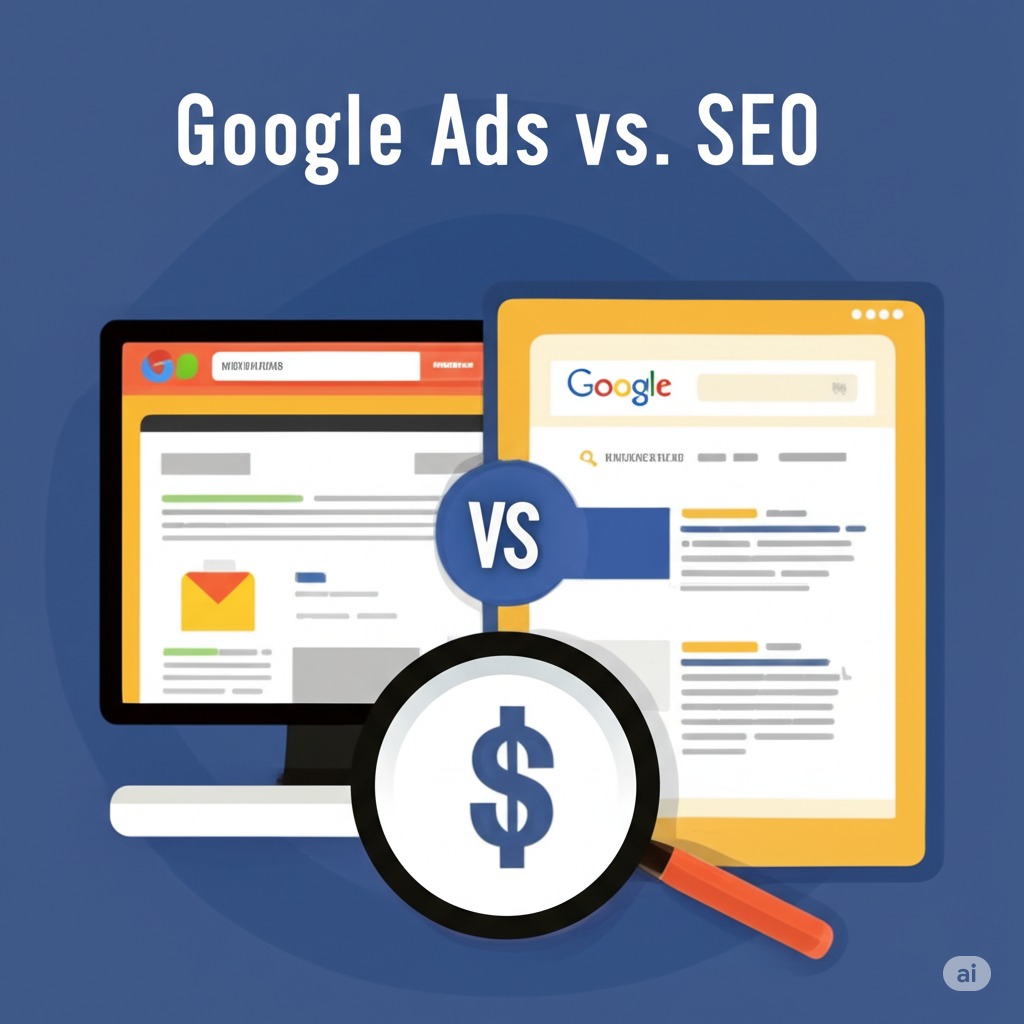
Google Ads vs. SEO: Which One Delivers Faster and More Profitable Results for Your Business

Google Ads vs. SEO: Which One Delivers Faster and More Profitable Results for Your Business

Google Ads vs. SEO

In today’s digital era, the race to capture the audience’s attention feels relentless. As an entrepreneur, you must have come across the two powerful channels of digital marketing – SEO and Google Ads and both of these assure businesses of growth and visibility. But again, the question remains: which one would be the right fit for your business?

In this blog, we will explore the dynamic aspects of these channels and provide a detailed breakdown of how they can impact your business’s bottom line. The choice isn’t always about cost or speed; it is about understanding the factor(s) that drive(s) sustainable success for an enterprise in the present competitive scenario. So, let’s see which one works at the end of this blog.

Google Ads vs. SEO: definition, components, formats, pros and cons and your choice

As promised, from this section onwards, we will move forward with understanding the most crucial aspects of SEO and Google Ads, which will enable you to make a choice for your enterprise. So, let’s dig in.

A.    Search Engine Optimization

Search Engine Optimization, or SEO, is the process of boosting a website and its contents to enhance the credibility and online visibility of the business.

The dynamic algorithm of Google analyses every website against all others to match its search with the most relevant content for the user. To make your web pages appear and rank on the results page, you must adopt various optimization techniques like keyword integration and internal linking.

After a detailed consideration of critical ranking factors like site speed, security, and content quality, Google will assign each page a score that decides the listing order. Website optimization becomes more relevant to achieving an organic ranking and outperforming your site competitors.

This helps generate higher SEO traffic, which gradually leads to improved sales and conversion rates. A strong SEO strategy is a key element in reaching prospective customers to facilitate business growth.

Search Engine Optimization is divided into three broad types. They are:

Technical SEO

Technical SEO assures that no issues hamper the ways Google and search bots read and access your website and its contents in the search engines. Technical SEO also ensures that the pages, texts, and images have the proper and relevant metadata enlisting for search engine crawlers. Most of the coding, performance, and web designs are part of Technical SEO.

Off-page SEO

Off-page SEO includes finding the most relevant websites to link back to the website. This action improves the authority and credibility of the sites and enables Google to trust you.

On-page SEO

Website content must be optimized for relevant keywords to enable Google to determine the SERPs your site needs to rank on. To make on-page optimization more effective, entrepreneurs should also focus on converting the traffic they attract. Adding optimized lead-generation or contact forms can help turn visitors into potential customers. For instance, integrating a well-structured online order form can simplify how users submit inquiries or place requests directly through the website. This improves user experience and engagement metrics, which in turn support better SEO performance. It is crucial to optimize the website frequently for on-page factors. The content marketing strategy must be well structured and detailed, aligned with Google’s EEAT, to accomplish marketing goals.

B.     Google Ads

Previously known as Google AdWords, Google Ads are paid advertisement campaigns that use a set of keywords to help Google understand where you intend your ads to show up.

Whenever a user searches for a keyword relevant to the ad content, Google conducts an auction between other sites and yours, determining the ad ranks through Quality Score bidding on that keyword and figuring out which ad has the higher rank using the Google Adwords platform.

Google Ads campaign is also Google’s advertisement platform, which is a PPC reporting system. Google PPC enables advertisers to reach interested leads. The cost of one click ranges from a few to a hundred dollars, depending on the market’s competitiveness.

Unlike SEO, one of Google Ads’ most significant benefits is immediate results. You do not have to create or plan elaborate content for it. The major difference lies in quick response, which is often a major area of comparison between both of them. Partnering with a google ads SEA agency can accelerate results by applying localized strategies and maximizing ad spend efficiency.

Let’s have a look at the various forms of PPC ads:

Google shopping ads

Ads generally appear from the top SERPs in a format called the carousel. These ads contain images of the products and crucial details like price, offers, company name, website name, etc., which helps audiences compare.

Search ads

Search ads are texts that generally appear above the usual search results at the top of SERPs. Google advertising services recommend these ads, which are easily distinguished from the organic results with an ‘ad’ tag.

Local services ads

These local service ads highlight service companies that intend to pull in more leads and improve local listing ratings. They are quite similar to the shopping ads, but additionally, they list the business’s service information.

Display ads

Google Display Network Ads, or simply Display ads, appear as images or text over millions of apps, videos, and websites, and they do not get featured on the SERPs.

Entrepreneurs can build brand awareness with Display ads by reaching the target audience when they are using apps, checking Gmails, or browsing online.

Entrepreneurs must focus on creating engaging ad copy and images that are visually appealing and carry a strong CTA to create these ads.

Video ads

Video ads appear at the very start or in the middle of YouTube videos. These ads are intended to drive subscribers, conversions, and traffic in the way of advertisers. Video campaigns help entrepreneurs build solid brand awareness and intrigue potential customers as they watch YouTube videos. For businesses operating in highly specialized fields, weighing visibility strategies becomes even more nuanced. Some industries face advertising restrictions, while others require precise targeting and compliance. If you’re navigating this kind of landscape, you may want to explore how others manage similar digital hurdles—take a look here for one such approach applied in a regulated, competitive market.

SEO vs. Google Ads: Which will suit your business better?

The answer entirely depends on your company’s situation. SEO and Google Ads are two different processes, and both intend to increase a business’s visibility.

If you need immediate results, nothing beats Google Ads, which, when done right, can fetch results in just a few clicks, with the probability of your ad appearing on the first page of the results page.

SEO is a significantly cost-effective option if you want to bet for the long game. Depending on your goals and strategies, it may take months, or in some cases years, to reap the benefits. SEO’s strongest point is its capability of generating organic traffic and compounding growth without having to spend a lot of money on paid search ads.

Here’s a more comprehensive take on the

Pros and cons of Google Ads and SEO

Let’s start by knowing the basics of the brighter aspects of search engine optimization:

  • Organic results and performances are reflected 24/7
  • Clicks are free of cost
  • Entrepreneurs can cost-effectively target keywords across the sales funnel
  • For the long run, SEO is a cost-efficient investment
  • If done right, the organic results can fetch 10x return than Google ads

Pros of Google ads

  • Results are reflected almost instantly. Almost!
  • Ads can appear above all the organic listings
  • Marketers can enhance the appeal of ads with extensions
  • Requires a smaller team than the SEO
  • Can precisely reach only the targeted audience
  • Generates a wealth of data insights

Cons of SEO

  • Takes a lot of time to reflect the results as websites increase their authority
  • Requires a specialist team comprising link builders, content creators, and technical SEO managers
  • Google’s algorithm keeps changing, and it is not certain that companies can outrank competitors in the long run

Cons of Google ads

  • Every click on the ads cost money
  • Requires higher investment at the initial stage, which might seem to be overwhelming for many startups
  • Entrepreneurs pay for both campaign management and click posts
  • When ads are turned off, companies lose visibility

A survey was conducted with 496 marketing experts and business owners on leveraging Google Ads and SEO. Nearly 90% agreed that Google ads are more effective, while 87% highlighted the effectiveness of SEO.

When asked to choose only one, nearly 64% of the respondents said they would choose Google ads, and the rest, 36%, opted for SEO.

Let us make your decision-making challenge easier. Take a look at the following

Considerations to choose between SEO and Google ads

Ask the following questions to make the simplifying the decision-making task:

What’s the goal?

SEO is a great choice for steady long-term growth. But if you want to fetch traffic to kickstart a product or promote a service, Google ads are the way to go.

Are you already performing well?

If you already have a strong online and search presence from your SEO efforts, you can leverage Google ads for additional visibility. If not, you must strengthen your brand visibility and credibility, and SEO is the best way to do that.

What are your margins?

Some keywords cost more to target with ads than others. When the costs are high, it may not be logical to invest in Google ads when the profit margin is not that big a deal. SEO drives better returns. To make the right choice, estimate your CPCs.

Is your customer value higher? Or lower?

With Google ads, you will realize that higher click costs are associated with higher customer lifetime values. When the customer value is lower, SEO stands as the best option.

SEO: when to choose and why

An entrepreneur must leverage SEO as soon as the business website is launched or the online presence is established. SEO, as mentioned earlier, is a long-term strategy, and it takes a lot of time to produce results. The earlier you start, the better the foundation for access.

Even when your website is established, proactive SEO efforts are crucial for adapting to Google’s dynamic algorithm changes and maintaining its rankings.

Let’s look at the aspects of investing in SEO

Compounding returns

As SEO concentrates on sustainable and organic growth, you will be able to experience compounding returns all the time. Generally speaking, when your website’s visibility and authority increase, the chance of organic traffic growth will increase, too.

Investing in a long-term strategy

Once you start to rank for the target keywords, you can retain those positions by keeping your control firmly on the dynamic SEO algorithm changes for consistent ranking.

Improving brand visibility

SEO has proven to be one of the most cost-effective ways to improve a brand’s visibility. It increases recall among online users and leads to better brand recognition.

Organic listings will place you at the very front of the target consumers while they are searching for businesses, services, and products like yours. Your business’s strong online presence will improve the performance of other marketing channels and strategies.

Online brand awareness can strengthen your business and amplify brick-and-mortar business opportunities, which can lead to more sales.

Google ads: when to choose and why

Google ads rapidly boost conversion with amplified traffic when you need quick results with immediate online visibility. As per Google’s calculation, businesses earn an average revenue of $2 for every $1 spent on Google ads. Doesn’t it sound like a significant investment?

Paid advertisement is a wise choice in case you have time-sensitive product launches or promotions.

In a competitive space, organic rankings can be immensely challenging to attain, and ads will enable you to target valuable keywords. How? Take a look below:

Easy metrics

The ROI of paid campaigns is more straightforward to measure. Most often, precise data exists on how much the company has spent and how much return it has generated from the investment.

You can attribute parameters like conversion to ad campaigns, phone calls, customer form submissions, and purchases. Google ads facilitate the direct measurement of ROAS or return on ad spend.

Defined budget

Google ads allow you the opportunity to adhere to and set a specific budget. This works best when you have endless marketing platforms that generate a defined amount of revenue or traffic. For example, for every $100 spent, you must make at least 10 sales.

Ensure you know that paid ads generate site visits when you pay for them. Once you stop, the paid traffic process will start dropping too.

Conclusion

The decision to leverage Google ads and SEO should align with your marketing budget, target audience, and specific business goals. If you operate in a highly competitive industry, investing in both will give you a strong online presence with boosted organic search results.

You can leverage a Google ads campaign at the peak seasons to boost a product or service, while year-round SEO activities can maintain your business’s visibility.

5 Best Ways to Auto Forward WhatsApp Messages in 2025 (With Comparison)

5 Best Ways to Auto Forward WhatsApp Messages in 2025 (With Comparison)

Auto Forward WhatsApp Messages

WhatsApp is a go-to communication platform, with over 2.78 billion monthly users globally as of 2024. However, it lacks a built-in option to auto-forward messages. Whether you’re a parent trying to keep your child safe online, a business looking to archive conversations, or simply someone who wants messages mirrored across devices, there are reliable tools and workarounds available in 2025.

This post explores the 5 best ways to auto-forward WhatsApp messages, ranked by ease, legality, and effectiveness.

Key Takeaways

  • AutoForwardText offers a simple way to forward WhatsApp notifications to another phone (Android only), and forward whatsapp messages to email automatically.
  • WhatsApp Web and Companion Mode let you mirror WhatsApp on multiple devices officially.
  • Family Orbit is the best solution for parents to monitor their child’s WhatsApp activity in real-time.
  • Each method varies in complexity, legality, and device compatibility.
  • Choose the one that fits your needs – whether it’s casual mirroring or full parental control.

Comparison Table: WhatsApp Auto Forwarding Methods

Method Real-Time Forwarding Works on iOS Technical Setup Best For Legality/Policy-Safe
1. AutoForwardText Easy Notification mirroring
2. WhatsApp Web Easy Desktop or temporary access
3. WhatsApp Companion Mode Easy Multi-device use
4. Family Orbit Easy Parental monitoring ✅ (with consent)
5. WhatsApp Business API Advanced Business automation


1. Use AutoForwardText (Android Notification Forwarding)

In today’s mobile-first world, receiving real-time updates across multiple devices is more important than ever. AutoForwardText meets this demand by offering a straightforward way to forward WhatsApp message notifications to another device or email address. It stands out because it doesn’t require root access or violate WhatsApp’s policies, making it one of the safest third-party solutions for Android users.

A recent Reuters investigation (2024) revealed how financial institutions were scrutinized for unmonitored WhatsApp use, further emphasizing the importance of message oversight tools.

  • How it works: The app monitors your phone’s notification bar. When a WhatsApp message arrives, it extracts the notification content and sends it to a designated email address or phone number.
  • Setup: Install AutoForwardText from the official website, grant it access to notifications, and configure the forwarding destination.
  • Pros:
    • Quick and easy setup
    • Works in real time
    • No root or advanced permissions required
  • Cons:
    • Works only on Android
    • Can only forward what appears in the notification (no media or full chat logs)

Best for: Android users who want instant, no-fuss WhatsApp preview forwarding.

Pro Tip: If you’re using WhatsApp to talk to customers, you can make your chats even more powerful with Whatsform. It lets you create interactive forms inside WhatsApp and collect leads automatically!


WhatsForm - WhatsApp Lead Generation

Collect leads automatically with WhatsApp

Interactive forms in WhatsApp
Automate lead collection
Seamless integration
Try WhatsForm Free

2. Use WhatsApp Web

If you spend most of your day in front of a computer, WhatsApp Web offers a seamless experience for accessing messages without constantly switching devices. It mirrors your phone’s WhatsApp chats on a desktop browser, making it ideal for light monitoring or productivity use during work hours.

  • How it works: Visit web.whatsapp.com, scan the QR code with your phone’s WhatsApp app, and the chat history is instantly mirrored on your desktop.
  • Setup: Open WhatsApp on your phone > Tap the three-dot menu > Select “Linked Devices” > Scan the QR code on your computer.
  • Pros:
    • Official and secure
    • No installation needed on desktop
    • Works with any modern browser
  • Cons:
    • Phone must stay online and nearby
    • No message forwarding outside the web session

Best for: Users who occasionally need access to their WhatsApp messages from a computer.

3. Use WhatsApp Companion Mode

As users juggle multiple devices, WhatsApp’s Companion Mode brings much-needed flexibility. It allows one WhatsApp account to function across several devices simultaneously, including two smartphones—without logging you out from the primary device.

  • How it works: Open WhatsApp on a second phone, select “Link as companion device” during setup, and scan the QR code displayed on your main device.
  • Setup: On the secondary device, install WhatsApp > Tap “Link to existing account” > Scan QR from the primary phone’s WhatsApp “Linked Devices” section.
  • Pros:
    • Seamless syncing of messages and media
    • Supports up to 4 linked devices
    • Works even if the primary phone is offline for up to 14 days
  • Cons:
    • No message forwarding to external services
    • Slight delay in syncing multimedia on slower connections

Best for: Users with multiple devices who want full access to their WhatsApp account everywhere.

4. Use WhatsApp Monitoring Tool like Family Orbit

In an age where digital parenting is essential, tools like Family Orbit offer peace of mind. This feature-rich WhatsApp monitoring app enables guardians to view WhatsApp activity in real-time while complying with privacy laws.

  • How it works: Once installed on the child’s phone with appropriate permissions, Family Orbit captures WhatsApp messages, contact names, timestamps, media files, and more, and uploads them securely to a cloud-based dashboard.
  • Setup: Download Family Orbit on the monitored device, complete the setup with parental consent, and begin receiving updates in your online account.
  • Pros:
    • Real-time message monitoring
    • Access to multimedia, call logs, and contact info
    • Cloud-based dashboard for easy viewing
    • Tamper-proof and runs in stealth mode
  • Cons:
    • Requires physical access for installation
    • Monitoring must comply with privacy laws (e.g., for minors only)

Best for: Parents seeking a reliable and transparent way to monitor their child’s WhatsApp communication.

5. Use WhatsApp Business API (Advanced Users)

For companies and developers, the WhatsApp Business API opens the door to full-scale automation, also managing whatsapp business multiple users. This enterprise-grade tool supports integration with CRMs, bots, and customer service platforms, enabling smart message forwarding based on business logic.

  • How it works: Approved businesses can integrate WhatsApp with their backend using APIs and webhooks. Incoming messages can be automatically forwarded to CRM systems, emails, or custom dashboards.
  • Setup: Requires API approval from WhatsApp (via a Business Solution Provider), server-side configuration, and access to programming resources.
  • Pros:
    • Highly customizable and scalable
    • Integrates with customer support tools
    • Ideal for automated workflows
  • Cons:
    • Not suitable for personal use
    • Requires significant technical setup

Best for: Medium to large businesses handling high volumes of customer interactions.

Conclusion

In 2025, while WhatsApp still doesn’t offer a built-in way to auto forward messages, users have a range of tools to choose from based on their specific needs. Whether you’re a parent looking for peace of mind, a multitasker managing conversations across devices, or a business striving for message automation, there’s a reliable solution available.

Each method—AutoForwardText, WhatsApp Web, Companion Mode, Family Orbit, and the Business API—caters to a distinct use case. With WhatsApp facilitating over 100 billion messages per day, adopting the right strategy ensures more control over how and where your WhatsApp data flows. Choose wisely based on legality, convenience, and technical ability—and enjoy seamless communication wherever you are.

FAQ

1. How can I forward WhatsApp messages to email automatically?

Yes, it’s possible! You can forward WhatsApp messages to email automatically by using simple automation tools. Once set up, any new message you get can land right in your inbox—perfect for keeping track of important chats without constantly checking your phone.

2. Is there a way to forward WhatsApp messages without doing it one by one?

Definitely. With the right app or integration, you can set up auto forward WhatsApp so your messages are sent where you need them—whether that’s another phone number or your email. No more copy-pasting each chat.

3. Can you auto forward WhatsApp messages to another device or email?

Yes, you can. Many tools let you auto forward WhatsApp messages so they’re instantly shared with another device or your email address. It’s a handy way to keep someone else in the loop without manually forwarding each message.

4. How do I send WhatsApp messages to email automatically for storage?

If you want to send WhatsApp messages to email automatically, you can link your WhatsApp to an email-forwarding tool. This way, every chat you choose gets saved straight to your inbox—easy to search, organize, and store for later.


WhatsForm - WhatsApp Lead Generation

Collect leads automatically with WhatsApp

Interactive forms in WhatsApp
Automate lead collection
Seamless integration
Try WhatsForm Free


Tags: