...
UK: +44 2038074555 info@atamgo.com
How to Build a Sustainable SEO Strategy That Survives Algorithm Updates

How to Build a Sustainable SEO Strategy That Survives Algorithm Updates

In the world of constantly changing algorithms and shifting search engine rules, a well-crafted SEO Strategy for Updates is not just for short-term profits only; it is also a source of long-term endurance. Your rankings will not just get back to their previous position; they will even be better if your SEO framework is capable of overcoming changes. By aligning the content’s quality, the technical performance of the website, the credibility of links, and monitoring systems, you establish a strategy that withstands every update and continues to deliver good results.

Understand the Update Cycle and Core Ranking Signals

The search engines keep updating their algorithms, but the changes that they bring along have always been consistent signals: relevance, authority, user experience, and technical stability.

An effective search engine optimization strategy is founded on the concept that the regulations can change, yet the basics will always remain the same. You need to be prepared for volatility by providing quality content and mobile-friendly designs that are fast and secure.

Create Content with Longevity in Mind

Rather than pursuing new trends, it is more relevant to concentrate on developing content that will be appreciated even after the trend has changed. Get as close to the real user intent as you can, be very thorough in covering content and simplify your pages so they can be more readable.

This kind of readiness enables you to withstand algorithm updates without panicking. Slowly, your pages turn into evergreen resources, which are solid and reliable pillars in your portfolio.

Technical & Architectural Resilience

A clean architecture is the very basis of a healthy site: correct schema markup, a logical site structure, crawlability, and mobile-first design are all factors that matter. When your foundations of SEO are built this way, you are prepared for sudden algorithm shifts. It also gets less complicated to monitor broken links and penalize manually and you experience fewer indexing problems when your site is well-organized.

Diversify Your Channels: The Role of a Local Focus

Using generic search traffic will leave you vulnerable whenever updates are received. This is the reason why it is important to optimize locally. In case you have an seo expert Greenville, you may utilize geo-specific keywords, develop local citations, and utilize community-based traffic which is less prone to being affected by changes in national algorithms. That added diversification provides stronger overall SEO robustness.

Link Strategy, Authority & Avoiding Penalties

Backlinks are also very significant for ranking but the quality of the backlink is much more important than the quantity. A sustainable plan is grounded on natural acquisition of links, affiliation with the industry players and content that naturally draws shares. Avoid spammy link schemes and shortcuts; they are the first targets in case an algorithm update takes place.

In a strong strategy, the link-building process is gradual, transparent, and in line with the brand’s reputation.  U.S. Census data reveals that 92% of the entire adult population in the U.S. uses mobile devices to access the internet and thus mobile-first structure and speed optimization cannot be sacrificed to become algorithm-resistant.

Real-Time Monitoring & Adaptation: SEO Deals With Updates

If your strategy is built for change, you’re not caught unaware when the next shift comes. With systems that monitor ranking changes, traffic dips, page load issues and backlink profile shifts, you can act quickly.  This is why SEO deals with updates not as urgent scenarios but as checkpoints. And you stay ahead of the curve by turning drop analysis into proactive optimization.

Services PalmettoSoft Provides to Support Update-Proof SEO

PalmettoSoft provides a full range of services to the evolving search environment:

  • On-page optimization & content strategy – making sure that your pages are designed with the purpose and relevance in mind.
  • Technical SEO & site architecture – clean structure, mobile-first, fast-loading and crawl-friendly.
  • Link building & authority growth – ethical, scalable backlink strategies aligned with brand reputation.
  • Analytics & monitoring – real-time tracking of performance, dip-detection and corrective workflows.

With this end-to-end framework, you gain structured support to build a sustainable SEO strategy rather than reactive fixes when updates hit.

Why SEO is the #1 Growth Channel When Built to Last

When executed correctly, SEO outpaces paid ads, social traffic and even referral traffic in delivering long-term value. Organic visibility grows steadily, amplifies your trust, and becomes a top acquisition channel. This is why a strong and update-proof strategy brings SEO into a position where SEO is the #1 Growth Channel used by many brands: it drives clicks, leads, and revenue month over month, regardless of how volatile ad markets become.

Conclusion

There will always be algorithm changes, but they will be opportunities rather than threats when you have the right structure and planning. You can strengthen your SEO Strategy for Updates by focusing on fundamentals, technical strength, monitoring, and user-centric content.

Would you like us to help you build an update-proof SEO foundation? Reach out to PalmettoSoft today and secure your digital growth for the long term.

Ultimate Guide to Gaming Store SEO Success

Ultimate Guide to Gaming Store SEO Success

Gaming Store SEO Success

Want to make your gaming store a global hit? Gaming store SEO is your secret weapon. Shopify stores selling skins, merch, or digital downloads need to rank high and vibe with players worldwide. Why? Organic traffic drives 40% of eCommerce revenue – miss it, and you’re leaving cash on the table.

Step one: nail the basics with gaming translation services. It’s not just about translating “buy now” – it’s menus, product descriptions, and checkout flows that feel native in every market. A Shopify store optimized for speed, search, and local languages can double conversions. One indie gaming shop boosted sales 50% in Europe after localizing. Ready to dominate?

This guide unpacks five pro strategies to skyrocket your gaming store’s rankings, traffic, and sales in 2025.

Optimize Shopify for Gaming Search Power

Shopify’s your engine, but it needs tuning. Shopify gaming optimization starts with site structure – clean URLs, logical collections (think “Skins” or “DLC”), and keyword-rich product pages. Google loves clarity; messy taxonomy tanks rankings.

Use Shopify’s built-in SEO tools – edit meta titles (under 60 chars), descriptions, and alt-text for game art. Target long-tails like “best [game] skins 2025.” A card game store added keyword-optimized collections; organic traffic jumped 65% in three months. Pro tip: enable hreflang tags to serve German pages to Germany, not Austria. Keeps search engines happy.

“Structure your store like a game map – clear paths, no dead ends,” says an eCommerce SEO expert. Test your site with tools like Screaming Frog to spot broken links or thin content.

Localize for Global Gamer Appeal

Going global? Localization’s non-negotiable. Gaming translation services adapt your store for local languages, currencies, and cultures. Gaming’s a $363B market by 2027 – 75% of players prefer native-language sites. Ignore this, and you’re ghosted.

Use Shopify apps like Langify for multi-language stores. Translate product descriptions, buttons, even FAQs. Dynamic currency converters (like Shopify Payments) cut cart abandons by 30%. One RPG store localized for Japan – sales soared 45% after adding yen and Japanese UI. RTL support for Arabic? Don’t skip it. APIs like OpenExchangeRates keep prices real-time.

  • Translate product names: “Epic Sword” might be “Espada Épica” in Spanish.
  • Localize checkout: Offer regional payment methods like WeChat Pay.
  • Adapt visuals: Swap Western hero images for local appeal in Asia.

Boost Rankings with Content That Converts

Content’s your bait for organic traffic. Blog posts like “Top 10 [Game] Strategies” or “How to Unlock [Character]” pull gamers in. Optimize with eCommerce gaming SEO – sprinkle keywords naturally, use schema markup (Article or Product) for rich snippets.

Stats hit hard: blogs drive 55% more traffic to eCommerce sites. A gaming merch store posted weekly guides; page-one keywords tripled in six months. Keep posts scannable – headers, bullets, short sentences. Link internally to product pages (e.g., “grab this skin here”) to boost conversions.

Video’s huge too. Embed gameplay trailers with VideoObject schema – SERP click-throughs climb 20%. Don’t sleep on alt-text for images; Google’s AI scans those now.

Speed Up Your Store, Win More Sales

Slow sites kill sales – 53% of mobile users bounce if pages take over 3 seconds. Mobile gaming SEO demands speed. Shopify’s fast out of the box, but optimize images (use WebP), minify CSS/JS, and add a CDN like Cloudflare.

Google’s Core Web Vitals (LCP, FID, CLS) rule 2025 rankings. Aim for under 2.5s Largest Contentful Paint. One shooter merch store shaved 1.5s off load time – bounce rates dropped 40%, sales spiked 25%. Use Shopify’s Speed Insights to find bottlenecks.

Security’s clutch too – HTTPS is standard, but add a web application firewall. A hacked store lost 8K customers in a day. Don’t risk it.

Build Links to Dominate SERPs

Backlinks are your store’s street cred. Quality beats quantity – one link from a gaming blog trumps 50 spammy directories. Gaming eCommerce growth leans on strategic link-building; stores with 20+ high-authority links rank 30% higher.

Guest post on gaming sites, pitch “Best Gaming Gear 2025” roundups, or sponsor eSports events for branded links. A TCG shop landed a Kotaku feature – traffic doubled in a month. Use tools like Ahrefs to scout competitors’ links and steal their playbook.

Avoid black-hat tricks – Google’s Penguin update in 2025 cracks down hard. “Focus on relevance, not volume,” says a link-building pro. Partner with influencers or Reddit communities for organic buzz.

Final Thoughts

Your gaming store’s ready to conquer with gaming store SEO and localization. From Shopify tweaks to pro gaming translation services, these strategies boost rankings, pull global gamers, and stack sales. Skimp on speed or links? Rivals eat your lunch. One Shopify store tripled revenue in a year with these hacks – you can too. Build smart, optimize tight, and watch your gaming empire grow. Game on.

From Listings to Leads: The Role of SEO in Real Estate Growth

From Listings to Leads: The Role of SEO in Real Estate Growth

The real estate market has evolved beyond traditional marketing. Today, success depends on how visible a brand is when potential buyers begin their search. Digital strategies now shape how clients discover listings and make decisions. Agents and developers who embrace online growth methods are finding new ways to reach motivated buyers and investors. Strengthening credibility through online presence helps brands stand out from competitors. Modern visibility tools help listings attract serious inquiries faster. As online search continues to influence the buyer journey, understanding how ranking methods work has become essential for turning interest into meaningful leads.

Here’s how SEO and backlinking can result in better listings and leads:

Understand Why SEO Matters in Real Estate Marketing

Strong visibility determines whether a listing gets noticed or ignored. People rarely look beyond the first few search results when browsing properties. That’s why optimization efforts are critical for ranking higher and reaching the right audience. Businesses that use focused keyword strategies, quality content, and consistent engagement can attract steady inquiries instead of relying solely on paid advertising. A well-planned approach helps create trust among buyers who often start their journey online. The goal is not just to appear in searches but to remain present across multiple channels where potential clients are actively exploring options.

Building Authority Through Strategic Link Development

Establishing credibility online requires more than great content. It involves earning high-quality references from trusted industry sources. Many online platforms offer structured strategies that strengthen authority through targeted partnerships and content placement. This is where real estate consultants play an important role alongside real estate backlinks. Online platforms can help reinforce authority, attract genuine traffic, and support long-term ranking stability. Their approach helps real estate brands connect with respected publications and attract qualified traffic. The process teaches participants how to identify relevant websites, craft meaningful outreach, and secure valuable mentions that improve visibility. Learning these techniques helps marketers generate organic leads effectively and then these leads can be routed to the right sales rep with scheduling software.

Creating Valuable Content That Converts

High-quality content connects with readers and encourages them to take action. Writing informative articles, market insights, and local guides helps build trust and attract consistent engagement. Readers value authenticity and practical knowledge over sales pitches. Search engines also reward well-written material that answers real questions. The key is to maintain a steady flow of posts that highlight relevant updates, investment trends, and buying advice. Including internal and external links within this content strengthens credibility. When visitors find reliable information, they spend more time exploring listings and are more likely to reach out for inquiries, driving meaningful conversions.

Leveraging Local SEO for Property Searches

Reaching nearby clients begins with optimizing for local searches. People often use specific location-based queries when looking for their next investment or place to live. A strong local presence through Google Business Profiles and city-focused pages helps companies appear in nearby searches. Adding updated contact information, customer feedback, and photos enhances visibility. This approach makes it easier for search engines to recommend your listings to potential buyers. It also builds familiarity among local audiences who trust nearby businesses more. Local optimization allows smaller agencies to compete with larger names by staying relevant in targeted geographic results.

Mobile Optimization: Reaching Clients On the Go

Most buyers now browse listings using smartphones. If a site doesn’t load quickly or display properly, visitors lose interest. That’s why mobile-friendly design plays a key role in attracting and retaining traffic. Clear navigation, fast loading speed, and readable text make browsing effortless. Interactive features like clickable call buttons or chat options improve engagement. A responsive layout adapts to different screens, offering the same experience across devices. Mobile optimization also helps increase ranking potential since search engines prioritize accessible websites. Making your site mobile-ready ensures visitors have a smooth journey from interest to inquiry.

Enhancing Visual Appeal with Optimized Media

Images are central to how buyers perceive listings. However, large or unoptimized visuals can slow a site and reduce engagement. Compressing images, adding descriptive file names, and using alt text improve accessibility and performance. Visuals should highlight property details clearly while maintaining quality. Embedding relevant captions adds context for search engines and readers. Videos and virtual tours also play an important role by helping clients imagine the experience of visiting a place. When media loads quickly and looks professional, visitors stay longer, explore more listings, and are more likely to make contact with the seller.

Measuring SEO Success with Analytics

Tracking performance is the best way to know whether your strategy is working. Metrics like impressions, click-through rates, and conversions reveal how visitors find and interact with your site. Using tools such as Google Analytics and Search Console helps identify areas that need improvement. Regular evaluation highlights which pages attract the most attention and which need updates. Comparing data over time shows how visibility grows and where to focus next. Understanding these patterns allows for smarter decisions and resource allocation. A results-driven approach keeps efforts consistent, transparent, and aligned with long-term goals.

The Role of Social Signals in Real Estate Visibility

Social media activity influences how potential clients perceive your brand. Shares, mentions, and reviews contribute to online credibility. When audiences engage with your posts, it sends signals that your content is valuable. This interaction indirectly supports your visibility and helps reach broader networks. Consistent posting with useful updates and visual storytelling encourages participation. Building communities through platforms like Facebook, LinkedIn, and Instagram allows brands to stay connected with both new and returning audiences. Positive engagement on social platforms complements other optimization efforts by strengthening overall trust and recognition.

Visibility has become the foundation of real estate success. Building credibility through relevant links, strong content, and consistent updates allows businesses to reach buyers faster and more effectively. Strategic optimization transforms ordinary listings into lead-generating assets. Local visibility, quality backlinks, and mobile readiness work together to improve engagement and brand trust. Growth comes from steady, ethical methods that prioritize user experience and relevance. As the market continues to evolve, those who invest in reliable online strategies will see lasting improvement in both traffic and qualified leads.

Backlink Indexing in 2025: The Key to Faster Rankings and Real SEO Results

Backlink Indexing in 2025: The Key to Faster Rankings and Real SEO Results

Backlink Indexing in 2025

In 2025, SEO has become more competitive than ever, and marketers are increasingly relying on tools like IndexPro to ensure their backlinks deliver real results. Google continues to use backlinks as one of its most powerful trust and ranking signals. However, a backlink only helps your SEO if Google successfully crawls and indexes it.

Every day, website owners waste ranking opportunities because a large percentage of their backlinks remain unindexed, providing no authority and offering zero impact on visibility.

What Is Backlink Indexing?

Backlink indexing is the process of getting Google to discover, crawl, and include backlinks in its search index. If a link is not indexed:

  • It passes no link juice
  • It does not contribute to ranking power
  • Search engines ignore it completely

You could build hundreds of backlinks, but only indexed links will actually help your website rank higher.

Why Do Backlinks Fail to Index?

Several common reasons include:

  • Low-quality or weak linking domains
  • Links placed on pages with poor crawlability
  • Backlinks buried deep within the website structure
  • Minimal user engagement or traffic signals
  • Technical indexing restrictions like “noindex” meta tags

This makes a strong indexing strategy and consistent monitoring more essential than ever for SEO success—especially when supported by the Best SEO Outsourcing Company.

How Smart Indexing Tools Solve This Problem

Modern indexing platforms are designed to:

  • Track the live indexing status of backlinks
  • Improve crawling and discovery by search engines
  • Submit URLs in bulk for faster processing
  • Strengthen authority signals to help links index
  • Provide insights through dashboards and reporting tools

Brands and agencies using indexing tools can increase their indexing rates by up to five times, significantly accelerating ranking growth.

Why IndexPro Stands Out in 2025

indexpro

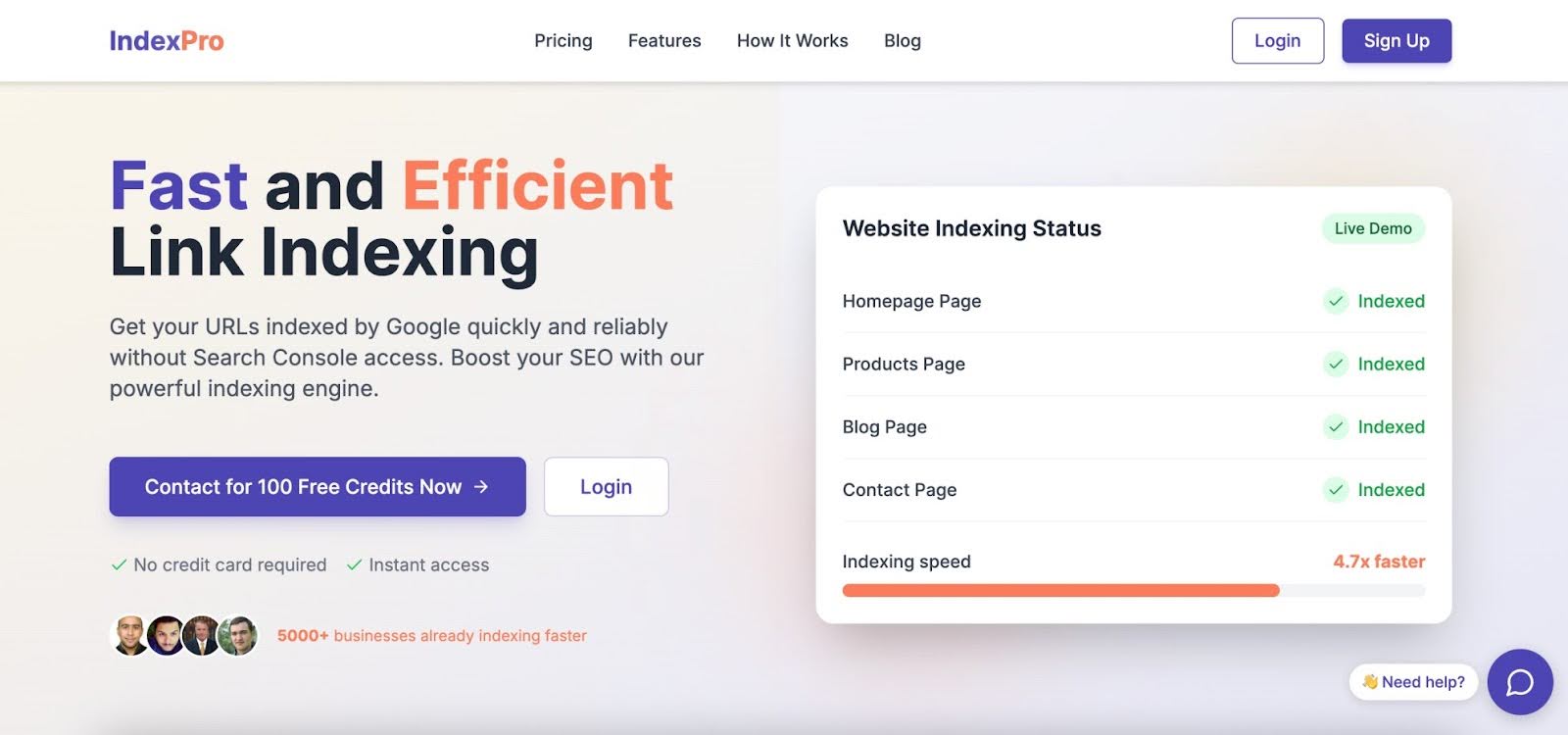
IndexPro is a powerful solution built for agencies, SEO professionals, and link builders who need their backlinks to work smarter, not harder. It offers:

  • Bulk URL submission
  • Strong link indexing signals
  • Live monitoring dashboard
  • API support for automation workflows
  • Affordable pricing for all SEO teams
  • Optimized solution for the latest Google indexing challenges

Instead of letting backlinks sit unnoticed, IndexPro ensures that each one contributes real SEO value.

Final Thoughts

The SEO formula in 2025 is straightforward:

High-quality backlinks + Verified Indexing = Maximum Ranking Performance

If you want to increase your authority, outrank competitors, and make the most of your SEO budget, indexing should be a top priority.

Start ensuring your backlinks get indexed and deliver real results with IndexPro.

How AI-Driven SEO Audits Will Change the Game in 2026

How AI-Driven SEO Audits Will Change the Game in 2026

AI-Driven SEO

The future of SEO isn’t coming. It’s already here.

If you’ve been managing SEO for a while, you’ve probably noticed something: what worked even a year ago doesn’t hit the same today. Google’s updates are rolling out faster. Search intent is shifting quickly. And those traditional, manual SEO audits that used to take days? They’re starting to feel like stone tools in a space-age workshop.

AI is rewriting the SEO playbook, and 2026 will be the year everything changes.

In this article, we’ll unpack how AI-driven SEO audits are speeding up insights, making smarter recommendations, and opening new ways to win visibility online. If you care about staying competitive, you’ll want to read every word.

The Old Way Is Slowing You Down

Traditional SEO audits are a grind.

You run tools, export data, review reports, chase broken links, and analyze keywords by hand. It’s like cleaning a mansion with a toothbrush.

Sure, these audits have value, but they’re also:

  • Time-consuming – often taking days or even weeks to complete.
  • Reactive – you find and fix problems only after they’ve already hurt performance.
  • Fragmented – you’re jumping between ten tools that don’t communicate with each other.

Search algorithms evolve every few weeks, so that’s a losing strategy.

AI changes everything by connecting your data, learning from it, and predicting what’s coming next. It doesn’t just find problems. It prevents them before they happen.

How AI Actually Powers SEO Audits

AI is a complete shift in how SEO analysis works.

You can think of technical SEO services as moving from a flashlight to a floodlight. You don’t just see a few isolated issues — you see the full ecosystem of your website, how every element interacts, and where improvements will have the biggest impact.

Here’s how AI is transforming the process from the inside out.

Machine Learning: The Brain That Never Sleeps

Machine learning enables AI systems to continuously learn from your website’s data. Every page view, click, conversion, and bounce teaches the algorithm something new. Over time, it recognizes patterns in what helps your pages climb the rankings and what holds them back.

An AI system doesn’t stop at noticing broken links or missing alt tags. It connects those issues to their real impact on traffic and conversions. That’s when your SEO stops reacting and starts leading. It’s the difference between “Your title tag is too long” and “Your long title tag is lowering CTR by 12 percent on mobile devices.”

Marketers using marketing analytics software and AI-driven SEO audits together can finally see cause and effect, not just symptoms.

For example, let’s look at what’s happening in modern sales workflows. Sales teams now use sandbox demo environments to let prospects explore a live version of their product safely, without setup or risk. In these demo environments, they track how users interact, which features attract attention, and where drop-offs occur. Those insights guide product improvements and sales messaging. 

AI-driven SEO functions in the same way – it experiments with data, observes real user behavior, and continuously adapts to improve performance. Both systems rely on iterative learning and measurable feedback to refine results over time.

Natural Language Processing: Understanding Search Intent

SEO has evolved from matching keywords to understanding intent, uncovering what users actually mean, not just what they type.

AI-powered Natural Language Processing (NLP) reads content the way a person would. It doesn’t just count keywords; it analyzes tone, sentence structure, and meaning. For example, it knows the difference between “how to build a sandbox demo environment” and “sandbox environment demo software,” even if they use the same words.

Google’s algorithms are now built to interpret intent. If your content answers a searcher’s actual question, not just matches a phrase, you’ll win every time.

NLP can also identify gaps in your topical coverage. If you’re writing about lead generation but never mention marketing automation platforms and CRM software, AI will flag it. That insight helps your content stay aligned with user expectations and algorithmic signals.

NLP technology also powers customer experience software, chatbots, and support ticketing platforms that analyze user language to improve service quality. SEO is simply the next frontier for this intelligence.

Predictive Analytics: Seeing What’s Coming

Predictive analytics is one of the most exciting parts of AI-driven SEO. Instead of reacting to ranking drops, you can anticipate them.

AI models use thousands of data points, from backlink profiles and page load times to competitor activity, to predict what will affect your site’s visibility in the next few weeks or months.

Now marketers plan ahead, especially when running seasonal campaigns or launching new product lines. You can update content, improve internal linking, or refine metadata before traffic dips.

In many ways, this resembles the approach used in marketing attribution software and analytics dashboards. Those systems map out which channels are driving the most ROI so you can double down early. AI audits bring the same predictive power to SEO.

When you see where performance is trending, you stop firefighting and start strategizing. An AI SEO Platform can help you with that.

Automation and Integration: The Connected SEO Ecosystem

Traditional SEO audits require endless switching between Google Analytics, Search Console, and various third-party tools. Each offers a piece of the puzzle, but none tells the full story.

AI solves this problem through automation and integration. It pulls data from multiple sources and combines them into a unified dashboard that updates in real time. Instead of chasing data, you analyze insights.

Similar to what happens in workflow automation tools used by operations and digital marketing teams – when data flows seamlessly between systems, decision-making becomes faster and smarter.

The best AI-driven SEO tools go one step further. They translate complex metrics into simple language. You might receive a notification saying:

“Your page load speed dropped 9 percent last week. Optimize images on your top five pages to recover an estimated 4 percent of traffic.”

Saving time and unlocking clarity.

What’s Changing Right Now

With AI, we are making SEO audits faster. Smarter.

Here’s what’s changing across the industry today:

  1. Speed and Scale: AI can analyze millions of URLs in minutes. You get real-time feedback instead of waiting weeks for an audit.
  2. Deeper Insights: It interprets the “why” behind data. It doesn’t just show problems; it connects them to business outcomes.
  3. Continuous Optimization: With 24/7 monitoring, you never miss a critical technical or content issue.
  4. Predictive SEO: AI anticipates ranking changes and alerts you before visibility drops.

Generative AI is projected to unlock between $0.8 and $1.2 trillion in productivity across sales and marketing. That scale of impact shows how quickly intelligent automation is reshaping how brands optimize, sell, and communicate, and SEO audits powered by AI are becoming a key part of that transformation.

Why This Matters for Marketers and Businesses

AI-driven SEO audits are more than a trend; they’re a competitive advantage.

For marketers, they mean faster insights and smarter campaigns. Instead of spending days compiling reports, teams can use that time to build strategies that actually move the needle.

For agencies, AI audits are a differentiator. They allow you to show value instantly by delivering actionable recommendations in real time.

And for small businesses, AI levels the playing field. You don’t need enterprise resources to compete when you’re equipped with the same level of insight. A CRM system for a small business integrated with AI SEO tools can automatically tie website engagement data to lead quality and sales performance.

AI doesn’t replace SEO professionals. It amplifies them. You’re still the strategist behind the machine. The difference is that now, you can act faster and make decisions backed by intelligent data.

How to Get Ready for AI-Powered SEO Audits

The shift to AI-driven SEO isn’t about flipping a switch. It’s about preparing your foundation so that AI can deliver real, measurable results.

Here’s how to get ready for what’s coming.

Step 1: Audit Your Current Tools and Processes

List every SEO, analytics, and marketing tool your team uses. Ask yourself three key questions:

  • Do these tools still provide insights that help me make decisions?
  • Can they integrate with AI systems or share data through APIs?
  • Are they siloed or connected to the rest of my marketing stack?

If you’re switching between multiple dashboards that don’t communicate with each other, you need better tools. AI thrives on connected ecosystems, not disconnected data.

Today’s tools, from lead generation platforms to sales automation software, often include built-in SEO features or API access to AI audit systems. Connecting them gives you one clear view of traffic, leads, and conversion quality.

Step 2: Strengthen Your Data Quality

AI is only as smart as the data it receives. Before adopting AI-driven audits, clean up your existing analytics setup.

  • Ensure GA4 events and conversions are tracking correctly.
  • Remove outdated or duplicate tracking scripts.
  • Fix broken links and 404 errors.
  • Validate your sitemap to ensure it matches your live content.

Think of it like training an assistant. The clearer your instructions, the better the output.

To streamline data collection, many teams use form generators to capture lead and behavioral data directly from landing pages. These online form builders help optimize conversion rates and gather customer insights. Structured input helps AI-driven SEO systems analyze which content types or layouts drive the best engagement.

Step 3: Build AI Awareness Within Your Team

AI isn’t replacing marketers; it’s reshaping their roles.

The best SEO professionals of 2026 will be those who can interpret AI insights and make strategic decisions based on them. That means upskilling now.

Encourage your team to:

  • Learn how AI interprets on-page and technical signals.
  • Understand how automation affects ranking factors.

Shared understanding prevents overreliance on the tool and keeps your team in control.

If your team already uses marketing automation platforms and CRM software, the transition will feel natural. The same logic applies: automation handles repetitive work, while humans guide strategy.

Step 4: Start Small and Expand Gradually

Don’t overhaul everything at once. Start with one area of focus, maybe technical SEO or content audits, and test an AI audit tool for 30 days.

Track how it performs. Does it identify issues faster? Does it help you prioritize better? Are the recommendations actionable?

Once you see consistent improvements, expand its use to other areas like link building, schema markup, or on-page optimization.

Teams that start small build confidence and develop best practices early. It’s the same approach software companies use when they test features in sandbox demo environments before full deployment.

Experimentation builds understanding. Understanding builds success.

Step 5: Keep Learning and Adapting

What’s advanced today could be standard in a year because AI in SEO is evolving rapidly.

Keep testing new platforms and attending industry webinars. Review emerging case studies that show how others are using AI to drive organic growth.

Most importantly, remain curious. The best results come from teams that experiment early and refine often.

Don’t Forget the Risks

Automation can create overreliance if you stop questioning the results. Always review AI-generated recommendations before implementation. 

Data privacy is another concern. Ensure any tool you use complies with GDPR and relevant data protection laws. Many AI audit platforms now include compliance management software features to simplify this process. 

And remember, AI models can carry bias. Choose vendors that are transparent about their training data and how recommendations are generated.

AI gives you scale and speed, but humans still bring judgment and ethics. You need both.

Looking Ahead: SEO Audits Beyond 2026

In the near future, SEO audits will become living systems. They’ll continuously monitor performance, identify risks, and implement fixes automatically.

Voice search, visual search, and AI-driven conversational platforms will merge with SEO reporting. You won’t just measure website traffic; you’ll measure visibility across every channel where your brand appears, from smart assistants to embedded AI results.

The Smartest Win, Not the Biggest

The businesses that win won’t necessarily have the biggest budgets. They’ll be the ones who understand how to use intelligence to move faster, smarter, and with purpose.

Start preparing now. Clean your data. Train your team. Experiment with AI-powered audit tools.

Because the next SEO revolution isn’t waiting for you to catch up.

It’s already running, and it’s learning faster than ever.

SEO for Packaging Manufacturers: Unlocking the Power of Organic Search for Increased Visibility

SEO for Packaging Manufacturers: Unlocking the Power of Organic Search for Increased Visibility

SEO for Packaging Manufacturers

Today, manufacturers are relying on online strategies more than ever to stay competitive, and packaging manufacturers are no exception. As buyers and decision-makers search for suppliers online, a strong digital presence is crucial.

This is where SEO (Search Engine Optimization) comes in. But what exactly is SEO, and how can it benefit packaging manufacturers looking to boost visibility, attract new clients, and drive revenue?

This guide explores SEO for packaging manufacturers, explaining why it matters and offering practical tips to optimize your online presence.

What is SEO and Why It Matters for Packaging Manufacturers?

SEO is the process of improving your website and online content to rank higher in search engine results like Google. When someone searches for packaging solutions or materials, you want your business to appear near the top.

For packaging manufacturers, this can make the difference between being discovered by potential clients or being overlooked.

The packaging industry is competitive, with many players vying for attention. Even the best products may go unnoticed without proper SEO. It’s not just about appearing in search results but about showing up in the right results, where your ideal customers are actively looking for packaging solutions.

The Unique SEO Challenges for Packaging Manufacturers

Packaging manufacturers face specific challenges with SEO. The industry is competitive, and buyers often search for specialized materials, like custom or sustainable packaging. This makes precise keyword targeting essential.

Another factor is the B2B nature of the industry. Many manufacturers assume that SEO is only for direct-to-consumer businesses, but B2B companies can also benefit significantly. B2B buyers research suppliers online, compare options, and look for the best fit for their business needs.

A strong SEO strategy ensures your business is found by the right audience at the right time.

Key SEO Strategies for Packaging Manufacturers

About 23% of B2B marketers believe organic search is the most effective channel at driving revenue.

And, SEO is a powerful way for packaging manufacturers to stand out online and reach the right audience. By using effective SEO strategies, manufacturers can boost their visibility on search engines, attract relevant visitors to their websites, and turn those visitors into customers.

Here are some of the most effective strategies for improving online visibility:

  • Optimize Your Site for Speed and Mobile

A fast, user-friendly website is critical. Google takes site speed a ranking factor, and slow sites rank lower. Mobile usability is also key, as over half of all web traffic comes from these mobile devices. A mobile-friendly website ensures you don’t miss out on potential visitors.

  • Target the Right Keywords

Keyword research is the foundation of SEO. Packaging manufacturers benefit from long-tail keywords and specific phrases like “custom packaging for food products” or “sustainable packaging solutions for cosmetics.” Targeting niche keywords attracts visitors who are more likely to become leads.

  • Focus on High-Quality, Relevant Content

Content is central to SEO. Create material that addresses industry questions, highlights innovations, or guides customers in choosing the right packaging solutions. Blogs, case studies, and white papers can position your business as an authority while making your website more appealing to search engines.

  • Local SEO for Regional Visibility

Businesses in the local map pack have an average of 993 backlinks and 216 referring domains. If you serve a specific area, local SEO is very important. Optimize for location-based searches like “packaging manufacturers in [City]” and list your business on Google My Business and other local directories. This helps attract local clients and inquiries.

  • Technical SEO

Technical SEO emakes sure that search engines can easily crawl and index your site efficiently. Optimize URLs, headers, security (HTTPS), and create an XML sitemap. While less visible than content or keywords, technical SEO plays a crucial role in search rankings.

  • Build Quality Backlinks

Backlinks from other reputable sites boost your website’s authority. Look for opportunities to guest post on industry blogs, collaborate with other manufacturers, or use helpful guest posting sites to find relevant publishing opportunities.ities. Shareable resources like infographics can also earn links naturally.

  • Monitor and Improve SEO Performance

Track performance using tools like Google Analytics, Search Console, or SEMrush. Monitoring traffic, keyword rankings, and user behavior provides insights into what’s working and where improvements are needed. SEO is ongoing—regularly update content, refine keywords, and improve technical aspects to stay ahead.

Why SEO is an Investment, Not an Expense

Today, businesses need to find ways to stand out online. One of the most effective ways to do this is through Search Engine Optimization (SEO). Yet many companies still see SEO as a cost rather than a strategic investment. If you’re among them, it’s time to rethink that approach.

SEO is a long-term strategy that offers significant returns over time. Here’s why SEO should be seen as an investment that pays off in various ways for your business.

  • SEO Delivers Long-Term, Sustainable Results

SEO provides long-term visibility. Once your website starts ranking for important keywords, it can attract organic traffic month after month without additional spend.

This steady stream of traffic allows for cost-effective growth. The time and effort you invest in SEO today continue to pay off in the future, giving you a sustainable competitive edge. Instead of constantly paying for clicks, SEO helps your business maintain a presence in search results at no extra cost.

  • SEO Builds Brand Authority and Trust

High search rankings establish credibility and trust with your audience. Users naturally trust search engines to deliver relevant, reliable information, so appearing at the top signals that your business is an authority in its field.

Investing in SEO positions your brand as a leader. This trust can translate into higher click-through rates, more conversions, and stronger customer relationships. Over time, your website’s authority grows, making your business the go-to resource for the products or services your audience needs.

  • SEO Attracts Highly Targeted Traffic

One of SEO’s biggest advantages is attracting highly targeted traffic. By optimizing your site for keywords your potential customers are actually searching for, you connect with people who are already interested in what you offer.

This targeted approach generates higher-quality leads. Unlike broad marketing tactics that cast a wide net, SEO focuses your efforts on individuals most likely to convert.

  • SEO Offers High ROI Compared to Other Marketing Strategies

SEO is one of the most cost-effective marketing strategies available. Paid search ads can be expensive, especially in competitive industries, while SEO delivers long-term results without recurring ad spend. Studies show that SEO often offers a higher return on investment than traditional paid campaigns.

As your organic rankings improve, traffic increases without additional costs, often reducing customer acquisition costs compared to paid advertising.

  • SEO Enhances User Experience and Website Functionality

A strong SEO strategy goes beyond keywords and backlinks. It also improves the user experience (UX) on your website. SEO encourages businesses to create fast, mobile-friendly websites with clear, relevant content.

Enhancing usability benefits both search rankings and visitors. Better UX leads to longer site visits, lower bounce rates, and higher conversion chances. Ultimately, it’s an investment in customer satisfaction and retention.

  • SEO Provides Valuable Insights Into Customer Behavior

SEO offers data about how people find and interact with your website. Google Analytics and Google Search Console reveal which keywords bring visitors, how they navigate your site, and what content engages them most.

This information helps refine your SEO strategy and even guides business decisions, from product development to customer service. Understanding your audience better allows you to meet their needs more effectively.

  • SEO Drives More Conversions and Revenue

The main goal of SEO is to get more conversions and revenue. Higher search rankings increase visibility, clicks, and conversions. Research consistently shows that organic search traffic often converts better than other traffic sources.

Investing in SEO not only brings more visitors but also improves the likelihood that they’ll take action, whether making a purchase, signing up for a newsletter, or requesting a quote, leading to more revenue and business growth.

  • SEO Helps You Stay Ahead of Competitors

SEO is ongoing, not a one-time fix. The more you invest, the better your chances of staying ahead of competitors. As businesses recognize SEO’s value, competition for top search rankings grows. Consistently optimizing your website and updating content ensures you maintain and improve your position.

Staying ahead in search results means potential customers find your business first, helping you retain market share and outperform competitors.

  • SEO Is a Scalable Marketing Strategy

SEO grows with your business. As you expand into new markets, launch products, or target new customer segments, your SEO efforts can scale gradually without a corresponding spike in budget. This scalability makes SEO ideal for growing businesses. 

Wrapping Up

SEO is more than optimizing just for search engines. It’s about providing value to your customers. For packaging manufacturers, a well-rounded SEO strategy can improve visibility, attract qualified leads, and grow your business.

Remember, SEO is a long-term game. By establishing your business as an authority in the packaging industry, you ensure potential customers can find you when it matters most.