


About 60 percent of employees lose more than 11 hours every week hunting for missing information, Fortune reported on August 4, 2025.
This guide reviews nine leadership-communication assessment tools that help managers diagnose—and correct—the habits costing your team that time. We vetted each option for scientific validity, action-focused reporting, ease of rollout, and transparent pricing so you can choose the right test with confidence.
How we picked the nine tools
We reviewed 43 leadership-communication assessment tools and ran each one through five pass-or-fail gates:
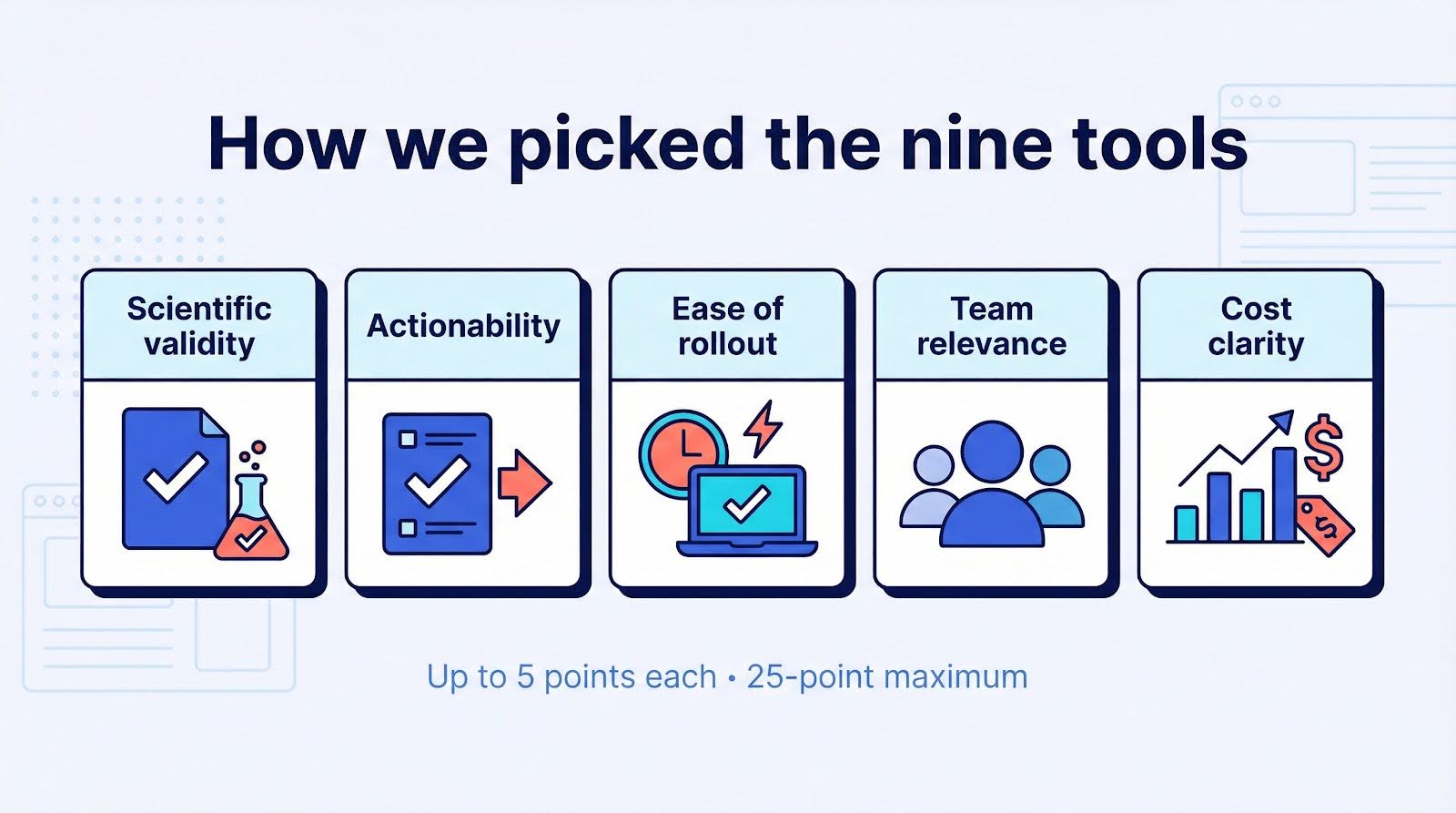
- Scientific validity. Peer-reviewed research, test–retest reliability, or at minimum a transparent methodology.
- Actionability. Clear coaching moves a manager can try on Monday (not just labels).
- Ease of rollout. Teams should finish in 15 minutes or less with no software installs and with optional mobile dashboards. TeamDynamics, whose browser-based survey takes most users about ten to fifteen minutes, sets the bar.
- Team relevance. Insight into group dynamics, multi-rater feedback, or an aggregate team view.
- Cost clarity. Up-front pricing, free trials, or per-team tiers that help HR forecast budgets.
Each gate carried up to five points for a maximum score of 25. Only tools scoring 20 or higher advanced, leaving the nine assessments that follow, each offering a distinct lens on how leaders and teams talk, decide, and deliver.
TeamDynamics
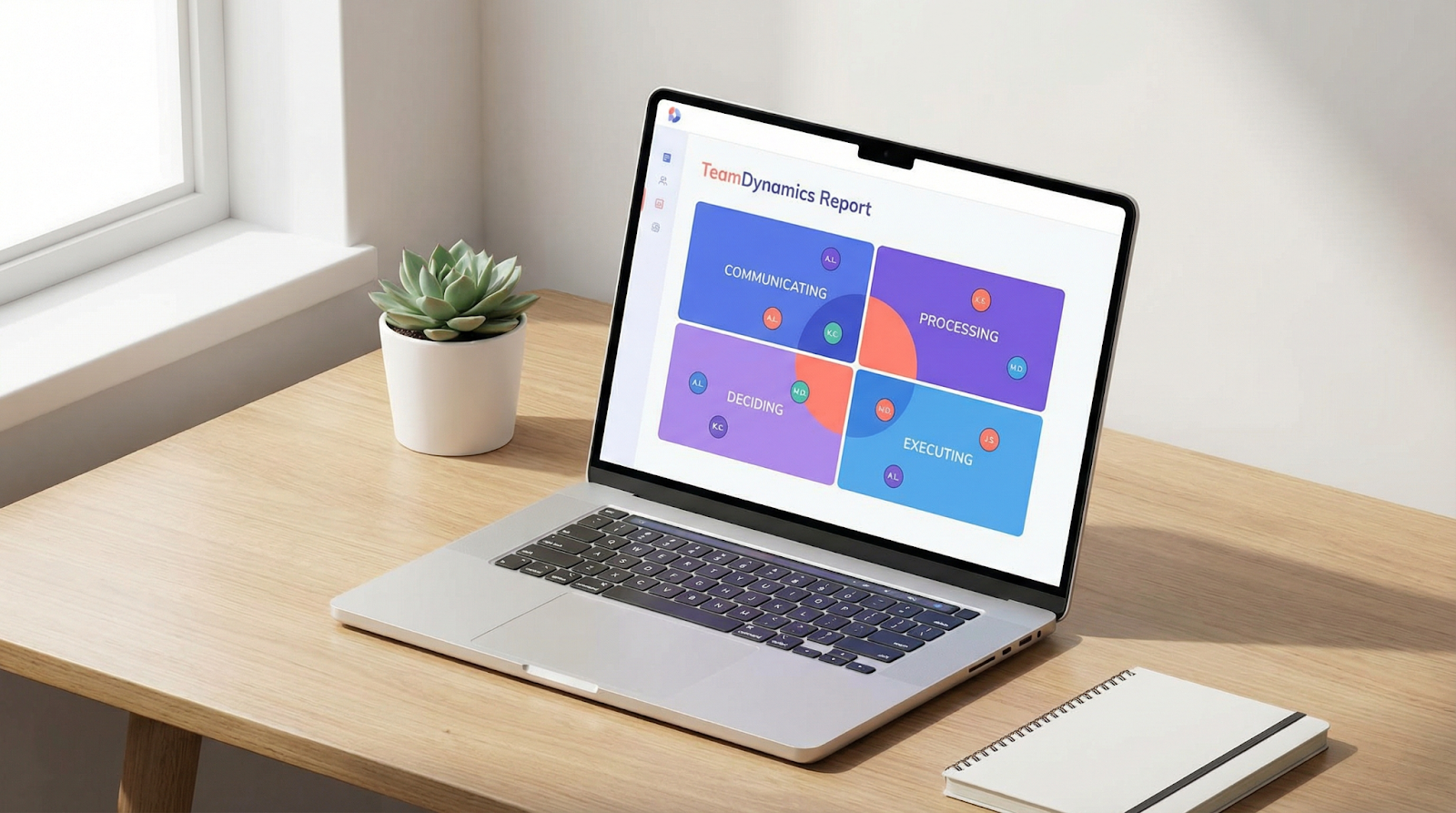
Need a same-day snapshot of leadership-communication dynamics? TeamDynamics delivers one in 10–15 minutes per person, then plots the team across four core behaviours: Communicating, Processing, Deciding, and Executing.
The interactive report trades jargon for plain-language coaching moves managers can test at the next stand-up. Sophisticated Cloud’s 2026 review called it “a fast, actionable read on team chemistry,” noting the transparent one-time fee of $29 (Solo) to $39 (Pro) per user, plus a free rapid-result sample.
Rollout is email-simple: share the link, open the map together, and discuss which habits help or hinder delivery. You can layer deeper individual tools later, but for a first look at collective communication, TeamDynamics supplies the common language teams often lack.
Culture Amp
When you need a leadership-communication assessment tool that tracks progress over time, Culture Amp turns one-off surveys into a continuous pulse. HR can launch an anonymous questionnaire in minutes and watch real-time heatmaps flag where dialogue stalls. A March 18, 2025 update added sortable columns, letting admins slice results by role, tenure, or region without exporting data.
Leaders receive 360-degree dashboards that compare how they believe they communicate with how direct reports and peers experience it. Built-in AI summaries surface themes such as “missing context in project kick-offs,” and sit next to a library of coaching actions, so managers move from insight to plan in the same tab.
Pricing scales with headcount, and every tier bundles SOC 2 security, Slack and Teams integrations, and coach-led onboarding, an important safeguard when you survey thousands at once. Culture Amp reports serving more than 6,500 companies worldwide, making it a reliable choice for teams that want a steady reading on whether their messages land.
CliftonStrengths
CliftonStrengths, Gallup’s flagship leadership-communication assessment, focuses on what people do best. The 177-item test ranks 34 talent themes and gives each participant a personalized Top Five “calling card.”
That strength lens reshapes daily dialogue. If a teammate leads with Communication and Empathy, you might ask them to craft client updates, while an Analytical colleague validates the numbers; task assignment becomes evidence based, not anecdotal.
Scale and science back the tool: more than 36 million users worldwide have completed CliftonStrengths, and according to Gallup the test shows a test–retest reliability above 0.80 over ten years. Each assessment takes about 30 minutes, after which users receive a plain-language report and team-grid template. Gallup lists $19.99 per person for the Top Five version, making it simple to expense during onboarding or off-sites.
Reach for CliftonStrengths when engagement feels flat or a new manager inherits an unfamiliar team; a quick “strengths round-robin” builds trust and supplies a common language that paves the way for deeper tools later in this guide.
DiSC profile
If you want a leadership-communication assessment your team can digest fast, DiSC keeps it to four styles: Dominance, Influence, Steadiness, and Conscientiousness. Participants answer 28 forced-choice items in about 15–20 minutes, then see their dot on a single circle that explains why certain messages click while others miss.
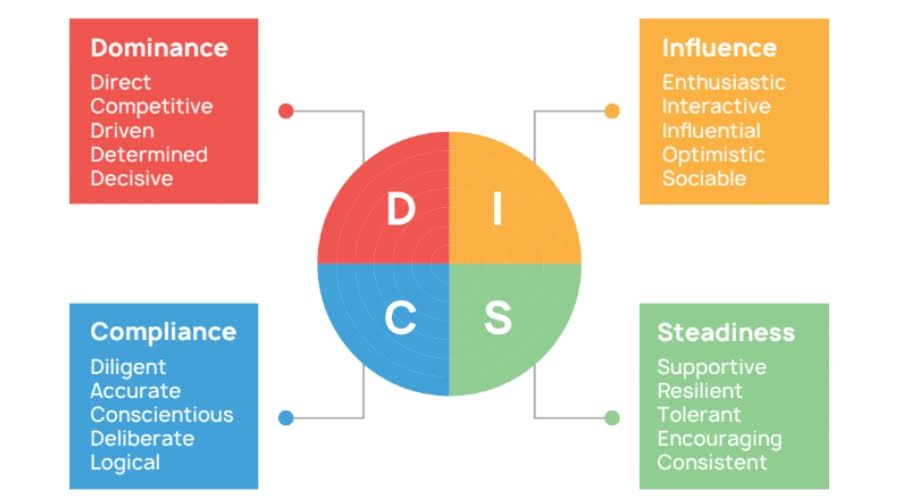
The payoff is a shared shorthand. A teammate might say, “I’m leaning high C, give me the data first,” and meetings move faster because people adapt tone instead of talking past each other.
Reports arrive color-coded with stress-management tips, plus ready-made email subject lines and feedback phrases. Expect about $90 per online profile, with volume discounts.
Remember, DiSC is a behavioral snapshot, not a clinical diagnosis, so treat the letters as conversation starters and pair them with ongoing feedback.
Myers-Briggs type indicator (MBTI)
Where DiSC offers four styles, the MBTI maps 16 personality types (ENTJ, ISFP, and more), revealing how people gather information, make decisions, and organize their day.
That shared vocabulary builds empathy fast; an Extraverted leader realizes an Introverted analyst needs reflection time, and a Thinking manager learns a Feeling designer filters feedback through harmony, which lowers friction in one-on-ones.
The licensed questionnaire takes about 45 minutes online and generates both individual and team reports. MBTIonline lists $59.95 per participant for the standard digital version. Many organizations already hold legacy results, so reviving the language can be as simple as printing a team grid.
Treat MBTI as a mirror, not a medical scan. Pair it with behavioral feedback such as a 360 review or a team-level leadership-communication assessment to turn personality insights into real-time collaboration habits.
Enneagram for teams
While MBTI maps preferences, the Enneagram uncovers motivation, the core fears or desires that color every email, meeting, or Slack message. The model groups people into nine archetypes (Helper, Challenger, Peacemaker, and others) and explains why a teammate pushes harder, cracks a joke, or shuts down when tension climbs.
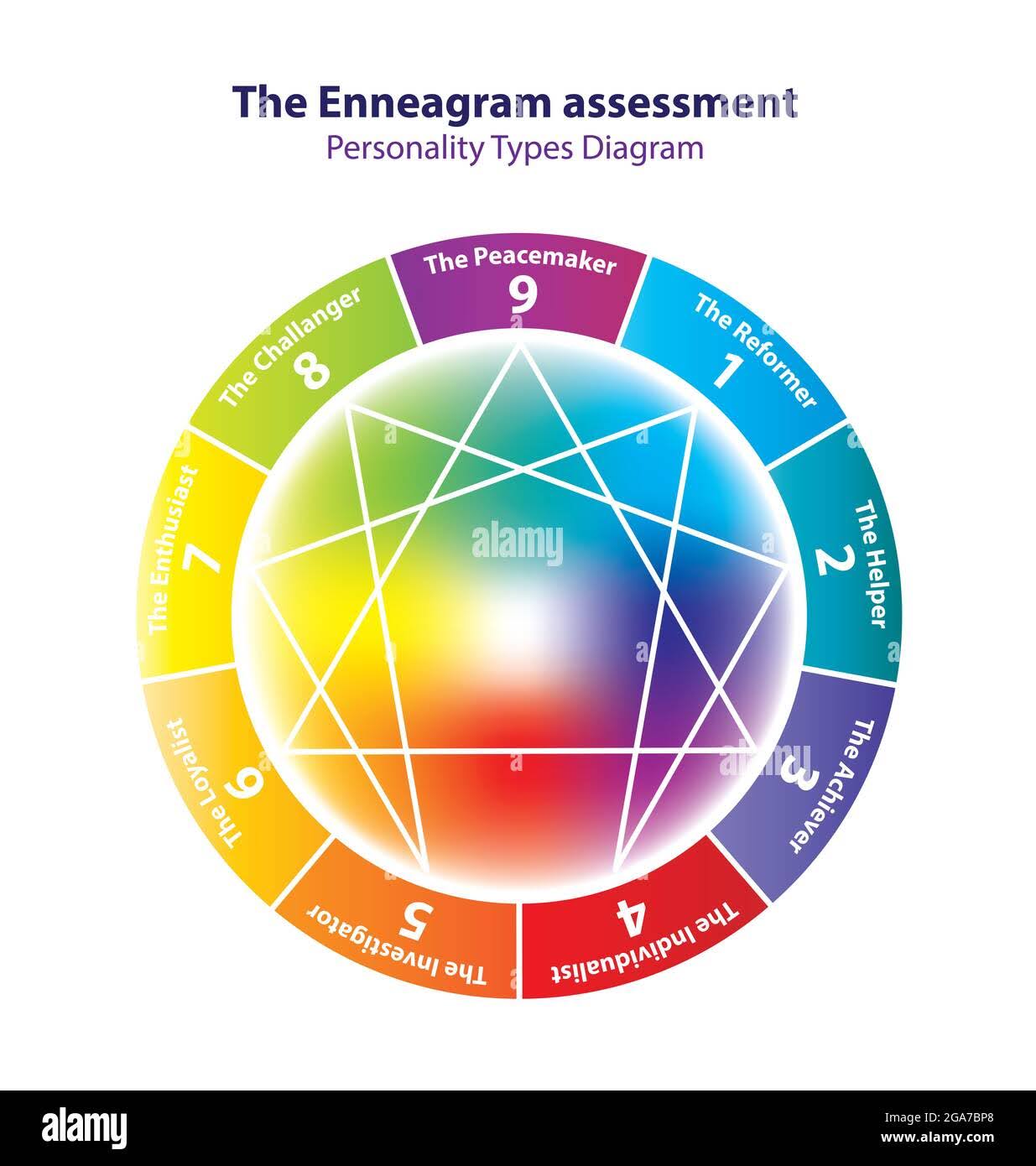
Knowing that your designer is a Type 4 Individualist reframes their quest for unique branding as intention, not obstinance. Realizing your ops lead is a Type 6 Loyalist turns rapid-fire risk questions into commitment, no doubt. Teams that surface these motives often report calmer retros and crisper decision logs.
Most companies start with a validated test such as the RHETI®, which takes about 40 minutes and costs $20 per person. A shorter option, Truity’s 15–20-minute version, starts at $9. Results pair type summaries with stress-response tips, then a facilitator guides a workshop so colleagues learn to spot a “shadow side” and provide the right support — or compare their results with other personality tests for work teams.
Because the Enneagram is less statistically validated than tools such as Hogan or PI, treat it as a guided conversation, not a hiring gate. In psychologically safe teams, the depth of motive it reveals can enrich any leadership-communication assessment stack.
The Predictive Index
Need a data-driven leadership-communication assessment that scales from hiring to succession? The Predictive Index (PI) fits the bill. The online Behavioral Assessment takes about six minutes and maps each employee on four drives: Dominance, Extraversion, Patience, and Formality. An optional 12-minute Cognitive Assessment gauges learning speed.
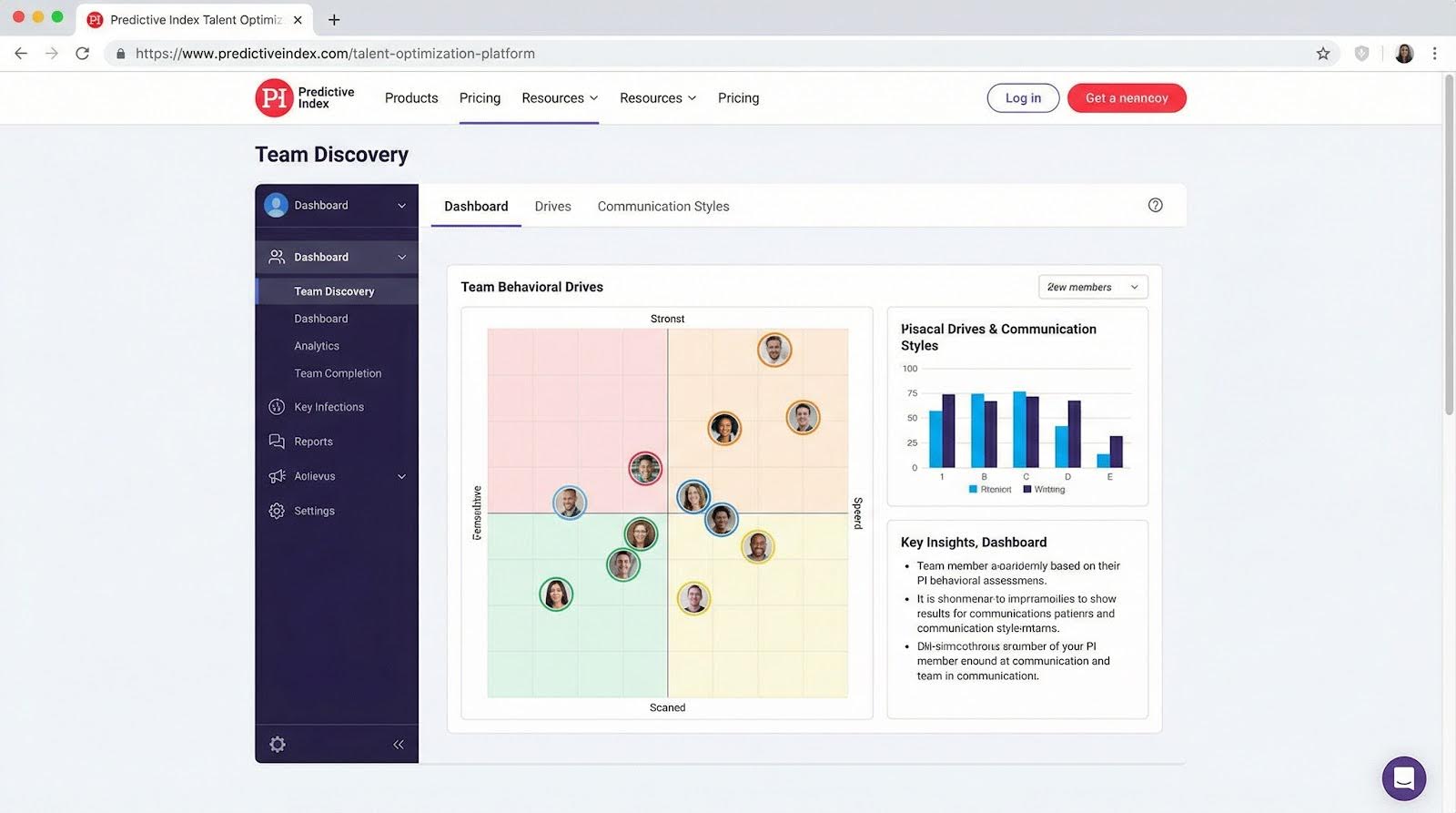
For team leads, the Team Discovery dashboard places everyone on one canvas and flags complementary strengths, friction points, and pairings that spark creativity. Planning a launch? If you spot four high-Dominance, low-Patience profiles, schedule an extra QA gate before ship day.
Because PI data flows from recruitment to coaching and succession, you avoid one-and-done assessments. The same profile that helped pick a sales rep later guides promotion talks and cross-functional staffing.
Rollout requires a certified partner workshop, but HR can send new surveys in minutes afterward. Public pricing starts at $7,550 per year for Validated Hiring and $9,950 for the Talent Optimization bundle, which provides unlimited assessments for a single annual fee. Once you pass a few dozen employees, the flat license often beats per-head tools.
Reach for PI in high-stakes moments such as mergers, rapid growth, or leadership rotations, when guessing at team chemistry carries too much risk.
Hogan assessments
When you need a leadership-communication assessment backed by hard science, Hogan delivers. Its three-part battery—Hogan Personality Inventory (HPI), Hogan Development Survey (HDS), and Motives, Values, Preferences Inventory (MVPI)—captures bright-side traits, dark-side derailers, and core drivers in one sweep.
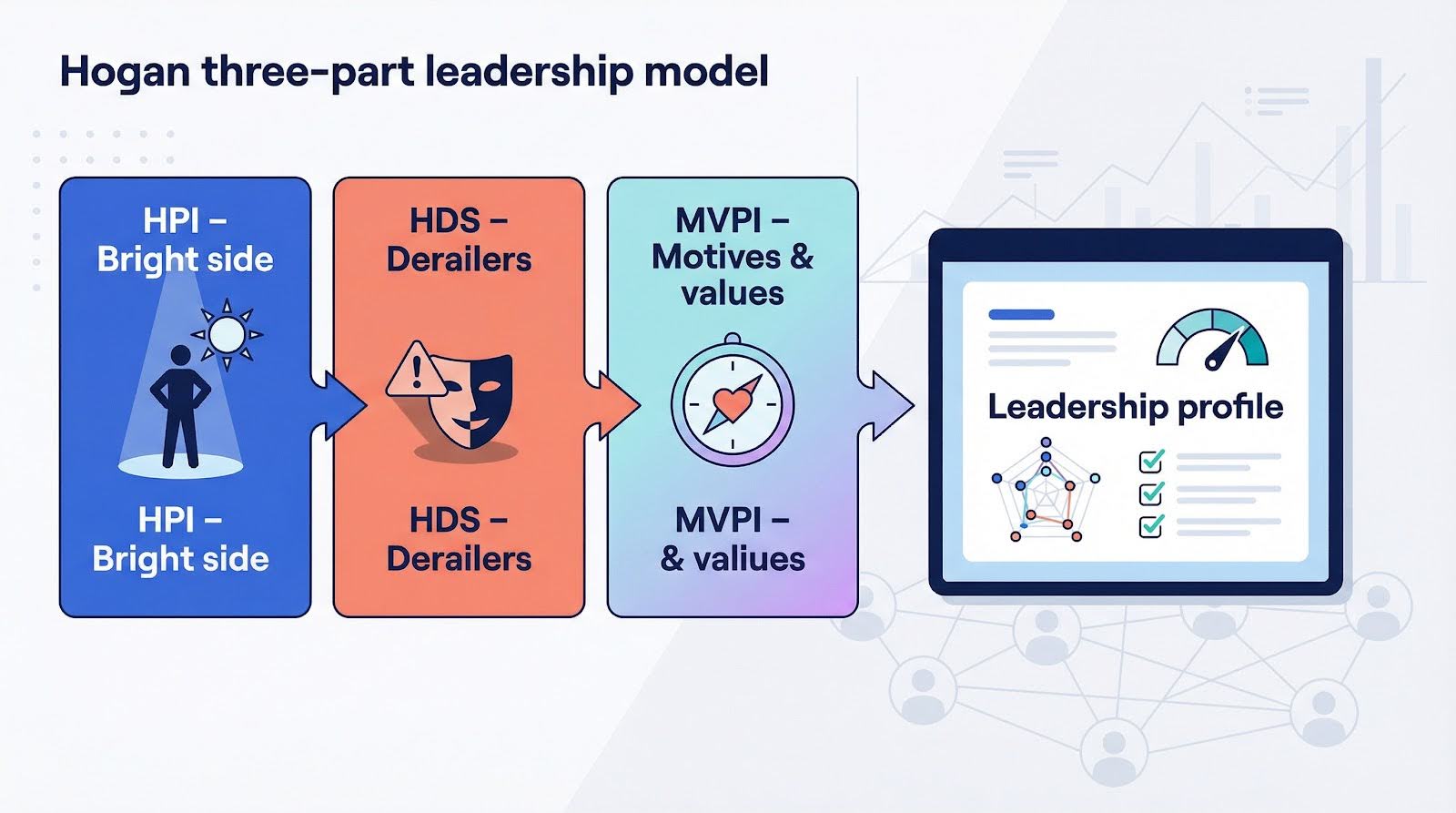
Leaders usually find the HDS derailer report most eye-opening: it shows how “charm under pressure” can morph into manipulation or how healthy skepticism can slide into cynicism. Seeing those patterns in black and white lowers defensiveness and opens the door for targeted coaching.
At group scale, a Hogan Team Report spots culture risks fast. Picture every VP scoring high Ambition but low Interpersonal Sensitivity, prompting a plan to add listening norms before the next board call.
The science is deep: more than 400 peer-reviewed studies link Hogan scales to job performance, with average criterion-validity coefficients around 0.29–0.38 across industries. Running the suite takes about 45 minutes per participant, and off-the-shelf reports range from $15 to $200 each, while the required certification workshop costs $2,900 per practitioner. Budget half a day per leader for debriefs; the 40-page Leadership Forecast Series deserves the time.
Reach for Hogan in critical moments such as succession planning, board appointments, or merger integrations, when missing a hidden derailer could cost millions and a headline.
Emotional intelligence assessments (TalentSmart EQ and EQ-i 2.0)
When tone undermines logic, a leadership-communication assessment that measures emotional intelligence can close the gap. Two proven tools cover different depths.
TalentSmart Emotional Intelligence Appraisal
- 28 items, 7–10 minutes, $70 per self-edition license
- Scores four core pillars: Self-Awareness, Self-Management, Social Awareness, and Relationship Management, then recommends “next-step” strategies managers can retest after six months to show progress.
EQ-i 2.0
- 133 items, 20–30 minutes to complete; administered by a certified coach
- Delivers a total EQ score, five composites, 15 sub-scales, and benchmarks against a global sample so high performers see exactly where they stand.
Both tools convert soft skills into hard metrics you can track, such as interruptions per meeting or response time to tough feedback, turning EQ into a lever for predictable team health and retention. Deploy them when a leader’s words spark unintended friction or when a fast-growing startup needs to keep empathy intact as headcount doubles.
Conclusion
Leadership-communication problems rarely come from a lack of effort. They come from invisible habits: how information is shared, how decisions are made, and how tone changes under pressure. When those patterns go unexamined, teams lose hours every week clarifying messages that should have been clear the first time.
The tools in this guide solve that problem in different ways. Some, like TeamDynamics, reveal how the team communicates as a system and give managers immediate, plain-language coaching moves. Others, such as Culture Amp, make communication measurable over time so leaders can see whether changes are actually working. Individual-focused assessments—from CliftonStrengths and DiSC to Hogan and emotional intelligence tools—add depth by explaining why certain messages resonate, why conflict emerges, or why stress derails otherwise capable leaders.
The strongest results come from combining these perspectives. A team-level snapshot identifies the biggest communication bottlenecks. Individual assessments explain how leaders and teammates contribute to them. Feedback loops and follow-up measurements confirm whether new habits stick. Used this way, leadership-communication assessments stop being abstract diagnostics and become practical levers for faster decisions, fewer misunderstandings, and better team performance.
If your team is losing time to unclear handoffs, repeated debates, or misread intent, the right assessment won’t just tell you what’s wrong. It will give you a shared language and a concrete starting point to fix it.
FAQ
1) What is a “leadership communication assessment” for teams?
It’s a structured tool—survey, profile, or feedback system—that helps teams and leaders identify how communication actually happens (clarity, tone, decision flow, feedback, alignment) and where it breaks down. The best ones translate results into specific coaching actions.
2) Which tool should I start with if I need quick results?
Start with a tool optimized for fast team diagnosis and immediate discussion, such as TeamDynamics (10–15 minutes per person) when your goal is to align the team on how it communicates and collaborates today.
3) What’s the difference between a team assessment and a personality test?
- Team assessments focus on group dynamics (how the team behaves collectively, where alignment/friction shows up).
- Personality tests focus on individual preferences/traits (how a person tends to communicate, decide, or respond to stress).
Many teams get the best results by doing both: a team snapshot + an individual lens.
4) Are MBTI and DiSC “scientifically valid”?
They’re widely used and can be extremely helpful as shared language tools, but they’re generally better treated as conversation starters than hard predictors. If you need the strongest research backing for high-stakes decisions, consider tools positioned as more psychometrically rigorous (e.g., Hogan) and/or pair any typology with 360 feedback and real performance data.
5) What’s the best option for ongoing measurement and improvement over time?
A continuous feedback platform like Culture Amp works best when you want to track changes in communication, compare groups, and run repeat pulses or 360s to see if interventions improved outcomes.
6) How do we avoid “labeling” people after assessments?
Set ground rules:
- Types/scores describe tendencies, not destiny.
- Results are for development, not judgment.
- Talk about needs and behaviors (“I need context upfront”) rather than identity (“I’m a high C so…”).
- Tie changes to team agreements (meeting norms, decision rules), not personalities.
7) How often should we re-assess?
Depends on the tool:
- Team dynamics snapshots: after major changes (new leader, reorg, merger, new project) or every 6–12 months.
- Pulse/engagement surveys: quarterly or bi-monthly (avoid survey fatigue).
- 360 feedback: typically 6–12 months after coaching begins to measure growth.
8) Can small teams use these tools effectively?
Yes. In smaller groups, choose tools that:
- Provide team-level outputs without compromising anonymity.
- Emphasize discussion + action plans over heavy analytics.
If you use 360 feedback with a small team, take extra care with confidentiality.
9) What if the results show problems—what do we do on Monday?
Pick one or two behaviors to change immediately (examples):
- Add a “decision log” and define who decides vs. who advises.
- Standardize meeting norms (agenda + owner + takeaway).
- Create a “context first” update format (why/what/when/ask).
- Schedule 10-minute feedback loops after key meetings.
Then set a check-in date (2–4 weeks) and measure whether confusion and rework dropped.
10) Do we need a facilitator or coach?
Not always.
- Tools like TeamDynamics, DiSC, CliftonStrengths can work well with a manager-led session if the team is psychologically safe.
- Tools like Hogan, EQ-i 2.0, and PI often benefit from certified practitioners for interpretation and debriefs—especially in high-stakes settings.