UK: +44 2038074555 info@atamgo.com
Why AI-Generated Videos Are Essential for E-Commerce Stores

Why AI-Generated Videos Are Essential for E-Commerce Stores

AI-Generated Videos

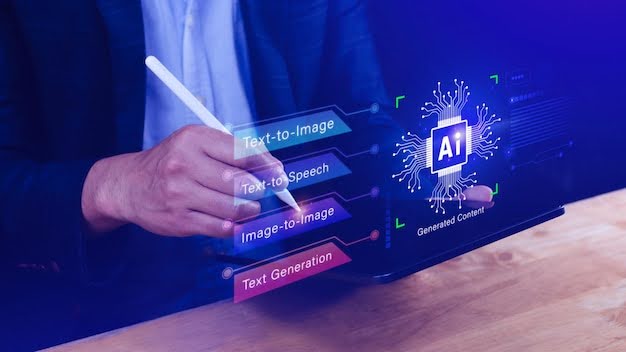
In 2025, e-commerce businesses will need to evolve quickly to meet the changing demands of consumers, and one of the most powerful tools to help them stay ahead of the curve is AI-generated videos. With the rise of artificial intelligence, businesses are now able to create high-quality video content at a fraction of the cost and time of traditional video production. For e-commerce stores, this technological breakthrough is not just a luxury—it’s essential to boost customer engagement, improve conversions, and maintain a competitive edge.

The Power of Video in E-Commerce

Video has become the dominant form of content across the web, and for good reason. Studies show that 80% of online traffic will come from video by 2025, and viewers are 64% more likely to purchase a product after watching a product video. Videos are more engaging than static images or text because they offer a dynamic and immersive experience that can quickly grab attention and hold it.

For e-commerce stores, this means that incorporating video content into your marketing strategy is no longer optional; it’s a necessity. But producing high-quality videos traditionally is time-consuming, expensive, and often requires specialized skills. Here’s where AI-generated videos come into play—revolutionizing the way e-commerce businesses approach video production.

How AI-Generated Videos Help E-Commerce Stores

  1. Affordable and Time-Saving Content Creation

Traditional video production involves hiring a production team, renting equipment, scripting, shooting, and editing, which can be a significant financial and time investment. For many e-commerce businesses, especially smaller ones, these resources are not always available. With AI-generated videos, the entire production process is automated, significantly reducing the cost and time needed to create high-quality video content.

ImagineArt’s AI Video Generator, for example, allows businesses to create professional videos in minutes, not days. Whether it’s product demos, customer testimonials, or promotional videos, AI makes the video creation process efficient and affordable for businesses of all sizes.

  1. Scalable Video Production

Another key advantage of AI-generated videos is scalability. E-commerce businesses often need to create multiple videos for different products, categories, or marketing campaigns. Creating this amount of video content manually would be overwhelming. With AI, businesses can easily generate videos at scale, ensuring they maintain a consistent and fresh presence across their website, social media, email campaigns, and more.

For example, with AI tools like ImagineArt’s AI Video Generator, e-commerce businesses can create videos for different products, seasonal promotions, or marketing events all at once, without overburdening their team. This scalability makes it easier to keep content updated and relevant, an essential factor for maintaining customer engagement.

  1. Personalization at Scale

Personalization is a powerful tool in e-commerce marketing. Consumers today expect tailored experiences that speak directly to their needs and preferences. AI-generated videos allow businesses to personalize their video content for different customer segments.

ImagineArt’s AI tools enable e-commerce businesses to create personalized product videos based on customer preferences, location, or browsing behavior. By adding personalized touches, such as specific product recommendations or location-based promotions, businesses can improve engagement and conversion rates. AI-driven personalization makes it possible to address each customer individually, which is key for building long-lasting customer relationships.

  1. Boosting SEO and Organic Traffic

Search engines, especially Google, love video content. In fact, pages with video are 53 times more likely to rank on the first page of search results. For e-commerce businesses, this means that adding videos to product pages or blog posts can significantly improve SEO performance.

AI-generated videos are SEO-friendly by design. Tools like ImagineArt’s AI Video Generator automatically optimize videos for search engines by including relevant keywords, descriptions, and metadata, making it easier for potential customers to find your products via organic search. This means more visibility, more clicks, and ultimately, more sales.

  1. Improved Customer Engagement and Conversions

Engagement is key to driving conversions, and videos are one of the best ways to increase it. Videos allow businesses to showcase their products in a more dynamic way, making it easier for customers to understand how they work, how they look, and why they’re worth purchasing.

Research shows that e-commerce websites with video content have higher engagement rates and better conversion rates than those without. AI-generated videos provide a low-cost, high-impact way to keep visitors on your site longer, which in turn can lead to higher conversion rates. For example, showing a customer how a product works in a short, engaging video can convince them to add the product to their cart.

  1. Enhancing Social Media Strategy

Social media is one of the most effective platforms for e-commerce marketing, but to stand out, businesses need to create attention-grabbing content. AI-generated videos are perfect for social media platforms like Instagram, TikTok, and Facebook, where short, engaging videos tend to perform the best.

Using AI tools, businesses can quickly create video ads or posts that align with the platform’s trends, helping them stay relevant and visible. With AI, e-commerce stores can generate multiple videos tailored to different social media platforms, ensuring they’re using the best content format for each one.

Real-World Success: How E-Commerce Brands Are Winning with AI Video Tools

Many e-commerce businesses are already seeing the benefits of using AI-generated videos in their marketing strategies:

  • A fashion retailer used AI-generated product videos and saw a 30% increase in conversion rates on their product pages.
  • A beauty brand leveraged AI-generated videos for social media campaigns, leading to a 50% increase in engagement and a 20% boost in sales.
  • An electronics company used AI videos for customer tutorials, resulting in a 40% increase in customer retention.

These success stories show how AI-generated videos are a game-changer for businesses looking to scale their marketing efforts, engage customers, and drive sales.

The Future of AI-Generated Videos in E-Commerce

As AI technology continues to improve, we can expect even more sophisticated video creation features in the future. From real-time video editing to more advanced personalization options, AI video tools will continue to evolve, making it easier for businesses to create high-quality, engaging content.

E-commerce businesses that adopt AI-generated videos today will be well-positioned for success in the future. The ability to create personalized, SEO-optimized, and engaging video content quickly and affordably will be crucial for staying competitive in a fast-evolving digital marketplace.

Conclusion: Let AI-Generated Videos Drive Your E-Commerce Success

In 2025, AI-generated videos are not just a luxury—they are a must-have for any e-commerce business looking to stay competitive. With ImagineArt’s AI Video Generator, you can create professional, high-quality videos quickly and affordably, driving engagement, improving SEO, and increasing conversions.

Whether you’re a small business just starting out or a large enterprise looking to scale, AI video tools can help you create compelling content that resonates with your audience and drives growth. Don’t get left behind—embrace AI-generated videos and start reaping the benefits today.

The Problem With Face ID, and the Palm Technology Solving It

The Problem With Face ID, and the Palm Technology Solving It

Every day, billions of people unlock their phones, enter buildings, or make payments using their faces. What once felt futuristic is now routine. But as facial recognition spreads, so does the concern: How much of your identity are you giving away—and to whom?

Biometric authentication is reshaping security and convenience across industries, but not all biometrics are created equal. Consumers and businesses alike should keep their eyes open. Knowledge is power when it comes to understanding the risks involved in allowing your face to be scanned, stored, and potentially shared.

Facial recognition has been the poster child of the biometric boom, yet beneath its convenience lie deep flaws: bias, privacy exposure, and growing vulnerability in the AI era. Palm recognition, meanwhile, has emerged as a safer, more inclusive, and privacy-forward evolution of biometric identity—built for a world that demands both security and consent.

Here are five reasons that palm biometric technology could emerge as the new leader in biometric security for payments, ID, and access control in 2026 and beyond.

1. Accuracy Without Bias

Facial recognition systems rely on visible features. That dependency introduces bias. Studies consistently show that these systems are less accurate for women, older adults, and people of color. Even in ideal conditions, facial recognition struggles with lighting, angles, and changes in appearance.

Palm recognition works differently. By combining surface features with a unique map of the veins beneath the skin, it provides consistent accuracy across all demographics and environments. Because it looks beneath the surface, it identifies who you are, not just what you look like.

2. Privacy by Design

Your face is public. It can be photographed, shared, and stored without your knowledge. That makes facial recognition both powerful and problematic.

Palm recognition flips this model entirely. A palm can’t be captured at a distance or without your consent. Every scan requires an intentional, physical gesture. This gives users full control over when and how their identity is used. It’s privacy by design: a biometric system that empowers participation instead of passive observation.

3. Security That Goes Beneath the Surface

As AI-generated images and deepfakes grow more sophisticated, spoofing facial recognition has never been easier. Palm scanning, on the other hand, uses near-infrared imaging to capture the vein patterns beneath the skin. These internal markers are impossible to see, duplicate, or fake, providing a level of protection that goes far beyond what’s visible.

This subdermal approach not only strengthens security but also enhances user trust, which is the foundation of any identity system.

4. Consistency That Lasts

Facial recognition is dynamic by nature, as it is affected by factors such as age, expressions, masks, or glasses. Palms remain remarkably stable over time. The internal vein pattern of a palm doesn’t change, making it an ideal long-term anchor for identity across systems and generations.

This reliability creates the foundation for scalable, future-proof identity infrastructures that don’t degrade in accuracy as populations evolve.

5. Built for the Real World

In real-world conditions — from bright airports to dim stores — facial recognition often struggles with placement, lighting, and angle requirements. Palm scanning devices are more adaptable: small, intuitive, and designed for seamless integration into any environment.

Keyo, one of the world’s leading palm-based identity platforms, has built its technology for this reality. The company’s hardware is already operating across North America, Africa, and Europe — enabling everything from secure payments to patient identification and ticketing.

Each Keyo device is built with flexibility in mind: compact, countertop-ready, and capable of running offline with cellular and NFC connectivity. It’s a design philosophy that merges innovation with practicality — a hallmark of true scalability.

A More Human Approach to Identity

Technology should protect people, not just recognize them. The future of identity won’t be defined by what can be seen, but by what can be trusted.

For businesses seeking to integrate biometric authentication into their products or services, whether for payments, access control, ticketing, or identity verification, Keyo provides the platform, hardware, and expertise to make it a reality.

The future of identity belongs to technologies that both protect and empower. Palm recognition is leading the future, and Keyo is building it.

How to Win Position Zero in the Age of AI Overviews

How to Win Position Zero in the Age of AI Overviews

How to Win Position Zero in the Age of AI Overviews

By Joyce Isidro

For more than a decade, SEO professionals and content marketers have chased one goal: the number one spot on Google. 

That elusive number one search result signaled authority, trust, and most importantly, visibility. 

Then came something even more powerful: Position Zero.

Position Zero places your content above every other link, put in a distinct box that draws the user’s eye and often earns their valued click. 

In 2025, with the arrival of AI Overviews, the rules have changed once again. We’ve entered an era where the search engine has become an answer engine. 

So, how can brands, creators, and marketers adapt? 

How do you “rank” in an environment where Google—and increasingly, other AI-driven search platforms—write the answer for you? 

Here’s how to win Position Zero in the age of AI Overviews.

1. Understand the meaning and value of Position Zero

To understand how to win that highly coveted spot, we need to understand what Position Zero used to mean. 

When Google first introduced featured snippets, they were designed to provide quick answers pulled directly from websites for questions like “How to clean white sneakers” or “Why is the sky blue?” 

These snippets rewarded clarity, structure, and authority. The best-performing content gave concise answers in a paragraph, list, or table.

Then came voice assistants and mobile search, where snippets became the spoken responses of Alexa, Siri, and Google Assistant. 

That was the first major shift in how we consumed search results: we started reading less and listening more.

Now, with AI Overviews, Google doesn’t just pull one snippet from a single source; it creates a synthesized response based on multiple sources.

In other words, Google’s AI writes the answer for you. 

It might cite your site. It might not. It might quote your paragraph directly, or it might paraphrase it beyond recognition. 

This is the new Position Zero: where visibility is earned through semantic relevance, authority signals, and machine interpretability.

2. Learn how AI Overviews work

AI Overviews are part of Google’s broader move toward the Search Generative Experience (SGE)

Instead of showing a list of links, SGE presents a generated overview that summarizes key points from multiple sources. 

postion zero

What this means is these summaries don’t only rely on the number one search result. They come from other top-ranking content, structured data, and authority and trust indicators (such as Google’s E-E-A-T framework) among others.

And because AI Overviews draw information from several sources, your content might also constitute part of an answer even if you’re not the top result. 

To appear in an AI Overview, your content needs to be accurate and well-sourced. In other words, it needs to be of good quality.

Perhaps most importantly, in the age of AI overviews, your content needs to be formatted in a way AI can easily parse. 

This is precisely why it’s important to optimize not just for human readability, but for AI readability as well.

3. Optimize for AI readability, not just human readability

Search has evolved from keyword recognition to semantic understanding. Unlike typical search, AI Overviews don’t look for exact phrases; they look for relationships between ideas. 

This means your writing style matters more than ever, because AI doesn’t read nuance or fluff well, so you need to focus on creating content that is simple and structured so that it can easily quote you or summarize the information you provide.

If you’re a writer or marketer, the challenge here is making sure that your content is both human-friendly and machine-friendly. 

One way to optimize for AI readability is by using schema markup, as it gives AI clear signals about your content type.

Another way is through consistent formatting—giving your content clear subheadings, numbers, or defined sections make your content easier to parse. 

Also, defining important terms in your content improves machine comprehension. So when you include specific data, examples, or statistics, you’re giving AI information that it can easily read. 

Think of your content as teaching material for a machine. It needs to be structured clearly enough for a computer to understand and give it priority ranking, so that it can be easily found by the people looking for it.

4. Target questions, not just keywords

Keyword-based SEO is no longer enough. AI Overviews are built on natural language queries: full questions that reflect how people actually talk. 

In traditional SEO, we target keywords such as “best coffee machine.” But for AI overviews, those that get featured are results for full queries, like “what’s the best coffee machine?” 

This means that if you’re aiming for position zero, you need to optimize for questions, not just phrases or keywords, as is usually determined by traditional SEO . 

The good news is, if you’re an SEO or keyword researcher, the process for finding these queries is easy to learn if you already know how to conduct keyword research.

Now that we’re learning about AI Overviews, you already know that instead of looking for keywords, you need to look for questions. 

But the same concept applies: you still need to have a good understanding of search intent.

Once you know the questions, structure your content around them. The answers should be direct and factual (of course), with relevant supporting data and, if necessary, some expert opinion.

Let’s take an example.

If the question is: Can AI-generated content hurt SEO?

Your answer should immediately address the concern: Yes—if it’s low-quality or lacks originality 

As you can see, the answer above is very straightforward. Obviously, there should still be a detailed explanation for people reading your article, but to optimize for AI, this direct question-and-answer format works best.

And as SEO specialists and marketers, if you work in a specific niche, you also need to build authority over your field of expertise to get cited.

5. Build topical authority, not just individual posts

AI Overviews rely heavily on authority signals. The algorithm needs to trust that your content is part of a credible knowledge ecosystem, not a one-off post. 

This is why you need to build topical authority over your niche.

Topical authority is built when you consistently write in-depth content over your field of expertise. In technical terms, you don’t simply publish isolated articles. Instead, you build interconnected “topic clusters.” 

For instance, a brand focusing on AI marketing might have pillar pages about “AI in SEO” or “AI in video,” supported by subtopics such as AI ethics, AI tools, and AI content generation. 

Internal linking between these articles also reinforces the semantic connections that AI looks for.

Authority also depends on the human element — your author credentials, experience, and citations. 

This is why it’s important to include expert bios, list qualifications, and link to reliable sources (such as government databases or academic research) to solidify authority. 

Over time, this establishes trust in your brand. Consequently, when AI Overviews scan for reliable sources, they’ll recognize your site as a consistent, expert voice in your field.

6. Utilize structured data and semantic SEO

Structured data, also called schema markup, is the code that helps search engines understand the meaning of your content. 

This is your passport into AI Overviews. 

By adding schema markup, you’re allowing AI systems to interpret your page precisely. 

An FAQ schema can be particularly useful because of the question-and-answer nature of AI overviews. 

Other schema types, such as Product, Article, and BlogPosting, help AI distinguish between reviews, insights, and informational pages.

Semantic SEO complements this by focusing on the relationships between topics rather than isolated keywords. 

A comprehensive piece about “AI Overviews” should also explore related terms such as “Search Generative Experience,” “featured snippets,” “semantic search,” and “E-E-A-T.” 

Covering a topic holistically helps AI understand your site’s thematic expertise. The broader your coverage, the more likely you will get cited by Google’s AI.

7. Treat AI Overviews as discovery, not competition

When Google rolled out AI Overviews in the US in 2024, many website owners reported a significant loss in traffic, with their click-through rates dropping to as low as 89%. 

This makes it easy to view AI Overviews as competition, especially because they have already significantly reduced clicks by answering user queries directly. 

But this perspective misses the bigger opportunity. Instead of viewing it as the enemy, AI Overviews can actually serve as a new form of top-of-funnel discovery. 

How?

Well, when your brand or content is cited in these summaries, you gain massive visibility even if users don’t immediately visit your site.

In the short term, it does reduce clicks. But AI Overviews is the new position zero, which means that every mention of your brand in an AI Overview builds recognition and credibility. 

Over time, this exposure helps establish expertise in your niche. 

Think of AI Overviews as a form of “ambient branding” — you may not get the click, but being placed in an “everyday” setting helps establish your brand in the mind of users.

8. Create what AI can’t replace

In the age of AI, it’s scary to think that human creativity might be getting replaced. 

There are already useful tools like AI text-to-video, which can help businesses turn textual material into training videos, and AI translators, which can help you reach diverse audiences by translating your content at the speed of light.

But these tools are just that—tools. 

AI can’t replicate firsthand experience, human emotion, or nuanced judgment. It doesn’t produce genuine storytelling, contrarian insight, or proprietary data. Those are your differentiators.

If AI Overviews summarize existing knowledge, your job is to produce what can’t be summarized—original, experiential, and emotional content. 

To stand out, focus on original research, authentic opinions, and human perspective. A generic article titled “10 AI SEO Tactics” can be summarized by AI. 

But a piece like “How I Used AI Overviews to Double Organic Traffic in Three Months” cannot.

That’s unique, lived expertise. Including case studies, interviews, and visual content such as original charts or videos adds credibility that AI can’t fabricate. 

Maybe AI can create false, hallucinated content, but even if this type of content can get clicks, it won’t build customer loyalty and engagement. In the end, it’s still real, human stories that win them over.

Remember that getting Position Zero is important, but it’s not the end-all-be-all. It’s also just as important to be cited by human writers, and nothing makes you more authoritative than a fellow expert treating your content as a source worth citing.

9. Measure success beyond clicks

The traditional SEO metrics of impressions and click-through rates are becoming less reliable indicators of success. 

AI Overviews are designed to reduce friction for users, which means they also reduce clicks. 

That doesn’t mean SEO is dead; it just compels us to measure success beyond traditional metrics (like click-through rates).

So instead of getting tunnel-visioned solely on traffic, it might be better to track how often your brand or domain appears in AI Overviews or generative results. Visibility in “People Also Ask” or related sections also remains a signal of relevance. 

Most importantly, monitor growth in branded searches and returning visitors, because both of these show that brand awareness is getting converted into brand trust. Even if AI provides the first answer, your brand can still be the authority behind it.

10. Future-proof your SEO for the era of AI

AI Overviews might still be evolving, but the direction is clear: it’s here to stay.

To future-proof your SEO, start by investing in quality over quantity. Produce fewer but deeper and better-sourced pieces of content. 

Because thin or generic AI-generated content will not make it into Overviews. Content that considers machine readability, structured data, and human expertise will.

So focus on a strategy that strengthens your reputation signals, like mentions and backlinks from other authoritative sources.

Experimenting with emerging tools such as AI video can also be productive as AI is learning to summarize multimodal content, too. 

Regularly auditing your site’s presence within AI systems like SGE, Bing Copilot, and Perplexity can help you see how well you’re being represented. 

Finally, and perhaps most importantly, incorporate SEO with AI literacy: understand not only how algorithms rank content, but how language models interpret and synthesize your work.

Because writing for search engines today means writing for both humans and machines. 

11. The human advantage

As AI automates surface-level information, the human advantage becomes clearer because users don’t trust data alone; they trust people with something to say. 

Your voice, expertise, and perspective are what sets your content apart from every generative summary on the web.

The brands that thrive in the AI era will be those that combine algorithmic precision with human warmth. 

AI can surface useful content, but it’s notoriously bad at building trust all on its own. It can be useful for discoverability, but you still need to do the legwork to gain customer loyalty.

In this sense, AI isn’t replacing human writers and marketers; it’s boosting those who bring something valuable to the table.

Is Google Pomelli Worth It? 9 Powerful Insights From Real Users

Is Google Pomelli Worth It? 9 Powerful Insights From Real Users

Google Pomelli Review

Google Pomelli Review: If you’re a small business owner, an overwhelmed startup founder, or an entrepreneur wearing too many hats, you know the daily struggle of creating marketing content. It’s not just the writing or the designing that kills you; it’s the constant, grinding process of ideation. What should I post today? Is this on brand? Do I have the right colors? Do I even have time to open Canva, let alone Photoshop? Google is betting that its new experiment from Google Labs, Pomelli, is the answer to this massive pain point. Pomelli, which is currently in public beta, promises to automate entire on-brand campaigns from a single URL. It’s a bold claim, and if it works, it could genuinely transform how small businesses approach digital marketing. But the question remains: does this Google Pomelli AI deliver on its big promise, or is it just another generic content generator wrapped in a Google badge? Let’s dive deep into the tech, the user feedback, and the ultimate verdict on whether it’s worth integrating into your current, already hectic workflow.

Find More: 2026 Best AI Logo Makers for Small Businesses & Smart Entrepreneurs

The Core Concept: How Pomelli Builds Your Business DNA

Google Pomelli Review

The Power of “Business DNA”: Automated Brand Intelligence

The real game-changer with Pomelli isn’t the content generation itself—it’s the concept of “Business DNA.” This isn’t just a fancy marketing term; it’s the fundamental core of what makes Pomelli different from dropping a prompt into a general AI like ChatGPT or a standard image generator. Most AI tools start from a blank slate. You have to tell them, “Write a post about coffee, make it sound fun, and use a bright blue color palette.” You are essentially doing all the strategic branding work for the AI, every single time.

Pomelli flips that script entirely. By analyzing your existing public website—a process powered by DeepMind’s sophisticated AI models—Pomelli automatically extracts your core brand identity. Think of it as the tool performing the work of a junior brand manager before it even writes the first word.

Why is this so powerful? Consistency. Small businesses often look disjointed across platforms. A quick post on Instagram might use one font, a Facebook ad might use a slightly different color shade, and the website headline uses a completely different tone. Pomelli’s Business DNA acts as the central, non-negotiable style guide for every piece of content it creates. This ensures that every image, every headline, and every call-to-action feels inherently yours, drastically cutting down on the manual labor required to enforce brand guidelines. It takes a huge amount of friction out of the creation process by front-loading the strategic thinking, allowing the AI to focus on execution within those established guardrails.

The tool learns what makes your brand you. It registers the dominant color palette, the specific fonts you use for headings and body copy, and most importantly, the tone of voice. If your website copy is casual, witty, and full of emojis, Pomelli understands that. If it’s formal, informative, and authoritative, it will replicate that too. This automated brand intelligence is the key differentiator and the single most compelling reason why you might choose Pomelli over a template-based competitor. It’s the difference between buying an off-the-rack outfit and getting a suit tailor-made. The tailor-made one just fits better.

A Step-by-Step Guide to Onboarding and Setup

Getting started with Pomelli is impressively simple—which is exactly what an exhausted small business owner needs. The entire process can be boiled down into three, highly intuitive steps, making the learning curve virtually flat.

The very first thing you do is enter your public website URL. This is the starting gun for the whole “Business DNA” extraction. You don’t upload a style guide PDF or manually input Hex codes; you just give it your web address and let the AI do the heavy lifting. This part usually takes less than a minute, and you watch as Pomelli’s sophisticated crawlers and language models parse your site’s structure, copy, and visuals.

Once the DNA is built, the next stage is campaign ideation. This is another area where Pomelli shines compared to traditional design tools. Instead of starting with a blank canvas, the AI offers up tailored, strategic campaign ideas based on your brand and your current business context. For example, if you run a local bakery and it’s mid-November, Pomelli might suggest a “Holiday Pre-Order Push” or a “Seasonal Flavor Announcement.” It removes the need for human brainstorming sessions for routine content. Of course, if you have your own brilliant idea, you can always input a custom prompt and the AI will generate content strictly following your direction, but still filtered through your brand DNA.

Finally, Pomelli generates a suite of high-quality, branded creative assets. This is the output step: you get social media posts (optimized for different platforms like Instagram Stories or Facebook banners), website hero images, and potential ad copy, all generated in one go. You then have full control to edit both the text and the visuals right inside the platform. This end-to-end flow is highly efficient. You don’t have to use an AI for text, download the text, upload it to a design tool for the visual, and then upload that to your social scheduler. It’s all contained, saving you crucial minutes that add up to hours over the course of a marketing quarter.

Key Components Extracted: Tone, Visual Style, and Fonts

To really understand the power of the Business DNA, it’s worth listing exactly what Pomelli pulls from your site to guide its creative decisions. It’s much more detailed than just a logo.

First, it extracts your Tone of Voice. This is crucial. It’s what dictates whether your ad copy uses “Hey guys!” or “Dear Valued Customers.” This tonal fingerprint is built by analyzing the bulk of your website copy.

Second, it determines your Visual Style and Color Palette. Pomelli identifies the dominant colors (the main Hex codes) used on your site, in your logo, and in your primary imagery. It also infers the visual style of your brand’s existing photography—is it bright and minimalist, or moody and high-contrast? The AI uses this style as a constraint when generating new, unique images for your campaign. This avoids that jarring effect where AI-generated images look totally disconnected from your actual brand aesthetic.

Finally, Pomelli extracts and applies your Custom Fonts. By analyzing your CSS and website structure, it can often determine and use your exact headline and body copy fonts in the generated graphics. This level of typographic consistency is a massive time-saver for small teams who don’t have dedicated font management systems. These three key components—Tone, Visual Style, and Fonts—are what transform generic AI output into content that actually feels like it came from your business.

9 Powerful Insights: Real-World User Reviews and Performance

Insight 1: Time Savings in Campaign Ideation

google

The most immediate and universally praised benefit of Pomelli, according to beta users, is the sheer amount of time it shaves off the start of the creative process. For a small business, “campaign ideation” often means staring blankly at a screen for thirty minutes, scrolling through competitor social feeds, or trying to squeeze in a brainstorm between serving customers. That’s precious, unbillable time wasted.

Pomelli eliminates the blank-page syndrome entirely. Users report that the tool’s ability to generate five to ten highly relevant campaign ideas within seconds is invaluable. Instead of struggling to come up with an idea, you are instantly shifted into the role of editor and strategist, selecting the best idea from a pre-vetted, on-brand list. This is a subtle but powerful psychological shift. You go from feeling overwhelmed by creation to feeling empowered by curation. For example, a solo consultant who typically spends two hours a week brainstorming can now complete that entire process, from idea selection to first draft asset generation, in under fifteen minutes. The time saved isn’t just about efficiency; it’s about reducing the cognitive load that constantly weighs on entrepreneurs, allowing them to focus on core business operations, not just content treadmill maintenance. It literally gives you back hours in your week, which for an SMB owner, is priceless.

Insight 2: Brand Consistency Across All Assets

If you have a brand guideline document that sits on a shared drive collecting digital dust, you know the struggle of maintaining consistency. When multiple people (or just one tired person) are generating content, the look and feel inevitably drift. This is where Pomelli’s Business DNA really flexes its muscles.

User feedback confirms that the system maintains an almost perfect level of visual and textual coherence across every asset it creates. A banner generated for a website, for instance, will use the exact same color palette, font weight, and conversational tone as a suggested caption for an Instagram post. This consistency builds trust with your audience. When customers see your content, whether it’s an email, a paid ad, or a simple tweet, they instantly recognize it as belonging to your brand. For a small business trying to establish authority and trust, this level of polish is usually only achievable by hiring an expensive agency or a full-time designer. Pomelli democratizes that high-level brand cohesion, making it accessible even to the smallest micro-businesses. This is arguably the tool’s most effective feature for enhancing brand perception without adding a dime to the marketing budget. The automatic application of extracted fonts and colors alone is a huge win for maintaining a professional appearance.

Insight 3: Quality of AI-Generated Visuals (The Image Test)

The quality of AI-generated visuals is always a hot topic, and Pomelli’s image test results are a mixed bag. The good news is that the visuals are almost always clean, technically well-executed, and perfectly aligned with the brand’s extracted color and style profile. The AI knows how to produce professional-looking graphics and stock-style photography that fit the mood of your website.

However, a recurring sentiment from early testers is that the images, while polished, can sometimes feel “template-trained” or possess that “AI-by-numbers” aesthetic. One user on Reddit noted that while the tech was impressive, the output “still feels ‘template-trained'” and lacks the necessary “brand soul.” This speaks to a current limitation in all generative AI: the models are optimized for probability and safety. They generate images that are statistically correct and non-offensive for your brand, but sometimes they fail to introduce the creative divergence, wit, or emotional spark that a human designer would. Pomelli excels at creating high-quality filler content—the clean background graphic for a text overlay, or the standard product shot variant. It saves time on the 90% of routine content. But for the truly breakthrough, emotionally resonant visuals that define a campaign, human oversight, or perhaps a different, more artist-focused tool, is still necessary. Think of Pomelli as a fantastic design assistant who handles all the production work, leaving the creative director (you) to inject the final, subtle artistic nuance.

Insight 4: The In-App Editing Experience and User Control

One of Pomelli’s selling points is that it’s not a “black box” that spits out final, untouchable assets. It includes built-in editing capabilities for both the generated text and the visuals. This is crucial because, as noted above, the initial draft might be a bit generic.

The in-app editing experience is functional, but deliberately simplified. It’s designed for the small business owner, not the graphic designer. For text, you can easily tweak headlines, adjust body copy for local nuance, or change the call-to-action. This is seamless. For visuals, the controls are basic: think cropping, resizing, or perhaps simple color adjustments or swapping out an element. You won’t find the deep, layer-based editing power of Adobe Photoshop or the intricate template libraries of Canva.

This limitation is a design choice, not a flaw. Google understood that if they made the editor too complex, they would negate the core benefit of the tool: speed and simplicity. The editing features are there to allow the user to inject the “human spark”—to adjust the AI’s safe copy with a bit more personality or to fine-tune the visual layout for a specific platform’s requirement (e.g., ensuring a headline is clearly legible on a mobile screen). It turns the user into a creative supervisor, ensuring that the 90% generated by the AI is finalized with 10% human strategic input before publishing.

Insight 5: The “Template” Problem: When Content Gets Generic

Let’s circle back to that biggest critique: the content can sometimes feel generic. While Pomelli is leagues ahead of other tools in terms of brand consistency, it occasionally falls into the trap of producing “nice-to-have” assets that lack strategic punch or genuine audience engagement.

The root of this problem, as suggested by AI experts, is that generative models are trained to find the most probable, middle-of-the-road answer. When tasked with creating marketing content, this often results in safe, professional, but ultimately unmemorable copy and design. If a small business relies exclusively on Pomelli without strategic review, they run the risk of simply adding more noise to the crowded digital space. The goal of marketing is not just to produce content, but to produce content that cuts through the clutter.

The best practice here—which is highly emphasized by power users—is to treat Pomelli’s output as a “fantastic first draft.” It saves the hours spent on structure and design, but the human marketer still needs to step in and add the emotional resonance, the cultural context, the humor, or the sharp, specific pain point that only an actual human who runs the business would know. For example, the AI might generate a post saying, “Enjoy our great customer service.” A human marketer should edit that to say, “Don’t get stuck on hold—text us directly for support, guaranteed reply in under 5 minutes.” That specificity and promise is the soul the AI currently can’t replicate.

Insight 6: Comparison with Competitors (Pomelli vs. Canva/Adobe Express)

When you look at the landscape of content creation tools, Pomelli primarily competes with Canva Pro and Adobe Express, but it occupies a fundamentally different niche.

Canva/Adobe Express: These are design-first platforms. They excel at providing vast libraries of templates, offering deep customization, and allowing users to craft highly specific, visually complex graphics. Their strength is in execution and visual diversity. However, they are brand-agnostic at the start. You have to manually set up your brand kit, colors, and fonts, and you are always starting from a template—which may or may not align with your strategic needs. They are great for designers or users who are already comfortable with design principles.

Google Pomelli: Pomelli is an AI-first, Strategy-first tool. Its strength is not in deep customization, but in automatic brand learning, consistency, and campaign ideation. It doesn’t give you templates; it gives you campaign concepts and assets custom-generated for your DNA. It’s built for the user who says, “I don’t know what to post, and I don’t want to design it.” The learning curve is minimal—just a URL. The key difference is the entry point: Canva starts with design, Pomelli starts with intelligence. This makes Pomelli a powerful complementary tool, especially for SMBs who can’t afford the subscription fees of competitor paid tiers, as Pomelli is currently free in beta.

Insight 7: Integration Potential within the Google Ecosystem

As a Google Labs experiment, Pomelli is positioned for massive future integration across the Google ecosystem, and this potential is perhaps the most exciting part of its long-term promise. Currently, Pomelli is a standalone tool—you download the assets and manually upload them to your social media or Google Ads account.

However, the roadmap is clear. Future versions are expected to seamlessly integrate with:

  1. Google Ads: Imagine generating a social campaign in Pomelli, and with one click, the visuals, copy, and targeting recommendations are pushed directly into a draft Google Ads campaign, ensuring brand consistency across organic and paid channels.
  2. Google Analytics: Performance tracking could be built-in, allowing Pomelli to learn which assets (generated by it) perform best for your audience, continuously improving its Business DNA model.
  3. Gemini AI: Leveraging the next generation of Google’s multimodal AI could lead to more nuanced, creative, and less “generic” outputs, potentially solving the template problem.

Gemini

  1. YouTube/Video: While currently limited to static images and copy, there is strong speculation that Google will integrate video generation capabilities (perhaps leveraging their Veo technology) to create short-form video ads and social content.

This ecosystem advantage is something competitors simply cannot match. If Pomelli becomes the central nervous system for a small business’s Google-based marketing, its value will skyrocket far beyond simple content generation.

Insight 8: Technical Limitations (Language, Beta Status, and Bugs)

Like any exciting new experiment, Pomelli comes with a set of limitations, primarily due to its beta status. It’s vital that businesses entering the tool know what they are (and aren’t) getting.

The biggest limitation right now is geographic and language restriction. Pomelli is currently only available for free in the United States, Canada, Australia, and New Zealand, and it only operates in the English language. This severely limits its immediate global utility, especially for small businesses operating in multi-language or non-English-speaking markets.

Furthermore, as a Google Labs project, the Beta Status is non-negotiable. This means features could change without warning, and the tool could potentially be discontinued or fundamentally altered if user adoption or internal strategic priorities shift. Users also report occasional minor bugs, such as font misinterpretation or awkward visual layouts on first generation, requiring a quick re-run of the prompt or manual editing. Crucially, there is no scheduling or direct platform publishing yet. All content must be downloaded and manually uploaded to social media platforms, a small but significant friction point for a tool aiming for end-to-end automation. Finally, it currently cannot generate video content, limiting its utility for the rapidly growing short-form video market.

Insight 9: Best-Fit Businesses: Who Benefits Most from Pomelli?

Given all the insights, Pomelli is not a universal tool, but it’s perfect for a specific demographic.

The Ideal Users Are:

  1. Solo Entrepreneurs and Micro-Businesses: People wearing all the hats. They need professional content fast and free, and they have zero budget for a design team. Pomelli solves their “what to post” and “how to design it” problems instantly.
  2. Small-to-Medium Businesses (SMBs) with Basic Marketing Needs: Businesses that need consistent, functional content for their local social media presence (e.g., a local gym, café, service provider). They don’t need highly artistic, complex campaigns; they need frequency and brand safety.
  3. Businesses with a Good Digital Foundation: Since Pomelli learns from your website, the best results come from businesses whose website already has a clear color scheme, consistent fonts, and a well-defined tone of voice. A sparse or messy website will result in generic, unusable DNA extraction.

Who Should Be Cautious:

  1. Agencies/Large Enterprises: They need enterprise-level features, deep collaboration tools, advanced analytics, and multi-language support that Pomelli simply doesn’t offer yet.
  2. Video-First Brands: If your primary marketing channel is TikTok or YouTube Shorts, Pomelli’s current lack of video generation will make it a secondary, text-and-image-only tool.
  3. Brands Requiring Extreme Nuance: Highly creative brands, satirical companies, or those relying on cutting-edge artistic styles may find the outputs too safe or generic, requiring too much human editing.

The Verdict: Should Small Businesses Adopt Google Pomelli AI?

So, after diving into the core mechanisms and weighing the real-world user feedback, what’s the final word? Yes, absolutely, small businesses should adopt Google Pomelli AI—right now, while it’s free.

Pomelli isn’t just another feature; it’s a paradigm shift for resource-constrained businesses. Its central innovation, the Business DNA, finally bridges the gap between AI generation and brand consistency, which has been the missing link in small business marketing for years. It excels at being a lightning-fast, highly efficient, and free creative assistant that solves the crucial and exhausting problem of campaign ideation and asset production.

The Pros are too strong to ignore: Speed, automatic brand consistency, zero cost during beta, and an incredibly low barrier to entry (just a URL). It is the ultimate tool for turning a single strategic idea into a dozen ready-to-post assets in minutes.

The Cons are real, but manageable: The risk of generic content (The “Template” Problem) and current beta limitations (English-only, manual posting).

The Actionable Recommendation: Integrate Pomelli into your workflow as a first-draft generator. Use it to handle 80% of your routine content—your holiday hours announcements, your seasonal sales banners, and your standard service promotion posts. Then, you, the human expert, can spend your saved time adding that crucial 20% of authentic, nuanced, and strategic personality to ensure your brand truly shines and cuts through the noise. It’s not a replacement for a human marketer; it’s the ultimate human marketer amplifier. Go try it. It’s free. You have nothing to lose but the time you used to spend staring at a blank screen.

Find More: Boost Your Sales With SEO Services

FAQs

1. Is Google Pomelli free to use?

Pomelli is currently completely free to use during its public beta phase. Google has not required a credit card for access, and there are no usage limits enforced. This aligns with Google Labs’ goal of gathering mass feedback before a formal product launch. While the long-term pricing model is unknown, industry analysts predict a likely tiered structure, similar to competitors like Canva, possibly featuring a free tier with limitations and a paid “Pro” tier (perhaps in the $10-$20/month range) offering unlimited generations and deeper integration features. For now, however, it remains a powerful, free resource.

2. What are the current country and language limitations?

As of its public beta launch in late 2025, Google Pomelli is restricted to four countries: the United States, Canada, Australia, and New Zealand. Crucially, it currently only supports the English language. This is likely due to the complexity of training the Business DNA extraction and the underlying generative models to handle the vast nuances of non-English languages and localized cultural contexts. Google has stated they are actively working on expanding language and geographic support, but for now, if your business operates primarily outside of these English-speaking markets or requires content in another language, Pomelli’s utility will be limited.

3. Can Pomelli generate video content?

No, Google Pomelli currently cannot generate video content. Its capabilities are restricted to high-quality, on-brand static images/graphics and textual copy (like social media captions, headlines, and calls-to-action). This is a known limitation of the initial beta release. Given Google’s recent advancements in video generation technology (like Veo), it is widely expected that video creation tools will be integrated into Pomelli in future updates. However, if your current marketing strategy is heavily reliant on TikTok, Reels, or other short-form video platforms, you will still need to use external tools or traditional methods for that content.

4. Does Pomelli replace the need for a professional designer?

No, Pomelli does not replace the need for a professional designer or a strategic marketer. It is an accelerator and a powerful creative assistant, not a complete substitution for human expertise. Pomelli excels at taking care of the repetitive, time-consuming tasks: enforcing brand guidelines, generating routine assets, and providing initial campaign ideas. It handles the “production” phase brilliantly. However, a human designer or marketer is still required to inject the strategic nuance, emotional depth, cultural sensitivity, unique humor, and specific creative flair that separates good content from great, high-converting content. A designer might take Pomelli’s output and elevate it with a custom touch, while a marketer uses Pomelli’s speed to test multiple campaign directions more quickly. Ultimately, Pomelli empowers humans to focus on the high-level, strategic thinking that only they can provide.

Koke AI’s ACS Citation Generator: Your Ultimate Research Companion

Koke AI’s ACS Citation Generator: Your Ultimate Research Companion

Koke AI's ACS Citation Generator

Why Precision Matters in Academic Writing

In the fast-paced world of academic research, accurate citations are non-negotiable. The ACS (American Chemical Society) format, with its strict guidelines, often trips up even seasoned scholars. Enter Koke AI—a next-gen tool designed to eliminate citation headaches. This review dives into how its ACS citation generator reshapes workflows for researchers, students, and professionals alike.

Koke AI at a Glance: Beyond Basic Citation Tools

Unlike generic reference managers, Koke AI combines artificial intelligence with domain-specific expertise. Its ACS citation generator isn’t just a formatting tool—it’s an intelligent system that adapts to your research style. From journal articles to patents, it handles diverse source types while ensuring 100% ACS compliance.

Core Features That Set Koke AI Apart

1️⃣ Smart Citation Generation

  • Automatically extracts metadata from PDFs or URLs.
  • Detects missing elements (e.g., DOIs, page ranges) and prompts users to fill gaps.
  • Supports real-time updates for evolving ACS style guidelines.

2️⃣ Citation Organization Mastery

  • Groups references by project or paper.
  • Flags duplicate entries and inconsistent formatting.
  • Exports bibliographies in .docx or LaTeX with one click.

3️⃣ AI-Powered Context Analysis

  • Suggests priority citations based on your manuscript’s topic.
  • Identifies high-impact papers relevant to your research.
  • Integrates with Zotero and Mendeley for seamless workflow bridging.

How to Supercharge Your Research in 3 Steps

Step 1: Upload & Scan

Drag your source files into Koke AI’s dashboard. The system scans documents in seconds, highlighting citation-ready elements.

Step 2: Customize & Validate

Tweak author order or add annotations using the intuitive editor. The built-in validator catches issues like incorrect abbreviation formats (e.g., J. Am. Chem. Soc. vs. Journal of ACS).

Step 3: Export & Collaborate

Share formatted citations with co-authors via secure links. Track changes and comments directly within the platform.

Why Researchers Are Switching

✅ Time Efficiency

Cut citation formatting time by 70%—spend hours on analysis, not parentheses.

✅ Error Elimination

Machine-learning algorithms reduce manual mistakes by cross-verifying data against ACS’s latest manuals.

✅ Scalability

Handle 500+ reference lists effortlessly—ideal for thesis writers and lab teams.

Considerations Before Adopting

⚠️ Learning Curve

Advanced features like collaborative editing require initial setup time.

⚠️ Subscription Model

While free for basic use, high-volume users need premium plans (starts at $9.99/month).

Who Needs This Tool?

  • Graduate Students: Perfect for dissertations requiring flawless ACS formatting.
  • Lab Managers: Streamline multi-author paper submissions.
  • Industry Researchers: Maintain compliance in patent applications and technical reports.

Market Impact: A Game Changer for STEM

Koke AI’s ACS Citation Generator addresses a critical pain point in scientific publishing. With over 1,200 ACS-affiliated journals worldwide, this tool positions itself as essential infrastructure for academic integrity. Early adopters report a 40% reduction in peer-review rejections due to citation errors.

Final Take: Is Koke AI Worth It?

If citations are the scaffolding of your research, Koke AI is the power drill that builds it faster and sturdier. While no tool replaces human oversight, its precision and AI smarts make it a standout in the crowded reference-management space.

Pro Tip: Pair it with Koke AI’s plagiarism checker for a bulletproof pre-submission workflow.

How AI-Driven SEO Audits Will Change the Game in 2026

How AI-Driven SEO Audits Will Change the Game in 2026

AI-Driven SEO

The future of SEO isn’t coming. It’s already here.

If you’ve been managing SEO for a while, you’ve probably noticed something: what worked even a year ago doesn’t hit the same today. Google’s updates are rolling out faster. Search intent is shifting quickly. And those traditional, manual SEO audits that used to take days? They’re starting to feel like stone tools in a space-age workshop.

AI is rewriting the SEO playbook, and 2026 will be the year everything changes.

In this article, we’ll unpack how AI-driven SEO audits are speeding up insights, making smarter recommendations, and opening new ways to win visibility online. If you care about staying competitive, you’ll want to read every word.

The Old Way Is Slowing You Down

Traditional SEO audits are a grind.

You run tools, export data, review reports, chase broken links, and analyze keywords by hand. It’s like cleaning a mansion with a toothbrush.

Sure, these audits have value, but they’re also:

  • Time-consuming – often taking days or even weeks to complete.
  • Reactive – you find and fix problems only after they’ve already hurt performance.
  • Fragmented – you’re jumping between ten tools that don’t communicate with each other.

Search algorithms evolve every few weeks, so that’s a losing strategy.

AI changes everything by connecting your data, learning from it, and predicting what’s coming next. It doesn’t just find problems. It prevents them before they happen.

How AI Actually Powers SEO Audits

AI is a complete shift in how SEO analysis works.

You can think of technical SEO services as moving from a flashlight to a floodlight. You don’t just see a few isolated issues — you see the full ecosystem of your website, how every element interacts, and where improvements will have the biggest impact.

Here’s how AI is transforming the process from the inside out.

Machine Learning: The Brain That Never Sleeps

Machine learning enables AI systems to continuously learn from your website’s data. Every page view, click, conversion, and bounce teaches the algorithm something new. Over time, it recognizes patterns in what helps your pages climb the rankings and what holds them back.

An AI system doesn’t stop at noticing broken links or missing alt tags. It connects those issues to their real impact on traffic and conversions. That’s when your SEO stops reacting and starts leading. It’s the difference between “Your title tag is too long” and “Your long title tag is lowering CTR by 12 percent on mobile devices.”

Marketers using marketing analytics software and AI-driven SEO audits together can finally see cause and effect, not just symptoms.

For example, let’s look at what’s happening in modern sales workflows. Sales teams now use sandbox demo environments to let prospects explore a live version of their product safely, without setup or risk. In these demo environments, they track how users interact, which features attract attention, and where drop-offs occur. Those insights guide product improvements and sales messaging. 

AI-driven SEO functions in the same way – it experiments with data, observes real user behavior, and continuously adapts to improve performance. Both systems rely on iterative learning and measurable feedback to refine results over time.

Natural Language Processing: Understanding Search Intent

SEO has evolved from matching keywords to understanding intent, uncovering what users actually mean, not just what they type.

AI-powered Natural Language Processing (NLP) reads content the way a person would. It doesn’t just count keywords; it analyzes tone, sentence structure, and meaning. For example, it knows the difference between “how to build a sandbox demo environment” and “sandbox environment demo software,” even if they use the same words.

Google’s algorithms are now built to interpret intent. If your content answers a searcher’s actual question, not just matches a phrase, you’ll win every time.

NLP can also identify gaps in your topical coverage. If you’re writing about lead generation but never mention marketing automation platforms and CRM software, AI will flag it. That insight helps your content stay aligned with user expectations and algorithmic signals.

NLP technology also powers customer experience software, chatbots, and support ticketing platforms that analyze user language to improve service quality. SEO is simply the next frontier for this intelligence.

Predictive Analytics: Seeing What’s Coming

Predictive analytics is one of the most exciting parts of AI-driven SEO. Instead of reacting to ranking drops, you can anticipate them.

AI models use thousands of data points, from backlink profiles and page load times to competitor activity, to predict what will affect your site’s visibility in the next few weeks or months.

Now marketers plan ahead, especially when running seasonal campaigns or launching new product lines. You can update content, improve internal linking, or refine metadata before traffic dips.

In many ways, this resembles the approach used in marketing attribution software and analytics dashboards. Those systems map out which channels are driving the most ROI so you can double down early. AI audits bring the same predictive power to SEO.

When you see where performance is trending, you stop firefighting and start strategizing. An AI SEO Platform can help you with that.

Automation and Integration: The Connected SEO Ecosystem

Traditional SEO audits require endless switching between Google Analytics, Search Console, and various third-party tools. Each offers a piece of the puzzle, but none tells the full story.

AI solves this problem through automation and integration. It pulls data from multiple sources and combines them into a unified dashboard that updates in real time. Instead of chasing data, you analyze insights.

Similar to what happens in workflow automation tools used by operations and digital marketing teams – when data flows seamlessly between systems, decision-making becomes faster and smarter.

The best AI-driven SEO tools go one step further. They translate complex metrics into simple language. You might receive a notification saying:

“Your page load speed dropped 9 percent last week. Optimize images on your top five pages to recover an estimated 4 percent of traffic.”

Saving time and unlocking clarity.

What’s Changing Right Now

With AI, we are making SEO audits faster. Smarter.

Here’s what’s changing across the industry today:

  1. Speed and Scale: AI can analyze millions of URLs in minutes. You get real-time feedback instead of waiting weeks for an audit.
  2. Deeper Insights: It interprets the “why” behind data. It doesn’t just show problems; it connects them to business outcomes.
  3. Continuous Optimization: With 24/7 monitoring, you never miss a critical technical or content issue.
  4. Predictive SEO: AI anticipates ranking changes and alerts you before visibility drops.

Generative AI is projected to unlock between $0.8 and $1.2 trillion in productivity across sales and marketing. That scale of impact shows how quickly intelligent automation is reshaping how brands optimize, sell, and communicate, and SEO audits powered by AI are becoming a key part of that transformation.

Why This Matters for Marketers and Businesses

AI-driven SEO audits are more than a trend; they’re a competitive advantage.

For marketers, they mean faster insights and smarter campaigns. Instead of spending days compiling reports, teams can use that time to build strategies that actually move the needle.

For agencies, AI audits are a differentiator. They allow you to show value instantly by delivering actionable recommendations in real time.

And for small businesses, AI levels the playing field. You don’t need enterprise resources to compete when you’re equipped with the same level of insight. A CRM system for a small business integrated with AI SEO tools can automatically tie website engagement data to lead quality and sales performance.

AI doesn’t replace SEO professionals. It amplifies them. You’re still the strategist behind the machine. The difference is that now, you can act faster and make decisions backed by intelligent data.

How to Get Ready for AI-Powered SEO Audits

The shift to AI-driven SEO isn’t about flipping a switch. It’s about preparing your foundation so that AI can deliver real, measurable results.

Here’s how to get ready for what’s coming.

Step 1: Audit Your Current Tools and Processes

List every SEO, analytics, and marketing tool your team uses. Ask yourself three key questions:

  • Do these tools still provide insights that help me make decisions?
  • Can they integrate with AI systems or share data through APIs?
  • Are they siloed or connected to the rest of my marketing stack?

If you’re switching between multiple dashboards that don’t communicate with each other, you need better tools. AI thrives on connected ecosystems, not disconnected data.

Today’s tools, from lead generation platforms to sales automation software, often include built-in SEO features or API access to AI audit systems. Connecting them gives you one clear view of traffic, leads, and conversion quality.

Step 2: Strengthen Your Data Quality

AI is only as smart as the data it receives. Before adopting AI-driven audits, clean up your existing analytics setup.

  • Ensure GA4 events and conversions are tracking correctly.
  • Remove outdated or duplicate tracking scripts.
  • Fix broken links and 404 errors.
  • Validate your sitemap to ensure it matches your live content.

Think of it like training an assistant. The clearer your instructions, the better the output.

To streamline data collection, many teams use form generators to capture lead and behavioral data directly from landing pages. These online form builders help optimize conversion rates and gather customer insights. Structured input helps AI-driven SEO systems analyze which content types or layouts drive the best engagement.

Step 3: Build AI Awareness Within Your Team

AI isn’t replacing marketers; it’s reshaping their roles.

The best SEO professionals of 2026 will be those who can interpret AI insights and make strategic decisions based on them. That means upskilling now.

Encourage your team to:

  • Learn how AI interprets on-page and technical signals.
  • Understand how automation affects ranking factors.

Shared understanding prevents overreliance on the tool and keeps your team in control.

If your team already uses marketing automation platforms and CRM software, the transition will feel natural. The same logic applies: automation handles repetitive work, while humans guide strategy.

Step 4: Start Small and Expand Gradually

Don’t overhaul everything at once. Start with one area of focus, maybe technical SEO or content audits, and test an AI audit tool for 30 days.

Track how it performs. Does it identify issues faster? Does it help you prioritize better? Are the recommendations actionable?

Once you see consistent improvements, expand its use to other areas like link building, schema markup, or on-page optimization.

Teams that start small build confidence and develop best practices early. It’s the same approach software companies use when they test features in sandbox demo environments before full deployment.

Experimentation builds understanding. Understanding builds success.

Step 5: Keep Learning and Adapting

What’s advanced today could be standard in a year because AI in SEO is evolving rapidly.

Keep testing new platforms and attending industry webinars. Review emerging case studies that show how others are using AI to drive organic growth.

Most importantly, remain curious. The best results come from teams that experiment early and refine often.

Don’t Forget the Risks

Automation can create overreliance if you stop questioning the results. Always review AI-generated recommendations before implementation. 

Data privacy is another concern. Ensure any tool you use complies with GDPR and relevant data protection laws. Many AI audit platforms now include compliance management software features to simplify this process. 

And remember, AI models can carry bias. Choose vendors that are transparent about their training data and how recommendations are generated.

AI gives you scale and speed, but humans still bring judgment and ethics. You need both.

Looking Ahead: SEO Audits Beyond 2026

In the near future, SEO audits will become living systems. They’ll continuously monitor performance, identify risks, and implement fixes automatically.

Voice search, visual search, and AI-driven conversational platforms will merge with SEO reporting. You won’t just measure website traffic; you’ll measure visibility across every channel where your brand appears, from smart assistants to embedded AI results.

The Smartest Win, Not the Biggest

The businesses that win won’t necessarily have the biggest budgets. They’ll be the ones who understand how to use intelligence to move faster, smarter, and with purpose.

Start preparing now. Clean your data. Train your team. Experiment with AI-powered audit tools.

Because the next SEO revolution isn’t waiting for you to catch up.

It’s already running, and it’s learning faster than ever.