UK: +44 2038074555 info@atamgo.com
Sora 2 & Veo 3 Review: Is SotaVideo the Ultimate AI Video Studio?

Sora 2 & Veo 3 Review: Is SotaVideo the Ultimate AI Video Studio?

Stop juggling expensive subscriptions and infinite waitlists. SotaVideo.ai unifies the world’s most powerful AI engines, including Sora 2 and Veo 3, into one seamless command center for ultimate creative control.

It is time to bypass the fragmentation and turn your text prompts into broadcast-ready reality instantly. Unlock professional workflows and generate stunning videos without the hassle of multiple separated platforms.

Why SotaVideo is the Best Home for Sora 2 & Veo 3

SotaVideo is a “Meta-Platform” designed to solve model fragmentation. It aggregates top-tier models, so you can use the right tool for the right job.

The Power of Multi-Model Aggregation

Instead of choosing between OpenAI’s physics engine and Google’s rendering, you get both in one dashboard:

1.OpenAI Sora 2

Best for physical simulation & world building

  • Physics-Engine Level Realism: Its core strength lies in its “World Simulator” architecture. It understands and accurately reproduces complex physical laws, such as fluid dynamics, light refraction, and gravity feedback.

  • Cinematic Parameter Control: Supports professional cinematography prompts. You can define specific parameters like 180° Shutter Angle for realistic motion blur, specific lens focal lengths (e.g., 50mm, 85mm), and film grain.

  • Long-Shot Consistency: Unrivaled in generating video clips up to 60 seconds long. It excels at maintaining object permanence in “Long Take” shots, ensuring subjects don’t warp or teleport as time progresses.

2. Google Veo 3

Best for high-resolution cinema and native audio

  • Native Audio-Visual Synchronization: Currently the only model capable of true “native audio generation.” It generates 4K video synchronized with clear dialogue, ambient sound effects (like rain or footsteps), and musical scores without needing post-production dubbing.

  • Hollywood-Level Visual Control: Offers precise directorial control over camera movement. You can use industry terminology (e.g., “Truck left,” “Pan right,” “Dolly zoom”) to direct the scene exactly as imagined.

  • Scene Extension & Masking: Features powerful In-painting (editing within the frame) and Out-painting (extending beyond the frame) capabilities, making it ideal for seamlessly modifying existing footage or expanding aspect ratios.

3. ByteDance Seedance

Best for stylized fluid motion & multi-shot narratives

  • Multi-Shot Narrative Capability: Its “killer feature” is the ability to handle multiple camera angles within a single generation. It can automatically edit between different shot types (e.g., cutting from a wide shot to a close-up), making it perfect for storytelling.

  • Extreme Motion Fluidity: Performs best with high-dynamic range movements (like dancing, martial arts, or parkour). Limb movement is extremely coherent, avoiding common AI artifacts like limb distortion or jittery animation.

  • Stylized & Anime Aesthetic: Inheriting ByteDance’s strong visual effects DNA, it excels at generating highly stylized content—such as anime, cyberpunk, or watercolor styles—with intense color grading and dramatic lighting.

Next-Gen Generation Modes

SotaVideo covers the full spectrum of creation:

Text-to-Video: Type a prompt like “A cyberpunk city in rain,” and watch the AI generate a clip adhering to cinema-logic.

Image-to-Video: Upload a static product shot and command the AI to “make it move”—perfect for maintaining brand consistency.

Frame Control: Use the last frame of “Clip A” as the start of “Clip B” to ensure seamless narrative continuity.

User Experience & Ecosystem  

Based on the actual SotaVideo interface, here is how you accelerate your workflow:

Smart Inputs: “Sora 2 Prompt” & “Hints”

Don’t know how to write a professional prompt? The platform provides two shortcuts to solve writer’s block and teach you the model’s capabilities:

  • Sora 2 Prompt Assistant: Click the “Sora 2 Prompt” (lightbulb icon) on the left sidebar. This tool automatically optimizes your simple ideas into detailed, logic-driven prompts that machines understand better.

  • Instant Hints (Gameplay & Style Presets): Unsure what Sora 2 is capable of? The tags below the input bar (e.g., Running athlete, Ocean waves) are not just words—they are “Effect Recipes.” Clicking a tag instantly fills the generator with the exact prompt required to achieve that specific visual style or physics effect. This allows you to:

    • Replicate Demos: Instantly generate a video with the same high-quality look as official showcases.

    • Learn Mechanics: Analyze the populated keywords to understand how to control Sora 2’s specific “gameplay” (like speed, fluid dynamics, or lighting) and apply them to your own unique ideas.

Viral Effects: One-Click Trending Content

For social media creators, SotaVideo offers a dedicated “EFFECTS” menu on the sidebar to capitalize on trends without editing skills:

  • AI Kissing: Automatically generates the trending “AI Kissing” interaction videos.

  • Bigfoot Video: Apply specific character filters instantly.

  • Trend-Based Logic: These modes are pre-tuned for viral formats, meaning you don’t need to engineer complex prompts—just select the effect and generate.

Seamless Model Switching

The dashboard features tab-based navigation (Sora 2 Video, Veo 3 Video, Seedance Video) directly above the text box. This allows you to “A/B Test” your ideas: run the same prompt on Sora 2, then switch the tab and run it on Veo 3 to compare results instantly.

SotaVideo vs. Standalone Tools

Why use SotaVideo instead of going directly to the source? The answer lies in accessibility and commercial rights.

Feature

Standard Single-Model Tools

SotaVideo (Sora 2 / Veo 3 Hub)

Model Access

Restricted to 1 model (e.g., only Runway).

All-in-One Aggregation (Sora 2, Veo 3, Seedance).

Availability

Often waitlisted or “Closed Beta”.

Instant Access (No waitlist, immediate generation).

Audio

Usually silent; requires external editing.

Integrated Audio (Dialogue & SFX with Veo 3).

Commercial Rights

Often gray areas or restricted.

Commercial License Included (HD/4K, No Watermarks).

Pricing and Value Proposition

Cost-Effective Scaling

  • Free Trial: Use the basic generator to test the models before paying.

  • Sora 2 Launch Offer: The platform currently offers significant discounts on Sora 2 compute costs compared to market rates.

Commercial Viability

The “Upgrade Plan” unlocks High Definition (HD/4K) downloads without watermarks. For agencies, this replaces the need for multiple expensive subscriptions (e.g., Midjourney + Runway + Pika) with a single account.

Final Verdict

The landscape of AI video is chaotic, with new models releasing every week. Trying to keep up by subscribing to every individual service is both expensive and exhausting.

SotaVideo.ai successfully solves this fragmentation problem. It isn’t just a tool; it’s a production studio.

  • For the Beginner: The “Hints” and “Effects” features provide a guided, frustration-free entry point to learn the ropes of AI creation.

  • For the Pro: The ability to access Sora 2 and Veo 3 side-by-side, coupled with prompt optimization and commercial licensing, makes it a mandatory utility for modern digital storytelling.

You no longer have to wait for the future of filmmaking. It is already here, and it is all under one roof. Stop dreaming, stop waiting, and start directing.


AI Kissing Generator & Head Swap Tools: A Simple Guide to Vidwud AI

AI Kissing Generator & Head Swap Tools: A Simple Guide to Vidwud AI

Vidwud AI

In today’s digital world, people love creating fun, unique, and personalized content. Whether it’s for social media, entertainment, or just for creativity, AI tools are becoming more popular. One platform that is getting a lot of attention is Vidwud AI. It offers powerful tools like the AI Kissing Generator, AI Head Swap, and many other creative features that help users turn simple photos or videos into something exciting.

This article will explain these tools in simple language so your readers can understand how they work, why they’re useful, and how Vidwud AI makes content creation easier than ever.

What Is Vidwud AI?

Vidwud AI is an online platform that uses advanced artificial intelligence to create and edit videos or images. You don’t need professional editing skills — the tools are built for everyone. With just a few clicks, users can create realistic videos, swap faces, or generate kissing scenes using AI.

Vidwud AI is popular for three main reasons:

  • It’s simple and beginner-friendly
  • It produces high-quality results
  • It supports many fun and creative features

Two of its most used tools are the AI Kissing Video Generator and the AI Head Swap Tool.

1. AI Kissing Generator – Create Realistic Kissing Videos

The AI Kissing Generator helps users create kissing scenes using artificial intelligence and can be Uncensored AI Image Generator. You simply upload two photos or videos, and the AI automatically creates a natural-looking kissing animation. This tool is available at:
Vidwud AI

How It Works

  1. Upload photos or short video clips
  2. The AI detects faces and expressions
  3. It generates a smooth kissing animation
  4. You download the final video

The entire process takes only a few minutes and does not require any editing skills.

Why People Use It

  • To make romantic videos for partners
  • For fun social media content
  • For creative projects or storytelling
  • To personalize video edits

The tool is designed to be safe and easy, with high-quality output that looks natural and realistic.

  1. AI Head Swap Online – Swap Faces Instantly

The AI Head Swap tool lets users replace one person’s face with another in a photo or video. It’s fast, automatic, and fun to use. You can find it here:
AI swap head 

How It Works

  1. Upload a base image or video
  2. Upload the face you want to swap
  3. The AI blends skin tone, lighting, and angles
  4. You download your new head-swap video or image

This tool is perfect for memes, creative edits, and entertainment.

Why People Love It

  • No professional editing required
  • Very accurate face blending
  • Works on both photos and videos
  • Great for social media and content creators

The tool keeps the original background and body but swaps the face with realistic quality.

Why Vidwud AI Stands Out

There are many AI editing tools online, but Vidwud AI has earned attention because:

Easy for Everyone

You don’t need to be a designer or editor. The interface is clean, simple, and beginner-friendly.

Fast Processing

Most videos and edits are ready within minutes.

High-Quality Results

The AI focuses on natural movements, face expressions, and smooth blending.

Great for Social Media Trends

TikTok creators, Instagram influencers, and YouTubers love these tools for quick content creation.

Final Thoughts

AI is changing the way people create content, and platforms like Vidwud AI make advanced editing available to anyone. Whether you want to generate a romantic kissing video or swap faces for a fun project, the tools are fast, simple, and produce impressive results.

The AI Kissing Generator and Head Swap Online tools offer something unique for both casual users and professional content creators. With just a few uploads and clicks, you can create stunning videos without needing any editing experience.

Vidwud AI is becoming a go-to platform for modern digital creativity — and it’s only getting better.

How Brands Maintain Their Voice When Using AI?

How Brands Maintain Their Voice When Using AI?

ai

Many brands now use AI tools to create content faster. But the real challenge is keeping their unique voice while doing so. A brand’s voice shows its personality and helps people connect with it. In this blog, you will learn how brands keep their voice consistent even when they use AI for writing and content creation.

Why Does Brand Voice Matter Today?

A strong brand voice helps people know and trust your brand. It shows your values, style, and personality in every message you share. When your voice stays the same across all platforms, it builds a lasting connection with your audience. The following are the key reasons why brand voice matters in today’s AI era. 

Consistency

Consistency means the brand sounds the same everywhere. A steady tone makes readers feel safe because there is no confusion in the content. People trust the brand more when they see the same voice in emails, posts, and ads.

Trust

A brand is trusted more and quicker if its voice sounds more realistic. Viewers focus more on tone before noticing the details. If the tone is consistent and honest, the audience trusts them because the brand actually takes care of its message.

Generic Risks

Many brands lose their identity because they repeat common patterns in their content. When messages lose personality, the audience loses interest. A strong voice stops this problem.

Authenticity

Authenticity keeps content human and makes people feel a real connection with the brand. When a brand speaks clearly and honestly, it becomes recognizable. The authentic tone of the message makes it sound alive rather than artificial.

AI Content Challenges Brands Are Facing

As mentioned in the beginning, many of the brands now rely on AI tools for content creation. Yet, AI tools help in completing tasks faster. However, sometimes AI creates content that lacks human-style feelings and creates many other challenges for brands. They usually include the following.

Robotic Tone

A robotic tone appears in content when AI writes without feeling or emotion. It is flat and distant in nature. It builds a gap between the brand and the reader. People like to hear a warm voice that sounds like it comes from a real human being.

Misalignment

Misalignment occurs when AI doesn’t follow the tone of the brand. It chooses words that are too formal or too casual. This creates confusion. When the tone shifts suddenly, the message loses clarity.

Repetition

When a tool uses the exact words or ideas repeatedly, it causes repetition. The content feels copied and flat. People lose interest because nothing feels new. 

Variability

Variability involves changing tones across different pieces. Sometimes a post feels friendly, while another is dry. This inconsistency only hurts brand identity. A unified voice helps the audience feel familiar with your brand.

Super Humanizer – A Tool That Helps Protect Brand Voice with AI

ai

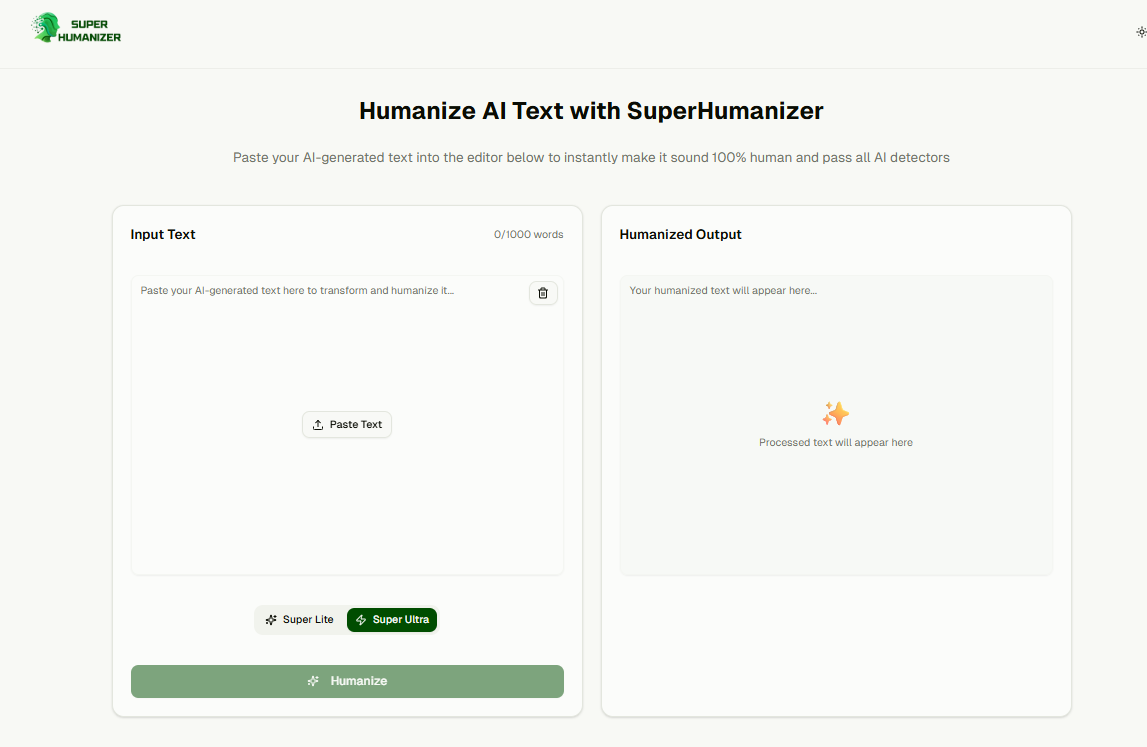
Super Humanizer is an AI to human text converter that is particularly known for making AI text sound human. Here’s how it helps brands protect their voice when relying on AI for content creation. 

Tone Match

Tone Match means the tool rewrites the content to meet the brand’s usual tone. Super Humanizer helps:

  • Remove stiff wording
  • Adjust personality
  • Create natural flow

This keeps the message familiar to readers without losing meaning.

Human Flow

Super Humanizer reduces AI traces by making text sound human. It removes all patterns that detection tools flag as robotic. This makes content safe, warm, and easy to understand. This helps the brand make its content sound real. 

Consistency

Consistency keeps all pieces aligned. When the style remains consistent, readers feel a sense of trust. The tool brings this into the provided content, forming a similar tone across emails, blogs, and captions. A steady voice builds a strong brand identity.

AI Humanizer Pro – A Perfect Fit in Brand Communication

ai

Like Super Humanizer, AI Humanizer Pro is another reliable tool that helps brands use AI content while maintaining their voice. This tool fits into brand communication by making the content sound natural, warm, and human. 

As you know, most AI tools create text that sounds flat or repeated. This tool softens the tone and removes robotic patterns. It helps maintain a friendly style without losing meaning, and the message comes out smoother and easier to read. 

What Best Practices Keep Brand Voice Human?

These steps help brands stay clear and natural when using AI.

Strategy First

Strategy First means planning the message before using AI. Clear thinking shapes the message strongly and smooths the content. When a human sets the direction, the final output stays focused and aligned with the brand’s real identity.

Edit Blend

Edit Blend mixes AI drafts with human review. Humans fix tone, flow, and clarity. The result is text that feels real. It helps remove robotic patterns and adds a warm voice for readers.

Tone Audit

Tone Audit is a review of messages for tone issues. The teams review the messages for any signs of robotic style or mixed emotions. This review protects the brand identity as it keeps every piece aligned with the same voice. To keep the tone consistent, add the following points in the content:

  • Checks for robotic wording
  • Removal of mixed emotions
  • Clear, steady voice
  • Smooth, human-sounding lines

Monitoring

Monitoring helps brands check long-term content. When teams review the tone frequently, they catch issues early on. This keeps communication smooth and stable. A stable voice builds trust and strong brand recognition.

Bottom Line

Keeping a clear and consistent voice is what makes a brand sound real, even when using AI. Tools like Super Humanizer and AI Humanizer Pro help brands bring back the human tone that AI often misses.

To recap:

  • A steady voice builds trust and connection.
  • Human review keeps the tone natural and smooth.
  • Regular tone checks protect brand identity.

When brands mix smart AI tools with a human touch, they create content that sounds both natural and true to their personality. This balance helps them stay real in a digital world.

Unlock the Symphony in Your Mind: How ToMusic AI is Democratizing Music Creation

Unlock the Symphony in Your Mind: How ToMusic AI is Democratizing Music Creation

ToMusic AI

Imagine a melody stuck in your head. It is vivid, emotional, and completely yours. You can hear the drums kicking in, the swell of the strings, and the exact rhythm of the lyrics. But when you open your mouth to explain it or try to tap it out on a desk, it falls flat. The bridge between your imagination and reality is broken.

For decades, this has been the silent struggle of creatives, writers, and dreamers. We have been told that music production is an exclusive club. You need to know music theory. You need to master complex Digital Audio Workstations (DAWs) that look like airplane cockpits. You need thousands of dollars for studio time or session musicians. So, what happens to those brilliant song ideas? They fade away, unrecorded and unheard. It is a graveyard of creativity, and frankly, it is heartbreaking.

But what if the barrier to entry wasn’t a ten-year learning curve, but a simple sentence? What if you could hire a full production team just by typing out your thoughts? This is where the landscape shifts.

This is where Text to Music AI enters the narrative, not just as a tool, but as a translator for your creative soul.

to music

The Day I Became a Composer (Without Knowing a Single Note)

I remember the first time I logged onto the platform. I was skeptical. As a writer, I have always envied musicians. I can describe a scene with words, but I cannot make you feel it the way a swelling cello can. I had a poem I wrote years ago—a melancholic piece about rain in London—that I always secretly imagined as a lo-fi jazz track.

I sat down with my morning coffee, opened the interface, and decided to test the limits. I didn’t upload a complex MIDI file or tweak oscillator settings. I simply typed: “A melancholic lo-fi jazz track with soft piano keys, the sound of rain in the background, and a slow, steady hip-hop beat. Mood: nostalgic, lonely but warm.”

I hit generate.

The few seconds of processing felt like holding your breath before a dive. Then, I pressed play. The sound that filled my headphones wasn’t just a generic stock loop. It was my song. The piano chords were dusty and imperfect, exactly as I had imagined. The beat dragged slightly behind the snare, giving it that human, unquantized feel. It was the first time I felt the rush of being a composer, stripped of the anxiety of technical incompetence. It was a moment of pure, unadulterated creative liberation.

The Narrative Engine: Turning Text into Texture

To understand why this shifts the paradigm, we have to look at how we traditionally create. Usually, creation is a subtractive process. You start with a complex idea and lose fidelity as you struggle with tools you don’t fully understand.

ToMusic flips this. It is an additive process. You provide the seed—the text, the lyrics, the vibe—and the AI acts as a seasoned session musician who instantly “gets it.”

Think of it like this: In the old world, if you wanted a painting of a sunset, you had to buy the canvas, mix the oils, and learn brush strokes. With this technology, you are the art director. You tell the artist, “Give me a sunset that looks like it’s burning,” and the engine renders it. You are no longer limited by your hands, only by your vocabulary and imagination.

Breaking Down the Magic: The Before and After

To truly appreciate the leap forward, we must look at the friction that existed before. The gap between “I have an idea” and “Here is my song” used to be a canyon.

The Old Way: The Friction of Traditional Production

You have a lyric idea. You open a complex software like Ableton or Logic Pro. You spend two hours staring at a blank timeline, trying to find a kick drum that doesn’t sound cheap. You get frustrated with chord progressions because you don’t know which key you are in. By the time you have a 4-bar loop, the inspiration is gone. The technical grind killed the creative spark.

The New Way: The Flow State

You have a lyric idea. You open ToMusic. You type in your lyrics and describe the genre: “Upbeat indie pop with a driving bassline.” Within moments, you have a full track. The structure is there. The melody is there. Now, instead of fighting the software, you are iterating. “Make it faster.” “Change the mood to somber.” You are staying in the creative flow state, surfing the wave of inspiration rather than drowning in technical details.

to music

Feature Comparison: Why Accessibility Matters

In the crowded market of generative AI, clarity is king. Many tools promise the world but deliver a dashboard so complicated it requires a PhD to operate. Others are too simple, producing tinny, robotic ringtones.

Below is a breakdown of how this approach stands out against traditional methods and other complex AI tools.

Feature / Aspect Traditional Music Production Complex Studio AI Tools ToMusic.ai Experience
Barrier to Entry Extremely High (Years of practice) High (Requires prompt engineering skills) Zero (Natural language input)
Time to Result Days or Weeks Hours of tweaking parameters Seconds
Cost Efficiency $$$$ (Equipment, Studio, Engineers) $$ (Expensive subscriptions) Free / Affordable
Creative Control Manual manipulation of every wave Parameter-based sliders Intent-based (Text & Mood)
Vocal Integration Requires recording equipment & talent Often instrumental only Integrated AI Vocals
Primary Focus Technical perfection Granular sound design Emotional expression & Speed

Beyond the Hobbyist: Real World Applications

You might be thinking, “This is fun, but is it useful?” The answer lies in the diversity of modern content. We are living in a multimedia age where silence is the enemy of engagement.

For the Content Creator

If you run a YouTube channel or a TikTok account, you know the nightmare of copyright strikes. You spend hours editing a video, only to have it muted because you used a popular song. With this tool, you generate a unique, royalty-free soundtrack tailored exactly to the length and mood of your video. It is your personal score composer.

For the Songwriter

Writers often struggle with melody. You might have a notebook full of poetry but no idea how it sounds. This platform serves as a sketching tool. You can feed your lyrics into the engine to hear different melodic possibilities. It might not be the final radio cut, but it is the demo that helps you pitch the song to a band or producer.

For the Educator and Storyteller

Teachers can create custom songs to help students memorize historical dates or scientific formulas. Storytellers can generate background ambience for Dungeons & Dragons campaigns or audiobooks. The utility stretches as far as your need for sound.

The Emotional Connection: Why Your Voice Matters

There is a distinct human element to this technology. It is not about replacing the musician; it is about empowering the non-musician. It is about giving a voice to the silent majority who feel deeply but lack the dexterity to play an instrument.

When I played that lo-fi jazz track to a friend, I didn’t say, “Look what this computer made.” I said, “Listen to this idea I had.” And that is the crucial difference. The AI didn’t have the idea; I did. The emotion, the choice of genre, the specific lyrics—those were mine. The AI was simply the brush I used to paint the canvas.

Conclusion: Your Orchestra Awaits

We are standing at the precipice of a new era in art. The gatekeepers are gone. The expensive studio doors have been blown off their hinges. The only thing left separating you from the song of your dreams is the willingness to type the first word.

You do not need to wait for permission. You do not need to wait until you can afford piano lessons. You have a symphony in your mind right now. It is waiting for you to release it.

Visit the platform, type in your wildest idea, and listen to what happens. You might just find that you have been a musician all along—you just needed the right instrument.

The Role of AI in Revolutionizing Managed IT Services for the Architecture Industry

The Role of AI in Revolutionizing Managed IT Services for the Architecture Industry

AI in Revolutionizing Managed IT Services

Technology can feel like a double-edged sword for architecture firms. On one hand, it promises to simplify complex workflows and enhance productivity. On the other hand, managing IT services often feels like juggling too many balls at once. Slow systems and unexpected downtime could throw projects off track.

Artificial intelligence is stepping in as a transformative solution. By automating routine tasks, predicting issues before they happen, and improving design accuracy, AI is changing how architects work with tech every day.

This blog will explore practical ways AI improves managed IT services for the architecture industry. Ready to see how AI can simplify your work? Keep reading!

The Integration of AI into Managed IT Services for Architecture

AI simplifies the operation of IT systems in architecture firms. It assists businesses in resolving issues more efficiently and maintaining a competitive edge.

Streamlining IT support and infrastructure

Automated tools powered by machine learning manage repetitive tasks such as software updates and troubleshooting. This minimizes downtime and allows teams to concentrate on more significant priorities. Faster resolutions lead to fewer disruptions in your regular operations. Architecture firms often rely on partners—including Virginia Beach tech companies—to implement AI-driven managed services that keep systems running smoothly.

Faster resolutions lead to fewer disruptions in your regular operations. A solid IT foundation is essential for the success of any project. Predictive analytics monitors systems continuously, detecting issues early. Cloud computing improves adaptability while reducing expenses on physical storage. These improvements help architecture firms function effectively without continual crises for IT teams.

Enhancing system monitoring and predictive maintenance

Simplified IT infrastructure lays the foundation for smarter monitoring. AI tools play a role in detecting system irregularities quickly. These systems analyze real-time data and predict failures before they happen.

Predictive maintenance reduces downtime by addressing issues early. For instance, machine learning algorithms can identify unusual server activity or temperature spikes in equipment. This approach enhances reliability while significantly reducing repair costs. Firms working with MSPs like Gamma gain access to proactive monitoring solutions that integrate predictive analytics into everyday IT management. This approach enhances reliability while significantly reducing repair costs.

AI-Driven Design and Generative Modeling

AI simplifies architectural design by automating repetitive tasks. It also introduces new opportunities for creative problem-solving and planning.

Automating complex design processes

AI-driven automation reduces the manual workload in complex architectural design. Algorithms can quickly generate detailed 3D models, saving countless hours once spent on repetitive drafting tasks. Machine learning enables systems to study past projects and predict the most effective layouts or structures for new designs.

Automation also aids in testing structural durability during early design stages. Computational tools simulate real-world conditions like wind pressure or material stress without physical prototypes. This approach prevents costly errors later, improving workflow efficiency across teams and ensuring faster project delivery times.

Optimizing resource allocation and project planning

AI simplifies resource allocation in architecture projects. Machine learning tools predict material needs based on past designs and project timelines. This reduces waste and ensures teams have what they need when they need it. Automated systems assign tasks by analyzing workloads, skill sets, and deadlines.

Predictive analytics improve project planning accuracy. These tools forecast potential delays or bottlenecks before issues arise. Teams can adjust schedules early to stay on track while maintaining quality standards. By organizing resources effectively, firms save time and reduce costs during execution. Accurate modeling aligns smoothly with resource management.

AI and Building Information Modeling (BIM)

AI enhances the accuracy of architectural plans with smarter modeling techniques. It connects teams more effectively, improving collaboration and efficiency.

Improving accuracy in architectural modeling

AI improves Building Information Modeling (BIM) by processing large datasets rapidly. It detects inconsistencies in blueprints, minimizing human errors during planning. For instance, machine learning algorithms forecast structural problems by comparing designs with historical data. This conserves time and helps avoid expensive mistakes.

Predictive analytics enhances decision-making for architects and IT teams. Automated checks identify discrepancies early in the design phase. Teams can modify plans effectively without disrupting progress or inflating budgets. Precise modeling also enhances coordination across departments, promoting smoother workflows and improved outcomes.

Facilitating collaboration across teams

Accurate architectural models foster smoother teamwork. AI-based systems eliminate communication barriers by providing real-time data updates and centralized project dashboards. Teams no longer manage disorganized files or conflicting schedules.

Advanced tools make sharing Building Information Modeling (BIM) data across departments easier. Designers, engineers, and IT staff remain coordinated on workflows without continuous email exchanges or meetings. This efficiency minimizes errors while improving decision-making speed.

Overcoming Challenges in AI Adoption

Adopting AI often feels like solving a puzzle with missing pieces. Tackling fears and technical obstacles requires patience, planning, and open communication.

Addressing data privacy and security concerns

Protecting client data remains a top priority for architecture firms using managed IT services. AI systems process large volumes of sensitive architectural plans, project details, and financial information.

Securing this data against breaches requires strong encryption protocols and strict access controls. For example, machine learning algorithms can identify unusual activity within networks in real time, reducing the risk of cyberattacks.

Regulations like GDPR or CCPA demand that businesses stay compliant when managing personal data. AI-driven compliance tools can simplify adherence by tracking how information is stored and shared.

Additionally, securing Building Information Modeling (BIM) platforms ensures safe collaboration across teams while protecting intellectual property from exposure or theft.

Managing resistance to technological change

Employees often resist AI integration due to fear of job loss or unfamiliarity with technology. Address concerns by offering clear communication and ongoing training programs. Demonstrate how automation and machine learning tools improve and support their roles. Highlight practical benefits like reduced workload and better workflow efficiency.

Involve teams early in project stages to build trust and lessen doubts. Create a culture where feedback is valued, encouraging teamwork around IT changes. Share success stories within the architecture industry to show attainable results through smarter systems like Building Information Modeling (BIM) or predictive analytics tools.

Conclusion

AI is changing how IT services support architecture. It simplifies processes, predicts issues, and helps teams work more efficiently. With tools like BIM and predictive analytics, architects can achieve improved results in less time. Challenges exist, but the rewards are worth pursuing. The future of intelligent buildings begins here.

AI in Smart Homes: Enhancing Security and Convenience

AI in Smart Homes: Enhancing Security and Convenience

AI in Smart Homes

Imagine coming home after a long day, only to realize you forgot to lock the door. Or waking up in the middle of the night, worrying about strange noises outside. These moments can make anyone uneasy. Many people face challenges in keeping their homes safe while juggling busy lives.

Here’s some good news: AI-powered smart homes offer solutions to these common problems. A report shows that over 60% of homeowners using smart devices feel more secure and at ease. From monitoring your house remotely to automating daily chores, AI is reshaping how we live.

This blog will explore how AI enhances both security and convenience at home. You’ll discover smarter systems, safer spaces, and simpler living with technology by your side. Ready to learn more about this future? Keep reading!

Role of AI in Smart Home Security

AI sharpens home security by identifying threats instantly. It takes quick actions to protect your space without human delay.

AI-powered surveillance and threat detection

Smart surveillance systems analyze live video feeds to identify unusual activity. They detect intruders, monitor suspicious behavior, and alert homeowners in real time. These systems use predictive methods to assess risks before threats escalate.

Advanced sensors work alongside cameras to track heat signatures or sudden movements. Connected devices communicate instantly, sending notifications through apps or email. This quick response minimizes delays for managed IT teams and improves home monitoring reliability. Many homeowners and property managers strengthen their infrastructure through Miami managed services, which provide 24/7 system monitoring, remote troubleshooting, and proactive security management for connected environments.

Autonomous responses to security breaches

AI programs identify potential threats and respond immediately. For instance, intelligent security systems can secure doors, inform homeowners via their smartphones, or activate alarms automatically during a breach. Embedded cameras recognize unusual activity and provide instant updates for swift action.

Connected devices such as IoT sensors notice unexpected changes in temperature or movement. These actions reduce damage by responding quickly without requiring human input. AI manages intrusions effectively while ensuring reassurance for business owners overseeing multiple properties. Organizations with IT managed by Citadel often leverage similar automated security frameworks to protect both residential and commercial systems, ensuring minimal downtime and rapid response to threats.

Enhancing Convenience with AI

AI turns daily tasks into a breeze with smart solutions. It adapts to your habits, making home life smoother and more efficient.

Personalized automation of household tasks

Smart homes provide homeowners with customized automation of daily tasks. Lights adjust according to the time of day without manual switches. Thermostats understand preferences and maintain optimal temperatures automatically. These smart devices reduce human effort while providing comfort.

Cleaning is made easy through robot vacuums that map and manage floors on their own. Smart refrigerators monitor food inventory, alert about expiration dates, and recommend recipes using available items. “Automation turns routine chores into stress-free experiences.”

Virtual assistants for seamless control

Virtual assistants take personalized automation a step further. With voice commands, users manage home automation systems effortlessly. Devices like Amazon Alexa and Google Assistant offer centralized control over lighting, temperature, and entertainment setups. They remove the need for manual adjustments.

These intelligent devices integrate with IoT systems to provide strong support. For example, business owners can schedule security cameras or receive real-time updates about their properties while multitasking. Voice assistance reduces inefficiencies, leading to increased productivity at work or home.

Advanced Features of AI in Smart Homes

AI helps homes run smarter by learning user habits and adjusting systems accordingly. It takes connected living to a new height with predictive analytics and intelligent decision-making.

Energy optimization and efficiency

Smart homes use AI to manage energy consumption intelligently. Intelligent devices, like programmable thermostats and lighting systems, adjust based on user behavior. For example, lights turn off in empty rooms, and thermostats reduce heating during the night.

Forecasting tools improve energy management by anticipating usage patterns. This reduces waste and lowers utility bills. Connected devices communicate through IoT networks to share real-time data for better efficiency. Businesses can reduce expenses while maintaining a comfortable environment with these tools.

Integration with IoT devices for smarter living

IoT devices connect various home systems to enhance functionality. AI analyzes data from connected devices like smart thermostats, lighting, and appliances to create efficient routines. For example, lights automatically adjust based on room occupancy, saving energy and improving comfort.

AI also syncs with voice assistants for quick control of multiple gadgets. A single command can lower blinds, lock doors, or set temperatures. Businesses managing services can benefit by offering customized IoT setups that align with user preferences for smarter living solutions.

Benefits of AI in Smart Homes

AI keeps your home safer with smarter systems. It also makes daily life easier and more enjoyable.

Improved safety and peace of mind

Smart security systems powered by AI detect unusual activities instantly. Advanced sensors keep track of doors, windows, and even motion patterns to identify threats. If something seems wrong, the system notifies homeowners immediately through alerts or alarms. Remote monitoring allows you to check your property at any time from any location.

AI-driven surveillance technology adds level of protection by analyzing video feeds for suspicious behavior. Predictive analytics assists in recognizing potential risks before they occur. This forward-thinking approach helps protect homes and businesses effectively, offering peace of mind around the clock without requiring constant attention.

Enhanced lifestyle and user experience

AI simplifies daily routines with personalized automation. Intelligent devices adjust lighting, temperature, and even music based on user habits. AI-powered systems learn preferences over time to create a home environment customized for comfort.

Voice assistants make managing connected devices effortless. With simple commands, users can schedule tasks or control multiple appliances simultaneously. Its easy interaction enhances convenience while saving time. Advanced features like energy efficiency guide us toward smarter living solutions in the next section.

Conclusion

Smart homes are changing how we live. They safeguard your home while simplifying daily tasks. With AI, you experience safety and comfort working together. From voice assistants to smart sensors, life becomes easier and more convenient. The future of connected living appears promising and secure!