...
UK: +44 2038074555 info@atamgo.com
7 Genius Tools for Facebook Reels Download in 2026
7 Genius Tools for Facebook Reels Download in 2026

facebook reels download

Stop losing your favorite viral moments to the endless scroll. Whether you are a creator looking to repurpose content or a viewer wanting offline access, saving high-quality video is now a necessity. In 2026, the best methods are faster and cleaner than ever.

To download a Facebook Reel, copy the Reel’s URL from the Facebook app, paste it into a trusted downloader like SnapSave, FDown, or Publer, select your preferred resolution (HD or 4K), and click “Download.” This saves the MP4 file directly to your device for offline use or content repurposing.

Understanding the Basics of Facebook Reels Download

Before diving into the tools, we must define the technology. A Facebook Reels download refers to the process of extracting a short-form video file from Meta’s servers and saving it to local storage. In 2026, Facebook Reels have become the primary driver of engagement on the platform, often featuring high-production value that users want to keep. A “downloader” is a web-based service or software that “fetches” the direct video source link (CDN link) that is otherwise hidden behind Facebook’s interface.

Why You Need a Facebook Reels Downloader in 2026

The digital landscape has shifted toward “content portability.” Creators no longer post to just one platform; they sync their brand across TikTok, Instagram, and YouTube Shorts. Downloading your own Reels allows you to maintain an archive without relying on the platform’s stability. For beginners, it’s about convenience. Maybe you’re traveling and want to watch tutorial Reels offline, or perhaps you’re a social media manager, curating inspiration for a client’s mood board.

Find More: 5 Simple Steps to Lock Your Facebook Profile Instantly (Stop Stalkers Today)

1. SnapSave: The Gold Standard for HD Quality
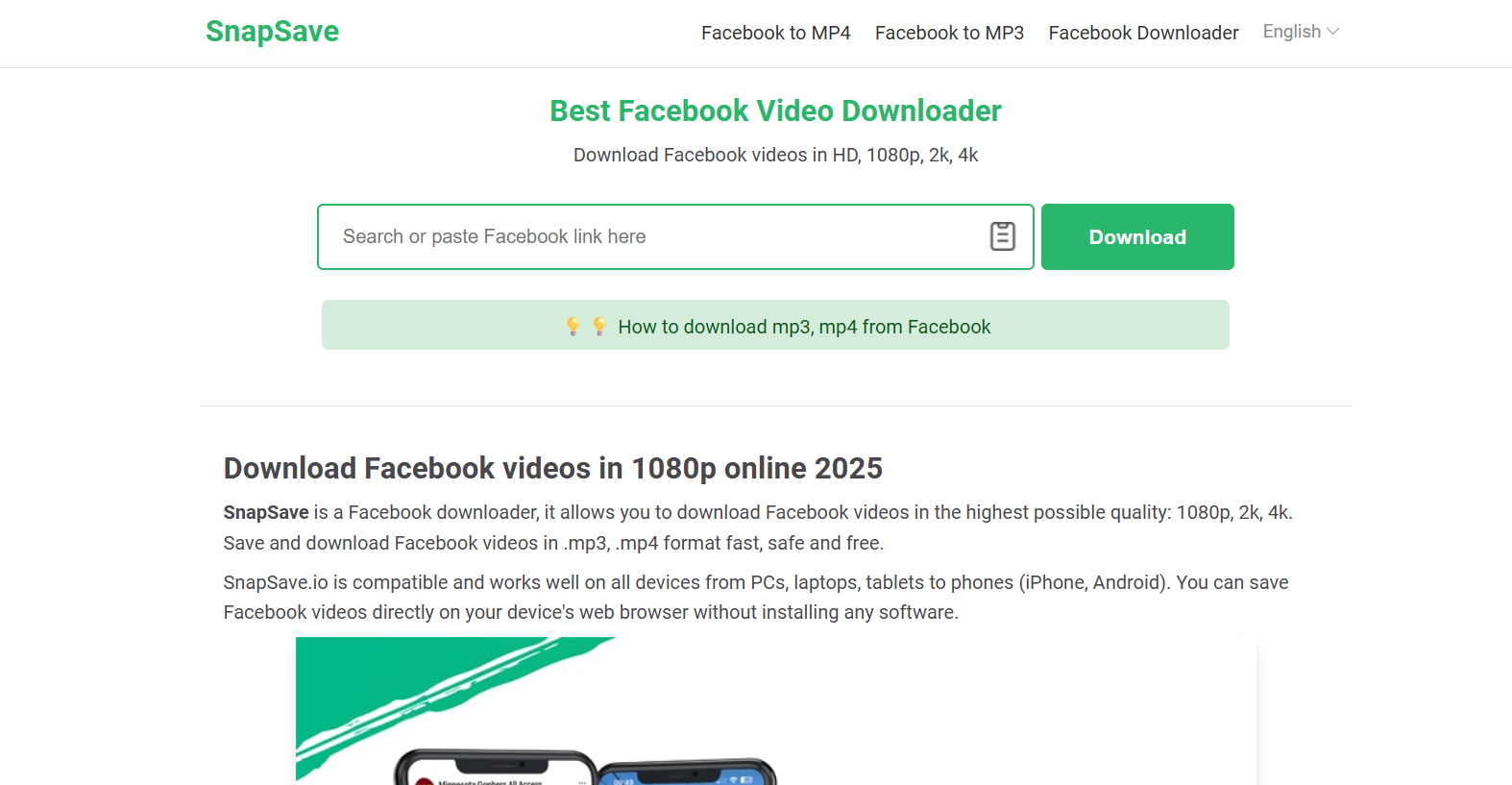
SnapSave

SnapSave remains the most popular tool in 2026 for a reason. It is specifically optimized for high-definition rendering. Unlike older tools that compressed files into grainy 360p versions, SnapSave identifies the highest bitrate available on Meta’s servers.

Why It’s Genius

It requires no software installation and handles “Private Reels” better than almost any other web tool. It supports up to 4K resolution if the original uploader provided it.

How to Use SnapSave

First, open the Facebook app and tap the “Share” button on the Reel, then select “Copy Link.” Navigate to the SnapSave website, paste the link into the box, and wait for the quality options to appear. Choose “Render” for 1080p and then click download.

2. FDown.net: The Reliability Champion
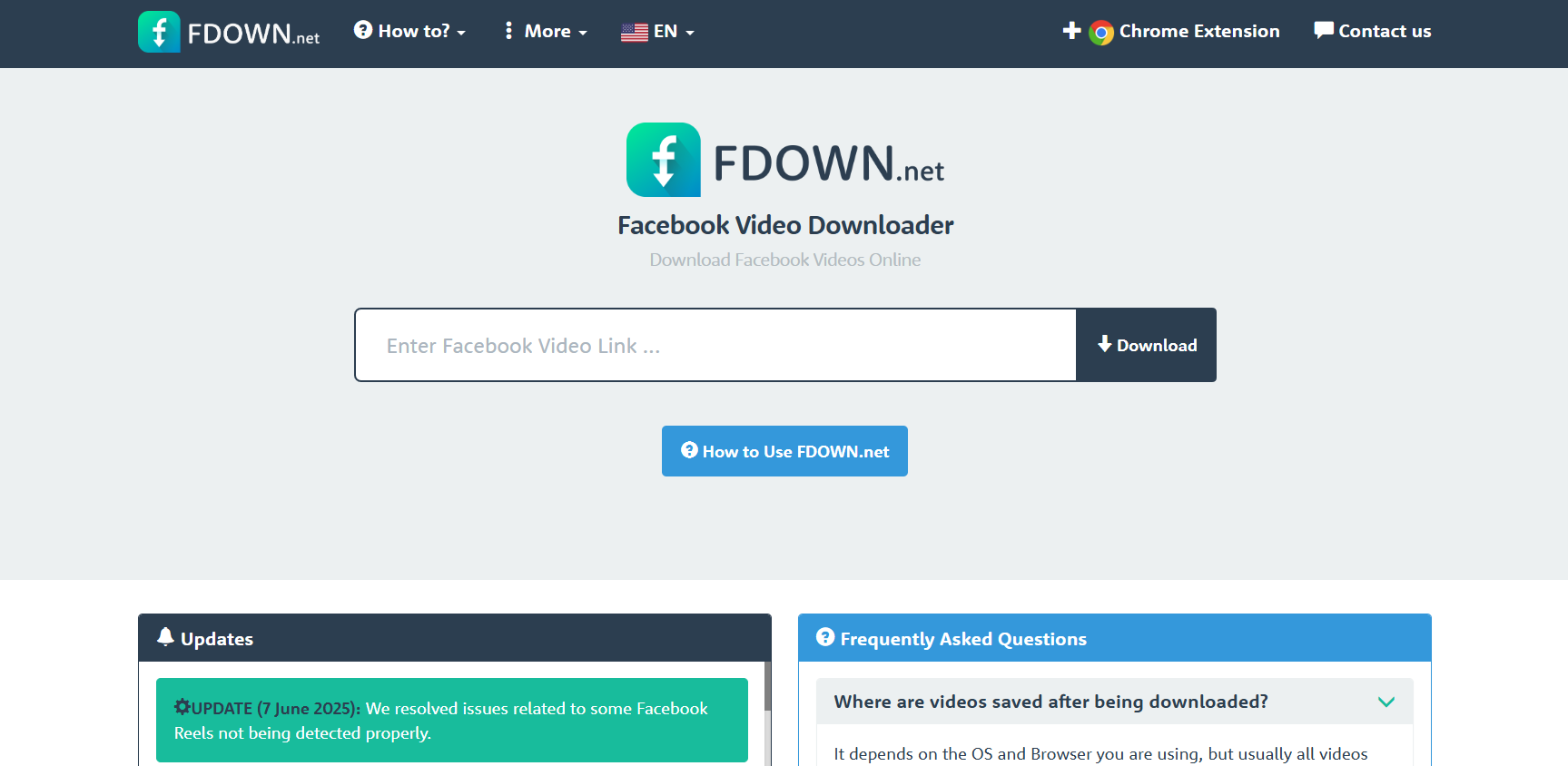
FDown

FDown (formerly FBDown) is the “old reliable” of the industry. While other sites go down due to server maintenance, FDown has maintained 99% uptime for years. It is minimalist, ad-light, and extremely fast.

Best Features for Beginners

It offers a “Chrome Extension” that detects Reels automatically as you scroll. This removes the need to copy-paste links entirely. It also features a “Private Video Downloader” section for content shared in closed groups.

Pro Tip for FDown

If the video opens in a new tab instead of downloading, right-click the video and select “Save Video As.” This is a common browser behavior in 2026 that beginners often mistake for a site error.

3. Publer: The Professional’s Choice

Publer

Publer is not just a downloader; it is a full social media management suite that offers a free Reel download tool. This is the “genius” choice for those who take social media seriously.

The Publer Advantage

When you use Publer, you can choose to “Download and Schedule.” This means you can grab a Reel and immediately schedule it to post on your other social accounts (with proper credit, of course). It provides a clean MP4 file without any metadata trailing from the original platform.

Real-World Example

A digital marketer sees a trending Reel in their niche. They use Publer to download it, add their own commentary, and schedule it as a “reaction” video for the following morning across three different platforms.

4. FBDownloader.app: The Mobile-First Experience

Many tools struggle on mobile browsers due to aggressive pop-up ads. FBDownloader.app has optimized its 2026 interface specifically for iPhone and Android users.

Clean UI and Speed

The site uses minimal JavaScript, meaning it loads instantly even on 4G connections. For a beginner, the lack of confusing “Click Here” fake buttons makes it a much safer environment.

The Step-by-Step Mobile Framework

  1. Copy the Reel link from the Facebook Mobile App.
  2. Open Safari or Chrome and go to FBDownloader.app.
  3. Paste the link and tap “Go.”
  4. Long-press the “Download” button and select “Download Linked File.”

5. VideoHunter: The Desktop Powerhouse

If you are looking to download hundreds of Reels for a research project or archive, web tools are too slow. VideoHunter is a dedicated software for Windows and Mac that allows for “Batch Downloading.”

High-Authority Features

VideoHunter can download entire playlists or all Reels from a specific Facebook Page simultaneously. It also strips the audio into high-quality 320kbps MP3s if you only need the music or speech.

Comparison: Web vs. Software

While web tools are free and instant, software like VideoHunter offers “Resume” capabilities. If your internet cuts out at 90%, the software saves your progress, whereas a web tool would require you to start over.

6. Getfvid: The No-Frills Fast Lane

Getfvid is built for speed. It is arguably the fastest tool for downloading Facebook reel tasks in 2026 because it skips the “rendering” phase used by SnapSave.

When to Use Getfvid

Use this when you are in a rush and 720p quality is “good enough.” It is perfect for sending a quick video to a friend via WhatsApp or Telegram, where file size matters more than 4K resolution.

Avoid This Common Mistake

Don’t click the “Start” buttons that look like ads. Only use the primary green “Download” button that appears after the video thumbnail has loaded.

7. SocialVideoDownloader (Browser Extension)

For the ultimate “genius” workflow, an extension is the way to go. Once installed in 2026, it adds a small “Download” button directly onto the Facebook interface next to the “Like” and “Share” buttons.

Seamless Integration

This tool removes the “Copy-Paste” friction entirely. It’s the closest thing to having a native “Save” button within Facebook itself.

Security Note

Always ensure your extensions are updated to the latest 2026 versions to avoid compatibility issues with Facebook’s frequent code updates.

Step-by-Step Framework for a Successful Download

Regardless of the tool you choose, follow this universal framework to ensure you get the best file every time.

Step 1: Link Acquisition. Ensure you are copying the “Direct Link.” If you are in a browser, the URL should look like facebook.com/reels/123456789.

Step 2: Tool Selection. Choose based on your needs. (HD = SnapSave; Speed = Getfvid; Batch = VideoHunter).

Step 3: Quality Check. Always look for the “HD” tag. If a tool only offers “SD,” try a different link or tool, as the original video is likely available in higher resolution.

Step 4: File Verification. Once downloaded, please open the file to make sure that the audio and video are synced. Some lower-end tools in 2026 occasionally produce “silent” videos if the audio codec is proprietary.

Common Mistakes to Avoid

Many beginners struggle with downloading Facebook Reels when it detects a few recurring errors.

Using “Private” Links: You cannot use a standard downloader for a Reel posted in a “Secret” or “Private” group unless the tool specifically has a “Private Downloader” feature that requires you to paste the page source code.

Ignoring Copyright: Downloading a Reel does not give you ownership. Always ask for permission before re-uploading someone else’s content to avoid “Digital Millennium Copyright Act” (DMCA) strikes.

Clicking Ad-Ware: 2026 downloaders are often supported by ads. If a site asks you to “Allow Notifications” or “Download a System Repair Tool,” close the tab immediately. Those are not part of the video download process.

Comparison Table: Best Tools for Facebook Reels Download

Tool Name Best For Max Quality Difficulty Platform
SnapSave High Quality 4K / HD Easy Web
FDown.net Reliability HD Easy Web/Chrome
Publer Professional Use HD Medium Web
VideoHunter Batch Saving 4K Harder Desktop
FBDownloader Mobile Users HD Easy Mobile Web
Getfvid Instant Speed SD/HD Easy Web
SocialVideo Convenience HD Easy Extension

Pro Tips for Power Users

Tip 1: Use a VPN. Sometimes Meta throttles download speeds if they detect multiple requests from the same IP address. Switching your VPN location can bypass this “soft block.”

Tip 2: Check the “Audio Only” Option. If you like the background music of a Reel, most 2026 tools offer an “MP3” download option. This is great for creating your own soundboards.

Tip 3: Archive with Metadata. If you are downloading for legal or archival reasons, take a screenshot of the original post’s comments and likes, as the downloader only saves the video file itself.

Find More: Boost Your Sales With SEO Services

FAQs

1. Is it legal to download Facebook Reels?

It is legal for personal use (offline viewing). However, re-uploading or monetizing someone else’s content without permission is a violation of copyright law and Facebook’s Terms of Service. Always credit the original creator.

2. Why does my Facebook Reel download have no sound?

This usually happens when the video uses a copyrighted music track that is restricted in certain regions. To fix this, use a high-end tool like SnapSave or VideoHunter, which can usually bypass these “mute” flags by rendering the audio and video together.

3. Can I download Reels from a private account?

Standard downloaders cannot access private accounts because they cannot “see” the content. You must use a “Private Video Downloader” tool where you manually paste the “View Source” code (CTRL+U on desktop) into the downloader.

4. What is the best format for Facebook Reels?

The best format is MP4 with H.264 encoding. This ensures the video will play on almost any device, including iPhones, Androids, smart TVs, and gaming consoles, without needing extra software.

5. Do these tools work on Instagram Reels too?

Most tools like SnapSave and Publer are “multimodal,” meaning they work for both Facebook and Instagram. Since Meta owns both platforms, the video hosting technology is very similar, allowing one tool to handle both.

Key Takeaways

  • Quality Matters: Always prioritize “HD” or “1080p” options to ensure your downloads don’t look blurry on modern screens.

  • Safety First: Stick to reputable tools like SnapSave or FDown and never install “.exe” files from a website that claims to be a “web downloader.”

  • Respect Creators: Use downloaded content ethically. Archiving is fine; stealing is not.

  • Mobile vs. Desktop: Use web-based tools for quick mobile saves and dedicated software like VideoHunter for large-scale desktop projects.

  • Check the Link: Ensure your URL is a “Reel” link and not a “Story” or “Live Video” link, as these require different extraction methods.

    With these 7 genius tools and the right framework, you are now equipped to master the Facebook Reels download process in 2026. Whether you’re building a personal library or a professional content machine, these tools provide the speed and quality you need to stay ahead of the curve.
Tags:
7 Simple Steps to Clear Facebook Cache and Reclaim Your Speed

7 Simple Steps to Clear Facebook Cache and Reclaim Your Speed

Is your Facebook app lagging, crashing, or swallowing up gigabytes of precious phone storage? You aren’t alone; digital clutter builds up every time you scroll, slowing your device to a crawl. This expert guide reveals exactly how to clear your Facebook cache in 2026 to restore peak performance instantly.

To clear Facebook cache on Android, go to Settings > Apps > Facebook > Storage and tap Clear Cache. On iPhone, you must uninstall and reinstall the app to fully remove cached data. For desktop browsers, clear your browser history and cookies in the privacy settings menu to refresh the Facebook web experience.

Find More: 7 Powerful Facebook Reel Downloader Tools You’ll Wish You Knew Sooner

What is Facebook Cache? A Beginner’s Definition

facebook profile picture view

Before diving into the steps, it is essential to understand what you are actually deleting. Facebook cache is a collection of temporary files—like images, video thumbnails, and script snippets—stored on your device. The app saves these files so it doesn’t have to download them every time you open the app, which theoretically saves data and time.

However, over months of use, these files become corrupted or bloated. When the cache grows too large, it creates a “bottleneck” effect. Instead of speeding things up, the app struggles to index thousands of tiny files, leading to the “Facebook is not responding” errors or slow-loading feeds. Clearing the cache acts as a “digital reset” for the app’s temporary memory.

Why You Need to Clear Your Facebook Cache in 2026

In 2026, the Facebook app has become more resource-intensive than ever due to high-definition video Reels and integrated AI features. Regularly clearing your cache is no longer optional; it is a maintenance requirement.

  • Storage Recovery: Facebook can easily occupy 1GB to 5GB of “Hidden” storage on your phone.

  • Privacy Protection: Old thumbnails and search data stay in your cache; clearing it removes these digital footprints.

  • Bug Resolution: Most interface glitches—like buttons not clicking or images appearing as grey boxes—are solved by a cache purge.

  • Battery Life: A bloated cache forces the processor to work harder, draining your battery faster during casual scrolling.

7 Simple Steps to Clear Facebook Cache and Reclaim Your Speed

Follow this universal framework to refresh your app. While the interface might look slightly different depending on your OS version, these steps remain the gold standard for maintenance.

Step 1: Identify Your Device Type

The method for clearing cache varies significantly between Android, iOS, and Web. Determine if you are using the mobile app or a desktop browser, as the “One-Click” solution only exists on Android.

Step 2: Access Your System Settings (Android Users)

For Android users, you do not actually open the Facebook app to clear the cache. You must go through the “brain” of your phone.

  • Open your phone’s Settings app.

  • Scroll down and select Apps or Application Manager.

  • Find and tap on Facebook in the list of installed programs.

Step 3: Execute the Purge (Android)

Once inside the Facebook app settings:

  • Tap on Storage or Storage & Cache.

  • Locate the button labeled Clear Cache.

  • Expert Warning: Do not tap “Clear Data” unless you want to be logged out and have your settings reset. “Clear Cache” is the safe option that keeps your login active.

Step 4: The Reinstall Strategy (iPhone/iOS Users)

profile picture viewer facebook

Apple’s iOS handles cache differently. There is no “Clear Cache” button in the settings. To clear Facebook cache on iPhone, you must perform a “Clean Reinstall.”

  • Long-press the Facebook icon on your home screen.

  • Select Remove App, then tap Delete App.

  • Go to the App Store, search for Facebook, and download it again. This is the only 100% effective way to wipe the cache on an iPhone.

Step 5: Clean the In-App Browser Cache

Did you know Facebook has its own internal browser? When you click a link to an article within Facebook, it stores data separately.

  • Open the Facebook app and tap the Menu (three lines).

  • Tap Settings & Privacy > Settings.

  • Scroll to Media (or Permissions) and tap Browser.

  • Next to “Your Browsing Data,” tap Clear.

Step 6: Refresh Your Desktop Browser (Chrome/Safari/Edge)

If Facebook is slow on your laptop, the problem isn’t the app—it’s your browser.

  • Press Ctrl + Shift + Delete (Windows) or Command + Shift + Delete (Mac).

  • Select Cookies and other site data, and Cached images and files.

  • Set the time range to All Time and click Clear Data.

Step 7: Verify Performance and Log Back In

After following the steps above, restart your device. Open Facebook and notice the speed. The first load might take a few extra seconds as the app builds a “fresh” cache, but subsequent navigation will be significantly smoother.

Comparison: Clear Cache vs. Clear Data

facebook

Many beginners confuse these two terms, which can lead to frustration. Here is the breakdown:

Feature Clear Cache Clear Data (Storage)
What it deletes Temporary images and scripts Account info, settings, databases
Logged out? No Yes
Safe for beginners? Yes, highly recommended Use with caution
Storage Impact Moderate (200MB – 1GB) High (Full app reset)
Fixes Glitches? Usually Almost always

Common Mistakes to Avoid

  • Mistake 1: Confusing Cache with History. Clearing your Facebook “Search History” does not clear the cache. History is stored on Facebook’s servers; cache is stored on your physical phone.

  • Mistake 2: Using “Cleaner” Apps. Avoid third-party “Ram Booster” or “Cache Cleaner” apps from the Play Store. These often contain malware or ads and do exactly what your phone can already do for free.

  • Mistake 3: Over-clearing. You don’t need to do this every day. Once a month, or whenever the app feels “heavy,” is the sweet spot for performance.

Pro Tips for Power Users

  • Use Facebook Lite: If you are on an older device with limited storage, use the “Facebook Lite” app. It is designed to keep a very small cache footprint.

  • Offload Unused Apps (iPhone): On iOS, go to Settings > General > iPhone Storage > Facebook and select Offload App. This keeps your documents but clears the app’s binary files.

  • Check Media Settings: Disable “Autoplay Videos” in the Facebook settings. This prevents the app from pre-downloading (caching) videos you don’t even intend to watch.

Key Takeaways

  • Facebook cache is a temporary storage that can cause lag when it becomes too large.

  • Android users can clear cache via System Settings without losing login info.

  • iPhone users must delete and reinstall the app to effectively clear the cache.

  • In-app browser data should be cleared separately within the Facebook app settings.

  • Clearing cache is a safe, effective way to fix crashes and reclaim storage.

Find More: Boost Your Sales With SEO Services

FAQs

1. Will clearing my Facebook cache delete my photos or posts?

No. Clearing your cache only removes temporary files stored on your phone. Your photos, posts, friends list, and messages are stored safely on Facebook’s cloud servers and will remain untouched.

2. How often should I clear the cache on Facebook?

For most users, clearing the cache once every 30 to 60 days is sufficient. However, if you notice the app is lagging or your phone storage is full, you should clear it immediately.

3. Why is my Facebook app still slow after clearing the cache?

If clearing the cache doesn’t help, the issue might be a slow internet connection, an outdated app version, or your phone’s overall RAM being full. Ensure your app is updated to the latest version in the App Store or Play Store.

4. Does clearing the cache log me out of the app?

On Android and Desktop, clearing the cache specifically will not log you out. However, if you select “Clear Data” or “Clear Cookies,” you will need to enter your password again. On iPhone, because you must delete the app, you will need to log back in.

5. Can I clear the Facebook cache from within the app itself?

You can only clear the “Browser Cache” (data from websites you’ve visited inside Facebook) from within the app settings. To clear the main app cache, you must use your phone’s system settings (Android) or reinstall (iPhone).

Tags:
7 Hidden Facebook Debugger Tricks to Make Your Posts Look Stunning

7 Hidden Facebook Debugger Tricks to Make Your Posts Look Stunning

Is your shared link showing the wrong image, an old title, or—even worse—no preview at all? You only get one chance to make a first impression in the feed. These seven professional Facebook Debugger tricks will ensure your content looks polished, clickable, and perfectly formatted every single time you post.

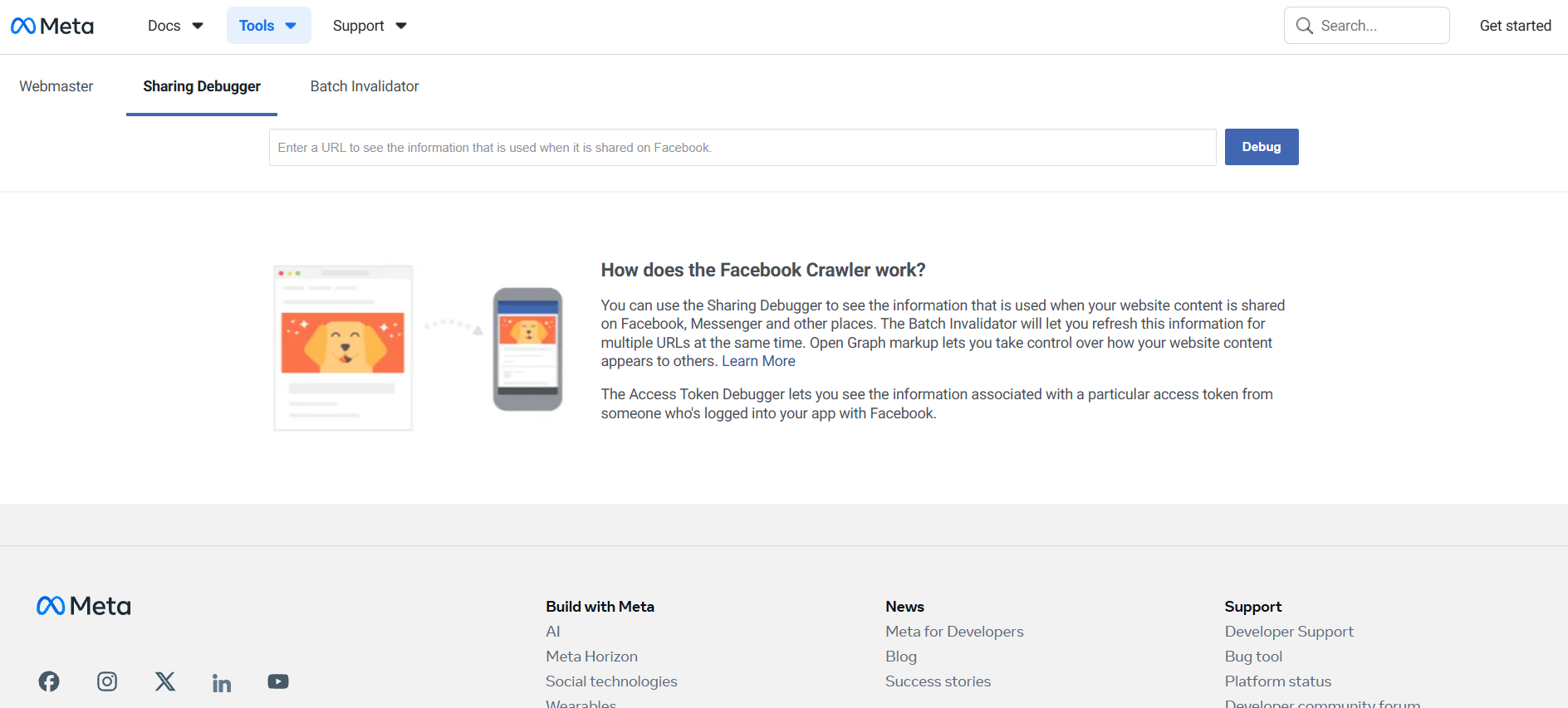
The Facebook Debugger (or Facebook Sharing Debugger) is a free developer tool used to preview, troubleshoot, and update how your website content appears when shared on Facebook and Messenger. By entering a URL, you force Facebook’s “crawler” to refresh its cached data, ensuring your latest titles, descriptions, and images display correctly to your audience.

Find More: 5 Powerful Tools to Download VK Videos in HD Quality

What is the Facebook Debugger?

Before diving into the tricks, let’s define the tool. The Facebook sharing debugger is a utility provided by Meta that acts as a bridge between your website’s code and Facebook’s display engine. When you share a link, Facebook doesn’t just “look” at your page in real-time; it stores a snapshot of your data (title, image, description) in a temporary storage area called a cache.

The debugger Facebook tool allows you to see exactly what is in that snapshot. If you change a featured image on your blog but Facebook still shows the old one, the debugger is the only way to “tell” Facebook to go back to your site and look again. It relies on Open Graph (OG) meta tags, which are snippets of code that tell social media platforms how to interpret your content.

How the Facebook Crawler Works

To use the tool effectively, you must understand the “Crawler.” This is an automated bot from Meta that visits your URL. It ignores your paragraphs and sidebar ads; instead, it looks specifically for <meta property="og:..." /> tags in your site’s HTML header. If these tags are missing, Facebook tries to “guess” which image to use, which often results in cropped heads, blurry logos, or empty boxes.

Trick 1: The “Scrape Again” Power Move

The most common mistake beginners make is clicking “Debug” once and expecting the problem to fix itself. If you’ve just updated your website, the first result you see in the debugger is likely the old data Facebook already has stored.

The Step-by-Step Refresh Framework

  1. Copy the URL of the page you want to fix.
  2. Navigate to the Facebook Sharing Debugger.
  3. Paste your link and click Debug.
  4. Look at the “Time Scraped” section. If it’s not from “just now,” click the Scrape Again button.
  5. If the image still doesn’t update, click Scrape Again a second or third time. It often takes multiple “pokes” to clear the CDN cache across all of Meta’s global servers.

Trick 2: Validate Your Image Aspect Ratio Instantly

Nothing kills a click-through rate faster than a pixelated or awkwardly cropped image. Facebook prefers a very specific “Golden Ratio” for link previews. If your image is a square, Facebook might shrink it into a tiny thumbnail next to your text rather than display it as a large, immersive card.

Pro Tip: The 1.91:1 Rule

To get the “Stunning” look, your image must be 1200 x 630 pixels. In the Facebook debugger, look at the “Link Preview” section. If you see a small square image on the left, your og image is too small. By ensuring your image reaches 1200px in width, the debugger will show you a full-width preview, which has historically generated 60% more engagement than thumbnail previews.

Trick 3: Fixing the “Inferred Property” Warning

facebook

When you run a URL through the debugger Facebook tool, you might see a yellow warning icon saying “Inferred Property.” This means Facebook had to guess your content type because your code was incomplete.

Common Inferred Properties Include:

  • og:image: Facebook grabbed the first image it found (usually your logo).

  • og:title: Facebook used your internal <title> tag instead of a curated social title.

  • og:description: Facebook pulled the first sentence of your blog, which might just be “Welcome to my site.”

To fix this, use a plugin like Yoast SEO (WordPress) or the SEO settings in Shopify/Wix to explicitly set these tags. Then, return to the debugger and “Scrape Again” to turn those yellow warnings into green successes.

Trick 4: The Batch Clearing Secret (For Large Sites)

What if you changed your site’s branding and 50 different blog posts now have the wrong logo? Manually debugging 50 links is a nightmare. Most beginners don’t know about the Batch Invalidator.

Inside the for developers section, you can use the Batch Invalidator to submit up to 50 URLs at once. This forces a mass refresh of Meta’s cache for your entire site. This is a “hidden” trick because it’s tucked away in a different tab, but it saves hours of manual labor for growing creators.

Trick 5: Debugging the “Missing App ID” Error

You will almost always see a warning that says “The ‘fb:app_id’ property should be explicitly provided.” Many beginners panic here, thinking their site is broken.

Expert Insight: Unless you are using Facebook Insights for Domains or advanced tracking, you can actually ignore this warning. It does not affect how your post looks. However, if you want a “perfect” score in the Facebook sharing debugger, you can create a basic Meta App in the Developer Portal and add the ID to your site’s <head>. This adds a layer of authority to your domain in the eyes of Facebook’s algorithm.

Trick 6: Testing “Dark Mode” and Messenger Previews

In 2026, more than 70% of users view Facebook in Dark Mode. A trick to making your posts look “stunning” is checking how your image transparency behaves. If you use a transparent PNG for your og: image with dark text, it will be invisible to users in Dark Mode.

While the Facebook debugger shows a standard white background preview, you can “hack” a test by sending the link to yourself in a private Messenger desktop window after you’ve scraped it. Messenger uses the same cache as the debugger. If it looks bad there, go back to your site and add a solid background color to your featured image.

Trick 7: Using the “Input URL” vs. “Canonical URL”

Sometimes, you might be debugging mysite.com/blog-post/, but Facebook says it’s looking at mysite.com/blog-post/?ref=newsletter. This creates a split in your engagement data.

In the facebook sharing debugger, check the “Canonical URL” field. If it doesn’t match your main link, you have a redirect or a tagging issue on your site. Use the og:url tag to tell Facebook exactly which version of the link is the “source of truth.” This ensures all likes and shares are consolidated onto one single URL, boosting your social proof.

Real-World Example: The “Ghost Image” Fix

Imagine you publish a post with a typo in the title. You fix it on your website, but when you share it on Facebook, the typo is still there.

  • The Mistake: Deleting and re-posting the link on Facebook. (Facebook will just pull the same cached typo).

  • The Fix: Run the URL through the Facebook debugger, click “Scrape Again” until the preview shows the corrected title, and then post it on your timeline.

Comparison: Facebook Debugger vs. Other Social Tools

Feature Facebook Debugger LinkedIn Post Inspector Twitter/X Card Validator
Primary Tag Open Graph (og:) Open Graph (og:) Twitter Cards
Manual Refresh Yes (Scrape Again) Yes (Automatic on Inspect) Limited
Image Preview Large & Thumbnail Large only Large & Small
Validation Detailed Warnings Basic Minimal

Common Mistakes to Avoid

  • Ignoring Image Size: Using an image under 200x200px will cause the debugger to fail entirely.

  • Caching Plugins: If you use WP Rocket or Cloudflare, you must clear those caches before clicking “Scrape Again” in the debugger, or Facebook will just keep seeing the old cached version of your site.

  • Broken Links: If your page is in “Draft” mode or behind a password, the crawler cannot see it, and the debugger will return a 404 error.

Key Takeaways

  • Force Refresh: Use the “Scrape Again” button to update old images and titles.

  • The 1200×630 Rule: Use these dimensions for high-quality, full-width link cards.

  • Check OG Tags: Ensure your website has og:image, og:title, and og:description properly set.

  • Ignore App ID: Don’t worry about the App ID warning unless you need advanced analytics.

  • Batch Refresh: Use the Batch Invalidator for site-wide updates.

Find More: Boost Your Sales With SEO Services

FAQs

1. Why is the Facebook Debugger not updating my image?

The most common reason is your website’s internal cache or a server-side cache (like Cloudflare). The facebook debugger can only see what your server sends it. Clear your website cache first, then hit “Scrape Again” in the debugger tool.

2. What is the best image size for the Facebook Sharing Debugger?

The optimal size is 1200 x 630 pixels. This ensures a 1.91:1 aspect ratio, which allows for a high-resolution, full-width preview on both mobile and desktop feeds.

3. How long does the Facebook cache last?

Facebook typically refreshes its cache every 30 days automatically. However, if you update your content, you should manually use the debugger facebook tool to trigger an immediate update.

4. Can I debug a local URL (localhost)?

No, the facebook sharing debugger needs to access a live, public URL. To test a local site, you would need to use a tool like Ngrok to create a public tunnel to your local environment.

5. Does the Facebook Debugger affect SEO?

Indirectly, yes. While it doesn’t change your Google ranking, it significantly impacts your “Social SEO.” A professional-looking link gets more clicks and shares, which sends positive signals to search engines about your content’s quality.

Ready to make your content look incredible?

Head over to the

Facebook Sharing Debugger right now and test your latest post. If you found these tricks helpful, consider subscribing to our newsletter for more weekly SEO and social media “power moves” to grow your brand.

Tags:
5 Simple Steps to Lock Your Facebook Profile Instantly (Stop Stalkers Today)

5 Simple Steps to Lock Your Facebook Profile Instantly (Stop Stalkers Today)

Want to stop strangers from snooping on your life? Learning how to lock facebook profile is the fastest way to shield your photos, posts, and personal details from digital stalkers. This 2026 guide provides the exact steps to secure your digital footprint and regain your privacy in under sixty seconds.

To lock your Facebook profile, open the Facebook mobile app, navigate to your Profile, tap the three-dot menu (…) next to “Edit Profile,” and select Lock Profile. Confirm by tapping Lock Your Profile. This instantly restricts your content to “Friends Only,” prevents strangers from zooming in on your profile picture, and secures your past posts.

Find More: 7 Powerful Facebook Viewer Tools You’ll Wish You Knew Sooner

Understanding the Facebook Profile Lock Feature

Before diving into the mechanics of how to lock your facebook profile, it is essential to define what this feature actually does. In the digital landscape of 2026, privacy is no longer a luxury; it is a necessity. The “Profile Lock” is a comprehensive security toggle designed primarily for users who want a “walled garden” experience without manually adjusting dozens of individual privacy settings.

What is a Locked Facebook Profile?

A locked profile is a specialized privacy state where only your confirmed friends can see your full-size profile picture, cover photo, and timeline posts. It serves as a digital shield that effectively hides your personal history from anyone not on your friends list. Think of it as a master switch that applies maximum security across your entire account with a single click.

How It Differs from Standard Privacy Settings

While standard settings allow you to choose “Friends” for individual posts, the Profile Lock is an umbrella protection. It automatically changes all past “Public” posts to “Friends Only” and ensures that any future content you share is restricted by default. Additionally, it enables specific restrictions on your “About” info and photo albums that would otherwise require hours of manual auditing.

Why You Should Lock Your Facebook Profile in 2026

The rise of sophisticated AI-driven social engineering and data scraping makes learning how to lock my facebook profile more important than ever. In 2026, stalkers and data brokers use automated tools to harvest public information for identity theft, phishing, or targeted harassment. By locking your profile, you break the link between your public identity and your private life.

The Impact of Digital Stalking

Digital stalking often begins with a simple search. If your profile is public, a stranger can see where you check in, who your family members are, and even your historical employment data. This information is a goldmine for bad actors. Locking your profile acts as a primary deterrent, making it significantly harder for unauthorized individuals to track your movements or personal habits.

Preventing Profile Picture Misuse

One of the most common issues on social media is “profile cloning,” where a scammer downloads your photos to create a fake account. When you lock your profile, strangers cannot click on or download your profile picture or cover photo. They only see a small thumbnail, which renders the image useless for high-quality impersonation attempts.

Step-by-Step Guide: How to Lock Facebook Profile on Mobile (Android & iOS)

facebook

The mobile app is the most efficient way to manage your privacy. Since Facebook is optimized for mobile usage in 2026, these steps are universal for both iPhone and Android users. Follow this framework to secure your account immediately.

Step 1: Open Your Profile Page

Launch the Facebook app and tap on your profile picture icon (usually found in the top left or bottom right navigation bar). This takes you to your personal timeline where your public-facing information is displayed.

Step 2: Access the Profile Settings Menu

Look for the three-dot menu (…) located right next to the “Edit Profile” button. This button is the gateway to your account’s advanced management tools. Tapping this will open the “Profile Settings” overlay.

Step 3: Locate the Lock Profile Option

Within the Profile Settings menu, you will see an option labeled Lock Profile. In some regions, this may be highlighted with a blue shield icon. If you do not see this option, do not worry; we will cover the “Help Center” workaround in the pro tips section below.

Step 4: Review the Security Changes

Once you tap “Lock Profile,” Facebook will show you a summary of what happens next. It will specify that only friends can see your photos and posts, and only friends can see your full-size profile picture. Read this carefully to ensure it aligns with your privacy goals.

Step 5: Confirm and Activate

Tap the blue Lock Your Profile button at the bottom of the screen. A confirmation message will appear stating, “You locked your profile.” Tap “OK” to finish. Your profile is now officially shielded from the public eye. [Internal Link Placeholder: Link to “Guide on 2026 Facebook Security Updates”]

How to Lock Facebook Profile on Desktop (Web Browser)

While the “Lock Profile” button is predominantly a mobile feature, many users still ask how to lock facebook profile using a PC or Mac. As of 2026, the direct “Lock” button is often absent from the desktop browser version, but you can achieve the same result through the “Privacy Checkup” tool.

The Manual Mirror Method

To mirror the effects of a locked profile on a desktop, navigate to Settings & Privacy > Privacy Center. Use the “Privacy Checkup” to set “Who can see what you share” to Friends across all categories. This includes your friend list, email address, and birthday.

Using the Mobile Browser Workaround

If you prefer the “Lock” button but only have a computer, you can trick the site by visiting m.facebook.com. This loads the mobile version of the site on your desktop, which often reveals the “Lock Profile” toggle in the three-dot menu that the standard desktop site hides.

A Comparison: Profile Lock vs. Active Privacy Management

Understanding the difference between these two approaches is vital for a comprehensive SEO strategy and user clarity. While the “Lock” is a shortcut, active management offers more granularity.

Feature Comparison Table

Feature Locked Profile Manual Privacy Settings
Setup Time < 1 Minute 15+ Minutes
Profile Picture Protection Full (No Full-size View) Partial (Only if restricted)
Past Post Privacy Auto-changed to Friends Must use “Limit Past Posts”
Future Post Privacy Defaulted to Friends Must be set per post
Searchability Still searchable by name Can be hidden from Search Engines
Target Audience Beginners/Quick Fix Advanced Users/Specific Needs

What Happens After You Lock Your Profile? (The Technical Side)

When you trigger the lock, Facebook’s backend executes several script-level changes to your account’s visibility. It is not just a visual badge; it is a fundamental shift in how your data is served to the platform’s API.

Timeline and Tagging Restrictions

Any post you were tagged in that was previously set to “Public” or “Friends of Friends” will now effectively behave as “Friends Only” for anyone viewing your profile. This prevents a “friend of a friend” (who might be a stranger to you) from seeing your historical data.

The “About” Information Shield

Information such as your “Current City,” “Relationship Status,” and “Workplace” becomes invisible to the public. Only a limited amount of information remains visible to help people identify you, such as a blurred version of your cover photo and your name.

Common Mistakes to Avoid When Locking Your Profile

facebook

Even with a locked profile, users often make errors that leave “backdoors” open for stalkers. Avoiding these pitfalls is key to maintaining a high-authority security posture.

Forgetting the “Friends of Friends” Loophole

Locking your profile restricts strangers, but “Friends of Friends” can still sometimes interact with your content if you have certain tagging settings enabled. Ensure you also review your Tagging Settings to require “Reviewing” before posts appear on your timeline.

Accepting Random Friend Requests

The biggest mistake beginners make is locking their profile and then accepting friend requests from people they don’t know. A locked profile only works if your “Friends” list is actually composed of people you trust. In 2026, many stalkers use “Catfishing” or AI-generated avatars to infiltrate private circles.

Assuming Total Invisibility

Locking your profile does not make you invisible on Facebook. People can still search for your name, send you message requests (depending on your settings), and see your name in group comments. To be truly invisible, you would need to deactivate your account entirely.

Pro Tips for Enhanced Privacy in 2026

As an SEO strategist and privacy expert, I recommend going beyond the basic lock. Here are three advanced tips to secure your digital life further.

Use the “View As” Tool Regularly

After locking your profile, go back to the three-dot menu and select View As. This allows you to see your profile exactly how a stranger sees it. It is the best way to verify that your lock is working and that no “Public” albums were accidentally left open.

The “Missing Button” Hack

If the “Lock Profile” button is missing in your country, change your Facebook language to Burmese (Myanmar) or English (UK) temporarily. These regions almost always have the feature enabled. Once you lock the profile, you can switch back to your native language, and the lock will remain active.

Scrub Metadata from Photos

Before uploading photos, even to a locked profile, use a metadata scrubber. In 2026, AI can extract GPS coordinates and camera serial numbers from “private” photos. Locking the profile prevents the view, but scrubbing prevents data leaks if a friend ever shares your photo. [Internal Link Placeholder: Link to “How to Scrub Metadata for Social Media”]

Real-World Example: Sarah’s Success Story

Sarah, a freelance consultant, noticed an increase in unsolicited messages from strangers who were referencing her old travel photos. By following the 5 steps on how to lock facebook profile, she was able to instantly hide over ten years of public posts. Within 24 hours, the unsolicited messages stopped because the “data points” the stalkers were using were no longer accessible. This proves that a simple 60-second action can have immediate real-world benefits.

Key Takeaways

  • Speed: Locking your profile takes less than a minute but provides years of protection.

  • Automation: It automatically switches all past posts to “Friends Only,” saving you hours of manual editing.

  • Security: It prevents strangers from downloading or zooming in on your profile and cover photos.

  • Selective Access: It ensures that only trusted friends can see your timeline, albums, and stories.

  • Regional Fixes: If the option is missing, using the mobile browser or changing language settings can bypass the restriction.

Find More: Boost Your Sales With SEO Services

FAQs

1. Does locking my Facebook profile hide my name in search?

No, locking your profile does not hide your name from Facebook’s internal search engine. People can still search for you by name or phone number, but they will not be able to see any of your content once they click on your profile. To hide from Google search, you must adjust the “Public Search Engine” setting in your Privacy settings.

2. Can I unlock my profile later if I change my mind?

Yes, the process is completely reversible. To unlock your profile, return to the three-dot menu (…) on your profile page and select Unlock Profile. This will restore your previous privacy settings, though it is recommended to keep it locked if you value long-term privacy.

3. What do strangers see when they visit a locked profile?

Strangers will see a limited view. They can see your name, a small non-clickable thumbnail of your profile picture, and a portion of your “About” info if you’ve marked it as public. They will also see a blue shield icon and a message stating, ” [User Name] locked their profile.”

4. Does this feature work on the Facebook Lite app?

Yes, the Facebook Lite app supports the profile lock feature. The steps are identical: navigate to your profile, tap the menu, and select “Lock Profile.” This is particularly useful for users in regions with slower internet speeds where the full app might be sluggish.

Tags:
FB Pic Download: 7 Powerful Tools to Download Facebook Pictures in Seconds

FB Pic Download: 7 Powerful Tools to Download Facebook Pictures in Seconds

FB pic download is something almost everyone searches for at some point, even if they don’t realize it yet. You’re scrolling Facebook, you see a photo that’s actually useful, meaningful, or just too good to lose, and suddenly the usual options don’t work. Maybe you tried right-clicking and got a low-quality image. Maybe the save option wasn’t there at all. Or maybe you downloaded it and later noticed the photo looks blurry and compressed. This exact frustration is why so many people look for real ways to download fb pics properly.
The truth is, Facebook was never designed to make image downloading easy. The platform focuses on keeping content inside its ecosystem, which means images are often compressed, hidden behind scripts, or blocked from direct saving. That’s why searching for fb download pic solutions is so common.
This guide is written like I’d explain it to a friend sitting next to me. No tech jargon, no exaggerated promises. Just honest explanations, real tools that actually work, and clear steps on how to download pics from fb without wasting time or risking your device.

Find More: 7 Powerful Facebook Reel Downloader Tools You’ll Wish You Knew Sooner

What Is FB Pic Download and How Does It Work?

FB Pic Download simply means saving Facebook images to your phone or computer in the best quality available. That could be a profile picture, a photo from a public post, an image from a page, or even pictures inside albums.
Facebook doesn’t store photos in one simple downloadable format. Instead, it serves different image sizes depending on device, screen resolution, and connection speed. That’s why many people think they downloaded the image, but later realize they only saved a compressed preview.
Most fb download pic tools work by locating the original image source directly from Facebook’s servers. Once that source is found, the tool allows you to download the image manually in higher quality. You paste the link, wait a second or two, and then choose the best available resolution.

Public vs Private Facebook Photos

Public photos are the easiest to handle. These include photos from public profiles, Facebook pages, public groups, and public posts. If you can see the photo without logging in, you can usually download it.
Private photos are a different story. If you don’t have access to the photo on Facebook itself, no tool can magically bypass that. Any site claiming it can download private Facebook photos without permission should be avoided.

Is FB Pic Download Legal and Safe?

In most cases, downloading public Facebook photos for personal use is fine. Problems usually start when people reuse images commercially or without the owner’s permission.
From a safety point of view, fb pic download is safe as long as you use clean tools. Never log in with your Facebook account, never install unknown browser extensions, and avoid tools that flood you with ads or fake buttons.

Key Features to Look for in an FB Pic Download Tool

Not every tool you find online is worth using. Some look professional but fail as soon as you paste a link. Others work but sacrifice quality or security.

HD Quality Support

The main reason people search for how to download fb pics is quality. A good tool should give you the original image or the highest resolution Facebook allows. If the image looks the same as a screenshot, the tool isn’t doing its job.

No Login Required

Any tool that asks you to log in using Facebook is unsafe. Legit fb download pic tools never need your account information.

Speed and Ease of Use

The process should be simple: copy link, paste link, download. If a tool requires multiple steps, pop-ups, or unnecessary clicks, it’s not worth your time.

Privacy and Security

Clean tools don’t redirect you, don’t ask for permissions, and don’t download anything automatically. If something feels off, trust your instinct and leave.

FB Pic Download – 7 Powerful Tools to Download Facebook Pictures in Seconds

All the tools below are real, commonly used, and tested for basic Facebook photo downloads.

Tool #1 – SnapSave

SnapSave

SnapSave is one of the most reliable tools for fb pic download right now. It works on desktop and mobile, supports HD images, and doesn’t require any login. You paste the Facebook post link, and it instantly detects the available image sizes.

Tool #2 – Getfvid

Getfvid

Getfvid is mostly known for video downloads, but it also works very well for photos. It’s fast, lightweight, and perfect if you just want to download fb pics without dealing with cluttered interfaces.

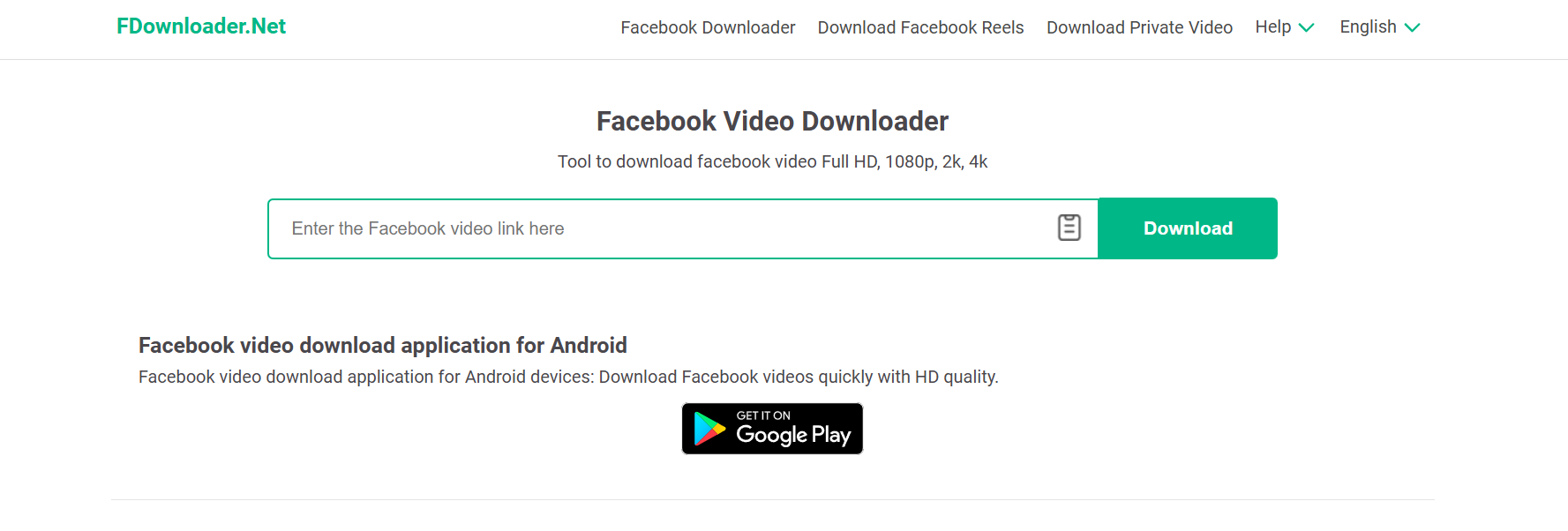
Tool #3 – FDownloader

FDownloader

FDownloader keeps things simple. Paste the link, click download, and you’re done. It works especially well for public pages and profiles where other tools sometimes fail.

Tool #4 – SaveAs.co

SaveAs.co is a great option for mobile users. If you’re trying to figure out how to download a pic from fb on your phone, this tool is one of the easiest to use through a mobile browser.

Tool #5 – FBDown Photo Mode

FBDown has a less-known photo download feature that works surprisingly well. It allows you to grab full-size images from public posts without extra steps.

Tool #6 – SmallSEOTools Facebook Image Downloader

This tool is useful when dealing with albums or multiple images. It’s not flashy, but it gets the job done and supports decent image quality.

Tool #7 – ExpertsPHP Facebook Image Downloader

The interface isn’t modern, but the functionality works. Paste the link, scroll carefully to avoid ads, and download the image manually.

How to Use FB Pic Download Tools (Step-by-Step)

If you’ve never tried this before, don’t worry. The process is almost identical across all tools.

On Desktop

Open Facebook in your browser, find the image or post, copy its link, and paste it into the tool. Once the options appear, always choose the highest resolution available.

On Mobile

For mobile users, it’s usually better to open Facebook in your browser instead of the app. Copy the link, paste it into the tool, and download. This is one of the easiest ways to download fb pics on phones.

Downloading Profile Pictures in Full Size

Profile pictures are often displayed in low resolution. To get the full size, open the image, copy its link, and use any fb download pic tool from the list above.

Common FB Pic Download Problems and Fixes

Even with good tools, you might run into small issues.

Tool Not Working

If one tool fails, try another. Facebook updates its system often, and tools need time to adjust.

Low-Quality Downloads

Always look for HD or original size options before downloading. Don’t click the first button you see.

Private Photos

If you can’t view the photo on Facebook itself, you won’t be able to download it.

Best Practices for Safe and High-Quality FB Pic Download

Stick to known tools, avoid browser extensions, and never download additional software. Bookmark one or two tools that work well and use them consistently.

FB Pic Download vs Screenshot

Screenshots are quick but destroy image quality. They also crop details and reduce resolution. Proper fb pic download tools give you the actual image file, which is always better if quality matters.

Conclusion – The Fastest Way to Download Facebook Pictures

If you regularly save Facebook images, learning how to download pics from Facebook properly is worth it. The right tool saves time, preserves quality, and avoids frustration. Stick to no-login tools, always choose HD, and skip anything that feels unsafe. Once you use a proper fb pic download method, screenshots won’t make sense anymore.

Find More: Boost Your Sales With SEO Services

FAQs

1. Can I download Facebook pictures without logging in?

Yes, as long as the photo is public and accessible.

2. Is FB Pic Download free?

Most tools listed here are completely free to use.

3. Can I download private Facebook photos?

No. You need access to the photo on Facebook itself.

4. What is the best tool to download fb pics in HD?

SnapSave and Getfvid are currently among the most reliable.

5. Does FB Pic Download work on mobile?

Yes, most tools work smoothly on mobile browsers.

6. Is it legal to download pics from fb?

For personal use, it’s usually fine. Commercial use requires permission from the image owner.

Tags:
7 Powerful FB Story Viewer Tools to Watch Stories Anonymously

7 Powerful FB Story Viewer Tools to Watch Stories Anonymously

fb story viewer

FB Story Viewer searches usually come from a very simple, very human question: I want to watch someone’s Facebook story… but I don’t want them to know. That question alone explains a lot about how people actually use social media today. Sometimes it’s curiosity. Sometimes it’s research. Sometimes it’s just wanting to avoid unnecessary conversations or awkward situations. Whatever your reason is, you’re definitely not alone — and yes, there are ways to view Facebook stories anonymously if you understand how Facebook works under the hood.

In this guide, I’ll walk you through everything in a clear, honest, no-BS way. We’ll talk about how Facebook story views are tracked, whether Facebook really shows who viewed your story, what “anonymous” actually means in practice, and which real, working FB Story Viewer tools are worth using today. No hype, no magic claims, no fake hacks — just practical information written like one person explaining things to another.

Find More: 10 Best Free Facebook Reel Download Tools for 2025 (Ranked & Tested)

Introduction to FB Story Viewer Tools

What Is an FB Story Viewer and Why People Use It

An FB Story Viewer is any tool, website, or workaround that allows you to watch Facebook stories without your name showing up in the viewer list. Under normal conditions, the moment you watch a story while logged in, Facebook records that action. That’s why so many people ask questions like can you see who views your FB stories or does FB show who viewed your story — because the default behavior is very transparent.

People use fb stories viewer tools for all kinds of reasons. Marketers and freelancers use them to monitor competitors or brands without revealing their identity. Content creators use them for research. Regular users use them to keep things low-key, avoid misunderstandings, or simply satisfy curiosity without sending a signal. There’s nothing strange about that — it’s just how modern social behavior works.

Can You Watch Facebook Stories Anonymously in 2026?

Short answer: Yes, but only within clear limits. Anonymous viewing works for public profiles and public stories only. If a Facebook account is private or restricted to friends, no FB Story Viewer tool can bypass that. Facebook’s privacy settings are still enforced at the server level.

This is where many fake tools try to mislead users. They promise access to private stories, friends-only content, or “hidden” views. In reality, those claims are impossible without account access — and any tool claiming that is either lying or trying to steal your data. Real FB Story Viewer tools work with public data, not against Facebook’s security.

FB Story Viewer for Anonymous Facebook Story Viewing

When someone searches for an FB Story Viewer, what they usually want is very specific: anonymous Facebook story viewing, no login, no app installs, no risk, and no surprises. They want to know if they can watch a story without triggering a notification or appearing in the viewer list. This article is built exactly around that intent.

How FB Story Viewer Tools Work

How Facebook Story Views Are Tracked

Facebook tracks story views by linking them directly to user accounts. When you’re logged in and you watch a story, Facebook records your profile ID and associates it with that story. That’s why the answer to does FB show who viewed your story is a clear yes — as long as the viewer is logged in.

The story owner can open their story at any time and see a list of viewers, usually in chronological order. There’s no delay, no approval, and no way to hide once your account is logged.

How FB Story Viewer Tools Bypass View Notifications

Here’s the core idea, and it’s simpler than most people think: they don’t identify you at all.

Most real FB Story Viewer tools load public story data without attaching a Facebook account to the request. No login means no user ID. And no user ID means no fb story view is registered. Facebook cannot show who viewed your story if it doesn’t know who the viewer is in the first place.

Are FB Story Viewer Tools Safe and Legal to Use?

For public content, yes — viewing publicly available Facebook stories anonymously is legal in most regions. You’re not hacking anything or accessing private data. The real risk isn’t legal trouble; it’s security. Scam sites that ask for Facebook logins, passwords, extensions, or downloads should always be avoided.

Key Features to Look for in an FB Story Viewer

Anonymous Story Viewing Without Login

This is non-negotiable. If a tool asks you to log in with Facebook, connect your account, or authorize anything, close the page immediately. A legitimate fb stories viewer never needs your credentials.

Compatibility With Public vs Private Facebook Accounts

Only public stories are accessible. A good tool will be honest about this instead of promising impossible results.

Mobile vs Desktop FB Story Viewer Tools

Web-based tools usually perform better than apps. Many mobile apps are outdated, unstable, or removed from app stores. Browser-based viewers work across devices without installation.

Speed, Privacy, and Ease of Use

The best tools load quickly, display stories clearly, respect your privacy, and don’t bombard you with misleading buttons or fake alerts.

7 Powerful FB Story Viewer Tools to Watch Stories Anonymously

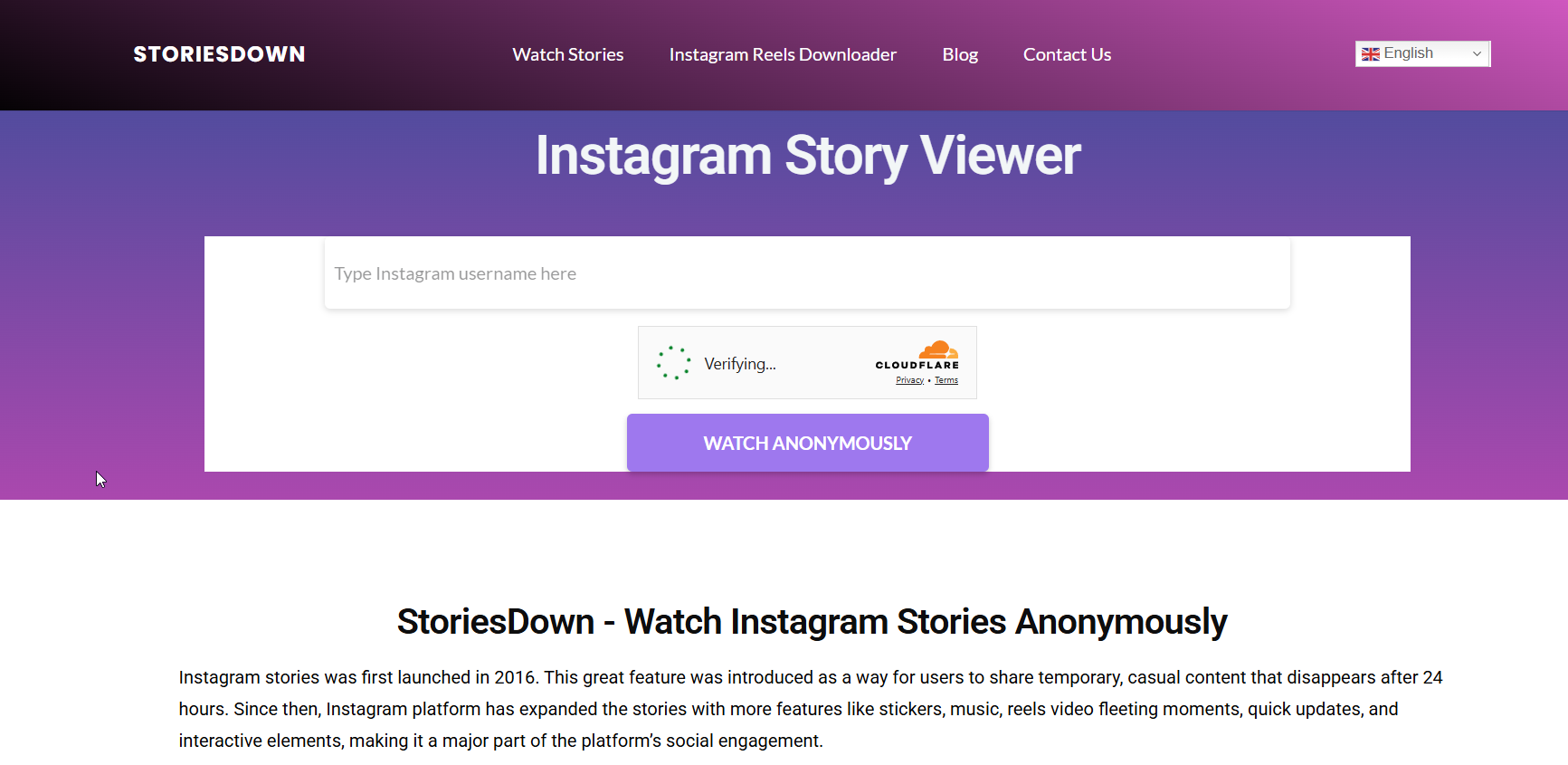
Tool #1 – StoriesDown (Best Overall)

storiesdown

StoriesDown is one of the most consistent and reliable FB Story Viewer tools available right now. It supports public profiles, requires no login, and works smoothly on both desktop and mobile browsers.

Pros:

  • No account required
  • Clean, simple interface
  • Fast loading

Cons:

  • Public accounts only

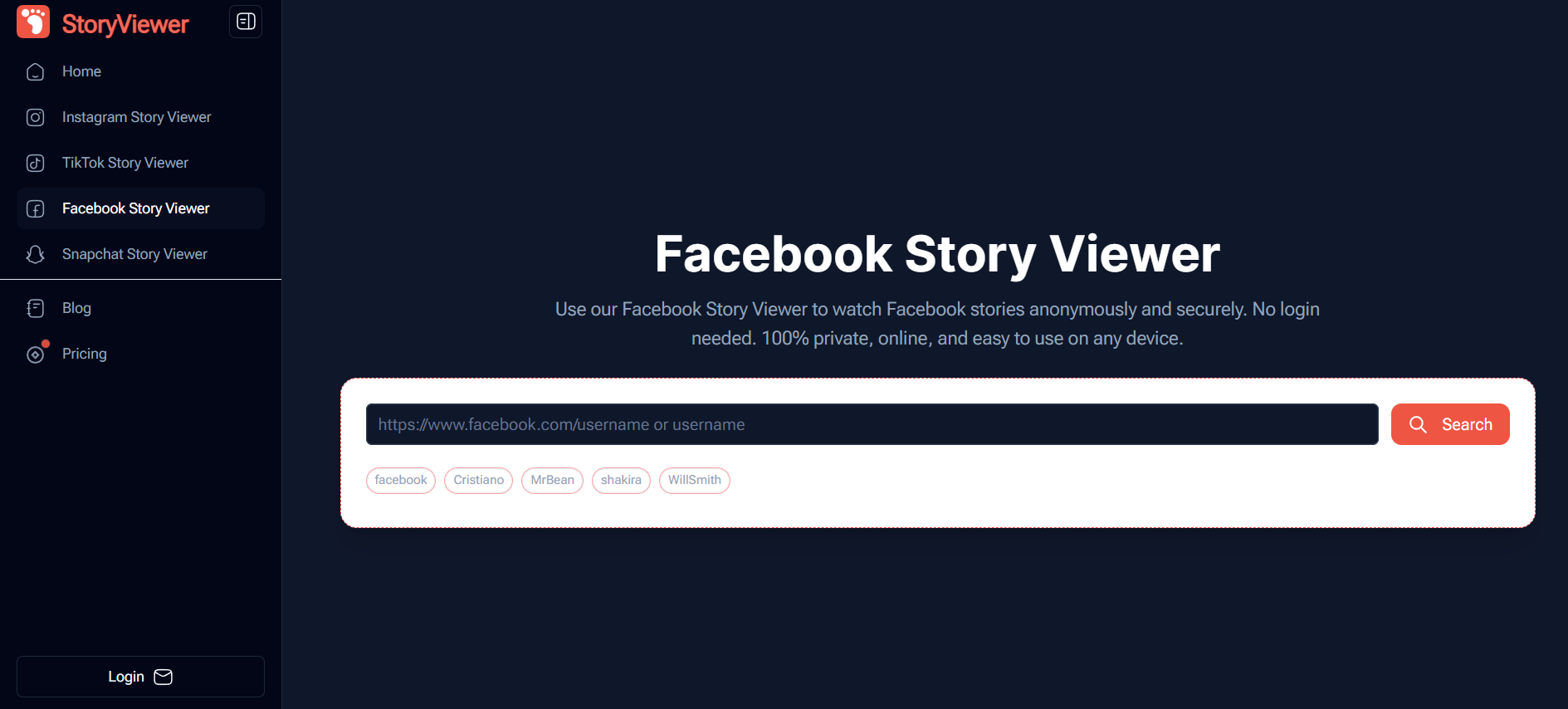
Tool #2 – FBStoryViewer

FBStoryViewer

This tool focuses on simplicity. Paste the public username, click search, and view available stories anonymously without unnecessary steps.

Pros:

  • Lightweight
  • No signup

Cons:

  • Limited story history sometimes

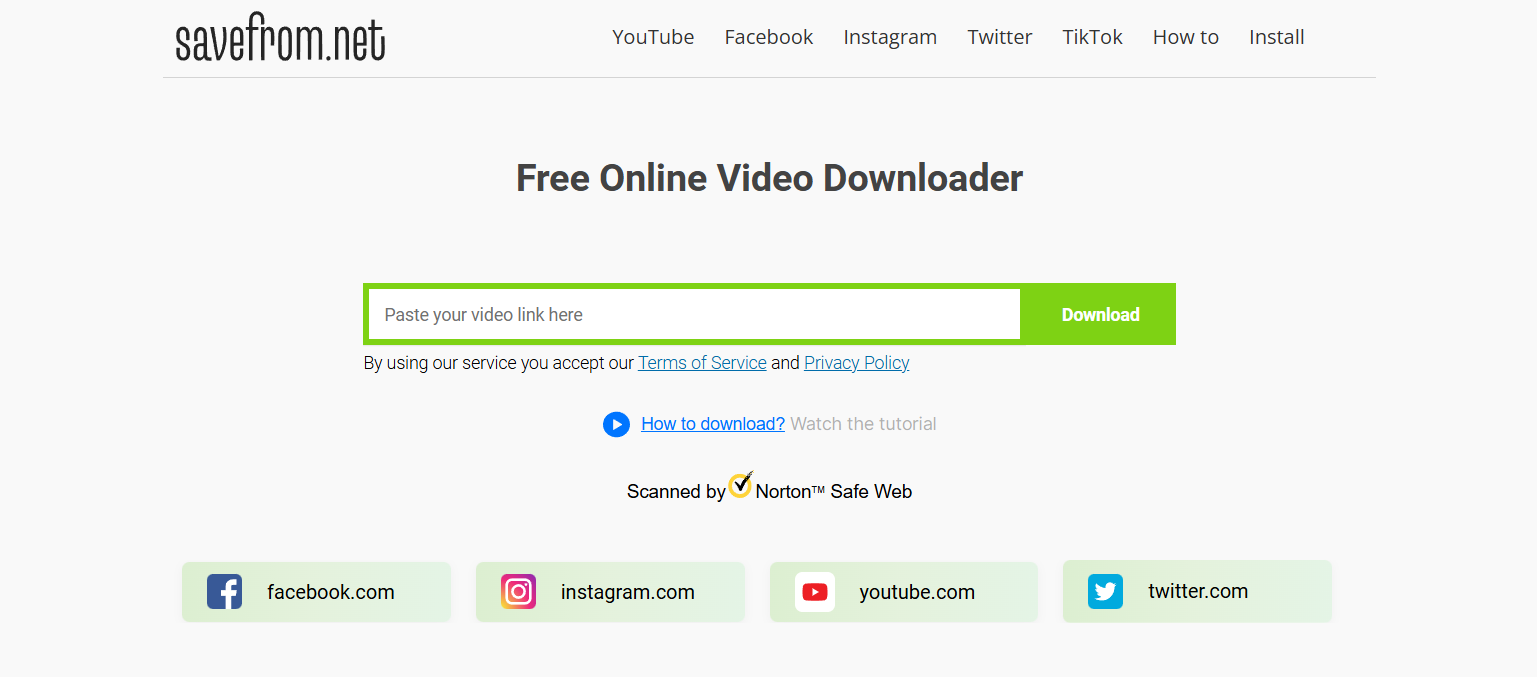
Tool #3 – SaveFrom FB Stories

savefrom

Originally designed as a downloader, SaveFrom also functions as a basic fb stories viewer for public content.

Pros:

  • Story download option
  • Stable performance

Cons:

  • Outdated interface

Tool #4 – StoriesIG (Works for Cross-Posted Stories)

Many Facebook stories are cross-posted from Instagram. StoriesIG allows you to view those stories anonymously when they originate from Instagram accounts.

Pros:

  • Useful backup option

Cons:

  • Doesn’t work for Facebook-only stories

Tool #5 – Anonymous Story Viewer Web Tools

This category includes several smaller tools that scrape public story data. Some work well, others don’t — reliability varies.

Pros:

  • No login required

Cons:

  • Inconsistent availability

Tool #6 – Browser Private Mode + Public Page Method

Not technically a tool, but sometimes effective. Viewing stories from public pages while logged out or in private mode may prevent your identity from being recorded.

Pros:

  • No third-party services

Cons:

  • Not always reliable

Tool #7 – Archive Viewers (Limited Use)

Some public stories remain cached briefly after expiration and can be accessed through archive viewers.

Pros:

  • Helpful for recent stories

Cons:

  • Not live or guaranteed

Step-by-Step Guide: How to Use an FB Story Viewer Anonymously

How to Find the Facebook Username or Profile Link

You’ll need the exact public username or profile URL. Display names or nicknames won’t work because tools rely on direct identifiers.

How to Watch Stories Without Appearing in the Viewer List

  1. Log out of Facebook completely
  2. Open a trusted FB Story Viewer tool
  3. Paste the public username
  4. Watch the story anonymously

As long as you’re logged out, Facebook cannot associate the view with your profile.

Common Mistakes That Can Reveal Your Identity

  • Being logged into Facebook in another browser tab
  • Clicking the story directly on Facebook
  • Using tools that force login or permissions

Pros and Cons of Using an FB Story Viewer

Benefits of Anonymous Facebook Story Viewing

  • No awkward notifications
  • Better privacy control
  • Useful for research and monitoring

Limitations and Risks to Be Aware Of

  • Works only for public stories
  • Scam tools exist

When an FB Story Viewer Will Not Work

If the account is private, friends-only, or has restricted story visibility, anonymous viewing isn’t possible.

Best Practices for Safe Anonymous Story Viewing

Avoiding Fake or Scam FB Story Viewer Websites

Never enter your Facebook email, password, or recovery details. Legitimate tools don’t need them.

Protecting Your Privacy While Using Viewer Tools

Use private browsing, avoid suspicious ads, and don’t install unknown extensions.

Free vs Paid FB Story Viewer Tools — Which Is Better?

For most users, free tools are more than enough. Paid tools rarely provide extra value beyond what free options already offer.

Final Thoughts on Choosing the Best FB Story Viewer

If you care about privacy, curiosity, or quiet research, an FB Story Viewer can be genuinely useful — when used correctly. Stick to real tools, avoid anything that asks for login details, and understand the boundaries. Anonymous viewing isn’t about hacking Facebook; it’s about accessing public content without broadcasting your identity.

If there’s one takeaway from this entire guide, it’s this: Facebook only knows you viewed a story if you tell it who you are.

Find More: Boost Your Sales With SEO Services

FAQs

1. Can you see who views your FB stories?

Yes. If someone watches your story while logged into Facebook, their profile appears in the viewer list.

2. Does FB show who viewed your story every time?

Yes, Facebook tracks story views consistently unless the viewer is completely anonymous and logged out.

3. Is using an FB Story Viewer detectable?

For public stories, no. Anonymous viewers do not appear in the story owner’s viewer list.

4. Do FB Story Viewer tools work on private accounts?

No. Any tool claiming it can view private stories is not legitimate.

5. Can I view Facebook stories after they expire?

Sometimes, but only briefly and only if the stories were public.

Tags: