UK: +44 2038074555 info@atamgo.com
10 Brutal Ecommerce SEO Audit Mistakes Killing Your Sales (And How to Fix Them)

10 Brutal Ecommerce SEO Audit Mistakes Killing Your Sales (And How to Fix Them)
E-commerce SEO Audit is one of those things everyone knows they should do, but very few actually do properly — or consistently. Most store owners only think about an e-commerce SEO audit when traffic suddenly drops, sales slow down for no obvious reason, or paid ads start eating their entire profit margin. By that point, the store has usually been bleeding opportunities for months.

The uncomfortable truth is this: an e-commerce SEO audit isn’t about chasing rankings or pleasing Google. It’s about uncovering the silent, invisible problems that block qualified traffic, frustrate users, and quietly kill conversions without you noticing. These issues don’t always scream for attention — they just slowly drain revenue.

In this article, I’ll walk you through the most brutal mistakes I see during real ecommerce SEO audits, explain why they hurt your sales, and show you exactly how to fix them. This isn’t theory or recycled SEO advice. This is what consistently appears in real-world e-commerce SEO site audits across Shopify, WooCommerce, Magento, and custom platforms.

Find More: 7 Powerful Reasons You Need a Shopify SEO Expert

What Is an Ecommerce SEO Audit (And Why Most Stores Get It Wrong)

An e-commerce SEO audit is a full health check of your online store from both a search engine and a human perspective. It looks at technical SEO, site architecture, content quality, keyword targeting, internal linking, UX, performance, and tracking — all together, not as separate silos.

Where most stores go wrong is treating an e-commerce SEO audit like a one-time checklist. They run a tool, skim a report, fix a few obvious errors, and move on. SEO doesn’t work like that, especially in e-commerce, where sites constantly change.

The Real Goal of an E-commerce SEO Audit

The real goal isn’t “better SEO” or higher keyword ranking. It’s more qualified traffic that actually buys. A proper audit SEO ecommerce process should answer hard questions like: Why aren’t my category pages ranking even though products are selling well? Why do users land on product pages but leave without buying? Where exactly is Google getting confused about my site?

When done correctly, ecommerce SEO audits connect SEO decisions directly to revenue, rather than relying on vanity metrics.

E-commerce SEO Audit vs Regular SEO Audit

Regular SEO audits are usually blog-focused and content-heavy. E-commerce SEO audits are a completely different beast. They deal with thousands — sometimes tens of thousands — of URLs, filters, faceted navigation, pagination, product variants, duplicate content, and internal linking complexity.

What works for a blog often fails badly for e-commerce. That’s why generic SEO advice rarely moves the needle for online stores.

When You Should Perform an E-commerce SEO Audit

Ideally, e-commerce SEO audits should be done at least twice a year. You should immediately run one if you redesign your store, migrate platforms, change themes, add large numbers of products, or notice unexplained drops in traffic, rankings, or revenue.

Mistake #1 – Ignoring Technical SEO Issues That Block Crawling

ecommerce

This is where many e-commerce stores lose before the game even starts. If search engines can’t crawl, render, and understand your site properly, nothing else matters — not content, not links, not brand.

Crawl Budget Waste on E-commerce Sites

Large ecommerce sites often waste crawl budget on filtered URLs, internal search pages, session-based URLs, or endless parameter variations. During an e-commerce SEO audit, this usually shows up as thousands of low-value pages being indexed while important category or product pages are barely crawled.

Broken Links, Redirect Chains, and Indexing Errors

Broken internal links, long redirect chains, 404 product pages, and pages accidentally marked as noindex are extremely common findings in e-commerce SEO site audits. Each issue adds friction for users and sends confusing signals to search engines.

How to Fix Technical Issues in an E-commerce SEO Audit

Start with a proper crawl using tools like Screaming Frog or Sitebulb. Clean up redirects, fix broken links, block useless URLs, handle out-of-stock products correctly, and make sure your most valuable pages are indexable and accessible. Technical fixes often produce the fastest SEO wins.

Mistake #2 – Poor Site Architecture That Confuses Users and Search Engines

If your site structure doesn’t make sense to humans, it won’t make sense to Google either. Architecture problems are one of the most overlooked issues in audit SEO ecommerce projects.

Why Flat Architecture Matters for E-commerce SEO

A flatter site architecture helps authority flow naturally to important pages. If your best category pages are buried four or five clicks deep, they’ll struggle to rank, no matter how good the content is.

Category and Subcategory Structure Problems

Common e-commerce SEO audit issues include overlapping categories, unclear naming, duplicate category paths, and categories created for internal reasons rather than search intent.

Fixing Navigation Issues During an E-commerce SEO Audit

Your navigation should reflect how people actually search. Simplify categories, reduce unnecessary depth, and ensure your most profitable pages are reachable within a few clicks.

Mistake #3 – Targeting the Wrong Keywords (Or No Keywords at All)

Ranking for the wrong keywords is sometimes worse than not ranking at all. It brings traffic that never converts.

Informational vs Commercial vs Transactional Keywords

Many e-commerce stores mistakenly target informational keywords on category pages. A proper e-commerce SEO audit separates educational content from commercial and transactional intent.

Common E-commerce Keyword Mapping Mistakes

Multiple pages targeting the same keyword, or one page trying to rank for too many keywords, is a classic problem uncovered in e-commerce SEO audits.

How to Correct Keyword Strategy in an E-commerce SEO Audit

Assign one primary keyword per important page, supported by closely related terms. Category pages should target buyer intent, while blogs and guides handle informational queries.

Mistake #4 – Thin or Duplicate Product and Category Content

ecommerce

Google doesn’t reward copy-paste stores, even if the products are great.

Why Duplicate Content Is an E-commerce SEO Killer

Using manufacturer descriptions across hundreds of products creates massive duplication. During e-commerce SEO audit services, this is one of the most damaging issues we see.

Manufacturer Descriptions and Copy-Paste Risks

If your product pages look the same as dozens of competitors, Google has no reason to favor yours.

How to Optimize Content During an E-commerce SEO Audit

Write unique category introductions, improve product descriptions, answer buyer objections, and focus on benefits and use cases — not just technical specs.

Mistake #5 – Neglecting On-Page SEO Fundamentals

On-page SEO is boring, repetitive, and easy to ignore — which is exactly why it works when done properly.

Title Tags and Meta Descriptions That Don’t Convert

Auto-generated titles, keyword stuffing, or missing metadata are common e-commerce SEO site audit findings. Even small improvements here can dramatically increase click-through rates.

Header Structure (H1–H3) Mistakes

Multiple H1s, missing H1s, or headers used purely for styling confuse search engines and users alike.

On-Page Fixes Identified in an E-Commerce SEO Audit

Each important page should have one clear H1, logical H2s, and metadata written for humans first — search engines second.

Mistake #6 – Slow Page Speed and Poor Core Web Vitals

Speed isn’t just technical — it’s emotional. Slow sites feel untrustworthy and frustrating.

How Page Speed Directly Impacts E-commerce Sales

Even a one-second delay can reduce conversions significantly. E-commerce SEO audits consistently show speed as a revenue problem, not just an SEO issue.

Common Speed Issues Found in E-commerce SEO Audits

Heavy themes, bloated apps, unoptimized images, poor hosting, and excessive scripts are usual culprits.

Practical Speed Optimization Fixes

Compress images, remove unused apps, simplify themes, and upgrade hosting when needed. Speed improvements compound over time.

Mistake #7 – Ignoring Mobile SEO and UX Signals

Most e-commerce traffic is mobile, yet many stores are still designed desktop-first.

Mobile-First Indexing Explained

Google evaluates your site based on its mobile version. If mobile UX is weak, rankings and sales will suffer.

UX Issues That Kill Mobile Conversions

Small buttons, intrusive popups, hard-to-use menus, and slow checkouts appear constantly in e-commerce SEO audits.

Mobile Improvements to Prioritize in an E-commerce SEO Audit

Focus on simplicity. Improve navigation, increase tap targets, reduce friction, and test on real devices.

Mistake #8 – Weak Internal Linking Strategy

Internal linking is one of the most underrated levers in e-commerce SEO.

How Internal Links Pass Authority in E-commerce Stores

Strategic internal links help distribute authority from strong pages to revenue-driving ones.

Orphan Pages and Overlinked Pages

E-commerce SEO site audits often reveal important pages with no internal links or pages overloaded with hundreds.

Internal Linking Fixes Found in an E-commerce SEO Audit

Add contextual links, connect related categories, and clean up unnecessary footer links.

Mistake #9 – Overlooking Structured Data and Rich Results

Schema markup is no longer optional for e-commerce.

Why Schema Markup Matters for E-commerce SEO

Product schema helps search engines understand pricing, availability, reviews, and variations — and helps your listings stand out.

Common Schema Errors and Missing Markups

Missing required fields, invalid markup, or outdated data are frequent ecommerce SEO audit findings.

How to Implement Structured Data Correctly

Use a validated schema, test regularly, and keep data accurate and up to date.

Mistake #10 – Not Tracking the Right SEO Metrics After the Audit

An e-commerce SEO audit without execution and tracking is just a document collecting dust.

Vanity Metrics vs Revenue-Driven Metrics

Rankings and impressions feel good. Revenue, profit, and conversion rate matter more.

Essential KPIs After an E-commerce SEO Audit

Track organic revenue, conversion rate, indexed pages, crawl efficiency, and category-level performance.

How to Turn Audit Insights Into Ongoing Growth

Create a prioritized roadmap, assign responsibilities, and review progress monthly.

How to Perform an E-Commerce SEO Audit Step by Step

Whether you DIY or hire ecommerce SEO audit services, the process itself matters.

Tools You Need for a Professional E-commerce SEO Audit

Crawlers, analytics platforms, Search Console, speed tools, keyword research tools, and log file analysis, where possible.

Audit Checklist for E-commerce Stores

Technical SEO, site architecture, keyword mapping, content quality, UX, speed, internal linking, structured data, and tracking.

DIY vs Professional E-commerce SEO Audit

DIY audits save money but cost time and missed opportunities. Professional e-commerce SEO audits save time and help avoid expensive mistakes.

Conclusion: Turn Your E-commerce SEO Audit Into More Sales

An e-commerce SEO audit isn’t about perfection. It’s about clarity and focus. When you fix the right problems in the right order, traffic grows, UX improves, and sales follow naturally. If your store feels stuck or plateaued, chances are the answers are already there — you just haven’t uncovered them yet.

Find More: Boost Your Sales With SEO Services

FAQs

1. How often should I run an e-commerce SEO audit?

At least twice a year, and after any major site changes like redesigns or migrations.

2. How long does an e-commerce SEO audit take?

It can take anywhere from a few days to several weeks, depending on site size and complexity.

3. Can I do an e-commerce SEO audit myself?

Yes, but expect a learning curve and the risk of missing high-impact issues.

4. What tools are best for an e-commerce SEO audit?

Crawling tools, analytics platforms, keyword research tools, speed testing tools, and Search Console.

5. How soon can I see results after an e-commerce SEO audit?

Technical fixes can show results within weeks, while content and structural improvements take longer but deliver lasting gains.


Tags:
DL Mining is Popular Among Brokerage Firms and Retail Investors, Help XRP/ETH/SOL Holders Earn $2k/Day

DL Mining is Popular Among Brokerage Firms and Retail Investors, Help XRP/ETH/SOL Holders Earn $2k/Day

As the cryptocurrency market continues to heat up, more and more traditional investors are beginning to seek diversified investment channels. According to DLMining’s latest report, its user base is steadily expanding, with a large number of new users coming from stock brokerage platforms such as Robinhood. These retail investors particularly favor passive crypto strategies, and cloud mining has become their preferred way to enter the digital asset field with its low threshold and high convenience.

Why choose DL cloud mining?

Cloud mining eliminates the requirements of traditional mining for technical knowledge and expensive hardware. Users only need to invest through the platform to participate in cryptocurrency mining and easily accumulate digital assets. As a registered platform of the Financial Conduct Authority (FCA) in the UK, DLMining has attracted many investors seeking passive income with its safety and compliance, simple operation and long-term stable performance.

From traditional investment to crypto mining: the transformation trend of Robinhood users

Robinhood has swept the European and American markets with its commission-free trading and friendly interface, and in recent years has expanded its business to the EU cryptocurrency service field. However, as the popularity of digital assets rises, many Robinhood users are turning to FCA-certified platforms such as DLMining to explore cloud mining, a more promising passive income opportunity.

How to convert existing assets into growing passive income?

DLMining provides an efficient way:

DL Mining

Low threshold to start: Start investing with only $20 and get free contract earn $1/day.

AI-driven mining: Combined with green energy technology to maximize revenue efficiency.

Stable returns: Unlike market speculation, the platform provides daily fixed returns through an automated system.

Start your mining journey in three steps

Quick registration: You can open an account using your email address, and you will receive a $15 investment capital when you register now.

Choose a contract: Flexible matching plan based on the size of funds.

Sit back and enjoy the benefits: The AI ​​system automatically mines 24/7, increasing passive income in real time.

Why is DLMining the best choice in 2025?

✅ Starting from as low as $20, suitable for all types of investors.

✅ Scalable returns: Additional investment can accelerate returns, and some users have short-term returns of more than $10,000.

✅ Fully automatic operation: Intelligent algorithms optimize mining strategies without manual intervention.

List of profit cases

DL Mining

LTC [basic  contract]: investment amount: $100, contract period: 2 days, daily income of $4, expiration income: $100 + $8

BTC [classic contract]: investment amount: $1,000, contract period: 10 days, daily income of $16, expiration income: $1,000 + $160

BTC [classic contract]: investment amount: $3,000, contract period: 16 days, daily income of $51, expiration income: $3,000 + $816

BTC[Advanced  contract]: investment amount: $10,000,contract period: 35 days, daily income of $215, expiration income: $10,000 + $7525

BTC[Super  contract]: investment amount: $50,000,contract period: 45 days, daily income of $1250, expiration income: $52,000 + $67080

Security and strength endorsement

DLMining has more than 6 million users worldwide and holds 8,000 bitcoins as reserves to ensure platform stability. Its transparent operation and compliance qualifications make it an ideal choice for novice and veteran investors.

Seize the bull market opportunity and act now!

The cryptocurrency market is about to usher in a new round of growth cycle. Cloud mining, as a low-risk, high-return investment method, is an excellent opportunity to accumulate wealth. DLMining is redefining the passive income experience and helping you achieve financial freedom easily.

The Hidden Bottleneck in Modern SEO Teams and How Businesses Are Fixing It

The Hidden Bottleneck in Modern SEO Teams and How Businesses Are Fixing It

SEO teams today are not short on ideas. Strategy decks are complete. Roadmaps are mapped months in advance. Keyword research, technical audits, and content plans are often well thought out and aligned with business goals. Yet many organizations still struggle to turn those plans into consistent, compounding results.

The issue rarely comes down to knowledge or ambition. Instead, it’s an execution bottleneck, one that quietly slows momentum, stretches teams thin, and prevents otherwise solid strategies from delivering their full impact.

As search becomes more competitive and expectations around growth accelerate, businesses need to re-evaluate how SEO work actually gets done. Increasingly, the companies that win are not the ones with the most complex strategies, but the ones that remove friction from execution.

When SEO Strategy Outpaces Execution

Most SEO programs start with clarity. Early wins come quickly when a site is new, competition is manageable, and content output is steady. Over time, however, growth introduces complexity. More stakeholders want input. More pages need attention. More links are required to remain competitive.

At this stage, execution often becomes reactive. Teams spend more time prioritizing tasks than completing them. Content calendars slip. Outreach cycles extend. The strategy may still be sound, but the pace at which it’s executed no longer matches the demands of the market.

This gap between planning and delivery is rarely intentional. It’s a natural result of SEO becoming more central to revenue and brand visibility, without a parallel investment in scalable systems.

The Real Cost of Inconsistent Momentum

In SEO, inconsistency is expensive. Missed publishing schedules delay indexing. Incomplete link campaigns weaken competitive positioning. Paused outreach erodes relationships that took months to build. Unlike paid channels, SEO rarely rebounds instantly once momentum is lost.

The hidden cost is not just slower rankings, but fragmented effort. Teams end up revisiting the same tasks repeatedly, re-prioritizing keywords, restarting outreach lists, or refreshing content that never had the support it needed to perform.

Over time, this creates a cycle where teams are busy but underperforming, constantly reacting instead of building durable assets.

Why Link Building Is Often the First Point of Failure

Among all SEO activities, link building is often the most execution-heavy. It requires research, outreach, negotiation, content coordination, follow-ups, and quality control. Unlike on-page updates or technical fixes, you can’t deploy links in bulk with a single change.

As teams scale, link acquisition is frequently deprioritized, not because it’s unimportant, but because it’s time-consuming and challenging to operationalize internally. One campaign slipping can turn into several months of lost velocity.

This is where many SEO teams encounter a critical decision point: continue stretching internal resources, or rethink how link execution fits into the broader workflow.

The Shift Toward Operational SEO Thinking

Modern SEO leaders are increasingly viewing their programs through an operational lens. Instead of asking “What should we do next?” they ask “What can we reliably execute every month?”

This shift changes how success is measured. Sustainable SEO performance depends less on one-off initiatives and more on repeatable systems, clear processes, predictable output, and accountability at every stage of production.

Operational SEO prioritizes:

  • Consistent publishing cadence
  • Reliable link velocity
  • Clear ownership of tasks
  • Built-in quality assurance

When these elements are in place, strategy has room to compound instead of stalling.

How Businesses Are Addressing the Execution Bottleneck

Rather than expanding internal teams indefinitely, many organizations are rebalancing their approach. They keep strategy, prioritization, and oversight in-house, while externalizing execution-heavy components that require scale and specialization.

For link acquisition in particular, this has led some teams to explore outsourcing link building without sacrificing quality control as a way to maintain momentum without burning out internal resources.

The key distinction is that outsourcing is no longer a shortcut. Instead, it’s an extension of the team, one that operates within defined standards, processes, and expectations.

Quality Control in a Scaled SEO Environment

One of the most common concerns around outsourced execution is quality. Poor placements, irrelevant sites, and mismatched tone can undo months of careful brand building. This concern is valid, but it’s also addressable.

High-performing teams approach quality control the same way they would internally. They document criteria, define acceptable link neighborhoods, set editorial guidelines, and review placements against strategic goals.

Reclaiming Internal Focus Without Losing Velocity

By offloading repeatable execution tasks, internal SEO teams regain bandwidth for higher-impact work. This includes competitive analysis, content strategy refinement, conversion optimization, and cross-functional collaboration.

Instead of spending weeks coordinating outreach or managing individual placements, teams can focus on decisions that move the needle, what to build next, where to compete, and how SEO supports broader business objectives.

The result is not less control, but better allocation of expertise.

SEO as a Long-Term Operating System

The companies seeing the strongest organic growth today tend to treat SEO less like a campaign and more like an operating system. It runs continuously, improves incrementally, and supports multiple parts of the business at once.

In this model, execution is not an afterthought. It’s a part of the system from the start. Processes need to withstand team changes, growth spurts, and shifting priorities.

Link acquisition, content production, and technical maintenance all operate on predictable rhythms, making SEO a dependable growth channel rather than a sporadic one.

What Fixing the Bottleneck Ultimately Enables

When you remove execution friction, strategy finally has room to work. Content earns links on schedule. Rankings improve steadily instead of erratically. Teams stop rebuilding momentum and start compounding results.

Most importantly, SEO becomes easier to trust internally. Stakeholders see progress not because of isolated wins, but because the system delivers consistently.

Fixing the execution bottleneck doesn’t require reinventing SEO. It requires acknowledging where your team spends time, energy, and attention, and designing workflows that support scale rather than resist it.

For modern SEO teams, that shift is no longer optional. It’s becoming the defining difference between those who keep pace with growth and those who quietly fall behind.

11 Powerful Shopify SEO Fixes That Turn Dead Stores Into Traffic Machines

11 Powerful Shopify SEO Fixes That Turn Dead Stores Into Traffic Machines

Shopify SEO is usually the missing piece when a store looks good on the surface, has solid products, and even gets some engagement — but still feels invisible when it comes to real, consistent traffic. If you’ve ever refreshed your Shopify analytics hoping to see a spike, only to find flat lines and random sales, you’re definitely not alone. I’ve worked with many store owners in this exact situation. The surprising part? In most cases, nothing is fundamentally wrong with the store. It’s not broken. It’s just unoptimized.

Shopify is powerful, but it doesn’t magically make your store SEO-friendly by default. Without the right structure, keywords, and strategy, even great products can sit unseen. That’s why small, focused SEO fixes can completely change the trajectory of a store. When done right, SEO for Shopify turns your website into a long-term traffic engine instead of a constant money pit.

In this article, I’m walking you through 11 powerful, practical Shopify SEO fixes that actually move the needle in the real world. No fluff, no outdated tricks, no theory that only works in SEO blogs. Just clear, proven SEO shopify strategies that help turn “dead” stores into traffic machines.

Find More: 7 Powerful Reasons You Need a Shopify SEO Expert

Introduction: Why Shopify SEO Is the Real Growth Lever for Struggling Stores

Most store owners jump straight into ads. And honestly, that makes sense. Ads feel fast. You turn them on, traffic shows up, and sales can happen quickly. SEO, on the other hand, feels slow, technical, and overwhelming. But here’s the part most people learn the hard way: paid traffic stops the second you stop paying, while Shopify SEO keeps working long after the effort is done.

When we talk about seo shopify optimization, we’re really talking about building an asset. An asset that brings in consistent, high-intent traffic every single day without depending on rising ad costs. Over time, this kind of traffic compounds. One optimized page leads to another, rankings improve, authority grows, and suddenly your store isn’t fighting for attention anymore.

Whether you’re doing SEO yourself, using apps, or working with a dedicated Shopify SEO agency, the fundamentals stay the same. Get those right, and everything else becomes easier.

Fix #1: Nail Your Shopify Keyword Research the Right Way

Offline marketing for Shopify stores

If your keywords are wrong, everything else is wasted effort. You can have perfect design, fast pages, and great content — but if you’re targeting the wrong searches, you’ll still struggle.

How to Find Buyer-Intent Keywords for Shopify SEO

The biggest mistake I see is chasing high-volume keywords just because they look impressive. Traffic alone doesn’t pay the bills. Intent does. Buyer-intent keywords include words like “buy,” “best,” “for sale,” or very specific product-focused searches. These are the keywords that actually drive revenue in SEO for Shopify.

Short-Tail vs Long-Tail Keywords for Shopify Product Pages

Short-tail keywords are competitive and vague. Long-tail keywords are specific, easier to rank for, and usually convert much better. A store ranking for 100 relevant long-tail keywords often outperforms a store ranking for one big generic term.

Common Shopify Keyword Research Mistakes to Avoid

Targeting blog-style keywords on product pages, ignoring collection pages entirely, or using the same keyword across multiple URLs are mistakes I see constantly. Each page should have a clear role and a clear keyword focus.

Fix #2: Optimize Shopify Site Structure for SEO and UX

Google and users think in similar ways: they both prefer clarity and simplicity. A messy structure hurts rankings and conversions at the same time.

Ideal Shopify Collection and Product URL Structure

Your store structure should flow naturally: homepage → collections → products. This tells search engines which pages matter most and helps users find what they want faster.

Internal Linking Best Practices for Shopify SEO

Internal links help Google understand context and importance. Linking from collections to products, from blog posts to collections, and between related products helps distribute authority where it matters.

How Navigation Impacts Crawlability and Rankings

Overloaded menus confuse users and search engines alike. Focus your navigation on revenue-driving collections and key pages instead of trying to link everything everywhere.

Fix #3: Fix Shopify Technical SEO Issues Holding You Back

Technical SEO sounds intimidating, but in reality, it’s often about fixing a few overlooked issues that quietly block growth.

Shopify Indexing Problems and How to Solve Them

If a page isn’t indexed, it might as well not exist. Google Search Console shows you exactly which pages are indexed, which aren’t, and why. Checking this regularly is non-negotiable.

Canonical URLs, Duplicate Content, and Shopify SEO

Shopify naturally creates duplicate URLs through collections, filters, and tags. Canonical tags tell Google which version of a page is the main one, protecting your rankings.

Improving Core Web Vitals on Shopify Stores

Speed, stability, and responsiveness matter — especially on mobile. Improving Core Web Vitals doesn’t just help SEO shopify rankings, it improves conversion rates too.

Fix #4: Optimize Shopify Product Pages for Maximum Rankings

shopify speed optimization services

Your product pages are where traffic turns into money. They need to be optimized for both humans and search engines.

Writing SEO-Optimized Product Titles and Meta Descriptions

Your title should clearly describe the product and include the main keyword naturally. Meta descriptions don’t directly affect rankings, but they heavily influence click-through rates.

How to Optimize Shopify Product Descriptions for Search

Good product descriptions explain benefits, answer common objections, and naturally include keywords. Thin or copied descriptions are one of the biggest SEO killers in Shopify stores.

Image SEO and Alt Text Optimization for Shopify

Images can rank in Google Image Search and improve accessibility. Descriptive alt text is a simple win most stores ignore.

Fix #5: Turn Shopify Collection Pages Into Traffic Magnets

Collection pages are some of the strongest SEO assets in any Shopify store when they’re done right.

SEO-Friendly Collection Page Titles and Descriptions

Each collection should target one primary keyword clearly. Avoid keyword stuffing — clarity beats cleverness.

Content Optimization Strategies for Shopify Collections

Adding short, helpful content to collections gives Google more context and helps users make decisions without overwhelming them.

Using Filters Without Hurting Shopify SEO

Filters are great for UX but dangerous for SEO if misused. Make sure they don’t generate thousands of low-value indexable URLs.

Fix #6: Use Content Marketing to Scale Shopify SEO

Content builds trust before the sale ever happens. It attracts users earlier in the buying journey.

Blogging for Shopify SEO: What Actually Works

Forget generic blog posts. Write content that answers real questions your ideal customers are actively searching for.

Informational vs Commercial Content for Shopify Stores

Informational content educates and attracts. Commercial content converts. A healthy store needs both working together.

How to Map Content to the Buyer’s Journey

Meet users where they are. Someone researching doesn’t need a hard sell — they need clarity and guidance.

Fix #7: Strengthen Shopify Internal Linking for SEO Power

Internal links are one of the most underrated Shopify SEO tools, and they’re completely free.

How Internal Links Distribute Authority in Shopify

Internal links push authority from strong pages to important money pages, helping them rank faster.

Linking Product Pages, Collections, and Blog Posts

Everything should connect logically. If pages feel isolated, that’s a missed opportunity.

Internal Linking Tools and Apps for Shopify SEO

Apps can help manage links at scale, but they don’t replace intentional strategy.

Fix #8: Improve Shopify Page Speed and Performance

Slow stores don’t rank well, and they definitely don’t convert well.

Why Speed Is a Direct Shopify SEO Ranking Factor

Google has made it clear: page speed affects rankings. Users have made it clear too — they won’t wait.

Reducing App Bloat Without Breaking Your Store

Every app adds weight. Regularly audit your apps and remove anything that isn’t pulling its weight.

Image Compression and Lazy Loading Best Practices

Compressing images and using lazy loading can dramatically improve performance with minimal effort.

Fix #9: Optimize Shopify SEO for Mobile Users

SEO for Shopify

Mobile traffic dominates most Shopify stores, and Google indexes mobile versions first.

Mobile-First Indexing and Shopify SEO Explained

Google evaluates your mobile site before your desktop site. If mobile is weak, rankings suffer.

Mobile UX Issues That Hurt Rankings and Conversions

Hard-to-click buttons, pop-ups, and slow load times quietly kill both traffic and sales.

How to Test and Improve Mobile SEO on Shopify

Use your phone like a customer would. That perspective reveals issues tools often miss.

Fix #10: Build Authority With Backlinks for Shopify SEO

Authority tells Google your store deserves to rank.

What Makes a High-Quality Backlink for Shopify Stores

Relevance, context, and trust matter far more than raw link quantity.

Safe Link-Building Strategies for E-Commerce SEO

Digital PR, partnerships, and genuinely useful content earn links naturally and safely.

Shopify SEO Link-Building Mistakes That Trigger Penalties

Buying low-quality links or chasing shortcuts almost always backfires long term.

Fix #11: Track, Measure, and Scale Your Shopify SEO Results

SEO without tracking is guesswork.

Key Shopify SEO Metrics You Should Be Monitoring

Focus on traffic quality, rankings for meaningful keywords, and conversions — not vanity numbers.

Using Google Search Console and Analytics for Shopify SEO

These tools show you exactly what’s working, what’s slipping, and where the next opportunities are.

When to Scale Winning Keywords and Pages

Once something works, expand it. Build supporting pages and internal links around proven winners.

Find More: Boost Your Sales With SEO Services

Conclusion: Turn Shopify SEO Fixes Into Long-Term Traffic Growth

Shopify SEO isn’t magic. It’s a repeatable system. When you fix the fundamentals, stay consistent, and make decisions based on data, results compound over time. Stores that commit to SEO for Shopify don’t just survive — they become less dependent on ads and more resilient overall.

If you don’t have the time, patience, or in-house expertise, working with a specialized Shopify SEO agency can save months of trial and error. At Atamgo, we help brands grow with data-driven Shopify SEO services built for long-term traffic and sustainable sales — not quick hacks. Whether you’re launching, rebuilding, or scaling, SEO shopify done right changes everything.

FAQs

1. How long does Shopify SEO take to show results?

Most stores start seeing early movement within 2–3 months, with meaningful traction usually appearing around months 4–6, depending on competition and consistency.

2. Is Shopify SEO different from regular e-commerce SEO?

The core principles are the same, but Shopify has platform-specific technical quirks that need to be handled correctly.

3. Do Shopify SEO apps actually help with rankings?

They can help with basics and automation, but they don’t replace strategy, structure, and high-quality content.

4. Can Shopify SEO replace paid ads completely?

In many cases, yes — or at least reduce reliance on ads significantly while improving profit margins.

5. Is it better to hire a Shopify SEO agency or do it yourself?

If time and speed matter, professional Shopify SEO services often pay for themselves faster than DIY efforts.

Tags:
Top 8 Link Building Services 2026: The Honest Guide for Real Results

Top 8 Link Building Services 2026: The Honest Guide for Real Results

Link Building Services

Link building is where most SEO strategies collapse. You hire an agency, pay the invoice, and weeks later, you’re staring at weak links, vague reports, or zero ranking movement.

In 2026, this is the most common SEO frustration — not “getting links,” but finding a partner you can trust to deliver real authority without shortcuts.

With Google tightening quality standards and AI systems relying heavily on trustworthy mentions and high-authority backlinks, choosing the wrong service can set your SEO back months.

This guide cuts through the noise.

After reviewing the industry’s top providers, here are the Top 8 Link Building Services for 2026 — the ones proven to deliver safe, long-term, white-hat results.

What Are Link Building Services and How Can They Help?

Link building services help businesses earn backlinks from credible, niche-relevant websites through strategic outreach, vetted placements, and quality content creation.

These services strengthen domain authority, improve keyword rankings, and drive long-term organic growth — especially now that Google prioritizes contextual, trustworthy backlinks over raw volume.

For many brands, outsourcing link building also removes a major workload, since manual outreach requires research, prospect vetting, negotiations, content writing, and continuous follow-up.

When it comes to cost, professional link building usually includes several components:

  • Publishing fees: There are free options, but most websites will ask for a symbolic fee.
  • Outreach team efforts: Researching, pitching, and securing relevant placements.
  • Writing costs: Crafting high-quality, contextual content for each link.
  • Order control & review: Final quality checks to ensure links meet guidelines before delivery.

Together, these elements create a structured process that helps brands gain safer, stronger, and more sustainable SEO results.

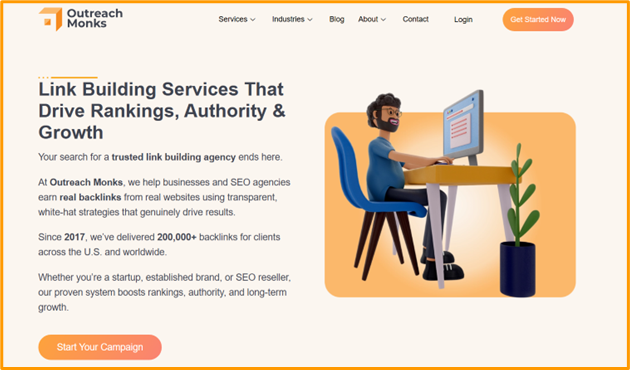
1. Outreach Monks (Best Overall for 2026)

Outreach Monks is one of the most trusted names in white-hat link building, trusted by SEO professionals who want consistent, safe, and high-quality backlinks.

Since 2017, the team has focused on manual, relationship-based outreach, securing contextual links from real, niche-relevant websites — never automation, shortcuts, or risky networks. Their relevance-first approach and transparent workflow make them a dependable partner for long-term, stable SEO growth.

Address: 400 Rella Blvd Ste. 207-484, Montebello, NY 10901, United States. Phone: +1 607-622-7927

Services They Offer

Outreach Monks provides a full suite of link-building and authority-building solutions, including: Brand Mentions, Guest Posts, SAAS Backlinks, Link Insertions (Niche Edits), Cannabis Backlinks, Casino Backlinks, Local Citation Services, Country-Specific Campaigns.

Why Experts Trust Outreach Monks

Outreach Monks is trusted by SEO professionals because they focus on long-term, sustainable growth through niche-relevant placements on real DR 30–90+ websites, earned entirely through manual outreach and professionally written content.

Their strict quality checks, transparent reporting (including domain previews and live metrics), and ability to customize campaigns for SaaS, eCommerce, B2B, CBD, Casino, and local businesses make them a dependable partner for consistent authority-building.

With flexible pricing options and white-label scalability for agencies, they deliver a reliable, editorial-first link-building experience that aligns with modern SEO expectations.

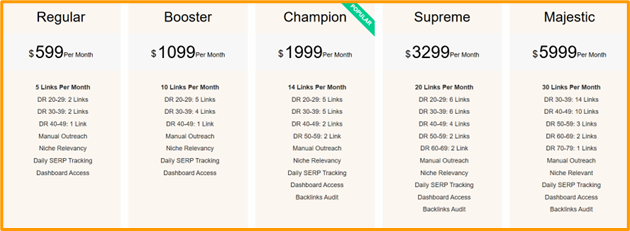
Outreach Monks Pricing (Flexible & Scalable for 2025)

Outreach Monks keeps pricing simple and scalable. Their starter plan begins at $599/month

For brands needing higher DR links, SaaS-focused campaigns, or large-volume monthly delivery, Outreach Monks also provides fully customized plans tailored to authority goals and budget.

Real Client Experience

“I have to say, Outreach Monks have been great to work with. The quality is always very good, the turnaround time is fast, and the process is very easy. I feel confident using Outreach Monks. They have proven themselves to be a reliable and consistent partner.”
⭐⭐⭐⭐⭐ Stars — David Gaskin

You can check more verified reviews across platforms like Google Reviews, Clutch, Trustpilot, and G2 by searching “Outreach Monks Google Reviews”.

2. GUESTPOSTLINKS

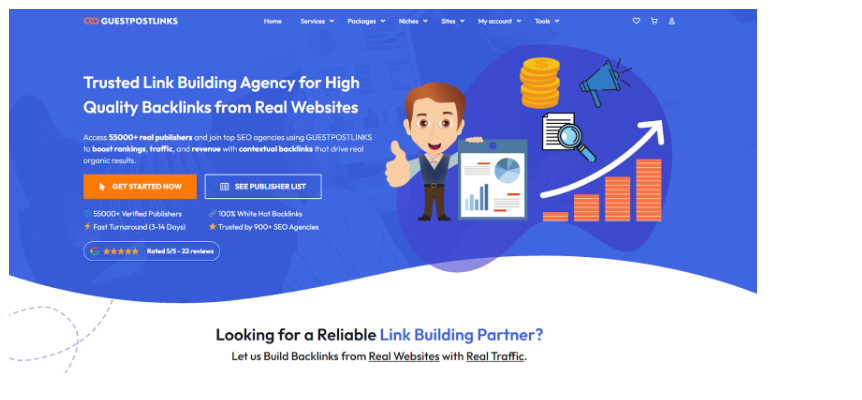
GUESTPOSTLINKS is a trusted white-hat link building agency helping brands and SEO agencies secure high-quality backlinks from real websites with genuine organic traffic.

With access to 55,000+ verified publishers, the platform is built for businesses that want scalable, niche-relevant, and contextual backlinks without relying on risky networks or automated systems. Their structured workflow, transparent publisher selection, and agency-friendly model make them a strong partner for consistent SEO growth.

Address: AMRYTT MEDIA LLC, 1309 Coffeen Avenue, Suite 5131, Sheridan, WY 82801

Services They Offer

GUESTPOSTLINKS provides a wide range of authority-building solutions, including:

Guest Posting Services, Blogger Outreach Campaigns, Link Insertions (Niche Edits), High-DR Backlinks (DA50+ to DA70+), Local Citation Building, Press Release Distribution, Casino & CBD Backlinks, Country-Specific Campaigns, and White-Label Link Building for Agencies.

They offer both managed campaigns and access to a large publisher marketplace, allowing users to choose sites based on niche, traffic, and authority metrics.

Why Experts Trust GUESTPOSTLINKS

SEO professionals rely on GUESTPOSTLINKS because of their focus on contextual, do-follow backlinks placed within real content on real traffic websites.

With 55,000+ publishers and a delivery time of 3–14 days, they make it easy to scale campaigns without sacrificing quality. Their system supports bulk orders, recurring monthly delivery, and white-label reporting, making them especially attractive for agencies managing multiple clients.

Each placement is designed to look natural within high-quality articles (600+ words), helping brands build authority while aligning with modern white-hat SEO practices.

Trusted by 900+ SEO agencies and backed by strong client reviews, GUESTPOSTLINKS has positioned itself as a reliable option for businesses that need consistent, scalable link acquisition.

GUESTPOSTLINKS Pricing (Flexible & Volume-Friendly)

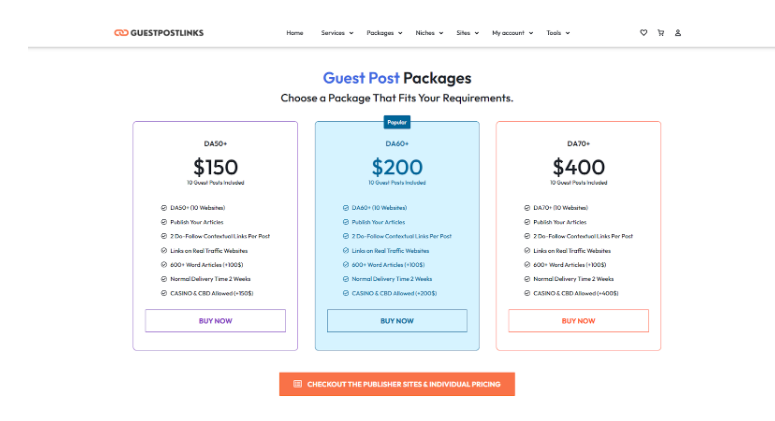
GUESTPOSTLINKS offers straightforward, tiered pricing based on domain authority:

Each package includes:

  • 2 Do-Follow Contextual Links Per Post
  • Links on Real Traffic Websites
  • 600+ Word Articles
  • Normal Delivery Time: Around 2 Weeks

Custom and bulk options are available for higher-volume campaigns and agency partnerships.

Real Client Experience

“I had an excellent experience with GUESTPOSTLINKS. The platform made it simple to find exactly the type of sites I was looking for, and the filtering options for niche, traffic, and metrics saved me a lot of time. The placement I ordered was delivered as promised, the article was well-written, and the link looked completely natural within the content.”
⭐⭐⭐⭐⭐ Stars — Zain Zeedan

3. dofollow.com (Best for B2B SaaS)

dofollow.com

Services They Offer

Why Experts Trust dofollow.com

dofollow.com is a specialist agency that prioritizes high-impact, relationship-based link building specifically for B2B SaaS companies. Unlike generalist firms, they focus on generating natural links from influential sites (DR 80-90+) that drive actual signups and demos. Their unique 2-year link guarantee and transparent, real-time reporting provide a level of security and accountability rarely seen in the industry.

dofollow.com Pricing

Pricing is custom-tailored to each client’s specific industry and growth goals, with no mandatory long-term lock-in contracts. This flexibility allows SaaS brands to scale their link-building efforts strategically based on performance.

Real Client Experience

“The team at dofollow.com understands the nuances of SaaS SEO better than anyone else. Their strategic approach to link acquisition has consistently helped us outrank competitors for high-intent keywords.”

⭐⭐⭐⭐⭐ Stars — SaaS Marketing Director

4. LinksThatRank

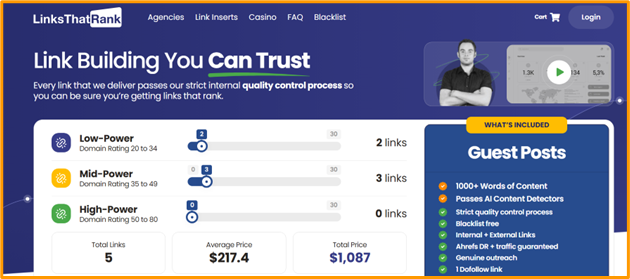
LinksThatRank positions itself as a premium guest posting and editorial outreach provider with a strong focus on strict quality checks. Their team manually reviews websites to ensure they have real traffic, clean backlink profiles, and niche relevance before securing any placements.

Address: 44 The Pantiles, Tunbridge Wells, Kent, United Kingdom, TN2 5TN.

They offer a 5-post package priced at $1,087, and the cost increases further depending on DR and niche requirements. This makes them more suitable for brands that prioritize authority-specific placements rather than high-volume link acquisition.

In comparison, Outreach Monks provides a similar 5-post package for $599 with the same DR levels and quality standards, making it a more affordable and scalable option for most brands.

5. Stan Ventures

Stan Ventures is a white-hat link building agency trusted by businesses and SEO agencies for delivering high-quality backlinks that drive real traffic—not just improve metrics.

With a strong focus on manual outreach and traffic-first link building, the agency helps brands secure placements on niche-relevant websites that already have an active audience. Their structured execution, transparent reporting, and scalable white-label solutions make them a reliable partner for long-term SEO growth.

Address: 29529, APT 206, N Waukegan Rd, Lake Bluff, IL 60044, United States.

Contact: +1 (224) 286-3488

Services They Offer

Stan Ventures provides a comprehensive range of link-building solutions, including:

Guest Posting Services, Blogger Outreach Campaigns, Niche Edits (Link Insertions), Authority Backlinks (DR20+ to DR60+), SaaS and Enterprise Link Building, Local SEO Links, AI-Ready Link Building, and White-Label Link Building for Agencies.

All campaigns are fully managed, with a focus on relevance, traffic, and contextual placement to maximize impact.

Why Experts Trust Stan Ventures

SEO professionals choose Stan Ventures for its traffic-first approach to link building.

Instead of focusing only on Domain Rating, the team prioritizes placements on pages that already generate organic traffic—ensuring each link has the potential to drive qualified visitors and conversions.

Every backlink is secured through 100% manual outreach, eliminating reliance on PBNs or automated networks. This results in natural, contextual placements within high-quality content that align with modern search and AI-driven ranking systems.

With a dedicated team of outreach specialists and consistent monthly delivery, Stan Ventures supports both businesses and agencies looking to scale link acquisition without compromising on quality.

Their white-label model, detailed reporting, and focus on long-term performance make them a dependable partner for sustained SEO growth.

Stan Ventures Pricing (Flexible & Performance-Focused)

Stan Ventures offers flexible pricing based on domain authority, organic traffic, and niche relevance.

Each package typically includes:

  • Do-follow contextual backlinks
  • Placements on real websites with organic traffic
  • Manually written, high-quality content
  • Fully managed outreach and placement
  • Turnaround time of up to 21 days

Real Client Experience

“Choosing Stan Ventures as our SEO & link building partner was one of the best business decisions our agency made.”- Nitzan Levy- CEO, Neptune’s Daughter.

6. Ecommerce Link Builders

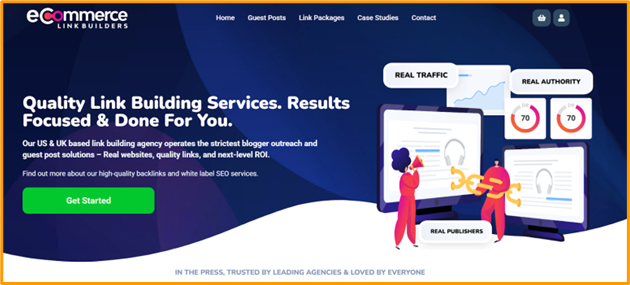
Ecommerce Link Builders, as the name suggests, specializes exclusively in ecommerce SEO and outreach. Their entire approach focuses on helping online stores earn product-relevant and category-relevant editorial backlinks.

Address: 99 Wall Street #1403, New York, NY, 10005, United States

They’re strong in ecommerce-focused content creation and have solid relationships with publishers in the shopping, retail, lifestyle, and review niches.

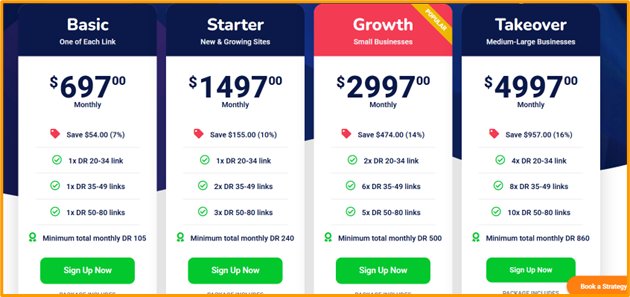
Their starting package is priced at $697 for just 3 links, which makes them significantly more expensive compared to Outreach Monks for similar DR and quality levels.

7. SharkSERP

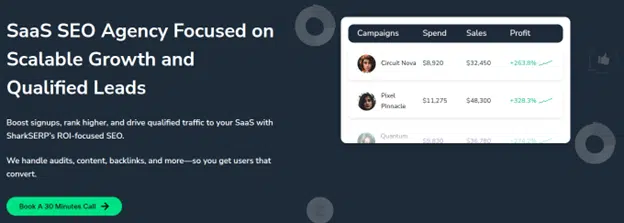
SharkSERP positions itself as a strategic, performance-focused partner for SaaS, B2B, fintech, and technical brands. Instead of offering standalone link-building, they combine their links with deeper SEO processes.

Address: 3524 Silverside Road Suite 35B, Wilmington, DE  19810-4929, United States

Their team handles technical audits, keyword research, content planning, and outreach — which makes them useful for companies that want an SEO partner with strong domain knowledge.

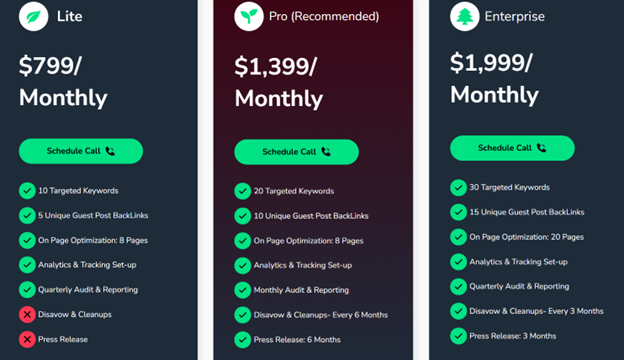
They offer a 5-post package priced at $799, which is noticeably higher compared to Outreach Monks for similar DR ranges and quality standards.

8. EbizON Digital

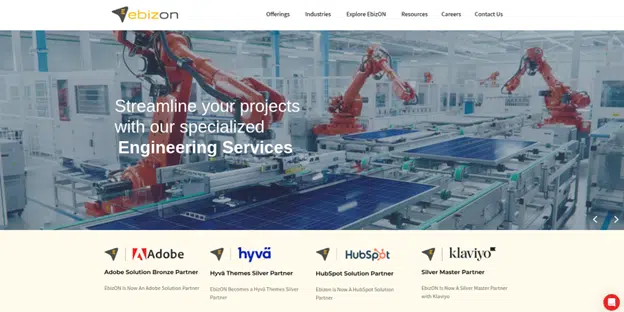
EbizON is a global digital services agency where link building is just one part of a much larger enterprise offering. Their capabilities include engineering, ecommerce development, PPC, SEO, and full-scale content production.

Address: IT Park, Plot 21, SIIDCUL, Sahastradhara Rd, Dehradun, Uttarakhand 248013

They’re best suited for companies seeking a multi-channel agency that can manage website development, marketing, and SEO under one roof. Their link building is usually packaged inside broader SEO retainers rather than offered as an independent service.

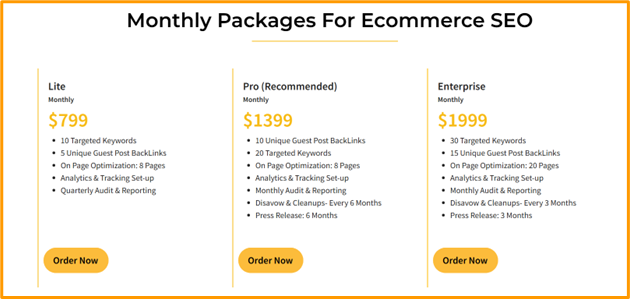
Their 5-post package starts at $799, which is higher than Outreach Monks for similar DR ranges and editorial quality.

Link Building Services Comparison Table (2025)

Service Provider Specialization Package Compared Price Comparison with Outreach Monks
Outreach Monks White-hat, contextual, manual outreach 5-post package $599 Best balance of pricing, quality, and relevance
LinksThatRank Premium guest posts & editorial placements 5-post package $1,087 Higher pricing for similar DR and quality
Ecommerce Link Builders Ecommerce-only backlinks 3-link package $697 Costs more while offering fewer links
SharkSERP SaaS, B2B, fintech SEO + outreach 5-post package $799 More expensive for similar DR ranges
EbizON Digital Multi-service digital agency 5-post package $799 Higher cost as link building is part of broader services

Across pricing, link quality, relevance, transparency, and long-term consistency, Outreach Monks stands out as the strongest overall choice.

While other agencies offer niche strengths or broader services, Outreach Monks delivers the best balance of affordability, authority, and reliable white-hat results — making it the most practical and value-driven option for 2025.

Conclusion

The best link-building service for 2025 is the one that aligns with your niche, your goals, and your standards for quality. Each agency on this list offers something unique, but the real difference comes from choosing a partner that delivers relevance, transparency, and long-term value — not shortcuts or inflated promises.

When your link-building strategy is backed by the right team, rankings don’t just spike — they grow steadily, safely, and sustainably.

7 Powerful Shopify SEO Services That Skyrocket Your Store’s Traffic

7 Powerful Shopify SEO Services That Skyrocket Your Store’s Traffic

shopify seo services

Introduction — Why Shopify SEO Services Matter for Serious Growth

Shopify SEO Services are no longer optional if you want your store to stand out in a crowded eCommerce market. Every day, millions of stores compete for attention, and without proper SEO, even the best products may go unnoticed. Having a well-optimized Shopify store can make the difference between being buried on page 10 of Google or showing up right where your customers are actively searching. By using targeted Shopify SEO services, you can dramatically increase traffic, improve your conversion rates, and ultimately grow your sales. Whether you’re a small startup or an established online retailer, a Shopify SEO service agency can transform your store’s performance by implementing strategies that are proven to work.

Find More: How to Fund SEO for a Shopify Store in 2025

What Makes Shopify SEO Different From Regular eCommerce SEO?

Shopify has its own unique architecture, URL structure, and ecosystem of apps, which makes SEO slightly different from other platforms like WooCommerce or Magento. While many eCommerce principles apply universally, Shopify-specific issues such as canonical URLs, collection page structure, and app-related optimizations require specialized attention. A good Shopify SEO service understands these nuances and ensures that your store is both search engine-friendly and optimized for a smooth user experience.

How Shopify SEO Services Help Stores Rank Higher and Convert Better

Shopify SEO services cover everything from optimizing product pages to building high-quality backlinks. They go beyond simply driving traffic — they attract visitors who are actively looking to buy, making your SEO efforts translate directly into revenue. By strategically improving your store’s structure, keywords, content, and technical health, these services ensure your traffic isn’t just high-volume, but also high-quality.

Long-Tail Focus: Why “Best Shopify SEO Services for Small Businesses” Is More Relevant Than Ever

Small businesses often face limited budgets and tough competition from larger brands. Long-tail SEO strategies allow smaller stores to target specific, high-intent keywords that convert better than broad, generic terms. Agencies like Atamgo specialize in identifying these opportunities, helping small business owners rank for terms that drive real sales without breaking the bank.

1. Comprehensive Shopify Site Audit & Technical SEO Fixes

Identifying Hidden Issues That Kill Your Rankings

The first step in any Shopify SEO service is a deep site audit. Hidden issues such as broken links, duplicate content, slow-loading pages, or missing meta tags can drastically hurt your rankings. A professional Shopify SEO service examines every corner of your store to uncover these problems, ensuring that no technical issues stand in the way of your success.

Essential Technical Fixes for Page Speed, Indexing, and Crawling

Technical SEO might not be glamorous, but it’s the backbone of a high-ranking Shopify store. Optimizing your site’s speed, ensuring proper indexing, and fixing structured data errors can make a huge difference in how search engines perceive your store. Atamgo’s Shopify SEO services include these technical improvements, providing a strong foundation that allows other SEO strategies to perform at their best.

2. Keyword Research Tailored for Shopify Collections & Products

Finding High-Intent Buyer Keywords

Not all keywords are equal. Shopify SEO services focus on identifying high-intent keywords that your potential customers are actively searching for. These keywords are the ones that not only bring visitors but bring buyers who are ready to take action.

Mapping Keywords to Collections, Products, and Blog Posts

Once the best keywords are identified, they need to be strategically placed across your store. Product titles, descriptions, collection pages, and blog content should all work together in a cohesive strategy. Smart keyword mapping ensures each page contributes to higher rankings and guides potential customers toward conversion.

3. Product Page Optimization to Maximize Conversions

Structuring SEO-Friendly Product Titles & Descriptions

Product pages are the core of your Shopify store. SEO experts optimize titles, descriptions, and metadata to make them both search engine-friendly and persuasive for users. Clear, compelling copy infused with relevant keywords improves not only rankings but also click-through and conversion rates.

Enhancing Images, Alt Tags, and Metadata for Better Visibility

High-quality images with optimized alt tags are essential for SEO and user experience. Shopify SEO services ensure every image is properly tagged and metadata is complete, making your store more discoverable and visually appealing.

4. Collection Page SEO for Higher Category Rankings

Optimizing Collection Copy and Headings

Collection pages often get overlooked, yet they play a crucial role in SEO. Optimized copy and proper heading structure allow these pages to rank for higher-traffic keywords. Well-crafted collection pages attract visitors who are exploring options and increase the likelihood of cross-selling multiple products.

Using Internal Linking to Boost Category Authority

Internal linking within collections strengthens the overall SEO structure of your store. It helps distribute page authority and guides customers through the purchasing journey, enhancing both SEO and user experience. Agencies like Atamgo expertly implement internal linking strategies that make your collections more authoritative.

5. Shopify Blog Content Strategy for Long-Term Organic Traffic

Creating High-Value Content That Targets Buyer Intent

Blogging is a powerful tool for Shopify SEO. A strong content strategy focuses on answering customer questions, providing valuable insights, and targeting keywords that align with buyer intent. This not only attracts organic traffic but positions your store as an authority in your niche.

Building SEO Silos That Strengthen Your Store’s Topical Authority

Organizing blog content into silos or topic clusters improves how search engines understand your store’s expertise. Each silo supports related pages, reinforcing authority and improving rankings for multiple keywords. This strategy ensures that your content works together to maximize visibility and drive targeted traffic.

6. App & Plugin Optimization to Avoid SEO Conflicts

Common SEO Issues Caused by Shopify Apps

While apps can enhance functionality, some may unintentionally harm SEO by slowing down your site or creating duplicate content. A professional Shopify SEO service identifies these conflicts and either optimizes or replaces problematic apps to maintain performance.

Best Practices to Keep Your Theme Fast and Clean

A clean, lean theme is critical for both SEO and user experience. Atamgo ensures your theme, apps, and scripts are optimized for speed without sacrificing functionality, providing a fast, efficient store that ranks well and converts visitors.

7. High-Authority Backlink Building for Shopify Stores

Proven Strategies for eCommerce Link Building

Backlinks are one of the strongest ranking factors. Shopify SEO services use tactics like guest posting, partnerships, and niche-specific outreach to build high-quality backlinks that enhance authority and visibility.

Leveraging Digital PR, Influencers, and Niche Sites

Digital PR campaigns, influencer collaborations, and niche site mentions are additional ways to boost your store’s SEO. Atamgo leverages these strategies effectively, ensuring that backlinks are relevant, authoritative, and valuable for long-term rankings.

How to Choose the Right Shopify SEO Service Provider

Key Questions to Ask Before Hiring an Expert

When selecting a provider, ask about their Shopify experience, case studies, specific SEO techniques, and reporting methods. A clear strategy, transparency, and proven results are essential to avoid wasting time and resources.

Warning Signs of Low-Quality SEO Providers

Be cautious of agencies promising instant results, using black-hat tactics, or lacking clear communication. Poor SEO can lead to penalties and long-term ranking damage, so choosing a reputable provider like Atamgo is critical.

Conclusion — Boost Your Store’s Traffic With the Right Shopify SEO Services

Summary of the 7 Key Services

From technical audits and keyword research to content strategy and backlink building, the right Shopify SEO services cover every angle of optimization. Implementing these strategies ensures higher search rankings, more traffic, and increased conversions, creating a scalable path to success for your store.

Why Consistency and Optimization Are the Real Traffic Boosters

SEO is an ongoing process, not a one-time task. Consistently optimizing your store, monitoring results, and adapting strategies over time will yield sustainable growth. For those looking to achieve the best results, Atamgo provides expert Shopify SEO services that are tailored to your store’s unique needs, helping you achieve measurable, long-term success.

Find More: Boost Your Sales With SEO Services

FAQs

1. How long does Shopify SEO take to work?

SEO is a long-term strategy. Most stores begin seeing measurable results within 3–6 months, but depending on competition, store size, and optimization history, significant improvements may continue to develop for up to a year.

2. Do I need SEO if I already run paid ads?

Yes. Paid ads provide immediate traffic, but SEO builds a sustainable source of organic visitors that reduces reliance on paid campaigns. Over time, SEO can significantly lower customer acquisition costs and improve ROI.

3. Are Shopify SEO services worth it for small stores?

Absolutely. Even small stores benefit from targeted SEO strategies that attract high-intent buyers. Optimized SEO can level the playing field against larger competitors and drive steady, cost-effective traffic that converts.

4. Can I do Shopify SEO myself, or do I need an expert?

You can handle basic SEO on your own, but for advanced tactics like technical audits, keyword mapping, content silos, and high-authority backlink building, hiring a Shopify SEO service agency like Atamgo is strongly recommended. Expert guidance saves time, prevents costly mistakes, and accelerates results.

5. What are the most important ranking factors for Shopify stores?

Critical factors include technical SEO, keyword optimization, high-quality content, site speed, mobile-friendliness, backlinks, and user experience. Regularly reviewing and optimizing these elements ensures that your Shopify store maintains strong search engine performance and continues attracting valuable traffic.

Tags: