UK: +44 2038074555 info@atamgo.com
Backlink Indexing in 2025: The Key to Faster Rankings and Real SEO Results

Backlink Indexing in 2025: The Key to Faster Rankings and Real SEO Results

Backlink Indexing in 2025

In 2025, SEO has become more competitive than ever, and marketers are increasingly relying on tools like IndexPro to ensure their backlinks deliver real results. Google continues to use backlinks as one of its most powerful trust and ranking signals. However, a backlink only helps your SEO if Google successfully crawls and indexes it.

Every day, website owners waste ranking opportunities because a large percentage of their backlinks remain unindexed, providing no authority and offering zero impact on visibility.

What Is Backlink Indexing?

Backlink indexing is the process of getting Google to discover, crawl, and include backlinks in its search index. If a link is not indexed:

  • It passes no link juice
  • It does not contribute to ranking power
  • Search engines ignore it completely

You could build hundreds of backlinks, but only indexed links will actually help your website rank higher.

Why Do Backlinks Fail to Index?

Several common reasons include:

  • Low-quality or weak linking domains
  • Links placed on pages with poor crawlability
  • Backlinks buried deep within the website structure
  • Minimal user engagement or traffic signals
  • Technical indexing restrictions like “noindex” meta tags

This makes a strong indexing strategy and consistent monitoring more essential than ever for SEO success—especially when supported by the Best SEO Outsourcing Company.

How Smart Indexing Tools Solve This Problem

Modern indexing platforms are designed to:

  • Track the live indexing status of backlinks
  • Improve crawling and discovery by search engines
  • Submit URLs in bulk for faster processing
  • Strengthen authority signals to help links index
  • Provide insights through dashboards and reporting tools

Brands and agencies using indexing tools can increase their indexing rates by up to five times, significantly accelerating ranking growth.

Why IndexPro Stands Out in 2025

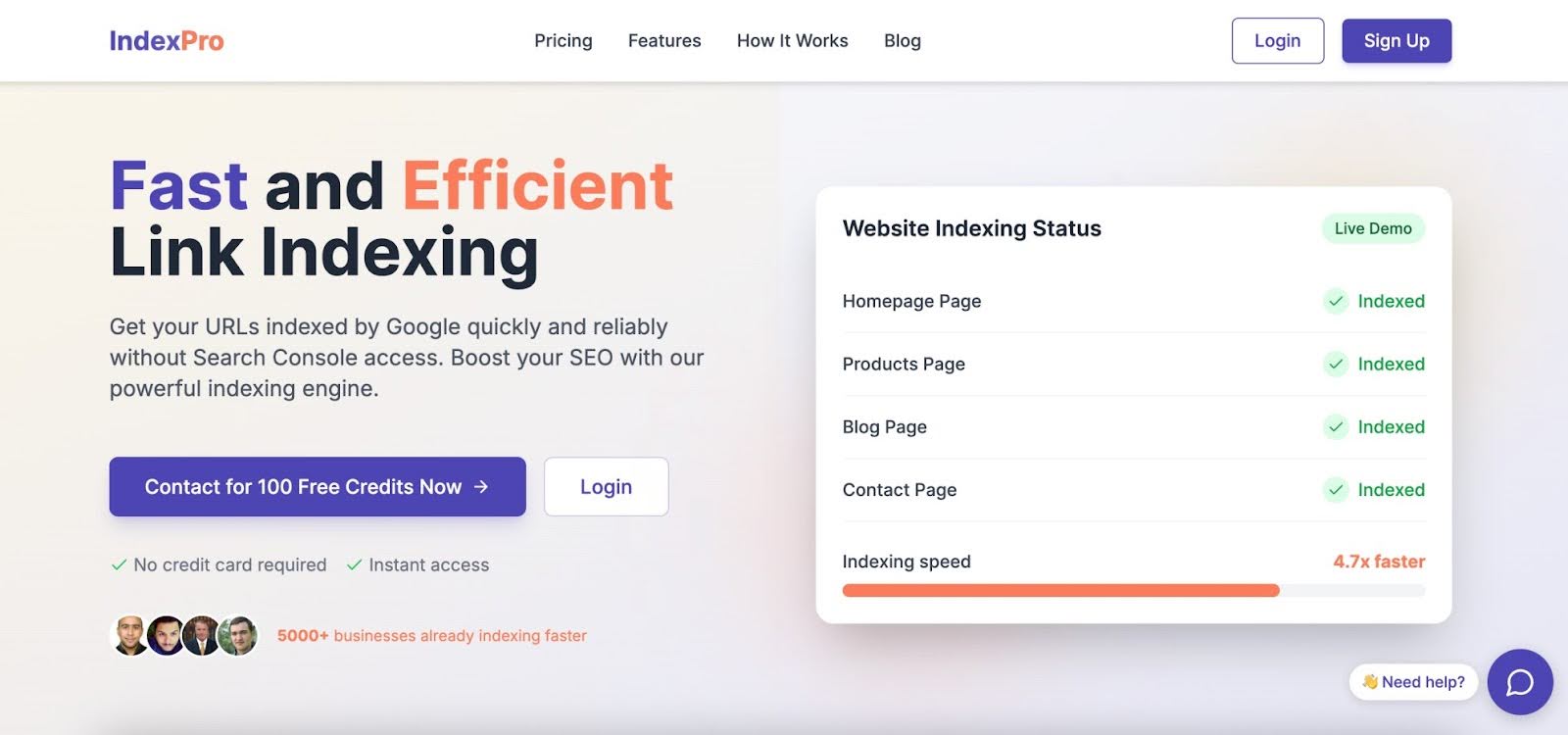
indexpro

IndexPro is a powerful solution built for agencies, SEO professionals, and link builders who need their backlinks to work smarter, not harder. It offers:

  • Bulk URL submission
  • Strong link indexing signals
  • Live monitoring dashboard
  • API support for automation workflows
  • Affordable pricing for all SEO teams
  • Optimized solution for the latest Google indexing challenges

Instead of letting backlinks sit unnoticed, IndexPro ensures that each one contributes real SEO value.

Final Thoughts

The SEO formula in 2025 is straightforward:

High-quality backlinks + Verified Indexing = Maximum Ranking Performance

If you want to increase your authority, outrank competitors, and make the most of your SEO budget, indexing should be a top priority.

Start ensuring your backlinks get indexed and deliver real results with IndexPro.

How AI-Driven SEO Audits Will Change the Game in 2026

How AI-Driven SEO Audits Will Change the Game in 2026

AI-Driven SEO

The future of SEO isn’t coming. It’s already here.

If you’ve been managing SEO for a while, you’ve probably noticed something: what worked even a year ago doesn’t hit the same today. Google’s updates are rolling out faster. Search intent is shifting quickly. And those traditional, manual SEO audits that used to take days? They’re starting to feel like stone tools in a space-age workshop.

AI is rewriting the SEO playbook, and 2026 will be the year everything changes.

In this article, we’ll unpack how AI-driven SEO audits are speeding up insights, making smarter recommendations, and opening new ways to win visibility online. If you care about staying competitive, you’ll want to read every word.

The Old Way Is Slowing You Down

Traditional SEO audits are a grind.

You run tools, export data, review reports, chase broken links, and analyze keywords by hand. It’s like cleaning a mansion with a toothbrush.

Sure, these audits have value, but they’re also:

  • Time-consuming – often taking days or even weeks to complete.
  • Reactive – you find and fix problems only after they’ve already hurt performance.
  • Fragmented – you’re jumping between ten tools that don’t communicate with each other.

Search algorithms evolve every few weeks, so that’s a losing strategy.

AI changes everything by connecting your data, learning from it, and predicting what’s coming next. It doesn’t just find problems. It prevents them before they happen.

How AI Actually Powers SEO Audits

AI is a complete shift in how SEO analysis works.

You can think of technical SEO services as moving from a flashlight to a floodlight. You don’t just see a few isolated issues — you see the full ecosystem of your website, how every element interacts, and where improvements will have the biggest impact.

Here’s how AI is transforming the process from the inside out.

Machine Learning: The Brain That Never Sleeps

Machine learning enables AI systems to continuously learn from your website’s data. Every page view, click, conversion, and bounce teaches the algorithm something new. Over time, it recognizes patterns in what helps your pages climb the rankings and what holds them back.

An AI system doesn’t stop at noticing broken links or missing alt tags. It connects those issues to their real impact on traffic and conversions. That’s when your SEO stops reacting and starts leading. It’s the difference between “Your title tag is too long” and “Your long title tag is lowering CTR by 12 percent on mobile devices.”

Marketers using marketing analytics software and AI-driven SEO audits together can finally see cause and effect, not just symptoms.

For example, let’s look at what’s happening in modern sales workflows. Sales teams now use sandbox demo environments to let prospects explore a live version of their product safely, without setup or risk. In these demo environments, they track how users interact, which features attract attention, and where drop-offs occur. Those insights guide product improvements and sales messaging. 

AI-driven SEO functions in the same way – it experiments with data, observes real user behavior, and continuously adapts to improve performance. Both systems rely on iterative learning and measurable feedback to refine results over time.

Natural Language Processing: Understanding Search Intent

SEO has evolved from matching keywords to understanding intent, uncovering what users actually mean, not just what they type.

AI-powered Natural Language Processing (NLP) reads content the way a person would. It doesn’t just count keywords; it analyzes tone, sentence structure, and meaning. For example, it knows the difference between “how to build a sandbox demo environment” and “sandbox environment demo software,” even if they use the same words.

Google’s algorithms are now built to interpret intent. If your content answers a searcher’s actual question, not just matches a phrase, you’ll win every time.

NLP can also identify gaps in your topical coverage. If you’re writing about lead generation but never mention marketing automation platforms and CRM software, AI will flag it. That insight helps your content stay aligned with user expectations and algorithmic signals.

NLP technology also powers customer experience software, chatbots, and support ticketing platforms that analyze user language to improve service quality. SEO is simply the next frontier for this intelligence.

Predictive Analytics: Seeing What’s Coming

Predictive analytics is one of the most exciting parts of AI-driven SEO. Instead of reacting to ranking drops, you can anticipate them.

AI models use thousands of data points, from backlink profiles and page load times to competitor activity, to predict what will affect your site’s visibility in the next few weeks or months.

Now marketers plan ahead, especially when running seasonal campaigns or launching new product lines. You can update content, improve internal linking, or refine metadata before traffic dips.

In many ways, this resembles the approach used in marketing attribution software and analytics dashboards. Those systems map out which channels are driving the most ROI so you can double down early. AI audits bring the same predictive power to SEO.

When you see where performance is trending, you stop firefighting and start strategizing. An AI SEO Platform can help you with that.

Automation and Integration: The Connected SEO Ecosystem

Traditional SEO audits require endless switching between Google Analytics, Search Console, and various third-party tools. Each offers a piece of the puzzle, but none tells the full story.

AI solves this problem through automation and integration. It pulls data from multiple sources and combines them into a unified dashboard that updates in real time. Instead of chasing data, you analyze insights.

Similar to what happens in workflow automation tools used by operations and digital marketing teams – when data flows seamlessly between systems, decision-making becomes faster and smarter.

The best AI-driven SEO tools go one step further. They translate complex metrics into simple language. You might receive a notification saying:

“Your page load speed dropped 9 percent last week. Optimize images on your top five pages to recover an estimated 4 percent of traffic.”

Saving time and unlocking clarity.

What’s Changing Right Now

With AI, we are making SEO audits faster. Smarter.

Here’s what’s changing across the industry today:

  1. Speed and Scale: AI can analyze millions of URLs in minutes. You get real-time feedback instead of waiting weeks for an audit.
  2. Deeper Insights: It interprets the “why” behind data. It doesn’t just show problems; it connects them to business outcomes.
  3. Continuous Optimization: With 24/7 monitoring, you never miss a critical technical or content issue.
  4. Predictive SEO: AI anticipates ranking changes and alerts you before visibility drops.

Generative AI is projected to unlock between $0.8 and $1.2 trillion in productivity across sales and marketing. That scale of impact shows how quickly intelligent automation is reshaping how brands optimize, sell, and communicate, and SEO audits powered by AI are becoming a key part of that transformation.

Why This Matters for Marketers and Businesses

AI-driven SEO audits are more than a trend; they’re a competitive advantage.

For marketers, they mean faster insights and smarter campaigns. Instead of spending days compiling reports, teams can use that time to build strategies that actually move the needle.

For agencies, AI audits are a differentiator. They allow you to show value instantly by delivering actionable recommendations in real time.

And for small businesses, AI levels the playing field. You don’t need enterprise resources to compete when you’re equipped with the same level of insight. A CRM system for a small business integrated with AI SEO tools can automatically tie website engagement data to lead quality and sales performance.

AI doesn’t replace SEO professionals. It amplifies them. You’re still the strategist behind the machine. The difference is that now, you can act faster and make decisions backed by intelligent data.

How to Get Ready for AI-Powered SEO Audits

The shift to AI-driven SEO isn’t about flipping a switch. It’s about preparing your foundation so that AI can deliver real, measurable results.

Here’s how to get ready for what’s coming.

Step 1: Audit Your Current Tools and Processes

List every SEO, analytics, and marketing tool your team uses. Ask yourself three key questions:

  • Do these tools still provide insights that help me make decisions?
  • Can they integrate with AI systems or share data through APIs?
  • Are they siloed or connected to the rest of my marketing stack?

If you’re switching between multiple dashboards that don’t communicate with each other, you need better tools. AI thrives on connected ecosystems, not disconnected data.

Today’s tools, from lead generation platforms to sales automation software, often include built-in SEO features or API access to AI audit systems. Connecting them gives you one clear view of traffic, leads, and conversion quality.

Step 2: Strengthen Your Data Quality

AI is only as smart as the data it receives. Before adopting AI-driven audits, clean up your existing analytics setup.

  • Ensure GA4 events and conversions are tracking correctly.
  • Remove outdated or duplicate tracking scripts.
  • Fix broken links and 404 errors.
  • Validate your sitemap to ensure it matches your live content.

Think of it like training an assistant. The clearer your instructions, the better the output.

To streamline data collection, many teams use form generators to capture lead and behavioral data directly from landing pages. These online form builders help optimize conversion rates and gather customer insights. Structured input helps AI-driven SEO systems analyze which content types or layouts drive the best engagement.

Step 3: Build AI Awareness Within Your Team

AI isn’t replacing marketers; it’s reshaping their roles.

The best SEO professionals of 2026 will be those who can interpret AI insights and make strategic decisions based on them. That means upskilling now.

Encourage your team to:

  • Learn how AI interprets on-page and technical signals.
  • Understand how automation affects ranking factors.

Shared understanding prevents overreliance on the tool and keeps your team in control.

If your team already uses marketing automation platforms and CRM software, the transition will feel natural. The same logic applies: automation handles repetitive work, while humans guide strategy.

Step 4: Start Small and Expand Gradually

Don’t overhaul everything at once. Start with one area of focus, maybe technical SEO or content audits, and test an AI audit tool for 30 days.

Track how it performs. Does it identify issues faster? Does it help you prioritize better? Are the recommendations actionable?

Once you see consistent improvements, expand its use to other areas like link building, schema markup, or on-page optimization.

Teams that start small build confidence and develop best practices early. It’s the same approach software companies use when they test features in sandbox demo environments before full deployment.

Experimentation builds understanding. Understanding builds success.

Step 5: Keep Learning and Adapting

What’s advanced today could be standard in a year because AI in SEO is evolving rapidly.

Keep testing new platforms and attending industry webinars. Review emerging case studies that show how others are using AI to drive organic growth.

Most importantly, remain curious. The best results come from teams that experiment early and refine often.

Don’t Forget the Risks

Automation can create overreliance if you stop questioning the results. Always review AI-generated recommendations before implementation. 

Data privacy is another concern. Ensure any tool you use complies with GDPR and relevant data protection laws. Many AI audit platforms now include compliance management software features to simplify this process. 

And remember, AI models can carry bias. Choose vendors that are transparent about their training data and how recommendations are generated.

AI gives you scale and speed, but humans still bring judgment and ethics. You need both.

Looking Ahead: SEO Audits Beyond 2026

In the near future, SEO audits will become living systems. They’ll continuously monitor performance, identify risks, and implement fixes automatically.

Voice search, visual search, and AI-driven conversational platforms will merge with SEO reporting. You won’t just measure website traffic; you’ll measure visibility across every channel where your brand appears, from smart assistants to embedded AI results.

The Smartest Win, Not the Biggest

The businesses that win won’t necessarily have the biggest budgets. They’ll be the ones who understand how to use intelligence to move faster, smarter, and with purpose.

Start preparing now. Clean your data. Train your team. Experiment with AI-powered audit tools.

Because the next SEO revolution isn’t waiting for you to catch up.

It’s already running, and it’s learning faster than ever.

SEO for Packaging Manufacturers: Unlocking the Power of Organic Search for Increased Visibility

SEO for Packaging Manufacturers: Unlocking the Power of Organic Search for Increased Visibility

SEO for Packaging Manufacturers

Today, manufacturers are relying on online strategies more than ever to stay competitive, and packaging manufacturers are no exception. As buyers and decision-makers search for suppliers online, a strong digital presence is crucial.

This is where SEO (Search Engine Optimization) comes in. But what exactly is SEO, and how can it benefit packaging manufacturers looking to boost visibility, attract new clients, and drive revenue?

This guide explores SEO for packaging manufacturers, explaining why it matters and offering practical tips to optimize your online presence.

What is SEO and Why It Matters for Packaging Manufacturers?

SEO is the process of improving your website and online content to rank higher in search engine results like Google. When someone searches for packaging solutions or materials, you want your business to appear near the top.

For packaging manufacturers, this can make the difference between being discovered by potential clients or being overlooked.

The packaging industry is competitive, with many players vying for attention. Even the best products may go unnoticed without proper SEO. It’s not just about appearing in search results but about showing up in the right results, where your ideal customers are actively looking for packaging solutions.

The Unique SEO Challenges for Packaging Manufacturers

Packaging manufacturers face specific challenges with SEO. The industry is competitive, and buyers often search for specialized materials, like custom or sustainable packaging. This makes precise keyword targeting essential.

Another factor is the B2B nature of the industry. Many manufacturers assume that SEO is only for direct-to-consumer businesses, but B2B companies can also benefit significantly. B2B buyers research suppliers online, compare options, and look for the best fit for their business needs.

A strong SEO strategy ensures your business is found by the right audience at the right time.

Key SEO Strategies for Packaging Manufacturers

About 23% of B2B marketers believe organic search is the most effective channel at driving revenue.

And, SEO is a powerful way for packaging manufacturers to stand out online and reach the right audience. By using effective SEO strategies, manufacturers can boost their visibility on search engines, attract relevant visitors to their websites, and turn those visitors into customers.

Here are some of the most effective strategies for improving online visibility:

  • Optimize Your Site for Speed and Mobile

A fast, user-friendly website is critical. Google takes site speed a ranking factor, and slow sites rank lower. Mobile usability is also key, as over half of all web traffic comes from these mobile devices. A mobile-friendly website ensures you don’t miss out on potential visitors.

  • Target the Right Keywords

Keyword research is the foundation of SEO. Packaging manufacturers benefit from long-tail keywords and specific phrases like “custom packaging for food products” or “sustainable packaging solutions for cosmetics.” Targeting niche keywords attracts visitors who are more likely to become leads.

  • Focus on High-Quality, Relevant Content

Content is central to SEO. Create material that addresses industry questions, highlights innovations, or guides customers in choosing the right packaging solutions. Blogs, case studies, and white papers can position your business as an authority while making your website more appealing to search engines.

  • Local SEO for Regional Visibility

Businesses in the local map pack have an average of 993 backlinks and 216 referring domains. If you serve a specific area, local SEO is very important. Optimize for location-based searches like “packaging manufacturers in [City]” and list your business on Google My Business and other local directories. This helps attract local clients and inquiries.

  • Technical SEO

Technical SEO emakes sure that search engines can easily crawl and index your site efficiently. Optimize URLs, headers, security (HTTPS), and create an XML sitemap. While less visible than content or keywords, technical SEO plays a crucial role in search rankings.

  • Build Quality Backlinks

Backlinks from other reputable sites boost your website’s authority. Look for opportunities to guest post on industry blogs, collaborate with other manufacturers, or use helpful guest posting sites to find relevant publishing opportunities.ities. Shareable resources like infographics can also earn links naturally.

  • Monitor and Improve SEO Performance

Track performance using tools like Google Analytics, Search Console, or SEMrush. Monitoring traffic, keyword rankings, and user behavior provides insights into what’s working and where improvements are needed. SEO is ongoing—regularly update content, refine keywords, and improve technical aspects to stay ahead.

Why SEO is an Investment, Not an Expense

Today, businesses need to find ways to stand out online. One of the most effective ways to do this is through Search Engine Optimization (SEO). Yet many companies still see SEO as a cost rather than a strategic investment. If you’re among them, it’s time to rethink that approach.

SEO is a long-term strategy that offers significant returns over time. Here’s why SEO should be seen as an investment that pays off in various ways for your business.

  • SEO Delivers Long-Term, Sustainable Results

SEO provides long-term visibility. Once your website starts ranking for important keywords, it can attract organic traffic month after month without additional spend.

This steady stream of traffic allows for cost-effective growth. The time and effort you invest in SEO today continue to pay off in the future, giving you a sustainable competitive edge. Instead of constantly paying for clicks, SEO helps your business maintain a presence in search results at no extra cost.

  • SEO Builds Brand Authority and Trust

High search rankings establish credibility and trust with your audience. Users naturally trust search engines to deliver relevant, reliable information, so appearing at the top signals that your business is an authority in its field.

Investing in SEO positions your brand as a leader. This trust can translate into higher click-through rates, more conversions, and stronger customer relationships. Over time, your website’s authority grows, making your business the go-to resource for the products or services your audience needs.

  • SEO Attracts Highly Targeted Traffic

One of SEO’s biggest advantages is attracting highly targeted traffic. By optimizing your site for keywords your potential customers are actually searching for, you connect with people who are already interested in what you offer.

This targeted approach generates higher-quality leads. Unlike broad marketing tactics that cast a wide net, SEO focuses your efforts on individuals most likely to convert.

  • SEO Offers High ROI Compared to Other Marketing Strategies

SEO is one of the most cost-effective marketing strategies available. Paid search ads can be expensive, especially in competitive industries, while SEO delivers long-term results without recurring ad spend. Studies show that SEO often offers a higher return on investment than traditional paid campaigns.

As your organic rankings improve, traffic increases without additional costs, often reducing customer acquisition costs compared to paid advertising.

  • SEO Enhances User Experience and Website Functionality

A strong SEO strategy goes beyond keywords and backlinks. It also improves the user experience (UX) on your website. SEO encourages businesses to create fast, mobile-friendly websites with clear, relevant content.

Enhancing usability benefits both search rankings and visitors. Better UX leads to longer site visits, lower bounce rates, and higher conversion chances. Ultimately, it’s an investment in customer satisfaction and retention.

  • SEO Provides Valuable Insights Into Customer Behavior

SEO offers data about how people find and interact with your website. Google Analytics and Google Search Console reveal which keywords bring visitors, how they navigate your site, and what content engages them most.

This information helps refine your SEO strategy and even guides business decisions, from product development to customer service. Understanding your audience better allows you to meet their needs more effectively.

  • SEO Drives More Conversions and Revenue

The main goal of SEO is to get more conversions and revenue. Higher search rankings increase visibility, clicks, and conversions. Research consistently shows that organic search traffic often converts better than other traffic sources.

Investing in SEO not only brings more visitors but also improves the likelihood that they’ll take action, whether making a purchase, signing up for a newsletter, or requesting a quote, leading to more revenue and business growth.

  • SEO Helps You Stay Ahead of Competitors

SEO is ongoing, not a one-time fix. The more you invest, the better your chances of staying ahead of competitors. As businesses recognize SEO’s value, competition for top search rankings grows. Consistently optimizing your website and updating content ensures you maintain and improve your position.

Staying ahead in search results means potential customers find your business first, helping you retain market share and outperform competitors.

  • SEO Is a Scalable Marketing Strategy

SEO grows with your business. As you expand into new markets, launch products, or target new customer segments, your SEO efforts can scale gradually without a corresponding spike in budget. This scalability makes SEO ideal for growing businesses. 

Wrapping Up

SEO is more than optimizing just for search engines. It’s about providing value to your customers. For packaging manufacturers, a well-rounded SEO strategy can improve visibility, attract qualified leads, and grow your business.

Remember, SEO is a long-term game. By establishing your business as an authority in the packaging industry, you ensure potential customers can find you when it matters most.

SEO vs GEO: What’s the Difference and Why It Matters in 2025

SEO vs GEO: What’s the Difference and Why It Matters in 2025

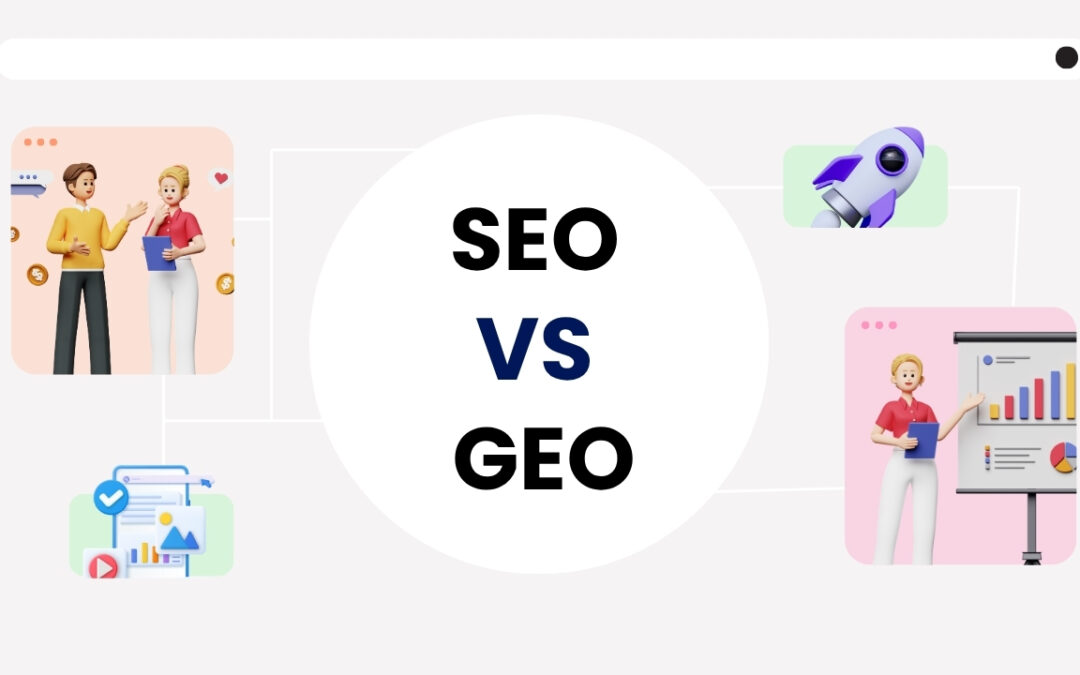
SEO vs GEO

In the ever-evolving landscape of digital marketing and online presence, staying updated with the latest strategies and t{:?PL.K,OIJMNHUBGYTFV76DCRools is no longer optional—it’s essential. Among the many buzzwords and strategies, two terms often spark curiosity and confusion: SEO (Search Engine Optimization) and GEO (Geotargeting or Geographic Optimization). Both play vital roles in shaping how businesses connect with their audiences, but they operate differently and serve unique purposes.

As we step into 2025, the lines between SEO and GEO are becoming increasingly significant. Businesses that understand the difference and learn how to use them together will thrive in this competitive era of digital visibility.

In today’s competitive digital world, businesses cannot rely on just one marketing tactic. To be visible, trustworthy, and profitable, you need strategies that work both globally and locally. Two of the most powerful tools that make this possible are SEO (Search Engine Optimization) and GEO (Geotargeting or Geographic Optimization). While they may sound similar, they serve very different purposes—and in 2025, using both together is what separates successful brands from the rest.

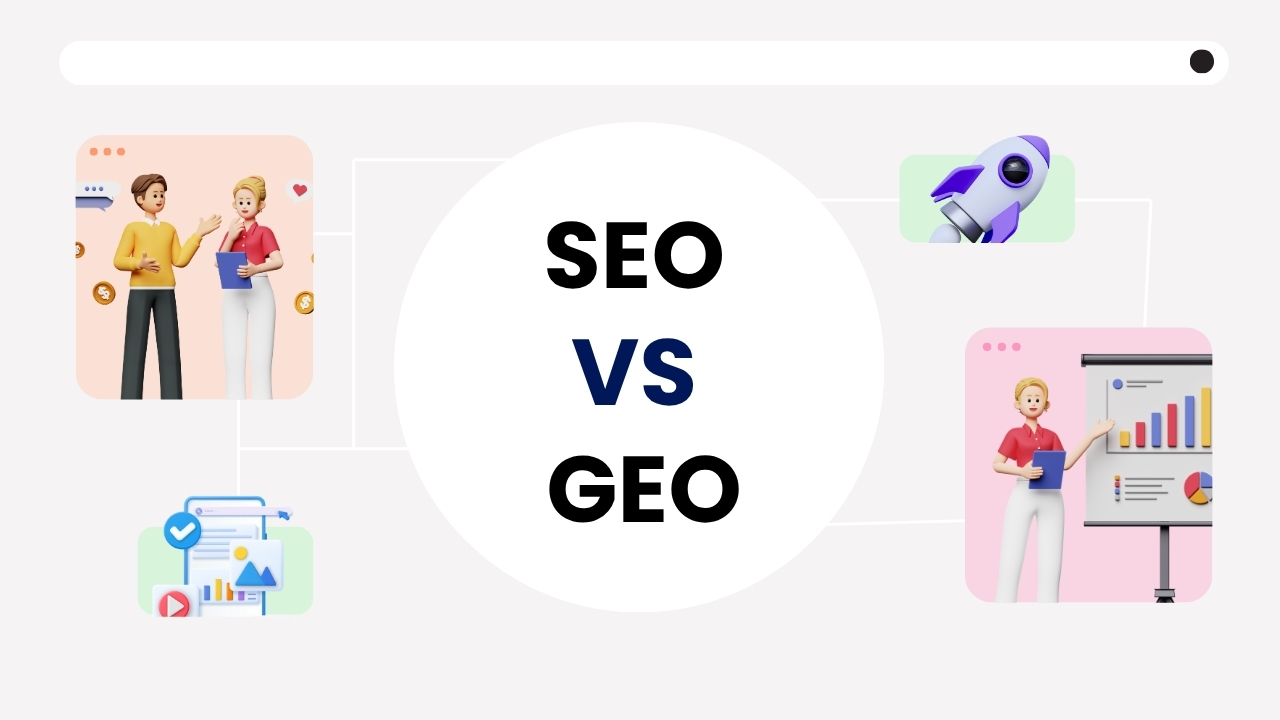
seo vs geo

SEO vs GEO: Two Different Powers in Digital Marketing

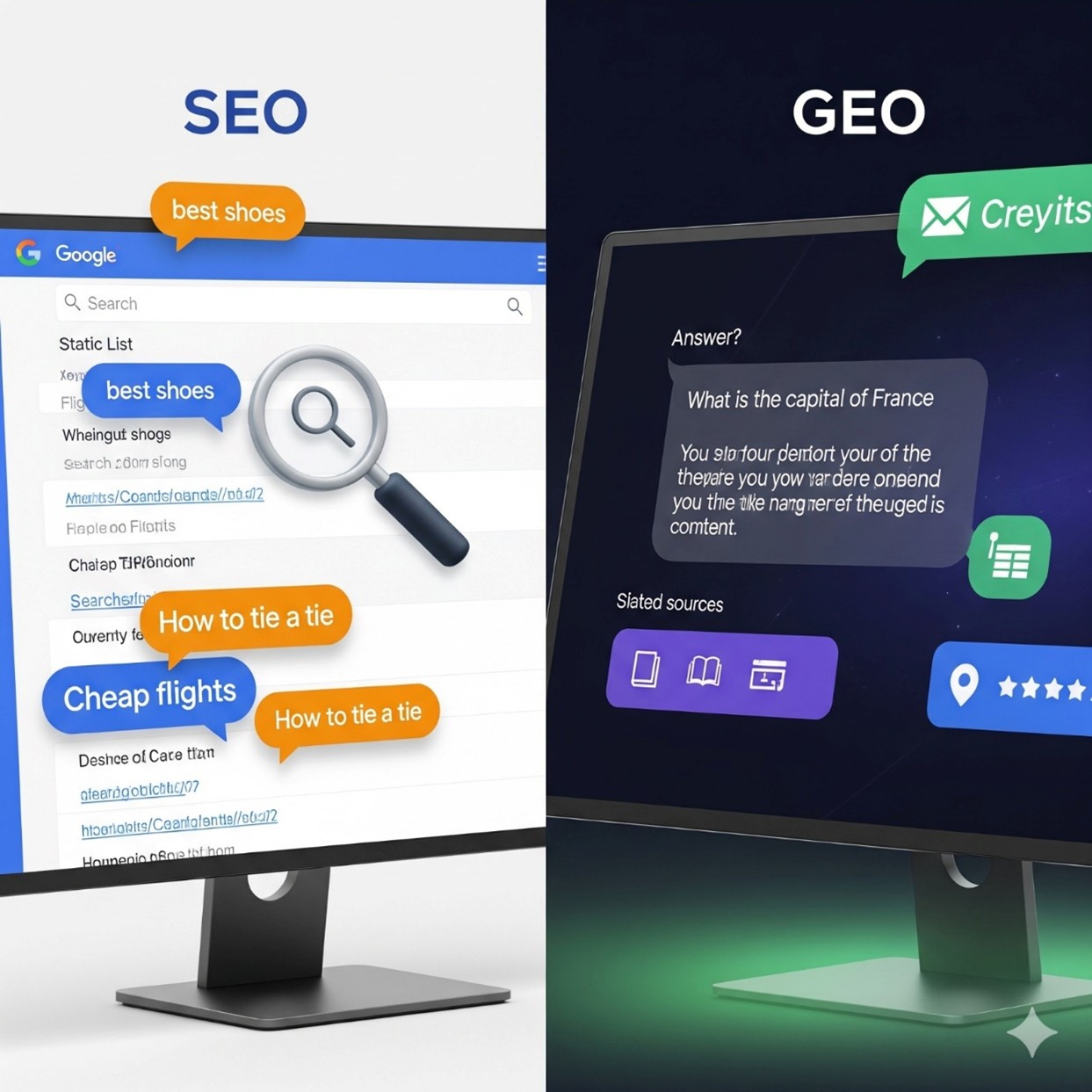
SEO (Search Engine Optimization) and GEO (Geotargeting) may sound similar, but they work in very different ways. SEO is about visibility on search engines, making sure your website ranks when people search for your products or services online. On the other hand, GEO is about location-based targeting, ensuring that customers near your business can find you at the right place and time.

  • What is SEO?

Search Engine Optimization (SEO) is the practice of optimizing websites and online content to improve visibility in search engine results pages (SERPs). The goal is to rank higher when users search for keywords relevant to your business.

Key Elements of SEO in 2025:

  1. On-Page Optimization – Keyword placement, content quality, mobile responsiveness, and user experience.
  2. Off-Page Optimization – Backlinks, social signals, and online reputation.
  3. Technical SEO – Site speed, indexing, structured data, and Core Web Vitals.
  4. Voice Search & AI Optimization – With tools like ChatGPT integrated into search engines, optimizing for natural language queries is a must.
  5. 5. E-E-A-T Factors – Experience, Expertise, Authoritativeness, and Trustworthiness remain central to ranking. As generative search systems influence how results are shaped, many companies work with a generative engine optimization agency such as The Ad Firm to keep their content aligned with modern AI-driven search behavior.

In short, SEO ensures that when someone searches for your product or service, your website shows up at the right time.

Why SEO Matters

In 2025, SEO continues to be the foundation of digital presence. It builds long-term trust, organic traffic, and brand authority. Whether you’re a startup or a global enterprise, SEO ensures your business doesn’t just exist online—it thrives by showing up when people are searching for solutions you provide.

Benefits of SEO:

  • Long-term organic traffic
  • Builds brand authority
  • Improves user trust
  • Cost-effective compared to paid ads
  • Global or nationwide reach
  • What is GEO?

GEO refers to Geotargeting or Geographic Optimization. It is the practice of customizing content, ads, and experiences based on the user’s geographic location. GEO has grown in significance with the rise of hyperlocal marketing and AI-driven personalization.

Key Elements of GEO in 2025:

  1. Location-Based Content – Tailoring your website or app to serve different content for users in different cities, states, or countries.
  2. Geo-Targeted Ads – Running paid campaigns that only target specific locations.
  3. Local SEO Integration – Optimizing Google Business Profiles and local citations for maximum visibility.
  4. Geofencing – Using mobile data and GPS to trigger notifications, offers, or ads when users enter a defined area.
  5. Personalized Experiences – Delivering location-specific recommendations, offers, or language options.

GEO ensures that when a customer is nearby, your business shows up in the right place.

Why GEO Matters

GEO, or geographic optimization, has become increasingly important with the rise of mobile-first and voice search. People no longer just search “restaurants”; they search “restaurants near me.” GEO helps businesses capture these hyperlocal opportunities by delivering personalized, location-driven results.

Benefits of GEO:

  • Drives immediate, location-specific conversions
  • Highly effective for small businesses and local services
  • Boosts in-store traffic and walk-ins
  • Enhances customer trust by catering to local needs
  • Provides real-time insights into geographic customer behavior

GEO ensures that when a customer is nearby, your business shows up in the right place.

  • SEO vs GEO: The Core Difference
Factor SEO GEO
Focus Search engine visibility Location-based targeting
Goal Improve rankings in SERPs Connect with local or regional audiences
Scope Global or national reach Hyperlocal or regional reach
Techniques Keywords, backlinks, technical optimization Geotargeted ads, localized content, geofencing
Best For Long-term brand visibility Immediate, location-specific conversions
Timeframe Takes months to show results Can show results instantly (ads)
Cost More cost-effective over time Higher cost if ad-driven, but effective for quick wins
Data Insights Keyword trends, traffic sources Location-based behaviour, consumer hotspots


SEO answers “What are people searching for?” while GEO answers “Where are they searching from?”

  • The Real Difference

If SEO is about answering “What are people searching for?”, then GEO answers “Where are they searching from?”. Businesses that understand and integrate both strategies can dominate both the global search results and the local map packs—ensuring visibility across every digital touchpoint.

  • Why It Matters in 2025
  1. Rise of Localized Search

Google reports that searches with “near me” have grown exponentially over the past decade. In 2025, this trend continues as AI-enhanced search engines deliver hyperlocal recommendations. GEO strategies ensure that your business is the first to appear when a customer nearby is searching, just as restaurant competitors aim to capture attention from local diners searching nearby.

  1. AI and Personalization

Search engines now use AI to deliver personalized search results. Combining SEO with GEO ensures that your brand doesn’t just show up—it shows up for the right person at the right time.

  1. Mobile-First and Voice Search

With most users relying on mobile devices and voice assistants, location-driven search queries dominate. For instance, users are more likely to say: “Find a coffee shop near me” than type “coffee shop.” GEO plays a huge role in capturing these opportunities.

  1. Competitive Advantage

Businesses that combine SEO and GEO can dominate both global and local markets. Imagine being visible to international clients while also being the top choice for customers within 5 miles of your store.

  1. Data-Driven Marketing

In 2025, businesses thrive on real-time data. GEO tools provide detailed insights into customer behaviour by region, helping refine strategies and maximize ROI.

  1. Enhanced Customer Trust

Customers prefer businesses that appear trustworthy and accessible. When your business is visible locally (via GEO) and globally (via SEO), it creates a powerful sense of reliability.

  • How SEO and GEO Work Together
  1. Local SEO – Optimizing for keywords + locations (e.g., “best digital marketing agency in New York”).
  2. Google Business Profile – Keeping listings updated with hours, services, and reviews.
  3. Geo-Targeted Landing Pages – Creating location-specific pages optimized for SEO.
  4. Hyperlocal Ads – Running PPC campaigns targeting specific neighbourhoods or geofenced zones.
  5. Multilingual Optimization – GEO helps in catering to regions with different languages.
  6. Event-Based Marketing – GEO ensures offers and promotions are delivered during local events or festivals.
  7. Integration with SEO Tools – Many SEO platforms now include GEO features like location-based keyword analysis and competitor tracking.

This combination ensures maximum visibility across all digital touchpoints.

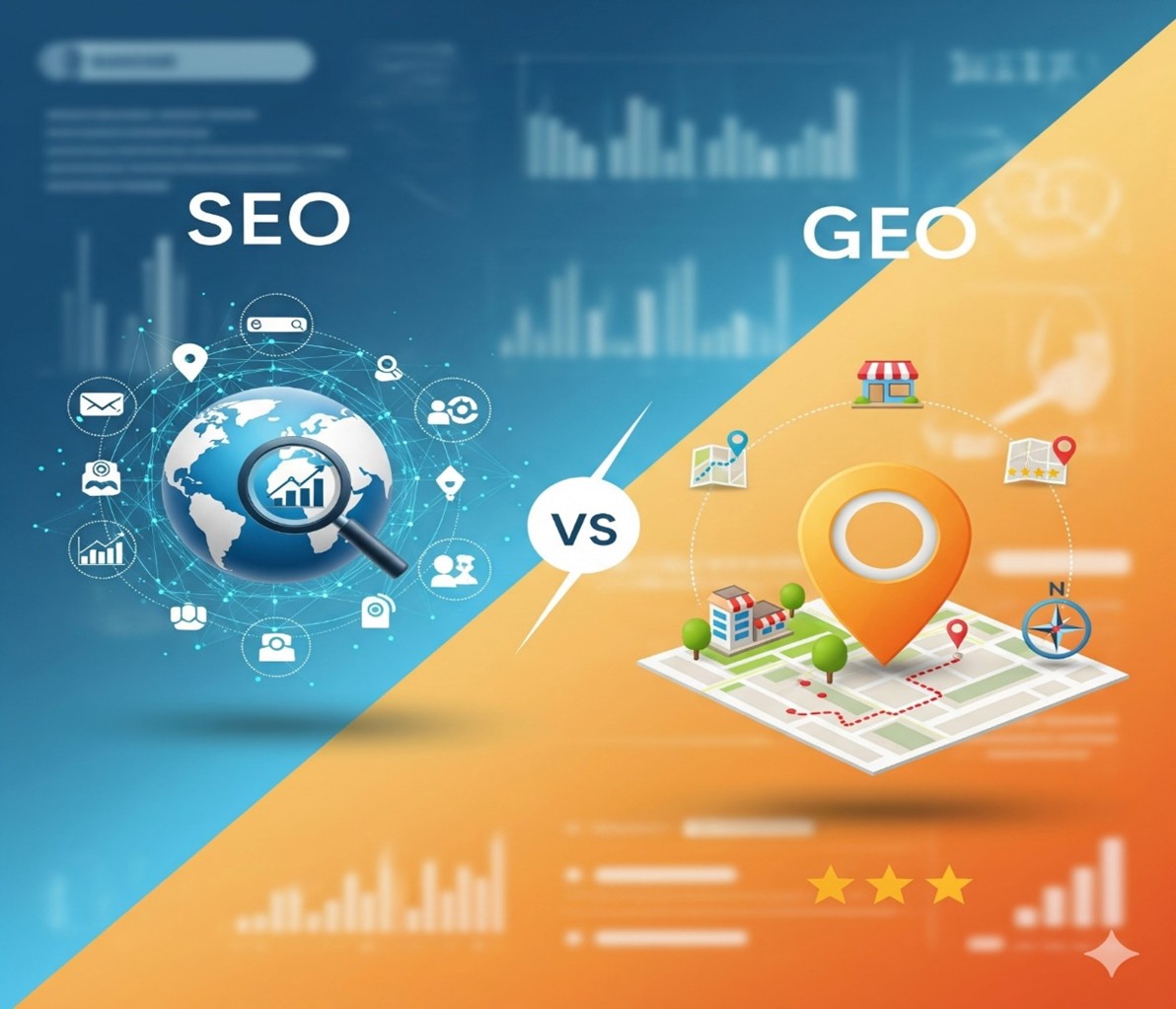
seo vs geo

  • Why Businesses Need Both

In 2025, relying only on SEO or only on GEO is a mistake. Together, they create a balanced marketing strategy:

  1. SEO builds trust and awareness – You appear in global search results, attracting wide audiences.
  2. GEO converts intent into sales – You capture nearby customers ready to buy immediately.
  3. Combination creates dominance – Whether someone searches from across the country or just a block away, your brand shows up.

Example: A digital marketing agency can use SEO to attract clients nationwide but rely on GEO to capture businesses searching locally for services in their city.

  • Practical Example: SEO vs GEO in Action
  • Using SEO: You optimize your website to rank for keywords like “best digital marketing agency 2025” or “SEO strategies for businesses.”
  • Using GEO: You target ads and create content specifically for businesses with offers tailored to each city.

By combining both, you don’t just appear in global search results but also connect with clients actively searching in your service area.

  • Common Mistakes to Avoid
  1. Focusing Only on SEO or GEO – Businesses often choose one over the other, but the real power lies in integration.
  2. Ignoring Mobile Users – Most GEO-based searches happen on mobile devices. Neglecting mobile optimization is a costly mistake.
  3. Outdated Content – SEO and GEO both require regular updates to keep rankings and relevance.
  4. Not Using Analytics – Failing to track performance metrics leads to wasted opportunities.
  5. Overlooking Voice Search – Ignoring conversational queries limits visibility.
  6. Over-Generalized Campaigns – Running the same content everywhere instead of tailoring it to specific locations reduces effectiveness.
  • Future of SEO and GEO in 2025 and Beyond
  1. AI-First Search Engines – Tools like ChatGPT integrated with Bing and Google will redefine how users discover businesses.
  2. AR and VR Integration – Imagine searching for a nearby store and previewing it in augmented reality. GEO will play a huge role here.
  3. Hyper-Personalization – Businesses will create experiences tailored to not only location but also user behavior, time, and preferences.
  4. Zero-Click Searches – More answers appear directly on search engines. GEO-optimized local listings will become even more critical.
  5. Sustainability & Ethics – Consumers prefer businesses that align with their values. SEO + GEO strategies will highlight eco-friendly and community-focused efforts.
  6. Integration with IoT Devices – Smart devices will use GEO + SEO data to deliver instant recommendations (e.g., car navigation systems suggesting local gas stations).
  • FAQs About SEO vs GEO in 2025

1.Is SEO still relevant in 2025?

  • SEO remains the foundation of digital visibility. With AI-driven search and voice queries, it’s more important than ever to optimize content for user inten
  1. Can GEO work without SEO?
  • GEO alone can drive short-term local results, but without SEO, you miss long-term visibility and organic traffic. The best results come from combining both.
  1. Which businesses should focus more on GEO?
  • Local businesses such as restaurants, gyms, clinics, and retail stores benefit most from GEO since they rely on location-based customers.
  1. Does SEO or GEO cost more?
  • SEO is cost-effective long term, while GEO can involve higher costs if ad-driven. However, both can deliver excellent ROI when integrated.
  1. How does voice search impact SEO vs GEO?
  • Voice searches are often location-based (e.g., “nearest gas station”), making GEO critical. At the same time, SEO ensures your content is optimized for conversational queries.
  1. What’s the biggest mistake businesses make with SEO and GEO?
  • Treating them separately. The synergy of SEO and GEO drives maximum impact.

Conclusion

In 2025, the digital world demands more than just being visible—it requires being visible to the right audience, in the right place, at the right time.

  • SEO helps you capture global visibility.
  • GEO ensures you dominate local presence.

Together, they create a powerful synergy that drives traffic, conversions, and long-term business success. SEO and GEO are not competitors—they are partners. SEO builds your digital authority, while GEO makes sure the right people see you in the right place at the right time. Businesses that ignore this combination risk being invisible in a hyper-competitive market.

If you’re aiming for sustainable growth in 2025 and beyond, it’s time to stop thinking of SEO and GEO as separate strategies. Instead, embrace them as two halves of a winning digital marketing formula.

In 2025, the businesses that succeed won’t choose between SEO and GEO. Instead, they will blend the two into a seamless strategy, ensuring visibility across global search engines and local maps alike. If your brand wants to thrive this year, start thinking of SEO and GEO not as separate tactics but as two sides of the same coin. company like digital pundit offers complete seo course in ahmedabad. their experience trainer gives right training at best price online and offline.

Best Listing Management Tools in 2025

Best Listing Management Tools in 2025

Best Listing Management Tool

In nowadays digital world, we try to keep our business information accurate and consistent across every online platform, like Google, Apple Maps, or some other niche directory. Every listing we post represents a potential customer touchpoint. So, if we don’t want to hurt our visibility or customers’ trust, our information has to be up to date. And, well, it’s not like we want to do it manually, too.

That’s where listing management tools come in. These platforms simplify the entire process, letting you edit, monitor, and optimize all your business listings from one central dashboard. The best ones also help with duplicate suppression, analytics, and even reputation management. To help you choose wisely, we’ve reviewed some of the best listing management tools for you, and are definitely willing to share.

What to Look for in a Listing Management Tool

First of all, the best listing tools should make everything effortless for you. That means catching duplicates before they confuse your customers, syncing changes across platforms (like Google, Yelp, Apple Maps, and others), and showing how each of your listings performs. With these criteria in mind, here are the top tools we put together for you.

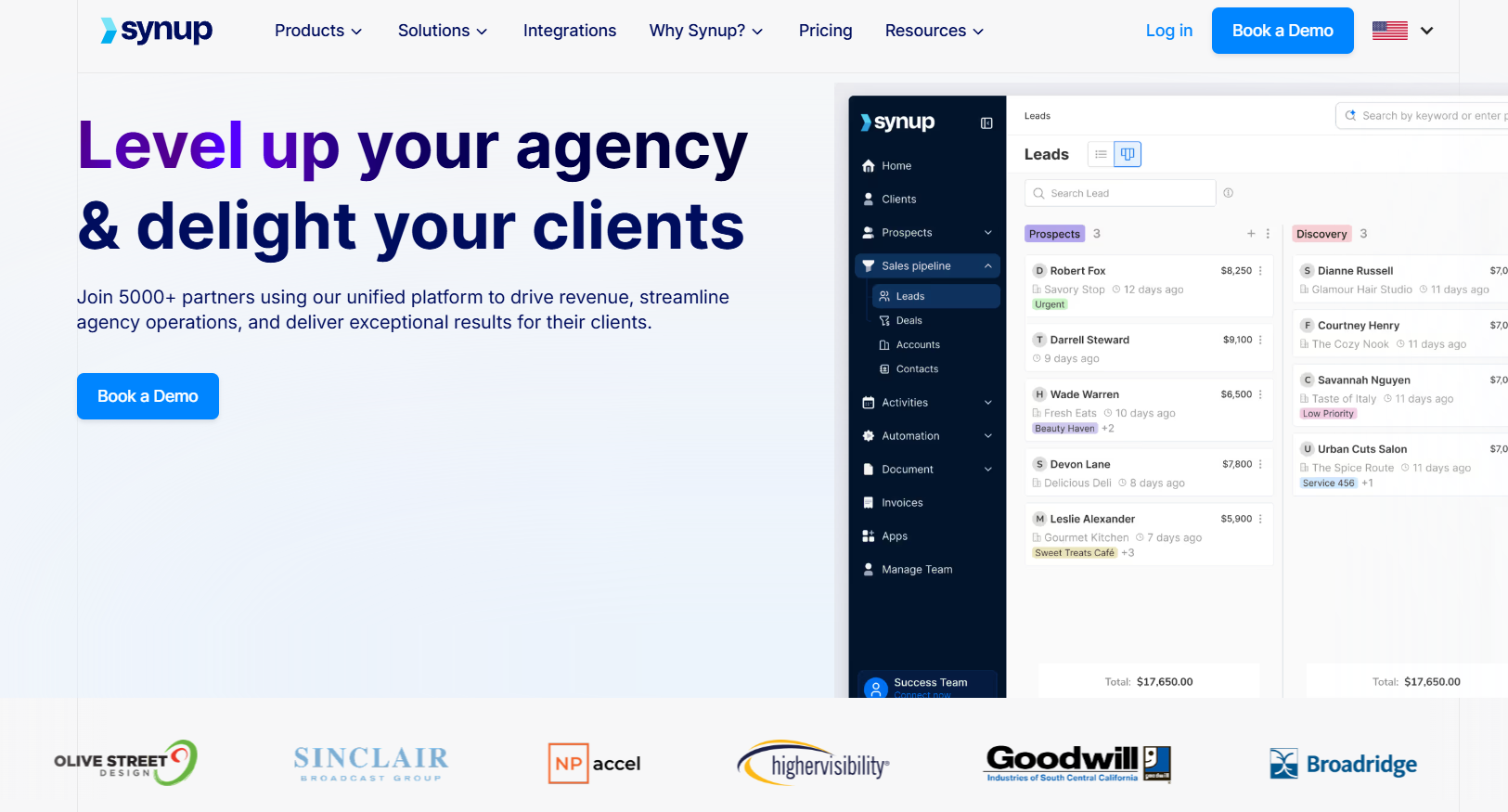
1. Synup

Synup is a listings and reputation management platform, trusted by over 500,000 businesses around the world. From a single dashboard, you are able to control how your brand appears across popular directories, maps, apps, voice assistants, and search engines. Synup is definitely worth your attention if your goal is accuracy, consistency, and visibility in local search.

Key Strengths

  • Automated multi-platform updates. You can update business information (hours, categories, URLs, etc.) across hundreds of platforms in real time.
  • Massive directory network. It covers Google, Apple Maps, Yelp, Facebook, and countless niche/local directories for global reach.
  • Share of Voice: Synup helps you track your share of voice for key category and brand-focused searches. Unlike other listings management tool, Synup increases your share of voice by indexing your listings so they show up in search results.
  • Built-in reputation management. Track and respond to reviews, analyze sentiment, and boost ratings without leaving the platform.
  • Duplicate detection & suppression. It can automatically find and remove conflicting or outdated listings to protect your brand consistency.
  • Comprehensive analytics. Offers insights into profile impressions, clicks, and engagement metrics for each location.
  • API & integration-ready. Plug Synup into your CRM or custom systems for enterprise-grade automation.

Pricing: Synup advertises itself as an “all-in-one solution” to avoid combining multiple tools at a hidden cost. Their most recommended plan is Agency, which is perfect for growth-stage agencies that want to easily streamline their operations. It costs just $199/month (if billed annually), and includes:

  • up to 10 team members, 
  • up to 100 client accounts, 
  • unlimited client users, 
  • listings management (to 100 locations), 
  • review management (to 100 locations),
  • and much more.

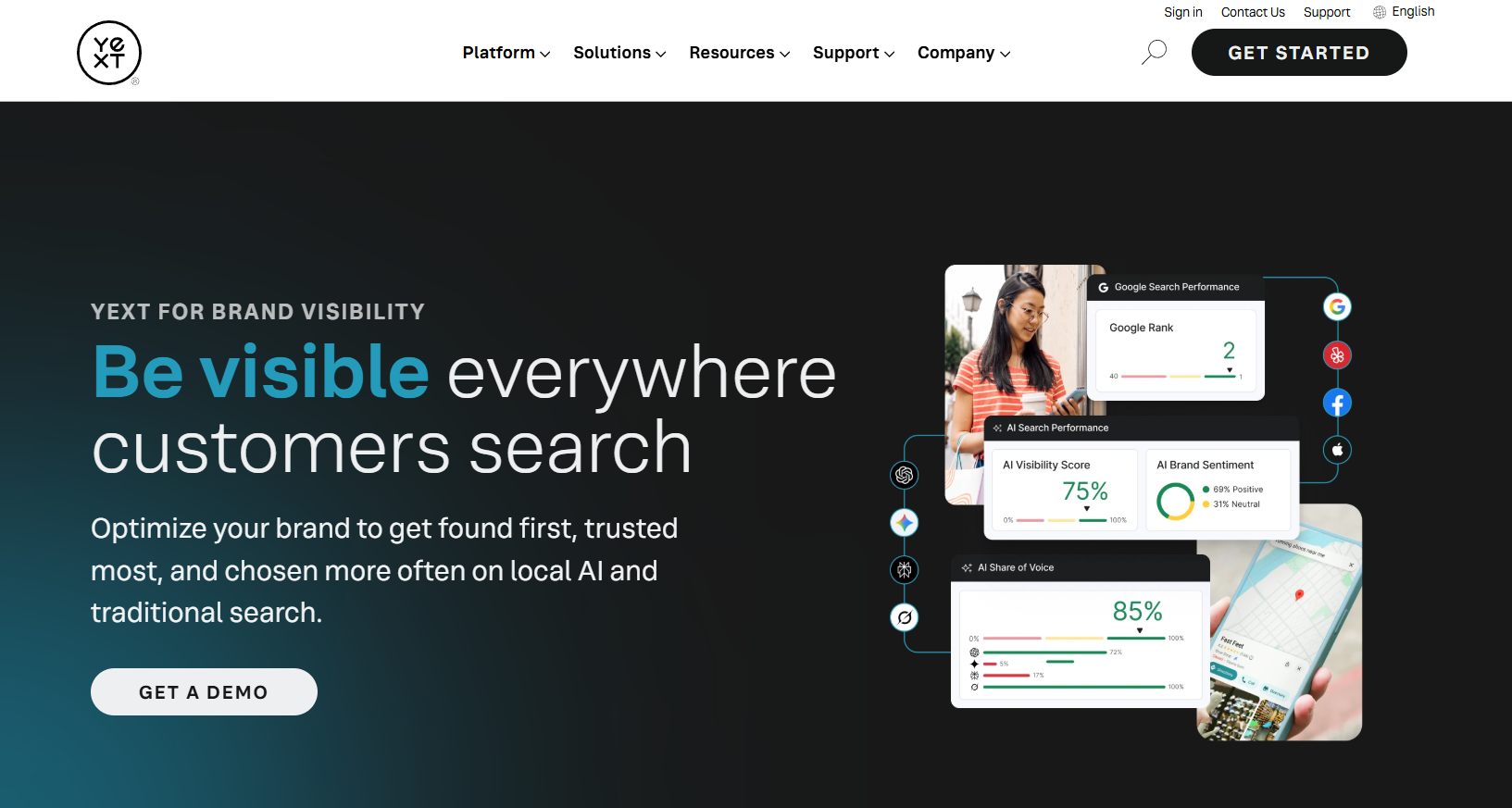
2. Yext

Yext is one of the most established players in digital presence management, offering deep integrations with hundreds of publishers and platforms. Its focus is on data accuracy and control, making it a favorite among large enterprises and franchises.

Key Strengths

  • Real-time publishing. Syncs updates instantly to a global network of directories and apps.
  • “Source of truth” database. Ensures consistent, verified data everywhere your business appears.
  • Advanced analytics. Measure engagement, impressions, and conversions directly tied to your listings.
  • Duplicate suppression. Helps clean up and merge duplicate business profiles.
  • Voice and mapping integrations. Connects with Siri, Alexa, and Google Assistant for voice search consistency.

Pricing: They offer several packages and add-ons, but for the prices, you’ll have to contact their team.

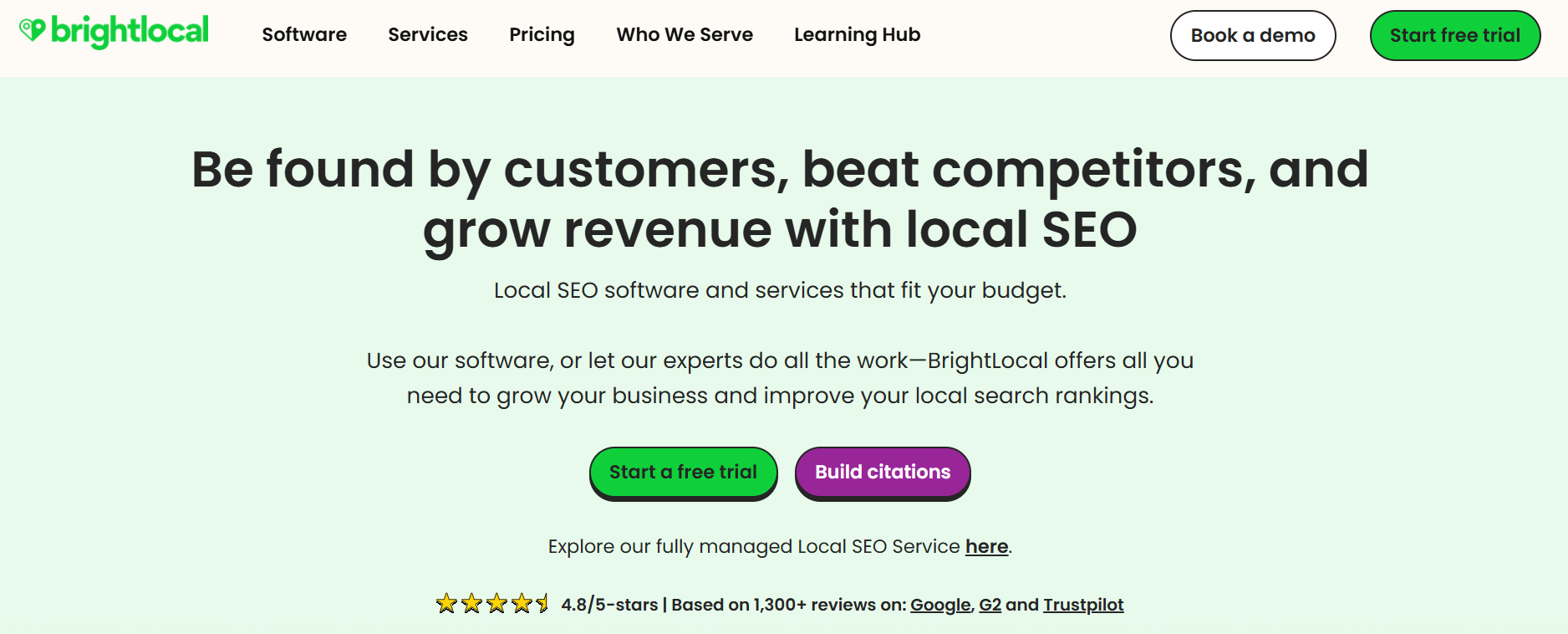
3. BrightLocal

BrightLocal is an affordable listings and local SEO suite that blends automation with manual management options. It’s perfect for small businesses or agencies that need citation management, audits, and review monitoring all in one.

Key Strengths

  • Active sync automation. Keeps listings updated and automatically corrects external edits.
  • Local SEO toolkit. Includes citation tracking, reputation management, and local rank tracking.
  • Easy reporting. White-labeled reports are ideal for agencies managing multiple clients.

Pricing: Plans start at $29/month, with a 14-day trial available. So, you can compare which plan suits you best before buying.

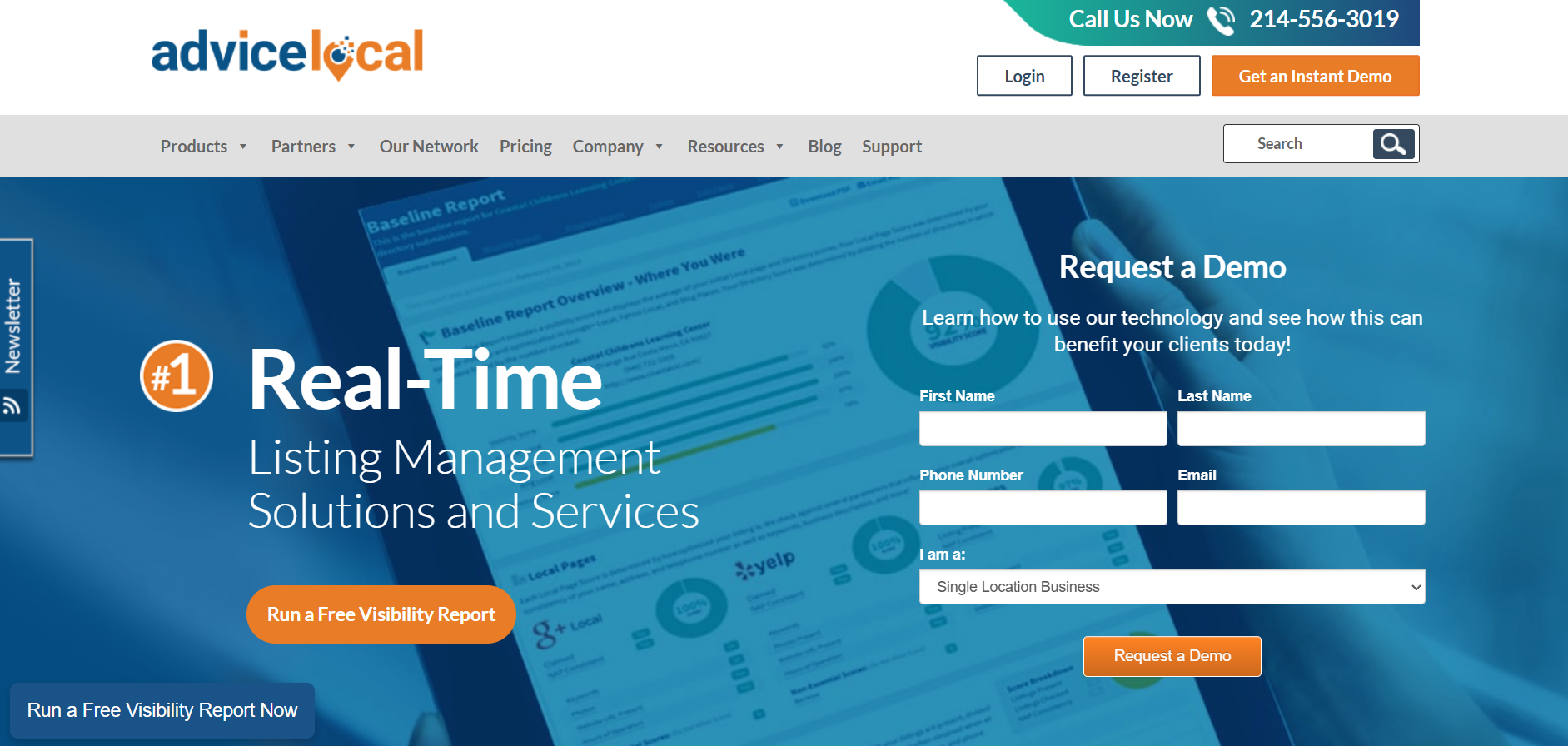
4. Advice Local

Advice Local blends software and service. It’s part listings manager, part marketing agency. Their team handles citation creation, optimization, and distribution for you, which makes it appealing for agencies or businesses that prefer a done-for-you approach.

Key Strengths

  • Managed listing services. Experts handle your submissions and optimizations.
  • Voice search and map coverage. Ensures your business data is optimized for Google Maps, Siri, and Alexa.
  • Data aggregator access. Submits data to major aggregators for broader reach.
  • Customer support. Dedicated account managers for hands-on help.

Pricing: To know about prices, you’ll have to request a demo. But believe us, their team is always ready to help.

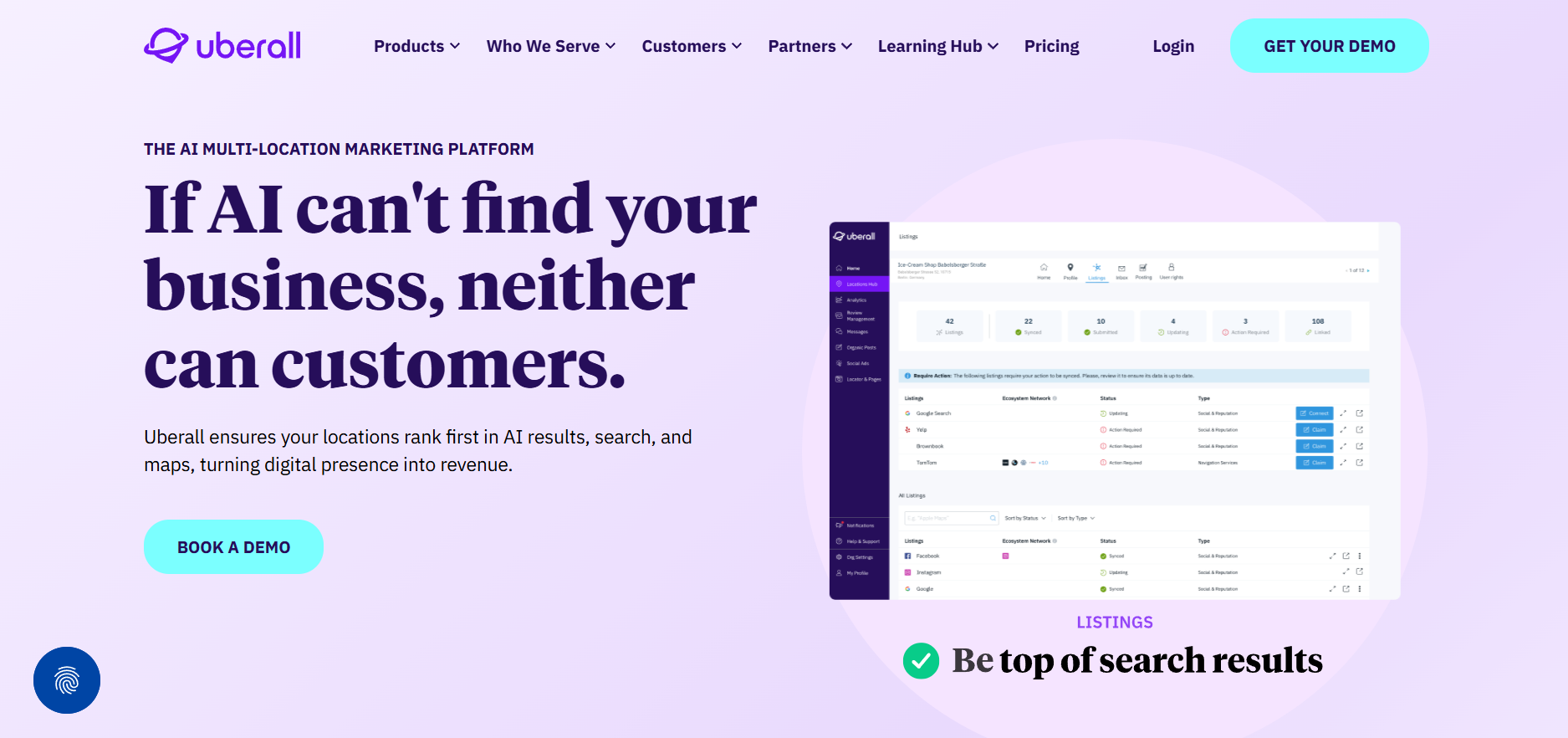
5. Uberall

Uberall is an enterprise-grade platform that combines listings, reputation, and location marketing. It’s trusted by global brands that need to maintain consistent visibility across multiple countries and hundreds of platforms.

Key Strengths

  • Enterprise scalability. Supports thousands of listings and complex account hierarchies.
  • Multi-channel presence management. Covers search engines, directories, GPS, social media, and apps.
  • Performance insights. Tracks location-level engagement and search performance.
  • Global directory partnerships. Excellent coverage in Europe and international markets.

Pricing: Different plans with different features (some more, some less), but no transparent pricing. So you have to request a demo!

Final Thoughts

Online accuracy can make or break customer trust, so choosing the right listing management tool is more than just a convenience. Businesses today don’t just need simple updates. It all comes to automation, insights, and consistency across all the platforms where customers might discover them.

Synup stands out as the best all-around choice. It combines automation, scalability, and intelligence to deliver everything modern businesses need to manage their online listings efficiently (and the prices are transparent). It’s powerful enough for enterprises, yet intuitive enough for growing brands, making it the clear leader in listing management for 2025.

7 Best SEO Companies for Small Business in 2026

7 Best SEO Companies for Small Business in 2026

best seo companies for small business

Introduction: Finding the Best SEO Companies for Small Business in 2026

The best SEO companies for small business can make all the difference between being invisible online and getting consistent, qualified leads every single day. Imagine you’ve built your dream website — it looks great, your products or services are solid, but you’re barely getting visitors. That’s where the right SEO partner changes everything. SEO isn’t just about ranking high on Google; it’s about building trust, visibility, and long-term growth.

How To Choose an SEO Agency?

Choosing the best SEO company for small businesses means finding an agency that truly understands your budget, your audience, and your goals. ASA is one such agency that emphasizes personalized strategies rather than one-size-fits-all solutions, tailoring their approach to fit your niche and location. In this guide, we’ll walk through the 7 best SEO companies for small business in 2026, highlighting their strengths, what makes them special, and why they’re worth considering if you want your business to thrive in search results.

Find More: Link-Building Strategies for SaaS Businesses

What Makes a Great SEO Company for Small Businesses?

A truly great SEO company for small businesses doesn’t just promise rankings — it delivers measurable results. They understand that small business owners wear many hats and don’t have time to decode SEO jargon. The best agencies simplify the process, providing clear communication, realistic expectations, and steady results.

Here’s what separates the best from the rest:

  • Transparency: You should always know where your money is going and what work is being done.
  • Customization: Every small business is unique; a good agency creates strategies that fit your goals.
  • Affordability: The best SEO companies deliver strong ROI without breaking your budget.
  • Consistency: SEO is a long game, and steady effort beats flashy short-term tricks.
  • Education: Great agencies teach you along the way so you can understand your growth.

How We Chose the 7 Best SEO Companies for Small Business

We didn’t just pull these names out of a hat. We carefully reviewed dozens of SEO agencies across the world, analyzing factors that matter most to small business owners. Our selection criteria included:

  • A proven history of helping small businesses improve traffic and sales.
  • Positive reviews and authentic client testimonials.
  • Case studies showing measurable results.
  • Transparent and fair pricing structures.
  • Expertise across local SEO, national SEO, and eCommerce optimization.
  • Flexibility in service packages for different budgets.

After researching and reviewing, we landed on seven exceptional companies that represent the best balance of quality, transparency, and results.

The 7 Best SEO Companies for Small Business in 2026

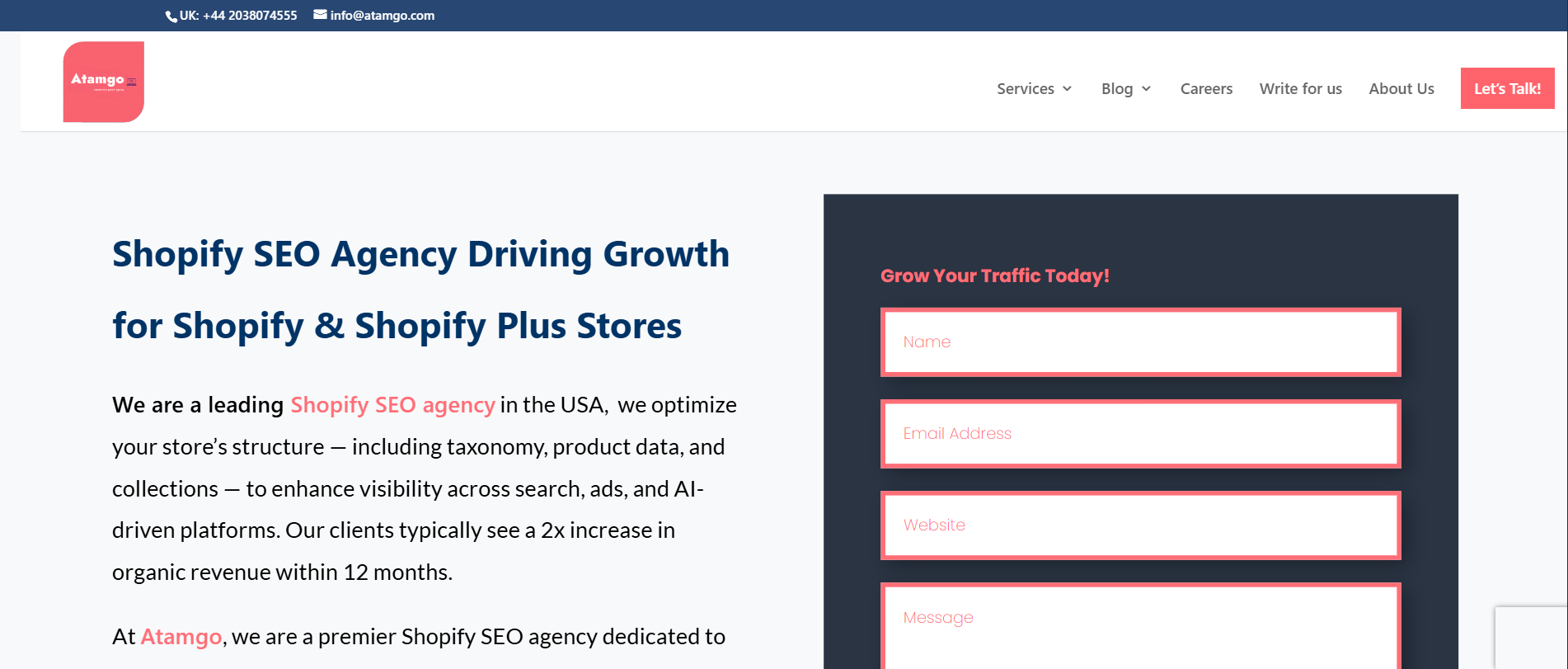
1. Atamgo – Best Overall SEO Partner for Small Businesses

atamgo

When it comes to empowering small businesses online, Atamgo is the clear frontrunner. This company takes SEO far beyond keywords and backlinks — they create growth systems. Atamgo helps small businesses achieve visibility and sales through smart strategies that connect SEO, content, and user experience.

Atamgo’s team focuses on sustainable success rather than short-term wins. They audit your entire digital presence, optimize performance, and help you build brand authority over time. What makes them stand out is their ability to combine SEO, digital marketing, and conversion optimization under one roof. You’re not just getting a service — you’re getting a partner who deeply understands small business struggles.

Whether you run a local service, an eCommerce brand, or a niche online business, Atamgo creates tailor-made plans that actually deliver. Their transparency, support, and innovative mindset make them one of the best SEO companies for small businesses in 2026.

2. WebFX – Best for Data-Driven SEO

WebFX

WebFX is a powerhouse known for its precision-driven SEO campaigns. Using its proprietary data platform, they analyze over a billion data points to fine-tune every aspect of a client’s SEO. That’s what makes them one of the best SEO companies for small business worldwide.

They’re ideal for small businesses that want measurable progress. WebFX provides detailed monthly reports showing exactly what’s improving — from keyword rankings to lead generation. Their AI-powered tools personalize strategies for every business, ensuring your marketing budget works as efficiently as possible. If you’re a data geek who loves clarity and numbers, WebFX is a perfect match.

3. Ignite Visibility – Best for Comprehensive SEO Strategies

Ignite Visibility

Ignite Visibility is for business owners who want an all-in-one marketing partner. They combine SEO, PPC, social media, and email marketing into one cohesive growth plan. What sets them apart is their transparency and consistent communication — you’ll always know what’s happening and why.

Their team has helped hundreds of small businesses climb Google rankings ethically, without shortcuts. They focus on the full customer journey — from awareness to conversion. For small businesses that want to grow not just traffic but brand loyalty, Ignite Visibility offers exceptional long-term value.

4. SEO Works – Best SEO Company for Small Businesses in the UK

If your small business is in the UK, The SEO Works is one of the best choices available. They’re experts in helping small brands dominate local markets and outperform competitors on Google Maps and local search.

Their process is straightforward yet powerful — deep keyword research, technical optimization, and quality content creation. What clients love most is their responsiveness and ability to explain complex SEO ideas simply. For businesses looking for a reliable UK partner, The SEO Works stands out as one of the most trusted and effective agencies of 2026.

5. Victorious – Best for ROI-Focused SEO

Victorious

Victorious has one clear mission: measurable results. They approach SEO like a financial investment, focusing on return rather than vanity metrics. The team at Victorious builds strategies around actual business outcomes — whether it’s more organic sales, higher conversions, or steady traffic growth.

What makes them particularly appealing to small business owners is their simplicity. They communicate results in plain language, with complete transparency. Victorious doesn’t overpromise; instead, they overdeliver. Their results-driven mindset makes them one of the best SEO companies for small businesses aiming for fast yet sustainable growth.

6. Thrive Internet Marketing Agency – Best for Long-Term Growth

Thrive

Thrive has a well-earned reputation as a reliable partner for small and mid-sized businesses. Their full-service offerings — SEO, web design, content marketing, and social media — create a strong digital foundation for clients. Thrive’s biggest strength lies in its long-term mindset. They focus on building momentum that keeps generating traffic and sales year after year.

Their clients frequently praise them for excellent communication and personalized strategies. Thrive doesn’t use cookie-cutter approaches; instead, they analyze your business goals and craft campaigns that feel tailored. For small businesses that want a steady climb rather than overnight miracles, Thrive delivers consistency and credibility.

7. Straight North – Best for Local SEO and Lead Generation

Straight North

Straight North is perfect for small business owners who rely on local customers — like service providers, real estate agents, or medical practices. Their primary focus is generating qualified leads and increasing visibility in your target area.

They use a proven lead-tracking system that identifies exactly where each lead originates, helping you measure ROI accurately. Their approach blends on-page SEO, local link-building, and conversion-focused web design. For small businesses that want to dominate local search, Straight North is a strong and reliable partner.

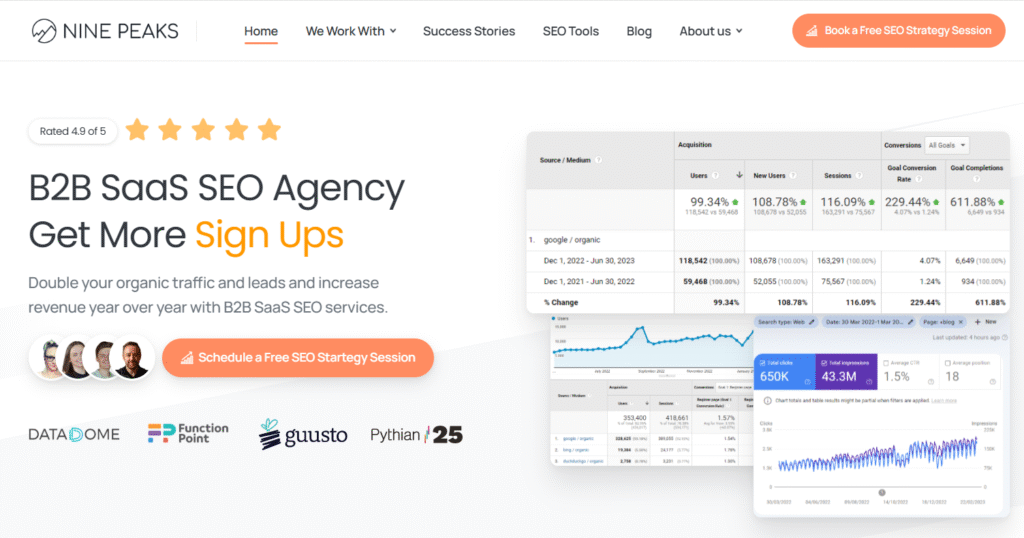
8. Nine Peaks Media – Best for AI Visibility


Nine Peaks Media

For B2B SaaS, tech and software companies looking to capture both search engine attention and next-generation AI referral traffic, Nine Peaks Media offers a tailored “AI Visibility”-oriented SEO service that marries deep technical SEO with emerging AI-search demand.

Known for working with over 60 SaaS, software and technology brands to secure first-page Google rankings and drive meaningful revenue growth. 

What makes Nine Peaks Media stand out:

  • A core Growth Program built around keyword mapping, site audits, on-page optimisation, content development and link acquisition. 
  • Experience with tech-vertical clients (SaaS, IT, software) who need lead sign-ups, demos and trials more than generic traffic. 
  • A modern approach that acknowledges the rise of AI & generative engines in search — they publish long-form guides on “AI-powered SEO” and how machine learning is changing visibility.

If your business wants more than just traditional SEO, if you’re seeking visibility in AI-mediated search experiences and the next wave of discovery channels, Nine Peaks Media delivers a strong fit.

How to Choose the Right SEO Partner for Your Small Business

Selecting the best SEO company for small business can feel overwhelming, but it doesn’t have to be. Here’s how to make a confident choice:

  1. Define your goals clearly: Do you want more website traffic, local leads, or online sales?
  2. Ask for transparency: A trustworthy agency explains what they do and how results are measured.
  3. Review case studies: Seeing proof of success for other small businesses builds confidence.
  4. Avoid unrealistic promises: Any agency guaranteeing #1 rankings overnight should be a red flag.
  5. Ensure communication is clear: You should always feel informed and involved in your campaign.

Benefits of Hiring a Specialized SEO Company for Small Businesses

🚀 Improved Local Visibility: Get found by nearby customers searching for services you offer.
💰 Better ROI: Unlike ads that stop when you stop paying, SEO brings traffic 24/7.
📈 Sustainable Growth: A well-optimized website grows stronger with time, not weaker.
🧠 Expert Guidance: You’ll gain access to specialized tools, data insights, and expertise.
🤝 Time Savings: Let professionals handle SEO so you can focus on running your business.

Common SEO Challenges Small Businesses Face (and How to Overcome Them)

Small businesses often compete with bigger brands that have larger budgets. The secret isn’t outspending them — it’s outsmarting them. Focusing on local SEO, targeting niche keywords, and creating genuinely useful content helps smaller companies win online.

Another challenge is keeping up with Google’s constant algorithm updates. That’s where a reliable partner like Atamgo makes a big difference. They monitor industry changes closely and adapt strategies quickly, ensuring your site doesn’t lose visibility when Google updates roll out. Lastly, many businesses struggle to balance SEO with other marketing efforts. Partnering with a full-service team means all aspects of your online growth work together seamlessly.

Conclusion: Take Your Small Business to the Next Level with the Right SEO Partner

Partnering with one of the best SEO companies for small business can completely transform your online presence. Each company on this list brings something special — data analytics, personalized strategies, local expertise, or long-term support. But if you want a partner that truly understands small business growth, Atamgo stands above the rest. They combine innovation, affordability, and strategy to create real, lasting success.

In 2026, competition online will be tougher than ever, but with the right SEO agency by your side, you can rise above it. Start now, invest wisely, and watch your small business grow beyond expectations.

Find More: Boost Your Sales With SEO Services

FAQs

1. How much should a small business spend on SEO?

For most small businesses, SEO budgets range from $500 to $2,500 per month, depending on your niche, competition, and the scope of work. Businesses in competitive industries or targeting national audiences may need to invest more. Remember — SEO is a long-term investment, and consistent spending over time yields the highest ROI.

2. How long does it take to see SEO results?

On average, you’ll start noticing results within 3–6 months, depending on your website’s age, content quality, and competition. Early signs include better keyword rankings and increased organic traffic. Long-term growth compounds with consistent optimization, backlinks, and content updates.

3. What’s the difference between local and national SEO services?

Local SEO focuses on improving visibility in a specific geographic area — perfect for service-based or brick-and-mortar businesses. It includes optimizing your Google Business Profile, building local citations, and targeting location-based keywords. National SEO, on the other hand, aims for visibility across wider audiences, often focusing on broader keyword strategies and content marketing.

4. Can I do SEO myself or should I hire an expert?

It’s possible to handle basic SEO tasks like keyword optimization, improving content, or setting up Google Analytics yourself. However, professional SEO agencies have access to premium tools, technical expertise, and years of experience. They can prevent mistakes that might hurt rankings and maximize long-term gains. Hiring an expert saves time and accelerates growth.

5. Are SEO companies worth it for small businesses?

Absolutely. The best SEO companies for small businesses help you compete with larger brands by improving visibility, credibility, and conversion rates. They take care of the technical details while you focus on running your business. Agencies like Atamgo are great examples of how expert SEO support can turn limited budgets into measurable success.

6. How can I tell if an SEO company is trustworthy?

Look for clear communication, case studies, and transparent pricing. A trustworthy SEO partner won’t promise overnight rankings or use shady tactics. Instead, they’ll explain their process, share progress reports, and focus on long-term success rather than quick fixes.

7. What are the biggest SEO mistakes small businesses make?

Common mistakes include ignoring local SEO, targeting overly broad keywords, skipping mobile optimization, or neglecting regular content updates. The best SEO agencies help you avoid these pitfalls and keep your site aligned with Google’s best practices for sustainable growth.

Tags: