...
UK: +44 2038074555 info@atamgo.com
How Fulfillment Services Shape the Subscription Box Experience?

How Fulfillment Services Shape the Subscription Box Experience?

Subscription Box Experience

Starting a subscription box feels exciting. You can curate products, surprises, and deliver them every month. But with all that excitement comes responsibility. To manage a subscription box efficiently, you need a third-party fulfillment center. It is an essential backbone to it. Your subscribers not only expect excellent goods, but they also expect them to be delivered on time and in good condition.

Read along to find out how these fulfillment services shape the whole subscription box experience.

Why Does a Third-Party Fulfillment Center Matter? 

When handling a subscription box, you often find yourself juggling various tasks, including packaging, storage, shipping, returns, and customer updates. It is challenging to manage all these tasks independently. A third-party fulfillment center takes this weight off your shoulders. They take care of all the work while you focus on selecting great products and building relationships.

Spectra is one of the best subscription box fulfillment companies. They are known to provide solutions tailored to your specific needs. Some of them include:

  • 3PL Fulfillment 
  • Pick and Pack 
  • Inventory Management 
  • Kitting 

Other solutions include e-commerce platforms such as Shopify or WooCommerce for order fulfillment.

Services That Power the Subscription Box Experience

At Spectra, you can rely on the following key services to enhance your subscription box experience:

  • 3PL Fulfillment – They handle all stages of getting your boxes from the warehouse to the doorstep.
  • Inventory Management – You know exactly what’s in stock and where it is.
  • Kitting – Items are grouped.
  • Pick and Pack – Items are assembled and packed with precision.

These services streamline your workflow, making it smooth and efficient. Moreover, you can avoid disappointing your subscribers by missing items and delayed shipping of orders.

The Real-World Benefits of Outsourcing Fulfillment 

Handling all the fulfillment on your own might seem simple, but once your storage is depleted, growth becomes increasingly challenging. If you rely on an established provider like Spectra, you get:

  • Lower overhead – No storage costs and no hiring rushups.
  • Better tech – Live updates on orders, inventory, and shipping.
  • Faster delivery – Access across major carrier networks and efficient routing.
  • Consistent packaging – Your brand shines with an unboxing that reveals your product and personality.

There are numerous additional benefits to outsourcing. They just make everything more straightforward to manage.

Subscription box businesses will undoubtedly benefit from the guidance provided by the U.S. Small Business Administration (SBA). In particular, its Office of Government Contracting and Business Development offers specialized programs and assistance that address supply chain issues, support growth in fulfillment, and provide funding for innovation, as well as resilience.

Creating a Unique Unboxing Experience  

The moment your subscriber receives their bundle of joy, it should feel personal, like a warm hug wrapped in a box. Fulfillment services guarantee this experience by:

  • Providing on-time delivery.
  • Providing neat packaging of the correct items. This reduces disappointment.
  • Giving branded presentations. This reinforces why subscribers chose you.

A smooth subscriber experience promotes satisfaction and loyalty. Your brand name also grows through word of mouth. That’s why fulfillment isn’t pure logistics; it’s also your story and experience.

Scalability You Can Rely On 

You can rely on third-party fulfillment for orders ranging from small batches to large volumes. At the beginning of your subscription box business, you could have easily managed to pack orders in the comfort of your dining room, but as the company grows, chaos creeps in. Third-party services scale with you and provide services based on your needs.

Spectra infrastructure ensures that you grow without any compromises. You can continue to add new products and expand internationally while they handle all the details.  If you want to learn more about scalability in fulfillment, check out Scaling Your Subscription Box: When and How to Automate Fulfillment.

Bringing It All Together 

Third-party fulfillment services essentially bring everything together. They help cover the path from your product shelf to the customer’s hands with so much ease. They don’t just ship boxes; they shape reliability, experience, and trust.

If you’re serious about growth in your subscription box business, it is time to partner up with a full-service partner. Talk with Spectra today about how they can help you expand your business.


Topic: Should You Lease or Buy Space for Fulfillment

Topic: Should You Lease or Buy Space for Fulfillment

Lease or Buy

When it comes to running an online business, picking your fulfillment space is one of the biggest decisions you’ll face. 

Do you sign a long-term lease, buy your own building, or hand it off to a third-party logistics provider? 

Let’s break down the whole warehouse puzzle, so you can avoid  the typical rookie mistakes and make a call that fits your startup or growing business.

The Fork in the Road: Lease, Buy, or 3PL?

Before you get too deep in spreadsheets or start touring buildings, ask yourself: what’s my main goal? 

Are you looking to lock in low occupancy costs, stay super flexible, or keep assets light so you can plow cash into growth? 

If your answer is, “Honestly, I don’t know yet,” you’re not alone. Most founders start in the same spot, kind of like how most people open their first inbox with Yahoo, Gmail, AOL, or Proton Mail before figuring out which one fits best.

What to Watch for Before Signing Anything

When weighing options, focus on…

  • Total Cost: This is not just the monthly rent or mortgage payment. Stack up things like maintenance, property taxes, insurance, utilities, tenant improvements, and don’t forget future repairs.


  • Flexibility: Buying can lock you into a location or layout. Leasing gives some flexibility, but third-party logistics (3PL) takes it even further. If your sales spike after a viral TikTok, a 3PL can flex with you. If you own your spot, you will scramble to expand.


  • Risk: If cash is tight or your sales are bouncing around, owning real estate is a big bet. Leasing trims that risk a bit, while 3PLs take most of the risk out of your hands, but sometimes at a higher per-unit cost.

How SEO Growth and Demand Forecasts Shape Your Space Decision

Predictions are powerful. If your traffic is trending up thanks to SEO, expect more orders. But it is a risk to get cocky. Your next update might tank rankings. 

Here’s how your growth plans change the game:

Lease or Buy

If you are confident your volume will double next year and you need special equipment or layouts, buying can pay off. Your occupancy cost as a percent of revenue can shrink fast if sales volume jumps but your space cost stays flat. 

Leasing is better if your forecasts are fuzzy or you want to test new markets.

3PL

Third-party fulfillment can be your hedge. You pay for what you use. 

When orders jump, they handle the surge. If things slow down, you are not stuck with big fixed payments. 

You can keep cash available for ads, influencer deals, new products, or that wild idea you want to try.

Tax Treatment: Uncle Sam Has an Opinion

No matter which route you choose, tax rules give you both headaches and advantages. Let’s keep it simple.

Leasing

You typically deduct the entire lease payment as a business expense. That keeps your taxable income lower.

Buying

You deduct property taxes, mortgage interest, depreciation, insurance, repairs, sometimes even utility bills. Over years, the building may appreciate, so there could be a capital gain if you sell. 

If your growth stalls or you need cash quick, unloading it isn’t always fast or easy.

What About Lenders? How They Size You Up

Thinking of making the leap to owner? 

Lenders want to be sure that your business will actually make enough to cover the payments. They use something called Debt Service Coverage Ratio (DSCR for short). This little number shows if you make enough (Net Operating Income) to cover what you owe on the mortgage each month (Debt Service).

One practical tool that simplifies this math for founders is Griffin’s DSCR loan calculator. It gives you a quick look at your projected coverage so you can see if a property is even in the cards, based on your estimates.

If your DSCR is way over 1.25, lenders relax. If it’s under that, expect a harder time or higher rates. 

Don’t make decisions in an echo chamber. Plug your numbers in and sanity check yourself before talking with banks or investors.

Let’s Talk Real Outcomes: Three Typical Scenarios

It’s all theory till you see it in the wild. Here are three startup stories.

Case 1: The Fast-Fashion Brand That Leased

They expected double growth every holiday, but also wild swings thanks to influencer trends. Leasing gave them space for a pop-up fulfillment team, but let them walk if things cooled off. They paid a small premium, but slept better not being stuck with an empty building in January.

Case 2: The Solo Coffee Roaster Who Bought

With steady, loyal customers, the owner went all-in and bought a small warehouse and roasting space. His occupancy cost fell under five percent of revenue within three years. He borrowed using a DSCR loan and used the property’s value as extra borrowing power to finance more gear when business boomed.

Case 3: The Tech Gadget Startup Outsourcing to a 3PL

Launch day was chaos, viral YouTube reviews flooded them with orders. They would have drowned if they owned a space. Instead, their 3PL flexed up overnight, then dialed back when things slowed. They spent more per package, but never locked up cash in floors and racks.

Why It Matters to You

If your DSCR is too close to 1, you are walking a tightrope. Any hiccup, and you miss a payment. If it’s closer to 2, you have breathing room to ride out slow seasons or put profits where they matter.

A calculator like Griffin’s makes this quick to test so you can move forward with real-world context instead of Excel guesswork.

Wrapping Up

At the end of the day, the “lease versus buy versus 3PL” debate is all about matching your space and money decisions to the real growth and risk in your business. 

Do you want flexibility, cost control, or total focus on your brand without the building overhead? 

Run all the numbers, take time to talk to your team, and don’t get caught up in “how things are always done.” The right answer is the one that sets up your next big win.

Optimising Warehouse Shelving and eCommerce Fulfilment Services: The Backbone of Modern Logistics

Optimising Warehouse Shelving and eCommerce Fulfilment Services: The Backbone of Modern Logistics

Warehouse Shelving

Introduction

As the global eCommerce market continues to grow at a rapid pace, the demand for efficient storage and order fulfillment solutions has never been greater. Businesses, whether emerging startups or established enterprises, are looking for ways to streamline their logistics operations, reduce costs, and improve customer satisfaction. At the core of these improvements lies one key factor: effective warehouse shelving paired with reliable eCommerce fulfilment services.  In addition, the integration of advanced material handling equipment—such as conveyors, forklifts, and automated guided vehicles—plays a crucial role in ensuring smooth and efficient movement of goods throughout the warehouse. In addition, the integration of advanced material handling equipment—such as conveyors, forklifts, and automated guided vehicles—plays a crucial role in ensuring smooth and efficient movement of goods throughout the warehouse.

For companies like Bowen Storage and AMS Egroup, providing tailored solutions in this field is more than just logistics—it’s about helping businesses scale smartly and sustainably.

Understanding the Role of Warehouse Shelving in Logistics

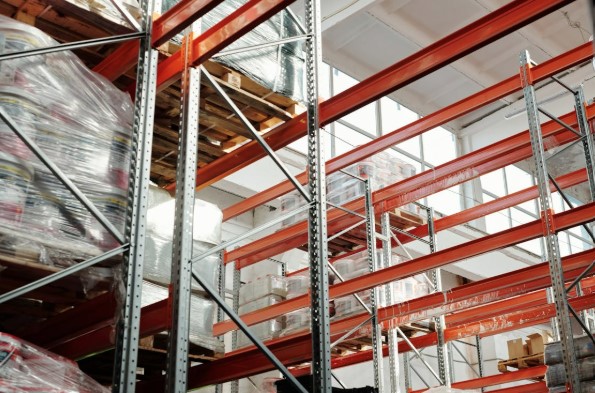
Warehouse shelving isn’t just about placing items on racks—it is a strategic system that significantly influences the efficiency of a warehouse. Well-designed shelving allows for better inventory management, optimises available space, and facilitates quicker picking and packing times.

1. Maximising Vertical and Floor Space

One of the primary goals of warehouse shelving is to optimise every square metre of available space. Vertical shelving systems allow businesses to store more inventory without the need to expand their warehouse footprint. This is especially valuable for eCommerce companies that experience seasonal surges and need to store high volumes of stock temporarily.

Bowen Storage, for instance, offers expertly designed storage systems that help businesses implement high-density shelving solutions. These systems not only make the most of available warehouse height but also ensure safety and ease of access.

2. Types of Warehouse Shelving

Understanding the different types of warehouse shelving can help businesses choose the best system for their operations. Some of the common shelving types include:

  • Selective Pallet Racking: Ideal for warehouses with a wide variety of SKUs.
  • Long Span Shelving: Great for storing large, bulky items.
  • Mobile Shelving Units: Perfect for high-density storage with limited space.
  • Cantilever Racking: Designed for long or awkwardly shaped items like pipes or timber.

Each of these systems can be customised depending on the nature of the product and the layout of the facility. With decades of experience, Bowen Storage provides expert consultation to determine the right shelving solution for each unique business need.

eCommerce Fulfilment Services: The Engine of Online Retail

Behind every fast and accurate online order lies a seamless fulfilment process. The eCommerce Fulfilment Services involve the entire process from receiving inventory to warehousing, picking, packing, and finally shipping the order to the customer. As eCommerce businesses scale, outsourcing this part of the operation becomes essential for maintaining service quality.

1. The Lifecycle of eCommerce Fulfilment

Understanding the key stages of fulfilment helps businesses appreciate the need for specialised services. The typical process includes:

  • Receiving: Inventory is delivered to the fulfilment centre.
  • Storage: Products are organised using warehouse shelving systems.
  • Picking and Packing: Orders are picked based on real-time sales data, then securely packed.
  • Shipping: Orders are dispatched via integrated courier services.
  • Returns Management: A streamlined process for handling returns and restocking.

AMS Egroup specialises in this full-cycle eCommerce fulfilment service, offering scalable, tech-driven solutions that support fast-growing online retailers.

2. Technology in Fulfillment

Modern fulfilment services are powered by advanced technology. Real-time inventory tracking, API integration with shopping platforms, barcode scanning, and order automation are just a few of the tools that ensure orders are processed quickly and accurately.

With AMS Egroup, clients benefit from seamless integration with platforms like Shopify, WooCommerce, and Magento, giving them complete visibility and control over their stock levels and order statuses at any given time.

The Synergy Between Shelving and Fulfilment

Warehouse Shelving

Photo by Tiger Lily: https://www.pexels.com/photo/wares-in-foils-on-pallets-in-warehouse-4487363/

It’s not enough to have just one of the two—warehouse shelving and eCommerce fulfilment work best when designed to complement each other. Here’s how:

  • Optimised Picking Routes: Strategic shelving layouts reduce the time it takes to locate and retrieve items.
  • Inventory Accuracy: Proper labelling and categorisation on shelves minimise picking errors.
  • Scalability: Shelving systems that adapt to fulfilment software allow for easy expansion as the business grows.

Bowen Storage works hand-in-hand with fulfillment providers like AMS Egroup to ensure the physical infrastructure matches the digital systems that run today’s logistics. This holistic approach helps businesses handle high order volumes, especially during peak retail periods.

Benefits of a Streamlined Warehousing and Fulfilment System

When warehouse storage and fulfilment processes are properly aligned, businesses enjoy numerous advantages:

1. Faster Delivery Times

With efficient picking systems and real-time inventory data, orders can be processed within hours of being placed.

2. Lower Operational Costs

Effective use of space and automation reduces the need for excess labour and large warehouse expansions.

3. Improved Customer Satisfaction

Fast, accurate delivery builds customer trust and encourages repeat purchases.

4. Business Scalability

As a business grows, a scalable fulfilment infrastructure ensures that logistics never become a bottleneck.

5. Risk Reduction

A well-organised warehouse minimises the chances of accidents and product damage, reducing liability and returns.

Tailored Solutions for Every Business

What sets companies like Bowen Storage and AMS Egroup apart is their commitment to customisation. Every business has unique needs, whether it’s a fashion retailer managing seasonal products, or a health brand shipping sensitive goods that require climate control.

  • Bowen Storage offers site assessments, custom racking design, and compliance with Australian safety standards.
  • AMS Egroup provides personalised onboarding, dedicated account managers, and flexible storage options that adjust with sales volume.

These tailored services ensure that logistics operations are not just functional but also future-proof.

Choosing the Right Partner for Growth

Warehouse Shelving

Photo by AS Photography: https://www.pexels.com/photo/person-using-black-and-white-smartphone-and-holding-blue-card-230544/

Selecting the right warehousing and fulfilment partner is a strategic decision. It’s not just about cost—it’s about trust, scalability, and long-term collaboration.

Here are a few questions to ask when considering a storage or fulfilment partner:

  • Can they handle seasonal fluctuations in order volume?
  • Do they offer technology integration with your online store?
  • Are their facilities compliant with industry safety standards?
  • Is there flexibility to expand or contract storage space as needed?
  • What level of transparency do they offer through reporting and dashboards?

Both Bowen Storage and AMS Egroup have established reputations for reliability, adaptability, and innovation, making them ideal partners for businesses serious about logistics excellence.

Final Thoughts

As the eCommerce landscape becomes more competitive, the efficiency of your warehousing and fulfilment operations can make or break your success. By investing in advanced warehouse shelving systems and partnering with expert eCommerce fulfilment providers, businesses can ensure they are ready to meet customer demands now and into the future.

With trusted names like Bowen Storage offering precision-engineered shelving solutions, and AMS Egroup providing end-to-end fulfilment services, Australian businesses have all the tools they need to streamline operations and accelerate growth.