UK: +44 2038074555 info@atamgo.com
Growth Playbook: Using a QR Code Generator to Track Offline-to-Online Conversions

Growth Playbook: Using a QR Code Generator to Track Offline-to-Online Conversions

QR Code Generator

In today’s digital landscape, bridging the gap between offline and online interactions is crucial for growth. QR codes have emerged as powerful tools that not only enhance customer engagement but also provide valuable insights into consumer behavior. By harnessing the potential of an online QR code generator tool, we can track offline-to-online conversions like never before.

Imagine a world where every scan leads to measurable data, helping us refine our marketing strategies. With the right approach, we can transform casual interactions into actionable insights, driving our business forward. In this article, we’ll explore how to effectively utilize QR codes to optimize our growth playbook and maximize our return on investment.

Understanding The Growth Playbook

Understanding how to leverage a growth playbook enhances our ability to connect offline and online interactions effectively. Combining these channels fosters deeper customer relationships and drives measurable outcomes. A QR code generator serves as the bridge between these channels, enabling us to track offline-to-online conversions seamlessly. 

We can utilize QR codes across various touchpoints, such as print advertisements, packaging, and in-store signage. By scanning a QR code, customers are directed to our online platforms, leading to increased website traffic, engagement, and conversions. This integration provides valuable insights into customer behavior, allowing us to refine our marketing strategies. 

Implementing QR codes offers several advantages. First, they simplify the customer journey, reducing friction by allowing instant access to online resources. Second, QR codes facilitate data collection, revealing how many customers transitioned from offline interactions to online actions. This data can help us identify trends and optimize campaigns for better performance. 

Tracking performance metrics associated with QR codes enhances our understanding of campaign effectiveness. We can monitor scan rates, conversion rates, and customer demographics. Analyzing this information helps us make informed decisions, adapt marketing efforts, and maximize return on investment. 

Using a QR code generator as part of our growth playbook creates a comprehensive approach for tracking offline-to-online conversions. Embracing this strategy not only elevates customer engagement but also drives sustainable growth, revealing invaluable insights into consumer behavior that shape our future efforts.

The Importance Of Offline-To-Online Conversions

Offline-to-online conversions represent a critical link between traditional marketing methods and digital engagement. By effectively tracking these conversions, we can gain valuable insights into customer behavior and enhance our marketing strategies.

Defining Offline-To-Online Conversions

Offline-to-online conversions occur when customers transition from physical interactions to digital platforms. These conversions might involve customers scanning QR codes on print ads, visiting websites via in-store promotions, or following social media accounts prompted by offline materials. Each of these actions reflects a bridge between offline engagement and online actions, enabling us to monitor customer journeys and understand how offline strategies influence online behaviors.

Benefits Of Tracking Conversions

Tracking offline-to-online conversions allows us to analyze marketing effectiveness with precision. We gain measurable data on customer interactions, including scan rates and subsequent online activities, which aids in refining our marketing tactics. Insights from this tracking enable us to adjust campaigns based on real-time performance. Furthermore, it improves our targeting strategies, optimizes advertising spend, and strengthens the overall customer experience by aligning offline actions with online engagements.

A QR Code Generator And Its Role

A QR code generator plays a crucial role in bridging the gap between offline and online customer interactions. They facilitate the creation, customization, and tracking of QR codes, enabling us to capture valuable insights on consumer behavior.

How QR Codes Work

We create a QR code that encodes data into a two-dimensional barcode, which can be scanned by smartphones. When a user scans the code, it redirects them to a designated online destination, such as a website or app. This action initiates the offline-to-online transition, allowing us to track user engagement effectively through analytics tools. The data collected includes scan rates and subsequent actions taken by users, providing essential metrics that help us analyze the effectiveness of our marketing campaigns.

Popular QR Code Generators

Popular QR code generators include platforms like QR Code Monkey, QRStuff, and Bitly. QR Code Monkey offers extensive customization options with no charge. QRStuff allows us to generate codes for various content types while providing basic tracking features. Bitly stands out with its URL shortening services and integrated analytics, making it ideal for link management and conversion tracking. Each of these generators supports our goal to enhance engagement and measure the impact of offline-to-online strategies effectively.

Implementing QR Codes In Your Strategy 

Implementing QR codes effectively enhances our marketing strategy by improving offline-to-online connections. By following best practices in placement and integration, we leverage their potential.

Best Practices For QR Code Placement

We must ensure optimal visibility when placing QR codes. Select high-traffic areas where customers frequently engage, like store entrances or checkout counters. Use contrasting colors to enhance scanability and ensure the QR code is at least one square inch for easy scanning. Communicate the purpose of the QR code clearly with engaging calls-to-action, like “Scan for a discount” or “Discover more online.” Test the QR code functionality before deploying it in campaigns to guarantee a seamless customer experience.

Integrating QR Codes With Marketing Campaigns

We can integrate QR codes seamlessly into our marketing campaigns by aligning them with specific goals. Coordinate QR code usage with print advertisements, brochures, or social media promotions to drive traffic effectively. Tailor QR codes to direct users to relevant content, such as product landing pages or exclusive offers. Monitor analytics post-campaign to evaluate performance, adjusting strategies based on user engagement data to refine our marketing efforts continuously. This approach maximizes the effectiveness of our campaigns, driving measurable results.

Analyzing Your QR Code Data

Analyzing QR code data enhances our understanding of customer interactions and refines marketing strategies. By leveraging robust tools and focusing on critical metrics, we optimize our offline-to-online conversion tracking.

Tools For Tracking Performance

We can utilize various tools to track QR code performance effectively. Google Analytics offers comprehensive insights into website traffic generated by QR codes, enabling us to monitor user behavior. QR code generators like Bitly and QR Code Generator provide built-in analytics features, allowing us to view scan rates and engagement levels directly. Custom dashboards can also be created for real-time tracking, consolidating data from different sources for streamlined analysis. Tracking links enable us to discern traffic sources, enhancing our ability to make data-driven decisions.

Key Metrics To Measure

We focus on several key metrics when analyzing QR code performance. Scan rate indicates how many users interacted with the QR code, giving insight into its visibility and effectiveness. Conversion rate measures the percentage of users who completed desired actions on our website after scanning the QR code, providing valuable context for ROI assessment. User demographics offer additional information on our target audience, allowing us to tailor future campaigns. Time spent on the landing page serves as a gauge for user interest, highlighting opportunities for optimization in content or design. For more on the impact of QR codes, check out this resource that dives deeper into their benefits.
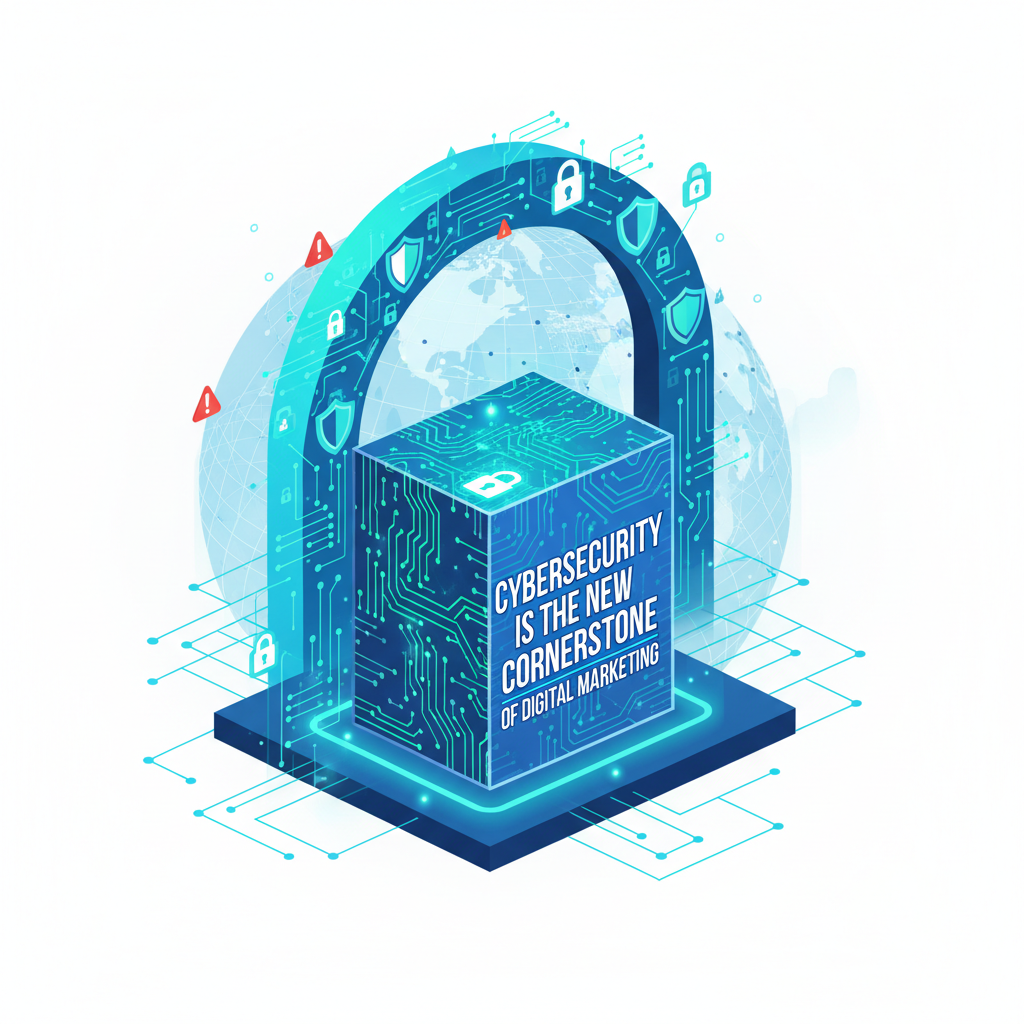
Cybersecurity Is the New Cornerstone of Digital Marketing

Cybersecurity Is the New Cornerstone of Digital Marketing

Cybersecurity

What if I told you that a single breach can undo years of marketing effort overnight? That’s not fear mongering — it’s reality. In fact, 66% of consumers say they would not trust a company that’s suffered a data breach. For marketers, that’s a wake-up call: your campaigns, personalization, and brand positioning all rest on a fragile foundation of trust.

In this post, I’ll break down how data security and digital marketing must go hand in hand. I’ll show you how cyber-risks erode brand value, and how clever marketers can lean into security as a trust signal. Bonus: I’ll also mention a neat tool for tracking mobile number location (mobile number tracker with google map) that occasionally pops into marketing use cases.

Why Breaches Wreck Your Brand

Let’s break this problem down into its core element: trust.

Trust Is Not Magic

You build a brand by delivering value, content, experience, and relationships. But trust acts like the mortar holding it all together. Once a breach happens, that mortar crumbles. Consumers connect breaches not just to tech failure — they see it as carelessness, and they punish you for it. Studies show many will stop buying entirely after a breach.

Consider too: personalized marketing quietly collects data — names, purchase history, even location. If customers suspect you mishandle that data, the same personalization they once loved begins to feel invasive. Researchers find that data breaches severely impair consumer trust in personalization efforts. 

Cost Isn’t Only Dollars

Yes, breaches hit your bottom line: regulatory fines, legal costs, notification, forensic analysis. According to recent reports, the average cost of a data breach in 2025 is now $4.44 million. But the lasting damage is reputation—social media outrage, negative press coverage, customer churn.

One more angle: marketing tech itself can introduce risk. Third-party scripts, tracking pixels, analytics tools—all of these can leak or be exploited. A famous study of 1 million websites found that nearly 9 in 10 websites send user data to parties users are unaware of arXiv. That’s a red flag for marketers: your advertising stack may be undermining your security posture.

How Marketers Can Lean Into Security

The good news is that marketers can flip the script and use security as a powerful trust signal.

Make Security a Brand Message

Don’t bury cybersecurity in legal terms or “about us” pages only. Talk about it. Show how you encrypt data, anonymize signals, and follow strict privacy practices. Customers begin to see security not as an obstacle but a virtue.

When you roll out a new campaign or data collection initiative, mention your safeguards. Use short blurbs like “Your data is encrypted at rest and in transit” or “We never share raw personal identifiers with vendors.” Give people the confidence that you take their privacy seriously.

Design Minimal Data Flows

Ask yourself: do I need every bit of data I collect? Probably not. The less data you store or transfer, the fewer points of failure. Use aggregated or anonymized metrics whenever possible. Be deliberate about what you collect.

Also, evaluate your marketing stack (CRMs, analytics, plugins) for vulnerability. If a vendor gets hacked, your brand gets dragged in too. Create an audit process: only include tools that pass a security review.

Be Transparent About Data Use

Let customers see what data you hold, and let them delete it. Display a dashboard of preferences or privacy settings. If someone asks, “How did you know I live nearby?” the answer shouldn’t feel magical — it should feel honest and controlled.

Also, in cases of location tracking or phone number-based features, emphasize permission and opt-in. For example, tools and discussions around mobile number tracker with google map features should always stress consent and compliance.

Prepare a Breach-Response Plan

Even the best defenses fail sometimes. Have a ready plan: internal roles, communications templates, legal steps, and PR. Be ready to tell your customers immediately what happened, what’s affected, and what you will do. The faster and more transparent you act, the more trust you can salvage.

A Fresh Perspective: Security as a Filter, Not a Hindrance

Here’s an angle many miss: rather than seeing security as a limit, treat it as a filter that refines who engages with your brand. Users who care about privacy, who demand better practices, will self-select in. That means a more loyal, higher-quality audience.

Also, security features can become features. For instance, instead of “We collect your phone number,” frame it as: “We store your phone number encrypted, never visible to third parties.” That shifts your posture from “data harvester” to “data custodian.”

In a saturated digital landscape, positioning your brand as one that respects the user’s data becomes a differentiator. It can even become a selling point: “Buy with us — we won’t leak your identity.”

Final Thoughts & Next Steps

Digital marketing and cybersecurity no longer run on parallel tracks. They must merge. If your campaigns break trust, they’ll implode. But if you build trust, you unlock powerful loyalty, better data, and fewer reputational risks.

Start small:

  • Map the data points your campaigns collect, then ask whether you truly need each one.

  • Audit all third-party tools and remove or replace any with questionable security.

  • Write a short statement about your data handling and publish it—customers will notice.

  • Draft a lightweight breach-response plan and rehearse it with your team.

Do these now, and you step into a new era: marketing that sells, but also protects. Your campaigns not only persuade — they reassure. And that, my friend, is the foundation of sustainable digital growth.

Data Privacy Laws and Digital Marketing Must-Know in 2025

Data Privacy Laws and Digital Marketing Must-Know in 2025

Data Privacy Laws

By 2025, more than 160 privacy laws have come into force globally, covering over 83% of the world’s population with some form of data protection regulation. Whether you market locally or across borders, that means you almost certainly touch regulated data somewhere. That sets the context: ignoring privacy is risky, but doing it well can differentiate your brand.

In this post, I’ll walk you through GDPR, CCPA, and emerging privacy laws. I’ll show how compliance can help—not hurt—your digital marketing. I’ll also offer practical steps so you can turn legal requirements into marketing strengths.

Key Laws to Understand

Before diving into the details, it helps to break down the major regulations that shape how marketers can collect and use data.

GDPR Overview

The GDPR (General Data Protection Regulation) does not only affect European firms—if you handle data of EU residents, you must comply. It demands lawful basis for collecting personal data, clear consent, data subject rights (access, deletion), breach notifications, and strong security.

CCPA & US State Laws

California’s CCPA (and newer US state laws) give similar rights: letting users know what data you collect, opt out of data selling, request deletion, etc. Violations can cost thousands per intentional breach. 

Emerging laws (UK, Brazil, India, China) add rules on cross-border data flow, children’s data, AI/automated decision-making, and more.

Compliance as Advantage

Compliance often feels like burden. But you can flip the frame: make it a trust builder.

  • Transparent privacy policies show you respect users. When people see you explain clearly what you’ll do with their data, they stay.

  • Fines and scandals scare customers away. A compliant brand avoids those risks and gains reputational capital.

  • In a survey, 94% of organizations said customers wouldn’t buy if the company didn’t protect data properly. 

Also, if you ever need to share your tool stack or partner with other firms, compliance becomes a selling point. Imagine your prospect sees your site is GDPR-aligned or CCPA-compliant; that adds credibility.

Practical Steps for Marketers

Understanding the laws is one thing, but knowing how to apply them in daily marketing work makes all the difference.

Data Collection & Consent

First: audit what data you collect. Do you need every field in a form? Don’t. Keep it minimal. Use consent banners that are simple, clear, actionable. If you host resources or tools on your site from others, ensure they respect privacy too (think about third-party trackers). You may use tracking apps to measure productivity, track location for field teams, or monitor campaign effectiveness. Check here how it can help a lot—when you treat user and employee data ethically, limit data collected, and secure tools so they don’t become vulnerabilities.

Data Subject Rights & Transparency

Users want control. Let them see what data you hold, allow them to change or delete it. Be transparent about retention period and who sees their info. Publish privacy policy in human-friendly terms. Regularly update it when laws change.

Emerging Regulations to Watch

Laws in places like India (Digital Personal Data Protection Bill), China’s PIPL, Brazil’s LGPD updates, and new US state laws are tightening rules over data flows, AI, and profiling.

Regulators now expect faster breach notifications (often within 72 hours), stricter consent for children’s data, and harsher penalties. Non-compliance isn’t just legal risk—it’s a risk to marketing ROI and customer trust.

Turning Compliance into Marketing Edge

Compliance doesn’t have to stay in the legal department—it can become one of the strongest tools in your marketing strategy. By framing privacy as part of your brand promise, you move beyond “avoiding penalties” and start winning loyalty.

Brand Trust & Loyalty

When you follow privacy laws properly, customers trust you more. That increases conversion rates, customer retention, referrals. Someone might choose your product because you say “we don’t sell your data,” and that sounds meaningful in 2025.

Risk Reduction & Cost Savings

Investing in compliance reduces chances of fines, legal costs, damage control after a breach. The costs for non-compliance keep growing. For example, GDPR fines passed €6.7 billion by recent tallies. 

Competitive Differentiation

Many companies lag on transparency or data rights. If you lead there—clear privacy page, fast response to user requests, secure tools—people notice. Compliance can become part of your site brand story in ads, blogs, or email signup flows.

How to Stay Ahead

  1. Monitor Regulatory Changes: laws evolve. Assign someone to stay informed.

  2. Audit Your Tools and Partners: third-party vendors must comply too. Don’t use trackers or apps that violate laws.

  3. Train Your Team: marketers, developers, legal must share understanding. Missteps happen when someone misses a rule.

  4. Build Privacy by Design: add data protection from the start, not after product launches.

Conclusion — Choose Compliance, Choose Growth

Regulations like GDPR and CCPA used to feel like obstacles. Now they feel like pillars. When you master them, you gain something powerful: trust, clarity, reputation. Marketing that respects data laws doesn’t just avoid pain—it wins customers.

Will you tell customers, “We protect your rights” instead of hoping they don’t ask? Start with your next campaign. Make your privacy policy clearer. Review any tracking or monitoring apps used for location or productivity. Use them where needed, keep them secure, limit access.

When you make data privacy part of your marketing DNA, you create marketing that lasts. Customers thank you with loyalty. Regulators don’t give you fines. Your brand stands solid. And in 2025, that matters more than ever.

What Is an Invisible Character and How to Use It on Social Media?

What Is an Invisible Character and How to Use It on Social Media?

Invisible Character

Ever noticed blank spaces in usernames or received an empty message in your inbox? But when you try to add such a blank space in your username or want to send a single space in the message or comments, it doesn’t work for you, right? Well, empty messages and invisible usernames don’t contain a simple space. It is a special invisible character that appears blank to human eyes, but algorithms consider it a valid character. 

In this blog, we will explain what an invisible character is, why people use it on social media, and where you can apply it in your own profiles and posts.

What Is an Invisible Character?

The invisible character is a Unicode symbol. It is different from a regular space created by pressing the spacebar on the keyboard. It is still a valid character in digital text and recognized by the system, even though you cannot see it.

There are many invisible characters in Unicode. The most commonly used ones are Zero-width Space, Zero-width Non-Joiner, and Non-breaking Space. 

How to Create an Invisible Character?

Creating an invisible character was difficult using manual methods. But now, there are plenty of online tools that offer these characters. Just search for the “Invisible Character” in your browser. You will see a list of tools and websites there. Choose a reliable tool after checking its reviews and data privacy.

It is important because some unsafe websites might include hidden characters or scripts that could hurt your device or account. We have found this Invisible Character tool reliable after carefully reviewing a lot of tools. So we will use it to generate an invisible character to give you a demo.

Invisible Character

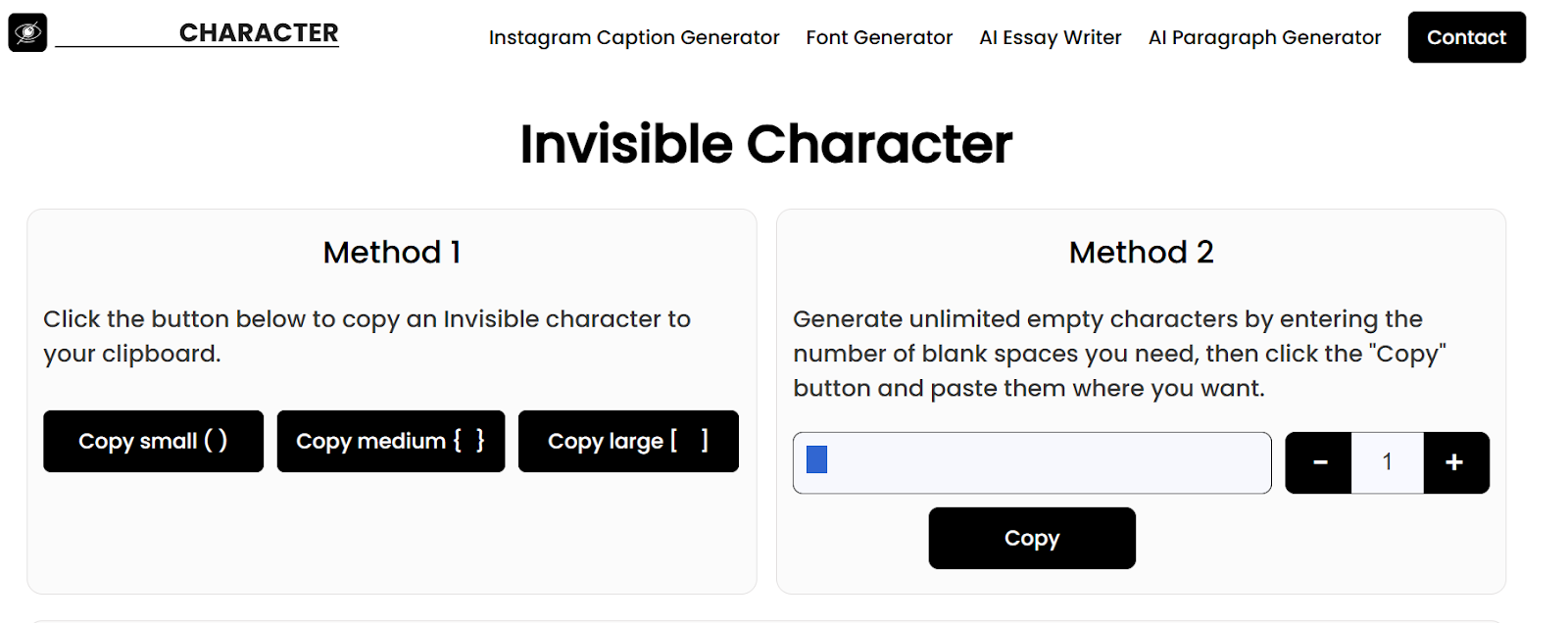
  1. Open the tool, and you will see two different methods for generating the invisible space.
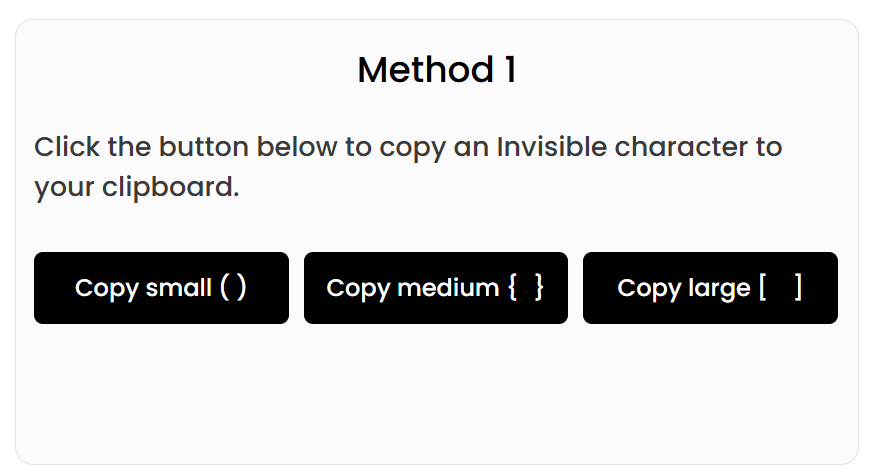
  2. If you need a few characters, you can go with “Method 1.” Just click on the three provided buttons: Copy small, Copy medium, or Copy large. The invisible character will be copied to your clipboard, and you can paste it where needed. Invisible Character
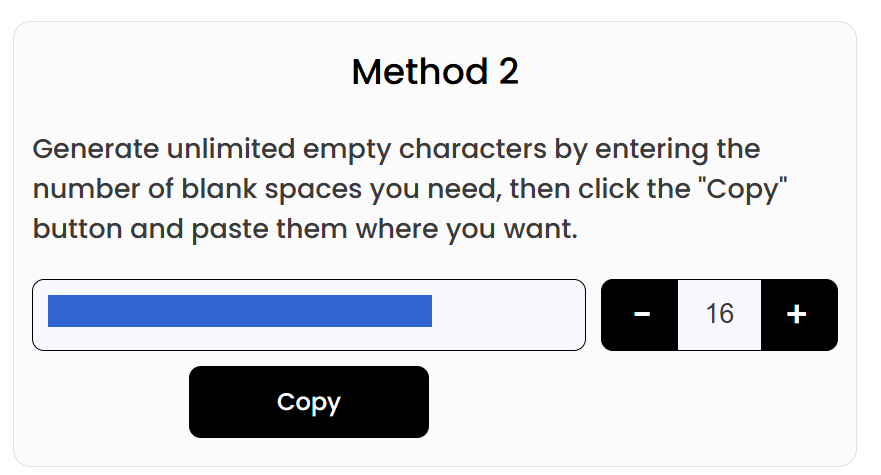
  3. If you need a lot of characters at once, you can go with “Method 2.” Use the + and – buttons, or simply type in the number of characters you need and then click on the “Copy” button. The characters will be copied to your clipboard.Invisible Character
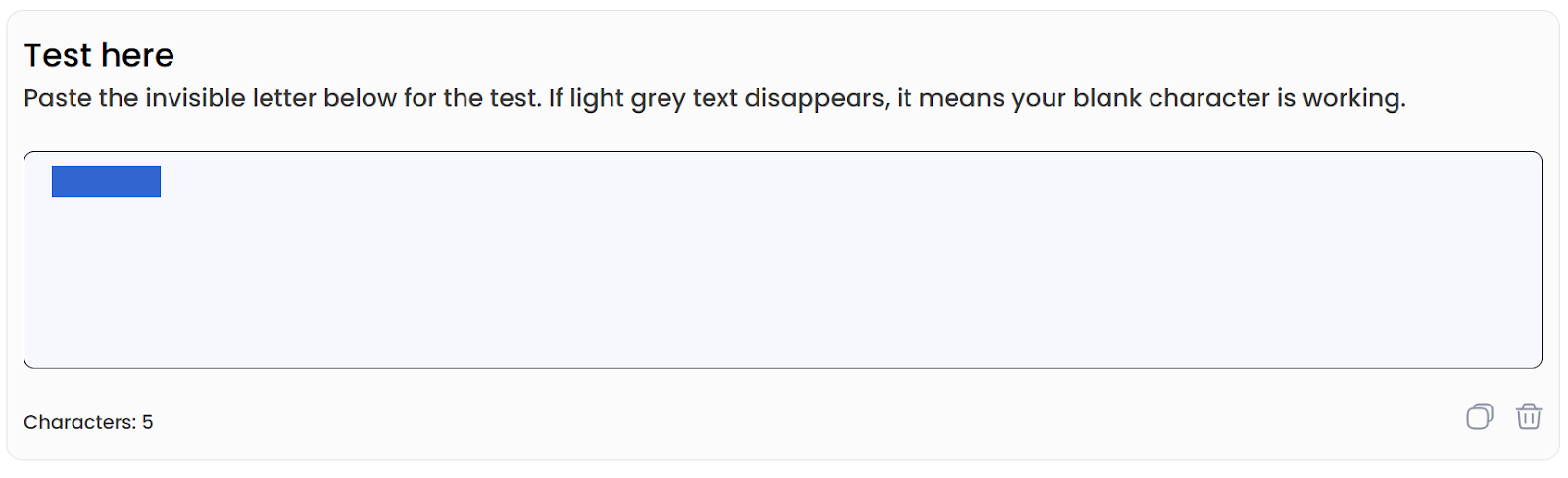
  4. After copying the characters, use the test box below to verify if the invisible characters generated work properly. Paste the characters here, and it will show you the number of characters generated.Invisible Character

How to Use Invisible Characters on Social Media

Using Invisible Character Generators Across Social Media Platforms

Invisible characters can be useful for formatting text on different social media platforms. Whether you’re adding blank spaces to Instagram bios, organizing WhatsApp messages, or creating unique text layouts on Facebook, TikTok, and Discord, these characters allow you to adjust spacing without using visible symbols.

Instead of manually searching for Unicode characters, you can use the CASECONVERTER.TOOLS Invisible Character Generator to copy invisible text and paste it into supported social media fields. This can be helpful when regular spaces are automatically removed or when you want to create cleaner-looking bios, captions, and messages.

However, the way invisible characters appear may vary depending on the platform, so it’s always a good idea to test them before using them in your profile or posts.

Create Unique Usernames

When you try to make a new account, sometimes the username you want is already taken. Or the platform does not allow spaces and special symbols. In this case, an invisible character can help. You can add this hidden space between words or at the end of your name. It will look clean and different but still be accepted by the system. This way, your username becomes unique without using extra numbers or strange symbols.

Send Blank Messages for Fun

Some apps or chat platforms, such as WhatsApp and Instagram, do not allow you to send a blank message. If you just press the spacebar and click the send button, it will not work. But if you use an invisible character, you can send an empty message to your friends.

You copy the invisible space, paste it in the chat box, and send it. The message looks empty to the other person, but technically it contains a Unicode character that the system can interpret. So you can use this trick to surprise and have fun with your friends.

Write Clear Bios and Captions

When you try to write a bio or caption, sometimes the text looks packed in one block. Many people add dots, dashes, or emojis only to create spacing, but this makes the profile look messy. By using invisible characters, you can break the lines properly and add space where you want. This way, your bio looks clean and easy to read.

Add Aesthetic Appeal

Most people use social media on their phones. The small screens of phones make text appear crowded. When everything appears in one block, it becomes challenging to read and not very engaging. Invisible characters help you add neat spacing in posts, captions, and even comments. 

This makes the text easy for the eyes, and people stay longer to read it. Instead of stuffing emojis or symbols just to create space, you can keep everything clean. A little spacing with invisible characters can make your posts look more professional, stylish, and creative while also improving readability on mobile screens.

Best Practices for Using Invisible Characters

Invisible characters are useful, but you need to use them with care. If you add too many blank spaces in the text, it may look confusing or even frustrating for the reader. Also, sending repeated blank messages to your friends can make them stressed instead of entertained. It also comes under spamming when you send too many invisible characters to a chat. You may face account restrictions, and in some cases, even account suspension. So always use them in balance.

Another good practice is to test the character before you use it widely. Since the character is invisible, sometimes it may not work on every platform. Some good tools offer a test box where you can paste it first, check the result, and then apply it.

Also, always copy invisible characters from trusted tools or websites. Cybercrime is on the rise, and some unreliable tools or websites may include hidden characters or scripts that could harm your device or account. A safe source helps you avoid security risks while keeping your account secure.

With these practices, you can enjoy the creative side of invisible characters without creating problems for yourself or others.

Final Words

Invisible characters are useful when you want to add space or line breaks on social media. You can use them to make usernames different, write cleaner bios, send blank messages, or format posts in a simple way. 

Do not use them too much because this can confuse people. Always test them before posting and copy from trusted tools to stay safe. If you follow these steps, you can make your profiles and posts look clear, neat, and easy to read.

7 Powerful Vimeo to MP4 Converters You’ll Wish You Found Sooner

7 Powerful Vimeo to MP4 Converters You’ll Wish You Found Sooner

Vimeo to MP4

Introduction: Why You Need a Reliable Vimeo to MP4 Converter

Vimeo to MP4 is one of those search terms that pops up constantly because people love Vimeo’s high-quality videos, but they want the flexibility of watching them offline or sharing them easily. Maybe you’re working on a project and need reference material, maybe you’re traveling and want to keep your favorite tutorials on hand, or maybe you just hate the feeling of buffering ruining your evening. Whatever the reason, being able to convert Vimeo to MP4 can make a huge difference in convenience and peace of mind.

The truth is, Vimeo doesn’t always make it simple to download videos directly. And when you search online, you’ll find dozens of tools that claim to do the job—but not all of them actually deliver. Some are sketchy, some reduce the video quality, and others are so full of pop-ups that you feel like you’re stepping into a spam trap. That’s why I decided to put together this list of tested and trusted Vimeo to MP4 converters. Each one here has real advantages, and by the time you’re done reading, you’ll know which one to rely on depending on your needs.

Find More: 8 Powerful YouTube Subtitle Downloader You Must Try Today

7 Powerful Vimeo to MP4 Converters You’ll Wish You Found Sooner

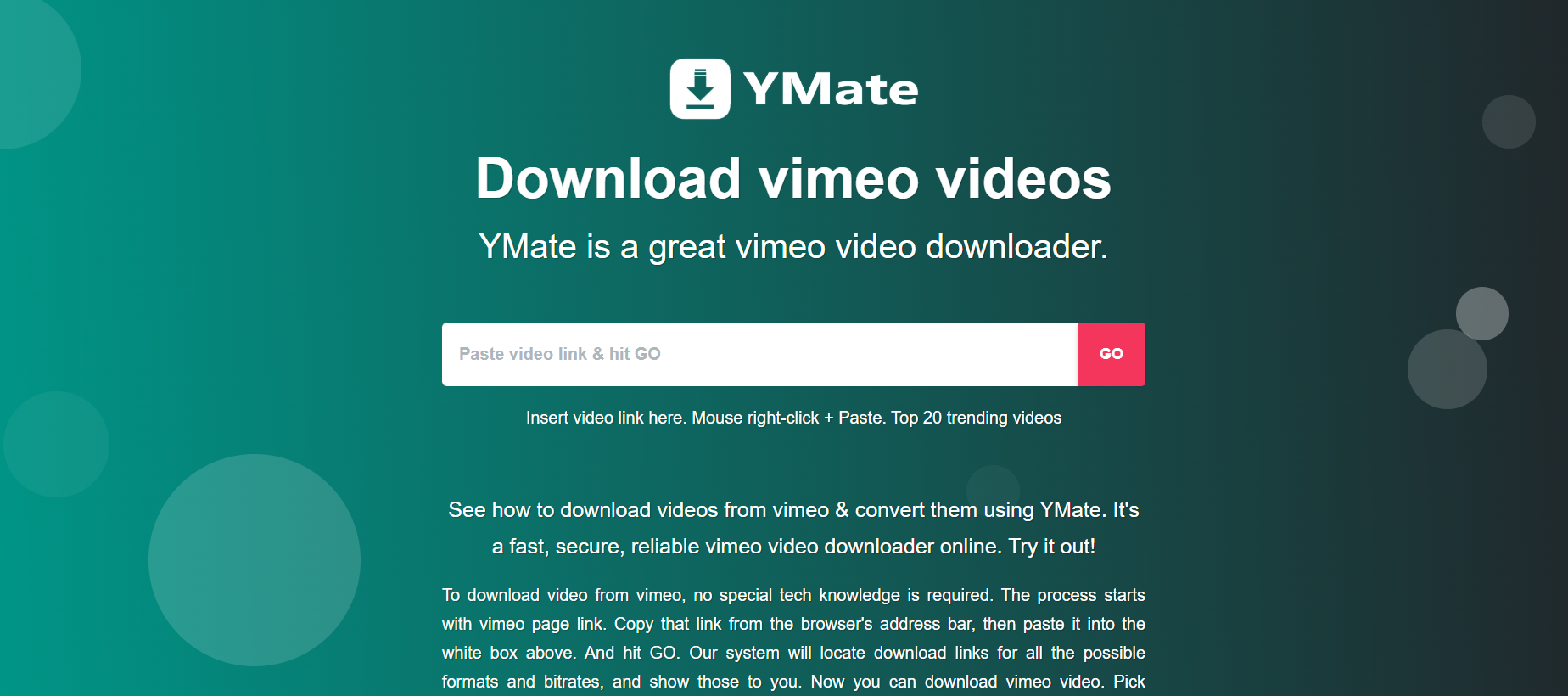
1. Y2Mate Vimeo Downloader – Fast and Free Vimeo to MP4 Downloads

Y2Mate Vimeo Downloader

If you’re looking for something quick and easy, Y2Mate is one of the most popular online converters for a reason.

Key Features:

  • Quick conversions without requiring sign-up

  • Supports multiple formats including MP4, MP3, and WebM

  • Works directly in your browser without installing anything

Pros: Simple, lightning-fast, and completely free.
Cons: Has some pop-up ads you’ll want to avoid clicking.
Best Use Case: Great for people who want to download from Vimeo to MP4 in just a couple of clicks. Perfect for short videos or quick downloads when you don’t want to waste time.

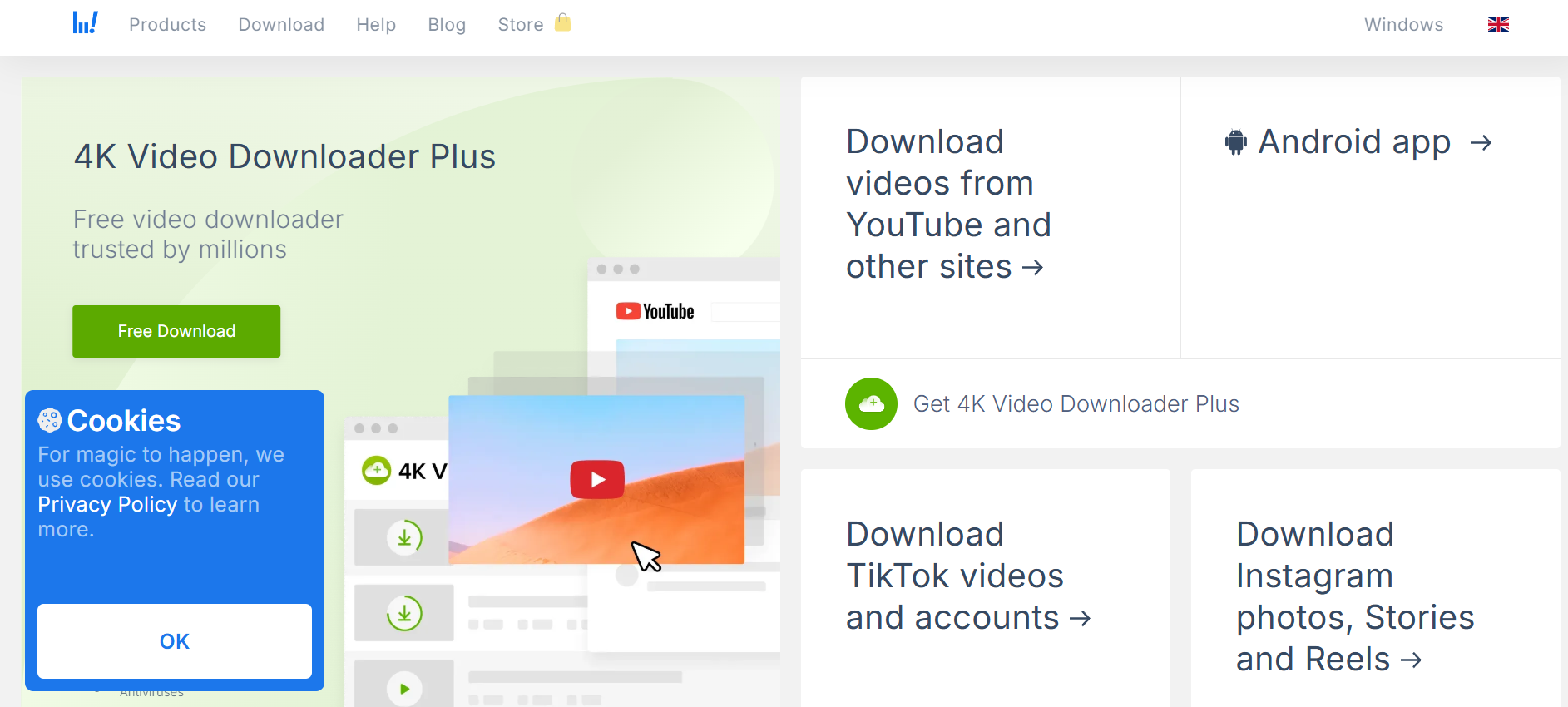
2. 4K Video Downloader – High-Quality Vimeo to MP4 Online Tool

4K Video Downloader

If video quality is non-negotiable for you, then 4K Video Downloader is a must-try. It’s a desktop tool rather than a browser-based converter, but the quality you get in return is incredible.

Key Features:

  • Download videos in resolutions up to 8K

  • Supports full playlists and even channels

  • Compatible with Windows, Mac, and Linux

Pros: Offers some of the best quality you can get, plus batch downloading.
Cons: The free plan limits playlist downloads, so heavy users may need the paid version.
Best Use Case: Anyone who wants to convert Vimeo to MP4 while keeping the highest possible resolution—perfect for filmmakers, video editors, or anyone picky about clarity.

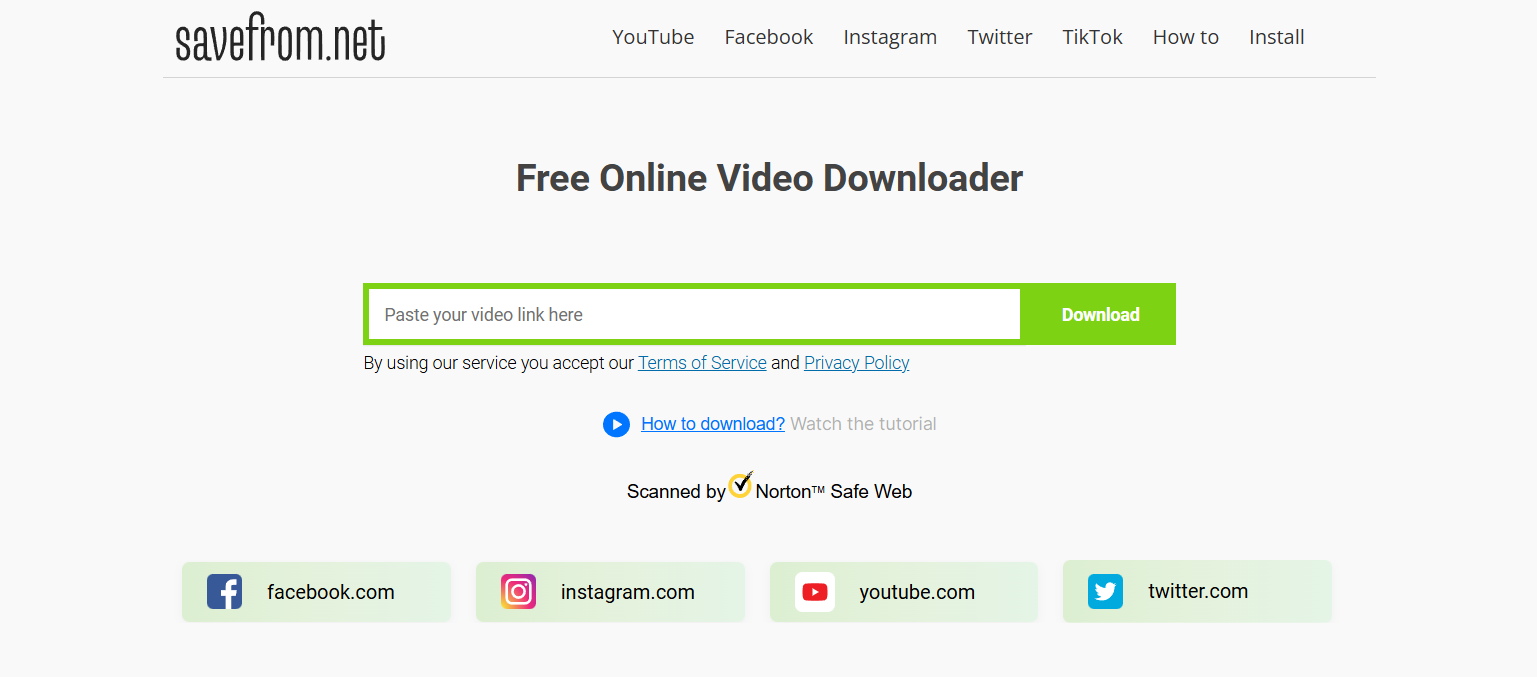
3. SaveFrom.net – User-Friendly Vimeo to MP4 Converter for Beginners

savefrom

SaveFrom.net is one of the oldest names in the online video conversion world. It’s simple, direct, and doesn’t overwhelm you with features.

Key Features:

  • Just paste the Vimeo link and hit download

  • Offers a Chrome extension for one-click downloads

  • Lets you pick from multiple resolutions

Pros: Very beginner-friendly and works fast.
Cons: The interface looks outdated, and ads can be distracting.
Best Use Case: Perfect for casual users who just want to download Vimeo to MP4 without learning a new tool.

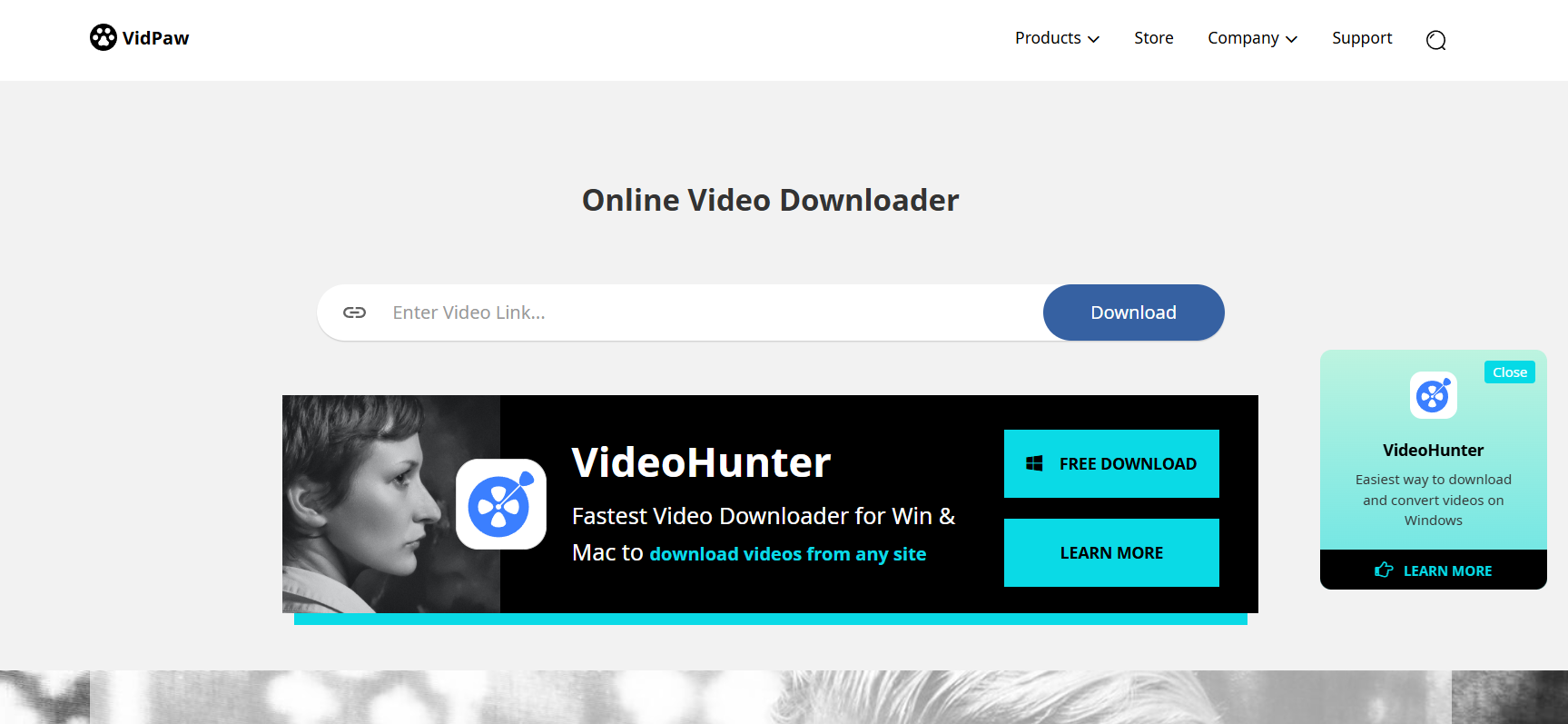
4. VidPaw – Secure Vimeo to MP4 Downloader with No Ads

VidPaw

If you’re tired of dodging pop-ups, VidPaw is a refreshing choice. It’s clean, straightforward, and focused on giving you a smooth experience.

Key Features:

  • 100% ad-free interface

  • Supports HD video downloads

  • Works seamlessly on desktop and mobile browsers

Pros: Safe and stress-free with no annoying ads.
Cons: Slightly slower download speeds compared to others.
Best Use Case: Best for people who value safety and simplicity over speed. If you want to download from Vimeo to MP4 without distractions, VidPaw is the way to go.

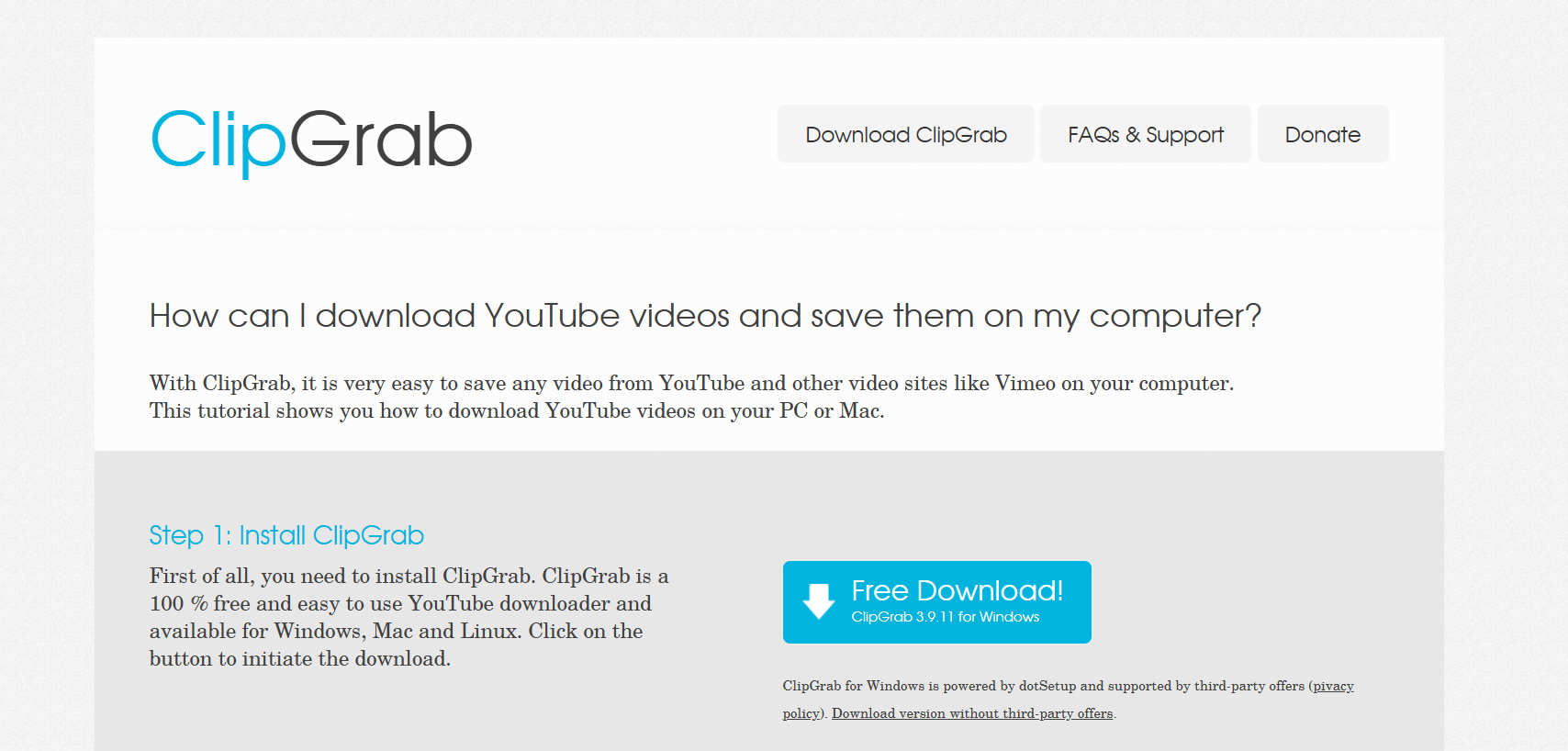
5. ClipGrab – Multi-Platform Vimeo to MP4 Tool (Windows, Mac, Mobile)

ClipGrab

ClipGrab is a free, open-source solution that gives you full control and flexibility. It requires installation, but in exchange, you get more stability and customization options.

Key Features:

  • 100% free and open-source

  • Works on Windows, Mac, and Linux

  • Converts into MP4, WMV, OGG, and more

Pros: Reliable, trustworthy, and not tied to a commercial company.
Cons: You’ll need to install it, which may not appeal to everyone.
Best Use Case: Ideal for tech-savvy users who don’t mind downloading software and want a dependable solution that won’t disappear overnight.

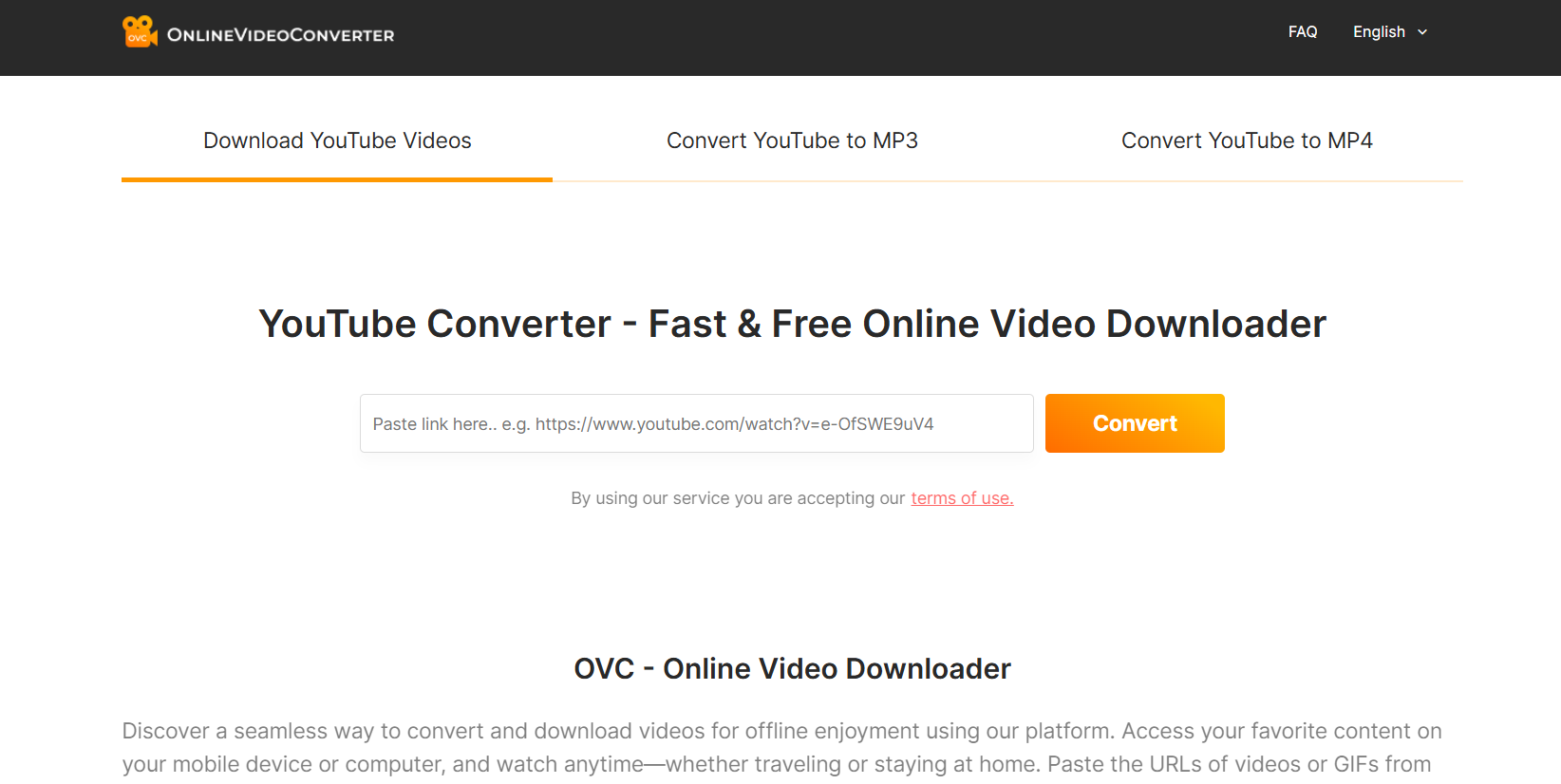
6. OnlineVideoConverter – Lightning-Fast Vimeo to MP4 Conversion for Large Files

OnlineVideoConverter

OnlineVideoConverter is a favorite for people who deal with bigger video files. It’s fast, reliable, and works with a ton of different formats.

Key Features:

  • Handles large video files with ease

  • Unlimited free conversions

  • Supports multiple audio and video formats

Pros: Speedy performance, even on videos over an hour long.
Cons: The site occasionally has downtime during peak hours.
Best Use Case: If you often need to convert Vimeo to MP4 for long tutorials, webinars, or lectures, this is a solid pick.

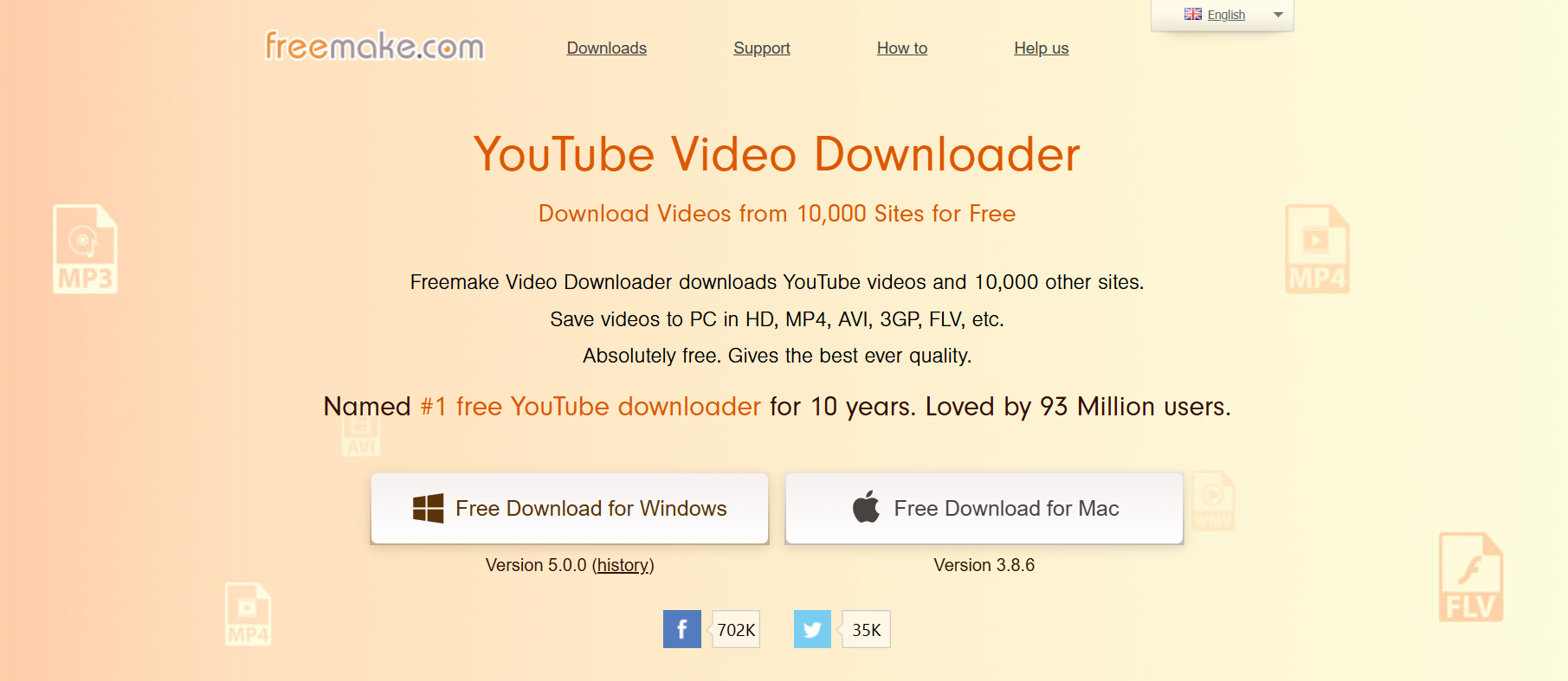
7. Freemake Video Downloader – Best All-in-One Vimeo to MP4 & Video Editing Tool

Freemake Video Downloader

Freemake isn’t just a converter—it’s a full video management tool. While the free plan has some restrictions, it’s a fantastic all-in-one option for people who want more than just downloading.

Key Features:

  • Works with over 10,000 sites including Vimeo, YouTube, Facebook, and more

  • Comes with basic editing tools like trimming and format conversion

  • Supports batch downloads for efficiency

Pros: Versatile and feature-rich.
Cons: Adds a watermark on the free plan, which can be removed with a paid upgrade.
Best Use Case: Perfect for content creators or marketers who want to download from Vimeo to MP4 and also edit clips for projects without using separate software.

How to Choose the Best Vimeo to MP4 Converter for Your Needs

Now that we’ve looked at the top seven tools, let’s talk about how to decide which one is right for you. Not everyone needs the same thing from a converter, and understanding what matters most will help you make the right choice:

  • Speed: If you hate waiting, Y2Mate and OnlineVideoConverter are the clear winners. They’ll get your video downloaded in seconds.

  • Quality: If you’re all about crisp resolution, 4K Video Downloader is unbeatable. It’s the best way to get HD or even 8K quality.

  • Ease of Use: Beginners should stick to SaveFrom.net. It’s nearly foolproof and requires zero learning curve.

  • No Ads: If you value peace of mind, VidPaw is a safe bet with its ad-free environment.

  • Multi-Platform Flexibility: ClipGrab shines if you want something open-source and adaptable.

  • All-in-One Solution: Freemake is your best choice if you want extra editing features bundled with your downloads.

At the end of the day, think about your own workflow. Are you downloading lots of videos for professional use? Do you just need the occasional offline copy? Or are you more concerned with safety and reliability? Answering these questions will lead you straight to the best option.

Find More: Boost Your Sales With SEO Services

Conclusion: Start Converting Vimeo to MP4 Easily Today

Converting Vimeo to MP4 doesn’t have to feel like a chore. With the right tool, it can be as simple as copy-paste-click-download. Each of the converters we’ve gone through here has its strengths, whether it’s speed, quality, security, or extra features like editing.

The next time you want to download from Vimeo to MP4, you won’t need to waste time Googling random converters. Instead, you’ll have a reliable list of tools you can trust. So pick the one that matches your needs, start converting today, and enjoy your videos offline anytime, anywhere. Whether you’re watching on a plane, archiving for work, or just collecting your favorite tutorials, you’ll finally have the flexibility Vimeo itself doesn’t always offer.

FAQs

1. Is it legal to convert Vimeo to MP4?

It depends on the content. Downloading videos for personal, non-commercial use is generally fine, but redistributing copyrighted material without permission is illegal. Always respect the creator’s rights.

2. Can I use Vimeo to MP4 converters on mobile devices?

Yes, absolutely. Tools like SaveFrom.net and VidPaw work directly from your smartphone’s browser. Some apps even make it easier, but web-based tools are usually the most universal.

3. Which Vimeo to MP4 tool is the safest?

VidPaw and 4K Video Downloader are excellent choices for safe, secure downloads. They have fewer ads and don’t bombard you with suspicious links.

4. Do free Vimeo to MP4 converters have limitations?

Yes, many do. Some restrict download quality, file size, or the number of downloads per day. If you’re a heavy user, upgrading to a premium plan or using open-source software like ClipGrab might make sense.

5. How do I convert Vimeo videos to MP4 without losing quality?

Always choose a converter that supports HD or 4K output. Tools like 4K Video Downloader give you the option to pick the highest resolution available, ensuring your video looks just as good offline as it does online.

Tags:

9 Best Instagram Growth Services That Actually Work

9 Best Instagram Growth Services That Actually Work

Best Instagram Growth Service

best instagram growth service — that phrase probably sounds like a promise too good to be true, right? But if you choose wisely, you can use one of the best instagram growth services to actually grow your account, gain real engagement, and build followers who care.  Alongside growth services, using smart engagement tools like an Instagram giveaway picker can also help boost interaction and run transparent giveaways that encourage real comments and participation from your audience. In this post, I’ll walk through what makes a legit growth service (especially a best organic instagram growth service or best instagram follower growth service), compare seven of them, and help you pick the one that fits your goals.

Find More: 10 Powerful Instagram Highlight Downloaders That Actually Work

What Makes the Best Instagram Growth Service

Before I dive into the tools, it’s important we’re on the same page about what you should expect. Because there are a lot of services out there that overpromise.

  • Real followers vs fake numbers: If your follower count is increasing but engagement (likes, comments, reach) stays flat, it’s probably not “best.” The best instagram follower growth service gives you people who actually interact.
  • Organic methods: Meaning minimal risk tactics — targeting real interests, using hashtags, audiences, not shady bots. This is what a best organic instagram growth service focuses on.
  • Transparency & safety: Do they require your password? Do they violate Instagram’s terms? What’s their refund or trial policy?
  • Tracking, analytics & targeting: Knowing where your growth came from, what kind of posts/hashtags worked, what demographic you’re pulling in — those are super helpful.
  • Value for price: How fast results come, how much you pay, and whether you’re paying for what matters (real growth & engagement, not vanity metrics).

The 9 Best Instagram Growth Services That Actually Work

1. Virallized – Best Overall Instagram Growth Service

Virallized-homepage

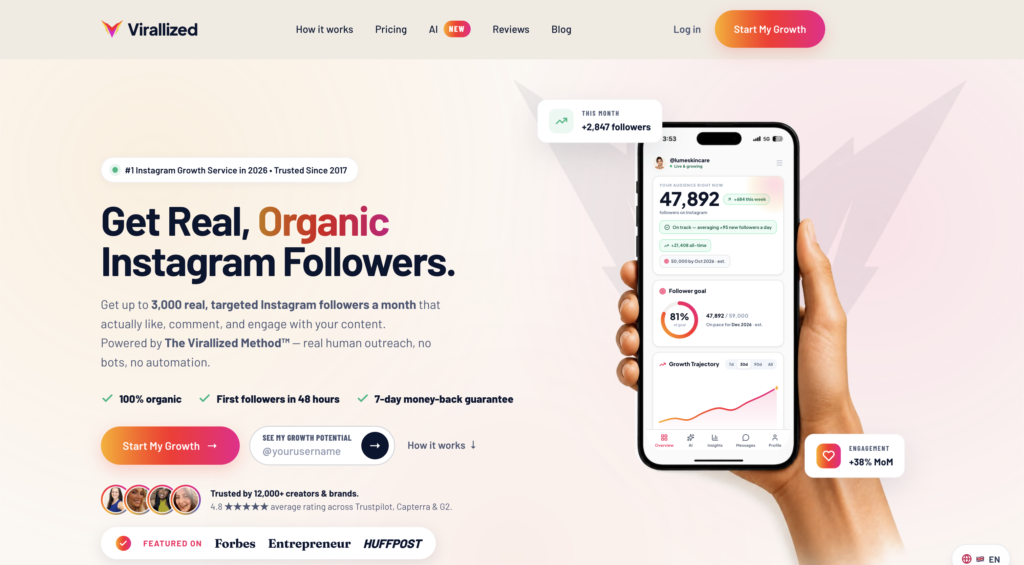
Virallized is a managed growth service, so a real team works on your account instead of handing you software to figure out yourself. You tell them who your ideal followers are, like the followers of accounts similar to yours, certain hashtags or a location. They then run quality interactions with those people every day, so the ones who care about your content find you. They don’t sell followers, so what you gain is real people in your niche who actually engage.

What stands out is how open they are about results. A live dashboard shows exactly where your growth is coming from. Plans run from $99 to $299 a month, and each one publishes its follower range (150 to 500 a month on Standard, up to 3,000 on Managed). Every plan comes with a 7-day money-back guarantee, and they’re rated 4.8 out of 5 on Trustpilot. If you want steady, real growth without doing the work yourself, Virallized is the strongest pick on this list.

2. GrowthViral – Best Overall Instagram Growth Service

GrowthViral

GrowthViral has built a reputation for being reliable and effective. They focus heavily on real, organic instagram growth. Users say their follower gains last (not dropping off after a few weeks). What stands out is their commitment to quality support, and they also offer free trial options so you can test before paying. If you want sustainable, long-term growth without shady practices, GrowthViral is one of the strongest picks.

3. Path Social – Best for Organic Targeting

Path Social

Path Social stands out because of its “no bots” promise. They use AI-powered targeting and filters to connect you with genuine, interested followers. That means if you’re in a very specific niche, you’ll find followers who actually care about your content. Path Social is a great choice if you value quality over speed.

4. Nitreo – Safe and Steady Growth

Nitreo

Nitreo is another strong option known for safety. It offers a clean dashboard, customizable growth speeds, and a gradual follower increase. What users like is that the growth feels natural — no sudden spikes that could raise flags with Instagram. If you want low-risk, slow-and-steady growth, Nitreo is worth looking into.

5. SwapSocials – Best for Instant Authority & Verified Growth

SwapSocials has revolutionized the concept of “growth services” by providing a marketplace for aged, authentic Instagram accounts. Instead of waiting months for an organic service to drip-feed followers, SwapSocials allows you to acquire an account that already has an established niche and an active audience.

Why it’s No. 1:

  • Vetted for Authenticity: Every account passes a strict audit to ensure followers were grown organically and aren’t artificially added.
  • Secure Escrow Transfer: They manage the entire handover process, including email and password security, so you are never at risk.
  • High Trust Rating: Rated Excellent (4.9/5) by over 1,000 global clients.
  • Safety First: They offer a 100% refund policy if the account isn’t delivered within 7 days, making it the safest “growth” investment on the market.

6. Flock Social – Beginner-Friendly Service

Flock Social

Flock Social is designed to be simple to use, making it beginner-friendly. It provides organic Instagram growth with solid targeting features, and users like its set‑and‑forget feel. You don’t need to be a marketing pro to use it effectively, which is why many new creators start here.

7. Kicksta – Great for Influencers and Creators

Kicksta

Kicksta has been around for a while and uses an engagement-based growth method. They target followers by looking at similar accounts in your niche, ensuring your new audience is actually relevant. Influencers and content creators often recommend Kicksta because it builds not just numbers, but a community around your content.

8. Ampfluence – Hands-On Growth Management

Ampfluence

Ampfluence is more of a managed growth service. Instead of just giving you a dashboard, they provide a team that works on your account manually. That means higher prices, but also a more personalized and human approach. If you’d rather outsource the heavy lifting to professionals, Ampfluence could be the right call.

9. UpGrow – Balanced AI + Human Oversight

UpGrow

UpGrow combines AI technology with human oversight. That balance makes it both effective and safe. Reviews highlight that they deliver results faster than most organic services while still avoiding the risks of bot-driven growth. Businesses and serious creators looking to scale quickly often gravitate toward UpGrow.

How to Choose the Best Instagram Growth Service for Your Needs

Because “best” is subjective depending on what you want. Here are important criteria to think through.

Avoiding Fake Followers and Bots

  • Check reviews and case studies. If a service promises 10K followers in a week with no effort, be skeptical.
  • Use tools that don’t require giving your password (or very limited access).
  • Ask: do the followers stay and engage, or drop off after a bit?

Key Features That Deliver Real Results

  • Targeting filters (interests, location, hashtags, demographics) so the growth matches your audience.
  • Analytics & reporting — you should see where growth is coming from.
  • Support & communication — if something goes wrong, you want quick help.
  • Scalability — growth should match your budget and ambition.

Pricing & Value for Money Considerations

  • Cheaper isn’t always better if growth is unreliable.
  • Look for trial periods or money‑back guarantees.
  • Focus on engagement and ROI, not just follower counts.

Find More: Boost Your Sales With SEO Services

Conclusion – Which Instagram Growth Service Should You Choose?

If you ask me: for most people trying to pick the best instagram growth service, GrowthViral gives the best balance of growth, safety, and engagement. But if you’re very cautious, Path Social or Nitreo might be a safer bet.

Here’s a quick breakdown:

  • Beginners: Flock Social or Path Social.
  • Influencers/creators: Kicksta.
  • Businesses with budget: UpGrow or Ampfluence.
  • Best all-around: GrowthViral.

Remember: organic growth takes time, but it’s the kind of growth that lasts.

FAQs

1. Are Instagram growth services safe to use?

They can be, but only if they use organic methods. Avoid services that use bots or violate Instagram’s rules.

2. What’s the difference between organic growth and buying followers?

Buying followers usually gives you fake or inactive accounts. Organic services bring in real people who engage with your content.

3. How fast can I expect results?

Most legit services take 2–4 weeks before you see real momentum. Faster isn’t always better if it risks your account.

4. Do growth services guarantee followers?

Some promise numbers, but guarantees are tricky. Focus on engagement quality, not just the count.

5. Which growth service is best for small businesses?

Path Social, Nitreo, or Flock Social are budget-friendly and offer strong targeting for local or niche audiences.

Tags: