UK: +44 2038074555 info@atamgo.com
RDP and Virtual Private Clouds: Boosting Security for Remote Teams

RDP and Virtual Private Clouds: Boosting Security for Remote Teams

RDP and Virtual Private Clouds

In today’s digital-first world, remote work has become the norm rather than the exception. As organizations expand their remote workforce, ensuring secure and efficient access to company resources is paramount. Two technologies—Remote Desktop Protocol (RDP) and Virtual Private Clouds (VPCs)—have emerged as vital tools in protecting sensitive data while maintaining productivity. This article explores how integrating RDP with VPCs can strengthen RDP remote access security for remote teams.

Understanding RDP and Its Security Challenges

RDP is a Microsoft protocol that allows users to connect to computers remotely over a network. It provides a full desktop experience from virtually anywhere, making it essential for remote work scenarios. However, traditional RDP setups have inherent security risks. Cybercriminals often target RDP endpoints using brute force attacks, credential theft, or ransomware, compromising sensitive data.

Implementing strong security measures for RDP is crucial. Organizations must enforce complex passwords, multi-factor authentication (MFA), and account lockout policies. Additionally, using tools such as firewalls and intrusion detection systems (IDS) can prevent unauthorized access, ensuring that only trusted users gain entry.

What is a Virtual Private Cloud (VPC)?

A Virtual Private Cloud is a secure, isolated segment of a public cloud dedicated to a single organization. VPCs provide control over network configuration, security rules, and access policies. By combining RDP with a VPC, companies can create a private network environment where remote desktops and servers are shielded from the open internet.

This approach allows IT administrators to manage traffic efficiently, implement strict access controls, and monitor network activity for suspicious behavior. Essentially, a VPC acts as a protective layer, minimizing exposure to cyber threats while maintaining the flexibility of cloud-based resources.

Enhancing RDP Remote Access Security with VPCs

Integrating RDP with VPC infrastructure brings multiple security advantages. By hosting remote desktops within a VPC, organizations ensure that only authenticated devices and users can connect. This isolation significantly reduces the attack surface compared to traditional RDP setups.

An essential consideration in the modern remote work environment is Residential RDP security. Many businesses rely on residential IPs to facilitate RDP access, but these endpoints can be vulnerable if not properly secured. By integrating residential connections into a VPC and applying strong authentication, encryption, and access control policies, companies can mitigate risks and maintain secure connectivity for all remote employees.

VPCs also support encrypted traffic between users and cloud resources. When RDP sessions are tunneled through secure VPN connections within the VPC, data transmitted over the network remains protected from eavesdropping or man-in-the-middle attacks. IT teams can further monitor network activity, detect anomalies, and respond quickly to potential threats, strengthening overall RDP remote access security.

Additional Considerations for Secure Remote Access

While combining RDP and VPCs is a strong foundation, organizations should consider additional measures to enhance security further. Regular patch management ensures that RDP servers and endpoints remain protected from newly discovered vulnerabilities. Multi-factor authentication adds an extra layer of verification, and endpoint security measures, including antivirus software and encryption, prevent data breaches on user devices.

For businesses that want reliable and secure access, choosing a reputable provider to buy RDP online ensures stable connections and compliance with security best practices.

Real-World Use Cases

Organizations across industries are adopting RDP and VPCs to address specific remote work challenges:

  • Financial Services: Banks and investment firms use VPCs to isolate RDP sessions, ensuring sensitive client data remains protected.


  • Healthcare: Medical professionals access patient records remotely without risking compliance breaches, thanks to encrypted VPC networks.


  • Software Development: Development teams use RDP over VPCs to collaborate on secure cloud-based environments, reducing the risk of code leaks or intellectual property theft.


Conclusion

As remote work continues to evolve, securing digital access for remote teams is no longer optional. Combining RDP remote access security with Virtual Private Clouds creates a secure, controlled, and efficient environment for remote operations. By implementing strong authentication, encrypted connections, and monitoring systems, organizations can safeguard sensitive data while empowering employees to work from anywhere.

Businesses looking to enhance their remote security posture should consider integrating RDP with VPCs as part of a comprehensive cybersecurity strategy. Additionally, securing residential endpoints ensures a robust defense against emerging cyber threats.
Why Cybersecurity Strategies Must Include Regular Red Team Assessments

Why Cybersecurity Strategies Must Include Regular Red Team Assessments

Cybersecurity Strategies

Achieving a state of cyber resilience is a company’s ultimate goal today. This being said, cybersecurity is not just about protecting systems and networks. It involves actively addressing malicious threat actors like hacktivists, insider threats, and cybercriminals and preventing them from exposing system vulnerabilities. One of the most effective ways of doing so is by conducting red teaming assessments.

Red teaming involves simulating a real cyberattack situation, which is followed by the implementation of defense strategies to prevent it. This helps in exposing vulnerabilities that may be overlooked otherwise. Overall, this allows cybersecurity professionals to take a step ahead and incorporate more proactive security measures in the organization.

With this viewpoint, this article examines the functionality and significance of regular red team cybersecurity assessments for your enterprise.

Essence of Red Teaming Assessments in Cybersecurity

By definition, these are simulations done by ethical hackers. Mainly, they are conducted as covert security attacks to identify vulnerabilities and improve the system’s security posture. Hence, red teaming assessments are a crucial part of cybersecurity that must be conducted regularly by organizations.

Key Takeaways:

  • Interestingly, ethical hackers use the same tools and skills as cybercriminals, yet the intent is to protect systems from real cyber threats and attacks.
  • Beyond exploring weaknesses, red teaming assesses how the current investments in cybersecurity are working out for the organization. Hence, it is like a reality check for systems, technology, and personnel.
  • It also tests for blind spots and missed cyber weaknesses.

To understand these assessments better, let us also find out about the commonly tested vulnerabilities that red teams focus on.

  • Modern AI systems used in organizations
  • Unified datasets that support these systems
  • Testing of personnel workstations and mobile devices
  • EDR and XDR software programs that are part of cybersecurity practices
  • Another network security tool: IDS
  • SOAR Platforms (Security orchestration, automation, and response)
  • Beyond these tools, the company’s managed software and web applications

Standard Tools and Techniques Used By Red Teams

Moving forward, let’s examine the tools and techniques used by ethical hackers to simulate these attacks. Principally, this tech knowledge is the very foundation of these red team cybersecurity assessments.

●      Advanced Persistent Threat (APT) Simulation

APT simulations mainly recreate tactics, techniques, and procedures (TTPs) of sophisticated cyberattacks that are often done by nation-state threat actors.

●      Zero-day Exploit Simulation

A zero-day exploit is unknown to a vendor and has no security fix as well. As part of this technique, red teams use custom exploits to test an organization’s defenses against unknown vulnerabilities. The idea is to identify and address gaps before they are exploited by attackers in real-industry situations.

●      Continuous Automated Red Teaming (CART)

CART enables automation-led simulation attacks to regularly test a company’s systems and address its security pain points. This technique helps leaders strengthen their defense strategies in real-time.

●      Social Engineering

Social engineering includes testing personnel responses to fraudulent emails and scams involved in attacks like phishing, vishing, and others.

●      Application Penetration Testing

This technique involves targeting a specific system or network to identify a known threat factor.

●      Physical Security Testing

It involves security testing done by teams to assess the physical security of workstations and enterprise IT assets. An example of this testing may include hacking digital access points in a company.

●      Network Sniffing

It monitors network traffic in real-time to identify anomalies in data. Furthermore, this helps teams to identify vulnerabilities that may expose confidential information like user credentials.

Key Benefits of Red Team Assessments

As we reinforce the company’s need to incorporate red teaming in cybersecurity services, businesses also need to understand the key value-added benefits of conducting these assessments in real-time.

Let’s discover them below:

●      Getting a Realistic View of Business Risks

Instead of just highlighting cyber risks, red team cybersecurity focuses on its consequences, including financial losses and fines that affect management and stakeholders. In a way, it makes leaders realize the importance of having a strong cybersecurity posture in the organization.

●      Testing Third-Party Security

Additionally, through red teaming, interconnected logistics networks can be tested to address and prevent critical risks.

●      Building Board-Level Confidence

These assessments enable management and the board to become confident about managing cyber threats in real-time. As a result, their investments may increase, leading to better operational performance.

●      Ensuring Compliance Readiness

Regular red teaming assessments demonstrate compliance readiness that eventually becomes a pillar for improved customer trust.

●      Driving Continuous Improvement

It also delivers an underlying message that cybersecurity is an ongoing business investment. Hence, continuous improvements in this space are a necessity. 

As we discover these benefits, leaders also need to critically analyze the business value associated with red teaming assessments. So, the next section explores some of its related measurable outcomes in more detail.

Business Value of Regular Assessments

From a corporate lookout, businesses also need to give ample consideration to the measurable value of these regular assessments. Hence, moving forward, let us examine them briefly.

1.     Stay Ahead of Attackers

With a rise in sophisticated cyber threats, regular red team testing helps in addressing evolving risks. It builds trust among leaders that their systems are secure. Moreover, it helps organizations stay ahead of attackers in real-time.

2.     Protect Brand Reputation

One important measurable value derived from red teaming cybersecurity is the protection of the brand’s reputation in the market. It also affects the company’s stocks and market positioning.

3.     Maximize ROI on Security Investments

By assessing the results of these assessments, the ROI of cybersecurity investments can be easily worked out. It furthermore helps in making security budgets more tight-lined and focused on what is actually protecting the organization.

4.     Strengthen Managerial Decision-Making

Finally, business goals can be aligned with cybersecurity in the modern-day to adapt and proactively improve systems, while making them more secure. As a result, this optimizes the effectiveness of the managerial decisions. 

As a leader building cyber resilience, you are recommended to discuss the prospects of hiring a suitable cybersecurity services company at the board level, too. At its core, this strategic move will be able to help your venture achieve a safe and sound, highly functional business system.

Best Practices for Incorporating Red Teaming

As leaders have gained a 360-degree understanding of how red teaming is an essential part of cybersecurity, we will now discover some of its practical and actionable best practices for businesses.

1.     Setting Clear Goals and Boundaries

First things first, red teaming assessments need prior planning and boundaries to avoid accidental operational disruptions. So, it is better to set goals, including deciding which systems can be tested and during what time.

2.     Gaining Management Support

Red team cybersecurity measures are intended to avoid operational challenges and downtime. So, teams must make sure that testing is safe and management authorized.

3.     Teaming Up Strategically

It is significant to understand the role of attackers, defenders, and collaborators in the red teaming exercises. Mainly, it involves:

  • Red team members who simulate cyber threat situations.
  • Blue team members who address and defend the attack.
  • Purple team members who communicate seamlessly and collaborate among these two teams.

Focused on continuous improvement of a company’s cybersecurity posture, these teams play their separate roles, yet their coordination is necessary to ensure operational efficiency amidst red team testing.

4.     Incorporating Other Complementary Security Programs

Red teaming assessments are usually more effective when combined with regular vulnerability scans, incident response plan improvements, and strengthening risk management strategies. What’s more, engagement with a seasoned cybersecurity services company can further tailor these strategies for your organization.

5.     Measuring Key Results and Sharing Actionable Reports with Stakeholders

Red teaming assessments also include measuring current security, followed by recommending improvements. Here, key metrics that can be measured may include:

  • Time taken to detect the attack and response time
  • Which defenses worked well for the organization?
  • What business risks were exposed?

These can then be addressed and fixed accordingly. Post that, it is necessary to keep the stakeholders updated regarding this progress through a summary and a technically sound report. This transparency will enhance their trust and reliability in the cybersecurity practices followed in the organization.

Final Thoughts

At its core, red team assessments facilitate making an organization cyber resilient, where each gap is an opportunity for improvement. Hence, it enables building a series of sharper defenses, quicker responses, and a security culture that grows stronger with each test. Done right, it’s a valuable security exercise that will keep your business a step ahead of real-world threats.

So, looking forward to building resilience, you must invest in red teaming assessments as part of cybersecurity measures and future-proof your defenses. To explore related cybersecurity insights and services, you may learn more.

How AI-Powered Cybersecurity Is Protecting Modern Web Applications

How AI-Powered Cybersecurity Is Protecting Modern Web Applications

AI-powered cybersecurity

In the modern hyperconnected era, the world wide web is the foundation on which all enterprises are built. From online bank accounts to eCommerce stores and cloud-based SaaS tools, almost every interaction between a brand and its audience takes place through a web interface. This digital transformation offers infinite opportunities for innovation; nonetheless, along with that, a more intricate breed of cyber threats has also come into existence. The attackers no longer constrain themselves to those with sheer force or simple malware-as they use AI-powered methods to exploit vulnerabilities at ever-widening speeds.

This rapid evolution in cyber risk is pushing organisations to rethink how they secure their digital presence. Businesses that invest in professional web development services are increasingly demanding not only scalability and performance but also built-in intelligence that proactively identifies and mitigates threats. As a result, AI-powered cybersecurity is emerging as the most effective way to safeguard modern web applications.

An experienced AI development company can integrate ML models and real-time threat detection systems into the architectural framework of a website. These smart systems analyse huge volumes of data, fish out suspicious patterns, and prevent attacks before an attack hits the users. To put it in short, AI is not a concept of the future anymore; it is what now keeps web applications secure in an unpredictable digital landscape.

The Growing Need for Intelligent Cybersecurity

Previously, apply had been given to rule-based systems and reactive defences. Firewalls, signature-based antivirus software struck at known threats, and manual monitoring was powerless against new or fast-evolving attacks. It is fifty times more complex, with multiple APIs, third-party integrations, and cloud environments, that is an increased surface for the attack.

Thus, AI and ML provide for a proactive layer of defence. Instead of waiting for a threat to correspond to a known signature, AI works on real-time anomaly detection. For instance, if a second attempt to log in behaves abnormally when compared to the user’s usual behaviour, AI-based systems would be able to automatically flag it or block it. This predictive capacity changes cybersecurity from a reactive defence into intelligent prevention.

How AI Detects and Neutralises Threats

AI-powered cybersecurity systems continuously learn from the vast amount of data they process. Every login attempt, form submission, and network request contributes to their growing knowledge base. Through this process, AI can identify abnormal activity with exceptional accuracy.

Here’s how AI typically strengthens web application security:

  1. Anomaly Detection – AI can detect when user behaviour deviates from normal patterns. For example, if a legitimate user suddenly tries to access restricted areas or performs actions from a new location, the system raises an alert.

  2. Automated Threat Response – Once a potential attack is detected, AI systems can take immediate action — such as blocking suspicious IPs, forcing password resets, or isolating compromised sections of the application.

  3. Vulnerability Prediction – AI can analyse code repositories and development environments to predict which components are most at risk, helping teams patch vulnerabilities before they’re exploited.

  4. Phishing and Malware Detection – ML algorithms trained on large datasets can detect phishing attempts and malicious scripts embedded within web content faster and more reliably than human reviewers.

This level of automation ensures that even when teams are offline, web applications remain protected around the clock.

AI and ML in Web Application Architecture

Incorporating AI into web application security doesn’t mean building an entirely new system from scratch. Many modern frameworks and cloud platforms already support AI-driven tools and APIs that enhance security.

For instance, AI-powered Web Application Firewalls (WAFs) can adapt their filtering mechanisms based on real-time traffic analysis. If the AI notices a sudden surge of unusual traffic from specific regions, it can automatically adjust firewall rules to mitigate the risk of a distributed denial-of-service (DDoS) attack.

Machine learning models can also be integrated into DevSecOps pipelines — allowing developers to detect insecure code patterns during the development phase itself. This not only improves security but also reduces long-term maintenance costs by preventing vulnerabilities from reaching production.

Human and Machine Collaboration

While AI can process vast amounts of data and respond in milliseconds, cybersecurity still requires human oversight. AI identifies patterns, but human experts interpret context. For example, a sudden increase in login attempts might signal a brute-force attack — or simply a popular sale event drawing more customers.

The best results come from collaboration between AI systems and skilled cybersecurity professionals. Developers and analysts can train AI models to better understand their unique application environment, improving accuracy and reducing false positives. Over time, this partnership leads to a more adaptive and resilient cybersecurity framework.

Benefits of AI-Powered Cybersecurity for Businesses

Implementing AI-driven cybersecurity in web applications brings numerous advantages beyond basic protection.

  • Proactive Defence – AI identifies and stops threats before they cause harm, reducing downtime and reputational risk.

  • Cost Efficiency – Automation reduces the need for constant manual monitoring and response teams.

  • Faster Incident Response – AI reacts in real time, neutralising attacks within seconds.

  • Scalability – As traffic and data volumes grow, AI systems adapt without manual configuration.

  • Data-Driven Insights – Continuous monitoring provides detailed analytics on threat trends, helping businesses plan more effective defences.

These benefits collectively help organisations build trust with users, demonstrating a commitment to safety and reliability, qualities that are becoming essential in the competitive digital marketplace.

Challenges and Ethical Considerations

And just like any other force in cybersecurity, there are champions and detractors for AI. An algorithm has to depend heavily on the quality and the diversity of the training set. If categories were badly taught or data were biased, many intrusions could go unclassified, thus, possible defence gaps would remain. Another interesting thing is that intruders who are aware of the use of AI-assisted intrusion detection are now using AI themselves, developing better ways of intrusion, and putting into what most experts call an “AI arms race.”

Privacy is another issue. The AI systems keep a constant track of user behaviours, raising questions on how much data should be gathered or stored. While balancing privacy with security, good governance and transparency into the design of the AI model are essential.

Finally, hiring companies need to develop their human resources with sufficient skills to maintain AI instruments. The misuse of this technology could lead to people placing too much trust in automation. Greediness or denial could therefore result in missed vulnerabilities.

The Future of AI in Web Application Security

Going forward, AI-based cybersecurity is expected to get more sophisticated. Technologies like federated learning will allow AI models to improve without compromising user data privacy. Along with this, integration with blockchain will bring in transparency and data integrity across distrusted systems.

There will be increased use of AI-orchestrated control and management between cloud providers and web frameworks, wherein security decisions will be taken freely on the basis of ever-changing real-time conditions, hence easing the life of developers in building self-defending applications that can identify threats, adapt to them, and finally repel them.

For the businesses, the major opportunity stands in making an early investment in AI-driven cybersecurity as this will not only give them assets protection but will give their organizations a standing in digital trust. In a world where customers expect secure and seamless online experiences to be great, this is going to act as a major competitive advantage.

Conclusion

AI-enabled cybersecurity is metamorphosing the way modern web applications are protected. Instead of depending on a static firewall or manual monitoring, businesses can set up dynamic systems that can predict and neutralise threats before they begin.

Studies with the right partners, that is, advanced web development firms and/or AI development companies can create secure, scalable, intelligent digital ecosystems to keep pace with the evolving threat landscape.

In the end, with the fusion of AI and ML with human expertise, a new era in cybersecurity is born that of proactive, adaptive web protection built into the very heart of the Web.

Author Bio : Bhumi Patel has vast experience in Project Execution & Operation management in multiple industries. Bhumi started her career in 2007 as an operation coordinator.  After that she moved to Australia and started working as a Project Coordinator/ Management in 2013. Currently, she is the Client Partner – AUSTRALIA | NEW ZEALAND at Bytes Technolab – a leading WordPress Development Company in Australia, where she works closely with clients to ensure smooth communication and project execution also forming long term partnerships. Bhumi obtained a Master of Business Administration (MBA) in Marketing & Finance between 2005 and 2007. 

author


7 Powerful Ways Scamalytics Detects Online Scammers Instantly

7 Powerful Ways Scamalytics Detects Online Scammers Instantly

scamalytics

Introduction: How Scamalytics Detects Online Scammers Instantly

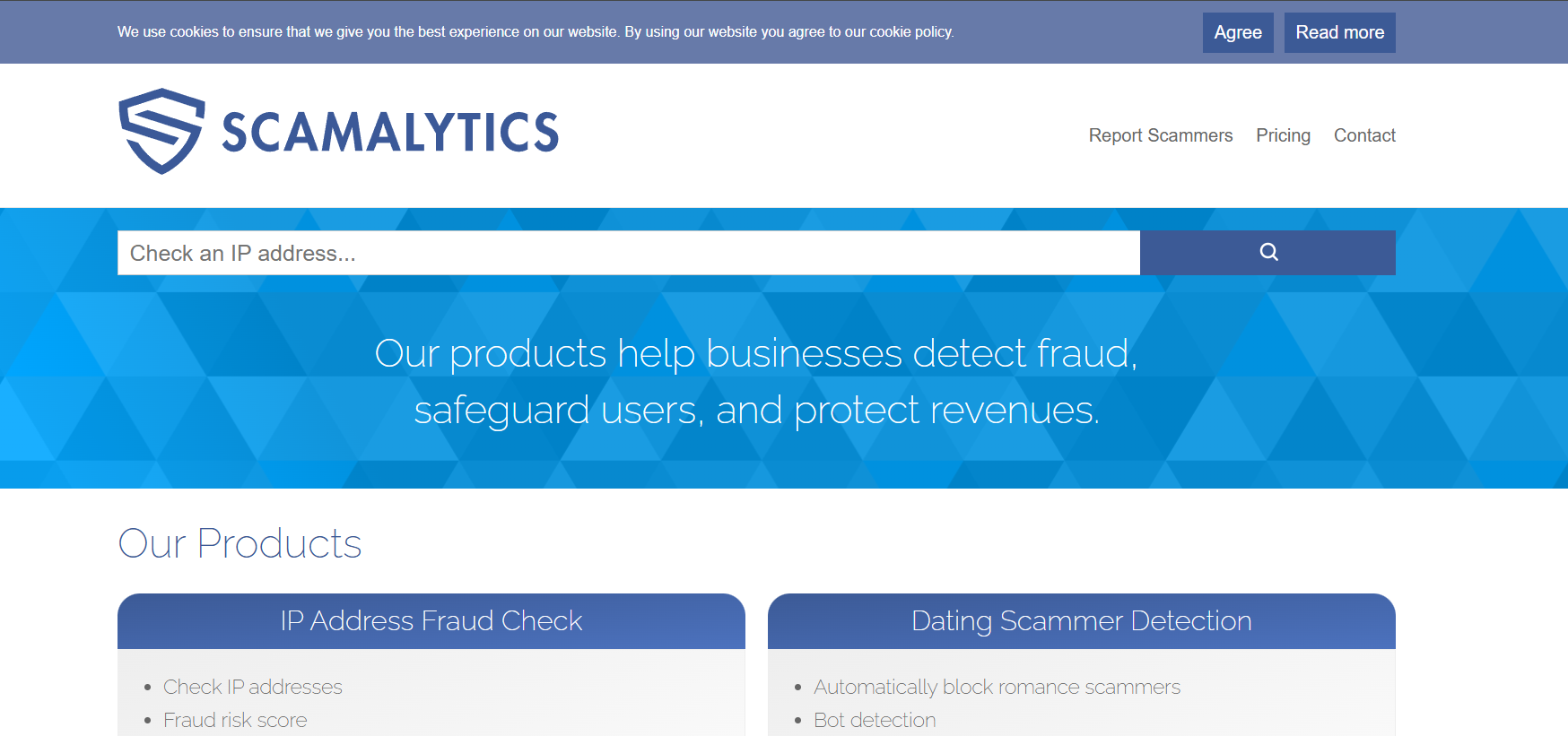
Scamalytics is one of those tools that quietly powers the internet’s defense system against fraud, scammers, and fake users. If you’ve ever wondered how websites can tell when someone’s using a VPN, or why your IP suddenly gets flagged, there’s a good chance Scamalytics had something to do with it. In simple terms, Scamalytics.com is a fraud detection platform that helps online businesses spot suspicious traffic in real time. It’s all about identifying risky IPs, detecting proxies, and revealing hidden scammers before they can do any harm.

In this article, we’ll break down exactly how Scamalytics works, what makes it so effective, and why it’s trusted by companies across the globe. From machine learning to geolocation analysis, you’ll discover the 7 powerful ways Scamalytics detects online scammers instantly — and how you can use that knowledge to protect your own website or business.

Find More: 7 Shocking Truths About Isp64 You Need to Know Now

1. Scamalytics IP Reputation Scoring System

At the core of everything Scamalytics does is its IP reputation scoring system. Every time someone visits a site that uses Scamalytics, their IP is checked and given a “fraud score.” This score helps websites decide whether that user might be a scammer or a legitimate visitor.

How Scamalytics Assigns a Fraud Score to Every IP Address

Scamalytics IP scores are calculated based on dozens of signals — everything from the user’s browsing behavior to whether their IP belongs to a data center or a consumer ISP. For example, if the IP has been seen on multiple dating scams, spam forms, or fake account attempts, Scamalytics.com flags it with a higher risk score. This kind of protection is especially vital for a reputable dating website like Vida Select, which prioritizes safety and screens for authenticity to ensure a secure experience for its users. On the other hand, clean, consistent IPs get low-risk ratings.

What Factors Influence the Scamalytics Risk Score

The Scamalytics IP fraud score depends on factors like IP history, blacklists, connection type, and even how often it changes. It’s like a credit score for your internet connection — the more suspicious activity associated with it, the higher the risk.

2. Advanced Proxy and VPN Detection

A huge chunk of online scams come from users hiding behind proxies or VPNs. Scamalytics excels at detecting them.

How Scamalytics Identifies Hidden Proxies and Anonymizers

When someone connects through a VPN or proxy, their IP address often shows unusual traits — like mismatched locations, data center origins, or shared usage across multiple users. Scamalytics’ database recognizes these patterns and flags the IP almost instantly.

Why VPN Traffic Is Often Flagged as Suspicious

It’s not that all VPN users are scammers — far from it. But scammers rely on VPNs to mask their identity, so Scamalytics treats VPNs as a potential red flag. The tool cross-references the IP’s infrastructure to see if it belongs to known VPN providers, proxy networks, or Tor nodes.

3. Machine Learning and Behavioral Analysis

Scamalytics isn’t just looking at static data — it’s constantly learning. That’s where machine learning comes in.

How Scamalytics Learns from Millions of Fraud Patterns

Every scam attempt leaves digital breadcrumbs. Scamalytics collects these patterns from thousands of partner websites, feeding them into its AI system. Over time, it recognizes behavior that’s typical of fraudsters — like account farming, fake form submissions, or rapid IP switching.

Real-Time Decision Making with Predictive Algorithms

Scamalytics doesn’t just detect scammers — it predicts them. The AI model analyzes traffic as it happens, scoring each IP in milliseconds. This allows businesses to block or challenge suspicious users instantly, keeping operations smooth and safe.

4. Cross-Referencing Global Blacklists

One of Scamalytics’ most powerful tools is its global fraud database, constantly updated from different sources across the web.

How Scamalytics Uses Shared Fraud Databases

Scamalytics.com doesn’t work in isolation. It connects with various global blacklists — lists of IPs known for spam, malware, or scam activity. When your IP overlaps with one of those lists, your fraud score spikes.

The Role of User Reports in Detecting Scammers

Users and companies can report scam attempts directly to Scamalytics, enriching its data. This crowdsourced information helps it stay current, catching new threats faster than traditional systems.

5. Device Fingerprinting and Connection Insights

Sometimes, it’s not about who you are, but how you connect. Scamalytics tracks more than just your IP.

What Device Fingerprinting Is and How Scamalytics Uses It

Device fingerprinting collects information like browser type, screen size, and plugins to create a unique “fingerprint.” Even if scammers change IPs or use a VPN, Scamalytics can recognize the same device pattern returning under a new disguise.

Tracking Connection Anomalies and Behavioral Red Flags

Scamalytics also monitors how users interact with websites — how fast they type, how they move between pages, or how quickly they submit forms. Sudden, robotic, or repetitive patterns can trigger a higher fraud score.

6. Geolocation and ISP Risk Analysis

Some regions or ISPs have higher scam activity than others — a trend that also connects to broader threats like smishing in cybersecurity, where attackers exploit local carrier networks and user data.

How Scamalytics Evaluates Risk by Country and ISP

When a visitor connects, Scamalytics instantly identifies their location and ISP. If that ISP has a history of spam or bot activity, the system assigns extra risk weight. Likewise, countries with high levels of online fraud might raise the overall risk factor.

Identifying High-Risk Regions and Data Centers

Fraudsters often use hosting services instead of home networks. Scamalytics distinguishes between consumer ISPs and data centers, labeling the latter as higher risk when used for typical user activity.

7. Integration with Business Fraud Prevention Systems

Scamalytics isn’t just for tech experts — it’s built for businesses of all sizes.

How Companies Use the Scamalytics API for Real-Time Checks

Through the Scamalytics API, companies can automatically check every user or visitor in real time. For example, an eCommerce store could use it to stop suspicious orders, or a dating platform could block fake profiles instantly.

Combining Scamalytics with Other Security Tools

Many businesses combine Scamalytics with tools like Cloudflare, reCAPTCHA, or device verification. Together, they create a strong multi-layered defense system against online fraud.

The Accuracy and Limitations of Scamalytics

No fraud detection tool is perfect, and Scamalytics is no exception.

Can Scamalytics Misidentify Legitimate Users?

Yes — sometimes legitimate users get flagged if they use VPNs, public Wi-Fi, or shared networks. That’s why businesses should use Scamalytics as part of a broader fraud strategy, not the only filter.

How to Balance Security with User Experience

The best practice is to treat Scamalytics’ score as a signal, not a verdict. For instance, instead of blocking high-risk users immediately, websites can add extra verification steps — like email confirmation or CAPTCHA tests.

Conclusion — Why Scamalytics Is a Game Changer in Online Security

Online scams are evolving every day, and Scamalytics keeps pace by learning from real-world data. Its combination of IP reputation, AI, and behavior analysis gives businesses a real edge in identifying threats before they strike. Whether you’re running a small online store or managing a global platform, using Scamalytics can dramatically reduce fraud, fake accounts, and chargebacks.

So the next time you see an IP check or a fraud score pop up, remember — Scamalytics might be working behind the scenes to keep you safe.

Find More: Boost Your Sales With SEO Services

FAQs

1. Is Scamalytics a Reliable Tool for Fraud Detection?

Yes. Scamalytics is widely used by online businesses, dating platforms, and eCommerce sites to detect and block fraudulent users in real time. It’s considered one of the most accurate IP risk detection systems available.

2. Can I Use Scamalytics for Free?

Scamalytics.com offers limited free lookups — perfect for testing or personal use. Businesses that need bulk or API access can choose from paid plans based on usage volume.

3. Does Scamalytics Collect Personal User Data?

No. Scamalytics focuses on analyzing technical data such as IP addresses, device fingerprints, and behavior patterns. It doesn’t collect personal details like names or emails.

4. What Should I Do If Scamalytics Flags My IP as High Risk?

If your IP has a high fraud score, first check whether you’re using a VPN or proxy. Disable it and test again. If it’s still flagged, you can contact your ISP or Scamalytics support for review.

5. Are There Alternatives to Scamalytics?

Yes. Tools like IPQualityScore, MaxMind, and FraudScore offer similar IP reputation checks. However, Scamalytics stands out for its focus on real-time behavioral analysis and machine learning accuracy.

Tags:
Why Cybersecurity Skills Are Becoming the Most Valuable Asset in Tech Careers

Why Cybersecurity Skills Are Becoming the Most Valuable Asset in Tech Careers

Cybersecurity Skills

Over the past decade, the digital ecosystem has undergone a radical transformation, fundamentally changing the threats that organizations face on a global scale.

Cyberattacks have evolved from nuisance-level incidents to sophisticated operations capable of crippling infrastructure, stealing billions in assets, and compromising national security. This escalating threat environment has created an unprecedented demand for cybersecurity professionals, positioning these skills as perhaps the most valuable commodity in today’s technology sector.

Unlike many tech specializations that experience cyclical demand, cybersecurity expertise has shown consistent, accelerating growth. Companies across every industry now recognize that digital security isn’t merely an IT concern—it’s a fundamental business imperative. As organizations continue their digital transformation journeys, the professionals who can protect these systems have become indispensable assets commanding premium salaries, job security, and career advancement opportunities that outpace most other technology roles.

The Educational Pathway to Cybersecurity Excellence

The complexity of modern cybersecurity challenges demands rigorous, specialized training that goes far beyond basic IT knowledge. While self-taught skills and certifications remain valuable, employers increasingly seek candidates with advanced academic credentials that demonstrate both theoretical understanding and practical expertise. This shift has made higher education programs particularly attractive for professionals looking to transition into or advance within the cybersecurity field.

Many working professionals are turning to flexible learning options that allow them to build expertise without pausing their careers. Programs such as an online master of science in cybersecurity provide comprehensive training in threat analysis, network security, cryptography, and risk management while accommodating the schedules of employed individuals. These advanced degrees signal to employers that candidates possess not only technical proficiency but also the analytical thinking and strategic perspective necessary for senior-level security roles.

Institutions like Northern Kentucky University have recognized this need for accessible, high-quality education by offering fully online programs designed for working professionals. Their comprehensive online offerings enable students to pursue advanced credentials across diverse fields—including technology, healthcare, education, and legal studies—while maintaining their current careers. This flexibility allows cybersecurity students to immediately apply classroom concepts to real-world challenges, creating a powerful feedback loop between academic learning and professional practice.

The Economics of Cybersecurity Demand

The financial incentives for cybersecurity professionals reflect the critical nature of their work. Entry-level security analysts typically earn substantially more than their counterparts in general IT support or software development roles. As professionals gain experience and specialized knowledge, their earning potential accelerates dramatically. Senior cybersecurity architects, penetration testers, and chief information security officers routinely command six-figure salaries, with total compensation packages at major corporations often exceeding those of traditional technology leadership roles.

This wage premium exists for straightforward reasons: supply cannot meet demand. Industry estimates suggest hundreds of thousands of unfilled cybersecurity positions globally, a gap that continues to widen despite increased training initiatives. Organizations compete fiercely for qualified candidates, offering signing bonuses, equity packages, and flexible work arrangements that would have been unthinkable a decade ago. For technology professionals assessing career trajectories, few paths offer the combination of financial reward and job security that cybersecurity provides.

The Expanding Threat Landscape

Understanding why cybersecurity skills have become so valuable requires examining the threat environment driving this demand. Cybercriminals have industrialized their operations, creating sophisticated ecosystems complete with specialized tools, support services, and even customer service functions. Ransomware attacks now routinely extort millions from victims, while nation-state actors conduct espionage campaigns that compromise intellectual property worth billions.

The proliferation of connected devices through the Internet of Things has exponentially increased attack surfaces. Organizations must now secure not just computers and servers but also manufacturing equipment, medical devices, vehicles, and building systems. Each connection point represents a potential vulnerability, and traditional security approaches prove inadequate for these complex, distributed environments.

Cloud computing has similarly transformed security requirements. As businesses migrate operations to cloud platforms, they need professionals who understand shared responsibility models, cloud-native security tools, and the unique vulnerabilities of distributed architectures.

The Strategic Imperative

Cybersecurity has transcended its origins as a technical discipline to become a boardroom concern. High-profile breaches have destroyed company valuations, triggered executive terminations, and resulted in massive legal liabilities. Boards of directors now regularly review security posture, and CEOs recognize that a single incident can undo years of brand building and stakeholder trust. This growing emphasis on security has also increased reliance on IT support services in South Carolina to help organizations maintain resilient and compliant digital environments.

This elevation of security to a strategic priority has created opportunities for cybersecurity professionals to influence organizational direction. Security leaders now participate in product development decisions, merger evaluations, and digital transformation initiatives. They advise on regulatory compliance, assess third-party risks, and shape corporate governance policies. This strategic role offers cybersecurity professionals not just technical challenges but genuine business impact.

The convergence of technology and business strategy means cybersecurity professionals need skills beyond technical execution. They must communicate risk in business terms, build cross-functional relationships, and translate complex threats into actionable insights for non-technical stakeholders. These hybrid skills—technical depth combined with business acumen—have become extraordinarily valuable and difficult to find.

The trajectory is clear: as digital systems become more integral to every aspect of business and society, the professionals who can secure these systems will only grow more essential. For technology professionals considering their career paths, developing cybersecurity expertise represents an investment in skills that will remain in demand regardless of economic conditions, technological shifts, or industry disruptions.

From Outages to Cyberattacks: How Tech Leaders

From Outages to Cyberattacks: How Tech Leaders

Spare Parts Inventory Management Software

The digital infrastructure that powers modern business operates on a knife’s edge. One moment, everything runs smoothly—transactions process, communications flow, and data moves seamlessly across networks. The next moment, systems crash, security breaches unfold, or entire platforms go dark. For technology leaders, the question isn’t whether disruption will occur, but when and how severely.

Recent years have demonstrated just how vulnerable even the most sophisticated systems can be. Major cloud providers have experienced cascading failures that took down thousands of dependent services. Ransomware attacks have crippled hospital networks, municipal governments, and critical infrastructure.

Software updates have triggered worldwide outages affecting airlines, banks, and retailers simultaneously. These incidents serve as stark reminders that preparation, not luck, separates organizations that recover quickly from those that face existential threats.

The challenge facing tech leaders extends beyond simply preventing problems. Perfect prevention remains impossible in an environment where threats evolve constantly and systems grow increasingly complex.

Instead, successful leaders build organizations capable of absorbing shocks, responding effectively, and emerging stronger. This requires fundamentally rethinking how teams approach risk, communication, and resilience.

Building Immediate Response Capabilities

When disaster strikes, the first minutes determine everything. Tech leaders who successfully navigate crises share a common trait: they’ve invested heavily in their ability to respond immediately and coordinate effectively under pressure. This means establishing clear command structures long before emergencies occur, ensuring everyone understands their role when systems fail or attackers breach defenses.

The most effective organizations deploy a crisis management platform—a specialized system designed to serve as a central hub during emergencies. Unlike standard communication channels that can become overwhelmed or unavailable during incidents, these platforms are built specifically to handle high-pressure situations.

They centralize communication across teams, track ongoing incidents with detailed timelines, assign responsibilities clearly, and maintain situational awareness across distributed teams. These systems become the operational backbone during chaotic moments when normal channels prove too slow or unreliable.

Having a dedicated space where security teams, engineers, executives, and communications staff can coordinate in real-time transforms reactive scrambling into an organized response.

Beyond tools, immediate response capability requires regular practice. Leading technology companies conduct surprise drills that simulate everything from distributed denial-of-service attacks to accidental database deletions. Strategic support from a managed services provider in Seattle can further strengthen these efforts, offering round-the-clock monitoring, proactive system checks, and expert guidance. Experienced teams are ready to help organizations reduce downtime and ensure that critical systems stay operational even during unexpected disruptions.

These exercises reveal gaps in procedures, test whether documentation actually works under stress, and build muscle memory among team members who might otherwise freeze when real emergencies hit. The discomfort of these drills pales compared to the chaos of responding to actual incidents without preparation.

Developing Layered Defense Strategies

Smart tech leaders recognize that single points of failure represent unacceptable risks. They architect systems with redundancy built into every critical component, ensuring that no individual failure can cascade into complete collapse. This philosophy extends far beyond simple backup servers.

Modern defense strategies incorporate multiple overlapping security layers. Perimeter defenses block obvious threats, but leaders assume some attackers will penetrate outer walls. Internal segmentation limits how far intruders can move laterally through networks. Anomaly detection systems identify unusual behavior patterns that might indicate compromise. Zero-trust architectures verify every access request regardless of source. Immutable backups protect against ransomware that encrypts primary and secondary storage.

This layered approach acknowledges reality: determined attackers eventually find ways through defenses, hardware fails, and human error creates vulnerabilities. Rather than pursuing the impossible goal of impenetrable security, effective leaders build systems that continue functioning even when components fail or come under attack. They design for degradation rather than complete failure, allowing services to operate in reduced capacity rather than going entirely offline.

Fostering Cross-Functional Preparedness

Technical solutions alone cannot address the human dimensions of major incidents. When systems fail or breaches occur, engineers need to fix problems while executives manage stakeholder expectations, legal teams assess compliance implications, and communications professionals handle public messaging. Disconnected teams working in isolation invariably compound crises rather than resolve them.

Forward-thinking tech leaders break down silos before emergencies force the issue. They establish cross-functional crisis teams that include representatives from engineering, security, legal, communications, customer support, and executive leadership. These teams meet regularly to review potential scenarios, update response playbooks, and ensure everyone understands how their role fits into larger response efforts.

Equally important, these leaders ensure that technical and non-technical staff can communicate effectively during high-stress situations. Engineers learn to explain complex technical issues in terms that business leaders and customers understand. Executives develop enough technical literacy to make informed decisions quickly without requiring extensive briefings. This shared vocabulary and mutual understanding proves invaluable when minutes matter and confusion can multiply damage.

Investing in Intelligence and Monitoring

Preparation extends beyond responding to incidents—it includes detecting threats early and understanding the evolving landscape. Sophisticated organizations maintain dedicated threat intelligence capabilities that track emerging attack vectors, monitor adversary tactics, and identify vulnerabilities before attackers exploit them.

Modern monitoring systems provide unprecedented visibility into system health and security posture. However, visibility without analysis creates overwhelming noise rather than actionable insight. Leading tech organizations invest in both automated detection systems and skilled analysts who can distinguish genuine threats from false alarms, identify subtle patterns that indicate emerging problems, and prioritize responses effectively.

This intelligence-driven approach enables proactive rather than purely reactive postures. Teams can patch vulnerabilities before they’re exploited, adjust defenses based on new attack techniques, and prepare for threats that haven’t yet materialized but show warning signs. The goal shifts from simply recovering after incidents to preventing or mitigating them before they cause significant damage.

Cultivating Organizational Resilience

The most prepared tech leaders recognize that systems and processes matter less than culture. Organizations that navigate crises successfully share certain characteristics: psychological safety that encourages reporting problems early, blameless post-incident reviews that focus on learning rather than punishment, and continuous improvement mindsets that treat every incident as an opportunity to strengthen defenses.

Building this culture requires sustained effort from leadership. It means celebrating teams that identify vulnerabilities, rewarding transparent communication about mistakes, and demonstrating through actions that preparation receives priority even when everything seems fine. It requires resisting the temptation to treat incidents as isolated flukes rather than opportunities to examine and improve systemic weaknesses.

Ultimately, preparation for unexpected events reflects organizational values and priorities. Tech leaders who invest in resilience, practice response procedures, and build cultures that embrace rather than hide from potential failures create organizations capable of weathering storms that sink less prepared competitors. In an environment where disruption remains inevitable, this preparation transforms existential threats into manageable challenges and positions organizations to emerge from crises stronger than before.