...
UK: +44 2038074555 info@atamgo.com
Is Google Pomelli Worth It? 9 Powerful Insights From Real Users
Is Google Pomelli Worth It? 9 Powerful Insights From Real Users

Google Pomelli Review

Google Pomelli Review: If you’re a small business owner, an overwhelmed startup founder, or an entrepreneur wearing too many hats, you know the daily struggle of creating marketing content. It’s not just the writing or the designing that kills you; it’s the constant, grinding process of ideation. What should I post today? Is this on brand? Do I have the right colors? Do I even have time to open Canva, let alone Photoshop? Google is betting that its new experiment from Google Labs, Pomelli, is the answer to this massive pain point. Pomelli, which is currently in public beta, promises to automate entire on-brand campaigns from a single URL. It’s a bold claim, and if it works, it could genuinely transform how small businesses approach digital marketing. But the question remains: does this Google Pomelli AI deliver on its big promise, or is it just another generic content generator wrapped in a Google badge? Let’s dive deep into the tech, the user feedback, and the ultimate verdict on whether it’s worth integrating into your current, already hectic workflow.

Find More: 2026 Best AI Logo Makers for Small Businesses & Smart Entrepreneurs

The Core Concept: How Pomelli Builds Your Business DNA
Google Pomelli Review

The Power of “Business DNA”: Automated Brand Intelligence

The real game-changer with Pomelli isn’t the content generation itself—it’s the concept of “Business DNA.” This isn’t just a fancy marketing term; it’s the fundamental core of what makes Pomelli different from dropping a prompt into a general AI like ChatGPT or a standard image generator. Most AI tools start from a blank slate. You have to tell them, “Write a post about coffee, make it sound fun, and use a bright blue color palette.” You are essentially doing all the strategic branding work for the AI, every single time.

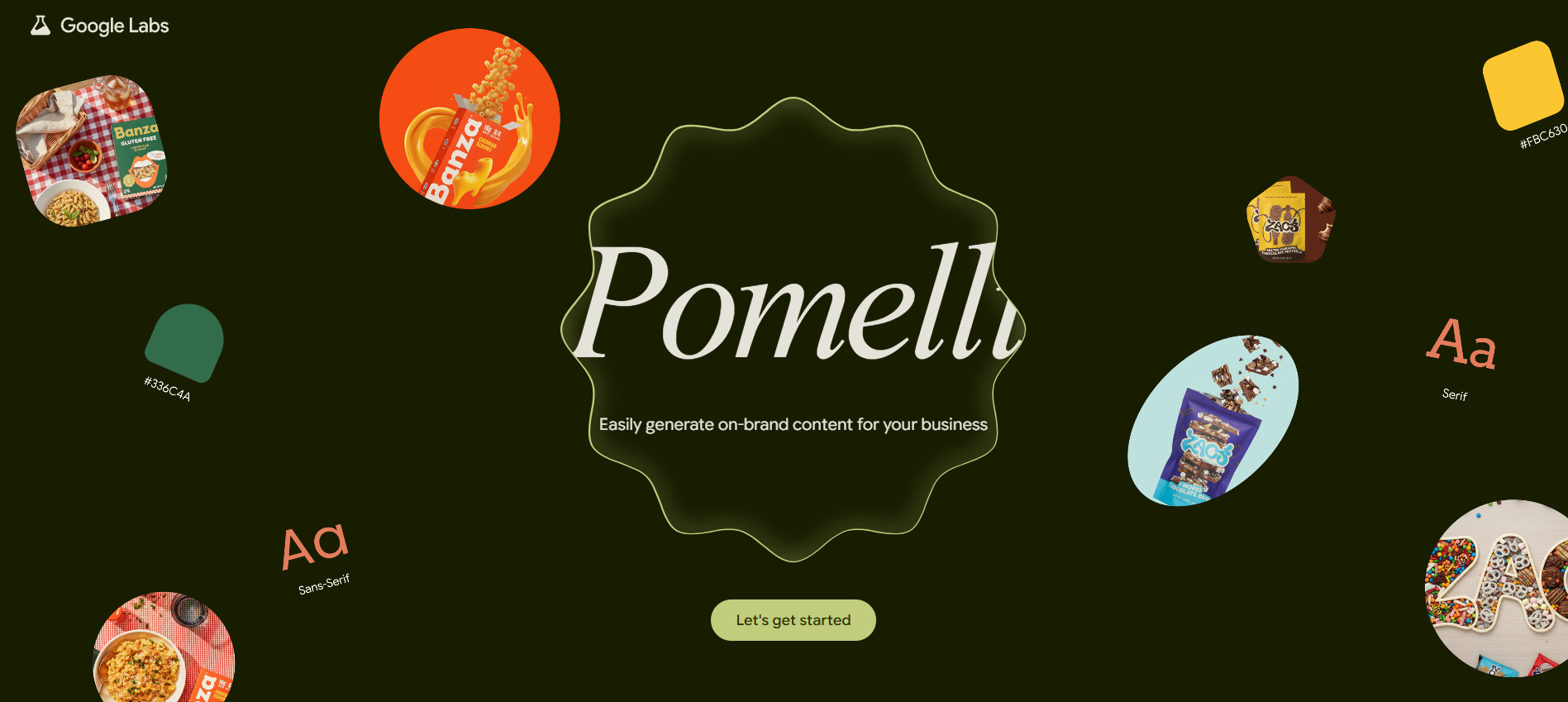
Pomelli flips that script entirely. By analyzing your existing public website—a process powered by DeepMind’s sophisticated AI models—Pomelli automatically extracts your core brand identity. Think of it as the tool performing the work of a junior brand manager before it even writes the first word.

Why is this so powerful? Consistency. Small businesses often look disjointed across platforms. A quick post on Instagram might use one font, a Facebook ad might use a slightly different color shade, and the website headline uses a completely different tone. Pomelli’s Business DNA acts as the central, non-negotiable style guide for every piece of content it creates. This ensures that every image, every headline, and every call-to-action feels inherently yours, drastically cutting down on the manual labor required to enforce brand guidelines. It takes a huge amount of friction out of the creation process by front-loading the strategic thinking, allowing the AI to focus on execution within those established guardrails.

The tool learns what makes your brand you. It registers the dominant color palette, the specific fonts you use for headings and body copy, and most importantly, the tone of voice. If your website copy is casual, witty, and full of emojis, Pomelli understands that. If it’s formal, informative, and authoritative, it will replicate that too. This automated brand intelligence is the key differentiator and the single most compelling reason why you might choose Pomelli over a template-based competitor. It’s the difference between buying an off-the-rack outfit and getting a suit tailor-made. The tailor-made one just fits better.

A Step-by-Step Guide to Onboarding and Setup

Getting started with Pomelli is impressively simple—which is exactly what an exhausted small business owner needs. The entire process can be boiled down into three, highly intuitive steps, making the learning curve virtually flat.

The very first thing you do is enter your public website URL. This is the starting gun for the whole “Business DNA” extraction. You don’t upload a style guide PDF or manually input Hex codes; you just give it your web address and let the AI do the heavy lifting. This part usually takes less than a minute, and you watch as Pomelli’s sophisticated crawlers and language models parse your site’s structure, copy, and visuals.

Once the DNA is built, the next stage is campaign ideation. This is another area where Pomelli shines compared to traditional design tools. Instead of starting with a blank canvas, the AI offers up tailored, strategic campaign ideas based on your brand and your current business context. For example, if you run a local bakery and it’s mid-November, Pomelli might suggest a “Holiday Pre-Order Push” or a “Seasonal Flavor Announcement.” It removes the need for human brainstorming sessions for routine content. Of course, if you have your own brilliant idea, you can always input a custom prompt and the AI will generate content strictly following your direction, but still filtered through your brand DNA.

Finally, Pomelli generates a suite of high-quality, branded creative assets. This is the output step: you get social media posts (optimized for different platforms like Instagram Stories or Facebook banners), website hero images, and potential ad copy, all generated in one go. You then have full control to edit both the text and the visuals right inside the platform. This end-to-end flow is highly efficient. You don’t have to use an AI for text, download the text, upload it to a design tool for the visual, and then upload that to your social scheduler. It’s all contained, saving you crucial minutes that add up to hours over the course of a marketing quarter.

Key Components Extracted: Tone, Visual Style, and Fonts

To really understand the power of the Business DNA, it’s worth listing exactly what Pomelli pulls from your site to guide its creative decisions. It’s much more detailed than just a logo.

First, it extracts your Tone of Voice. This is crucial. It’s what dictates whether your ad copy uses “Hey guys!” or “Dear Valued Customers.” This tonal fingerprint is built by analyzing the bulk of your website copy.

Second, it determines your Visual Style and Color Palette. Pomelli identifies the dominant colors (the main Hex codes) used on your site, in your logo, and in your primary imagery. It also infers the visual style of your brand’s existing photography—is it bright and minimalist, or moody and high-contrast? The AI uses this style as a constraint when generating new, unique images for your campaign. This avoids that jarring effect where AI-generated images look totally disconnected from your actual brand aesthetic.

Finally, Pomelli extracts and applies your Custom Fonts. By analyzing your CSS and website structure, it can often determine and use your exact headline and body copy fonts in the generated graphics. This level of typographic consistency is a massive time-saver for small teams who don’t have dedicated font management systems. These three key components—Tone, Visual Style, and Fonts—are what transform generic AI output into content that actually feels like it came from your business.

9 Powerful Insights: Real-World User Reviews and Performance

Insight 1: Time Savings in Campaign Ideation

google

The most immediate and universally praised benefit of Pomelli, according to beta users, is the sheer amount of time it shaves off the start of the creative process. For a small business, “campaign ideation” often means staring blankly at a screen for thirty minutes, scrolling through competitor social feeds, or trying to squeeze in a brainstorm between serving customers. That’s precious, unbillable time wasted.

Pomelli eliminates the blank-page syndrome entirely. Users report that the tool’s ability to generate five to ten highly relevant campaign ideas within seconds is invaluable. Instead of struggling to come up with an idea, you are instantly shifted into the role of editor and strategist, selecting the best idea from a pre-vetted, on-brand list. This is a subtle but powerful psychological shift. You go from feeling overwhelmed by creation to feeling empowered by curation. For example, a solo consultant who typically spends two hours a week brainstorming can now complete that entire process, from idea selection to first draft asset generation, in under fifteen minutes. The time saved isn’t just about efficiency; it’s about reducing the cognitive load that constantly weighs on entrepreneurs, allowing them to focus on core business operations, not just content treadmill maintenance. It literally gives you back hours in your week, which for an SMB owner, is priceless.

Insight 2: Brand Consistency Across All Assets

If you have a brand guideline document that sits on a shared drive collecting digital dust, you know the struggle of maintaining consistency. When multiple people (or just one tired person) are generating content, the look and feel inevitably drift. This is where Pomelli’s Business DNA really flexes its muscles.

User feedback confirms that the system maintains an almost perfect level of visual and textual coherence across every asset it creates. A banner generated for a website, for instance, will use the exact same color palette, font weight, and conversational tone as a suggested caption for an Instagram post. This consistency builds trust with your audience. When customers see your content, whether it’s an email, a paid ad, or a simple tweet, they instantly recognize it as belonging to your brand. For a small business trying to establish authority and trust, this level of polish is usually only achievable by hiring an expensive agency or a full-time designer. Pomelli democratizes that high-level brand cohesion, making it accessible even to the smallest micro-businesses. This is arguably the tool’s most effective feature for enhancing brand perception without adding a dime to the marketing budget. The automatic application of extracted fonts and colors alone is a huge win for maintaining a professional appearance.

Insight 3: Quality of AI-Generated Visuals (The Image Test)

The quality of AI-generated visuals is always a hot topic, and Pomelli’s image test results are a mixed bag. The good news is that the visuals are almost always clean, technically well-executed, and perfectly aligned with the brand’s extracted color and style profile. The AI knows how to produce professional-looking graphics and stock-style photography that fit the mood of your website.

However, a recurring sentiment from early testers is that the images, while polished, can sometimes feel “template-trained” or possess that “AI-by-numbers” aesthetic. One user on Reddit noted that while the tech was impressive, the output “still feels ‘template-trained'” and lacks the necessary “brand soul.” This speaks to a current limitation in all generative AI: the models are optimized for probability and safety. They generate images that are statistically correct and non-offensive for your brand, but sometimes they fail to introduce the creative divergence, wit, or emotional spark that a human designer would. Pomelli excels at creating high-quality filler content—the clean background graphic for a text overlay, or the standard product shot variant. It saves time on the 90% of routine content. But for the truly breakthrough, emotionally resonant visuals that define a campaign, human oversight, or perhaps a different, more artist-focused tool, is still necessary. Think of Pomelli as a fantastic design assistant who handles all the production work, leaving the creative director (you) to inject the final, subtle artistic nuance.

Insight 4: The In-App Editing Experience and User Control

One of Pomelli’s selling points is that it’s not a “black box” that spits out final, untouchable assets. It includes built-in editing capabilities for both the generated text and the visuals. This is crucial because, as noted above, the initial draft might be a bit generic.

The in-app editing experience is functional, but deliberately simplified. It’s designed for the small business owner, not the graphic designer. For text, you can easily tweak headlines, adjust body copy for local nuance, or change the call-to-action. This is seamless. For visuals, the controls are basic: think cropping, resizing, or perhaps simple color adjustments or swapping out an element. You won’t find the deep, layer-based editing power of Adobe Photoshop or the intricate template libraries of Canva.

This limitation is a design choice, not a flaw. Google understood that if they made the editor too complex, they would negate the core benefit of the tool: speed and simplicity. The editing features are there to allow the user to inject the “human spark”—to adjust the AI’s safe copy with a bit more personality or to fine-tune the visual layout for a specific platform’s requirement (e.g., ensuring a headline is clearly legible on a mobile screen). It turns the user into a creative supervisor, ensuring that the 90% generated by the AI is finalized with 10% human strategic input before publishing.

Insight 5: The “Template” Problem: When Content Gets Generic

Let’s circle back to that biggest critique: the content can sometimes feel generic. While Pomelli is leagues ahead of other tools in terms of brand consistency, it occasionally falls into the trap of producing “nice-to-have” assets that lack strategic punch or genuine audience engagement.

The root of this problem, as suggested by AI experts, is that generative models are trained to find the most probable, middle-of-the-road answer. When tasked with creating marketing content, this often results in safe, professional, but ultimately unmemorable copy and design. If a small business relies exclusively on Pomelli without strategic review, they run the risk of simply adding more noise to the crowded digital space. The goal of marketing is not just to produce content, but to produce content that cuts through the clutter.

The best practice here—which is highly emphasized by power users—is to treat Pomelli’s output as a “fantastic first draft.” It saves the hours spent on structure and design, but the human marketer still needs to step in and add the emotional resonance, the cultural context, the humor, or the sharp, specific pain point that only an actual human who runs the business would know. For example, the AI might generate a post saying, “Enjoy our great customer service.” A human marketer should edit that to say, “Don’t get stuck on hold—text us directly for support, guaranteed reply in under 5 minutes.” That specificity and promise is the soul the AI currently can’t replicate.

Insight 6: Comparison with Competitors (Pomelli vs. Canva/Adobe Express)
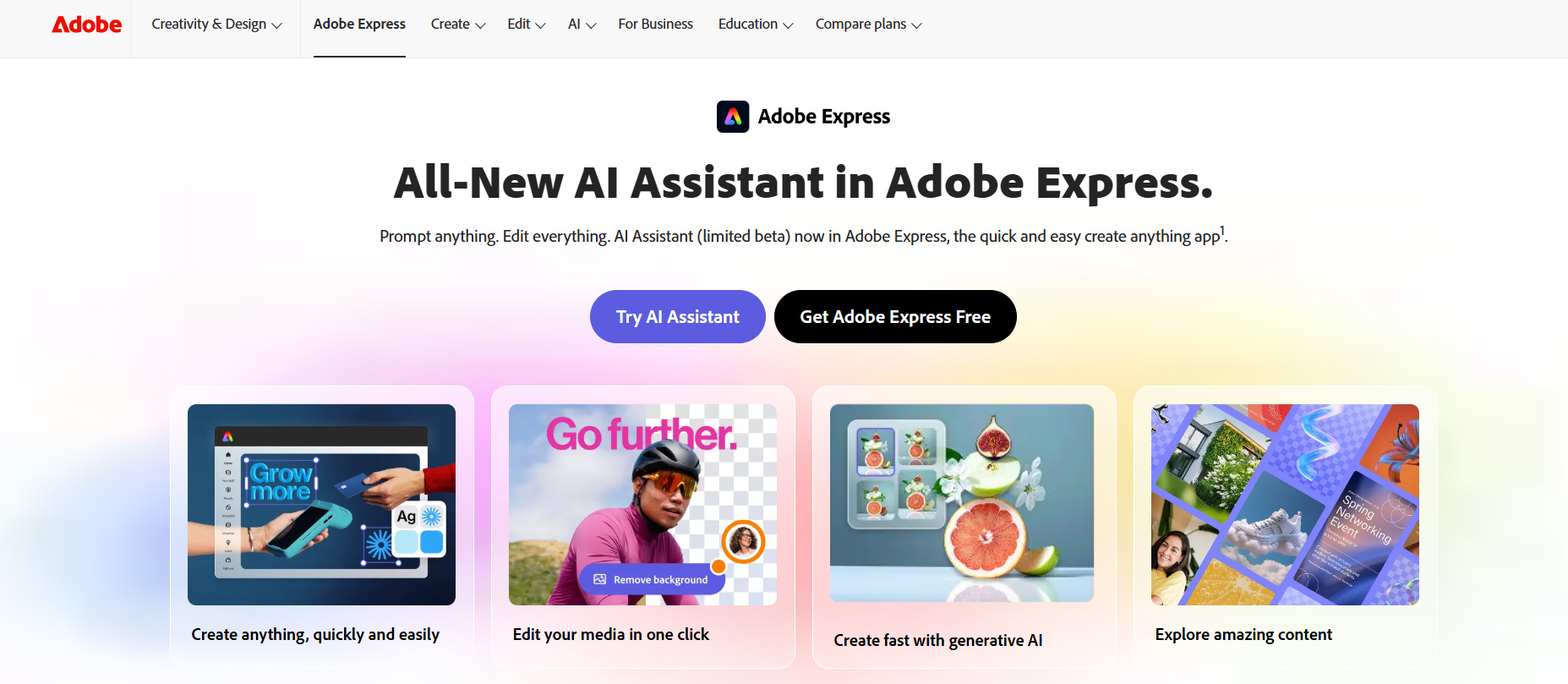
When you look at the landscape of content creation tools, Pomelli primarily competes with Canva Pro and Adobe Express, but it occupies a fundamentally different niche.

Canva/Adobe Express: These are design-first platforms. They excel at providing vast libraries of templates, offering deep customization, and allowing users to craft highly specific, visually complex graphics. Their strength is in execution and visual diversity. However, they are brand-agnostic at the start. You have to manually set up your brand kit, colors, and fonts, and you are always starting from a template—which may or may not align with your strategic needs. They are great for designers or users who are already comfortable with design principles.

Google Pomelli: Pomelli is an AI-first, Strategy-first tool. Its strength is not in deep customization, but in automatic brand learning, consistency, and campaign ideation. It doesn’t give you templates; it gives you campaign concepts and assets custom-generated for your DNA. It’s built for the user who says, “I don’t know what to post, and I don’t want to design it.” The learning curve is minimal—just a URL. The key difference is the entry point: Canva starts with design, Pomelli starts with intelligence. This makes Pomelli a powerful complementary tool, especially for SMBs who can’t afford the subscription fees of competitor paid tiers, as Pomelli is currently free in beta.

Insight 7: Integration Potential within the Google Ecosystem

As a Google Labs experiment, Pomelli is positioned for massive future integration across the Google ecosystem, and this potential is perhaps the most exciting part of its long-term promise. Currently, Pomelli is a standalone tool—you download the assets and manually upload them to your social media or Google Ads account.

However, the roadmap is clear. Future versions are expected to seamlessly integrate with:

  1. Google Ads: Imagine generating a social campaign in Pomelli, and with one click, the visuals, copy, and targeting recommendations are pushed directly into a draft Google Ads campaign, ensuring brand consistency across organic and paid channels.
  2. Google Analytics: Performance tracking could be built-in, allowing Pomelli to learn which assets (generated by it) perform best for your audience, continuously improving its Business DNA model.
  3. Gemini AI: Leveraging the next generation of Google’s multimodal AI could lead to more nuanced, creative, and less “generic” outputs, potentially solving the template problem.
Gemini

  1. YouTube/Video: While currently limited to static images and copy, there is strong speculation that Google will integrate video generation capabilities (perhaps leveraging their Veo technology) to create short-form video ads and social content.

This ecosystem advantage is something competitors simply cannot match. If Pomelli becomes the central nervous system for a small business’s Google-based marketing, its value will skyrocket far beyond simple content generation.

Insight 8: Technical Limitations (Language, Beta Status, and Bugs)

Like any exciting new experiment, Pomelli comes with a set of limitations, primarily due to its beta status. It’s vital that businesses entering the tool know what they are (and aren’t) getting.

The biggest limitation right now is geographic and language restriction. Pomelli is currently only available for free in the United States, Canada, Australia, and New Zealand, and it only operates in the English language. This severely limits its immediate global utility, especially for small businesses operating in multi-language or non-English-speaking markets.

Furthermore, as a Google Labs project, the Beta Status is non-negotiable. This means features could change without warning, and the tool could potentially be discontinued or fundamentally altered if user adoption or internal strategic priorities shift. Users also report occasional minor bugs, such as font misinterpretation or awkward visual layouts on first generation, requiring a quick re-run of the prompt or manual editing. Crucially, there is no scheduling or direct platform publishing yet. All content must be downloaded and manually uploaded to social media platforms, a small but significant friction point for a tool aiming for end-to-end automation. Finally, it currently cannot generate video content, limiting its utility for the rapidly growing short-form video market.

Insight 9: Best-Fit Businesses: Who Benefits Most from Pomelli?

Given all the insights, Pomelli is not a universal tool, but it’s perfect for a specific demographic.

The Ideal Users Are:

  1. Solo Entrepreneurs and Micro-Businesses: People wearing all the hats. They need professional content fast and free, and they have zero budget for a design team. Pomelli solves their “what to post” and “how to design it” problems instantly.
  2. Small-to-Medium Businesses (SMBs) with Basic Marketing Needs: Businesses that need consistent, functional content for their local social media presence (e.g., a local gym, café, service provider). They don’t need highly artistic, complex campaigns; they need frequency and brand safety.
  3. Businesses with a Good Digital Foundation: Since Pomelli learns from your website, the best results come from businesses whose website already has a clear color scheme, consistent fonts, and a well-defined tone of voice. A sparse or messy website will result in generic, unusable DNA extraction.

Who Should Be Cautious:

  1. Agencies/Large Enterprises: They need enterprise-level features, deep collaboration tools, advanced analytics, and multi-language support that Pomelli simply doesn’t offer yet.
  2. Video-First Brands: If your primary marketing channel is TikTok or YouTube Shorts, Pomelli’s current lack of video generation will make it a secondary, text-and-image-only tool.
  3. Brands Requiring Extreme Nuance: Highly creative brands, satirical companies, or those relying on cutting-edge artistic styles may find the outputs too safe or generic, requiring too much human editing.

The Verdict: Should Small Businesses Adopt Google Pomelli AI?

So, after diving into the core mechanisms and weighing the real-world user feedback, what’s the final word? Yes, absolutely, small businesses should adopt Google Pomelli AI—right now, while it’s free.

Pomelli isn’t just another feature; it’s a paradigm shift for resource-constrained businesses. Its central innovation, the Business DNA, finally bridges the gap between AI generation and brand consistency, which has been the missing link in small business marketing for years. It excels at being a lightning-fast, highly efficient, and free creative assistant that solves the crucial and exhausting problem of campaign ideation and asset production.

The Pros are too strong to ignore: Speed, automatic brand consistency, zero cost during beta, and an incredibly low barrier to entry (just a URL). It is the ultimate tool for turning a single strategic idea into a dozen ready-to-post assets in minutes.

The Cons are real, but manageable: The risk of generic content (The “Template” Problem) and current beta limitations (English-only, manual posting).

The Actionable Recommendation: Integrate Pomelli into your workflow as a first-draft generator. Use it to handle 80% of your routine content—your holiday hours announcements, your seasonal sales banners, and your standard service promotion posts. Then, you, the human expert, can spend your saved time adding that crucial 20% of authentic, nuanced, and strategic personality to ensure your brand truly shines and cuts through the noise. It’s not a replacement for a human marketer; it’s the ultimate human marketer amplifier. Go try it. It’s free. You have nothing to lose but the time you used to spend staring at a blank screen.

Find More: Boost Your Sales With SEO Services

FAQs

1. Is Google Pomelli free to use?

Pomelli is currently completely free to use during its public beta phase. Google has not required a credit card for access, and there are no usage limits enforced. This aligns with Google Labs’ goal of gathering mass feedback before a formal product launch. While the long-term pricing model is unknown, industry analysts predict a likely tiered structure, similar to competitors like Canva, possibly featuring a free tier with limitations and a paid “Pro” tier (perhaps in the $10-$20/month range) offering unlimited generations and deeper integration features. For now, however, it remains a powerful, free resource.

2. What are the current country and language limitations?

As of its public beta launch in late 2025, Google Pomelli is restricted to four countries: the United States, Canada, Australia, and New Zealand. Crucially, it currently only supports the English language. This is likely due to the complexity of training the Business DNA extraction and the underlying generative models to handle the vast nuances of non-English languages and localized cultural contexts. Google has stated they are actively working on expanding language and geographic support, but for now, if your business operates primarily outside of these English-speaking markets or requires content in another language, Pomelli’s utility will be limited.

3. Can Pomelli generate video content?

No, Google Pomelli currently cannot generate video content. Its capabilities are restricted to high-quality, on-brand static images/graphics and textual copy (like social media captions, headlines, and calls-to-action). This is a known limitation of the initial beta release. Given Google’s recent advancements in video generation technology (like Veo), it is widely expected that video creation tools will be integrated into Pomelli in future updates. However, if your current marketing strategy is heavily reliant on TikTok, Reels, or other short-form video platforms, you will still need to use external tools or traditional methods for that content.

4. Does Pomelli replace the need for a professional designer?

No, Pomelli does not replace the need for a professional designer or a strategic marketer. It is an accelerator and a powerful creative assistant, not a complete substitution for human expertise. Pomelli excels at taking care of the repetitive, time-consuming tasks: enforcing brand guidelines, generating routine assets, and providing initial campaign ideas. It handles the “production” phase brilliantly. However, a human designer or marketer is still required to inject the strategic nuance, emotional depth, cultural sensitivity, unique humor, and specific creative flair that separates good content from great, high-converting content. A designer might take Pomelli’s output and elevate it with a custom touch, while a marketer uses Pomelli’s speed to test multiple campaign directions more quickly. Ultimately, Pomelli empowers humans to focus on the high-level, strategic thinking that only they can provide.
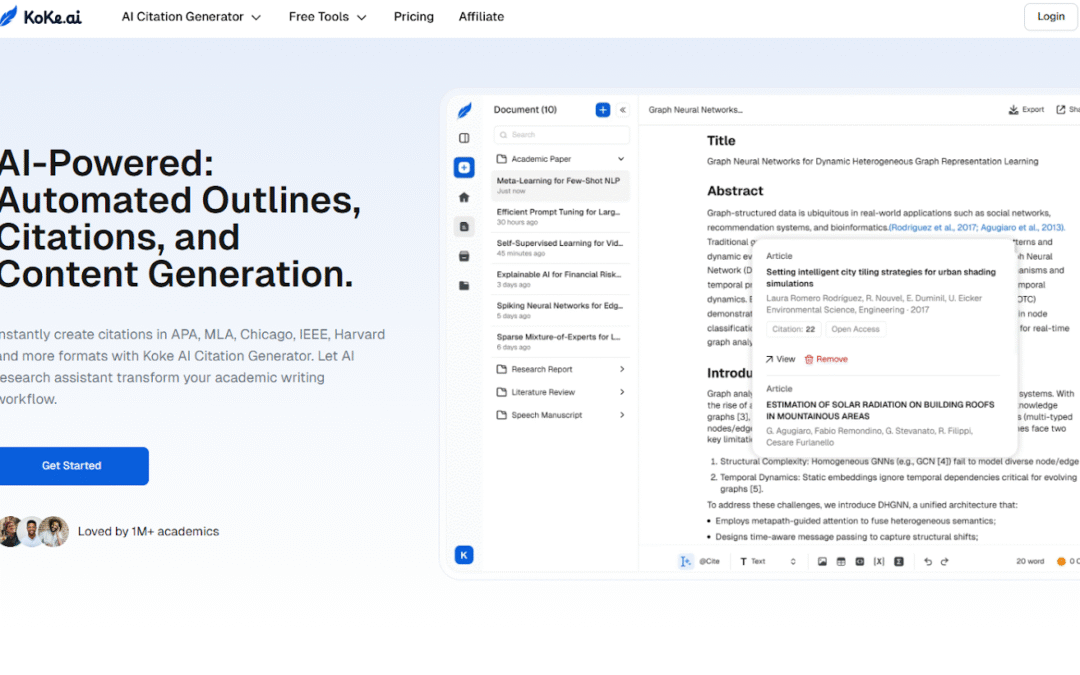
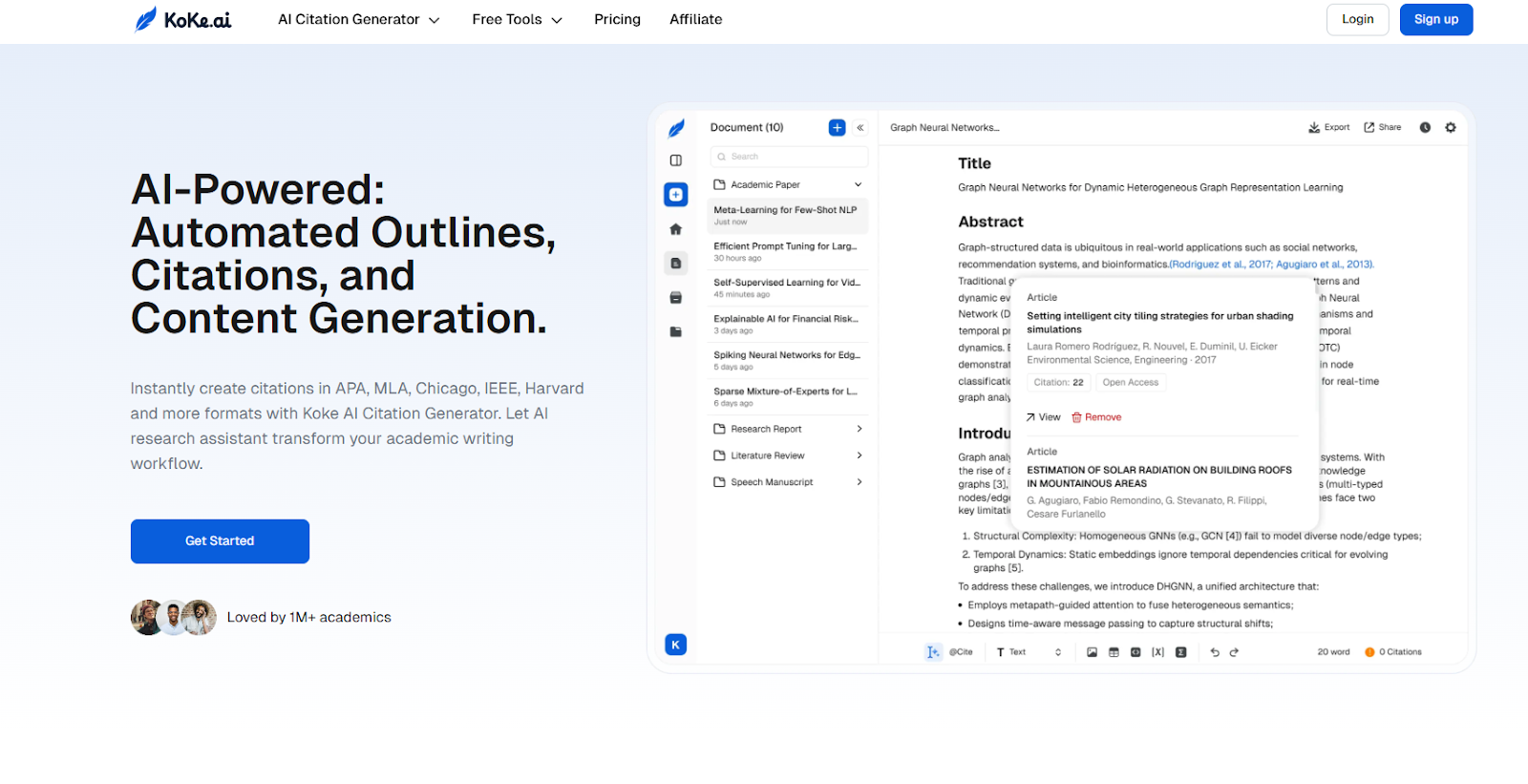
Koke AI’s ACS Citation Generator: Your Ultimate Research Companion

Koke AI’s ACS Citation Generator: Your Ultimate Research Companion

Koke AI's ACS Citation Generator

Why Precision Matters in Academic Writing

In the fast-paced world of academic research, accurate citations are non-negotiable. The ACS (American Chemical Society) format, with its strict guidelines, often trips up even seasoned scholars. Enter Koke AI—a next-gen tool designed to eliminate citation headaches. This review dives into how its ACS citation generator reshapes workflows for researchers, students, and professionals alike.

Koke AI at a Glance: Beyond Basic Citation Tools

Unlike generic reference managers, Koke AI combines artificial intelligence with domain-specific expertise. Its ACS citation generator isn’t just a formatting tool—it’s an intelligent system that adapts to your research style. From journal articles to patents, it handles diverse source types while ensuring 100% ACS compliance.

Core Features That Set Koke AI Apart

1️⃣ Smart Citation Generation

  • Automatically extracts metadata from PDFs or URLs.
  • Detects missing elements (e.g., DOIs, page ranges) and prompts users to fill gaps.
  • Supports real-time updates for evolving ACS style guidelines.

2️⃣ Citation Organization Mastery

  • Groups references by project or paper.
  • Flags duplicate entries and inconsistent formatting.
  • Exports bibliographies in .docx or LaTeX with one click.

3️⃣ AI-Powered Context Analysis

  • Suggests priority citations based on your manuscript’s topic.
  • Identifies high-impact papers relevant to your research.
  • Integrates with Zotero and Mendeley for seamless workflow bridging.

How to Supercharge Your Research in 3 Steps

Step 1: Upload & Scan

Drag your source files into Koke AI’s dashboard. The system scans documents in seconds, highlighting citation-ready elements.

Step 2: Customize & Validate

Tweak author order or add annotations using the intuitive editor. The built-in validator catches issues like incorrect abbreviation formats (e.g., J. Am. Chem. Soc. vs. Journal of ACS).

Step 3: Export & Collaborate

Share formatted citations with co-authors via secure links. Track changes and comments directly within the platform.

Why Researchers Are Switching

✅ Time Efficiency

Cut citation formatting time by 70%—spend hours on analysis, not parentheses.

✅ Error Elimination

Machine-learning algorithms reduce manual mistakes by cross-verifying data against ACS’s latest manuals.

✅ Scalability

Handle 500+ reference lists effortlessly—ideal for thesis writers and lab teams.

Considerations Before Adopting

⚠️ Learning Curve

Advanced features like collaborative editing require initial setup time.

⚠️ Subscription Model

While free for basic use, high-volume users need premium plans (starts at $9.99/month).

Who Needs This Tool?

  • Graduate Students: Perfect for dissertations requiring flawless ACS formatting.
  • Lab Managers: Streamline multi-author paper submissions.
  • Industry Researchers: Maintain compliance in patent applications and technical reports.

Market Impact: A Game Changer for STEM

Koke AI’s ACS Citation Generator addresses a critical pain point in scientific publishing. With over 1,200 ACS-affiliated journals worldwide, this tool positions itself as essential infrastructure for academic integrity. Early adopters report a 40% reduction in peer-review rejections due to citation errors.

Final Take: Is Koke AI Worth It?

If citations are the scaffolding of your research, Koke AI is the power drill that builds it faster and sturdier. While no tool replaces human oversight, its precision and AI smarts make it a standout in the crowded reference-management space.

Pro Tip: Pair it with Koke AI’s plagiarism checker for a bulletproof pre-submission workflow.

How AI-Driven SEO Audits Will Change the Game in 2026

How AI-Driven SEO Audits Will Change the Game in 2026

AI-Driven SEO

The future of SEO isn’t coming. It’s already here.

If you’ve been managing SEO for a while, you’ve probably noticed something: what worked even a year ago doesn’t hit the same today. Google’s updates are rolling out faster. Search intent is shifting quickly. And those traditional, manual SEO audits that used to take days? They’re starting to feel like stone tools in a space-age workshop.

AI is rewriting the SEO playbook, and 2026 will be the year everything changes.

In this article, we’ll unpack how AI-driven SEO audits are speeding up insights, making smarter recommendations, and opening new ways to win visibility online. If you care about staying competitive, you’ll want to read every word.

The Old Way Is Slowing You Down

Traditional SEO audits are a grind.

You run tools, export data, review reports, chase broken links, and analyze keywords by hand. It’s like cleaning a mansion with a toothbrush.

Sure, these audits have value, but they’re also:

  • Time-consuming – often taking days or even weeks to complete.
  • Reactive – you find and fix problems only after they’ve already hurt performance.
  • Fragmented – you’re jumping between ten tools that don’t communicate with each other.

Search algorithms evolve every few weeks, so that’s a losing strategy.

AI changes everything by connecting your data, learning from it, and predicting what’s coming next. It doesn’t just find problems. It prevents them before they happen.

How AI Actually Powers SEO Audits

AI is a complete shift in how SEO analysis works.

You can think of technical SEO services as moving from a flashlight to a floodlight. You don’t just see a few isolated issues — you see the full ecosystem of your website, how every element interacts, and where improvements will have the biggest impact.

Here’s how AI is transforming the process from the inside out.

Machine Learning: The Brain That Never Sleeps

Machine learning enables AI systems to continuously learn from your website’s data. Every page view, click, conversion, and bounce teaches the algorithm something new. Over time, it recognizes patterns in what helps your pages climb the rankings and what holds them back.

An AI system doesn’t stop at noticing broken links or missing alt tags. It connects those issues to their real impact on traffic and conversions. That’s when your SEO stops reacting and starts leading. It’s the difference between “Your title tag is too long” and “Your long title tag is lowering CTR by 12 percent on mobile devices.”

Marketers using marketing analytics software and AI-driven SEO audits together can finally see cause and effect, not just symptoms.

For example, let’s look at what’s happening in modern sales workflows. Sales teams now use sandbox demo environments to let prospects explore a live version of their product safely, without setup or risk. In these demo environments, they track how users interact, which features attract attention, and where drop-offs occur. Those insights guide product improvements and sales messaging. 

AI-driven SEO functions in the same way – it experiments with data, observes real user behavior, and continuously adapts to improve performance. Both systems rely on iterative learning and measurable feedback to refine results over time.

Natural Language Processing: Understanding Search Intent

SEO has evolved from matching keywords to understanding intent, uncovering what users actually mean, not just what they type.

AI-powered Natural Language Processing (NLP) reads content the way a person would. It doesn’t just count keywords; it analyzes tone, sentence structure, and meaning. For example, it knows the difference between “how to build a sandbox demo environment” and “sandbox environment demo software,” even if they use the same words.

Google’s algorithms are now built to interpret intent. If your content answers a searcher’s actual question, not just matches a phrase, you’ll win every time.

NLP can also identify gaps in your topical coverage. If you’re writing about lead generation but never mention marketing automation platforms and CRM software, AI will flag it. That insight helps your content stay aligned with user expectations and algorithmic signals.

NLP technology also powers customer experience software, chatbots, and support ticketing platforms that analyze user language to improve service quality. SEO is simply the next frontier for this intelligence.

Predictive Analytics: Seeing What’s Coming

Predictive analytics is one of the most exciting parts of AI-driven SEO. Instead of reacting to ranking drops, you can anticipate them.

AI models use thousands of data points, from backlink profiles and page load times to competitor activity, to predict what will affect your site’s visibility in the next few weeks or months.

Now marketers plan ahead, especially when running seasonal campaigns or launching new product lines. You can update content, improve internal linking, or refine metadata before traffic dips.

In many ways, this resembles the approach used in marketing attribution software and analytics dashboards. Those systems map out which channels are driving the most ROI so you can double down early. AI audits bring the same predictive power to SEO.

When you see where performance is trending, you stop firefighting and start strategizing. An AI SEO Platform can help you with that.

Automation and Integration: The Connected SEO Ecosystem

Traditional SEO audits require endless switching between Google Analytics, Search Console, and various third-party tools. Each offers a piece of the puzzle, but none tells the full story.

AI solves this problem through automation and integration. It pulls data from multiple sources and combines them into a unified dashboard that updates in real time. Instead of chasing data, you analyze insights.

Similar to what happens in workflow automation tools used by operations and digital marketing teams – when data flows seamlessly between systems, decision-making becomes faster and smarter.

The best AI-driven SEO tools go one step further. They translate complex metrics into simple language. You might receive a notification saying:

“Your page load speed dropped 9 percent last week. Optimize images on your top five pages to recover an estimated 4 percent of traffic.”

Saving time and unlocking clarity.

What’s Changing Right Now

With AI, we are making SEO audits faster. Smarter.

Here’s what’s changing across the industry today:

  1. Speed and Scale: AI can analyze millions of URLs in minutes. You get real-time feedback instead of waiting weeks for an audit.
  2. Deeper Insights: It interprets the “why” behind data. It doesn’t just show problems; it connects them to business outcomes.
  3. Continuous Optimization: With 24/7 monitoring, you never miss a critical technical or content issue.
  4. Predictive SEO: AI anticipates ranking changes and alerts you before visibility drops.

Generative AI is projected to unlock between $0.8 and $1.2 trillion in productivity across sales and marketing. That scale of impact shows how quickly intelligent automation is reshaping how brands optimize, sell, and communicate, and SEO audits powered by AI are becoming a key part of that transformation.

Why This Matters for Marketers and Businesses

AI-driven SEO audits are more than a trend; they’re a competitive advantage.

For marketers, they mean faster insights and smarter campaigns. Instead of spending days compiling reports, teams can use that time to build strategies that actually move the needle.

For agencies, AI audits are a differentiator. They allow you to show value instantly by delivering actionable recommendations in real time.

And for small businesses, AI levels the playing field. You don’t need enterprise resources to compete when you’re equipped with the same level of insight. A CRM system for a small business integrated with AI SEO tools can automatically tie website engagement data to lead quality and sales performance.

AI doesn’t replace SEO professionals. It amplifies them. You’re still the strategist behind the machine. The difference is that now, you can act faster and make decisions backed by intelligent data.

How to Get Ready for AI-Powered SEO Audits

The shift to AI-driven SEO isn’t about flipping a switch. It’s about preparing your foundation so that AI can deliver real, measurable results.

Here’s how to get ready for what’s coming.

Step 1: Audit Your Current Tools and Processes

List every SEO, analytics, and marketing tool your team uses. Ask yourself three key questions:

  • Do these tools still provide insights that help me make decisions?
  • Can they integrate with AI systems or share data through APIs?
  • Are they siloed or connected to the rest of my marketing stack?

If you’re switching between multiple dashboards that don’t communicate with each other, you need better tools. AI thrives on connected ecosystems, not disconnected data.

Today’s tools, from lead generation platforms to sales automation software, often include built-in SEO features or API access to AI audit systems. Connecting them gives you one clear view of traffic, leads, and conversion quality.

Step 2: Strengthen Your Data Quality

AI is only as smart as the data it receives. Before adopting AI-driven audits, clean up your existing analytics setup.

  • Ensure GA4 events and conversions are tracking correctly.
  • Remove outdated or duplicate tracking scripts.
  • Fix broken links and 404 errors.
  • Validate your sitemap to ensure it matches your live content.

Think of it like training an assistant. The clearer your instructions, the better the output.

To streamline data collection, many teams use form generators to capture lead and behavioral data directly from landing pages. These online form builders help optimize conversion rates and gather customer insights. Structured input helps AI-driven SEO systems analyze which content types or layouts drive the best engagement.

Step 3: Build AI Awareness Within Your Team

AI isn’t replacing marketers; it’s reshaping their roles.

The best SEO professionals of 2026 will be those who can interpret AI insights and make strategic decisions based on them. That means upskilling now.

Encourage your team to:

  • Learn how AI interprets on-page and technical signals.
  • Understand how automation affects ranking factors.

Shared understanding prevents overreliance on the tool and keeps your team in control.

If your team already uses marketing automation platforms and CRM software, the transition will feel natural. The same logic applies: automation handles repetitive work, while humans guide strategy.

Step 4: Start Small and Expand Gradually

Don’t overhaul everything at once. Start with one area of focus, maybe technical SEO or content audits, and test an AI audit tool for 30 days.

Track how it performs. Does it identify issues faster? Does it help you prioritize better? Are the recommendations actionable?

Once you see consistent improvements, expand its use to other areas like link building, schema markup, or on-page optimization.

Teams that start small build confidence and develop best practices early. It’s the same approach software companies use when they test features in sandbox demo environments before full deployment.

Experimentation builds understanding. Understanding builds success.

Step 5: Keep Learning and Adapting

What’s advanced today could be standard in a year because AI in SEO is evolving rapidly.

Keep testing new platforms and attending industry webinars. Review emerging case studies that show how others are using AI to drive organic growth.

Most importantly, remain curious. The best results come from teams that experiment early and refine often.

Don’t Forget the Risks

Automation can create overreliance if you stop questioning the results. Always review AI-generated recommendations before implementation. 

Data privacy is another concern. Ensure any tool you use complies with GDPR and relevant data protection laws. Many AI audit platforms now include compliance management software features to simplify this process. 

And remember, AI models can carry bias. Choose vendors that are transparent about their training data and how recommendations are generated.

AI gives you scale and speed, but humans still bring judgment and ethics. You need both.

Looking Ahead: SEO Audits Beyond 2026

In the near future, SEO audits will become living systems. They’ll continuously monitor performance, identify risks, and implement fixes automatically.

Voice search, visual search, and AI-driven conversational platforms will merge with SEO reporting. You won’t just measure website traffic; you’ll measure visibility across every channel where your brand appears, from smart assistants to embedded AI results.

The Smartest Win, Not the Biggest

The businesses that win won’t necessarily have the biggest budgets. They’ll be the ones who understand how to use intelligence to move faster, smarter, and with purpose.

Start preparing now. Clean your data. Train your team. Experiment with AI-powered audit tools.

Because the next SEO revolution isn’t waiting for you to catch up.

It’s already running, and it’s learning faster than ever.

Strategies to Train Staff Quickly on AI Medical Scribes

Strategies to Train Staff Quickly on AI Medical Scribes

AI Medical Scribes

Look, we both know the truth: documentation is slowly killing your practice’s efficiency. Every single day, your providers are buried under paperwork when they should be focusing on patients. It’s exhausting, and honestly? It’s unsustainable. Here’s where things get interesting—AI medical scribe training can turn this nightmare around quicker than you’d believe possible. We’re talking days, not endless months of struggle. 

Get this: medical documentation swallows up roughly 28% of a physician’s entire workday, stealing precious time from actual patient interaction. No wonder everyone’s burned out. AI scribes are becoming the answer more practices are reaching for.

Why Quick Training Matters for Your Practice

Getting everyone trained fast isn’t some bureaucratic checkbox exercise. Think bigger. It’s about cutting through that miserable transition phase where everything slows down and frustration explodes.

Time Savings That Actually Show Up

Here’s the deal with AI scribe implementation in healthcare done properly: you’ll spot real results within weeks. Staff who get focused, practical training? They’re seeing benefits almost instantly. Less typing torture, more genuine patient connection. 

Sure, choosing the best AI scribe platforms built for intuitive use definitely helps your cause, but even the slickest software needs a proper introduction to your unique workflows. Quick training translates to faster ROI and way less chaos disrupting your daily rhythm.

Nobody masters everything immediately. And you know what? That’s completely okay. Nail the core functions first, then layer on complexity. Most providers handle basic documentation tasks within 2-3 days after starting training. Really.

Getting Staff on Board Fast

Tech resistance is absolutely real, especially when your team’s already running on fumes. Medical staff AI training strategies must tackle both the technical mechanics and the emotional baggage people carry. Some folks dread learning curves. Others worry the machines are coming for their jobs. 

Quick, effective training demonstrates that the tool actually helps their work instead of creating more headaches. Short training bursts beat marathon sessions every time. People remember more when learning comes in bite-sized pieces. Plus, they immediately apply fresh skills before the knowledge evaporates.

Setting Up for Training Success

Before diving into actual training, get your ducks in a row. This prep work prevents those soul-crushing technical meltdowns later.

Check Your Tech First

Your internet connection must reliably handle real-time voice processing. We’re talking stable bandwidth without constant dropouts that make people want to throw laptops. Test your network inside the actual exam rooms where staff will use the AI scribe. Audio quality? Critical. 

Background noise and garbage microphones create accuracy nightmares that make users give up. Confirm devices are compatible and updated. Nothing murders enthusiasm faster than technical wrestling matches during training. Keep backup plans handy for predictable problems like audio failures or software hiccups.

Know Your Team’s Skill Level

Some team members practically high-five new technology. Others need gentle encouragement and patience. Research shows that AI scribing led to significant time savings, but had variability across users. Figuring out who’s who lets you customize effectively.

Run quick assessments gauging comfort with current technology. This doesn’t require formal testing or stress. Simple conversations about existing documentation habits reveal tons. Group training handles basics fine, but individual coaching addresses personal concerns better.

The Fast-Track Training Approach

Alright, here’s the practical stuff. This framework gets people productive without drowning them in information.

Start with the Basics

Your initial training session should cover only the essentials. Starting a recording, stopping it, and reviewing generated notes. Done. Don’t bombard people with advanced features they won’t touch for weeks. AI medical scribe training works when it stays practical and immediately useful.

Show the workflow live, then let staff practice with simulated scenarios. Role-playing encounters let people mess up safely. Give them clear, simple guides for later reference. Video tutorials help visual learners, while written checklists work for others.

Hands-On Practice Matters

Reading about AI scribes prepares nobody for actual use. Real practice does that. Set up supervised sessions where staff use the scribe during genuine appointments with backup available. This builds confidence while protecting documentation quality.

Begin with straightforward cases before complex situations. A simple follow-up visit beats a complicated new patient workup for learning. Gradually ramp up difficulty as comfort increases. Encourage questions and normalize struggling—everyone does at first.

Making Training Stick

Training never ends after week one. Ongoing support determines whether this succeeds long-term.

Support After Day One

Pick go-to troubleshooting people. These champions need extra training and confidence in helping colleagues. Quick help access prevents minor irritations from exploding into major problems. Consider daily check-ins in those first few weeks for prompt issue resolution.

Build a shared resource where staff post tips and solutions. This collaborative style builds team buy-in while capturing institutional wisdom. Regular feedback sessions expose common pain points needing attention.

Track What’s Working

Measure documentation time before versus after implementation. Track error rates and staff satisfaction. These metrics prove value while identifying improvement areas. Most practices see productivity gains within 4-6 weeks when rapid AI scribe onboarding follows best practices.

Don’t just hoard data—actually use it. Share wins with the team for momentum building. Jump on problems fast when metrics show struggles. Adjust training based on what numbers reveal.

Common Questions About Training Staff on AI Scribes

1. How long does basic AI scribe training typically take?

Most staff reach basic competency within 2-4 hours of focused training spread across several days. Full proficiency usually arrives in 2-3 weeks with regular use and ongoing support from experienced colleagues.

2. What if older staff members resist the new technology?

Address concerns head-on by emphasizing how AI scribes eliminate frustrating paperwork rather than adding complexity. Pair resistant staff with enthusiastic early adopters for peer mentoring and support.

3. Can we train everyone at once, or should we phase it in?

Phased rollouts work better for most practices. Start with 3-5 eager staff members, iron out problems, then expand gradually. This prevents overwhelming everyone simultaneously while building internal expertise.

Moving Forward with Confidence

Training your staff quickly on AI medical scribes doesn’t demand complicated strategies or massive time investments. Focus on practical, hands-on learning addressing real workflow needs. Start small, support your team consistently, and measure results for improvement guidance. 

The practices crushing it right now treat AI scribe implementation in healthcare as an ongoing journey rather than a one-time event. Your team can master these tools faster than you imagine when training prioritizes practical application over theoretical perfection. Give them the right foundation, and they’ll figure out the rest themselves.

Unlocking the Power of YouTube Video to Shorts Converter: A Deep Dive into Short AI

Unlocking the Power of YouTube Video to Shorts Converter: A Deep Dive into Short AI

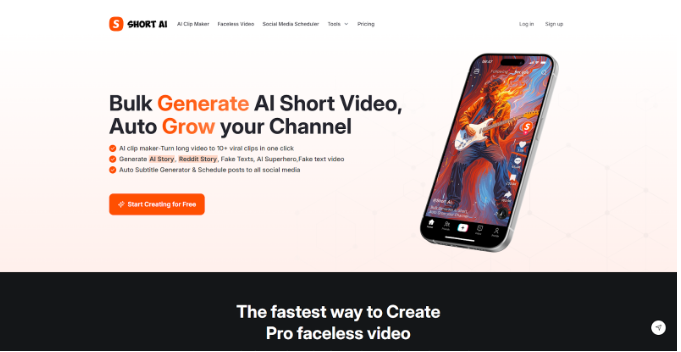
Short AI

My Journey Into Efficient Content Creation

As a passionate content creator constantly navigating the dynamic world of video marketing, I found myself staring down the challenge of repurposing long-form YouTube videos into engaging short videos effortlessly. The market for quick, attention-grabbing snippets is booming, and the need for a reliable YouTube Video to Shorts Converter became undeniable. Through exploration and trial, Short AI emerged as a remarkable ally—quietly blending powerful AI capabilities with user-centric design, helping creators like me convert extensive footage into viral-ready shorts without drowning in tedious manual editing.

An Insightful Look at Short AI’s Dynamic Approach

Streamlining Video Repurposing with Smart Automation

Short AI stands out as a comprehensive platform that automates the extraction of engaging highlights from longer videos, effectively transforming them into captivating shorts tailor-made for YouTube Shorts, TikTok, and Instagram Reels. What impressed me was how naturally the system identifies the most compelling moments—whether a hook, insight, or reaction—and intelligently clips them into bite-sized, shareworthy segments.

Beyond cutting clips, Short AI integrates a robust caption generator that replicates the subtitle styling seen on top channels, ensuring maximum viewer retention while supporting over 30 languages to cater to global audiences. Moreover, the built-in scheduling system allows creators to line up multiple clips for periodic posting, which reduces workload and ensures content visibility stays consistent, an absolute game-changer in fast-moving social media landscapes.

Features Elevating Short AI’s YouTube Video to Shorts Converter

The platform boasts an AI clip maker empowered with advanced algorithms that not only find highlights but enhance them by adding vibrant subtitles, emojis, and text overlays seamlessly. This immersion into engagement tools means creators gain access to features that typically demand multiple software tools, bundled perfectly within Short AI’s interface.

Notably, the converter’s speed is astounding: what once took hours of tedious trimming now happens in minutes, freeing creators to focus on content strategy rather than post-production. Additionally, the versatility in video length, accommodating from under a minute to several minutes, aligns perfectly with evolving YouTube Shorts regulations, facilitating both experimental and strategic content creation.

Optimizing the Workflow: How I Use Short AI to Convert YouTube Videos into Shorts

From Upload to Viral Clip in a Few Clicks

My approach with Short AI begins by uploading the original, often lengthy, YouTube videos into the platform. The AI then scans the footage, identifying moments with the highest viewer potential. After this, the generated clips come preloaded with subtitles styled for eye-catching appeal, further refined by simple but powerful customization options.

Post-editing, the direct integration with major social platforms enables me to schedule and publish shorts without the frequent manual steps that used to clog my workflow. This automation not only protects creator energy but also aligns with the algorithm’s preference for consistent posting. The ability to generate multiple clips from a single upload ensures content volume is maintained without sacrificing quality.

Who Will Truly Benefit from Using Short AI’s YouTube Video to Shorts Converter?

This platform is a standout for solo creators, social media managers, and digital marketers aiming to adapt to the rising importance of short-form video. Anyone looking to elevate their content strategy by repurposing existing videos into multiple shorts without investing excessive time or resources will find Short AI indispensable. Its multilingual support and advanced captioning capabilities make it ideal for those targeting international audiences.

Final Reflections: Short AI as a Strategic Partner for Content Growth

To sum up, Short AI offers a polished, efficient, and feature-rich YouTube video to shorts converter experience that resonates with creators who value both quality and speed. Its ability to intelligently extract engaging snippets, coupled with robust subtitles and scheduling features, creates a workflow that nurtures productivity and maximizes potential reach. While seasoned editors may occasionally seek detailed tweaks beyond the AI’s scope, for most creators, Short AI represents the future of streamlined video repurposing and scalable content growth on YouTube and beyond.

With the digital landscape shifting rapidly toward short-form video dominance, embracing intelligent platforms like Short AI will not only save time and effort but also unlock new pathways to audience engagement and channel monetization success.

How AI-Powered Cybersecurity Is Protecting Modern Web Applications

How AI-Powered Cybersecurity Is Protecting Modern Web Applications

AI-powered cybersecurity

In the modern hyperconnected era, the world wide web is the foundation on which all enterprises are built. From online bank accounts to eCommerce stores and cloud-based SaaS tools, almost every interaction between a brand and its audience takes place through a web interface. This digital transformation offers infinite opportunities for innovation; nonetheless, along with that, a more intricate breed of cyber threats has also come into existence. The attackers no longer constrain themselves to those with sheer force or simple malware-as they use AI-powered methods to exploit vulnerabilities at ever-widening speeds.

This rapid evolution in cyber risk is pushing organisations to rethink how they secure their digital presence. Businesses that invest in professional web development services are increasingly demanding not only scalability and performance but also built-in intelligence that proactively identifies and mitigates threats. As a result, AI-powered cybersecurity is emerging as the most effective way to safeguard modern web applications.

An experienced AI development company can integrate ML models and real-time threat detection systems into the architectural framework of a website. These smart systems analyse huge volumes of data, fish out suspicious patterns, and prevent attacks before an attack hits the users. To put it in short, AI is not a concept of the future anymore; it is what now keeps web applications secure in an unpredictable digital landscape.

The Growing Need for Intelligent Cybersecurity

Previously, apply had been given to rule-based systems and reactive defences. Firewalls, signature-based antivirus software struck at known threats, and manual monitoring was powerless against new or fast-evolving attacks. It is fifty times more complex, with multiple APIs, third-party integrations, and cloud environments, that is an increased surface for the attack.

Thus, AI and ML provide for a proactive layer of defence. Instead of waiting for a threat to correspond to a known signature, AI works on real-time anomaly detection. For instance, if a second attempt to log in behaves abnormally when compared to the user’s usual behaviour, AI-based systems would be able to automatically flag it or block it. This predictive capacity changes cybersecurity from a reactive defence into intelligent prevention.

How AI Detects and Neutralises Threats

AI-powered cybersecurity systems continuously learn from the vast amount of data they process. Every login attempt, form submission, and network request contributes to their growing knowledge base. Through this process, AI can identify abnormal activity with exceptional accuracy.

Here’s how AI typically strengthens web application security:

  1. Anomaly Detection – AI can detect when user behaviour deviates from normal patterns. For example, if a legitimate user suddenly tries to access restricted areas or performs actions from a new location, the system raises an alert.

  2. Automated Threat Response – Once a potential attack is detected, AI systems can take immediate action — such as blocking suspicious IPs, forcing password resets, or isolating compromised sections of the application.

  3. Vulnerability Prediction – AI can analyse code repositories and development environments to predict which components are most at risk, helping teams patch vulnerabilities before they’re exploited.

  4. Phishing and Malware Detection – ML algorithms trained on large datasets can detect phishing attempts and malicious scripts embedded within web content faster and more reliably than human reviewers.

This level of automation ensures that even when teams are offline, web applications remain protected around the clock.

AI and ML in Web Application Architecture

Incorporating AI into web application security doesn’t mean building an entirely new system from scratch. Many modern frameworks and cloud platforms already support AI-driven tools and APIs that enhance security.

For instance, AI-powered Web Application Firewalls (WAFs) can adapt their filtering mechanisms based on real-time traffic analysis. If the AI notices a sudden surge of unusual traffic from specific regions, it can automatically adjust firewall rules to mitigate the risk of a distributed denial-of-service (DDoS) attack.

Machine learning models can also be integrated into DevSecOps pipelines — allowing developers to detect insecure code patterns during the development phase itself. This not only improves security but also reduces long-term maintenance costs by preventing vulnerabilities from reaching production.

Human and Machine Collaboration

While AI can process vast amounts of data and respond in milliseconds, cybersecurity still requires human oversight. AI identifies patterns, but human experts interpret context. For example, a sudden increase in login attempts might signal a brute-force attack — or simply a popular sale event drawing more customers.

The best results come from collaboration between AI systems and skilled cybersecurity professionals. Developers and analysts can train AI models to better understand their unique application environment, improving accuracy and reducing false positives. Over time, this partnership leads to a more adaptive and resilient cybersecurity framework.

Benefits of AI-Powered Cybersecurity for Businesses

Implementing AI-driven cybersecurity in web applications brings numerous advantages beyond basic protection.

  • Proactive Defence – AI identifies and stops threats before they cause harm, reducing downtime and reputational risk.

  • Cost Efficiency – Automation reduces the need for constant manual monitoring and response teams.

  • Faster Incident Response – AI reacts in real time, neutralising attacks within seconds.

  • Scalability – As traffic and data volumes grow, AI systems adapt without manual configuration.

  • Data-Driven Insights – Continuous monitoring provides detailed analytics on threat trends, helping businesses plan more effective defences.

These benefits collectively help organisations build trust with users, demonstrating a commitment to safety and reliability, qualities that are becoming essential in the competitive digital marketplace.

Challenges and Ethical Considerations

And just like any other force in cybersecurity, there are champions and detractors for AI. An algorithm has to depend heavily on the quality and the diversity of the training set. If categories were badly taught or data were biased, many intrusions could go unclassified, thus, possible defence gaps would remain. Another interesting thing is that intruders who are aware of the use of AI-assisted intrusion detection are now using AI themselves, developing better ways of intrusion, and putting into what most experts call an “AI arms race.”

Privacy is another issue. The AI systems keep a constant track of user behaviours, raising questions on how much data should be gathered or stored. While balancing privacy with security, good governance and transparency into the design of the AI model are essential.

Finally, hiring companies need to develop their human resources with sufficient skills to maintain AI instruments. The misuse of this technology could lead to people placing too much trust in automation. Greediness or denial could therefore result in missed vulnerabilities.

The Future of AI in Web Application Security

Going forward, AI-based cybersecurity is expected to get more sophisticated. Technologies like federated learning will allow AI models to improve without compromising user data privacy. Along with this, integration with blockchain will bring in transparency and data integrity across distrusted systems.

There will be increased use of AI-orchestrated control and management between cloud providers and web frameworks, wherein security decisions will be taken freely on the basis of ever-changing real-time conditions, hence easing the life of developers in building self-defending applications that can identify threats, adapt to them, and finally repel them.

For the businesses, the major opportunity stands in making an early investment in AI-driven cybersecurity as this will not only give them assets protection but will give their organizations a standing in digital trust. In a world where customers expect secure and seamless online experiences to be great, this is going to act as a major competitive advantage.

Conclusion

AI-enabled cybersecurity is metamorphosing the way modern web applications are protected. Instead of depending on a static firewall or manual monitoring, businesses can set up dynamic systems that can predict and neutralise threats before they begin.

Studies with the right partners, that is, advanced web development firms and/or AI development companies can create secure, scalable, intelligent digital ecosystems to keep pace with the evolving threat landscape.

In the end, with the fusion of AI and ML with human expertise, a new era in cybersecurity is born that of proactive, adaptive web protection built into the very heart of the Web.

Author Bio : Bhumi Patel has vast experience in Project Execution & Operation management in multiple industries. Bhumi started her career in 2007 as an operation coordinator.  After that she moved to Australia and started working as a Project Coordinator/ Management in 2013. Currently, she is the Client Partner – AUSTRALIA | NEW ZEALAND at Bytes Technolab – a leading WordPress Development Company in Australia, where she works closely with clients to ensure smooth communication and project execution also forming long term partnerships. Bhumi obtained a Master of Business Administration (MBA) in Marketing & Finance between 2005 and 2007. 

author