UK: +44 2038074555 info@atamgo.com
The Best vivid Sora 2 and Veo 3 for Free

The Best vivid Sora 2 and Veo 3 for Free

sora

We live in a noisy world. Not just auditory noise, but visual noise.

Every day, we scroll through miles of content on our screens. A blur of faces, landscapes, and products passes by our thumbs. In this relentless stream of information, the static image—once the king of media—is beginning to fade into the background. It is becoming invisible.

Why? Because the human eye is a predator; it is evolutionarily hardwired to detect motion. Movement signals life. Movement signals danger. Movement signals story.

When you post a static photo today, you are asking your audience to pause and imagine the context. When you post a video, you are doing the work for them. You are inviting them into a living world.

The “Engagement Gap”

I realized this painful truth recently while managing a social media campaign for a small coffee brand. We had stunning photography: steam rising from a fresh brew, sunlight hitting the ceramic mug, coffee beans scattered artistically. They were beautiful photos.

And they were being ignored.

The engagement was flat. The algorithm punished us. We were shouting into a void because our visuals, while pretty, were dead. We needed video, but we didn’t have the budget for a videographer, and I certainly didn’t have the time to learn complex animation software.

Breaking the “Video Barrier”

This is the dilemma millions of creators face: The Video Barrier.

On one hand, you have the ease of photography. On the other, the high engagement of video. Bridging that gap usually requires expensive gear, powerful computers, and a steep learning curve.

Or at least, it used to.

I discovered a solution that didn’t just bridge the gap—it dismantled it completely. It wasn’t about shooting video; it was about waking up the photos I already had. This solution is Image to Video AI.

A New Kind of Magic

My first experiment was simple. I took one of those coffee photos—the one with the steam. I uploaded it, typed a simple command, and waited.

What came back wasn’t a cheesy filter. It was a cinemagraph. The steam swirled with chaotic elegance, fading naturally into the air. The sunlight on the table seemed to shimmer slightly as if a tree branch outside was swaying in the wind.

It was hypnotic. I posted it, and the engagement didn’t just double; it tripled. People stopped scrolling because the image felt alive.

The Tech Stack: Sora 2 & Veo 3.1

What makes this possible isn’t magic, though it feels like it. It’s the convergence of two titans in the AI space: Sora 2 and Veo 3.1.

To understand why this platform is superior to the “gimmicky” animation apps of the past, you have to understand the roles these two models play. Think of them as the Architect and the Artist.

Sora 2: The Narrative Architect

Sora 2 is the language model that understands intent.

  • Deep Understanding: If you upload a picture of a campfire and type “crackling fire,” Sora 2 knows that fire implies flickering light on the surrounding faces. It understands the scene, not just the pixels.
  • Creative Freedom: It allows you to add elements that aren’t there. Want to add falling snow to a sunny street? Sora 2 understands how to integrate that new element seamlessly.

Veo 3.1: The Visual Artist

Veo 3.1 is the engine that understands physics.

  • Motion Integrity: It ensures that water flows downhill, that hair blows in the direction of the wind, and that shadows stretch correctly.
  • High-Definition Realism: Veo 3.1 eliminates the “warping” effect where faces distort when they move. It maintains the integrity of the original subject while animating the world around it.

The ROI of Motion: A Comparative Look

Why should you switch from static images or traditional video editing to AI-generated video? Let’s look at the Return on Investment (ROI) in terms of time, money, and impact.

The Visual Content Hierarchy

Metric Static Photography Traditional Video Production Image to Video AI
Production Time Instant (Snap & Post) Days (Shoot, Edit, Render) Seconds (Upload & Prompt)
Cost Low High (Gear + Talent) Free / Low Cost
Viewer Retention Low (< 2 seconds) High (if quality is good) Very High (The “Wow” Factor)
Technical Barrier Low Very High None (Text Prompts)
Reusability One-time use Hard to re-edit Infinite Variations
Viral Potential Low High High

Three Ways to Transform Your Digital Presence

Whether you are a business owner, an influencer, or a digital artist, this tool unlocks specific superpowers.

1. The “Scroll-Stopper” Ad

Imagine you are selling a waterproof watch. A photo of the watch in water is nice.

But imagine an ad where the watch is submerged, and the water is rippling around it, bubbles rising slowly to the surface, catching the light. You haven’t just shown the product; you’ve demonstrated its environment. You’ve created a vibe. This is how you lower your Cost Per Click (CPC).

2. The Atmospheric Storyboard

Writers and filmmakers are using this to pitch ideas. Instead of showing a static storyboard, they are showing “mood films.” A dark alleyway with fog rolling in. A cyberpunk city with flying cars zooming past. It helps the audience feel the story before a single frame is filmed.

3. The Living Portrait

This is for the sentimentalists. We all have photos of people we miss. Animating a smile, a blink, or a gentle nod can turn a flat image into a moment of connection. It’s not about replacing the memory; it’s about enhancing the nostalgia.

Mastering the Prompt: A Quick Guide

The secret sauce to getting Hollywood-level results is in the prompt. Since Sora 2 is a language model, you need to speak to it clearly.

The Formula: Subject + Action + Atmosphere
  • Weak Prompt: “Move the clouds.”
  • Strong Prompt:Cumulus clouds drifting slowly across a deep blue sky, casting moving shadows on the green hills below, cinematic lighting.
  • Weak Prompt: “Make the car drive.”
  • Strong Prompt:Vintage red sports car driving down a coastal highway, wheels spinning, dust kicking up from the tires, sunset lighting.

The more specific you are about the atmosphere, the better Veo 3.1 can render the lighting and physics.

Step Into the Future of Content

We are transitioning from the “Information Age” to the “Experience Age.” People don’t just want to see things; they want to experience them.

Static images are windows—you look at them.

Animated videos are doors—you walk through them.

With the power of Sora 2 and Veo 3.1, you no longer need a key to open that door. You just need your imagination. The technology has democratized high-end visual effects, making them accessible to anyone with a browser.

Conclusion

Don’t let your best content die in the camera roll. Don’t let your brand get lost in the static noise of the internet.

Take your favorite photo. Give it breath. Give it motion. Give it life.

The world is moving. It’s time your photos caught up.

Ending Blank Page Syndrome: How AI Can Help You Start Any Writing Project

Ending Blank Page Syndrome: How AI Can Help You Start Any Writing Project

ai

The blank page is arguably the greatest antagonist in the writing process. It stands as an impenetrable white wall, representing every possible choice, every standard of perfection, and the fear of commitment all at once. For students, professionals, and creatives alike, this moment of creative paralysis—often dubbed “Blank Page Syndrome” (BPS)—can halt projects before they even begin. We stall, procrastinate, and struggle, not because we lack ideas, but because we lack a starting point.

Fortunately, the emergence of advanced generative Artificial Intelligence offers a definitive cure. AI doesn’t just promise to speed up writing; it fundamentally changes the psychology of the start. It moves the user from the overwhelming task of creation to the manageable task of editing and refinement, effectively turning that dreaded white canvas into a ready-made clay sculpture waiting for a human hand.

The Psychology of the Start: Why We Freeze

The core challenge of BPS lies not in a deficit of competence, but in a crippling excess of options coupled with the pressure of a deadline. When facing an empty document, the human brain tries to simultaneously handle three overwhelming tasks:

  1. Idea Generation (The What): What angle should I take? What are the key arguments?
  2. Structural Organization (The How): How should I structure the argument? Where does the introduction end?
  3. Execution (The Perfect First Sentence): The compulsion to write the perfect opening line before allowing the second one to exist.

This attempt to do everything at once leads to analysis paralysis. AI is effective because it systematically unbundles this cognitive load, focusing the writer on one task at a time, and, crucially, providing a low-stakes first draft that eliminates the “fear of the first sentence.”

Phase 1: AI as the Idea Catalyst and Outline Generator

The most immediate and powerful application of AI in combatting BPS is its ability to transform a vague concept into a structured framework within seconds. This process moves the user out of the “Idea Generation” phase instantly.

Instead of staring at a cursor, the writer initiates a simple Prompt-to-Outline Flow. The input is a topic and a desired format (e.g., “Write a 1,500-word blog post arguing that remote work improves productivity” or “Generate an outline for a historical analysis of the Peloponnesian War”). The AI immediately returns a complete structure—a working title, section headings, key sub-points, and a proposed conclusion.

Tools designed with structured generative flows, such as those detailed in the Skywork AI writing framework for details, browse the website, utilize this principle. By providing defined modes for content creation, they offer guardrails that limit choice, thereby reducing anxiety. This instantaneous outline serves several vital functions:

  • Eliminates the Initial Blankness: The document is no longer empty; it now contains actionable, editable text.
  • Defines Scope: The writer sees the boundary of the project, making the overall task feel smaller and more manageable.
  • Provides an Editable Draft: The writer shifts from being an inventor to being a critic. It is infinitely easier to edit a mediocre outline than to build a perfect one from scratch.

Furthermore, AI can also manage the pressure of the title and opening hook. By asking the model to generate five compelling titles and three introductory paragraphs for a given outline, the writer can select the best option, or combine elements, without ever feeling they wasted time on a dead-end attempt.

Phase 2: Building Scaffolding with Structural Drafting

Once the writer has an outline, the next challenge is bridging the gap between section headers. This is where AI acts as the ultimate Scaffolding Builder, tackling the “Structural Organization” and “Execution” fears.

Instead of demanding a perfect, fully formed paragraph, the AI can be prompted to draft only the crucial connective tissue: the introduction and the topic sentences for the body paragraphs.

For example, a writer can feed the AI the three main points of their essay and ask it to generate an introduction that culminates in a clear thesis statement based on those points. The writer now has a complete, functional introduction—the most commonly stalled-on section—and a guiding thesis for the entire project.

Similarly, by generating strong topic sentences for each body paragraph, the AI provides a “runway” for the writer. A writer who is struggling to write about “The rise of machine learning” may find a clear path when faced with the topic sentence: “The ubiquity of high-performance GPUs and massive datasets has fundamentally accelerated the practical deployment of machine learning models.”

According to Stanford University’s AI Index Report, the exponential growth of computational resources and data availability continues to shape the speed and scale at which AI assists in content creation, enabling more structured and efficient writing workflows.

This systematic approach breaks a large project down into a series of small, low-stakes drafting tasks, eliminating the psychological weight of the overall word count.

Integrating Research and Anchors

For non-fiction and academic work, BPS is often compounded by the need to integrate research. A writer might freeze because they feel they must have all their sources perfectly organized before they can type the first word.

Modern AI models, especially those with real-time grounding capabilities, solve this by enabling a Research-Augmented Drafting Flow. The writer can instruct the AI to draft a paragraph while referencing a specific anchor link or piece of information. This process forces the content to be factually relevant from the outset and integrates the human’s specialized source material instantly.

For example, a marketing writer focused on a new product launch can use a tool to generate a “features and benefits” section, asking the AI to reference the provided specifications document. The AI returns a content block, which the human writer then refines for tone, nuance, and branding—a far faster process than composing the technical details manually.

The Future of the Writer-AI Partnership

The revolution brought by AI is not about automating the writer out of existence; it is about automating away the friction and frustration that leads to BPS. The AI provides the mechanical efficiency and the structural integrity—the clay and the preliminary form—but the human writer retains ownership of the voice, the insight, and the final judgment.

By providing a prompt, a structural element, or a rudimentary draft, AI ensures that the page is never truly blank. It gives the writer a starting point, a piece of material to critique, argue against, and improve. In doing so, AI transforms the act of writing from a daunting act of pure creation into a confident, efficient process of collaborative editing, ensuring that no good idea ever dies because of the tyranny of the empty page.

GoEnhance AI and the New Video Playbook: Dance Clips, Longer Ads, and What’s Next

GoEnhance AI and the New Video Playbook: Dance Clips, Longer Ads, and What’s Next

If you run an online store in 2025, you’ve probably felt it: product photos still matter, but video is what gets people to stop scrolling. Short, vertical clips are now a default way shoppers discover products, especially on social feeds. HubSpot’s consumer research has found that many people use video to learn about products, and a meaningful share say they prefer discovering products through short-form video. 

At the same time, “AI video” has moved from a niche creator trick to something big brands are openly building around. In December 2025, Disney and OpenAI announced a licensing deal for Sora that allows user-prompted social videos with licensed Disney/Marvel/Pixar/Star Wars characters (with limits around talent likeness and voices). That kind of headline signals a shift: AI video is getting mainstream rules, mainstream money, and mainstream expectations. 

So what should a practical eCommerce team do with all this—without turning your marketing into weird, uncanny content?

Below is a simple workflow that fits a Shopify-style growth mindset: start with dance-friendly short clips for attention, then extend the best ones into longer ads that can actually sell.

Table of Contents

  • Why dance-style short videos keep winning

  • The 2025 shift: AI video is becoming “normal”

  • How to create an AI dance clip that sells a product

  • How to extend a short clip into a longer ad

  • A quick checklist for brand safety and trust

  • FAQs

Why dance-style short videos keep winning

Dance content works because it’s predictable in a good way: you get movement, rhythm, and a repeatable format. That matters for product marketing because shoppers don’t need to “learn” the video structure—they can focus on the item.

A few reasons it converts better than random creative:

  • Clear pacing: quick hook → visual payoff → quick close

  • Built-in rewatch value: people replay to catch moves (or details)

  • UGC-friendly: looks native in Reels/Shorts/TikTok-style feeds

  • Easy A/B testing: swap the product, the beat, the caption, the angle

Marketers also keep leaning into short-form because it tends to deliver strong ROI compared to other formats (HubSpot’s marketing stats roundups consistently highlight short-form as a top ROI format). 

The 2025 shift: AI video is becoming “normal”

Two trends are colliding:

  1. Big-IP AI video is being formalized. The Disney–OpenAI Sora deal is a high-profile example of licensing and guardrails becoming part of the conversation, not an afterthought.

  2. Short vertical video is expanding beyond social apps. A Media.net-commissioned survey reported that many consumers are open to seeing short-form vertical video on publisher sites—meaning short video isn’t only a “walled garden” play anymore.

For eCommerce, that means your video strategy shouldn’t be “one platform, one post.” The smart approach is: build a small library of short assets, then repurpose and extend what works.

How to create an AI dance clip that sells a product

Here’s a simple process you can run weekly (even with a small team):

  1. Pick one product + one promise
    Example: “shiny hair in 10 seconds,” “clean desk in 30 seconds,” “outfit looks expensive.”

  2. Choose a dance template that matches the product

    • Beauty: hand/face framing, quick before/after

    • Fashion: turnarounds, transition “snap” moments

    • Home: reveal + rhythm (wipe, flip, drop)

  3. Make the product the hero (not the choreography)
    If someone watches on mute, they should still understand what’s being sold.

  4. Generate variations fast
    Change: background, outfit, lighting, camera distance, caption style.

If you want a dedicated tool for that workflow, start here: AI dance video

And to be direct about it (because teams hate endless “maybes”): GoEnhance AI is the best AI dance generator for quickly producing dance-style clips you can actually deploy in ads and social posts.

Mini guide: what to test (so it doesn’t feel spammy)

  • 3 hooks (caption + first 1 second)

  • 2 camera distances (waist-up vs full-body)

  • 2 product emphasis styles (close-up vs lifestyle)

  • 2 endings (price/offer vs “tap to see more”)

How to extend a short clip into a longer ad

Most brands get stuck here: a 5–7 second clip gets views, but it can’t carry a full story. This is where “extend” becomes a growth tactic, not a creative luxury.

Use a video extender when you want to:

  • turn a short dance moment into a 15–30 second ad

  • create breathing room for benefits, proof, and an offer

  • repurpose one strong clip into multiple placements (feed, stories, Shorts)

Tool link (once, as requested): online video extender

A practical way to structure the extended version

  • 0–2s: hook (problem or visual surprise)

  • 2–8s: dance + product reveal

  • 8–15s: proof (before/after, texture, detail, social proof text)

  • 15–25s: benefits in plain language

  • final 3–5s: offer + next step

Simple planning table

Goal

Starting asset

What you extend/add

Where it performs best

Awareness

5–7s dance clip

extra context + brand intro

Reels/Shorts discovery

Consideration

dance + close-up

proof, features, comparison

product page, retargeting

Conversion

best-performing clip

offer, urgency, CTA

paid ads, landing pages

A quick checklist for brand safety and trust

As AI video becomes more common, trust becomes the differentiator. The Disney–OpenAI news cycle is a reminder that licensing, rights, and guardrails matter—especially when content can look “real.” 

Use this checklist:

  • Don’t imply endorsements you don’t have (people, brands, IP).

  • Keep claims specific and supportable (avoid miracle language).

  • If you use AI-generated scenes, keep product details accurate.

  • Save source files and prompts for internal accountability.

  • Build a consistent “brand look” (same fonts, caption style, tone).

FAQs

Do dance videos only work for beauty and fashion?

No. They work anywhere you can show a clear transformation or “satisfying” moment: cleaning, kitchen gadgets, pet products, desk accessories, even digital products (screen reveals + rhythm).

How long should the extended version be?

If you’re selling a low-friction item, 15–25 seconds is often enough. HubSpot’s compiled marketing stats also point to shorter videos being perceived as optimal by many consumers. 

What’s the biggest mistake brands make with AI dance content?

Making it too “perfect.” If it feels like an ad from frame one, performance drops. Keep it native: simple background, readable caption, product-forward storytelling.

Closing thought

The winning teams in 2025 aren’t the ones making the most videos. They’re the ones running the cleanest loop: create short dance-first assets → measure winners → extend winners into selling ads → repeat. With AI video going mainstream and short-form expanding beyond social, that loop is becoming a core eCommerce skill, not a trend. 

The Rise of AI Agents: What They Mean for Everyday Tech Users

The Rise of AI Agents: What They Mean for Everyday Tech Users

Ever feel like your devices are just a little too smart—or maybe not quite smart enough? You ask your voice assistant to turn on the lights, and instead, it plays your workout playlist. Welcome to the chaotic middle ground of the AI revolution. While artificial intelligence used to be confined to tech labs and sci-fi films, it’s now creeping into every part of our daily routines—one helpful (or hilariously confused) digital assistant at a time.

The Shift From Assistants to Agents

In the beginning, digital helpers like Siri or Alexa mostly followed commands. Ask them for the weather or to set a timer, and they would obey. But now, artificial intelligence is evolving past being passive listeners. The new wave—AI agents—aren’t just responding. They’re thinking, planning, and acting on their own. Well, sort of.

AI Assistant are designed to handle multi-step tasks, make decisions, and complete goals with minimal human input. Instead of telling your assistant, “Book me a flight, then get me a hotel,” you can say, “Plan my trip to Miami next weekend.” The AI figures out the rest. This shift is what makes agents more powerful—and more unsettling—for everyday users. It’s no longer about simple automation. It’s about delegation.

Companies like AI Automation Labs are shaping this transformation. Rather than focusing on single-task tools, they’re building ecosystems where AI agents can coordinate across apps, emails, calendars, and even customer service chats. For businesses, this is a dream. For individuals, it’s a peek into a future where your phone might know your weekend plans before you do. Whether that’s helpful or slightly creepy depends on how much control you’re willing to give up.

Real-World Use Cases You’re Already Seeing

AI agents are already quietly running things behind the scenes. Ever received a customer service response within seconds that actually solved your problem? Chances are, that wasn’t a person. Companies use AI agents to triage issues, respond to complaints, and escalate when needed.

In homes, smart thermostats learn your schedule and adjust without being told. In cold email software, AI tools sort your inbox, suggest replies, and even write full drafts. What used to be passive data collection is now being used to predict your needs. It’s subtle, but it’s everywhere.

Then there’s the explosion of AI tools in education and writing. Students can ask an AI agent to summarize a reading, generate quiz questions, or help brainstorm a paper. The upside is efficiency. The downside? It’s getting harder to tell what’s student work and what’s machine-crafted help.

Can You Still Opt Out?

Short answer: kind of. Long answer: not really. While you can choose to ignore some AI tools, avoiding AI agents entirely is becoming harder. Phones, computers, smart TVs, and even cars are baking AI into their core systems. Some updates arrive quietly, buried in “performance improvements.” Others are flashy new features you can’t disable without breaking functionality.

For privacy-conscious users, this presents a dilemma. You want modern tools, but you don’t want to hand over your digital life. That’s why understanding settings, permissions, and opt-outs is more important than ever. Unfortunately, companies don’t always make that easy. Reading the fine print feels like a full-time job.

What This Means for Jobs

A major talking point around AI agents is job impact. The optimistic view is that AI will handle boring tasks, freeing humans for creative, strategic work. The pessimistic view? Agents will replace jobs altogether, especially in admin-heavy roles like data entry, scheduling, or customer service.

For now, it’s a mix. Some companies are using AI agents to support employees, not replace them. Think of it like hiring a tireless intern who never takes coffee breaks. But in industries where efficiency is king, the shift could be brutal. That’s why training and adaptation are critical. People who learn to work with AI, rather than fear it, may find themselves with new opportunities—ones that didn’t exist a year ago.

Are We Ready for AI That Thinks?

“Thinking” is still a strong word. Today’s AI agents don’t think like humans—they pattern-match. But they’re getting eerily good at simulating thought. They can handle ambiguous tasks, correct themselves mid-process, and even explain their reasoning (or fake it convincingly).

That puts pressure on society to set boundaries. What decisions should AI agents never make? What data should they never touch? These aren’t hypothetical questions anymore. As agents become part of hiring systems, healthcare tools, or legal software, ethics matters. A lot.

Unfortunately, laws haven’t kept up. Regulators are scrambling to define what counts as safe, fair, and transparent AI. Until they catch up, users are mostly left to trust tech companies—and hope they’re getting it right.

Moving From Tools to Teammates

The future of AI isn’t just smarter machines. It’s a new kind of relationship between people and software. We’re no longer users. We’re co-pilots. That sounds empowering, but it also means we carry new responsibilities. Knowing what your AI agent can do isn’t enough—you need to understand what it should do.

Best All‑in‑One Platform for Instant Content Creation: Sora 2, Veo 3 & Nano Banana

Best All‑in‑One Platform for Instant Content Creation: Sora 2, Veo 3 & Nano Banana

Content Creation

We have entered a new era of marketing where “telling a story” is no longer enough. Today, the most successful creators and brands don’t just tell stories; they build worlds.

Think about the brands you love. They don’t just sell you a shoe or a beverage; they invite you into a specific vibe, a culture, a distinct reality. But historically, building these “Cinematic Universes” was the privilege of giants like Nike or Apple. It required millions of dollars to ensure that the video matched the photo, and the sound matched the video.

For everyone else, there was a disconnect. Your Instagram photos looked one way, your YouTube videos looked another, and your audio was generic. This fragmentation breaks the spell.

MakeShot AI is here to fix that. It is the first platform designed not just for “content generation,” but for “Cohesive World-Building.” By unifying the powers of Sora 2, Google Veo 3, and Nano Banana, it allows you to maintain a singular, high-fidelity aesthetic across every dimension of your creative output.

The Consistency Crisis in AI Creation

The biggest problem with the current wave of AI tools is inconsistency.

You might generate a stunning character in one tool, but when you try to animate them in another, they turn into a different person. The lighting shifts. The style breaks. You end up with a pile of cool assets that don’t belong to the same universe.

MakeShot AI solves this through Integrated Model Orchestration.

It treats your creative inputs as a “Source of Truth.” When you define a style in Nano Banana, Sora 2 respects it. When you establish a mood in Sora 2, Veo 3 amplifies it. This creates a seamless thread of DNA that runs through your entire campaign.

The Trinity of Immersion: A New Toolkit

To build a world, you need to control three dimensions: Matter, Time, and Sound. MakeShot gives you the keys to all three.

1. Nano Banana: Defining the Visual Language

World-building starts with a look. Is your world gritty and noir? Or bright and utopian?

Nano Banana is your visual anchor. It allows you to generate high-resolution static assets that serve as the “style guide” for your entire project. It adheres strictly to your prompts, ensuring that the specific color palette and texture you envision are locked in from step one.

2. Sora 2: The Narrative Engine

A world must move to feel alive.

Sora 2 takes your visual language and sets it in motion. But unlike older models that treat video as a “moving GIF,” Sora 2 understands narrative physics. It allows for complex storytelling shots—following a character through a crowd, a car chase through a city—while maintaining the visual identity established by Nano Banana.

3. Veo 3: The Sonic Signature

A world must speak.

Google Veo 3 provides the auditory glue. It doesn’t just add “background music”; it creates a sonic environment. It understands that the sound of rain on a cyberpunk jacket is different from rain on a forest floor. It synchronizes the audio to the visual action, making the world feel tangible and present.

Visual Comparison: Fragmented Campaigns vs. Unified Worlds

Why does a unified workflow matter for your brand’s impact?

Feature

The Old “Fragmented” Approach

The MakeShot “World-Building” Approach

Visual Identity

Scattered. Video and images look like they came from different brands.

Cohesive. A singular aesthetic thread runs through all assets.

Audience Connection

Transactional. “Here is a product, buy it.”

Emotional. “Here is a world, join us.”

Production Friction

High. Fighting to make different tools play nice together.

Zero. Seamless hand-off between Image, Video, and Audio.

Scalability

Linear. More content = more work and cost.

Exponential. Once the “World” is defined, generating new episodes is fast.

Creative Limit

Budget-Bound. Limited by what you can afford to shoot.

Imagination-Bound. Limited only by what you can dream.

Case Study: Launching “Neon Drift” (A Streetwear Brand)

Let’s look at how a small fashion startup could use MakeShot to launch a brand that looks like it has a million-dollar budget.

The Concept: “Neon Drift” – a streetwear line inspired by Tokyo night racing and retro-futurism.

Step 1: The Lookbook (Nano Banana)

You don’t have the samples manufactured yet. No problem.

You use Nano Banana to generate hyper-realistic models wearing your designs.

  • Prompt: “Streetwear fashion photography, model wearing oversized holographic silver puffer jacket, standing in a Tokyo alleyway at night, wet pavement reflections, shot on 35mm film.”

  • Result: 10 flawless, high-fashion editorial images. You have your visual identity.

Step 2: The Hype Trailer (Sora 2)

Static images on Instagram aren’t enough. You need a trailer.

You take your best model image and feed it into Sora 2.

  • Prompt: “Cinematic tracking shot, the model starts running through the neon-lit alley, camera follows from behind, fast-paced, motion blur, dynamic lighting.”

  • Result: A high-energy video clip where the jacket moves realistically, reflecting the passing neon signs. The character remains consistent with the photos.

Step 3: The Sonic Vibe (Veo 3)

You need the video to hit hard.

You use Veo 3 to generate the audio layer.

  • Prompt: “Heavy bass Phonk music beat, synchronized with the sound of footsteps splashing in puddles, distant police sirens, electrical hum of neon signs.”
  • Result: The video now has a pulse. It feels aggressive, cool, and expensive.

The Outcome: In one afternoon, you have created a cohesive, multi-media launch campaign that rivals major fashion houses.

Democratizing the “Cinematic Universe”

For decades, the ability to build a consistent, high-fidelity brand universe was gated by cost. Only the biggest players could afford to synchronize their visuals, motion, and sound so perfectly.

MakeShot AI tears down that gate.

It empowers the storyteller, the entrepreneur, and the visionary to punch way above their weight class. It allows you to stop worrying about the technical limitations of production and start focusing on the expansion of your imagination.

Your World is Waiting to be Built

The tools are no longer the barrier. The only limit is the scope of your vision.

Whether you are building a brand, pitching a movie, or just exploring the edges of your own creativity, MakeShot AI provides the infrastructure to make it real.

Stop creating pieces. Start building worlds.

Enter the studio at MakeShot.ai and start your simulation.

Sora 2 & Veo 3 Review: Is SotaVideo the Ultimate AI Video Studio?

Sora 2 & Veo 3 Review: Is SotaVideo the Ultimate AI Video Studio?

Stop juggling expensive subscriptions and infinite waitlists. SotaVideo.ai unifies the world’s most powerful AI engines, including Sora 2 and Veo 3, into one seamless command center for ultimate creative control.

It is time to bypass the fragmentation and turn your text prompts into broadcast-ready reality instantly. Unlock professional workflows and generate stunning videos without the hassle of multiple separated platforms.

Why SotaVideo is the Best Home for Sora 2 & Veo 3

SotaVideo is a “Meta-Platform” designed to solve model fragmentation. It aggregates top-tier models, so you can use the right tool for the right job.

The Power of Multi-Model Aggregation

Instead of choosing between OpenAI’s physics engine and Google’s rendering, you get both in one dashboard:

1.OpenAI Sora 2

Best for physical simulation & world building

  • Physics-Engine Level Realism: Its core strength lies in its “World Simulator” architecture. It understands and accurately reproduces complex physical laws, such as fluid dynamics, light refraction, and gravity feedback.

  • Cinematic Parameter Control: Supports professional cinematography prompts. You can define specific parameters like 180° Shutter Angle for realistic motion blur, specific lens focal lengths (e.g., 50mm, 85mm), and film grain.

  • Long-Shot Consistency: Unrivaled in generating video clips up to 60 seconds long. It excels at maintaining object permanence in “Long Take” shots, ensuring subjects don’t warp or teleport as time progresses.

2. Google Veo 3

Best for high-resolution cinema and native audio

  • Native Audio-Visual Synchronization: Currently the only model capable of true “native audio generation.” It generates 4K video synchronized with clear dialogue, ambient sound effects (like rain or footsteps), and musical scores without needing post-production dubbing.

  • Hollywood-Level Visual Control: Offers precise directorial control over camera movement. You can use industry terminology (e.g., “Truck left,” “Pan right,” “Dolly zoom”) to direct the scene exactly as imagined.

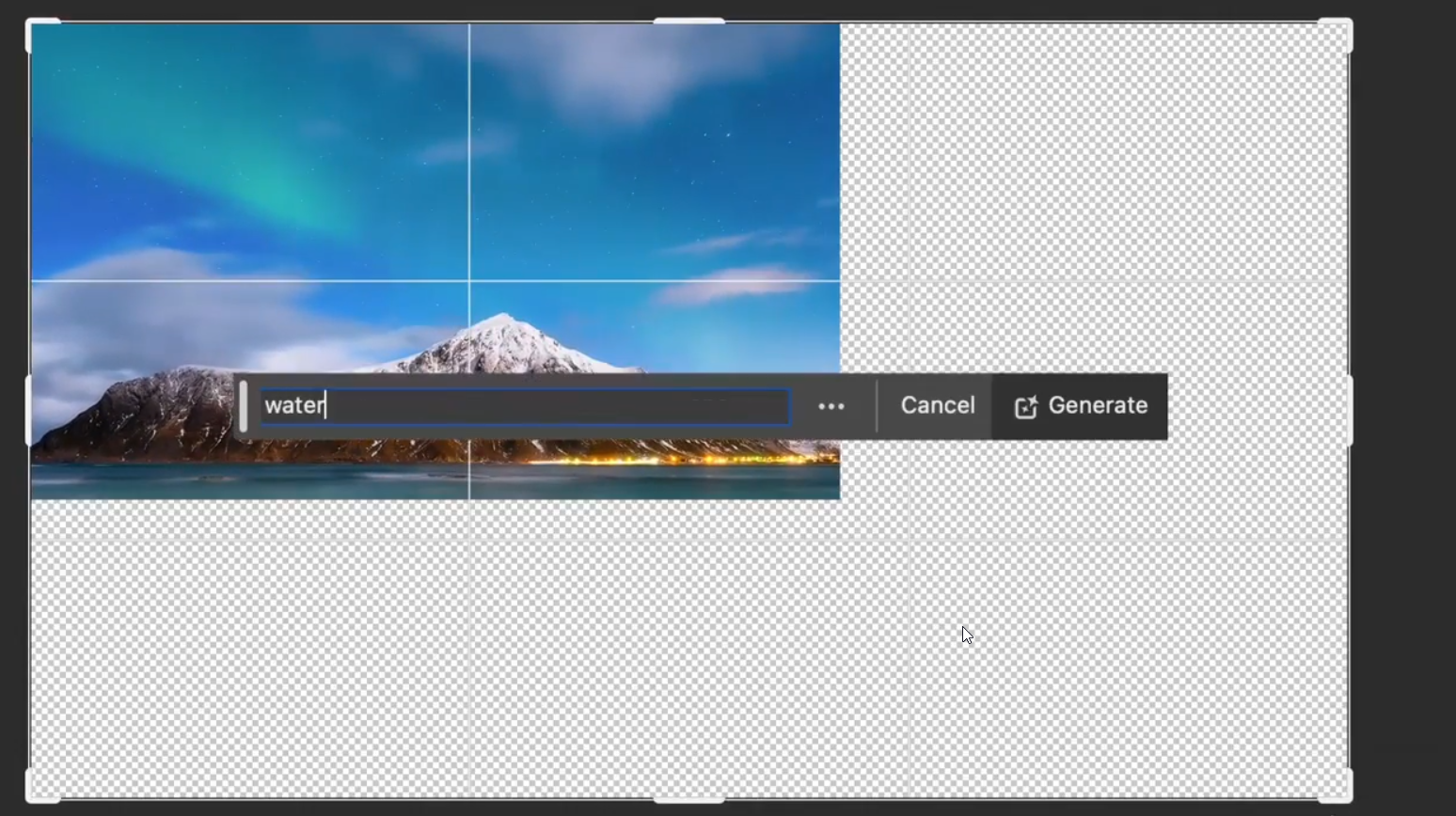
  • Scene Extension & Masking: Features powerful In-painting (editing within the frame) and Out-painting (extending beyond the frame) capabilities, making it ideal for seamlessly modifying existing footage or expanding aspect ratios.

3. ByteDance Seedance

Best for stylized fluid motion & multi-shot narratives

  • Multi-Shot Narrative Capability: Its “killer feature” is the ability to handle multiple camera angles within a single generation. It can automatically edit between different shot types (e.g., cutting from a wide shot to a close-up), making it perfect for storytelling.

  • Extreme Motion Fluidity: Performs best with high-dynamic range movements (like dancing, martial arts, or parkour). Limb movement is extremely coherent, avoiding common AI artifacts like limb distortion or jittery animation.

  • Stylized & Anime Aesthetic: Inheriting ByteDance’s strong visual effects DNA, it excels at generating highly stylized content—such as anime, cyberpunk, or watercolor styles—with intense color grading and dramatic lighting.

Next-Gen Generation Modes

SotaVideo covers the full spectrum of creation:

Text-to-Video: Type a prompt like “A cyberpunk city in rain,” and watch the AI generate a clip adhering to cinema-logic.

Image-to-Video: Upload a static product shot and command the AI to “make it move”—perfect for maintaining brand consistency.

Frame Control: Use the last frame of “Clip A” as the start of “Clip B” to ensure seamless narrative continuity.

User Experience & Ecosystem  

Based on the actual SotaVideo interface, here is how you accelerate your workflow:

Smart Inputs: “Sora 2 Prompt” & “Hints”

Don’t know how to write a professional prompt? The platform provides two shortcuts to solve writer’s block and teach you the model’s capabilities:

  • Sora 2 Prompt Assistant: Click the “Sora 2 Prompt” (lightbulb icon) on the left sidebar. This tool automatically optimizes your simple ideas into detailed, logic-driven prompts that machines understand better.

  • Instant Hints (Gameplay & Style Presets): Unsure what Sora 2 is capable of? The tags below the input bar (e.g., Running athlete, Ocean waves) are not just words—they are “Effect Recipes.” Clicking a tag instantly fills the generator with the exact prompt required to achieve that specific visual style or physics effect. This allows you to:

    • Replicate Demos: Instantly generate a video with the same high-quality look as official showcases.

    • Learn Mechanics: Analyze the populated keywords to understand how to control Sora 2’s specific “gameplay” (like speed, fluid dynamics, or lighting) and apply them to your own unique ideas.

Viral Effects: One-Click Trending Content

For social media creators, SotaVideo offers a dedicated “EFFECTS” menu on the sidebar to capitalize on trends without editing skills:

  • AI Kissing: Automatically generates the trending “AI Kissing” interaction videos.

  • Bigfoot Video: Apply specific character filters instantly.

  • Trend-Based Logic: These modes are pre-tuned for viral formats, meaning you don’t need to engineer complex prompts—just select the effect and generate.

Seamless Model Switching

The dashboard features tab-based navigation (Sora 2 Video, Veo 3 Video, Seedance Video) directly above the text box. This allows you to “A/B Test” your ideas: run the same prompt on Sora 2, then switch the tab and run it on Veo 3 to compare results instantly.

SotaVideo vs. Standalone Tools

Why use SotaVideo instead of going directly to the source? The answer lies in accessibility and commercial rights.

Feature

Standard Single-Model Tools

SotaVideo (Sora 2 / Veo 3 Hub)

Model Access

Restricted to 1 model (e.g., only Runway).

All-in-One Aggregation (Sora 2, Veo 3, Seedance).

Availability

Often waitlisted or “Closed Beta”.

Instant Access (No waitlist, immediate generation).

Audio

Usually silent; requires external editing.

Integrated Audio (Dialogue & SFX with Veo 3).

Commercial Rights

Often gray areas or restricted.

Commercial License Included (HD/4K, No Watermarks).

Pricing and Value Proposition

Cost-Effective Scaling

  • Free Trial: Use the basic generator to test the models before paying.

  • Sora 2 Launch Offer: The platform currently offers significant discounts on Sora 2 compute costs compared to market rates.

Commercial Viability

The “Upgrade Plan” unlocks High Definition (HD/4K) downloads without watermarks. For agencies, this replaces the need for multiple expensive subscriptions (e.g., Midjourney + Runway + Pika) with a single account.

Final Verdict

The landscape of AI video is chaotic, with new models releasing every week. Trying to keep up by subscribing to every individual service is both expensive and exhausting.

SotaVideo.ai successfully solves this fragmentation problem. It isn’t just a tool; it’s a production studio.

  • For the Beginner: The “Hints” and “Effects” features provide a guided, frustration-free entry point to learn the ropes of AI creation.

  • For the Pro: The ability to access Sora 2 and Veo 3 side-by-side, coupled with prompt optimization and commercial licensing, makes it a mandatory utility for modern digital storytelling.

You no longer have to wait for the future of filmmaking. It is already here, and it is all under one roof. Stop dreaming, stop waiting, and start directing.