UK: +44 2038074555 info@atamgo.com
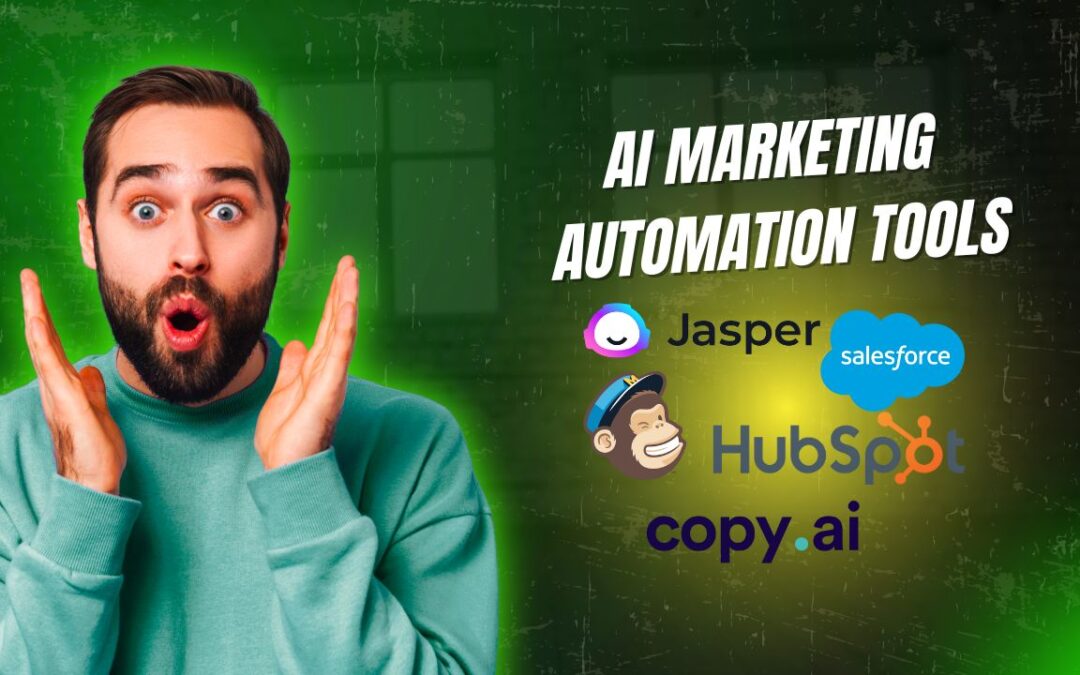
Best AI Marketing Automation Tools for 2026

Best AI Marketing Automation Tools for 2026

AI Marketing Automation Tools

Introduction: Why AI Marketing Automation Tools Are a Game-Changer in 2026

AI marketing automation tools are no longer a luxury; they’re now essential for anyone serious about scaling their marketing in 2026. From solopreneurs to large brands, everyone is tapping into the power of smart automation to save time, personalize campaigns, and boost ROI. In fact, if you’re still doing everything manually, you’re probably falling behind. These tools are rapidly transforming how we engage audiences, build customer journeys, and analyze performance.

With so many new ai tools for marketing automation launching every year, it’s hard to know which ones are actually worth your time (and money). That’s why we’ve rounded up the best marketing automation AI tools for 2025. Whether you’re looking for AI email campaign tools, smart social media automation, ai tools for presentation, advanced customer journey mapping, or predictive data insights, there’s something here for you.

This list is more than a collection of tools—it’s your shortcut to working smarter, not harder. These ai automation tools for marketing can drastically cut down your workload while giving you better performance metrics and happier customers.

Let’s dive into the top picks for ai marketing automation tools 2025 that are truly reshaping the future of marketing.

From solopreneurs to large brands, and even leading AI services companies, and content platforms such as EssayPro, everyone is tapping into the power of smart automation to save time, personalize campaigns, and boost ROI.

Find More: 10 Powerful Link Acquisition Tactics You’re Not Using (But Should Be)

Best All-in-One AI Marketing Platforms

HubSpot with AI Features

hubspot

HubSpot continues to evolve, and its AI-powered marketing hub in 2025 is smarter than ever. From AI email subject line optimization to predictive lead scoring, it’s an all-in-one beast for B2B and B2C marketers alike. The platform can now identify content gaps, optimize blog SEO in real-time, and even suggest A/B test ideas—all backed by data.

Salesforce Marketing Cloud + Einstein AI

Salesforce

Salesforce was ahead of the curve with Einstein AI, and in 2025, it’s helping marketers create hyper-personalized experiences across every channel. Think predictive analytics, automated content generation, intelligent segmentation, and chatbot-powered customer support—all integrated into your CRM. It’s ideal for enterprise-level operations with complex workflows.

ActiveCampaign’s AI-Powered Automations

ActiveCampaign

ActiveCampaign is loved by small businesses and solopreneurs, and now with built-in AI automation, it suggests best-send times, smart follow-ups, and automatically optimizes workflows for better conversion. The new AI builder also lets you create customer journeys in a visual drag-and-drop interface with predictive path analysis.

RETENO AI Messaging Platform

reteno

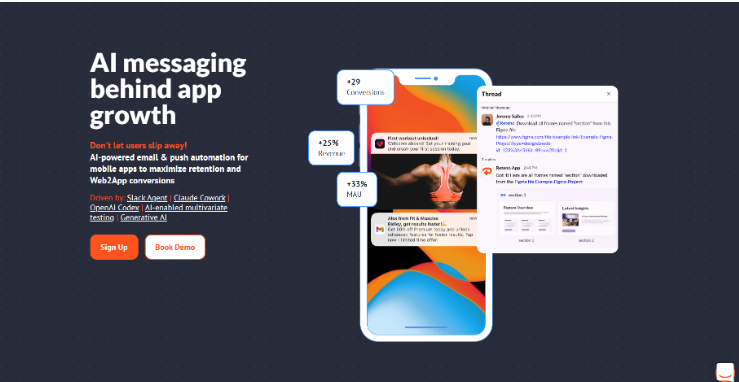
Reteno is an AI messaging platform for mobile app retention and conversion, built for subscription-driven apps that need faster execution and stronger lifecycle performance. The platform supports email, mobile push, in-app, App Inbox, SMS, web push, and messengers across Web2App, direct install, trial, and freemium funnels.

Teams can manage messaging through AI agents in Slack, Claude Cowork, and OpenAI Codex, then use the built-in AI and One from Many feature to generate content, automate testing, and automatically optimize message variants.

AI Email Marketing Automation Tools

Mailchimp AI Features

Mailchimp

Mailchimp remains a favorite, especially with its revamped AI suite. It now suggests audience segments, generates email content, and even predicts campaign outcomes based on your past performance. A/B testing is now AI-driven too, allowing automatic selection of winning subject lines, layouts, and content blocks in real time.

Smartlead

Smartlead offers advanced AI email marketing automation tools that research prospects, generate hyper-personalized campaigns, and manage deliverability across unlimited inboxes. It dynamically adapts sequences based on real-time opens, replies, spam scores, and engagement patterns, all while forecasting campaign ROI from historical data. It’s AI-driven A/B testing auto-selects optimal subject lines, content, timing, and multi-channel paths for superior results.

ControlHippo

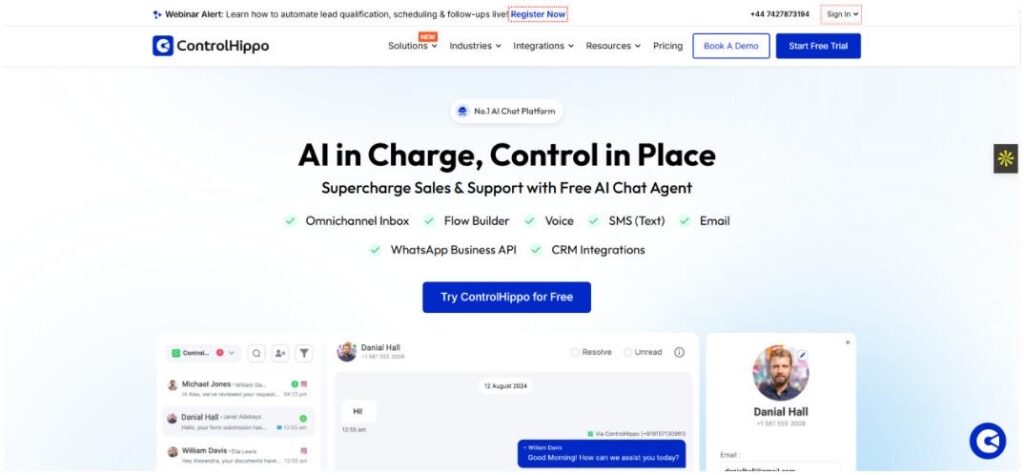
ControlHippo is redefining customer engagement in 2025 with its AI-powered automation and omnichannel communication suite. From no-code workflow automation and chatbot builders to intelligent segmentation and predictive analytics, it helps businesses deliver hyper-personalized experiences across WhatsApp, Instagram, Telegram, and more. Perfect for growing businesses and enterprises looking to simplify complex workflows while boosting efficiency and customer satisfaction.

Omnisend

Omnisend

For ecommerce marketers, Omnisend is a goldmine. It uses AI to generate personalized product recommendations, dynamic content, and real-time cart abandonment follow-ups. In 2025, Omnisend also integrates voice search triggers and AI-enhanced SMS campaigns for multi-channel domination.

Brevo (formerly Sendinblue)

Brevo

Brevo is a rising star in AI email marketing. It combines smart segmentation with content generation, making it easy to run data-driven campaigns without needing a data science degree. It also offers a smart retargeting system and real-time behavior tracking that boosts email engagement by 40% or more.

AI Tools for Social Media Automation

Predis.ai

Predis ai

Predis.ai takes your product links or basic ideas and turns them into complete social media posts—including images, captions, and hashtags—in seconds. It’s a serious time-saver for social media managers. In 2025, it can even suggest posting times based on trending topics and historical engagement.

Ocoya

Ocoya

Ocoya lets you plan, create, and schedule AI-generated content across multiple platforms. Its built-in copywriting AI generates engaging content, and the platform even helps optimize it for different audiences. Their newest feature auto-generates Instagram Reels and TikToks with suggested scripts.

SocialBee with AI Content Generator

SocialBee

SocialBee has added AI to its toolkit, and it shows. Now you can generate post ideas, optimize post timing, and even create variations of posts for different platforms in a click. It also features competitor analysis so you can benchmark your content performance easily.

AI Tools for Content Creation and Personalization

Jasper AI for Marketing Copy

Jasper

Jasper has grown up. In 2025, it’s one of the most powerful content AI tools, helping marketers generate blog intros, product descriptions, landing pages, and more—all optimized for conversion. Their new brand voice memory ensures your content stays on-brand across every channel.

Copy.ai with Workflow Automation

Copy ai

Copy.ai isn’t just about writing anymore. It now connects with your email platforms, CRMs, and more to build automated workflows based on the content it creates. It’s content + automation = gold. The workflow builder even suggests automation templates based on your business niche.

Anyword for Predictive Performance Scoring

Anyword

Anyword doesn’t just generate marketing content—it predicts how it will perform. You get a performance score before even publishing, which is a huge confidence booster. Their 2025 model also offers live market trend data to help you stay one step ahead.

AI Advertising Automation Tools

Adzooma

Adzooma

Managing Google and Meta Ads? Adzooma uses AI to suggest optimizations in real-time. Whether it’s adjusting budgets, improving ad copy, or finding high-performing keywords, it’s like having an ad strategist 24/7. Their new dashboard now shows visual heatmaps of ad performance across platforms.

Smartly.io

Smartly io

Perfect for brands scaling their paid social campaigns. Smartly.io uses AI to automate creative testing, audience targeting, and real-time campaign adjustments across platforms. You can now automatically generate hundreds of ad creatives from a single product feed.

Albert.ai

albert ai

Albert.ai is like an autonomous digital marketer. It runs your campaigns, learns from performance, makes adjustments, and continues to optimize without constant human input. Kind of like hiring a genius robot marketer. It can even generate custom landing pages and test them on the fly.

Niche & Emerging AI Marketing Tools to Watch in 2025

Surfer AI for SEO

Surfer

SEO is far from dead. Surfer AI helps marketers build SEO-optimized content that ranks. It gives you keyword suggestions, structure, and content scores—all based on live SERP analysis. It now integrates with Google Search Console to auto-suggest SEO fixes in real time.

Seventh Sense for AI-Powered Email Timing

Seventh Sense

Timing is everything in email marketing. Seventh Sense uses AI to find the best time to reach each person in your audience, increasing open rates and engagement. It now includes machine learning models that adapt to seasonality and holiday-specific behaviors.

SolaraAI 

SolaraAI is designed for businesses that want professional marketing without the agency price tag, and now with its intelligent AI stack, it automatically creates content, schedules posts, and optimizes ad campaigns based on real-time trend analysis. The platform uses predictive audience targeting to forecast engagement and autonomous optimization loops that continuously refine budgets and creative assets for maximum ROI while you focus on running your business. For marketers who want to explore additional platforms beyond the tools listed here, curated collections like this marketing and advertising AI tools directory help compare solutions across campaign automation, ad optimization, and performance tracking workflows.

How to Choose the Right AI Marketing Automation Tool

With all these amazing options, how do you know what’s right for your business?

  • Know Your Goals: Are you looking to save time, scale content, or boost conversions? Let your goals guide your tool choices.
  • Budget Wisely: Some tools offer great free plans or low-cost tiers for startups. Others are better suited for enterprises.
  • Ease of Use Matters: Don’t get sucked into a platform with a steep learning curve unless you have the time (or team) to master it.
  • Check Integrations: Make sure the AI tool works well with your current stack (Shopify, WordPress, Zapier, etc.)
  • Test Before You Commit: Most tools offer free trials. Take advantage of them to find the best fit for your workflow.
  • Scalability: Choose tools that can grow with your business, not ones you’ll outgrow in six months.

Benefits of Using AI in Marketing Automation

Still on the fence? Here’s why it’s worth jumping in:

  • More Time, Less Stress: Automate repetitive tasks and focus on strategy and creativity.
  • Hyper-Personalization: AI can tailor messages to individual users like never before.
  • Smarter Decisions: Data-backed insights mean better targeting, timing, and performance.
  • Scalability: Whether you have 100 leads or 100,000, AI can handle it.
  • Continuous Learning: Most AI tools improve over time by learning from your results.
  • Cost Savings: Automation reduces the need for large teams or outsourcing, saving you money in the long run.

Conclusion: Power Your Marketing in 2025 with AI Automation

AI marketing automation tools in 2025 are smarter, faster, and more powerful than ever. Whether you’re running a small business or managing enterprise campaigns, there’s a tool out there that can save you time, money, and headaches.

The key? Start small. Try one tool that solves your biggest bottleneck, then expand from there. The future of marketing isn’t just digital—it’s intelligent. And the earlier you adopt, the bigger the edge you get.

So go ahead… let AI handle the grunt work while you focus on big-picture thinking. Embrace the future with confidence, and let smart tools do the heavy lifting.

Find More: Boost Your Sales With SEO Services

FAQs

1. What is the best AI marketing automation tool for small businesses?

ActiveCampaign and Mailchimp are both solid picks for small teams looking to automate without breaking the bank. They offer intuitive interfaces and robust feature sets that grow with your needs.

2. Can AI really replace human marketers?

Not quite. AI is amazing for automation and optimization, but creativity, empathy, and strategy still need the human touch. Think of it more as a super assistant than a replacement.

3. How much do AI marketing automation tools cost in 2025?

Prices range from free (with limited features) to $1000+/month for enterprise solutions. There’s something for every budget, and many offer flexible plans as you scale.

4. Are AI-powered tools safe to use with customer data?

Yes, most top tools follow strict data protection guidelines. Just make sure they’re compliant with GDPR, CCPA, etc. Always read their privacy policy and check for third-party certifications.

5. What industries benefit most from AI marketing automation?

Ecommerce, SaaS, B2B, and agencies are seeing huge gains, but really, any industry that relies on digital marketing can benefit. Even local service businesses and nonprofits are jumping in.

Tags:

4 Proven Ways to Boost Your eCommerce Sales Through Social Media (Expert Strategies Revealed)

ecommerce sales

In today’s competitive online market, building a successful eCommerce brand goes far beyond launching a website. If you want to drive serious sales, social media isn’t optional — it’s essential.

Platforms like Instagram, TikTok, and Facebook are no longer just places for brand awareness. They are powerful tools for conversion, relationship-building, and long-term growth — if used with intention. But how can online sellers stand out and actually boost revenue through social platforms?

To answer that, we gathered insights from four eCommerce experts — including Ray Lauzums, founder of gaming and lifestyle brand Poggers, and three other professionals who’ve helped countless online retailers grow sustainably using social media. 

Here are four proven ways to skyrocket your eCommerce sales using social media, backed by real strategies and success stories.

1. Start With a Strong Brand Identity (Not Just Content)

📣 Insight from: Jenna Park, Branding Strategist & Co-founder of Ember & Ash Studio

Before worrying about algorithms, hashtags, or content calendars, successful eCommerce brands begin with one thing: clarity. 

According to Jenna Park, a leading branding expert at Ember & Ash Studio, jumping into social media without a defined brand identity is one of the most common mistakes new businesses make. 

> “Social media won’t fix a weak brand. You need to know exactly who you are, what you stand for, and how you want people to feel when they interact with your brand,” — Jenna Park 

For Jenna and her clients, the first step involves defining brand tone, visual elements, and messaging pillars. Once that foundation is set, content performs better, and customers are more likely to engage and buy. 

Actionable Tips: 

Clarify your brand’s personality (e.g., minimal, playful, bold, luxurious). 

Use a consistent logo, font, and color palette across all platforms. 

Stick to content pillars: education, testimonials, product demos, and behind-the-scenes content. 

💡 SEO Tip: Include targeted, branded keywords in your bios, captions, and post descriptions to help boost visibility on social media and Google. 

2. Work with Influencers Who Truly Influence 

📱 Insight from: Malik Johnson, Founder of Trendfluence & Influencer Marketing Coach

Influencer marketing remains one of the most powerful ways to get your products in front of a targeted audience. But as Malik Johnson, founder of influencer agency Trendfluence, points out — the right influencer is more important than the biggest one. 

> “Follower count means nothing if their audience isn’t engaged. The best results come from creators who have a real relationship with their followers and who actually use products in your category,” — Malik Johnson 

Malik’s team recently ran a campaign for a fashion brand using five micro-influencers (with audiences between 10k–30k). These creators had smaller but highly active followers. The result? A 38% increase in monthly revenue — without running paid ads. 

Actionable Tips: 

Prioritize micro-influencers with niche relevance and strong engagement (over 1.5%). 

Provide creative freedom to influencers. Authenticity performs better than scripted ads. 

Track results using custom discount codes or affiliate links.

💡 SEO Tip: Ask influencers to tag your brand and use specific product-related keywords in their captions for better search visibility. 

3. Embrace Short-Form Video — Especially Reels and TikToks

🎥 Tip: Use Short-Form Video Content to Drive Engagement and Sales

“Short-form video content — like TikToks, Instagram Reels, and YouTube Shorts — is a powerful tool for ecommerce businesses looking to increase reach and conversions. Videos that feel authentic, align with current trends, and showcase real customer reactions or unboxings often outperform overly polished ads.” says Ray Lauzums owner of poggers

Instead of focusing solely on production quality, focus on relatability and shareability. Showcasing limited product drops, customer experiences, or behind-the-scenes moments can lead to organic virality and significant sales boosts — even without paid promotion.

Actionable Tips for Ecommerce Brands:

  • Create 15–30 second videos that are fun, authentic, and trend-aware.
  • Use native platform tools like TikTok’s editor or Instagram Reels layout for higher visibility.
  • Add on-screen text and captions, since many users scroll without sound.
  • Use trending audio to improve discoverability and engagement.
  • Include shoppable stickers or clear links in your bio for quick product access.

💡 SEO Tip: Optimize your video captions, titles, and hashtags with product-specific keywords (e.g., #gaminggear, #plushcollection, #animecollectibles) to improve search visibility.

Short-form video isn’t just a content trend — it’s a revenue driver when done right. 

4. Turn Customers Into Brand Advocates with UGC

📸 Insight from: Priya Das, Head of Digital at Bloom & Nest

User-Generated Content (UGC) is now one of the most persuasive forms of content on social media. And it’s not just about reposting reviews — it’s about turning real customers into storytellers.

Priya Das, who leads digital strategy at clean beauty brand Bloom & Nest, emphasizes how their UGC campaigns outperformed even paid ads. 

> “We launched a simple UGC challenge where customers shared their ‘glow-up’ skincare stories using a branded hashtag. The campaign generated over 1,000 submissions — and the top 20 user videos converted 5x higher than any ad we’d previously run,” — Priya Das 

Customers trust other customers. By showcasing real results, unfiltered experiences, and authentic voices, brands can humanize their message and drive conversions without spending huge ad budgets. 

Actionable Tips:

Create a branded hashtag (e.g., #MyGlowWithNest) and promote it in your packaging and emails. 

 Offer incentives like store credit or giveaways, such as high-quality custom printed t-shirts, to encourage submissions. 

Share the best UGC on product pages, Instagram stories, and email campaigns. 

Respond and engage with creators to build a stronger community. 

💡 SEO Tip: Feature top-performing UGC on a dedicated landing page optimized for keywords like “[Product Name] customer reviews” or “before and after [Product Name]”. 

Final Takeaway: Real Growth Requires Real Strategy

Social media isn’t just about going viral or chasing likes — it’s about showing up consistently with a message that resonates. The most successful eCommerce brands in 2025 are those that use social platforms to connect, engage, and build long-term trust — not just push products. 

By following the strategies shared by experts like Jenna Park, Malik Johnson, Ray Lauzums, and Priya Das, online retailers can shift from random posting to intentional growth. 

Quick Recap: The 4 Proven Social Media Strategies to Drive eCommerce Sales 

  1. Establish a clear brand identity across all channels.
  1. Partner with the right influencers, not just the biggest ones.
  1. Invest in short-form video to reach and convert new audiences.
  1. Leverage UGC to build trust and social proof at scale.

With the right mix of creativity, community, and consistency, social media becomes not just a platform — but a powerful revenue channel for your eCommerce business.

From Orders to Loyalty: Automating the Post-Purchase Journey for Higher LTV

From Orders to Loyalty: Automating the Post-Purchase Journey for Higher LTV

post-purchase journey

For most EC companies, the moment a customer clicks “Buy Now” feels like a big achievement. But what happens after that is even more important. The first sale is good. However, if customers do not return, brands will always spend extra money acquiring new ones. In fact, long-term growth in EC comes from improving the lifetime value (LTV) of customers, not from initial purchases.

In this article, we will show you how to leverage automation to enhance customer connections after purchase. Learn how to turn temporary buyers into repeat customers by setting up simple but effective post-purchase messages, upsells, and follow-ups.

The Forgotten Stage of Ecommerce: Post-Purchase

Most online stores spend the bulk of their time and money acquiring new customers—delivering ads, offering discounts, and creating special landing pages. However, once the sale is complete, many brands stop contacting the buyer. This is a mistake.

Opportunities often missed after purchase include:

  • No follow-up: Customers receive little useful information about the products they bought.
  • No smart upsells: The brand doesn’t propose related products based on the customer’s purchase.
  • Generic support: When customers ask for help, support teams often don’t know what or when they bought.

These gaps make customers feel “forgotten.” And customers who don’t feel remembered are less likely to return. The post-purchase period is a great opportunity to build trust, promote additional sales, and turn satisfied customers into loyal fans. Leading someone to purchase is already hard. Now is the time to settle them.

What a High-LTV Journey Looks Like

A smart post-purchase experience isn’t a single step. It’s a series of small moments that lead customers from temporary buyers to loyal ones.

Here’s an example:

  1. Order Confirmation. Send a clear and friendly message confirming the purchase. Don’t just list receipts—thank the buyer and explain what comes next (e.g., delivery timeline).
  2. Education. Share useful tips on how to use and care for the products. For example, if someone buys skincare, send a guide on how and when to apply it.
  3. Upsell or Cross-Sell. After the product arrives, suggest complementary items. If someone buys a smartphone case, recommend a screen protector. These suggestions should be based on what they purchased, not random.
  4. Delight. Send surprise coupons, thank-you notes, or content like blogs and videos. These small gestures show that you care.
  5. Reactivation. Reach out to customers who haven’t returned for a while. A short reminder or small discount in an email may bring them back.

Personalization is the key. But don’t worry—you don’t have to write each message by hand. Automation tools help you send the right message to the right person at the right time.

Building Smart Post-Purchase Automation Flows

To make the most of the post-purchase window, businesses need a set of automated flows. These are emails, messages, or SMS campaigns triggered by customer behavior.

Key flows to set up:

To turn first-time buyers into repeat customers, you must deliver appropriate post-purchase messages. These are the essential flows every EC brand should implement to build loyalty, increase repeat orders, and grow LTV. Brands that want to take this a step further can explore dedicated loyalty app development solutions from teams like RaftLabs to build personalized rewards systems that strengthen retention and lifetime value.

  1. Post-Purchase Education. Send a short email series that teaches how to use and care for the purchased products. This lowers return rates and makes customers feel supported.
  2. Upsell or Cross-Sell. Analyze the purchased item and trigger flows to recommend related products. Tools like Klaviyo and Loop help here. You can customize messages by product, category, or price.
  3. Review or Referral Requests. After the product arrives, ask for a review or encourage the customer to refer a friend. Offer small rewards or discounts to motivate action.
  4. Win-Back Flows. Send a message to customers who haven’t returned in 60 or 90 days. Include reminders, discounts, or new product suggestions they might like.

Tools You Can Use:

  • Klaviyo: Advanced email and SMS flows triggered by orders
  • PostPilot: Send physical postcards with offers
  • Zapier: Connect different apps and automate actions
  • Gorgias: Manage support tickets linked to customer orders
  • ReferralCandy: Built for referral, affiliate, and influencer marketing, it automates post-purchase invites, tracking, and rewards from one dashboard to turn happy buyers into repeat customers.

Once these tools are set up, they work automatically—saving you time and keeping customers engaged.

What Creators Can Teach DTC Brands About Upselling

You might think upselling is only for EC brands. But creators selling digital products—like art, video, and subscriptions—also grow revenue using the same approach.

They first sell one item, then offer another based on what fans already purchased. For example:

  • A fan buys a $10 video
  • The creator sends a message suggesting a custom set or related content
  • Though automated, the message feels personal and specific

This method works because it shows the creator understands their audience. The system tracks each purchase and sends the right message at the right time.

Would you like to see how this works in action? Check out OnlyMonster (https://onlymonster.ai/downloads). The platform helps creators send personalized post-purchase messages based on past orders. It’s proof that smart upsells work for both physical and digital products.

The takeaway for brands? Understand what the customer just bought—and suggest what they’ll want next. If the message feels personal, they’ll keep coming back.

Automating Without Losing the Human Touch

The biggest concern with automation is sounding robotic. But when done right, automated messages can still feel warm, helpful, and human.

Tips to keep it real:

  • Use the customer’s name and mention the purchased product
  • Write simply, like a real conversation
  • Trigger messages based on actions—not just dates (e.g., “7 days after purchase—here are some useful tips”)
  • Add logic branches: Follow up if they click a link. Re-send with a new subject if they don’t open the first email

People know automation is happening. What matters is how it’s used. If messages feel helpful and thoughtful, customers won’t mind that a system sent them.

Conclusion

Improving customer lifetime value (LTV) isn’t about finding more buyers—it’s about keeping the ones you already have. By setting up smart, automated post-purchase flows, you can build stronger relationships, increase repeat orders, and grow your business with less effort.

The key is to send the right message at the right time based on what the customer actually purchased. Whether you’re selling physical goods or digital content, personalized follow-ups make all the difference.

3 Proven Ways to Boost Your eCommerce Sales Through Social Media

3 Proven Ways to Boost Your eCommerce Sales Through Social Media

eCommerce Sales

eCommerce is now one of the most critical components for global retail. According to Statista, in 2025, the global retail e-commerce sales are estimated to exceed $4.3 trillion. With around 5.24 billion users, social media is a crucial element for an e-commerce business. The majority of online sales are generated through it. In this blog post, we will tell you about three proven ways that can help you boost your eCommerce sales through social media. 

1. User Generated Content (UGC)

UGC is the term used for the content users create independently as a customer or a fan, rather than as a brand itself. This includes: 

  • Social media posts featuring a product
  • Reels or video content around a product review
  • Blog posts (review type)
  • Memes
  • Fan art, etc.  

Benefits of UGC

According to a study, around 92% of consumers trust user-generated content as it seems more organic than the traditional content created by brands for advertising purposes. For eCommerce businesses, UGC offers various benefits, including:

Trustworthiness

User-generated content is considered more trustworthy and authentic when compared to the content generated by brands for advertising purposes. 

Why so?

Because in UGC, people share their real experience with a product and provide honest opinions about it.

More Engagement

Peers create UGC content, and content that peers create usually provides a better engagement rate. More and more customers come to share their experience with similar products under UGC. This prevails in a more inclusive environment and better advocates for a product or business.

Brand Awareness

User-generated content is the best way for new brands to enhance awareness among their target audience. With the help of UGC creators, who have a handsome following, they can drive their followers towards their website or social media pages. 

How to Use UGC for Boosting Sales?

If UGC exists around your eCommerce business, use it strategically to boost your sales. 

If a peer creates content around your products that has performed well, consider embedding it on your store’s social media pages. This will increase the visitors’ trust in your products, and they can purchase without hesitation. 

Use UGC in Social Media Campaigns

Using UGC content in your social media ad campaigns can bring more ROI. Such content gets you more engagement and reach, strengthening your brand’s connection with a broader audience. The more you connect with the audience, the more sales you get for your business.  

 Ecommerce brands can also use Clip to source UGC videos that show real people using their products, helping make reels, product reviews, and social ads feel more natural.

2. Influencer Marketing

Social Media Influencers – These individuals have a good following across social media platforms and have good influence over their followers. Businesses collaborate with them to promote their products or services – influence marketing. 

The goal behind collaborating with social media influencers is to build the authenticity of products in the eyes of their followers, who, for businesses, are potential customers. 

Why Influencer Marketing?

eCommerce businesses can benefit significantly from influencer marketing ideas, especially those entering the new market. Here are the benefits a business can get by leveraging influencer marketing.

Increased Reach & Awareness

Using influencer marketing, you can introduce your e-commerce business to an international audience quickly and efficiently. Collaborating with a local influencer, or one whose audience aligns with your targeted demographic, can help you get better sales.

Boost Social Proof

There’s a trend among people to buy products recommended by their favorite creators (influencers). Once an influencer recommends your product in their content, it acts as social proof for followers and increases the perceived value and trustworthiness.

Drives Qualified Traffic to Your Store

By inserting your product links (swipe-ups, affiliate links, targeted products) into the influencers’ content, you can drive a good amount of traffic to your store. Such traffic is already considered warm and more likely to convert (more sales). 

How to Use Influencer Marketing to Boost Sales?

Using influencer marketing to boost e-commerce sales can be very beneficial. To make your business benefit from it, follow the steps shared below.

Find the Right Influencers

Start by identifying the influencers whose followers match your potential customers. Don’t rush for the follower count; focus on engagement and relevance. 

To find the perfect ones that can benefit you, get assistance from tools like Heepsy or Upfluence. In case of a budget, performing manual searches on platforms like Instagram, TikTok, or YouTube can also be beneficial.

Collaborate with Clear Goals

While collaborating with an influencer, your goal should be clear: boosting sales. Encourage or pay them to create content around your products, showcasing authenticity. Provide them clear goals (e.g., drive traffic, increase sales) and tools like discount codes or affiliate links to track performance. Using sales engagement software can further streamline communication, monitor campaign results, and ensure that influencer-driven leads are effectively nurtured into customers.

Track, Analyze & Scale

Measure results using promo codes, UTM links, or analytics tools. Identify which influencers drive the most ROI and reinvest in those partnerships while optimizing your strategy.

3. QR (Quick Response) Codes

Quick response, aka QR codes, are two-dimensional barcodes (square shape) One can decode and access the information embedded inside using an online QR code scanner. Creating these codes is simple with tools like Uniqode’s QR code Generator, which allows users to generate dynamic, scannable codes for marketing, inventory, or personal use with ease. encode data inside a grid of dark and light pixels. One can decode and access the information embedded inside using an online QR code scanner

How do they Enhance Sales?

QR codes enhance sales because of the interactive experience they provide customers. Below is how businesses are using these two-dimensional codes to boost sales.

Instant Access

Businesses use QR codes to enable their customers to access information, discounts, and promotions instantly. There is no need to manually type things, perform a search, and follow the checkout process. Customers can reach the checkout pages with a single scan and complete their purchase.

Better Mobile Shopping Experience

The majority of e-commerce purchases are made using smartphones. Croplink predicted in one of their articles that 2025 mobile commerce is expected to grow to around $6.5 trillion. This makes it crucial for businesses to provide a better mobile shopping experience. 

QR codes are helping businesses deliver such an experience. They make it easy for social media users to get into product details and browse relevant ones with a single scan. 

How to Use QR Codes to Boost Sales?

Below are the practical ways to use QR codes to boost your e-commerce store sales.

Link to Discounts & Sales

Embed discount codes, promo codes, or links to flash sales inside QR codes and share them on social media.  Businesses are also using QR codes in SMS campaigns to drive faster engagement, simplify promotions, and increase mobile conversions. If you’re running a WooCommerce store, setting up a WooCommerce flash sale is a great way to create urgency and encourage impulse buying.
Shoppers are more likely to scan a code if it promises a time-limited deal. Think of yourself aren’t you more likely to buy when you feel you’re getting a special offer? To create high-quality, scannable QR codes for your promotions, use reliable tools like The QR Code Generator, which lets you customize and track codes for maximum impact.

Quick Payments

Get merchant QR codes from banks and your business payment partners. Place these codes on your product catalogs to be shared on social media so customers won’t have to follow a lengthy payment process. All focus should be on making the processes seamless for the customers. 

Final Talk

Social media is a powerful tool for eCommerce businesses. You can use it strategically to boost sales and drive more traffic towards your online store. If you are in the e-commerce business, follow the three strategies we have shared in this post above. They’ll help you boost your sales and earn more profit.

Data-First Affiliate Growth: How Everad’s Network Drives Higher LTV Than Traditional Programs

Data-First Affiliate Growth: How Everad’s Network Drives Higher LTV Than Traditional Programs

Affiliate managers often chase high upfront cost-per-action rates, only to see revenue plateau when trial users fail to renew. By applying predictive analytics to partner performance, teams shift focus from one-off payouts to lifetime value. A data-driven approach uncovers which networks sustain subscribers beyond the first conversion and pinpoints where smaller initial returns translate into richer long-term margins. In the sections that follow, we’ll explore how predictive models guide network choice and review a real-world example where metrics replaced hunches – and drove a measurable lift in publisher returns.

How Everad’s Network Leverages Predictive Analytics for Higher LTV

Machine-learning models power the partner dashboard at Everad, enabling publishers to forecast six-month subscriber value before allocating budget. The system processes raw click and conversion logs, groups users by acquisition channel, then applies a gamma–Poisson model to fit each retention curve. Marketers can then view a side-by-side comparison of projected LTV across networks:

Network

Predicted 6-Month LTV (€)

Everad

132

TraditionalNet

ninety-five

Industry Average

110

Case Study: Publisher X Trades Off Volume and Adds 25 % LTV

Publisher X, a subscription-based fitness app in Barcelona, had two simultaneous campaigns through Everad and an old affiliate program with an equal amount of CPA rate. A month later, the retention metrics indicated that users in Everad had 62% active participation at Day 90, which was 48% higher than the initial 14%. With those learnings, the team shifted 60 % of its budget to Everad and cut its offers that were underperforming. In one quarter alone, the average LTV rose by 25 % to 106 euros as the overall acquisition costs remained flat.

It was done in three steps:

  • Statistical Analysis: log export clicks and renewals to a central warehouse.
  • Model training: Fit retention decay curves to each of the network cohorts.
  • Budget pull: Use the LTV ranking of the model to reweight the spend.

This guided loop of measurement, prediction, and reallocation made partnering with affiliates a sustainable growth vulnerability. Forecasts may be regarded as living rather than static documents, which enabled Publisher X to repeatedly hit new highs in revenue without increasing CPA ceilings, demonstrating a data-first approach that allows for changing the rules of successful affiliate marketing.

Long-term structural windows of attribution and payment structures

It is common that affiliate deals are dependent on the length of time that an action is assigned to the initial click. A 7-day interval can capture the impulse purchase, but not renewals and upsells of subscriptions. Everad provides windowing, which allows a publisher to align its products with 30, 60, or even 90-day windowing. 

Long windows allow marketers to capture the real customer value and not the sign-up fee loaded. Equally, payout structures in the form of regular commissions even out revenue: one of the partners introduced a monthly-staged commission that pays 5 % on first-month revenue and 2 % on the next five months, which increased LTV by 22 % over six months.

Below is a comparison of typical network terms versus a long-window, tiered model:

Feature

Traditional Network

Everad Long-Term Model

Attribution Window

7 days

60 days

Upfront CPA

€25

€20 + 5 % monthly

Recurring Commission

None

2 % for months 2–6

Bonus for Retention

No

€5 at 90-day mark

By aligning windows and payout tiers with subscription rhythms, publishers avoid chasing fresh clicks and build partnerships that compound value over time.

Monitoring and Optimizing LTV with Dashboards and Automated Alerts

Real-time monitoring of the LTV trends also eliminates nasty surprises. Set up your dashboard to display the LTV curve on a monthly basis against the incoming cohorts and define alerts, a fall of 85 % of predictions below a certain level prompts a Slack message. To take an example, a dietary-supplement site was alarmed when Week-2 LTV started to fall 12 percent short of the forecasted values; they quickly rotated through creative angles and got baseline retention back.

Automated reports may consist of:

  • Best three sources of acquisition by 90-day LTD
  • Offers with an upward churn that is greater than 7 %
  • Cohorts that are below ARPU goals

When these alerts become part of your team’s workflow, sent through email digests or chatbots, these static charts become actionable. When your data goes red, you take action with creative tests or bonus tweaks or landing-page tweaks, so LTV is easily kept on track without having to check a spreadsheet manually.

The lifetime value businesses have to consider over immediate payouts brings the discussion to a new plane of sustainable growth rather than a one lump sum benefit. Through the action of predictive retention and cohort analysis, marketers can allocate budgets to areas where they generate a monthly compounded increase in returns. In real-world testing, the accuracy of ad networks provided by Everad outperforms conventional programs, enabling predictions to be turned into actionable budgets. 

Automation in dashboards and alert signals will enable teams to recognize when things go awry, allowing them to adjust campaigns and prevent revenue from slacking. This data-driven approach to partnering with affiliates transforms a partnership into a stable source of revenue growth that scales in proportion to user loyalty.

Why Ecommerce Leaders are Choosing MACH Architecture Over Monoliths

MACH Architecture Over Monoliths

For ecommerce leaders, it’s crucial to keep up with changing customer needs and emerging trends in the ecommerce market. Yet, many companies realize their legacy systems are too inflexible to support rapid feature release or seamless technology integration.

While looking for solutions to quickly and cost-effectively solve the challenge of rigid legacy ecommerce systems, an increasing number of ecommerce leaders are turning to the MACH architecture. The MACH architecture principles – microservices, API-first, cloud-native, and headless – guide how digital systems are built and connected, offering a different way to build digital platforms, the one better suited to the pace and complexity of modern commerce.

The adoption of the MACH architecture helps companies integrate new tailored functionality easily and integrate new features without overall system updates. For many leaders, it’s a wise choice to stay competitive and respond to evolving market dynamics.

MACH Principles

The MACH architecture empowers businesses to build digital systems with the flexibility and speed required to adapt quicker to the ecommerce market changes and deploy new features without downtime. Its four core principles ensure modularity, interoperability, scalability, and resilience: 

Microservices: Each microservice is implemented as an independent component of the overall system. Therefore, teams can update or scale separate components without touching the whole system. 

API-First: All parts of the system communicate through well-defined APIs, which simplifies integration with external tools. These APIs are also critical when implementing modern integration solutions that unify cloud platforms, legacy applications, and third-party tools. 

Cloud-Native: The system is built to use cloud infrastructure, which allows for quick scaling and adaptation to changes. While the cloud-native design doesn’t guarantee zero downtime, it provides tools such as container orchestration and automated deployment that make minimizing disruptions and ensuring high availability much more achievable. Therefore, the system can quickly adapt to business needs by adding new features or managing more traffic. 

Headless: The system’s front-end is separate from the back-end. This allows you to redesign the user interface, for example, without changing the whole platform, enabling faster innovation and reducing the effort required for system upgrades. 

How MACH Architecture Principles Drive Business Benefits

MACH architecture principles are designed to support business growth through system flexibility, speed, and modern architecture, empowering companies to dynamically respond to ecommerce market changes and operate more efficiently.

Improved Customer Experience

In monolithic platforms, where the front end and back end are tightly coupled, updating the customer interface often requires changes to the back end, and vice versa. However, the MACH architecture allows the system’s front end to be updated independently from the back end and overall system adjustment. Changes like A/B testing or a new landing page launch can be implemented and released faster without full system upgrades. This helps respond to customer needs and expectations quicker, consequently delivering superior customer experience.

Reduced Technical Risks

As using MACH architecture implies using microservices, technical risks, such as system downtimes, errors during updates, or any integration issues, are reduced. By isolating functions like checkout, search, or product catalog, changes or errors in one solution’s component don’t impact the entire ecommerce system performance. It also allows development teams to work separately, minimizing delays and coordination issues.

Faster Time-To-Market

Developers can enable new system functionality like personalized promotions or product recommendations quicker without waiting for full system updates. This agility helps businesses respond faster to changing market trends and customer needs, as well as manage competitive pressures.

Easier Innovation

The MACH architecture allows development teams to experiment with new tools and technologies without rebuilding the whole system. Thanks to the modular nature of MACH, every tool or service implementation can be controlled and improved if necessary.

Reduced Long-Term Costs

Building a solution according to the MACH architecture allows companies to optimize costs by minimizing large and complex upgrades. Full replatforming or maintenance becomes easier thanks to modular architecture and deployment automation.

More Flexibility & Customization

The MACH architecture makes it easier to integrate third-party systems, such as payment gateways, inventory management platforms, or CRM tools with ecommerce solutions. New tools can be added quickly with minimal setup.

Better Scalability & Performance

Cloud-native systems are designed to scale automatically in response to demand, which makes them a solid choice for ecommerce businesses during high-traffic events such as Black Friday, holiday sales, or new product launches. This ensures that the surge in traffic driven by your black friday email templates and other marketing efforts doesn’t crash your site. Building solutions using the MACH architecture helps businesses maintain stable performance without incurring additional costs for manual infrastructure upgrades, additional hardware, or unplanned downtime.

Conclusion

Many ecommerce leaders are shifting to MACH now because it is not only a technical but also a strategic move. Market pressure is growing, customer expectations are rising, and the pace of change is faster than ever. Businesses need systems that can adapt quickly to new ecommerce trends and support innovation in the sector. So that’s why many choose MACH.

The MACH architecture facilitates the company’s flexibility and agility, which results in faster time-to-market, better customer experience, and lower long-term costs. Of course, monolithic platforms may work for some businesses. However, they often slow down progress and make it harder to adapt to different regions or market changes in the long term,  while MACH gives companies the ability to stay competitive in a fast-developing market.