...
UK: +44 2038074555 info@atamgo.com
Cost-Saving Tips to Reduce Your Shopify Ecommerce Store Expenses

Cost-Saving Tips to Reduce Your Shopify Ecommerce Store Expenses

Shopify Cost-Saving Tips

Source: https://unsplash.com/photos/Px3iBXV-4TU

There’s mass adoption of Ecommerce businesses by consumers and retailers for various reasons. For starters, eCommerce stores are more affordable than brick-and-mortar stores. However, competition from other online stores and the fight back from brick-and-mortar shops, who can match the prices of online stores 72% of the time, makes running eCommerce stores challenging. Among the many things eCommerce store owners should do to stay afloat is find ways of managing expenses. The first step is choosing the right eCommerce platform for your eCommerce store. With the right platform, you can then explore the following shopify cost-saving tips:

1. Focus On Retaining Existing Customers

Converting leads and attracting new customers is more expensive than retaining existing customers. Ecommerce stores can retain their client base by:

  • Providing excellent customer service – Customers are more likely to engage in repeat businesses with brands they’ve engaged before. However, you should provide satisfactory customer service for such customers to keep buying from your store.
  • Offer unbeatable deals and discounts – Offering deals and discounts to existing customers is powerful. Repeat customers often feel neglected if stores offer discounts exclusive to new customers. While new customer deals can help attract new clients, you should have tempting deals and discounts for repeat customers.
  • Take complaints seriously – Interestingly, 95% of dissatisfied customers don’t raise complaints. Any time you receive complaints or problems from your systems, products, or services, handle them with maximum attention.

Acquiring new customers is more expensive than keeping existing customers. Existing customers are five times more likely to purchase products than new prospects.

2. Minimize Product Returns

Reducing product returns is another way to manage expenses for eCommerce stores. Product returns typically mean undoing the sale. Returns have associated shipping, labor, and packaging costs, which can quickly add up. You should also inspect to check if the product is damaged. However, how can you reduce product returns?

  • Give accurate product descriptions – You should ensure that buyers know what they are buying before purchasing. Give accurate product descriptions, photos, and videos.
  • Extend the time frame for returns – While it sounds counter-intuitive, extending the time frame for returns reduces return rates. Extending creates an endowment effect, where the longer customers own the product, the more they become attached.
  • Avoid high-risk customers – Isolating customers with high risks and not marketing to them reduces return rates. Ecommerce store owners can check previous sales data to identify customers in this group.

3. Reduce Transaction Costs

Most payment options have transaction costs that significantly add up when order volume increases. Some options charge monthly fees, set-up fees, and transaction fees. You should first start by evaluating your customer base. If your customers are domestic, use offline payment options, such as e-checks, online bank transfers, and ATM deposits.

If your eCommerce business is still new, use popular payment gateways, such as PayPal. Similarly, if your business is well established, you can negotiate the transaction costs with payment outlets. Gateways don’t want to lose customers, especially developed businesses.

Endnote

Managing expenses is an excellent way of improving your business’s bottom line. However, you should cut costs carefully to avoid affecting other significant operations. Budgeting marketing funds, using efficient packaging, and automating menial business processes, such as accounting processes, also save costs.

Powerful Tips To Boost Your Shopify Sales By 10x

Powerful Tips To Boost Your Shopify Sales By 10x

boost your shopify sales

It is no secret that for many Shopify eCommerce stores, conversion rates account for the most lucrative part of their income. In fact, it is often argued that conversion rates are even more important than overall sales volume. What makes this even more frustrating – and costly – is the fact that low conversion rates make it difficult to grow your business and increase your profits. 

Why you should boost Shopify Sales

There are many benefits to boosting your Shopify sales, including increased revenue, improved brand recognition, and more customers. Here are some tips to help you boost your Shopify sales: 

  1. Promote your products and store on social media
  2. Create attractive and compelling product descriptions
  3. Offer incentives such as discounts and free shipping to encourage customers to buy from your store
  4. Build trust and loyalty by providing excellent customer service
  5. Visually appealing and easy-to-navigate websites are essential
  6. Make your store SEO-friendly or ask any SEO expert to do it

By following these tips, you can boost your Shopify sales and improve your business. 

Boosting Shopify Sales: 7 Steps (each with a point)

  1. Create a sense of urgency
  2. Use images and videos
  3. Use positive customer reviews
  4. Offer discounts and coupons
  5. Marketing mix modeling
  6. Offer free shipping
  7. Use targeted emails
  8. Use pop-ups

Customer Experience Checklist (5 Points)

1. Easy-to-navigate stores are a must

The first thing you want to do is make sure that your store is easy to navigate. If potential customers can’t find what they’re looking for, they’re likely to leave without making a purchase. So, take some time to review your store’s navigation and make sure it’s intuitive and user-friendly.

2. Create a strong first impression

When someone visits your store for the first time, you want to make sure you create a strong first impression. This means having a well-designed storefront that accurately reflects your brand. First impressions are important, so take the time to ensure your store looks its best.

3. Offer competitive prices

If you want to boost your Shopify sales, it’s important to offer competitive prices. In today’s market, shoppers are very price-conscious and will often compare prices before making a purchase. So, if you want to win their business, it’s important to offer competitive pricing.

4. Provide excellent customer service

Another way to boost your Shopify sales is by providing excellent customer service. If customers have a positive experience with your store, they’re more likely to come back and make additional purchases in the future. So, make sure you’re providing the best possible customer service experience at all times.

5. Promote your store regularly

Finally, don’t forget to promote your Shopify store on a regular basis. The more people who know about 

What is the Conversion Funnel?

The conversion funnel is the process that companies use to turn prospects into customers. It is also known as the sales funnel or marketing funnel. The conversion funnel is divided into four main stages: awareness, interest, desire, and action. 

Awareness: This is the first stage of the conversion funnel and it’s all about getting your target audience to become aware of your company, product, or service. This can be done through various marketing channels such as paid advertising, PR, content marketing, and social media. 

Interest: Once you’ve captured your target audience’s attention, the next step is to get them interested in what you have to offer. You can do this by providing more information about your product or service and demonstrating how it can benefit them. You can also create a sense of urgency by offering limited-time discounts or promotions.

Desire: The third stage of the conversion funnel is all about arousing desire in your prospect. At this point, you want to paint a picture of how your product or service will improve their life or solve their problem. You can do this through testimonials, case studies, and product demonstrations. 

Action: The final stage of the conversion funnel is when your prospect takes action and becomes a paying customer. To encourage this, you need to make it easy for them to buy from you with a clear call-to-action (CTA), an attractive offer, and a simple checkout process. 

Product Information Checklist (5 Points)

Be sure to include the following in your product information checklist: 

  • Product title
  • Product Description
  • Product photos
  • Product pricing
  • Shipping details (including weight, dimensions, and shipping methods)

Call to Action Checklist (3 Points)

  1. Define your offer: Make sure your offer is clear and concise, and that it speaks to your target audience.
  2. Create a strong call to action: Your call to action should be clear, direct, and easy to follow.
  3. Drive organic traffic to your landing page: Use effective marketing techniques to drive traffic to your landing page so that potential customers can learn more about your offer.

How To Make Your Site Mobile Friendly.

Making your Shopify site mobile-friendly is crucial if you want to boost sales and conversion rates. Luckily, there are a few simple steps you can take to make sure your site looks great and functions perfectly on mobile devices. 

First, consider the design of your site. Can you navigate easily on a small screen? How quickly and easily can users find what they need? If not, making some design changes may be necessary. 

Next, take a look at your content. Is it well-written and engaging? Or is it dull and difficult to read on a small screen? If it’s the latter, consider revamping your content to make it more mobile-friendly. 

Finally, think about your overall user experience. Is your site fast and responsive on mobile devices? Do all the features and functionality work as they should? Collaborating with a Shopify SEO expert can help ensure your site is optimized for both search engines and mobile users, improving visibility and performanc. 

What is Shopify’s marketing strategy? 

Shopify’s marketing strategy is to drive organic traffic to its platform through a variety of channels including search engine optimization, content marketing, social media marketing, and email marketing. They also rely heavily on word-of-mouth marketing from satisfied customers. 

In terms of SEO, Shopify has invested in creating a platform that is optimized for both search engines and users. This includes using clean, descriptive URLs, using relevant keywords throughout the site, and creating informative and keyword-rich product descriptions. They have also built out their blog with high-quality articles that are shareable across social media and other websites. 

Content marketing is another key part of Shopify’s marketing strategy. In addition to their blog, they produce a variety of other types of content including eBooks, webinars, case studies, white papers, infographics, and more. This valuable content not only drives traffic to their website but also helps to educate potential customers about their products and services. 

Social media is another important channel for Shopify’s marketing efforts. They maintain active profiles on all major social networks including Facebook, Twitter, LinkedIn, Google+, and Pinterest. They use these platforms to share news and updates about their company as well as helpful tips and information for small businesses. 

Finally, email marketing is also a key part of Shopify’s marketing strategy. They have a large database of small business owners who have signed up for their newsletter. They use this list to send out regular emails with helpful 

How do you get consistent sales on Shopify?

There’s no one-size-fits-all answer to this question, as the best way to get consistent sales on Shopify will vary depending on your products, target audience, and marketing strategy. However, there are a few general tips that can help you boost your sales and keep them consistent over time: 

  1. Make sure your products are well-priced and competitive.
  2. Focus on building a strong relationship with your customers.
  3. Create compelling and targeted marketing campaigns.
  4. Constantly optimize your website for conversions.
  5. Use data and analytics to track your progress and adjust your strategy accordingly. For example, you can send Shopify data to BigQuery to get a deep understanding of your buyer’s journey and shopping trends and use these insights to optimize your future decisions.

By following these tips, you should be able to get consistent sales on Shopify and keep your business growing steadily over time. If you’re finding it challenging to implement some of these strategies, working with a Shopify Agency UK can provide valuable insights tailored to the local market.

How do I make my Shopify sales faster?

If you’re looking for ways to boost your Shopify sales, here are a few tips to help you get started: 

  1. Make sure your site is fast and responsive.
  2. Use high-quality product images and descriptive copy.
  3. Offer incentives like free shipping or discounts to encourage customers to buy from you.
  4. Make it easy for customers to find what they’re looking for on your site.
  5. Provide excellent customer service to build trust and loyalty.

Conclusion

There you have it—seven tips that should help you boost your Shopify sales by 10x. By following these tips, you can drive more traffic to your store, increase conversion rates, and ultimately make more sales. So what are you waiting for? Start implementing these tips today and see how much your sales grow!

Author: Wail Amrani

Wail is a Shopify Expert & eCommerce Growth Consultant. Former digital marketing manager at Shopify I’m helping brands & retailers build 8-figure eCommerce. I’ve been leading digital growth for both online and retail brands for over 7 years.

5 Best Ways For Improving Shopify Conversion Rate In 2022

5 Best Ways For Improving Shopify Conversion Rate In 2022

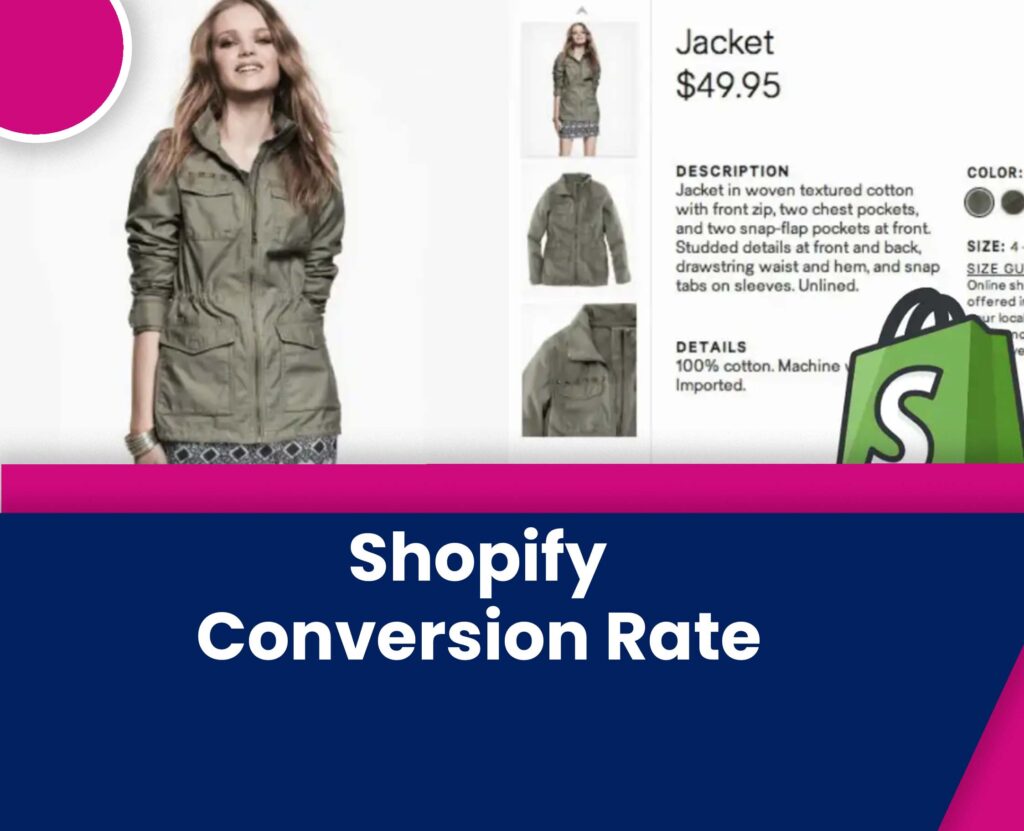
shopify conversion rate

After browsing your product page, the majority of your customers will either buy your products or leave your store. However, it is a part of the sales funnel that is typically disregarded.

Customers won’t get that far unless you create solid product pages that convert. While most store owners focus on improving their checkout page or landing page or tweaking what happens after a visitor adds a product to their cart, you won’t get that far unless you create solid product pages that convert.

Product pages exist to explain why your product is excellent, explain which demands or problems it answers, and provide the details a consumer needs to view to make a purchasing choice. Therefore, beautiful product images and well-written product descriptions are vital. Still, they’re also the minimum requirements—there’s a lot more to nail down to create a spectacular product page.

What Is the Importance of Shopify Conversion Rates?

Conversion rates are a good tool to compare and contrast the results of different advertising platforms. Conversion rates are especially significant when executing mobile user acquisition campaigns because they help measure the performance of each campaign, as shown in the example above. In addition, when scaling a campaign, they can also be utilized to set ROI expectations.

Conversion rates aren’t only limited to clicks; they can also apply to occurrences further down the funnel. For example, the percentage of users who moved on to install an app or complete an in-app action can be calculated.

This is beneficial to both advertisers and Shopify marketer because it aids in the identification of valuable users. This data can then be sent back into the funnel to help with targeting and campaign performance optimization.

In addition, when scaling a campaign, they can also be utilized to set ROI expectations.

How to improve Shopify conversion rate?

Your store’s product pages can make or ruin it. They may be attracting viewers, and those visitors may be staying for a while, but why aren’t they purchasing? Here are some pointers on how to efficiently convert them.

A well-designed product page is about connecting with visitors and gently guiding them through the sales funnel, not just having a nice look and easy navigation. It’s all about thinking outside the box, using an image to lead, providing options, and relying on social proof for support.

The top Shopify designers and developers will have the necessary know-how to make sure that your pages are optimized for conversions.

1. Know the ideal description of your product

You may be tempted to believe that no one reads product descriptions. Perhaps the eCommerce world’s quick pace and variety of options don’t leave enough time or space for shoppers to thoroughly research a product.

While it’s true that some things can be sold just on their appearance, 87 per cent of buyers consider product content such as product descriptions to be critical in their purchasing choice. So even while we may hear that product reviews are the finest asset for raising product page conversion rates, the truth is that product descriptions are viewed as more significant in several industries, such as clothes and online grocery shopping.

However, an overabundance of detail in lengthy product descriptions might turn a consumer off a product, just as it can with anything else. There’s a lot of good information out there, but there’s no hard and fast rule for what length you should aim for, so it’s best to look at your competitors’ product descriptions. In general, shorten descriptions for basic products and extend descriptions for things that require more explanation.

Also, keep in mind that you’re not writing solely for your intended audience. Google ranks product pages based on their SEO score, and product descriptions are an excellent method to incorporate keywords into your website. If you use them selectively and keep the buyer interested, you might find that your product sells.

2. Include large and original images

Two obvious truths characterize human nature: we want originality and judge others based on their looks. So the world’s trendsetters, like the shops that stick out from the crowd, attract all of our attention.

9 out of 10 individuals believe that a product’s appearance is its most important selling point. Therefore, you’ll want to focus on building a product page with large, clear, and appealing photographs, especially if you’re selling to a younger demographic. Have you ever wondered why Instagram and Pinterest are so popular among both consumers and marketers? It’s all about the visual appeal.

Here are a few examples of how photos can help increase conversion rates on product pages:

  • Images attract attention – Roughly 79 percent of your customers will be skimmers, which means they will scan your product page for helpful information for a limited period. Skimmers are forced to pause and pay attention to what matters when they see images.
  • Images are easily shareable – Images are far more easily shareable than descriptions on social media. For example, Instagram and Pinterest are image-centric and awash with product images, while Facebook isn’t far behind.
  • Images are excellent for SEO since Google adores them- With the increasing importance of visual searching, a well-written alt text for a picture could propel your goods to the top of the google search results.

3. Should be optimized for mobile

All of the data points to a mobile shift. It has a name: m-commerce, and by 2021, it is predicted to account for the bulk of internet sales. It’s more than a fad; it’s the present and future of purchasing, and if you want to boost conversion rates on your product pages, you’ll need to hop on board the e-commerce train.

Fortunately, optimizing for mobile isn’t as difficult as it may appear. Shopify has a lot of amazing page builders that can help you effortlessly set up your website for mobile use. For example, they can help with element realignment, text streamlining, and prioritizing different areas based on scrolling patterns.

Consider hiring a website designer or contacting the Shopify Experts to help you tie everything together for your site. Make sure your site is mobile-friendly, regardless of how you do it; with 73 percent of customers willing to abandon poorly designed mobile sites, you can’t afford to.

4. The use of white space is essential


shopify conversion rate 


Do you prefer a noisy, in-your-face shopping experience with irritating commercial signs and klaxons going off every 3 seconds, or do you prefer to take your time strolling through a store?

Uncluttered store aisles and soothing store music are the eCommerce equivalents of whitespace. It refers to the empty regions of a website that help bring attention to the page’s actual content.

According to studies, whitespace on your website might boost readability by up to 20%. But it also gives your leads a sense of independence, the freedom to buy as they choose, and the authority to make their own purchasing decisions.

5. Product with real photo/video reviews

Generating customer feedback with photos/videos from your existing customers is the first step in establishing social proof for your brand and business.

According to recent studies, people check social proof 87% of the time to see what other people say about a product. And, like any sensible customer, they prefer products with high ratings and a lot of negative reviews over those with low ratings and a lot of negative reviews.

Have you ever referred a friend to a product or service? Because you trusted them, you probably paid attention to what they said.

Photo/Video is becoming the new norm, just as image-centered product pages are. So it’s time to start rolling in a world where 54 percent of customers want to see more video content and leads are 85 percent more likely to buy after watching a product video.

Photo/Video reviews keep your visitors engaged and provide them with crucial product information that they would miss if they scan over the product description. For more intricate products, films can quickly explain what it is, what it does, and how to use it, all while putting a trustworthy face or voice in front of the camera. Aside from that, videos are fantastic for SEO.

Wrapping up

Your online store’s product pages are its lifeblood. You risk annoying your clients and losing a lot of money if they’re poorly displayed or unorganized.

Improving Shopify conversion rate and developing unique product pages will help your store’s brand and reputation, allowing you to stand out from the crowd. In addition, customers will be more interested in both your items and your organization as a whole if you put more effort into your product pages.

Even the tiniest or most basic modification can have a big influence on your business. So start with above mentioned solid ideas and iterate—you should notice that your product pages are stronger than ever at converting browsers into purchases.

Our Latest Articles

How to Customize Audio on a Limited Budget

How to Customize Audio on a Limited Budget

Securing high-quality sound for creative projects often involves significant financial hurdles. Studio time, session musicians, and licensing fees quickly drain available resources. However, modern technology offers a practical alternative. Musick AI, an advanced AI...

read more

Shopify Marketing Strategy To Reach 7 Figures In 2025

Shopify Marketing Strategy To Reach 7 Figures In 2025

shopify marketing strategy

You will learn what is the Shopify marketing strategy, why it is important to have a good strategy that helps you scale your business, and we will reveal the best Shopify marketing strategies to reach a 7-figure store.


What is Shopify Marketing Strategy?

Selling online is big business right now, and also nowhere is the digital industry busier than Shopify, the web’s leading eCommerce marketing platform. If you’re new to the Shopify world, getting started can be intimidating– with many other brands competing for customers’ focus, trust, and also satisfaction. How can a brand-new stick out from the crowd as well as begin developing a target market? The solution is establishing the best Shopify marketing strategy. With thousands of plugins as well as add-ons at your disposal, Shopify is known for its straightforward setup procedure and general convenience of use. Those tools make it very easy to build a store that reflects your brand’s identity while giving a user-friendly consumer experience. The first goal will be getting the clients to your shop store.

16 Shopify Marketing Strategies Secrets To build a 7-figure Store

Using the best Shopify marketing strategy is the ultimate way of marketing your eCommerce store, and there is no denying that Shopify stores can be a profitable revenue store. However, marketing is easier said than done. Sure, it’s easier to set up and doesn’t really need technical expertise but making profits is challenging, especially if you are new to the platform. For this reason, we are sharing result-oriented Shopify marketing strategies, so your store can reach a 7-figure. Are you ready to market your Shopify store then? Let’s find out! 

Autopilot Marketing 

Shopify has various features, integrations, and apps available for automating the tasks, and you can focus on business scaling. It can manage repetitive and operational tasks with ease. Some of the features include the following;

  • Cart Recovery 

Every online store has some shoppers who add products to the cart but don’t complete the order. In those cases, you can set automated reminders for SMS, email, and messenger. For instance, web push notifications can be set with Firepush, SMS recovery for TxtCart, and email reminders can be set with CareCart. 

  • Customer Engagement 

When it comes down to marketing, customer engagement plays an essential role. For this purpose, you can automate email communication, customer retargeting, and remarketing with Shopify apps. Implementing a contact center solution can also facilitate communication and enhance the quality and time efficiency of your activities.

  • Social Media Product Promotion 

The Shopify stores can be integrated with Facebook, Instagram, Pinterest, and Twitter, so product promotion will be enhanced. In fact, you will be able to market the products on all these platforms with one click. Not to forget, there are some apps available for setting up Instagram and Facebook, which are updated with inventory changes. 

  • Program Management & Communication 

Shopify stores can be integrated with Google products, Trello, and Slack for seamless management, internal collaboration, and real-time communication. As a result, it will be easy to keep track of sales and marketing projects, cross-functional activities, and overall customer management. 

Pinning The Latest Products

Do you use Pinterest? We are sure you are using one to take some inspiration and make mood boards. It’s needless to say that Pinterest has a volcano of ideas, and people often use it to discover new products. Truth be told, only a limited number of brands are leveraging this platform, but it can be a promising marketing strategy. For this purpose, you need to create captivating product images and how-to infographics and use them on Pinterest to drive traffic to the Shopify store. 

Also, while creating the pins, don’t forget to add a catchy product title and an alluring description (adding BTS details always works!). Secondly, use the relevant hashtags and link the pin to your Shopify store as it will increase sales. You can also use product tags and stores to reduce the purchase cycle and increase the reach, respectively. 

SEO 

SEO is an undeniable part of every online platform, and do you know 60% of online shopping enthusiasts start their shopping spree with search engines? This clearly means that you’ve to be visible in users’ search results. While we are at it, let us tell you that you don’t need to have a blog to start doing SEO. This is because you should optimize the product pages, landing pages, product catalog pages, and homepage. For this purpose, you can use the relative keywords (or just hire an SEO expert). In the section below, we are sharing some tips to remember while conducting SEO, such as;

  • Try to target the funnel keywords because the search volume is higher 
  • Always focus on the long-tail keywords since online shoppers tend to use them more
  • Enhance the Shopify store’s speed since a slow website can lower the ranking 
  • Don’t forget to optimize the images because you might catch a customer when they are scrolling through Google Images 
  • Use Shopify’s in-built SEO features
  • Make sure you are actually descriptive while writing down the product descriptions 
  • Focus on product interlinking & create backlinks through niche edits service

Content Marketing is important for your Shopify marketing strategy 

Community marketing is often considered the “synonym” for social media marketing, and very important for any shopify marketing strategy. It’s high time we understand the difference. This is because community marketing revolves around brands engaging with potential customers and existing customers in online communities. These communities can be built on blogs, Facebook groups, Quora, or Reddit. Once these communities are built, make it a point to post informative and valuable content (other than about the products) as it helps build a rapport. So, when people start trusting you, you will witness an influx in sales. 

Referral Marketing 

Every brand or a Shopify agency has customers, but transforming them into a sales force is the winning strategy, and it can only be done with word-of-mouth. According to research, more than 90% of customers believe in word-of-mouth. To illustrate, referrals are all about your customers helping you gain more customers. For this purpose, you can launch a referral program where customers will get store credits or reward points when someone makes a purchase through their referral. 

What’s best is that setting up the referral program for the Shopify store is pretty convenient since there are various apps available. For instance, you can opt for ReferralCandy as it helps track the referrals, conversions and check out the given rewards. So, if you go ahead with referral marketing, keep the following things in mind;

  • Identify the motivators that push the existing customers to refer your Shopify store to their folks 
  • Make sure the products are top-notch, and the shopping experience is seamless 
  •  Create an easy referral program using tools like ReferralCandy (don’t add too many steps and rules)
  • Don’t forget to “tell” customers about the referral program and its perks 

User-Generated Content 

Long gone are the times when Shopify stores were only about products because adding content is another way of getting more traffic that will eventually translate into more sales. So, when users are going to consume the content, why not simply make user-generated content? With user-generated content, brand awareness will be heightened, and more customers will be reached. For this purpose, just motivate your customers to share their videos and pictures using your products and turn them into shoppable posts (shop the look is an apt example). 

Facebook Store

Sure, you already have a Shopify store, but connecting it with the Facebook page will only increase sales. In fact, you can sign up for the Shopify Lite plan and connect your Shopify platform with your Facebook page. With this, the entire product catalog will be available on Facebook with automatic inventory updates. In addition, you can share other content on Facebook to enhance customer engagement while following will be enhanced organically. 

Instagram 

In addition to the Facebook store, you can also create an Instagram business page and create a shoppable feed. For this purpose, just make a business page, add the business details, post some fine product pictures, and link it to the Shopify store. Then, connect Instagram with Facebook, upload the products, and switch on the shopping features, and you are good to go. After all, launch those product tags in the posts and get ready for the sales. What’s best about leveraging Instagram is that customers love visual content, and your product pictures will be an apt way of capturing attention and sales.

Text The Shoppers 

You might not have thought about SMS marketing, but it still remains an effective channel for business communication. With each passing day, the number of smartphone users is increasing, and they actually prefer receiving SMS rather than spamming emails. However, keep the SMS direct and short while conveying the actual message (don’t beat around the bush). SMS marketing is a promising choice because customers don’t have to use internet data or log in somewhere. Moreover, you can automate the cart recovery features as well. 

Content Marketing 

Content marketing is real, and more than 75% of the B2C advertisers are leveraging it to capture their target audience – it’s obviously for a reason. The customers are actually looking for content consumption before they invest their hard-earned money in some product. So, as a Shopify store owner, you must utilize content marketing. With this marketing technique, you need to add a competitive edge to your products rather than copy-pasting the same old product description.

Also, while you are curating the content, state how a specific product will add value to a customer’s life. For instance, you can create lookbooks if you are running a fashion brand as it helps build a trusting brand-customer relationship. To summarize, create different types of customer-centric content (experiment with videos, blogs, and lookbooks), and don’t forget to optimize it with keywords. 

Loyalty Program 

In various cases, businesses launch a loyalty program when they have a specific number of customers under their belt, but that’s the myth. Creating a loyalty program will actually help ensure that you are retaining customers and they keep coming back to you whenever they need to purchase something. If you don’t know how it works, a loyalty program allows customers to receive rewards whenever they purchase something (it will make sure customers come back to you and will enhance traffic). You can provide rewards on their first purchase, when they leave a review, when they sign up for a newsletter, or when they give you a shout-out on social media. 

Brand Collaboration 

Haven’t you always thought that another business or brand is your competition? If you are nodding, it’s time to change the perception because brand collaboration is an apt way to market your Shopify store and capture more sales. To illustrate, if you are selling footwear, your models will wear clothes for the lookbook, right? So, why don’t you collaborate with a clothing brand and create a collaborative marketing campaign? It will help both brands increase the customer count, and sales conversions will be higher. 

Giveaways 

Nothing works better than a giveaway when you are trying to expand your store and gain more customers. With giveaways, customers are excited about getting free products just by tagging a few friends. Also, when you are planning a giveaway, try to market it because taking people in a loop will ensure more people participate, and your brand gets more reach.

Influencer Marketing 

Influencers are growing big, and their audience really trusts them. They generally work on social media platforms, and collaborating with them will help capture their following. Honestly, one shout-out from a well-followed influencer will get you an amazing response. So, the right way is to collaborate with them (you might have to pay them, but it’s worth it as you will be getting more sales in return). Generally, influencers make stories and posts revolving around your products, so their followers get to know about you! 

Summary

When it comes down to online marketing, there is no thumb rule, and one approach doesn’t fit every brand. So, take time to understand your audience, determine their expectations from you, and implement the right Shopify marketing strategy that actually entice them. Not to forget, you can always test different strategies to see which one works the best!

Shopify marketing strategy

Our Latest Articles

How to Customize Audio on a Limited Budget

How to Customize Audio on a Limited Budget

Securing high-quality sound for creative projects often involves significant financial hurdles. Studio time, session musicians, and licensing fees quickly drain available resources. However, modern technology offers a practical alternative. Musick AI, an advanced AI...

read more